



UBC Science
@science.ubc.ca
News and events from the Faculty of Science at the University of British Columbia.
“In the center, we found four tightly-interacting galaxies forging one star every 40 minutes,” says UBC astronomer Dr. Ryley Hill. “For comparison, it currently takes a whole year for three or four stars to form in the Milky Way.” @ubcphas.bsky.social
bit.ly/4kz4xHO
bit.ly/4kz4xHO

How giant galaxies could have formed just 1.4 billion years after the Big Bang
New radio observations of molecular gas reveal how dozens of galaxies could have rapidly merged together in the early Universe.
bit.ly
February 10, 2026 at 7:58 PM
“In the center, we found four tightly-interacting galaxies forging one star every 40 minutes,” says UBC astronomer Dr. Ryley Hill. “For comparison, it currently takes a whole year for three or four stars to form in the Milky Way.” @ubcphas.bsky.social
bit.ly/4kz4xHO
bit.ly/4kz4xHO
Dr. Kemi Ola draws on her research and teaching experience to explore how students learn, thrive, and navigate a world suffering from excess. Join us Feb. 23 for this talk in UBC’s Black Excellence in STEM Speaker Series.
Learn more and register: bit.ly/3ZYL8pX%E2%8...
Learn more and register: bit.ly/3ZYL8pX%E2%8...

February 9, 2026 at 5:59 PM
Dr. Kemi Ola draws on her research and teaching experience to explore how students learn, thrive, and navigate a world suffering from excess. Join us Feb. 23 for this talk in UBC’s Black Excellence in STEM Speaker Series.
Learn more and register: bit.ly/3ZYL8pX%E2%8...
Learn more and register: bit.ly/3ZYL8pX%E2%8...
Reposted by UBC Science

Research led by François Jean reveals compounds with broad-spectrum antiviral activity that protect mice from influenza A. The findings could launch new drugs to treat not only flu but a larger family of viruses that work via the same mechanism.
Read more: bit.ly/4qm2esT
Read more: bit.ly/4qm2esT
Fluids, rest, and a broad-spectrum antiviral
François Jean's team has discovered two chemical compounds with potent and wide-ranging antiviral activity that protect mice from influenza A infection.
bit.ly
February 4, 2026 at 11:56 PM
Research led by François Jean reveals compounds with broad-spectrum antiviral activity that protect mice from influenza A. The findings could launch new drugs to treat not only flu but a larger family of viruses that work via the same mechanism.
Read more: bit.ly/4qm2esT
Read more: bit.ly/4qm2esT
Reposted by UBC Science

Community Choice Award Voting Now Open!
Voting runs until February 20 and is open to members of the Biodiversity Research Centre community.
View the photos and vote for your favourite photo here:
explore.beatymuseum.ubc.ca/BRC-photo-competition
Voting runs until February 20 and is open to members of the Biodiversity Research Centre community.
View the photos and vote for your favourite photo here:
explore.beatymuseum.ubc.ca/BRC-photo-competition


February 3, 2026 at 9:32 PM
Community Choice Award Voting Now Open!
Voting runs until February 20 and is open to members of the Biodiversity Research Centre community.
View the photos and vote for your favourite photo here:
explore.beatymuseum.ubc.ca/BRC-photo-competition
Voting runs until February 20 and is open to members of the Biodiversity Research Centre community.
View the photos and vote for your favourite photo here:
explore.beatymuseum.ubc.ca/BRC-photo-competition
Reposted by UBC Science

“It’s clear that their body condition, their survival, their reproduction has been declining with #sea ice,"said Dr. Marie Auger-Methe. “For Canadian #polar #bears, this doesn’t change anything. Our bears are not doing well." www.rcinet.ca/eye-on-the-a... via @RCInet

No sea ice, no problem for these Barents Sea bears — for now
By Bianca McKeown
Decades of data shows bears' body conditions stable despite global warming affecting sea ice.
A lonely polar bear swimming for hours in an ice-free Arctic has been a poster child o...
www.rcinet.ca
February 4, 2026 at 4:31 PM
“It’s clear that their body condition, their survival, their reproduction has been declining with #sea ice,"said Dr. Marie Auger-Methe. “For Canadian #polar #bears, this doesn’t change anything. Our bears are not doing well." www.rcinet.ca/eye-on-the-a... via @RCInet
Please join us Feb. 10 for our first of two Black Excellence in STEM events this month: Swimming to UBC Like a Fish by Dr. Rashid Sumaila, as he recounts the twists and turns of his academic journey, and reflects on what it means to build impact at UBC.
bit.ly/4tttPeq
bit.ly/4tttPeq

February 2, 2026 at 5:40 PM
Please join us Feb. 10 for our first of two Black Excellence in STEM events this month: Swimming to UBC Like a Fish by Dr. Rashid Sumaila, as he recounts the twists and turns of his academic journey, and reflects on what it means to build impact at UBC.
bit.ly/4tttPeq
bit.ly/4tttPeq
Reposted by UBC Science
“For Canadian polar bears, this doesn't change anything. Our bears are not doing well,” says Dr. @marieaugermethe.bsky.social. “It's clear that their body condition, their survival, their reproduction has been declining with sea ice.” www.cbc.ca/news/climate... via @cbcnews.ca @science.ubc.ca

These polar bears are showing surprising resilience in a warming world | CBC Climate Change News
Studying close to 800 bears over nearly 25 years shows that polar bear populations in the rapidly warming Barents Sea, off the northern coasts of Norway and Russia, are doing better than polar bears i...
www.cbc.ca
January 29, 2026 at 6:50 PM
“For Canadian polar bears, this doesn't change anything. Our bears are not doing well,” says Dr. @marieaugermethe.bsky.social. “It's clear that their body condition, their survival, their reproduction has been declining with sea ice.” www.cbc.ca/news/climate... via @cbcnews.ca @science.ubc.ca
Meet Laszlo Hollander (BSc ‘02), UBC Science’s 2026 Alumni Builder Award recipient. Hollander has dedicated a quarter of a century to supporting undergraduates as they navigate their academic and career journeys in Computer Science’s tri-mentoring program. @cs.ubc.ca
www.cs.ubc.ca/news/2025/09...
www.cs.ubc.ca/news/2025/09...

January 30, 2026 at 5:41 PM
Meet Laszlo Hollander (BSc ‘02), UBC Science’s 2026 Alumni Builder Award recipient. Hollander has dedicated a quarter of a century to supporting undergraduates as they navigate their academic and career journeys in Computer Science’s tri-mentoring program. @cs.ubc.ca
www.cs.ubc.ca/news/2025/09...
www.cs.ubc.ca/news/2025/09...
Reposted by UBC Science
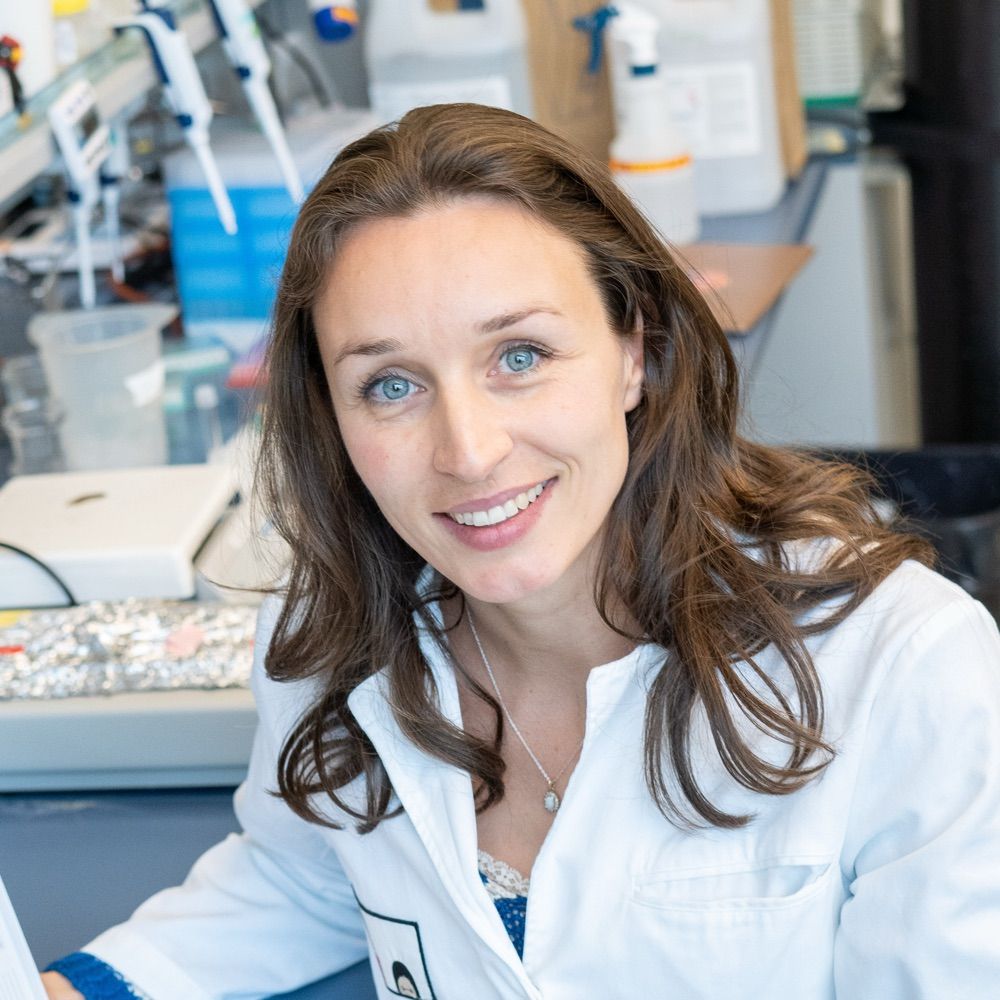
Excited to share our latest publication, led by Dr. Ellie McCallum and Juan Burckhardt!
bit.ly/4kfzQaf
You can access the article for free here: authors.elsevier.com/a/1mWb4L7PXu... And more information is available on the updated preprint: www.biorxiv.org/content/10.1...
bit.ly/4kfzQaf
You can access the article for free here: authors.elsevier.com/a/1mWb4L7PXu... And more information is available on the updated preprint: www.biorxiv.org/content/10.1...

Glowing bacterial sensors detect gut illness in mice before symptoms emerge
UBC researchers have engineered gut bacteria that dim their fluorescent glow in the presence of illness.
bit.ly
January 28, 2026 at 7:54 PM
Excited to share our latest publication, led by Dr. Ellie McCallum and Juan Burckhardt!
bit.ly/4kfzQaf
You can access the article for free here: authors.elsevier.com/a/1mWb4L7PXu... And more information is available on the updated preprint: www.biorxiv.org/content/10.1...
bit.ly/4kfzQaf
You can access the article for free here: authors.elsevier.com/a/1mWb4L7PXu... And more information is available on the updated preprint: www.biorxiv.org/content/10.1...
Reposted by UBC Science
February's #NatureClub is all about the fantastic world of fishes! Our family-friendly activities are geared towards kids 5-12; everyone is welcome to join in! Sign up online or drop in between 10:30 am-1 pm on Saturday, February 7.
🐟 🐠 🦈
beatymuseum.ubc.ca/nature-club
🐟 🐠 🦈
beatymuseum.ubc.ca/nature-club

January 28, 2026 at 7:00 PM
February's #NatureClub is all about the fantastic world of fishes! Our family-friendly activities are geared towards kids 5-12; everyone is welcome to join in! Sign up online or drop in between 10:30 am-1 pm on Saturday, February 7.
🐟 🐠 🦈
beatymuseum.ubc.ca/nature-club
🐟 🐠 🦈
beatymuseum.ubc.ca/nature-club
Full-scale AI swarms remain theoretical but early warning signs include AI-generated deepfakes and fabricated news outlets that influenced recent election debates in the US, Taiwan, Indonesia and India, says UBC computer scientist Dr. Kevin Leyton-Brown. @cs.ubc.ca
science.ubc.ca/news/2026-01...
science.ubc.ca/news/2026-01...

AI swarms could hijack democracy—without anyone noticing
They don’t march in the streets or storm the polls, but a new breed of AI-controlled personas could be the next big threat to democracy.
science.ubc.ca
January 29, 2026 at 5:08 PM
Full-scale AI swarms remain theoretical but early warning signs include AI-generated deepfakes and fabricated news outlets that influenced recent election debates in the US, Taiwan, Indonesia and India, says UBC computer scientist Dr. Kevin Leyton-Brown. @cs.ubc.ca
science.ubc.ca/news/2026-01...
science.ubc.ca/news/2026-01...
Reposted by UBC Science
UBC researchers have engineered gut bacteria that dim their fluorescent glow in the presence of illness.
Their findings, published in Cell, could improve gut diagnostics by using bacteria that already live there.
Read more: bit.ly/4kfzQaf
@science.ubc.ca @news.ubc.ca
Their findings, published in Cell, could improve gut diagnostics by using bacteria that already live there.
Read more: bit.ly/4kfzQaf
@science.ubc.ca @news.ubc.ca

Glowing bacterial sensors detect gut illness in mice before symptoms emerge
UBC researchers have engineered gut bacteria that dim their fluorescent glow in the presence of illness.
bit.ly
January 28, 2026 at 6:59 PM
UBC researchers have engineered gut bacteria that dim their fluorescent glow in the presence of illness.
Their findings, published in Cell, could improve gut diagnostics by using bacteria that already live there.
Read more: bit.ly/4kfzQaf
@science.ubc.ca @news.ubc.ca
Their findings, published in Cell, could improve gut diagnostics by using bacteria that already live there.
Read more: bit.ly/4kfzQaf
@science.ubc.ca @news.ubc.ca
UBC astronomer Dr. Aaron Boley says the scariest hazard isn't the large space junk that tracking networks follow. “The biggest risk on orbit is the lethal non-trackable debris; it won’t cause an explosion, but it can disable the spacecraft if hit.” @ubcphas.bsky.social
www.msn.com/en-us/travel...
www.msn.com/en-us/travel...
MSN
www.msn.com
January 28, 2026 at 5:37 PM
UBC astronomer Dr. Aaron Boley says the scariest hazard isn't the large space junk that tracking networks follow. “The biggest risk on orbit is the lethal non-trackable debris; it won’t cause an explosion, but it can disable the spacecraft if hit.” @ubcphas.bsky.social
www.msn.com/en-us/travel...
www.msn.com/en-us/travel...
Reposted by UBC Science

Put your lab goggles and lab coats on and join the Chemistry Department for Kids Take Over UBC On Feb 15, 10am-5pm!
🧪Hands-on activities: Includes slime making, non-Newtonian fluids
🍦Liquid Nitrogen Ice Cream
More info and get tickets: www.chem.ubc.ca/outreach-and... @ubcartsculture.bsky.social
🧪Hands-on activities: Includes slime making, non-Newtonian fluids
🍦Liquid Nitrogen Ice Cream
More info and get tickets: www.chem.ubc.ca/outreach-and... @ubcartsculture.bsky.social


January 27, 2026 at 5:45 PM
Put your lab goggles and lab coats on and join the Chemistry Department for Kids Take Over UBC On Feb 15, 10am-5pm!
🧪Hands-on activities: Includes slime making, non-Newtonian fluids
🍦Liquid Nitrogen Ice Cream
More info and get tickets: www.chem.ubc.ca/outreach-and... @ubcartsculture.bsky.social
🧪Hands-on activities: Includes slime making, non-Newtonian fluids
🍦Liquid Nitrogen Ice Cream
More info and get tickets: www.chem.ubc.ca/outreach-and... @ubcartsculture.bsky.social
Dean of Science and UBC chemist Dr. Mark MacLachlan has a science themed crossword in the New York Times. "This puzzle’s theme idea came to me when I got one of those pesky error messages on my computer," Dr. MacLachlan said. @chem.ubc.ca
www.nytimes.com/2026/01/24/c...
www.nytimes.com/2026/01/24/c...

Alert! Alert!
www.nytimes.com
January 26, 2026 at 5:06 PM
Dean of Science and UBC chemist Dr. Mark MacLachlan has a science themed crossword in the New York Times. "This puzzle’s theme idea came to me when I got one of those pesky error messages on my computer," Dr. MacLachlan said. @chem.ubc.ca
www.nytimes.com/2026/01/24/c...
www.nytimes.com/2026/01/24/c...
Reposted by UBC Science
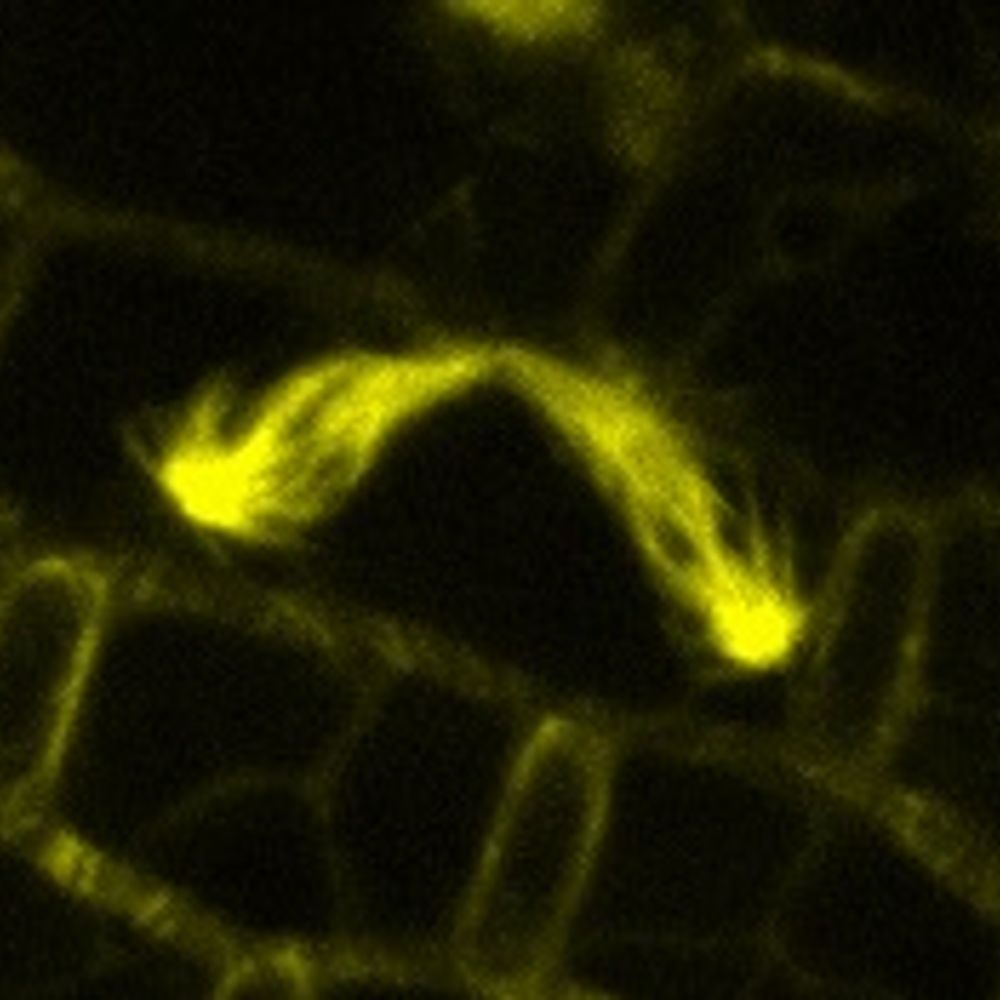
Grad students in my lab are very creative. Here is a recent example.

January 22, 2026 at 9:13 PM
Grad students in my lab are very creative. Here is a recent example.
Reposted by UBC Science
Have you ever wondered what a day in the life of a Beaty Biodiversity Museum volunteer looks like? Read the full story at beatymuseum.ubc.ca/blog
#biodiversity #museums #science #volunteering #BeatyMuseum
#biodiversity #museums #science #volunteering #BeatyMuseum

January 22, 2026 at 9:25 PM
Have you ever wondered what a day in the life of a Beaty Biodiversity Museum volunteer looks like? Read the full story at beatymuseum.ubc.ca/blog
#biodiversity #museums #science #volunteering #BeatyMuseum
#biodiversity #museums #science #volunteering #BeatyMuseum
In a first, UBC physicists have used a new optical centrifuge to spin up molecules suspended in a superfluid. The results bring researchers a step closer to demystifying the behaviour of friction-less superfluids at the atomic scale. @ubcphas.bsky.social
science.ubc.ca/news/2026-01...
science.ubc.ca/news/2026-01...

A new optical centrifuge is helping physicists probe the mysteries of superfluids
Physicists have used the new optical centrifuge to control the rotation of molecules suspended in liquid helium nano-droplets.
science.ubc.ca
January 22, 2026 at 5:24 PM
In a first, UBC physicists have used a new optical centrifuge to spin up molecules suspended in a superfluid. The results bring researchers a step closer to demystifying the behaviour of friction-less superfluids at the atomic scale. @ubcphas.bsky.social
science.ubc.ca/news/2026-01...
science.ubc.ca/news/2026-01...
Join us on Sunday, February 15 for Kids Take Over UBC! Families can wander across the Vancouver campus discovering arts and culture activities for all ages—from storytelling and cultural crafts to STEM workshops, to guided tours and live performances, and much more!
inspired.ubc.ca/kidstakeover...
inspired.ubc.ca/kidstakeover...

January 21, 2026 at 7:38 PM
Join us on Sunday, February 15 for Kids Take Over UBC! Families can wander across the Vancouver campus discovering arts and culture activities for all ages—from storytelling and cultural crafts to STEM workshops, to guided tours and live performances, and much more!
inspired.ubc.ca/kidstakeover...
inspired.ubc.ca/kidstakeover...
Reposted by UBC Science
Congrats to @profhein.bsky.social & Dr. Ivory Zhang! Their IvoryOS project has been selected for @innovationubc.bsky.social's Venture Founder program. IvoryOS is transforming self‑driving labs with a no‑code, open‑source platform. @science.ubc.ca @natchem.nature.com
🔗 www.chem.ubc.ca/hein-lab-s-i...
🔗 www.chem.ubc.ca/hein-lab-s-i...

January 19, 2026 at 5:36 PM
Congrats to @profhein.bsky.social & Dr. Ivory Zhang! Their IvoryOS project has been selected for @innovationubc.bsky.social's Venture Founder program. IvoryOS is transforming self‑driving labs with a no‑code, open‑source platform. @science.ubc.ca @natchem.nature.com
🔗 www.chem.ubc.ca/hein-lab-s-i...
🔗 www.chem.ubc.ca/hein-lab-s-i...
“It takes a lot of energy to grow, to become really big & pups need a lot of energy,” said Dr. Andrew Trites of @ubcoceans.bsky.social. “One way that mums can ensure that pups are going to get big enough to become future breeders is to continue to provide them with milk.”
www.cbc.ca/radio/asitha...
www.cbc.ca/radio/asitha...

These fully grown sea lions won't stop nursing, and scientists don’t know why | CBC Radio
A new study documents the surprising prevalence of 'supersuckling' among Galápagos Islands sea lions.
www.cbc.ca
January 19, 2026 at 5:49 PM
“It takes a lot of energy to grow, to become really big & pups need a lot of energy,” said Dr. Andrew Trites of @ubcoceans.bsky.social. “One way that mums can ensure that pups are going to get big enough to become future breeders is to continue to provide them with milk.”
www.cbc.ca/radio/asitha...
www.cbc.ca/radio/asitha...
Reposted by UBC Science
PICTURES: California and steller #sealions are pictured on a dock near West Vancouver in Howe Sound on Wednesday. A range of marine wildlife is making its presence felt in the region. www.cbc.ca/news/canada/...

Marine wildlife returns to Howe Sound | CBC News
A range of marine wildlife — from birds and seals to bellowing sea lions — has made life colourful for residents around the marine region of Howe Sound just north of Vancouver.
www.cbc.ca
January 16, 2026 at 5:39 PM
PICTURES: California and steller #sealions are pictured on a dock near West Vancouver in Howe Sound on Wednesday. A range of marine wildlife is making its presence felt in the region. www.cbc.ca/news/canada/...
UBC Emeritus College offers 2 annual awards that honour the contributions of UBC Emeriti. Science students, staff and faculty can nominate worthy retired UBC faculty who continue to pursue scholarly endeavours, and those who display exceptional leadership in community service at bit.ly/49EJdv5

January 16, 2026 at 5:49 PM
UBC Emeritus College offers 2 annual awards that honour the contributions of UBC Emeriti. Science students, staff and faculty can nominate worthy retired UBC faculty who continue to pursue scholarly endeavours, and those who display exceptional leadership in community service at bit.ly/49EJdv5
Does Alberta really want to bet its future on the predictability of U.S. politics rather than consumer preferences driving a rapid technology transition to electric vehicles?
Drs. Milind Kandlikar and David Boyd of @ires.ubc.ca discuss prosperity in a post-oil world.
bit.ly/3NERNme
Drs. Milind Kandlikar and David Boyd of @ires.ubc.ca discuss prosperity in a post-oil world.
bit.ly/3NERNme

Opinion: Alberta’s oil economy has 10 years before electric takes over. It’s time to invest in the future.
Alberta’s oil economy has 10 years before electric takes over. It’s time to invest in the future.
calgaryherald.com
January 12, 2026 at 5:37 PM
Does Alberta really want to bet its future on the predictability of U.S. politics rather than consumer preferences driving a rapid technology transition to electric vehicles?
Drs. Milind Kandlikar and David Boyd of @ires.ubc.ca discuss prosperity in a post-oil world.
bit.ly/3NERNme
Drs. Milind Kandlikar and David Boyd of @ires.ubc.ca discuss prosperity in a post-oil world.
bit.ly/3NERNme
"With further studies in humans, we hope to understand whether there are situations in which, for specific patients, these procedures may put them at risk of disease exacerbation," said Dr. Carolina Tropini. @ctropini.bsky.social @ubcmicroimmuno.bsky.social
bit.ly/4aRZnDU
bit.ly/4aRZnDU

January 9, 2026 at 5:41 PM
"With further studies in humans, we hope to understand whether there are situations in which, for specific patients, these procedures may put them at risk of disease exacerbation," said Dr. Carolina Tropini. @ctropini.bsky.social @ubcmicroimmuno.bsky.social
bit.ly/4aRZnDU
bit.ly/4aRZnDU