



Raunak Basu
@raunakbasu.bsky.social
Assistant Professor of Neuroscience at The Edmond and Lily Safra Center for Brain Sciences
Reposted by Raunak Basu
Hybrid neural–cognitive models reveal how memory shapes human reward learning
www.nature.com/articles/s41...
www.nature.com/articles/s41...

Hybrid neural–cognitive models reveal how memory shapes human reward learning - Nature Human Behaviour
Using artificial neural networks applied to human data, Eckstein et al. show that good models of reinforcement learning require memory components that track representations of the past.
www.nature.com
February 6, 2026 at 9:45 AM
Hybrid neural–cognitive models reveal how memory shapes human reward learning
www.nature.com/articles/s41...
www.nature.com/articles/s41...
Reposted by Raunak Basu

An updated version of the following paper is now available on bioRxiv:
Early spatial and contextual coding deficits in hippocampal CA1 precede performance decline in an Alzheimer's disease model.
Yimei Li, Mary Ann Go, Hualong Zhang, Simon R Schultz.
www.biorxiv.org/content/10.1...
Early spatial and contextual coding deficits in hippocampal CA1 precede performance decline in an Alzheimer's disease model.
Yimei Li, Mary Ann Go, Hualong Zhang, Simon R Schultz.
www.biorxiv.org/content/10.1...

February 4, 2026 at 9:51 AM
An updated version of the following paper is now available on bioRxiv:
Early spatial and contextual coding deficits in hippocampal CA1 precede performance decline in an Alzheimer's disease model.
Yimei Li, Mary Ann Go, Hualong Zhang, Simon R Schultz.
www.biorxiv.org/content/10.1...
Early spatial and contextual coding deficits in hippocampal CA1 precede performance decline in an Alzheimer's disease model.
Yimei Li, Mary Ann Go, Hualong Zhang, Simon R Schultz.
www.biorxiv.org/content/10.1...
Reposted by Raunak Basu

The hippocampal map has its own attentional control signal!
Our new study reveals that theta #sweeps can be instantly biased towards behaviourally relevant locations. See 📹 in post 4/6 and preprint here 👉
www.biorxiv.org/content/10.6...
🧵(1/6)
Our new study reveals that theta #sweeps can be instantly biased towards behaviourally relevant locations. See 📹 in post 4/6 and preprint here 👉
www.biorxiv.org/content/10.6...
🧵(1/6)
Attention-like regulation of theta sweeps in the brain's spatial navigation circuit
Spatial attention supports navigation by prioritizing information from selected locations. A candidate neural mechanism is provided by theta-paced sweeps in grid- and place-cell population activity, which sample nearby space in a left-right-alternating pattern coordinated by parasubicular direction signals. During exploration, this alternation promotes uniform spatial coverage, but whether sweeps can be flexibly tuned to locations of particular interest remains unclear. Using large-scale Neuropixels recordings in freely-behaving rats, we show that sweeps and direction signals are rapidly and dynamically modulated: they track moving targets during pursuit, precede orienting responses during immobility, and reverse during backward locomotion — without prior spatial learning. Similar modulation occurs during REM sleep. Canonical head-direction signals remain head-aligned. These findings identify sweeps as a flexible, attention-like mechanism for selectively sampling allocentric cognitive maps. ### Competing Interest Statement The authors have declared no competing interest. European Research Council, Synergy Grant 951319 (EIM) The Research Council of Norway, Centre of Neural Computation 223262 (EIM, MBM), Centre for Algorithms in the Cortex 332640 (EIM, MBM), National Infrastructure grant (NORBRAIN, 295721 and 350201) The Kavli Foundation, https://ror.org/00kztt736 Ministry of Science and Education, Norway (EIM, MBM) Faculty of Medicine and Health Sciences; NTNU, Norway (AZV)
www.biorxiv.org
January 28, 2026 at 10:03 AM
The hippocampal map has its own attentional control signal!
Our new study reveals that theta #sweeps can be instantly biased towards behaviourally relevant locations. See 📹 in post 4/6 and preprint here 👉
www.biorxiv.org/content/10.6...
🧵(1/6)
Our new study reveals that theta #sweeps can be instantly biased towards behaviourally relevant locations. See 📹 in post 4/6 and preprint here 👉
www.biorxiv.org/content/10.6...
🧵(1/6)
Reposted by Raunak Basu

With some trepidation, I'm putting this out into the world:
gershmanlab.com/textbook.html
It's a textbook called Computational Foundations of Cognitive Neuroscience, which I wrote for my class.
My hope is that this will be a living document, continuously improved as I get feedback.
gershmanlab.com/textbook.html
It's a textbook called Computational Foundations of Cognitive Neuroscience, which I wrote for my class.
My hope is that this will be a living document, continuously improved as I get feedback.
January 9, 2026 at 1:27 AM
With some trepidation, I'm putting this out into the world:
gershmanlab.com/textbook.html
It's a textbook called Computational Foundations of Cognitive Neuroscience, which I wrote for my class.
My hope is that this will be a living document, continuously improved as I get feedback.
gershmanlab.com/textbook.html
It's a textbook called Computational Foundations of Cognitive Neuroscience, which I wrote for my class.
My hope is that this will be a living document, continuously improved as I get feedback.
Reposted by Raunak Basu
I love papers that summarize what we know versus don't about a thing (most often via a model) and lead to clarity about what's unknown.
Three cheers to @fabienvinckier.bsky.social et al for this paper that does exactly in a space with much too little clarity: mood!
www.nature.com/articles/s41...
Three cheers to @fabienvinckier.bsky.social et al for this paper that does exactly in a space with much too little clarity: mood!
www.nature.com/articles/s41...

Neuro-computational account of how mood fluctuations arise and affect decision making - Nature Communications
Fluctuations in mood are known to affect our decisions. Here the authors propose and validate a model of how mood fluctuations arise through a slow integration of positive and negative feedback and re...
www.nature.com
January 20, 2026 at 10:20 AM
I love papers that summarize what we know versus don't about a thing (most often via a model) and lead to clarity about what's unknown.
Three cheers to @fabienvinckier.bsky.social et al for this paper that does exactly in a space with much too little clarity: mood!
www.nature.com/articles/s41...
Three cheers to @fabienvinckier.bsky.social et al for this paper that does exactly in a space with much too little clarity: mood!
www.nature.com/articles/s41...
Reposted by Raunak Basu
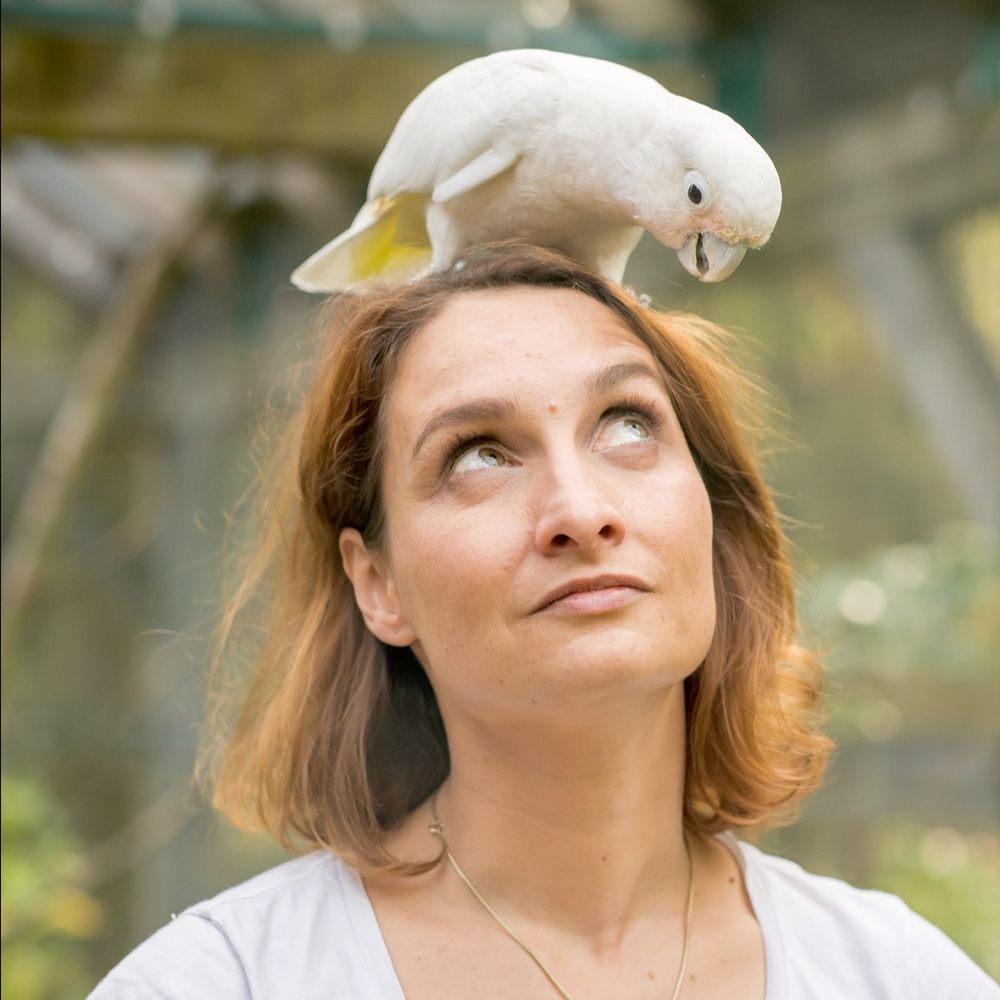
Our new paper (with @biotay.bsky.social) is out and on the cover story of @currentbiology.bsky.social !!!! Veronika, a Carinthian mountain cow flexibly uses a “multi-purpose tool” to scratch herself. A video and more information will follow in the comments.
www.cell.com/current-biol...
www.cell.com/current-biol...

January 19, 2026 at 4:07 PM
Our new paper (with @biotay.bsky.social) is out and on the cover story of @currentbiology.bsky.social !!!! Veronika, a Carinthian mountain cow flexibly uses a “multi-purpose tool” to scratch herself. A video and more information will follow in the comments.
www.cell.com/current-biol...
www.cell.com/current-biol...
Reposted by Raunak Basu
Please spread the word🔊My lab is looking to hire two international postdocs. If you want to do comp neuro, combine machine learning and awesome math to understand neural circuit activity, then come work with us! Bonn is such a cool place for neuroscience now, you don't want to miss out.
January 10, 2026 at 5:39 PM
Please spread the word🔊My lab is looking to hire two international postdocs. If you want to do comp neuro, combine machine learning and awesome math to understand neural circuit activity, then come work with us! Bonn is such a cool place for neuroscience now, you don't want to miss out.
Reposted by Raunak Basu

When and why do modular representations emerge in neural networks?
@stefanofusi.bsky.social and I posted a preprint answering this question last year, and now it has been extensively revised, refocused, and generalized. Read more here: doi.org/10.1101/2024... (1/7)
@stefanofusi.bsky.social and I posted a preprint answering this question last year, and now it has been extensively revised, refocused, and generalized. Read more here: doi.org/10.1101/2024... (1/7)

January 9, 2026 at 7:06 PM
When and why do modular representations emerge in neural networks?
@stefanofusi.bsky.social and I posted a preprint answering this question last year, and now it has been extensively revised, refocused, and generalized. Read more here: doi.org/10.1101/2024... (1/7)
@stefanofusi.bsky.social and I posted a preprint answering this question last year, and now it has been extensively revised, refocused, and generalized. Read more here: doi.org/10.1101/2024... (1/7)
Reposted by Raunak Basu

Nature research paper: Prefrontal neural geometry of learned cues guides motivated behaviours
go.nature.com/49HCsKd
go.nature.com/49HCsKd

Prefrontal neural geometry of learned cues guides motivated behaviours - Nature
The dorsomedial prefrontal cortex encodes the value, salience and valence of learned stimuli along distinct neural dimensions, and the geometry of these representations shapes motivated behaviours in mice.
go.nature.com
January 9, 2026 at 9:26 AM
Nature research paper: Prefrontal neural geometry of learned cues guides motivated behaviours
go.nature.com/49HCsKd
go.nature.com/49HCsKd
Reposted by Raunak Basu
Can humans & animals really use internal maps to take shortcuts?
Tolman famously said yes - based largely on his Sunburst maze.
Our new review & meta-analysis suggests evidence is far weaker than you might think.
🧵👇 doi.org/10.1111/ejn....
@uofgpsychneuro.bsky.social @ejneuroscience.bsky.social
Tolman famously said yes - based largely on his Sunburst maze.
Our new review & meta-analysis suggests evidence is far weaker than you might think.
🧵👇 doi.org/10.1111/ejn....
@uofgpsychneuro.bsky.social @ejneuroscience.bsky.social

Tolman's Sunburst Maze 80 Years on: A Meta‐Analysis Reveals Poor Replicability and Little Evidence for Shortcutting
In 1946, Tolman et al. reported that rats could take a novel shortcut to a goal after training on an indirect route, supporting the Cognitive Map theory. However, a review of subsequent Sunburst maze...
doi.org
January 5, 2026 at 7:52 PM
Can humans & animals really use internal maps to take shortcuts?
Tolman famously said yes - based largely on his Sunburst maze.
Our new review & meta-analysis suggests evidence is far weaker than you might think.
🧵👇 doi.org/10.1111/ejn....
@uofgpsychneuro.bsky.social @ejneuroscience.bsky.social
Tolman famously said yes - based largely on his Sunburst maze.
Our new review & meta-analysis suggests evidence is far weaker than you might think.
🧵👇 doi.org/10.1111/ejn....
@uofgpsychneuro.bsky.social @ejneuroscience.bsky.social
Reposted by Raunak Basu
New paper from the lab: "Asynchronous firing and off states in working memory maintenance"
www.sciencedirect.com/science/arti...
www.sciencedirect.com/science/arti...

Asynchronous firing and off states in working memory maintenance
Persistent spiking activity and activity-silent mechanisms have been proposed as neural correlates of working memory. To determine their relative cont…
www.sciencedirect.com
December 29, 2025 at 2:41 PM
New paper from the lab: "Asynchronous firing and off states in working memory maintenance"
www.sciencedirect.com/science/arti...
www.sciencedirect.com/science/arti...
Reposted by Raunak Basu

⚠️ New paper alert and what a way to end 2025! 🎉
Happy to share our story “Sleep-dependent infraslow rhythms are evolutionarily conserved across reptiles and mammals.” published today in Nature Neuroscience.
Sleeping dragons 🦎 and functional ultrasound!
Read the full paper here: rdcu.be/eWJHb 1/8
Happy to share our story “Sleep-dependent infraslow rhythms are evolutionarily conserved across reptiles and mammals.” published today in Nature Neuroscience.
Sleeping dragons 🦎 and functional ultrasound!
Read the full paper here: rdcu.be/eWJHb 1/8

Sleep-dependent infraslow rhythms are evolutionarily conserved across reptiles and mammals
Nature Neuroscience - Bergel et al. show that an infraslow rhythm connecting the brain and body during sleep is shared by lizards, mammals and birds, revealing an ancestral process and reshaping...
rdcu.be
December 29, 2025 at 4:17 PM
⚠️ New paper alert and what a way to end 2025! 🎉
Happy to share our story “Sleep-dependent infraslow rhythms are evolutionarily conserved across reptiles and mammals.” published today in Nature Neuroscience.
Sleeping dragons 🦎 and functional ultrasound!
Read the full paper here: rdcu.be/eWJHb 1/8
Happy to share our story “Sleep-dependent infraslow rhythms are evolutionarily conserved across reptiles and mammals.” published today in Nature Neuroscience.
Sleeping dragons 🦎 and functional ultrasound!
Read the full paper here: rdcu.be/eWJHb 1/8
Reposted by Raunak Basu

We invite applications for postdoctoral researchers with strong expertise in in vivo electrophysiology and circuit neuroscience to join our team at the Paris Brain Institute (ICM).


December 17, 2025 at 2:31 PM
We invite applications for postdoctoral researchers with strong expertise in in vivo electrophysiology and circuit neuroscience to join our team at the Paris Brain Institute (ICM).
Reposted by Raunak Basu
lab preprint! Interopceptive predictions are central to many brain-body interactions theories, but it's unclear if/how they affect bodily physiology. We (fearless Einav Litvak et al) show that insular cortex predictions are essential for glucose homeostasis-THREAD.. www.biorxiv.org/content/10.6...

Insular cortex predictions regulate glucose homeostasis
Brain-body interactions are essential for physical and emotional homeostasis. The brain uses information from the external world to predict upcoming bodily changes. This process involves interoceptive...
www.biorxiv.org
December 12, 2025 at 1:15 PM
lab preprint! Interopceptive predictions are central to many brain-body interactions theories, but it's unclear if/how they affect bodily physiology. We (fearless Einav Litvak et al) show that insular cortex predictions are essential for glucose homeostasis-THREAD.. www.biorxiv.org/content/10.6...
Reposted by Raunak Basu

Dimensionality reduction may be the wrong approach to understanding neural representations. Our new paper shows that across human visual cortex, dimensionality is unbounded and scales with dataset size—we show this across nearly four orders of magnitude. journals.plos.org/ploscompbiol...

December 11, 2025 at 3:32 PM
Dimensionality reduction may be the wrong approach to understanding neural representations. Our new paper shows that across human visual cortex, dimensionality is unbounded and scales with dataset size—we show this across nearly four orders of magnitude. journals.plos.org/ploscompbiol...
Reposted by Raunak Basu

Reposted by Raunak Basu

*Fully funded PhD student positions available to discover what changes in 🧠 when we learn something new.*
You think virtual reality + laser scanning microscopy are cool? You like 💻 and 🐭? Come join us!
Apply either through
www.udel.edu/academics/co...
or
www.udel.edu/academics/co...
You think virtual reality + laser scanning microscopy are cool? You like 💻 and 🐭? Come join us!
Apply either through
www.udel.edu/academics/co...
or
www.udel.edu/academics/co...
December 1, 2025 at 11:02 PM
*Fully funded PhD student positions available to discover what changes in 🧠 when we learn something new.*
You think virtual reality + laser scanning microscopy are cool? You like 💻 and 🐭? Come join us!
Apply either through
www.udel.edu/academics/co...
or
www.udel.edu/academics/co...
You think virtual reality + laser scanning microscopy are cool? You like 💻 and 🐭? Come join us!
Apply either through
www.udel.edu/academics/co...
or
www.udel.edu/academics/co...
Reposted by Raunak Basu

Terrific work led by @emmaroscow.bsky.social showing that hippocampal replay reflects events with large prediction errors, all the better to bootstrap learning as we slumber
Congratulations to Matt Jones & Nathan Lepora for seeing this through to the end!
www.nature.com/articles/s41...
Congratulations to Matt Jones & Nathan Lepora for seeing this through to the end!
www.nature.com/articles/s41...
Post-learning replay of hippocampal-striatal activity is biased by reward-prediction signals - Nature Communications
It is unclear which aspects of experience shape sleep’s contributions to learning. Here, by combining neural recordings in rats with reinforcement learning, the authors show that reward-prediction sig...
www.nature.com
November 27, 2025 at 10:24 AM
Terrific work led by @emmaroscow.bsky.social showing that hippocampal replay reflects events with large prediction errors, all the better to bootstrap learning as we slumber
Congratulations to Matt Jones & Nathan Lepora for seeing this through to the end!
www.nature.com/articles/s41...
Congratulations to Matt Jones & Nathan Lepora for seeing this through to the end!
www.nature.com/articles/s41...
Reposted by Raunak Basu
𝗛𝗼𝘄 𝗱𝗼𝗲𝘀 𝘁𝗵𝗲 𝗯𝗿𝗮𝗶𝗻 𝗶𝗺𝗽𝗹𝗲𝗺𝗲𝗻𝘁 𝗱𝗲𝗰𝗶𝘀𝗶𝗼𝗻𝘀 𝗶𝗳 𝘁𝗵𝗲𝗿𝗲 𝗶𝘀 𝗻𝗼 "𝗰𝗲𝗻𝘁𝗿𝗮𝗹 𝗲𝘅𝗲𝗰𝘂𝘁𝗶𝘃𝗲" (𝗮𝗸𝗮 𝗵𝗼𝗺𝘂𝗻𝗰𝘂𝗹𝘂𝘀)?
Via Decision Formation Through Multi-Area Population Dynamics
Excellent short review.
doi.org/10.1523/JNEU...
#neuroskyence
Via Decision Formation Through Multi-Area Population Dynamics
Excellent short review.
doi.org/10.1523/JNEU...
#neuroskyence

November 20, 2025 at 8:37 PM
𝗛𝗼𝘄 𝗱𝗼𝗲𝘀 𝘁𝗵𝗲 𝗯𝗿𝗮𝗶𝗻 𝗶𝗺𝗽𝗹𝗲𝗺𝗲𝗻𝘁 𝗱𝗲𝗰𝗶𝘀𝗶𝗼𝗻𝘀 𝗶𝗳 𝘁𝗵𝗲𝗿𝗲 𝗶𝘀 𝗻𝗼 "𝗰𝗲𝗻𝘁𝗿𝗮𝗹 𝗲𝘅𝗲𝗰𝘂𝘁𝗶𝘃𝗲" (𝗮𝗸𝗮 𝗵𝗼𝗺𝘂𝗻𝗰𝘂𝗹𝘂𝘀)?
Via Decision Formation Through Multi-Area Population Dynamics
Excellent short review.
doi.org/10.1523/JNEU...
#neuroskyence
Via Decision Formation Through Multi-Area Population Dynamics
Excellent short review.
doi.org/10.1523/JNEU...
#neuroskyence
Reposted by Raunak Basu

My book "The Brain, in Theory" on the publisher's website (out in April 2026):
press.princeton.edu/books/paperb...
press.princeton.edu/books/paperb...

The Brain, In Theory
Why engineering and computational analogies are poorly suited to the study of biological cognition
press.princeton.edu
November 18, 2025 at 8:25 AM
My book "The Brain, in Theory" on the publisher's website (out in April 2026):
press.princeton.edu/books/paperb...
press.princeton.edu/books/paperb...
Reposted by Raunak Basu
Who wore it better? Our new paper shows that rat OFC supports Bayesian inference of hidden states! With neural correlates of inferred state transitions at the level of single neurons and population-level latent factors. www.sciencedirect.com/science/arti...

November 17, 2025 at 6:06 PM
Who wore it better? Our new paper shows that rat OFC supports Bayesian inference of hidden states! With neural correlates of inferred state transitions at the level of single neurons and population-level latent factors. www.sciencedirect.com/science/arti...
Reposted by Raunak Basu
Ecstatic to announce our exciting new paper! Rat-mon y Cajal found a new friend to help him learn. Introducing, Dr. Tutor-us!

November 11, 2025 at 2:47 PM
Ecstatic to announce our exciting new paper! Rat-mon y Cajal found a new friend to help him learn. Introducing, Dr. Tutor-us!
Reposted by Raunak Basu

New preprint:
Neural manifolds that orchestrate walking and stopping
Here we develop a new theory for neural generation of walking and how it can stop- Next we test the theory using Neuropixels probes in the lumber spinal cord of freely moving rats. See more:
www.biorxiv.org/content/10.1...
Neural manifolds that orchestrate walking and stopping
Here we develop a new theory for neural generation of walking and how it can stop- Next we test the theory using Neuropixels probes in the lumber spinal cord of freely moving rats. See more:
www.biorxiv.org/content/10.1...

November 9, 2025 at 9:33 PM
New preprint:
Neural manifolds that orchestrate walking and stopping
Here we develop a new theory for neural generation of walking and how it can stop- Next we test the theory using Neuropixels probes in the lumber spinal cord of freely moving rats. See more:
www.biorxiv.org/content/10.1...
Neural manifolds that orchestrate walking and stopping
Here we develop a new theory for neural generation of walking and how it can stop- Next we test the theory using Neuropixels probes in the lumber spinal cord of freely moving rats. See more:
www.biorxiv.org/content/10.1...
Reposted by Raunak Basu

🚨Job alert🚨
The lab has up to *3 postdoc openings* for comp systems neuroscientists interested in describing and manipulating neural population dynamics mediating behaviour
This is part of a collaborative ARIA grant "4D precision control of cortical dynamics"
euraxess.ec.europa.eu/jobs/383909
The lab has up to *3 postdoc openings* for comp systems neuroscientists interested in describing and manipulating neural population dynamics mediating behaviour
This is part of a collaborative ARIA grant "4D precision control of cortical dynamics"
euraxess.ec.europa.eu/jobs/383909

3 Postdoctoral Research Fellows
Champalimaud Foundation (Fundação D. Anna de Sommer Champalimaud e Dr.
euraxess.ec.europa.eu
November 4, 2025 at 5:11 PM
🚨Job alert🚨
The lab has up to *3 postdoc openings* for comp systems neuroscientists interested in describing and manipulating neural population dynamics mediating behaviour
This is part of a collaborative ARIA grant "4D precision control of cortical dynamics"
euraxess.ec.europa.eu/jobs/383909
The lab has up to *3 postdoc openings* for comp systems neuroscientists interested in describing and manipulating neural population dynamics mediating behaviour
This is part of a collaborative ARIA grant "4D precision control of cortical dynamics"
euraxess.ec.europa.eu/jobs/383909
Reposted by Raunak Basu
Specialized structure of neural population codes in parietal cortex outputs
www.nature.com/articles/s41...
www.nature.com/articles/s41...

Specialized structure of neural population codes in parietal cortex outputs - Nature Neuroscience
Cortical neurons comprising an output pathway form a specialized population code that enhances the propagation of information to a downstream target, potentially improving the accuracy of decision-mak...
www.nature.com
November 5, 2025 at 2:13 PM
Specialized structure of neural population codes in parietal cortex outputs
www.nature.com/articles/s41...
www.nature.com/articles/s41...