



Oliver A. Kern
@oliverkern.bsky.social
PostDoc @ University of Tromsø
sedaDNA | landscape ecology | medieval history of Europe
sedaDNA | landscape ecology | medieval history of Europe
Pinned
Oliver A. Kern
@oliverkern.bsky.social
· Oct 19

Wondering who I am and what I do? Here is a word cloud based on the titles of my academic publications so far.
Credit and thanks to @obialik.bsky.social for the inspiration!
(source: shiny.rcg.sfu.ca/u/rdmorin/sc...)
Credit and thanks to @obialik.bsky.social for the inspiration!
(source: shiny.rcg.sfu.ca/u/rdmorin/sc...)
I have just deployed an update to my little PALVEG app that I created to facilitate the data visualization of pollen and pollen-based: oakern.shinyapps.io/PALVEG/
by using leaflet, the maps are now interactive and clicking dots on the map shows the percentage of land cover
give it a try!
by using leaflet, the maps are now interactive and clicking dots on the map shows the percentage of land cover
give it a try!
PALVEG - REVEALS land-cover estimates for the Late Pleistocene
oakern.shinyapps.io
January 29, 2026 at 1:16 PM
I have just deployed an update to my little PALVEG app that I created to facilitate the data visualization of pollen and pollen-based: oakern.shinyapps.io/PALVEG/
by using leaflet, the maps are now interactive and clicking dots on the map shows the percentage of land cover
give it a try!
by using leaflet, the maps are now interactive and clicking dots on the map shows the percentage of land cover
give it a try!
Reposted by Oliver A. Kern
📢 New Blog Post
How can a rock from hundreds of kilometers away become a stone tool? Dr. Johanna Hilpert explains how HESCOR researchers study prehistoric #networks of interaction and #exchange 🌐🤝
🔗 read on here:
shorturl.at/f0t5G
#Magdalenian #LBK #Modelling
How can a rock from hundreds of kilometers away become a stone tool? Dr. Johanna Hilpert explains how HESCOR researchers study prehistoric #networks of interaction and #exchange 🌐🤝
🔗 read on here:
shorturl.at/f0t5G
#Magdalenian #LBK #Modelling
January 14, 2026 at 5:24 PM
📢 New Blog Post
How can a rock from hundreds of kilometers away become a stone tool? Dr. Johanna Hilpert explains how HESCOR researchers study prehistoric #networks of interaction and #exchange 🌐🤝
🔗 read on here:
shorturl.at/f0t5G
#Magdalenian #LBK #Modelling
How can a rock from hundreds of kilometers away become a stone tool? Dr. Johanna Hilpert explains how HESCOR researchers study prehistoric #networks of interaction and #exchange 🌐🤝
🔗 read on here:
shorturl.at/f0t5G
#Magdalenian #LBK #Modelling
#FieldworkFriday Coring lakes on the Orkney and Shetland Isles last summer for sedaDNA and lipids for the V2C project at Uni Tromsø. Exploring the transition from Viking to Christian landscapes and their interactions on a species-level

January 23, 2026 at 9:11 AM
#FieldworkFriday Coring lakes on the Orkney and Shetland Isles last summer for sedaDNA and lipids for the V2C project at Uni Tromsø. Exploring the transition from Viking to Christian landscapes and their interactions on a species-level
Reposted by Oliver A. Kern
3-year postdoc position available in bioinformatics of eDNA @ University of Tromsø. The postdoc will develop new methods for processing and annotating DNA shotgun data from lake sediments with a focus on vascular plants.
Deadline 17th of February:
www.jobbnorge.no/en/available...
Deadline 17th of February:
www.jobbnorge.no/en/available...

Postdoctoral Research Fellow in Bioinformatics of eDNA (292346) | UiT The Arctic University of Norway
Job title: Postdoctoral Research Fellow in Bioinformatics of eDNA (292346), Employer: UiT The Arctic University of Norway, Deadline: Tuesday, February 17, 2026
www.jobbnorge.no
January 19, 2026 at 1:32 PM
3-year postdoc position available in bioinformatics of eDNA @ University of Tromsø. The postdoc will develop new methods for processing and annotating DNA shotgun data from lake sediments with a focus on vascular plants.
Deadline 17th of February:
www.jobbnorge.no/en/available...
Deadline 17th of February:
www.jobbnorge.no/en/available...
Reposted by Oliver A. Kern
🔔🔔New Paper 🔔🔔
Pollen-based REVEALS land-cover reconstructions for Europe during the latter half of the Last Glacial Period
essd.copernicus.org/articles/17/...
We show that glacial refugia and frequent openings of migration corridors may have played a substantial role human dispersal
Pollen-based REVEALS land-cover reconstructions for Europe during the latter half of the Last Glacial Period
essd.copernicus.org/articles/17/...
We show that glacial refugia and frequent openings of migration corridors may have played a substantial role human dispersal

Landscape reconstructions for Europe during the late Last Glacial (60–20 ka BP): a pollen-based REVEALS approach
Abstract. Vegetation change during the Last Glacial period in Europe plays a crucial role in better understanding the ecosystem dynamics response to abrupt climate change. Yet, most quantitative recon...
essd.copernicus.org
November 11, 2025 at 2:30 PM
🔔🔔New Paper 🔔🔔
Pollen-based REVEALS land-cover reconstructions for Europe during the latter half of the Last Glacial Period
essd.copernicus.org/articles/17/...
We show that glacial refugia and frequent openings of migration corridors may have played a substantial role human dispersal
Pollen-based REVEALS land-cover reconstructions for Europe during the latter half of the Last Glacial Period
essd.copernicus.org/articles/17/...
We show that glacial refugia and frequent openings of migration corridors may have played a substantial role human dispersal
3-year postdoc position available in bioinformatics of eDNA @ University of Tromsø. The postdoc will develop new methods for processing and annotating DNA shotgun data from lake sediments with a focus on vascular plants.
Deadline 17th of February:
www.jobbnorge.no/en/available...
Deadline 17th of February:
www.jobbnorge.no/en/available...
Postdoctoral Research Fellow in Bioinformatics of eDNA (292346) | UiT The Arctic University of Norway
Job title: Postdoctoral Research Fellow in Bioinformatics of eDNA (292346), Employer: UiT The Arctic University of Norway, Deadline: Tuesday, February 17, 2026
www.jobbnorge.no
January 19, 2026 at 1:32 PM
3-year postdoc position available in bioinformatics of eDNA @ University of Tromsø. The postdoc will develop new methods for processing and annotating DNA shotgun data from lake sediments with a focus on vascular plants.
Deadline 17th of February:
www.jobbnorge.no/en/available...
Deadline 17th of February:
www.jobbnorge.no/en/available...
Excited to announce that I have started my new position as a Researcher at the University of Tromsø 🇳🇴. In the ERC-funded MEMELAND project we will employ a multi-proxy approach including sedaDNA, biomarkers, archaeobotany, pollen, and geochemistry to uncover the ecological landscape history of Europe

January 16, 2026 at 11:18 AM
Excited to announce that I have started my new position as a Researcher at the University of Tromsø 🇳🇴. In the ERC-funded MEMELAND project we will employ a multi-proxy approach including sedaDNA, biomarkers, archaeobotany, pollen, and geochemistry to uncover the ecological landscape history of Europe
Reposted by Oliver A. Kern
📢 New Blog Post
Understanding #reconstructions of past vegetation can be difficult….
@oliverkern.bsky.social introduces his PALVEG app to make the maps from #paleovegetation reconstructions more accessible to researchers across all disciplines! 💻🌳
🔗 read on here:
shorturl.at/dNas6
Understanding #reconstructions of past vegetation can be difficult….
@oliverkern.bsky.social introduces his PALVEG app to make the maps from #paleovegetation reconstructions more accessible to researchers across all disciplines! 💻🌳
🔗 read on here:
shorturl.at/dNas6

December 10, 2025 at 1:09 PM
📢 New Blog Post
Understanding #reconstructions of past vegetation can be difficult….
@oliverkern.bsky.social introduces his PALVEG app to make the maps from #paleovegetation reconstructions more accessible to researchers across all disciplines! 💻🌳
🔗 read on here:
shorturl.at/dNas6
Understanding #reconstructions of past vegetation can be difficult….
@oliverkern.bsky.social introduces his PALVEG app to make the maps from #paleovegetation reconstructions more accessible to researchers across all disciplines! 💻🌳
🔗 read on here:
shorturl.at/dNas6
Reposted by Oliver A. Kern
📢 New Blog Post
What's a (good) model? Dr. Annika Vogel highlights the questions that need to be answered and decisions that need to be made to appropriately #model interdisciplinary phenomena - there are always tradeoffs!
🔗 read on here:
shorturl.at/JklT1
What's a (good) model? Dr. Annika Vogel highlights the questions that need to be answered and decisions that need to be made to appropriately #model interdisciplinary phenomena - there are always tradeoffs!
🔗 read on here:
shorturl.at/JklT1

What is a good model? - Hescor
What's a (good) model? Dr. Annika Vogel highlights the questions that need to be answered and decisions that need to be made to appropriately model interdisciplinary phenomena - there are always trade...
shorturl.at
November 12, 2025 at 10:21 AM
📢 New Blog Post
What's a (good) model? Dr. Annika Vogel highlights the questions that need to be answered and decisions that need to be made to appropriately #model interdisciplinary phenomena - there are always tradeoffs!
🔗 read on here:
shorturl.at/JklT1
What's a (good) model? Dr. Annika Vogel highlights the questions that need to be answered and decisions that need to be made to appropriately #model interdisciplinary phenomena - there are always tradeoffs!
🔗 read on here:
shorturl.at/JklT1
🔔🔔New Paper 🔔🔔
Pollen-based REVEALS land-cover reconstructions for Europe during the latter half of the Last Glacial Period
essd.copernicus.org/articles/17/...
We show that glacial refugia and frequent openings of migration corridors may have played a substantial role human dispersal
Pollen-based REVEALS land-cover reconstructions for Europe during the latter half of the Last Glacial Period
essd.copernicus.org/articles/17/...
We show that glacial refugia and frequent openings of migration corridors may have played a substantial role human dispersal
Landscape reconstructions for Europe during the late Last Glacial (60–20 ka BP): a pollen-based REVEALS approach
Abstract. Vegetation change during the Last Glacial period in Europe plays a crucial role in better understanding the ecosystem dynamics response to abrupt climate change. Yet, most quantitative recon...
essd.copernicus.org
November 11, 2025 at 2:30 PM
🔔🔔New Paper 🔔🔔
Pollen-based REVEALS land-cover reconstructions for Europe during the latter half of the Last Glacial Period
essd.copernicus.org/articles/17/...
We show that glacial refugia and frequent openings of migration corridors may have played a substantial role human dispersal
Pollen-based REVEALS land-cover reconstructions for Europe during the latter half of the Last Glacial Period
essd.copernicus.org/articles/17/...
We show that glacial refugia and frequent openings of migration corridors may have played a substantial role human dispersal
Reposted by Oliver A. Kern
🐝🐚🐙 Job Opening! 🐙🐚🐝
We are looking for a new collection manager for the macro-invertebarte collection at the Natural History Museum in Basel (CH).
I can only recommend the museum and the curator!
We are looking for a new collection manager for the macro-invertebarte collection at the Natural History Museum in Basel (CH).
I can only recommend the museum and the curator!
📯Collection manager position in the Natural History Museum of Basel 🇨🇭
Collection: "invertebrate" fossils
Location: maps.app.goo.gl/Svd1o2M333av...
Workload: 70% of full-time
Description and application page: stellenmarkt.bs.ch/kbs/job/deta...
Collection: "invertebrate" fossils
Location: maps.app.goo.gl/Svd1o2M333av...
Workload: 70% of full-time
Description and application page: stellenmarkt.bs.ch/kbs/job/deta...
September 15, 2025 at 12:06 PM
🐝🐚🐙 Job Opening! 🐙🐚🐝
We are looking for a new collection manager for the macro-invertebarte collection at the Natural History Museum in Basel (CH).
I can only recommend the museum and the curator!
We are looking for a new collection manager for the macro-invertebarte collection at the Natural History Museum in Basel (CH).
I can only recommend the museum and the curator!
Reposted by Oliver A. Kern
🚨We developed a simple app to facilitate access to pollen-based vegetation 🌿reconstructions from Europe during the Late Pleistocene ☃️to scientists from other fields:
Check out oakern.shinyapps.io/PALVEG/
more will follow!
Check out oakern.shinyapps.io/PALVEG/
more will follow!
PALVEG - REVEALS land-cover estimates for the Late Pleistocene
oakern.shinyapps.io
August 2, 2024 at 12:27 PM
🚨We developed a simple app to facilitate access to pollen-based vegetation 🌿reconstructions from Europe during the Late Pleistocene ☃️to scientists from other fields:
Check out oakern.shinyapps.io/PALVEG/
more will follow!
Check out oakern.shinyapps.io/PALVEG/
more will follow!
Reposted by Oliver A. Kern
📢 New Blog Post
Living in high-altitudes is challenging - but humans in the #Ethiopian highlands have done it for tens of thousands of years! Dr. Götz Ossendorf introduces his hypothesis that social connectedness allowed past humans to endure such harsh conditions!
🔗 read on here:
shorturl.at/vH1en
Living in high-altitudes is challenging - but humans in the #Ethiopian highlands have done it for tens of thousands of years! Dr. Götz Ossendorf introduces his hypothesis that social connectedness allowed past humans to endure such harsh conditions!
🔗 read on here:
shorturl.at/vH1en

September 3, 2025 at 12:42 PM
📢 New Blog Post
Living in high-altitudes is challenging - but humans in the #Ethiopian highlands have done it for tens of thousands of years! Dr. Götz Ossendorf introduces his hypothesis that social connectedness allowed past humans to endure such harsh conditions!
🔗 read on here:
shorturl.at/vH1en
Living in high-altitudes is challenging - but humans in the #Ethiopian highlands have done it for tens of thousands of years! Dr. Götz Ossendorf introduces his hypothesis that social connectedness allowed past humans to endure such harsh conditions!
🔗 read on here:
shorturl.at/vH1en
Reposted by Oliver A. Kern
Upcoming @hescor.bsky.social and @mesh-research-hub.bsky.social event at the University of Cologne on the "Politics of More-Than-Human Life and Earth System Science" with an exciting programme: www.hescor-project.com/news/politic...

Politics of more-than-human life and Earth System Science - Hescor
www.hescor-project.com
September 8, 2025 at 8:56 AM
Upcoming @hescor.bsky.social and @mesh-research-hub.bsky.social event at the University of Cologne on the "Politics of More-Than-Human Life and Earth System Science" with an exciting programme: www.hescor-project.com/news/politic...
Reposted by Oliver A. Kern
📢 New Blog Post
What have we learned from animals and they from us? @shumon.bsky.social & Dr. Dominik Ohrem highlight their research to better integrate the ways that humans and animals learn from each other and how that knowledge-sharing impacts the Earth System!
🔗 read on here:
shorturl.at/6zdAa
What have we learned from animals and they from us? @shumon.bsky.social & Dr. Dominik Ohrem highlight their research to better integrate the ways that humans and animals learn from each other and how that knowledge-sharing impacts the Earth System!
🔗 read on here:
shorturl.at/6zdAa

August 21, 2025 at 11:06 AM
📢 New Blog Post
What have we learned from animals and they from us? @shumon.bsky.social & Dr. Dominik Ohrem highlight their research to better integrate the ways that humans and animals learn from each other and how that knowledge-sharing impacts the Earth System!
🔗 read on here:
shorturl.at/6zdAa
What have we learned from animals and they from us? @shumon.bsky.social & Dr. Dominik Ohrem highlight their research to better integrate the ways that humans and animals learn from each other and how that knowledge-sharing impacts the Earth System!
🔗 read on here:
shorturl.at/6zdAa
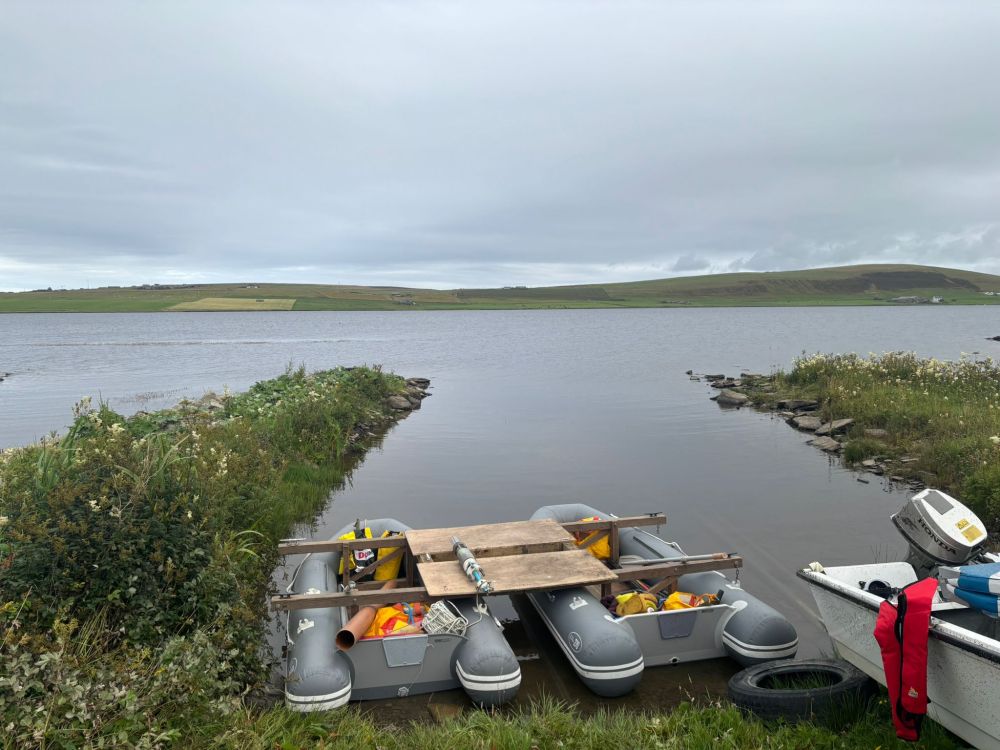
Third day on the Orkney Islands was a great success! Two cores, one >2m long, from the deepest secrion of the lake! Let's see what the sedaDNA will tell us about the history of the area
July 25, 2025 at 5:51 PM
Third day on the Orkney Islands was a great success! Two cores, one >2m long, from the deepest secrion of the lake! Let's see what the sedaDNA will tell us about the history of the area
Reposted by Oliver A. Kern
Researchers at universities rarely work with researchers in other departments - why? Dr. Elena Robakiewicz highlights the difficulties of understanding #research and #data in other fields and what HESCOR is doing to address data #communication issues!
🔗 read on here:
tinyurl.com/bdffven4
🔗 read on here:
tinyurl.com/bdffven4
Communicating Interdisciplinary Data - Hescor
tinyurl.com
June 25, 2025 at 12:01 PM
Researchers at universities rarely work with researchers in other departments - why? Dr. Elena Robakiewicz highlights the difficulties of understanding #research and #data in other fields and what HESCOR is doing to address data #communication issues!
🔗 read on here:
tinyurl.com/bdffven4
🔗 read on here:
tinyurl.com/bdffven4
Reposted by Oliver A. Kern
✍️ HESCOR Comics
We are collaborating with Dr Frederik von Reumont (Institute of Geography Education) to create easily digestible #educational #comics about the #interdisciplinary scientific process for the public, ranging in age from school children to the young at heart!
🔗 tinyurl.com/ed825wmf
We are collaborating with Dr Frederik von Reumont (Institute of Geography Education) to create easily digestible #educational #comics about the #interdisciplinary scientific process for the public, ranging in age from school children to the young at heart!
🔗 tinyurl.com/ed825wmf
June 20, 2025 at 12:28 PM
✍️ HESCOR Comics
We are collaborating with Dr Frederik von Reumont (Institute of Geography Education) to create easily digestible #educational #comics about the #interdisciplinary scientific process for the public, ranging in age from school children to the young at heart!
🔗 tinyurl.com/ed825wmf
We are collaborating with Dr Frederik von Reumont (Institute of Geography Education) to create easily digestible #educational #comics about the #interdisciplinary scientific process for the public, ranging in age from school children to the young at heart!
🔗 tinyurl.com/ed825wmf
Reposted by Oliver A. Kern
What is HESCOR? 🤔
Join Andreas Maier and Nikki Vercauteren for insights into HESCOR‘s vision and research goals!
want to learn more?
hescor-project.com
#HESCOR #Interdisciplinary #UniCologne #EarthSystem #HumanSystem #ResearchProject #Culture #Nature
Join Andreas Maier and Nikki Vercauteren for insights into HESCOR‘s vision and research goals!
want to learn more?
hescor-project.com
#HESCOR #Interdisciplinary #UniCologne #EarthSystem #HumanSystem #ResearchProject #Culture #Nature
June 6, 2025 at 2:27 PM
What is HESCOR? 🤔
Join Andreas Maier and Nikki Vercauteren for insights into HESCOR‘s vision and research goals!
want to learn more?
hescor-project.com
#HESCOR #Interdisciplinary #UniCologne #EarthSystem #HumanSystem #ResearchProject #Culture #Nature
Join Andreas Maier and Nikki Vercauteren for insights into HESCOR‘s vision and research goals!
want to learn more?
hescor-project.com
#HESCOR #Interdisciplinary #UniCologne #EarthSystem #HumanSystem #ResearchProject #Culture #Nature
Reposted by Oliver A. Kern
Hello Bluesky! 👋
Welcome to the official Bluesky account of #HESCOR - an interdisciplinary research project based at the #UniCologne!
We explore how the human and earth system co-evolve, bridging natural sciences, system modelling, and the humanities.
🔗 Learn more: www.hescor-project.com
Welcome to the official Bluesky account of #HESCOR - an interdisciplinary research project based at the #UniCologne!
We explore how the human and earth system co-evolve, bridging natural sciences, system modelling, and the humanities.
🔗 Learn more: www.hescor-project.com
HESCOR: Human & Earth System Coupled Research
HESCOR unites Earth system science, human modelling & humanities to study how climate and culture have co-evolved across history.
www.hescor-project.com
June 4, 2025 at 8:51 AM
Hello Bluesky! 👋
Welcome to the official Bluesky account of #HESCOR - an interdisciplinary research project based at the #UniCologne!
We explore how the human and earth system co-evolve, bridging natural sciences, system modelling, and the humanities.
🔗 Learn more: www.hescor-project.com
Welcome to the official Bluesky account of #HESCOR - an interdisciplinary research project based at the #UniCologne!
We explore how the human and earth system co-evolve, bridging natural sciences, system modelling, and the humanities.
🔗 Learn more: www.hescor-project.com
Reposted by Oliver A. Kern
There is a job opening (Post-Doctoral Research Associate, 2 years, 100%) in my new VW project on the macro-evolution of Pleistocene technological ecosystems in Europe: ecolithic.uni-koeln.de/opportunitie...
Deadline 25.05.2025
Please distribute widely!
🏺🦣
Deadline 25.05.2025
Please distribute widely!
🏺🦣
May 3, 2025 at 1:28 PM
There is a job opening (Post-Doctoral Research Associate, 2 years, 100%) in my new VW project on the macro-evolution of Pleistocene technological ecosystems in Europe: ecolithic.uni-koeln.de/opportunitie...
Deadline 25.05.2025
Please distribute widely!
🏺🦣
Deadline 25.05.2025
Please distribute widely!
🏺🦣
Reposted by Oliver A. Kern
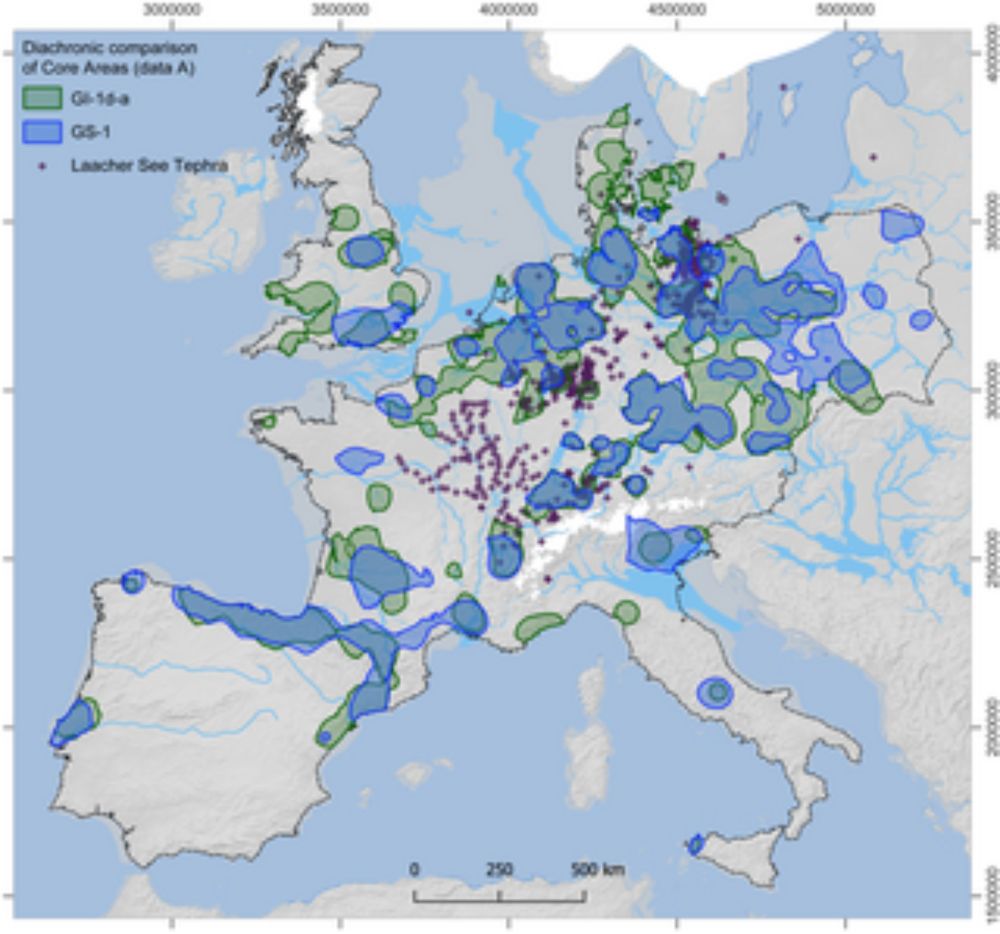
Our study on #demograpic responses of #huntergatherers during the #FinalPalaeolithic in #Europe is out now:
journals.plos.org/plosone/arti...
💪🏼 Thanks to the great collaborative effort that has gone into putting together an #archaeological #database - available at zenodo.org/records/1313...
journals.plos.org/plosone/arti...
💪🏼 Thanks to the great collaborative effort that has gone into putting together an #archaeological #database - available at zenodo.org/records/1313...
Large scale and regional demographic responses to climatic changes in Europe during the Final Palaeolithic
The European Final Palaeolithic witnessed marked changes in almost all societal domains. Despite a rich body of evidence, our knowledge of human palaeodemographic processes and regional population dyn...
journals.plos.org
April 7, 2025 at 2:17 PM
Our study on #demograpic responses of #huntergatherers during the #FinalPalaeolithic in #Europe is out now:
journals.plos.org/plosone/arti...
💪🏼 Thanks to the great collaborative effort that has gone into putting together an #archaeological #database - available at zenodo.org/records/1313...
journals.plos.org/plosone/arti...
💪🏼 Thanks to the great collaborative effort that has gone into putting together an #archaeological #database - available at zenodo.org/records/1313...
Interested in vegetation reconstructions from the Last Glacial in Europe? How do different approaches (pollen/models) compare? And most importantly, how to visualize all these data for a quick overview without spending weeks?
Check out an early version here:
oakern.shinyapps.io/palveg_v2/
Check out an early version here:
oakern.shinyapps.io/palveg_v2/
PALVEG (Version 2) - Comparing different approaches to reconstruct the paleovegetation of the Last Glacial
oakern.shinyapps.io
April 2, 2025 at 11:53 AM
Interested in vegetation reconstructions from the Last Glacial in Europe? How do different approaches (pollen/models) compare? And most importantly, how to visualize all these data for a quick overview without spending weeks?
Check out an early version here:
oakern.shinyapps.io/palveg_v2/
Check out an early version here:
oakern.shinyapps.io/palveg_v2/
Reposted by Oliver A. Kern
🚨Preprint Online🚨
REVEALS Vegetation reconstructions using pollen data from the late Last Glacial (60-20 ka BP) in Europe and bordering regions!
essd.copernicus.org/preprints/es...
REVEALS Vegetation reconstructions using pollen data from the late Last Glacial (60-20 ka BP) in Europe and bordering regions!
essd.copernicus.org/preprints/es...

Landscape reconstructions for Europe during the late Last Glacial (60–20 ka BP): A pollen-based REVEALS approach
Abstract. Vegetation change during the Last Glacial period in Europe plays a crucial role in better understanding the ecosystem dynamics response to abrupt climate change. Yet, quantitative reconstruc...
essd.copernicus.org
November 25, 2024 at 7:00 PM
🚨Preprint Online🚨
REVEALS Vegetation reconstructions using pollen data from the late Last Glacial (60-20 ka BP) in Europe and bordering regions!
essd.copernicus.org/preprints/es...
REVEALS Vegetation reconstructions using pollen data from the late Last Glacial (60-20 ka BP) in Europe and bordering regions!
essd.copernicus.org/preprints/es...
Reposted by Oliver A. Kern
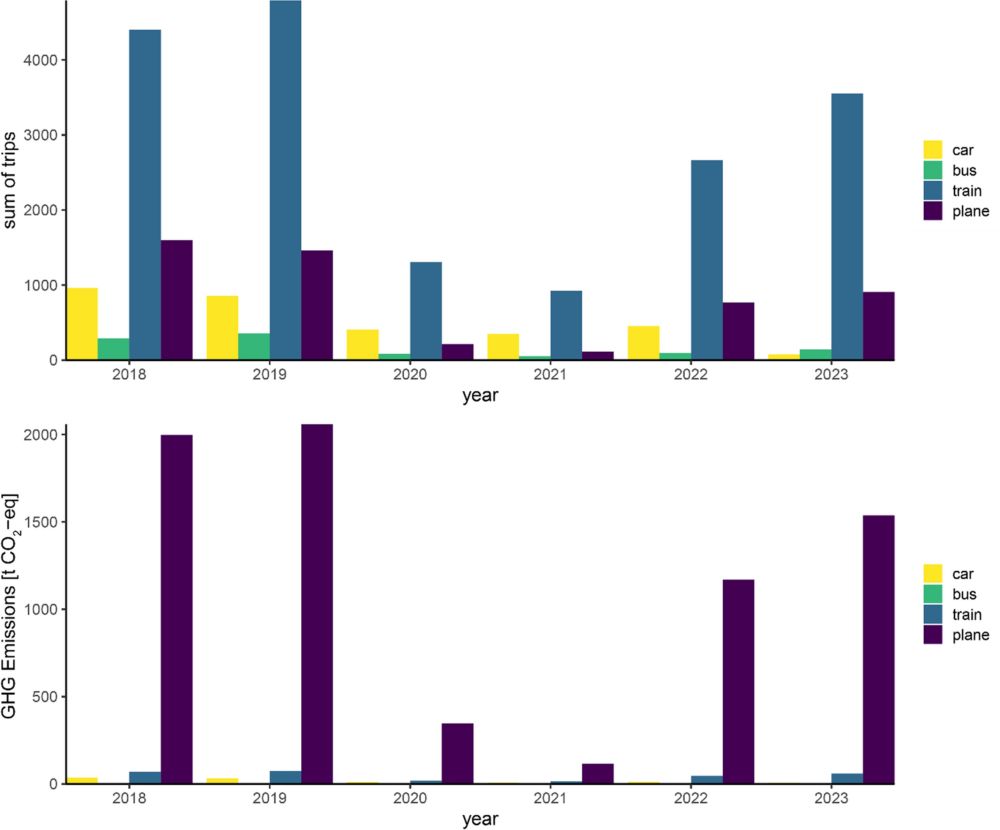
Analysis of travel-related carbon emissions by physicians and researchers at a university hospital, led by @gebhardtpsych.bsky.social
link.springer.com/article/10.1...
long story short:
- 98% of CO2 from flights
- noticeable decrease during and after (!) COVID-19
- lots of room to emit less CO2
link.springer.com/article/10.1...
long story short:
- 98% of CO2 from flights
- noticeable decrease during and after (!) COVID-19
- lots of room to emit less CO2
A longitudinal bottom-up analysis of staff travel patterns (2018–2023) at a research-intensive university hospital - Discover Sustainability
University hospitals are part of the health care system, as well as academia. The carbon footprint of staff travel, quantified as greenhouse gas (GHG) emissions, is significantly enlarged by academic ...
link.springer.com
January 13, 2025 at 12:13 PM
Analysis of travel-related carbon emissions by physicians and researchers at a university hospital, led by @gebhardtpsych.bsky.social
link.springer.com/article/10.1...
long story short:
- 98% of CO2 from flights
- noticeable decrease during and after (!) COVID-19
- lots of room to emit less CO2
link.springer.com/article/10.1...
long story short:
- 98% of CO2 from flights
- noticeable decrease during and after (!) COVID-19
- lots of room to emit less CO2