



Joe Orton
@notroj.bsky.social
Hacker @apache.org
Product Owner @ Red Hat
Product Owner @ Red Hat
Reposted by Joe Orton

The centerpiece of The ASF's new logo is an oak leaf, which represents the enduring power of our ethos: community over code.
To learn more about why we chose an oak leaf and to see our new brand guidelines, check out this blog: buff.ly/lR8XNas #opensource #communityovercode
To learn more about why we chose an oak leaf and to see our new brand guidelines, check out this blog: buff.ly/lR8XNas #opensource #communityovercode

Introducing The ASF’s New Logo - The ASF Blog
Last year we shared that The Apache® Software Foundation (ASF) would be evolving its corporate logo and brand system to better represent our enduring ethos of community over code. Today, we are proud…
news.apache.org
September 25, 2025 at 3:23 AM
The centerpiece of The ASF's new logo is an oak leaf, which represents the enduring power of our ethos: community over code.
To learn more about why we chose an oak leaf and to see our new brand guidelines, check out this blog: buff.ly/lR8XNas #opensource #communityovercode
To learn more about why we chose an oak leaf and to see our new brand guidelines, check out this blog: buff.ly/lR8XNas #opensource #communityovercode
@colmmacc.bsky.social Any reason why AWS LB can't provide SNI on outgoing TLS connections? This is breaking a bunch of deployments since mod_ssl is now more strict on catching SNI/vhost mismatches. bz.apache.org/bugzilla/sho...
Log in to ASF Bugzilla
bz.apache.org
July 18, 2025 at 1:10 PM
@colmmacc.bsky.social Any reason why AWS LB can't provide SNI on outgoing TLS connections? This is breaking a bunch of deployments since mod_ssl is now more strict on catching SNI/vhost mismatches. bz.apache.org/bugzilla/sho...
Reposted by Joe Orton

Just for future reference and if anyone is curious: the seventeen AI slop security reports submitted to #curl (so far):
https://gist.github.com/bagder/07f7581f6e3d78ef37dfbfc81fd1d1cd
Maybe this will come handy.
https://gist.github.com/bagder/07f7581f6e3d78ef37dfbfc81fd1d1cd
Maybe this will come handy.
AI slop security reports submitted to curl
AI slop security reports submitted to curl. GitHub Gist: instantly share code, notes, and snippets.
gist.github.com
June 28, 2025 at 9:15 PM
Just for future reference and if anyone is curious: the seventeen AI slop security reports submitted to #curl (so far):
https://gist.github.com/bagder/07f7581f6e3d78ef37dfbfc81fd1d1cd
Maybe this will come handy.
https://gist.github.com/bagder/07f7581f6e3d78ef37dfbfc81fd1d1cd
Maybe this will come handy.
Regarding socket.dev/blog/libxml2... I have some sympathy, but, also:
sh-5.2$ nm -D /usr/lib64/libexpat.so.1 | grep ' T ' | wc -l
69
sh-5.2$ nm -D /usr/lib64/libxml2.so.2 | grep ' T ' | wc -l
1632
sh-5.2$ nm -D /usr/lib64/libexpat.so.1 | grep ' T ' | wc -l
69
sh-5.2$ nm -D /usr/lib64/libxml2.so.2 | grep ' T ' | wc -l
1632

libxml2 Maintainer Ends Embargoed Vulnerability Reports, Cit...
Libxml2’s solo maintainer drops embargoed security fixes, highlighting the burden on unpaid volunteers who keep critical open source software secure.
socket.dev
June 19, 2025 at 1:27 PM
Regarding socket.dev/blog/libxml2... I have some sympathy, but, also:
sh-5.2$ nm -D /usr/lib64/libexpat.so.1 | grep ' T ' | wc -l
69
sh-5.2$ nm -D /usr/lib64/libxml2.so.2 | grep ' T ' | wc -l
1632
sh-5.2$ nm -D /usr/lib64/libexpat.so.1 | grep ' T ' | wc -l
69
sh-5.2$ nm -D /usr/lib64/libxml2.so.2 | grep ' T ' | wc -l
1632
Reposted by Joe Orton
Detecting malicious Unicode in #curl
https://daniel.haxx.se/blog/2025/05/16/detecting-malicious-unicode/
https://daniel.haxx.se/blog/2025/05/16/detecting-malicious-unicode/
Detecting malicious Unicode
In a recent educational trick, curl contributor James Fuller submitted a pull-request to the project in which he suggested a larger cleanup of a set of scripts.
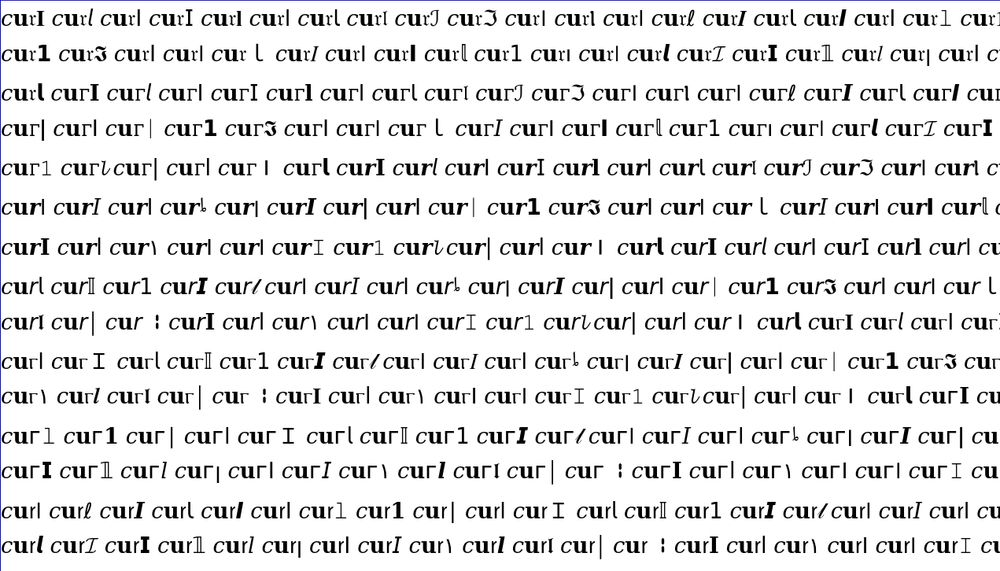
In a later presentation, he could show us how not a single human reviewer in the team nor any CI job had spotted or remarked on one of the changes he included: he replaced an ASCII letter with a Unicode alternative in a URL.
This was an eye-opener to several of us and we decided we needed to up our game. We are the curl project. We can do better.
## GitHub
The replacement symbol looked identical to the ASCII version so it was not possible to visually spot this, but the diff viewer knows there is a difference.
In this GitHub website screenshot below I reproduced a similar case. The right-side version has the Latin letter ‘g’ replaced with the Armenian letter co. They appear to be the same.
GitHub shows a diff. But what is actually the difference?
The diff viewer says there is a difference but as a human it isn’t possible to detect what it is. Is it a flaw? Does it matter? If done “correctly”, it would be done together with a _real_ and expected fix.
The impact of changing one or more letters in a URL can of course be devastating depending on conditions.
When I flagged about this rather big omission to GitHub people, I got barely no responses at all and I get the feeling the impact of this flaw is not understood and acknowledged. Or perhaps they are all just too busy implementing the next AI feature we don’t want.
## Warnings
When we discussed this problem on Mastodon earlier this week, Viktor Szakats provided me with an example screenshot of doing a similar stunt with Gitea which quite helpfully highlights that there is something special about the replacement:
Gitea warns that the replacement is using “ambiguous Unicode characters”
I have been told that some of the other source code hosting services also show similar warnings.
As a user, I would actually like to know even more than this, but at least this warns about the proposed change clearly enough so that if this happens I would get the code manually and investigate before accepting such a change.
## Detect
While we wait for GitHub to wake up and react (which I have no expectation will actually happen anytime soon), we have implemented checks to help us poor humans spot things like this. _To detect malicious Unicode._
We have added a CI job that scans all files and validates every UTF-8 sequence in the git repository.
In the curl git repository most files and most content are plain old ASCII so we can “easily” whitelist a small set of UTF-8 sequences and some specific files, the rest of the files are simply not allowed to use UTF-8 at all as they will then fail the CI job and turn up red.
In order to drive this change home, we went through all the test files in the curl repository and made sure that all the UTF-8 occurrences were instead replaced by other kind of escape sequences and similar. Some of them were also used more or less by mistake and could easily be replaced by their ASCII counterparts.
The next time someone tries this stunt on us it could be someone with less good intentions, but now ideally our CI will tell us.
## Confusables
There are plenty of tools to find similar-looking characters in different Unicode sets. One of them is provided by the Unicode consortium themselves:
https://util.unicode.org/UnicodeJsps/confusables.jsp
## Reactive
This was yet another security-related fix _reacting_ on a demonstrated problem. I am sure there are plenty more problems which we have not yet thought about nor been shown and therefore we do not have adequate means to detect and act on automatically.
We want and strive to be proactive and tighten everything _before_ malicious people exploit some weakness somewhere but security remains this never-ending race where we can only do the best we can and while _the other side_ is working in silence and might at some future point attack us in new creative ways we had not anticipated.
That future unknown attack is a tricky thing.
daniel.haxx.se
May 16, 2025 at 7:10 AM
Detecting malicious Unicode in #curl
https://daniel.haxx.se/blog/2025/05/16/detecting-malicious-unicode/
https://daniel.haxx.se/blog/2025/05/16/detecting-malicious-unicode/