



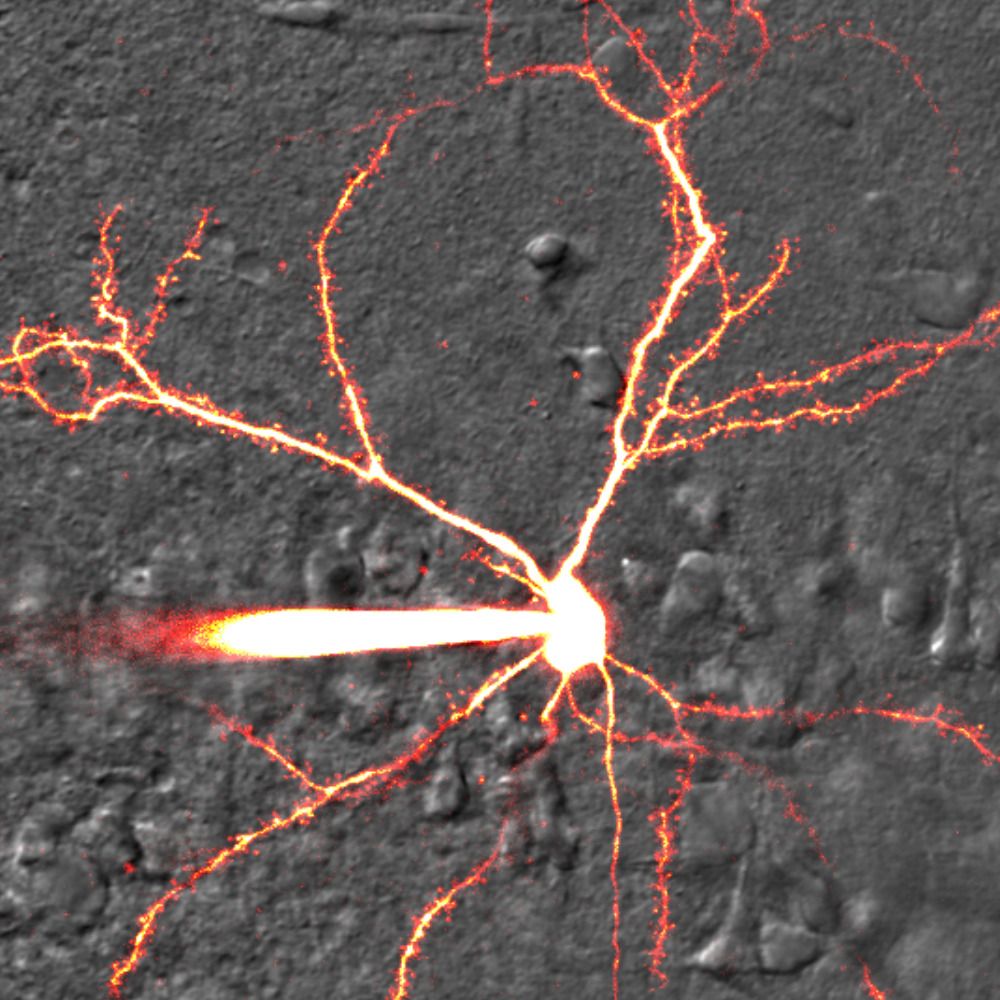
Kevin Bender
@neurobender.bsky.social
Neuroscientist at UCSF.
Studies everything related to neuronal ion channels—their modulation, their role in neuronal integration, and the intersection between these functions and neurodevelopmental and neuropsychiatric disorders.
Studies everything related to neuronal ion channels—their modulation, their role in neuronal integration, and the intersection between these functions and neurodevelopmental and neuropsychiatric disorders.
New work from @danfeldman.bsky.social's lab, exploring sensory representations in Scn2a loss of function mice. Whisker representations are blurred, akin to cortical visual impairment often seen in SCN2A kiddos. Rescuable w/ @nadavahituv.bsky.social's CRISPRa @P30!
www.biorxiv.org/content/10.6...
www.biorxiv.org/content/10.6...

Degraded sensory coding in a mouse model of Scn2a-related disorder and its rescue by CRISPRa gene activation
Heterozygous loss-of-function mutations in SCN2A, a sodium channel gene expressed in cortical pyramidal (PYR) cells, lead to a neurodevelopmental disorder characterized by autism, intellectual disabil...
www.biorxiv.org
December 15, 2025 at 4:41 PM
New work from @danfeldman.bsky.social's lab, exploring sensory representations in Scn2a loss of function mice. Whisker representations are blurred, akin to cortical visual impairment often seen in SCN2A kiddos. Rescuable w/ @nadavahituv.bsky.social's CRISPRa @P30!
www.biorxiv.org/content/10.6...
www.biorxiv.org/content/10.6...
Please no! Your part was amazing. But what I then did…
November 13, 2025 at 12:47 AM
Please no! Your part was amazing. But what I then did…
We use pipettes glued to piezos
They do make noise so you have to counterbalance that with another unattached piezo to ensure the mice and paying attention to their whiskers.
People use magnets, too. Air puffs are probably not a good option.
They do make noise so you have to counterbalance that with another unattached piezo to ensure the mice and paying attention to their whiskers.
People use magnets, too. Air puffs are probably not a good option.
October 21, 2025 at 10:37 PM
We use pipettes glued to piezos
They do make noise so you have to counterbalance that with another unattached piezo to ensure the mice and paying attention to their whiskers.
People use magnets, too. Air puffs are probably not a good option.
They do make noise so you have to counterbalance that with another unattached piezo to ensure the mice and paying attention to their whiskers.
People use magnets, too. Air puffs are probably not a good option.
Fresh off the press! @selinsch.bsky.social discovered some really cool features of mouse frontal cortex pyramidal cells that co-vary with dopamine receptor expression. D3R+ cells appear very responsive to AP bursts, producing Ca transients across dendritic arbors.
www.jneurosci.org/content/earl...
www.jneurosci.org/content/earl...

Intrinsic dendritic integration features of prefrontal layer 5 pyramidal cell subclasses
Prefrontal cortex (PFC) is an associative center in the brain and integrates various inputs to support cognition. Layer 5 pyramidal cells are themselves associative centers, as their dendrites span al...
www.jneurosci.org
October 15, 2025 at 7:55 PM
Fresh off the press! @selinsch.bsky.social discovered some really cool features of mouse frontal cortex pyramidal cells that co-vary with dopamine receptor expression. D3R+ cells appear very responsive to AP bursts, producing Ca transients across dendritic arbors.
www.jneurosci.org/content/earl...
www.jneurosci.org/content/earl...
Thanks Pierre! It’s been a ride, but there’s lots more to do…
September 24, 2025 at 3:10 PM
Thanks Pierre! It’s been a ride, but there’s lots more to do…
Yes wild is right! Our pet theory, without too much to back it up yet, is that neocortical pyramidal cells freeze in a pre-critical period state waiting for activity dependent refinement signals if they’re missing half their dendritic NaVs. Much more to look at related to that….
September 17, 2025 at 10:01 PM
Yes wild is right! Our pet theory, without too much to back it up yet, is that neocortical pyramidal cells freeze in a pre-critical period state waiting for activity dependent refinement signals if they’re missing half their dendritic NaVs. Much more to look at related to that….
Thank you!
This is the first for CRISPRa for a neurodevelopmental disorder, as far as I'm aware, but Navneet Matharu (also an author here!) and @nadavahituv.bsky.social used this approach to treat obesity related to Sim1 and and Mc4r: www.science.org/doi/10.1126/...
This is the first for CRISPRa for a neurodevelopmental disorder, as far as I'm aware, but Navneet Matharu (also an author here!) and @nadavahituv.bsky.social used this approach to treat obesity related to Sim1 and and Mc4r: www.science.org/doi/10.1126/...

CRISPR-mediated activation of a promoter or enhancer rescues obesity caused by haploinsufficiency
Obesity caused by loss of function of one gene copy can be rescued via CRISPR-mediated activation of the normal copy.
www.science.org
September 17, 2025 at 9:08 PM
Thank you!
This is the first for CRISPRa for a neurodevelopmental disorder, as far as I'm aware, but Navneet Matharu (also an author here!) and @nadavahituv.bsky.social used this approach to treat obesity related to Sim1 and and Mc4r: www.science.org/doi/10.1126/...
This is the first for CRISPRa for a neurodevelopmental disorder, as far as I'm aware, but Navneet Matharu (also an author here!) and @nadavahituv.bsky.social used this approach to treat obesity related to Sim1 and and Mc4r: www.science.org/doi/10.1126/...
SCN2A loss is strongly linked to neurodevelopmental delays and, at times, seizure. In an amazing collaboration with @nadavahituv.bsky.social, led by Serena Tamura, Andrew Nelson, and Perry Spratt, we leveraged CRISPR activator approaches to rescue this loss.
rdcu.be/eGU0W
rdcu.be/eGU0W

CRISPR activation for SCN2A-related neurodevelopmental disorders
Nature - Using SCN2A haploinsufficiency as a proof-of-concept, upregulation of the existing functional gene copy through CRISPR activation was able to rescue neurological-associated phenotypes in...
rdcu.be
September 17, 2025 at 6:27 PM
SCN2A loss is strongly linked to neurodevelopmental delays and, at times, seizure. In an amazing collaboration with @nadavahituv.bsky.social, led by Serena Tamura, Andrew Nelson, and Perry Spratt, we leveraged CRISPR activator approaches to rescue this loss.
rdcu.be/eGU0W
rdcu.be/eGU0W
Yeah we tried 3 different tomes. Two different cables. I can verify that the diode works and that the LED is lighting up. So it’s on the circuit board unfortunately.
Havent tried checking voltage dividers yet (I did fix a tv once that way!).
Blood sacrifice already performed, as is tradition
Havent tried checking voltage dividers yet (I did fix a tv once that way!).
Blood sacrifice already performed, as is tradition
August 6, 2025 at 11:56 PM
Yeah we tried 3 different tomes. Two different cables. I can verify that the diode works and that the LED is lighting up. So it’s on the circuit board unfortunately.
Havent tried checking voltage dividers yet (I did fix a tv once that way!).
Blood sacrifice already performed, as is tradition
Havent tried checking voltage dividers yet (I did fix a tv once that way!).
Blood sacrifice already performed, as is tradition
We are somewhat pot committed with two tomes, unfortunately.
June 25, 2025 at 2:43 PM
We are somewhat pot committed with two tomes, unfortunately.
Patch clampers: we got an error 52 on our Leica vibracheck and the normal "blow on it like a nintendo in the 80s" fix didn't work. Nor did a cleaning of the LED and diode. LED does shine. Has anyone else had such an issue and managed to resurrect this very simple but stupidly expensive thing?
June 24, 2025 at 10:41 PM
Patch clampers: we got an error 52 on our Leica vibracheck and the normal "blow on it like a nintendo in the 80s" fix didn't work. Nor did a cleaning of the LED and diode. LED does shine. Has anyone else had such an issue and managed to resurrect this very simple but stupidly expensive thing?
Not posting that much lately, because... well, yeah.
But i have to share this text i got from my daughter. I totally see it.
But i have to share this text i got from my daughter. I totally see it.

April 3, 2025 at 12:27 AM
Not posting that much lately, because... well, yeah.
But i have to share this text i got from my daughter. I totally see it.
But i have to share this text i got from my daughter. I totally see it.
Oh there’s a bonus question too! The IPSC kinetics speed up as more HCN channels open. If anyone can figure out why have em rotate ;)
January 3, 2025 at 7:26 PM
Oh there’s a bonus question too! The IPSC kinetics speed up as more HCN channels open. If anyone can figure out why have em rotate ;)
Thank you, Thøm.
December 20, 2024 at 9:54 PM
Thank you, Thøm.
New work from Josh Garcia in our lab! This is a collaboration with David Hackos (formerly Genentech) Roy Ben-Shalom (UC Davis) and Al George (Northwestern) where we use fancy knockin mice to allow for selective block of different sodium channels, revealing their unique roles in excitability.

Differential roles of NaV1.2 and NaV1.6 in neocortical pyramidal cell excitability https://www.biorxiv.org/content/10.1101/2024.12.17.629038v1
December 20, 2024 at 8:32 PM
New work from Josh Garcia in our lab! This is a collaboration with David Hackos (formerly Genentech) Roy Ben-Shalom (UC Davis) and Al George (Northwestern) where we use fancy knockin mice to allow for selective block of different sodium channels, revealing their unique roles in excitability.
Those BK currents always washed out for me. Is this within the first minute or two or should we switch up internal?
November 24, 2024 at 8:06 PM
Those BK currents always washed out for me. Is this within the first minute or two or should we switch up internal?
Cartwheel? Perf patch? Thems real purty spikes you got there…
November 24, 2024 at 4:40 AM
Cartwheel? Perf patch? Thems real purty spikes you got there…
@pjenkinslab.bsky.social and I wrote a review on the axon initial segment. We tried our best to discuss the state of the field and provide our perspective (and resolution for) some current sticking points. Hope it's useful!
doi.org/10.1152/phys...
doi.org/10.1152/phys...
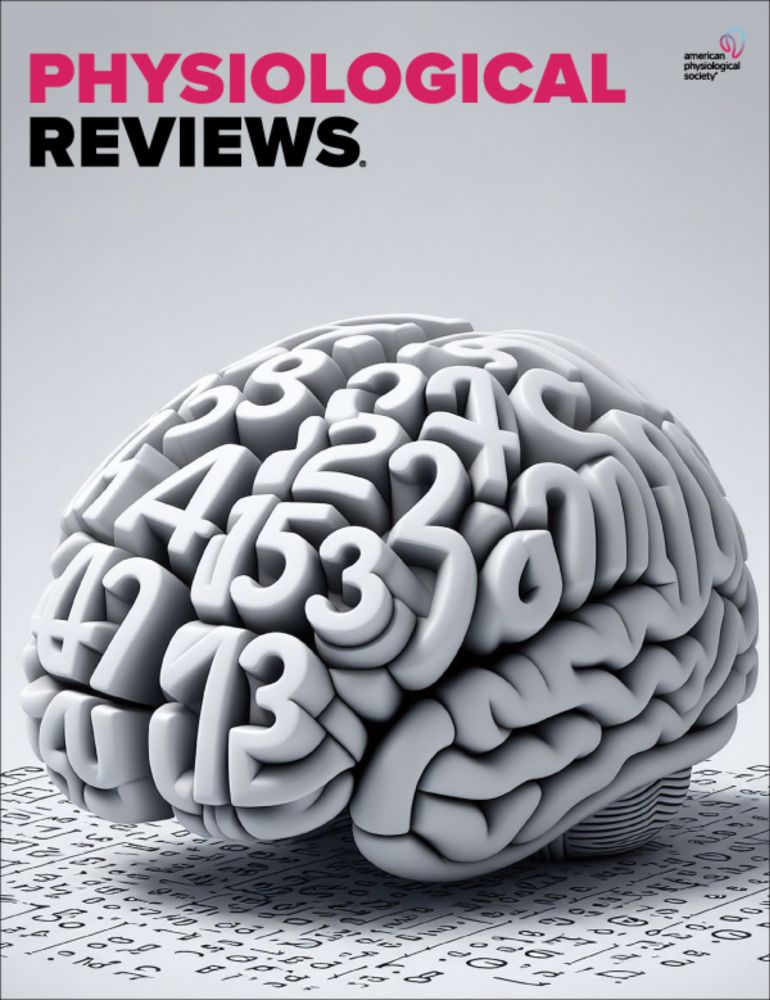
Axon Initial Segment Structure and Function in Health and Disease | Physiological Reviews
At the simplest level, neurons are structured to integrate synaptic input and perform computational transforms on that input, converting it into an action potential (AP) code. This process-converting synaptic input into AP output-typically occurs in a specialized region of axon termed the axon initial segment (AIS). The AIS, as its name implies, is often contained to the first section of axon abutted to the soma and is home to a dizzying array of ion channels, attendant scaffolding proteins, intracellular organelles, extracellular proteins, and, in some cases, synapses. The AIS serves multiple roles as the final arbiter for determining if inputs are sufficient to evoke APs, as a gatekeeper that physically separates the somatodendritic domain from the axon proper, and as a regulator of overall neuronal excitability, dynamically tuning its size to best suit the needs of parent neurons. These complex roles have received considerable attention from experimentalists and theoreticians alike. Here, we review recent advances in our understanding of the AIS and its role in neuronal integration and polarity in health and disease.
doi.org
November 19, 2024 at 4:44 PM
@pjenkinslab.bsky.social and I wrote a review on the axon initial segment. We tried our best to discuss the state of the field and provide our perspective (and resolution for) some current sticking points. Hope it's useful!
doi.org/10.1152/phys...
doi.org/10.1152/phys...
Can cerebellar reflexive learning shine a little light on ASD related dysfunction? For SCN2A, it sure looks like it. New paper from Chenyu Wang, in collaboration with Guy Bouvier and FamilieSCN2A:
urldefense.com/v3/__https:/...
urldefense.com/v3/__https:/...
urldefense.com
February 26, 2024 at 4:48 PM
Can cerebellar reflexive learning shine a little light on ASD related dysfunction? For SCN2A, it sure looks like it. New paper from Chenyu Wang, in collaboration with Guy Bouvier and FamilieSCN2A:
urldefense.com/v3/__https:/...
urldefense.com/v3/__https:/...
Amazing collaborative project with @pjenkinslab.bsky.social on the interactions between two major ASD associated genes: SCN2A and ANK2. All led by the incomparable Andrew Nelson.
doi.org/10.1016/j.ne...
doi.org/10.1016/j.ne...
January 29, 2024 at 4:26 PM
Amazing collaborative project with @pjenkinslab.bsky.social on the interactions between two major ASD associated genes: SCN2A and ANK2. All led by the incomparable Andrew Nelson.
doi.org/10.1016/j.ne...
doi.org/10.1016/j.ne...
New paper from @selinsch.bsky.social in collaboration with @alexkwan.bsky.social
doi.org/10.1523/ENEU...
Scn2a loss is a major ASD/ID risk, and it brings along comorbidities like epilepsy. Selin found that mouse models do just fine in foraging tasks, but the associated water restriction ⬆️ seizure
doi.org/10.1523/ENEU...
Scn2a loss is a major ASD/ID risk, and it brings along comorbidities like epilepsy. Selin found that mouse models do just fine in foraging tasks, but the associated water restriction ⬆️ seizure
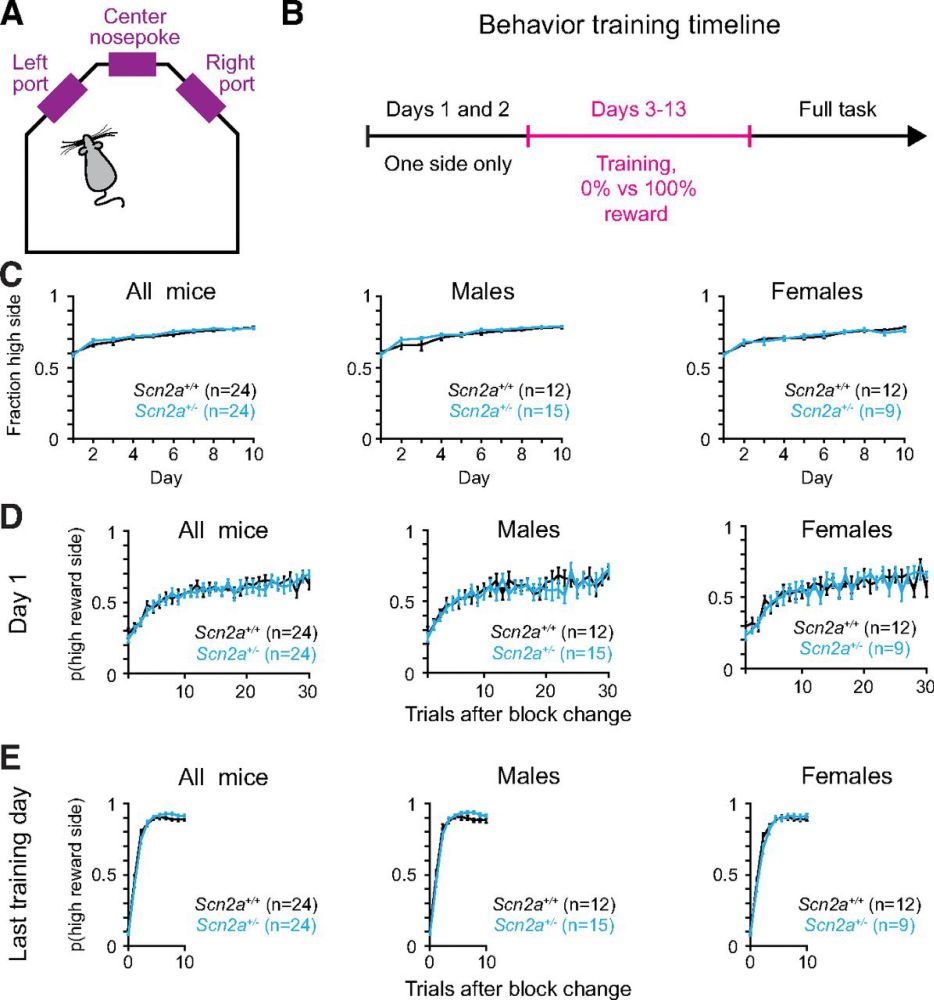
Dynamic Foraging Behavior Performance Is Not Affected by Scn2a Haploinsufficiency
Dysfunction in the gene SCN2A , which encodes the voltage-gated sodium channel Nav1.2, is strongly associated with neurodevelopmental disorders including autism spectrum disorder and intellectual disa...
doi.org
December 30, 2023 at 7:05 PM
New paper from @selinsch.bsky.social in collaboration with @alexkwan.bsky.social
doi.org/10.1523/ENEU...
Scn2a loss is a major ASD/ID risk, and it brings along comorbidities like epilepsy. Selin found that mouse models do just fine in foraging tasks, but the associated water restriction ⬆️ seizure
doi.org/10.1523/ENEU...
Scn2a loss is a major ASD/ID risk, and it brings along comorbidities like epilepsy. Selin found that mouse models do just fine in foraging tasks, but the associated water restriction ⬆️ seizure
Cool. 6 more chaperones!
October 2, 2023 at 9:29 PM
Cool. 6 more chaperones!
Congrats to Dr Schamiloglou for her amazing thesis defense today. Third student to defend this year from the lab! She’s off to bigger and better things in the DiGregorio lab (now at Colorado)… but not before we sort out two final papers!
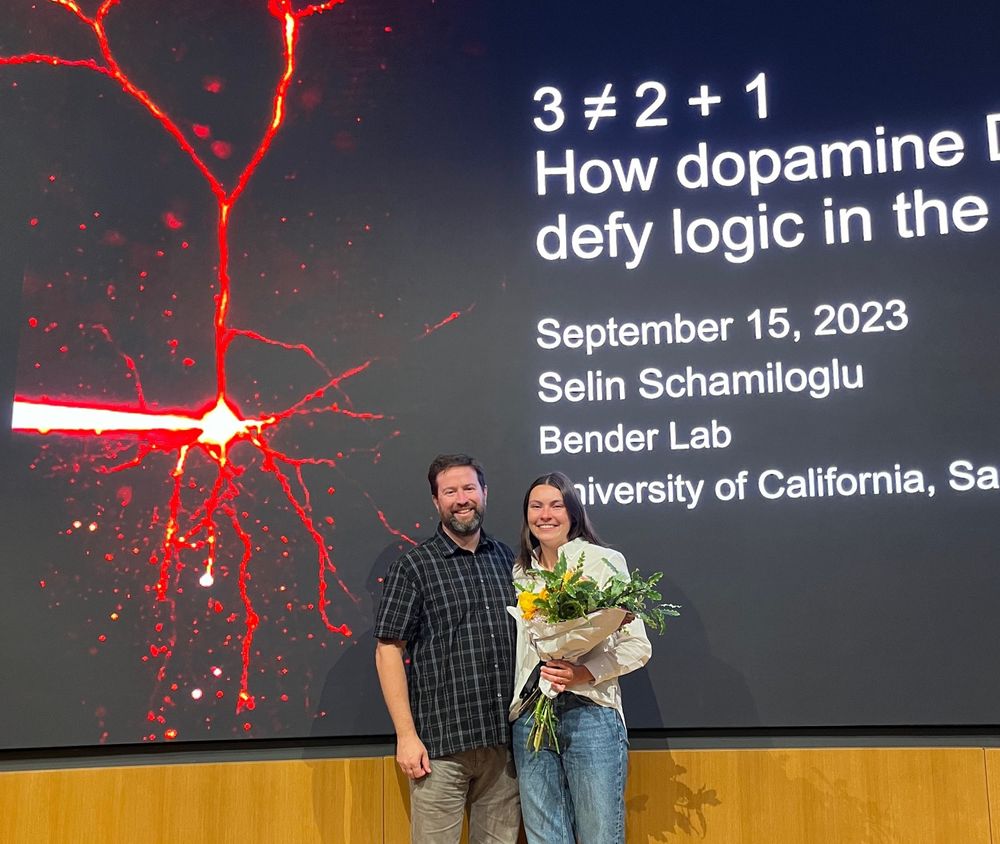
September 16, 2023 at 5:02 AM
Congrats to Dr Schamiloglou for her amazing thesis defense today. Third student to defend this year from the lab! She’s off to bigger and better things in the DiGregorio lab (now at Colorado)… but not before we sort out two final papers!
Too much strontium.

September 5, 2023 at 6:01 PM
Too much strontium.