



Neil Ritchie
@neilritchie.bsky.social
Editor: @DefenceToday.com, @MilitaryJournal.net and @JacobiteWars.com • Military & Defence Matters • Military History • Scottish History • Nikon D850 user
Reposted by Neil Ritchie

17 January 1746: In a storm of sleet, wind and hail, the Jacobite army of Charles Edward Stuart clashed with government forces commanded by Lieutenant-General Henry Hawley at the Battle of Falkirk Muir, the largest military engagement of the Jacobite Rising of 1745.

January 17, 2026 at 7:12 PM
17 January 1746: In a storm of sleet, wind and hail, the Jacobite army of Charles Edward Stuart clashed with government forces commanded by Lieutenant-General Henry Hawley at the Battle of Falkirk Muir, the largest military engagement of the Jacobite Rising of 1745.
Reposted by Neil Ritchie

Two RAF Jaguar GR.1s in flight during the Gulf War (Operation GRANBY): XX358 "Katrina Jane" (foreground) and XZ356 "Mary Rose", aircraft of 41 Sqn CO.
📸 Ryan Roger / IWM (GLF 434)
📸 Ryan Roger / IWM (GLF 434)

January 17, 2026 at 12:48 PM
Two RAF Jaguar GR.1s in flight during the Gulf War (Operation GRANBY): XX358 "Katrina Jane" (foreground) and XZ356 "Mary Rose", aircraft of 41 Sqn CO.
📸 Ryan Roger / IWM (GLF 434)
📸 Ryan Roger / IWM (GLF 434)
Private M. Methven from Methilhill, Fife, and Private M. Holme from Kendal, Westmorland, searching the skies for hostile aircraft at a 3.7-inch anti-aircraft battery at Cairneyhill near Dunfermline in January 1943.
📸 IWM (H 26574)
📸 IWM (H 26574)

January 14, 2026 at 8:53 PM
Private M. Methven from Methilhill, Fife, and Private M. Holme from Kendal, Westmorland, searching the skies for hostile aircraft at a 3.7-inch anti-aircraft battery at Cairneyhill near Dunfermline in January 1943.
📸 IWM (H 26574)
📸 IWM (H 26574)
Reposted by Neil Ritchie
In January 1942, the North American Aviation P-51 Mustang entered service with the Royal Air Force. Due to poor high-altitude performance, the P-51 was initially used for tactical reconnaissance and ground-attack duties. The P-51 didn't enter service with the United States Army Air Force until 1944.

January 10, 2026 at 11:32 AM
In January 1942, the North American Aviation P-51 Mustang entered service with the Royal Air Force. Due to poor high-altitude performance, the P-51 was initially used for tactical reconnaissance and ground-attack duties. The P-51 didn't enter service with the United States Army Air Force until 1944.
Reposted by Neil Ritchie
Christmas at the Front: a British soldier with two turkeys walking through the snow at Hesdin on 22 December 1917.
📸 Lt David McLellan / IWM (Q 9814)
📸 Lt David McLellan / IWM (Q 9814)

December 22, 2025 at 9:02 PM
Christmas at the Front: a British soldier with two turkeys walking through the snow at Hesdin on 22 December 1917.
📸 Lt David McLellan / IWM (Q 9814)
📸 Lt David McLellan / IWM (Q 9814)
Image of Castle Hospital at Balaklava below the old Genoese fortress during the winter of 1854-55, showing William Howard Russell of the Times writing in his tent and Florence Nightingale holding a lamp, although during the war she only visited the Crimea in May 1855 for a short time.

December 18, 2025 at 9:57 PM
Image of Castle Hospital at Balaklava below the old Genoese fortress during the winter of 1854-55, showing William Howard Russell of the Times writing in his tent and Florence Nightingale holding a lamp, although during the war she only visited the Crimea in May 1855 for a short time.
Reposted by Neil Ritchie
18 December 1745: As Charles Edward Stuart's army continued its withdrawal back to Scotland, the Jacobite rearguard under Lord George Murray fought an action against pursuing government dragoons commanded by Lieutenant-Colonel Philip Honeywood at Clifton, south of Penrith.

December 18, 2025 at 4:18 PM
18 December 1745: As Charles Edward Stuart's army continued its withdrawal back to Scotland, the Jacobite rearguard under Lord George Murray fought an action against pursuing government dragoons commanded by Lieutenant-Colonel Philip Honeywood at Clifton, south of Penrith.
RMS Empress of Britain arriving at Greenock on 17 December 1939 with the first Canadian soldiers to arrive in Britain. The vessel was one of four liners of Canadian troop convoy TC.1. In the background are the battlecruiser HMS Hood and the battleship HMS Warspite, which had escorted TC.1.

December 17, 2025 at 10:58 AM
RMS Empress of Britain arriving at Greenock on 17 December 1939 with the first Canadian soldiers to arrive in Britain. The vessel was one of four liners of Canadian troop convoy TC.1. In the background are the battlecruiser HMS Hood and the battleship HMS Warspite, which had escorted TC.1.
Reposted by Neil Ritchie
The 11th Battalion, Royal Scots Fusiliers, charging through artillery fire at a battle school in Perthshire in December 1943. The battalion underwent intense training for the upcoming assault into northern France, being initially earmarked to be part of the first wave in the landings.
📸 IWM H34907
📸 IWM H34907

December 11, 2025 at 12:26 PM
The 11th Battalion, Royal Scots Fusiliers, charging through artillery fire at a battle school in Perthshire in December 1943. The battalion underwent intense training for the upcoming assault into northern France, being initially earmarked to be part of the first wave in the landings.
📸 IWM H34907
📸 IWM H34907
Reposted by Neil Ritchie
4 December 1939: Nelson-class battleship HMS NELSON detonated a magnetic mine laid by the German submarine U-31 at the entrance to Loch Ewe on the west coast of Scotland, which put NELSON out of action until August 1940.

December 4, 2025 at 11:59 AM
4 December 1939: Nelson-class battleship HMS NELSON detonated a magnetic mine laid by the German submarine U-31 at the entrance to Loch Ewe on the west coast of Scotland, which put NELSON out of action until August 1940.
Reposted by Neil Ritchie
British Mark IV Male and Female Tanks of 'C' Battalion, including 'Crusty' and 'Centaur II', loaded aboard a train at Plateau Station in preparation for movement to the forward area prior to the opening of the Battle of Cambrai, which began on 20 November 1917.
📸 IWM (Q 46941)
📸 IWM (Q 46941)

November 19, 2025 at 11:00 AM
British Mark IV Male and Female Tanks of 'C' Battalion, including 'Crusty' and 'Centaur II', loaded aboard a train at Plateau Station in preparation for movement to the forward area prior to the opening of the Battle of Cambrai, which began on 20 November 1917.
📸 IWM (Q 46941)
📸 IWM (Q 46941)
Reposted by Neil Ritchie
12 November 1944: RAF Lancasters of No. 9 and No. 617 Squadrons carrying 12,000 lb Tallboy bombs attacked and sank the German battleship Tirpitz off Tromsø, Norway. Tirpitz capsized after being hit by two Tallboy bombs and the shockwaves of others that hit the water nearby. Painting by Jim Laurier.

November 12, 2025 at 11:27 AM
12 November 1944: RAF Lancasters of No. 9 and No. 617 Squadrons carrying 12,000 lb Tallboy bombs attacked and sank the German battleship Tirpitz off Tromsø, Norway. Tirpitz capsized after being hit by two Tallboy bombs and the shockwaves of others that hit the water nearby. Painting by Jim Laurier.
Reposted by Neil Ritchie
Soldiers of the Machine Gun Corps (74th Division) are cheered as they march through the Grand Place, Tournai, on 10 November 1918. Tournai had been captured by the German II Corps on 23 August 1914, and remained in German hands until liberated by the British on 8 November 1918.
📸 IWM (Q 9668)
📸 IWM (Q 9668)

November 10, 2025 at 8:42 PM
Soldiers of the Machine Gun Corps (74th Division) are cheered as they march through the Grand Place, Tournai, on 10 November 1918. Tournai had been captured by the German II Corps on 23 August 1914, and remained in German hands until liberated by the British on 8 November 1918.
📸 IWM (Q 9668)
📸 IWM (Q 9668)
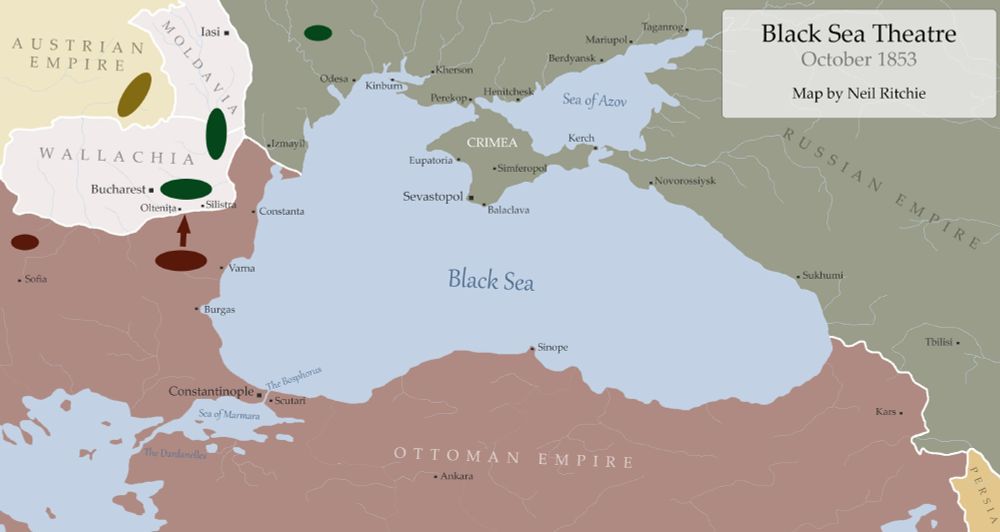
14 October 1853: At the request of the Ottomans, the British and French fleets left Besika Bay and transited the Dardanelles as the Ottoman army prepared to engage Russian forces occupying Wallachia. The Austrian army's mobilisation against Russia continued.
October 14, 2025 at 9:22 AM
14 October 1853: At the request of the Ottomans, the British and French fleets left Besika Bay and transited the Dardanelles as the Ottoman army prepared to engage Russian forces occupying Wallachia. The Austrian army's mobilisation against Russia continued.
12 October 1854: British commander Lord Raglan issued instructions for the army to prepare for a winter campaign in the Crimea and ordered fuel to be stockpiled at Scutari. The French commander Canrobert issued similar instructions. The grand raid to seize Sevastopol would last longer than expected.

October 12, 2025 at 6:40 PM
12 October 1854: British commander Lord Raglan issued instructions for the army to prepare for a winter campaign in the Crimea and ordered fuel to be stockpiled at Scutari. The French commander Canrobert issued similar instructions. The grand raid to seize Sevastopol would last longer than expected.
Reposted by Neil Ritchie
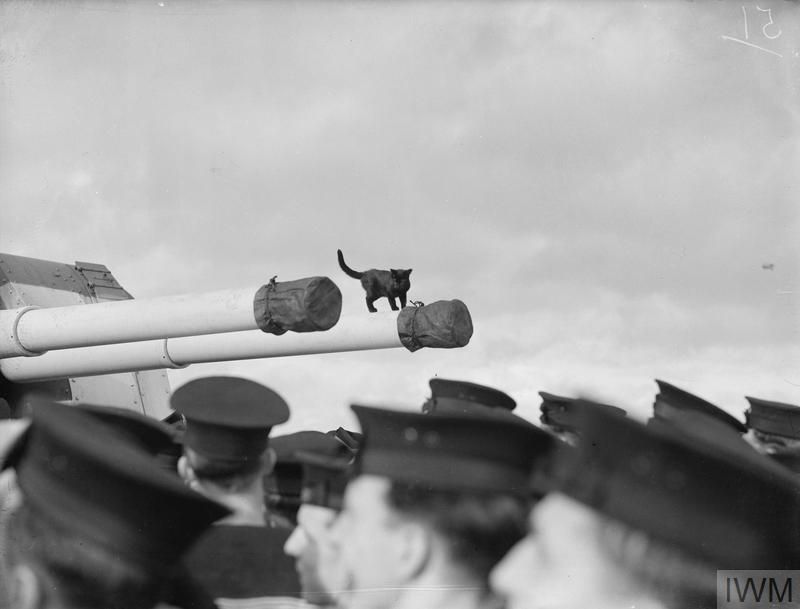
HMS SCYLLA's mascot watching over proceedings during a visit by Winston Churchill to the Home Fleet base at Scapa Flow on 11 October 1942. Photo by Lt. C. H. Parnall.
October 11, 2024 at 9:29 AM
HMS SCYLLA's mascot watching over proceedings during a visit by Winston Churchill to the Home Fleet base at Scapa Flow on 11 October 1942. Photo by Lt. C. H. Parnall.
Reposted by Neil Ritchie
Soldiers of the 8th (Service) Battalion, Black Watch (Royal Highlanders), part of 9th (Scottish) Division, resting by the roadside near Contalmaison Wood during the Battle of Le Transloy (1-18 October 1916).

October 10, 2025 at 11:19 AM
Soldiers of the 8th (Service) Battalion, Black Watch (Royal Highlanders), part of 9th (Scottish) Division, resting by the roadside near Contalmaison Wood during the Battle of Le Transloy (1-18 October 1916).
Reposted by Neil Ritchie
9 October 1760: With Frederick the Great's forces concentrated in Silesia, Russian and Austrian troops occupied large parts of the Prussian capital, Berlin and seized around 18,000 muskets and 143 cannons from the Berlin arsenal, during the Third Silesian War, part of the Seven Years' War.

October 9, 2025 at 2:00 PM
9 October 1760: With Frederick the Great's forces concentrated in Silesia, Russian and Austrian troops occupied large parts of the Prussian capital, Berlin and seized around 18,000 muskets and 143 cannons from the Berlin arsenal, during the Third Silesian War, part of the Seven Years' War.
7 October 1855: British and French warships set sail from Kameisch Bay in the Crimea bound for a rendezvous off Odessa before sailing to their objective of Kinburn Fort, which guarded the Bug and Dneiper rivers and the access to the Russian shipyards at Nikolaev.

October 7, 2025 at 10:22 AM
7 October 1855: British and French warships set sail from Kameisch Bay in the Crimea bound for a rendezvous off Odessa before sailing to their objective of Kinburn Fort, which guarded the Bug and Dneiper rivers and the access to the Russian shipyards at Nikolaev.
5 October 1853: Backed by British and French fleets in the Dardanelles, the Ottoman Empire declared war on Russia after issuing an ultimatum to St Petersburg to remove its armies from the principalities of Wallachia and Moldavia. It began what became known as the Crimean War.

October 5, 2025 at 2:24 PM
5 October 1853: Backed by British and French fleets in the Dardanelles, the Ottoman Empire declared war on Russia after issuing an ultimatum to St Petersburg to remove its armies from the principalities of Wallachia and Moldavia. It began what became known as the Crimean War.
Reposted by Neil Ritchie
4 October 1693: At the Battle of Marsaglia in northern Italy, the French army under Marshal Nicolas Catinat employed the mass use of the bayonet for the first time. The French infantry line advanced and then launched a bayonet charge on Victor Amadeus II's army of the Grand Alliance and routed them.

October 4, 2025 at 1:56 PM
4 October 1693: At the Battle of Marsaglia in northern Italy, the French army under Marshal Nicolas Catinat employed the mass use of the bayonet for the first time. The French infantry line advanced and then launched a bayonet charge on Victor Amadeus II's army of the Grand Alliance and routed them.
Reposted by Neil Ritchie
A patrol from 21 Special Air Service (Reserve) Regiment stops to check a compass bearing in a wood in South Jutland during a training exercise against the Danish Home Guard in July 1970. 21 SAS were to form part of NATO stay-behind forces in the event of a Warsaw Pact invasion.
📸 Leslie Wiggs
📸 Leslie Wiggs

October 2, 2025 at 3:04 PM
A patrol from 21 Special Air Service (Reserve) Regiment stops to check a compass bearing in a wood in South Jutland during a training exercise against the Danish Home Guard in July 1970. 21 SAS were to form part of NATO stay-behind forces in the event of a Warsaw Pact invasion.
📸 Leslie Wiggs
📸 Leslie Wiggs
1 October 1854: To assist in the siege of Sevastopol, the Royal Navy began landing the Naval Brigade and 50 naval guns at Balaklava. Made up of Royal Marines and sailors from the fleet, the brigade was commanded by Captain Stephen Lushington of HMS Albion.

October 1, 2025 at 10:00 AM
1 October 1854: To assist in the siege of Sevastopol, the Royal Navy began landing the Naval Brigade and 50 naval guns at Balaklava. Made up of Royal Marines and sailors from the fleet, the brigade was commanded by Captain Stephen Lushington of HMS Albion.