


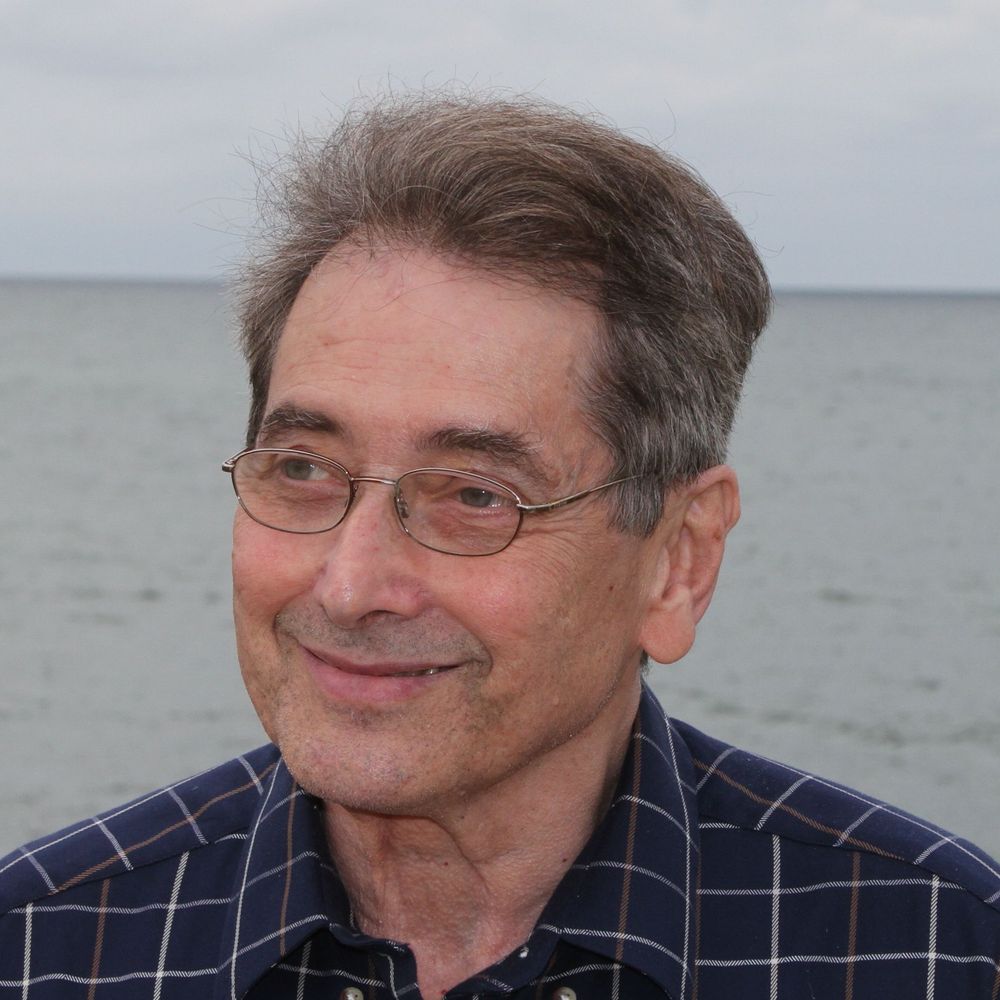
Stephen Grossberg
@mindandbrain.bsky.social
I founded the field of biological neural network models in 1957 when I was a college Freshman at Dartmouth taking introductory psychology. To see what I have discovered since then, check out my website sites.bu.edu/steveg/. .. more
I founded the field of biological neural network models in 1957 when I was a college Freshman at Dartmouth taking introductory psychology. To see what I have discovered since then, check out my website sites.bu.edu/steveg/.
Neuroscience
66%
Computer science
24%
Pinned
stevegrossberg.bsky.social
stevegrossberg.bsky.social
stevegrossberg.bsky.social Natural Selection designs us to adapt to the world. Why, then are so many of us afflicted with mental disorders like Alzheimer's disease, autism, schizophrenia, PTSD, ADHD, agnosias and sleep problems? This article suggests some answers: www.frontiersin.org/journals/neu...

Yes! I am invincible! | Stephen Grossberg
https://lnkd.in/egMGg_CQ
“I AM INVINCIBLE”:
FROM GOLDENEYE TO GOLDEN CALF
Recent actions by our Federal political leadership motivated me yesterday to see…
www.linkedin.com
Rachel,
You might enjoy the following LinkedIn message about threats to our democracy:
www.linkedin.com/feed/update/...
In case you also want to know how our brains make our conscious minds, I have been called the Newton and Einstein of the Mind.
See sites.bu.edu/steveg for why.
Steve Grossberg
You might enjoy the following LinkedIn message about threats to our democracy:
www.linkedin.com/feed/update/...
In case you also want to know how our brains make our conscious minds, I have been called the Newton and Einstein of the Mind.
See sites.bu.edu/steveg for why.
Steve Grossberg

The same brain processes that support morality, religion, and empathy can, in some environments, lead to irrationality, prejudice, conspiracy theories, and cult behaviors. Understanding how helps to defend against it. Chapter 17 of my book explains how this works:
www.amazon.com/Conscious-Mi...
www.amazon.com/Conscious-Mi...

The same brain processes that support morality, religion, and empathy can, in some environments, lead to irrationality, prejudice, conspiracy theories, and cult behaviors. Understanding how helps to defend against it. Chapter 17 of my book explains how this works:
www.amazon.com/Conscious-Mi...
www.amazon.com/Conscious-Mi...

Towards solving the hard problem of consciousness: The varieties of brain resonances and the conscious experiences that they support
The hard problem of consciousness is the problem of explaining how we experience qualia or phenomenal experiences, such as seeing, hearing, and feelin…
www.sciencedirect.com
During earning and recall of recognition categories, there are reciprocal interactions for which concepts like values and keys are not strong enough to explain what is going on.
See, for example,
www.sciencedirect.com/science/arti...
and Chapters 5 and 6 in:
www.amazon.com/Conscious-Mi...
See, for example,
www.sciencedirect.com/science/arti...
and Chapters 5 and 6 in:
www.amazon.com/Conscious-Mi...
sites.bu.edu
For people interested in
How Humans Consciously See Paintings and Paintings Illuminate How Humans See,
check out
sites.bu.edu/steveg/files...
How Humans Consciously See Paintings and Paintings Illuminate How Humans See,
check out
sites.bu.edu/steveg/files...
stevegrossberg.bsky.social
stevegrossberg.bsky.social
stevegrossberg.bsky.social For people on Bluesky who are interested in knowing about how, where in our brains, and even why we humans can consciously see, hear, feel, and know about the world, here is an article that describes neural networks which clarify that:
www.sciencedirect.com/science/arti...
www.sciencedirect.com/science/arti...
An Inverted U occurs during many brain processes. It is part of how our brains regulate their homeostasis.
Permanently? What if you recall them again?
Stephen Grossberg
sites.bu.edu
It’s more informative to discuss processing of spatial patterns of cell activation than bits. Bits are useful to discuss stationary channels, as in Information Theory, but not to discuss self-organizing systems like brains. See sites.bu.edu/steveg for many examples of this in our brains.
Stephen Grossberg
sites.bu.edu
Biological neural network models have explained and simulated lots of psychological and neurobiological data about them during the past 40+ years. Many downloadable archival articles can be found at sites.bu.edu/steveg .
sites.bu.edu
See sites.bu.edu/steveg for 40+ years of principled theoretical progress.