



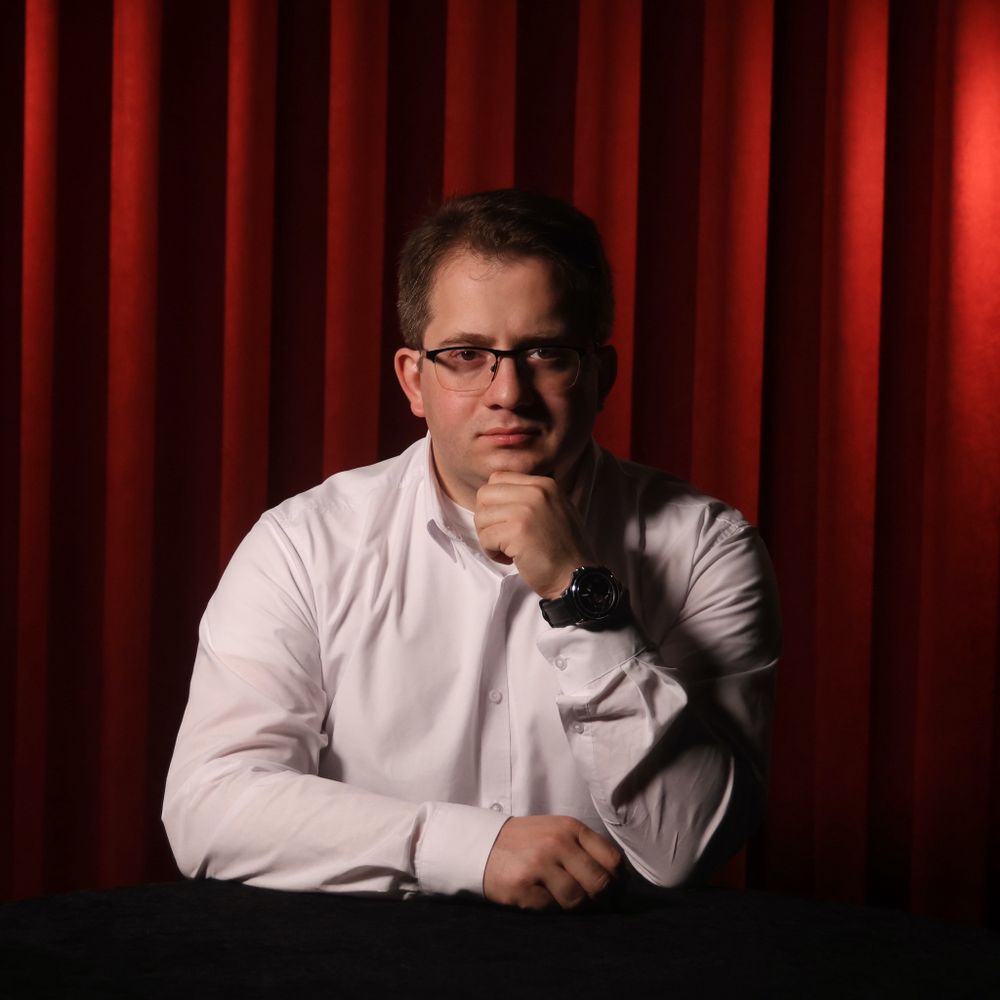
George Melashvili 🇺🇦🇬🇪
@mel.ge
🦊 Europe-Georgia Institute, President. Patriot of 🇬🇪. Believer in Georgia's 🇪🇺 Future & Transatlantic Alliance.
so many others for weeks. My jacket had to hang outside for days because the smell & irritation wouldn’t fade. What was done to us should not be just ignored. Those responsible must be held to account. Thank you, BBC, for for the truth and giving our experience the attention it deserved. [2/2]
December 2, 2025 at 11:57 PM
so many others for weeks. My jacket had to hang outside for days because the smell & irritation wouldn’t fade. What was done to us should not be just ignored. Those responsible must be held to account. Thank you, BBC, for for the truth and giving our experience the attention it deserved. [2/2]
So, the @bbcnewslive.bsky.social published its investigation. I was among the protesters sprayed by the water cannon laced with a WW1-era chemical that night. This is me afterwards. The symptoms didn’t go away: the burning, the coughing, the shortness of breath stayed with me and [1/2]

December 2, 2025 at 11:57 PM
So, the @bbcnewslive.bsky.social published its investigation. I was among the protesters sprayed by the water cannon laced with a WW1-era chemical that night. This is me afterwards. The symptoms didn’t go away: the burning, the coughing, the shortness of breath stayed with me and [1/2]
Georgia’s people chose Europe - and they keep paying a huge price for it. [5/5]
December 1, 2025 at 8:04 AM
Georgia’s people chose Europe - and they keep paying a huge price for it. [5/5]
No EU country uses banned WW1 toxins on its own population. No democratic government treats citizens fighting for a European future as enemies. [4/5]
December 1, 2025 at 8:04 AM
No EU country uses banned WW1 toxins on its own population. No democratic government treats citizens fighting for a European future as enemies. [4/5]
The government responded by calling the findings “absurd,” while continuing to label peaceful, pro-European citizens as “criminals.” [3/5]
December 1, 2025 at 8:04 AM
The government responded by calling the findings “absurd,” while continuing to label peaceful, pro-European citizens as “criminals.” [3/5]
This wasn’t “crowd control.” Protesters - myself included - suffered burning skin, breathing problems, vomiting, cardiac irregularities - symptoms that lasted for weeks. Doctors call it consistent with a chemical weapon, not tear gas. [2/5]
December 1, 2025 at 8:04 AM
This wasn’t “crowd control.” Protesters - myself included - suffered burning skin, breathing problems, vomiting, cardiac irregularities - symptoms that lasted for weeks. Doctors call it consistent with a chemical weapon, not tear gas. [2/5]
Georgia just became the first country in Europe where a WW1-era chemical weapon was used against peaceful protesters. According to a BBC investigation, water cannons were laced with camite - a toxic compound from 1930s with long-lasting, dangerous effects. [1/5]
www.bbc.co.uk/news/article...
www.bbc.co.uk/news/article...

WW1 toxic compound sprayed on Georgian protesters, BBC evidence suggests
Anti-government demonstrators are likely to have been targeted with camite, our investigation finds.
www.bbc.co.uk
December 1, 2025 at 8:04 AM
Georgia just became the first country in Europe where a WW1-era chemical weapon was used against peaceful protesters. According to a BBC investigation, water cannons were laced with camite - a toxic compound from 1930s with long-lasting, dangerous effects. [1/5]
www.bbc.co.uk/news/article...
www.bbc.co.uk/news/article...
On this Remembrance Day, I honour his memory – and the memory of all who stood for freedom, justice, and the future of their homeland. Lest we forget. [7/7]
November 11, 2025 at 6:33 PM
On this Remembrance Day, I honour his memory – and the memory of all who stood for freedom, justice, and the future of their homeland. Lest we forget. [7/7]
He sacrificed his life for the free, dignified, and European future of Georgia – a future we still fight for, defend, and believe in. [6/7]
November 11, 2025 at 6:33 PM
He sacrificed his life for the free, dignified, and European future of Georgia – a future we still fight for, defend, and believe in. [6/7]
He was captured and murdered when the city fell – during the ethnic cleansing of Georgians in Abkhazia in 1993 – alongside other members of the legitimate government. For his courage, he was later awarded the First Class Order of Vakhtang Gorgasali. [5/7]
November 11, 2025 at 6:33 PM
He was captured and murdered when the city fell – during the ethnic cleansing of Georgians in Abkhazia in 1993 – alongside other members of the legitimate government. For his courage, he was later awarded the First Class Order of Vakhtang Gorgasali. [5/7]
During the Georgian–Abkhazian War, he served in the Government of Abkhazia, fighting against Russian-backed forces, and refused to abandon besieged Sukhumi even when escape was still possible. [4/7]
November 11, 2025 at 6:33 PM
During the Georgian–Abkhazian War, he served in the Government of Abkhazia, fighting against Russian-backed forces, and refused to abandon besieged Sukhumi even when escape was still possible. [4/7]
He was a journalist, writer, and founder of the Georgian Television of Abkhazia – a voice for truth in a time of immense upheaval. [3/7]
November 11, 2025 at 6:33 PM
He was a journalist, writer, and founder of the Georgian Television of Abkhazia – a voice for truth in a time of immense upheaval. [3/7]
My grandfather, Alexander Berulava, was born on this very day – 11 November – a reminder that remembrance is not only collective, but also intimate and profoundly human. [2/7]
November 11, 2025 at 6:33 PM
My grandfather, Alexander Berulava, was born on this very day – 11 November – a reminder that remembrance is not only collective, but also intimate and profoundly human. [2/7]
As the grandson of a man who embodied courage, dignity, and unwavering duty, this Remembrance Day is both national and deeply personal for me – his values remain with me every single day. [1/7]

November 11, 2025 at 6:33 PM
As the grandson of a man who embodied courage, dignity, and unwavering duty, this Remembrance Day is both national and deeply personal for me – his values remain with me every single day. [1/7]
Georgian Dream is a beneficiary of their distortions.
Until the West finds the political will to pierce this bubble, sanctions will keep feeding the system they were meant to break.
Until the West finds the political will to pierce this bubble, sanctions will keep feeding the system they were meant to break.
October 30, 2025 at 3:25 PM
Georgian Dream is a beneficiary of their distortions.
Until the West finds the political will to pierce this bubble, sanctions will keep feeding the system they were meant to break.
Until the West finds the political will to pierce this bubble, sanctions will keep feeding the system they were meant to break.
The paper argues:
Sanctions must target business models - not just individuals - and reward defection from Russia’s orbit.
Otherwise, sanctions risk strengthening the very regimes they seek to contain. [11/12]
Sanctions must target business models - not just individuals - and reward defection from Russia’s orbit.
Otherwise, sanctions risk strengthening the very regimes they seek to contain. [11/12]
October 30, 2025 at 3:25 PM
The paper argues:
Sanctions must target business models - not just individuals - and reward defection from Russia’s orbit.
Otherwise, sanctions risk strengthening the very regimes they seek to contain. [11/12]
Sanctions must target business models - not just individuals - and reward defection from Russia’s orbit.
Otherwise, sanctions risk strengthening the very regimes they seek to contain. [11/12]
But bubbles burst.
When sanctions pressure tightens, Georgian Dream's inflated economy - built on Russian capital and regulatory loopholes - will implode, leaving dependency and fragility behind. [10/12]
When sanctions pressure tightens, Georgian Dream's inflated economy - built on Russian capital and regulatory loopholes - will implode, leaving dependency and fragility behind. [10/12]
October 30, 2025 at 3:25 PM
But bubbles burst.
When sanctions pressure tightens, Georgian Dream's inflated economy - built on Russian capital and regulatory loopholes - will implode, leaving dependency and fragility behind. [10/12]
When sanctions pressure tightens, Georgian Dream's inflated economy - built on Russian capital and regulatory loopholes - will implode, leaving dependency and fragility behind. [10/12]
The May 2024 “Offshore Law” offered tax amnesty for capital fleeing transparency - pitched as help for those “worried about getting sanctioned.”
Georgia turned “protection” into a business model. [9/12]
Georgia turned “protection” into a business model. [9/12]
October 30, 2025 at 3:25 PM
The May 2024 “Offshore Law” offered tax amnesty for capital fleeing transparency - pitched as help for those “worried about getting sanctioned.”
Georgia turned “protection” into a business model. [9/12]
Georgia turned “protection” into a business model. [9/12]
The political cost?
A captured state, broken European dream.
Georgian Dream profits from this bubble, trading Euro-Atlantic integration for oligarchic protection.
Budapest and Bratislava even vetoed EU sanctions against Tbilisi. [8/12]
A captured state, broken European dream.
Georgian Dream profits from this bubble, trading Euro-Atlantic integration for oligarchic protection.
Budapest and Bratislava even vetoed EU sanctions against Tbilisi. [8/12]
October 30, 2025 at 3:25 PM
The political cost?
A captured state, broken European dream.
Georgian Dream profits from this bubble, trading Euro-Atlantic integration for oligarchic protection.
Budapest and Bratislava even vetoed EU sanctions against Tbilisi. [8/12]
A captured state, broken European dream.
Georgian Dream profits from this bubble, trading Euro-Atlantic integration for oligarchic protection.
Budapest and Bratislava even vetoed EU sanctions against Tbilisi. [8/12]
The result: 37 400 Russian-owned firms now operate in Georgia - ≈ 30 000 founded after 2022.
These shell structures allow for payments, contracting, and money movement - effectively making Georgia a sanctions-evasion hub. [7/12]
These shell structures allow for payments, contracting, and money movement - effectively making Georgia a sanctions-evasion hub. [7/12]
October 30, 2025 at 3:25 PM
The result: 37 400 Russian-owned firms now operate in Georgia - ≈ 30 000 founded after 2022.
These shell structures allow for payments, contracting, and money movement - effectively making Georgia a sanctions-evasion hub. [7/12]
These shell structures allow for payments, contracting, and money movement - effectively making Georgia a sanctions-evasion hub. [7/12]
Russian oil also found a backdoor: Georgian “origin-washing.” Discrepancies between EU import data and Georgian statistics reveal re-labeling and blending practices disguising Russian fuel. [6/12]
October 30, 2025 at 3:25 PM
Russian oil also found a backdoor: Georgian “origin-washing.” Discrepancies between EU import data and Georgian statistics reveal re-labeling and blending practices disguising Russian fuel. [6/12]
Microchip imports surged 33 700 % in a year.
“Dual-use” goods like bearings, electronics, and navigation devices re-entered Russian supply chains - often through Georgian firms.
Some components were later found on the Ukrainian battlefield. [5/12]
“Dual-use” goods like bearings, electronics, and navigation devices re-entered Russian supply chains - often through Georgian firms.
Some components were later found on the Ukrainian battlefield. [5/12]
October 30, 2025 at 3:25 PM
Microchip imports surged 33 700 % in a year.
“Dual-use” goods like bearings, electronics, and navigation devices re-entered Russian supply chains - often through Georgian firms.
Some components were later found on the Ukrainian battlefield. [5/12]
“Dual-use” goods like bearings, electronics, and navigation devices re-entered Russian supply chains - often through Georgian firms.
Some components were later found on the Ukrainian battlefield. [5/12]
The role of Georgian Dream is multidimensional:
• Destination-washing of goods bound for Russia
• Hosting IT staff for Russia-based firms
• Facilitating remittances, investments, and laundering networks through local banks. [4/12]
• Destination-washing of goods bound for Russia
• Hosting IT staff for Russia-based firms
• Facilitating remittances, investments, and laundering networks through local banks. [4/12]
October 30, 2025 at 3:25 PM
The role of Georgian Dream is multidimensional:
• Destination-washing of goods bound for Russia
• Hosting IT staff for Russia-based firms
• Facilitating remittances, investments, and laundering networks through local banks. [4/12]
• Destination-washing of goods bound for Russia
• Hosting IT staff for Russia-based firms
• Facilitating remittances, investments, and laundering networks through local banks. [4/12]
As Western markets shut down “Londongrad,” Russian elites moved to “Dubaich” - and from there, into the Caucasus. Dubai is too costly for many; Georgia offered proximity, permissive banking, and a friendly political climate. [3/12]
October 30, 2025 at 3:25 PM
As Western markets shut down “Londongrad,” Russian elites moved to “Dubaich” - and from there, into the Caucasus. Dubai is too costly for many; Georgia offered proximity, permissive banking, and a friendly political climate. [3/12]
Sanctions meant to constrain Russia instead inflated Georgia’s economy. Re-exports, remittances, tourism, and IT offshoring brought hard cash - but also deep Russian leverage. In 2022, Russian-linked flows made up ≈14.5 % of Georgia’s GDP. [2/12]
October 30, 2025 at 3:25 PM
Sanctions meant to constrain Russia instead inflated Georgia’s economy. Re-exports, remittances, tourism, and IT offshoring brought hard cash - but also deep Russian leverage. In 2022, Russian-linked flows made up ≈14.5 % of Georgia’s GDP. [2/12]