




Materials Chemistry Frontiers
@materchemfront.rsc.org
An international high quality journal for multi-disciplinary research on all aspects of materials chemistry.
Published by @rsc.org 🌐 Website: rsc.li/materchemfront
Published by @rsc.org 🌐 Website: rsc.li/materchemfront
#OpenAccess article by Hirotomo Nishihara 𝘦𝘵 𝘢𝘭.
#Uni-Roma #TohokuUniversity
Using density functional theory ( #DFT), this study revealed how #topological defects in #graphene influenced the interaction with CO₂ and NH₃ molecules.
doi.org/10.1039/D5QM00443H
#Uni-Roma #TohokuUniversity
Using density functional theory ( #DFT), this study revealed how #topological defects in #graphene influenced the interaction with CO₂ and NH₃ molecules.
doi.org/10.1039/D5QM00443H

The interplay between topological defects and CO2 and NH3 adsorption in graphene
Topological defects in graphene, such as Stone–Wales rearrangements and non-hexagonal ring formations, significantly reshaped its electronic landscape and unlocked new adsorption pathways. Using densi...
doi.org
November 28, 2025 at 7:03 AM
#OpenAccess article by Hirotomo Nishihara 𝘦𝘵 𝘢𝘭.
#Uni-Roma #TohokuUniversity
Using density functional theory ( #DFT), this study revealed how #topological defects in #graphene influenced the interaction with CO₂ and NH₃ molecules.
doi.org/10.1039/D5QM00443H
#Uni-Roma #TohokuUniversity
Using density functional theory ( #DFT), this study revealed how #topological defects in #graphene influenced the interaction with CO₂ and NH₃ molecules.
doi.org/10.1039/D5QM00443H
#OpenAccess research by Benoît H. Lessard 𝘦𝘵 𝘢𝘭.
#UniversityofOttawa
Authors report the synthesis of a series of axially-substituted siloxane-SiPc derivatives where the length and branching of the siloxane chains are systematically varied.
doi.org/10.1039/D5QM00722D
#UniversityofOttawa
Authors report the synthesis of a series of axially-substituted siloxane-SiPc derivatives where the length and branching of the siloxane chains are systematically varied.
doi.org/10.1039/D5QM00722D

Branched siloxane axial substituents outperform linear analogues in a model silicon phthalocyanine-based organic thin film transistor
The rational design of organic semiconductors (OSCs) necessitates a deep understanding of structure–property relationships, where side chain engineering is as critical as the conjugated core itself. W...
doi.org
November 27, 2025 at 10:01 AM
#OpenAccess research by Benoît H. Lessard 𝘦𝘵 𝘢𝘭.
#UniversityofOttawa
Authors report the synthesis of a series of axially-substituted siloxane-SiPc derivatives where the length and branching of the siloxane chains are systematically varied.
doi.org/10.1039/D5QM00722D
#UniversityofOttawa
Authors report the synthesis of a series of axially-substituted siloxane-SiPc derivatives where the length and branching of the siloxane chains are systematically varied.
doi.org/10.1039/D5QM00722D
#Review article by Jian Zhang 𝘦𝘵 𝘢𝘭. #FJIRSM
This review summarizes chiral COF synthesis and CPL activity, focusing on strategies, integration methods, film fabrication, applications, and chiroptical mechanisms.
doi.org/10.1039/D5QM00571J
This review summarizes chiral COF synthesis and CPL activity, focusing on strategies, integration methods, film fabrication, applications, and chiroptical mechanisms.
doi.org/10.1039/D5QM00571J

Chiral covalent–organic frameworks as a new class of circularly polarized luminescent materials
Chiral covalent organic frameworks (COFs) have emerged as a promising class of circularly polarized luminescent (CPL) materials. This review systematically summarizes the synthesis and CPL activity of...
doi.org
November 26, 2025 at 9:06 AM
#Review article by Jian Zhang 𝘦𝘵 𝘢𝘭. #FJIRSM
This review summarizes chiral COF synthesis and CPL activity, focusing on strategies, integration methods, film fabrication, applications, and chiroptical mechanisms.
doi.org/10.1039/D5QM00571J
This review summarizes chiral COF synthesis and CPL activity, focusing on strategies, integration methods, film fabrication, applications, and chiroptical mechanisms.
doi.org/10.1039/D5QM00571J
Research article by Junqiao Ding 𝘦𝘵 𝘢𝘭. #YunnanUniversity
A series of donor–oxygen–acceptor (D–O–A)-type polymers have been newly designed and synthesized.
This article has been included in themed collection "Room-temperature phosphorescence".
doi.org/10.1039/D5QM00555H
A series of donor–oxygen–acceptor (D–O–A)-type polymers have been newly designed and synthesized.
This article has been included in themed collection "Room-temperature phosphorescence".
doi.org/10.1039/D5QM00555H

Acceptor engineering for color modification in D–O–A based pure organic room-temperature electrophosphorescent polymers
A series of donor–oxygen–acceptor (D–O–A)-type polymers have been newly designed and synthesized, where benzophenone, 1,3-bis(phenylmethanone)-phenylene or 1,4-bis(phenylmethanone)-phenylene is select...
doi.org
November 25, 2025 at 5:45 AM
Research article by Junqiao Ding 𝘦𝘵 𝘢𝘭. #YunnanUniversity
A series of donor–oxygen–acceptor (D–O–A)-type polymers have been newly designed and synthesized.
This article has been included in themed collection "Room-temperature phosphorescence".
doi.org/10.1039/D5QM00555H
A series of donor–oxygen–acceptor (D–O–A)-type polymers have been newly designed and synthesized.
This article has been included in themed collection "Room-temperature phosphorescence".
doi.org/10.1039/D5QM00555H
🔥Hot #review by Zhenxia Chen 𝘦𝘵 𝘢𝘭.
#FudanUniversity
Authors focus on the integration of quaternary components into a simple #pcu-b network using a [Zn₄O]-core cluster and paddle-wheel #SBUs alongside organic linkers.
🔗 doi.org/10.1039/D5QM00561B
#FudanUniversity
Authors focus on the integration of quaternary components into a simple #pcu-b network using a [Zn₄O]-core cluster and paddle-wheel #SBUs alongside organic linkers.
🔗 doi.org/10.1039/D5QM00561B

Reticular synthesis of a pcu-b framework: digital reticular chemistry for anisotropic modulation and multicomponent integration
The introduction of “heterogeneity within order” to metal–organic frameworks (MOFs) commonly leads to an increase in structural complexity, posing the question of whether it is possible to spatially a...
doi.org
November 24, 2025 at 9:40 AM
🔥Hot #review by Zhenxia Chen 𝘦𝘵 𝘢𝘭.
#FudanUniversity
Authors focus on the integration of quaternary components into a simple #pcu-b network using a [Zn₄O]-core cluster and paddle-wheel #SBUs alongside organic linkers.
🔗 doi.org/10.1039/D5QM00561B
#FudanUniversity
Authors focus on the integration of quaternary components into a simple #pcu-b network using a [Zn₄O]-core cluster and paddle-wheel #SBUs alongside organic linkers.
🔗 doi.org/10.1039/D5QM00561B
🔥Hot article by Jie Shu 𝘦𝘵 𝘢𝘭.
#NingboUniversity
Authors present an all-organic rocking-chair proton battery employing a #HATN anode paired with a #2,6-DHN @CMK-3 cathode, operating in 9.5 m H₃PO₄ electrolyte.
🔗 doi.org/10.1039/D5QM00578G
#NingboUniversity
Authors present an all-organic rocking-chair proton battery employing a #HATN anode paired with a #2,6-DHN @CMK-3 cathode, operating in 9.5 m H₃PO₄ electrolyte.
🔗 doi.org/10.1039/D5QM00578G

A rocking-chair type all-organic proton battery operated at ultralow temperature
Aqueous proton batteries have garnered significant interest owing to their cost-effectiveness and enhanced safety. However, achieving all-organic rocking-chair proton batteries remains a challenge due...
doi.org
November 20, 2025 at 8:48 AM
🔥Hot article by Jie Shu 𝘦𝘵 𝘢𝘭.
#NingboUniversity
Authors present an all-organic rocking-chair proton battery employing a #HATN anode paired with a #2,6-DHN @CMK-3 cathode, operating in 9.5 m H₃PO₄ electrolyte.
🔗 doi.org/10.1039/D5QM00578G
#NingboUniversity
Authors present an all-organic rocking-chair proton battery employing a #HATN anode paired with a #2,6-DHN @CMK-3 cathode, operating in 9.5 m H₃PO₄ electrolyte.
🔗 doi.org/10.1039/D5QM00578G
📢Issue 23 is released! Read cover article for free:
𝐑𝐞𝐭𝐢𝐜𝐮𝐥𝐚𝐫 𝐬𝐲𝐧𝐭𝐡𝐞𝐬𝐢𝐬 𝐨𝐟 𝐚 𝐩𝐜𝐮-𝐛 𝐟𝐫𝐚𝐦𝐞𝐰𝐨𝐫𝐤: 𝐝𝐢𝐠𝐢𝐭𝐚𝐥 𝐫𝐞𝐭𝐢𝐜𝐮𝐥𝐚𝐫 𝐜𝐡𝐞𝐦𝐢𝐬𝐭𝐫𝐲 𝐟𝐨𝐫 𝐚𝐧𝐢𝐬𝐨𝐭𝐫𝐨𝐩𝐢𝐜 𝐦𝐨𝐝𝐮𝐥𝐚𝐭𝐢𝐨𝐧 𝐚𝐧𝐝 𝐦𝐮𝐥𝐭𝐢𝐜𝐨𝐦𝐩𝐨𝐧𝐞𝐧𝐭 𝐢𝐧𝐭𝐞𝐠𝐫𝐚𝐭𝐢𝐨𝐧 by Zhenxia Chen 𝘦𝘵 𝘢𝘭.
#MOFs
#pcu-b
🔗 doi.org/10.1039/D5QM00561B
𝐑𝐞𝐭𝐢𝐜𝐮𝐥𝐚𝐫 𝐬𝐲𝐧𝐭𝐡𝐞𝐬𝐢𝐬 𝐨𝐟 𝐚 𝐩𝐜𝐮-𝐛 𝐟𝐫𝐚𝐦𝐞𝐰𝐨𝐫𝐤: 𝐝𝐢𝐠𝐢𝐭𝐚𝐥 𝐫𝐞𝐭𝐢𝐜𝐮𝐥𝐚𝐫 𝐜𝐡𝐞𝐦𝐢𝐬𝐭𝐫𝐲 𝐟𝐨𝐫 𝐚𝐧𝐢𝐬𝐨𝐭𝐫𝐨𝐩𝐢𝐜 𝐦𝐨𝐝𝐮𝐥𝐚𝐭𝐢𝐨𝐧 𝐚𝐧𝐝 𝐦𝐮𝐥𝐭𝐢𝐜𝐨𝐦𝐩𝐨𝐧𝐞𝐧𝐭 𝐢𝐧𝐭𝐞𝐠𝐫𝐚𝐭𝐢𝐨𝐧 by Zhenxia Chen 𝘦𝘵 𝘢𝘭.
#MOFs
#pcu-b
🔗 doi.org/10.1039/D5QM00561B

November 19, 2025 at 5:48 AM
📢Issue 23 is released! Read cover article for free:
𝐑𝐞𝐭𝐢𝐜𝐮𝐥𝐚𝐫 𝐬𝐲𝐧𝐭𝐡𝐞𝐬𝐢𝐬 𝐨𝐟 𝐚 𝐩𝐜𝐮-𝐛 𝐟𝐫𝐚𝐦𝐞𝐰𝐨𝐫𝐤: 𝐝𝐢𝐠𝐢𝐭𝐚𝐥 𝐫𝐞𝐭𝐢𝐜𝐮𝐥𝐚𝐫 𝐜𝐡𝐞𝐦𝐢𝐬𝐭𝐫𝐲 𝐟𝐨𝐫 𝐚𝐧𝐢𝐬𝐨𝐭𝐫𝐨𝐩𝐢𝐜 𝐦𝐨𝐝𝐮𝐥𝐚𝐭𝐢𝐨𝐧 𝐚𝐧𝐝 𝐦𝐮𝐥𝐭𝐢𝐜𝐨𝐦𝐩𝐨𝐧𝐞𝐧𝐭 𝐢𝐧𝐭𝐞𝐠𝐫𝐚𝐭𝐢𝐨𝐧 by Zhenxia Chen 𝘦𝘵 𝘢𝘭.
#MOFs
#pcu-b
🔗 doi.org/10.1039/D5QM00561B
𝐑𝐞𝐭𝐢𝐜𝐮𝐥𝐚𝐫 𝐬𝐲𝐧𝐭𝐡𝐞𝐬𝐢𝐬 𝐨𝐟 𝐚 𝐩𝐜𝐮-𝐛 𝐟𝐫𝐚𝐦𝐞𝐰𝐨𝐫𝐤: 𝐝𝐢𝐠𝐢𝐭𝐚𝐥 𝐫𝐞𝐭𝐢𝐜𝐮𝐥𝐚𝐫 𝐜𝐡𝐞𝐦𝐢𝐬𝐭𝐫𝐲 𝐟𝐨𝐫 𝐚𝐧𝐢𝐬𝐨𝐭𝐫𝐨𝐩𝐢𝐜 𝐦𝐨𝐝𝐮𝐥𝐚𝐭𝐢𝐨𝐧 𝐚𝐧𝐝 𝐦𝐮𝐥𝐭𝐢𝐜𝐨𝐦𝐩𝐨𝐧𝐞𝐧𝐭 𝐢𝐧𝐭𝐞𝐠𝐫𝐚𝐭𝐢𝐨𝐧 by Zhenxia Chen 𝘦𝘵 𝘢𝘭.
#MOFs
#pcu-b
🔗 doi.org/10.1039/D5QM00561B
#OpenAccess article by Ziqi Wang and Kenry.
#UniversityofArizona
Authors demonstrate the use of explainable ensemble supervised learning to accelerate the prediction of the electronic band gap of anisotropic nanomaterials.
🔗 doi.org/10.1039/D5QM00559K
#UniversityofArizona
Authors demonstrate the use of explainable ensemble supervised learning to accelerate the prediction of the electronic band gap of anisotropic nanomaterials.
🔗 doi.org/10.1039/D5QM00559K

Explainable ensemble learning to predict anisotropic nanomaterial band gap using atomic-scale structural descriptors
Predicting the electronic band gap of nanomaterials is essential for discovering and developing novel nanostructures with tailored properties for a myriad of applications, including biomedical and pha...
doi.org
November 18, 2025 at 5:56 AM
#OpenAccess article by Ziqi Wang and Kenry.
#UniversityofArizona
Authors demonstrate the use of explainable ensemble supervised learning to accelerate the prediction of the electronic band gap of anisotropic nanomaterials.
🔗 doi.org/10.1039/D5QM00559K
#UniversityofArizona
Authors demonstrate the use of explainable ensemble supervised learning to accelerate the prediction of the electronic band gap of anisotropic nanomaterials.
🔗 doi.org/10.1039/D5QM00559K
#OpenAccess article by Emma V. Puttock 𝘦𝘵 𝘢𝘭. #KIT
Authors examine the impact of #triazole connectivity on the #photophysical properties of donor–acceptor emitters.
🔗 doi.org/10.1039/D5QM00572H
Authors examine the impact of #triazole connectivity on the #photophysical properties of donor–acceptor emitters.
🔗 doi.org/10.1039/D5QM00572H

Steering the luminescence of donor–acceptor materials by regioisomerism of triazole linkers
We examine the impact of triazole connectivity on the photophysical properties of donor–acceptor emitters. In these systems, the electron donor is connected either to the triazole's nitrogen atom (N1,...
doi.org
November 17, 2025 at 7:30 AM
#OpenAccess article by Emma V. Puttock 𝘦𝘵 𝘢𝘭. #KIT
Authors examine the impact of #triazole connectivity on the #photophysical properties of donor–acceptor emitters.
🔗 doi.org/10.1039/D5QM00572H
Authors examine the impact of #triazole connectivity on the #photophysical properties of donor–acceptor emitters.
🔗 doi.org/10.1039/D5QM00572H
#OpenAccess article by Amirhossein Mirtaleba and Ruigang Wang. #MSU
Authors report a dual-phase electrolyte system based on a poly(vinylidene fluoride) ( #PVDF) matrix embedded with a cerium-doped sulfide glass–ceramic filler, Li₇P₂․₉Ce₀․₁S₁₁.
🔗 doi.org/10.1039/D5QM00523J
Authors report a dual-phase electrolyte system based on a poly(vinylidene fluoride) ( #PVDF) matrix embedded with a cerium-doped sulfide glass–ceramic filler, Li₇P₂․₉Ce₀․₁S₁₁.
🔗 doi.org/10.1039/D5QM00523J

A dendrite-free Li–S battery with a cerium-doped sulfide glass–ceramic composite electrolyte
The development of composite polymer electrolytes (CPEs) that simultaneously achieve high ionic conductivity, mechanical flexibility, and interfacial compatibility is crucial for advancing solid-state...
doi.org
November 14, 2025 at 3:58 AM
#OpenAccess article by Amirhossein Mirtaleba and Ruigang Wang. #MSU
Authors report a dual-phase electrolyte system based on a poly(vinylidene fluoride) ( #PVDF) matrix embedded with a cerium-doped sulfide glass–ceramic filler, Li₇P₂․₉Ce₀․₁S₁₁.
🔗 doi.org/10.1039/D5QM00523J
Authors report a dual-phase electrolyte system based on a poly(vinylidene fluoride) ( #PVDF) matrix embedded with a cerium-doped sulfide glass–ceramic filler, Li₇P₂․₉Ce₀․₁S₁₁.
🔗 doi.org/10.1039/D5QM00523J
#Review article by Huanming Xiong 𝘦𝘵 𝘢𝘭. #FudanUniversity
Authors summarize recent advances in PMs constructed using CDs, with an emphasis on the influence of CDs regarding the morphology and pore structure of these materials, as well as the underlying mechanisms.
🔗 doi.org/10.1039/D5QM00563A
Authors summarize recent advances in PMs constructed using CDs, with an emphasis on the influence of CDs regarding the morphology and pore structure of these materials, as well as the underlying mechanisms.
🔗 doi.org/10.1039/D5QM00563A

Porous materials fabricated using carbon dots
Porous materials (PMs) are a class of special materials characterized by their internal pore network structures, which afford them a larger specific surface area and a greater number of accessible act...
doi.org
November 13, 2025 at 7:37 AM
#Review article by Huanming Xiong 𝘦𝘵 𝘢𝘭. #FudanUniversity
Authors summarize recent advances in PMs constructed using CDs, with an emphasis on the influence of CDs regarding the morphology and pore structure of these materials, as well as the underlying mechanisms.
🔗 doi.org/10.1039/D5QM00563A
Authors summarize recent advances in PMs constructed using CDs, with an emphasis on the influence of CDs regarding the morphology and pore structure of these materials, as well as the underlying mechanisms.
🔗 doi.org/10.1039/D5QM00563A
#OpenAccess article by Oleg Lupan 𝘦𝘵 𝘢𝘭.
#KielUniversity
This study investigates an aluminium-doped CuO (CuO:Al) sensor coated with a zeolitic imidazolate framework-8 (ZIF-8) layer for hydrogen and n-butanol detection.
🔗 doi.org/10.1039/D5QM00565E
#KielUniversity
This study investigates an aluminium-doped CuO (CuO:Al) sensor coated with a zeolitic imidazolate framework-8 (ZIF-8) layer for hydrogen and n-butanol detection.
🔗 doi.org/10.1039/D5QM00565E

Humidity-tolerant selective sensing of hydrogen and n-butanol using ZIF-8 coated CuO:Al film
Hydrogen and n-butanol are emerging as clean energy carriers, necessitating reliable sensors for their low concentration detection. This study investigates an aluminium-doped CuO (CuO:Al) sensor coate...
doi.org
November 12, 2025 at 5:44 AM
#OpenAccess article by Oleg Lupan 𝘦𝘵 𝘢𝘭.
#KielUniversity
This study investigates an aluminium-doped CuO (CuO:Al) sensor coated with a zeolitic imidazolate framework-8 (ZIF-8) layer for hydrogen and n-butanol detection.
🔗 doi.org/10.1039/D5QM00565E
#KielUniversity
This study investigates an aluminium-doped CuO (CuO:Al) sensor coated with a zeolitic imidazolate framework-8 (ZIF-8) layer for hydrogen and n-butanol detection.
🔗 doi.org/10.1039/D5QM00565E
👉 #Review article by Xing Lu 𝘦𝘵 𝘢𝘭. #HUST
This article comprehensively reviews recent progress in three-dimensional (3D) and two-dimensional (2D) organic–inorganic hybrid halide #perovskite-based #FETs.
🔗 doi.org/10.1039/D5QM00380F
This article comprehensively reviews recent progress in three-dimensional (3D) and two-dimensional (2D) organic–inorganic hybrid halide #perovskite-based #FETs.
🔗 doi.org/10.1039/D5QM00380F

Organic–inorganic hybrid halide perovskites for field-effect transistors
Organic–inorganic hybrid halide perovskites exhibit exceptional properties, including prolonged charge carrier lifetimes, high photoluminescence quantum efficiency, and remarkable defect tolerance, de...
doi.org
November 11, 2025 at 9:51 AM
👉 #Review article by Xing Lu 𝘦𝘵 𝘢𝘭. #HUST
This article comprehensively reviews recent progress in three-dimensional (3D) and two-dimensional (2D) organic–inorganic hybrid halide #perovskite-based #FETs.
🔗 doi.org/10.1039/D5QM00380F
This article comprehensively reviews recent progress in three-dimensional (3D) and two-dimensional (2D) organic–inorganic hybrid halide #perovskite-based #FETs.
🔗 doi.org/10.1039/D5QM00380F
#Review article by Xue Feng Lu 𝘦𝘵 𝘢𝘭. #FuzhouUniversity
This review introduces the recent progress in electrospinning to prepare noble metal-based catalysts for water electrolysis.
🔗 doi.org/10.1039/D5QM00471C
This review introduces the recent progress in electrospinning to prepare noble metal-based catalysts for water electrolysis.
🔗 doi.org/10.1039/D5QM00471C

Electrospun noble metal-based nanofibers for water electrolysis
The rational preparation of efficient and durable electrocatalysts is the key to advancing the development of water electrolysis technology. Noble metal-based materials, such as Pt, Ru, and Ir, have e...
doi.org
November 7, 2025 at 6:16 AM
#Review article by Xue Feng Lu 𝘦𝘵 𝘢𝘭. #FuzhouUniversity
This review introduces the recent progress in electrospinning to prepare noble metal-based catalysts for water electrolysis.
🔗 doi.org/10.1039/D5QM00471C
This review introduces the recent progress in electrospinning to prepare noble metal-based catalysts for water electrolysis.
🔗 doi.org/10.1039/D5QM00471C
🔓 #OpenAccess article by Jinsang Kim 𝘦𝘵 𝘢𝘭.
#Room-temperature-phosphorescence
#UMich
Authors report a high-performance CPP system based on brominated cholesteric liquid-crystalline molecules that spontaneously self-assemble into left-handed chiral nematic phases.
🔗 doi.org/10.1039/D5QM00520E
#Room-temperature-phosphorescence
#UMich
Authors report a high-performance CPP system based on brominated cholesteric liquid-crystalline molecules that spontaneously self-assemble into left-handed chiral nematic phases.
🔗 doi.org/10.1039/D5QM00520E

Color-tunable, high-dissymmetry circularly polarized phosphorescence in chiral nematic phases: self-assembly, energy transfer, and handedness inversion
Purely organic circularly polarized phosphorescence (CPP) materials are promising candidates for chiral optoelectronic and photonic applications but remain limited by challenges in achieving both high...
doi.org
November 6, 2025 at 8:44 AM
🔓 #OpenAccess article by Jinsang Kim 𝘦𝘵 𝘢𝘭.
#Room-temperature-phosphorescence
#UMich
Authors report a high-performance CPP system based on brominated cholesteric liquid-crystalline molecules that spontaneously self-assemble into left-handed chiral nematic phases.
🔗 doi.org/10.1039/D5QM00520E
#Room-temperature-phosphorescence
#UMich
Authors report a high-performance CPP system based on brominated cholesteric liquid-crystalline molecules that spontaneously self-assemble into left-handed chiral nematic phases.
🔗 doi.org/10.1039/D5QM00520E
🎉Issue 22 of Materials Chemistry Frontiers has been released, check out the latest review and research:
pubs.rsc.org/en/journals/...
pubs.rsc.org/en/journals/...
Materials Chemistry Frontiers Home-High quality multi-disciplinary research across the breadth of materials science.<br/><br/>Editor-in-chief: Shu-Hong Yu<br/>Impact factor: 6.4<br/>Cit...
High quality multi-disciplinary research across the breadth of materials science.<br/><br/>Editor-in-chief: Shu-Hong Yu<br/>Impact factor: 6.4<br/>CiteScore: 12.0<br/>Time to first decision (peer revi...
pubs.rsc.org
November 5, 2025 at 7:30 AM
🎉Issue 22 of Materials Chemistry Frontiers has been released, check out the latest review and research:
pubs.rsc.org/en/journals/...
pubs.rsc.org/en/journals/...
🔓𝐒𝐭𝐚𝐛𝐢𝐥𝐢𝐳𝐚𝐭𝐢𝐨𝐧 𝐨𝐟 𝐭𝐡𝐞 𝐜𝐮𝐛𝐢𝐜 π-𝐩𝐡𝐚𝐬𝐞 𝐨𝐟 𝐒𝐧𝐒 𝐛𝐲 𝐜𝐚𝐥𝐜𝐢𝐮𝐦 𝐬𝐮𝐛𝐬𝐭𝐢𝐭𝐮𝐭𝐢𝐨𝐧 by Guy Makov 𝘦𝘵 𝘢𝘭.
Authors found that addition of Ca²⁺ cations enables phase control of SnS grown from solution from α-SnS to π-SnS.
#OpenAccess
🔗 doi.org/10.1039/D5QM00399G
Authors found that addition of Ca²⁺ cations enables phase control of SnS grown from solution from α-SnS to π-SnS.
#OpenAccess
🔗 doi.org/10.1039/D5QM00399G

Stabilization of the cubic π-phase of SnS by calcium substitution
The cubic phase of tin monosulphide, π-SnS, is of significant interest due to its attractive properties, such as a wider band gap suitable for solar photovoltaic application and being easier to epitax...
doi.org
November 4, 2025 at 7:01 AM
🔓𝐒𝐭𝐚𝐛𝐢𝐥𝐢𝐳𝐚𝐭𝐢𝐨𝐧 𝐨𝐟 𝐭𝐡𝐞 𝐜𝐮𝐛𝐢𝐜 π-𝐩𝐡𝐚𝐬𝐞 𝐨𝐟 𝐒𝐧𝐒 𝐛𝐲 𝐜𝐚𝐥𝐜𝐢𝐮𝐦 𝐬𝐮𝐛𝐬𝐭𝐢𝐭𝐮𝐭𝐢𝐨𝐧 by Guy Makov 𝘦𝘵 𝘢𝘭.
Authors found that addition of Ca²⁺ cations enables phase control of SnS grown from solution from α-SnS to π-SnS.
#OpenAccess
🔗 doi.org/10.1039/D5QM00399G
Authors found that addition of Ca²⁺ cations enables phase control of SnS grown from solution from α-SnS to π-SnS.
#OpenAccess
🔗 doi.org/10.1039/D5QM00399G
👉𝐎𝐩𝐭𝐢𝐦𝐢𝐳𝐢𝐧𝐠 𝐜𝐨𝐦𝐛𝐢𝐧𝐚𝐭𝐢𝐨𝐧 𝐛𝐞𝐭𝐰𝐞𝐞𝐧 𝐭𝐡𝐢𝐚𝐧𝐭𝐡𝐫𝐞𝐧𝐞 𝐚𝐧𝐝 𝐛𝐞𝐧𝐳𝐨𝐩𝐡𝐞𝐧𝐨𝐧𝐞 𝐭𝐨𝐰𝐚𝐫𝐝 𝐞𝐟𝐟𝐢𝐜𝐢𝐞𝐧𝐭 𝐫𝐨𝐨𝐦-𝐭𝐞𝐦𝐩𝐞𝐫𝐚𝐭𝐮𝐫𝐞 𝐩𝐡𝐨𝐬𝐩𝐡𝐨𝐫𝐞𝐬𝐜𝐞𝐧𝐜𝐞 𝐚𝐧𝐝 𝐨𝐱𝐲𝐠𝐞𝐧 𝐬𝐞𝐧𝐬𝐢𝐧𝐠 by Bing Yang 𝘦𝘵 𝘢𝘭.
A class of high-efficiency #RTP materials has been created here.
Check out if you are interested:
🔗 doi.org/10.1039/D5QM00556F
A class of high-efficiency #RTP materials has been created here.
Check out if you are interested:
🔗 doi.org/10.1039/D5QM00556F

Optimizing combination between thianthrene and benzophenone toward efficient room-temperature phosphorescence and oxygen sensing
Purely organic room-temperature phosphorescence (RTP) materials show broad prospects for various applications due to their characteristics such as stimuli-responsiveness and high exciton utilization. ...
doi.org
November 3, 2025 at 7:29 AM
👉𝐎𝐩𝐭𝐢𝐦𝐢𝐳𝐢𝐧𝐠 𝐜𝐨𝐦𝐛𝐢𝐧𝐚𝐭𝐢𝐨𝐧 𝐛𝐞𝐭𝐰𝐞𝐞𝐧 𝐭𝐡𝐢𝐚𝐧𝐭𝐡𝐫𝐞𝐧𝐞 𝐚𝐧𝐝 𝐛𝐞𝐧𝐳𝐨𝐩𝐡𝐞𝐧𝐨𝐧𝐞 𝐭𝐨𝐰𝐚𝐫𝐝 𝐞𝐟𝐟𝐢𝐜𝐢𝐞𝐧𝐭 𝐫𝐨𝐨𝐦-𝐭𝐞𝐦𝐩𝐞𝐫𝐚𝐭𝐮𝐫𝐞 𝐩𝐡𝐨𝐬𝐩𝐡𝐨𝐫𝐞𝐬𝐜𝐞𝐧𝐜𝐞 𝐚𝐧𝐝 𝐨𝐱𝐲𝐠𝐞𝐧 𝐬𝐞𝐧𝐬𝐢𝐧𝐠 by Bing Yang 𝘦𝘵 𝘢𝘭.
A class of high-efficiency #RTP materials has been created here.
Check out if you are interested:
🔗 doi.org/10.1039/D5QM00556F
A class of high-efficiency #RTP materials has been created here.
Check out if you are interested:
🔗 doi.org/10.1039/D5QM00556F
👉𝐑𝐞𝐜𝐞𝐧𝐭 𝐚𝐝𝐯𝐚𝐧𝐜𝐞𝐬 𝐢𝐧 𝐛𝐨𝐫𝐨𝐧-𝐛𝐚𝐬𝐞𝐝 𝐫𝐨𝐨𝐦-𝐭𝐞𝐦𝐩𝐞𝐫𝐚𝐭𝐮𝐫𝐞 𝐩𝐡𝐨𝐬𝐩𝐡𝐨𝐫𝐞𝐬𝐜𝐞𝐧𝐜𝐞 𝐦𝐚𝐭𝐞𝐫𝐢𝐚𝐥𝐬: 𝐝𝐞𝐬𝐢𝐠𝐧 𝐬𝐭𝐫𝐚𝐭𝐞𝐠𝐢𝐞𝐬, 𝐦𝐞𝐜𝐡𝐚𝐧𝐢𝐬𝐦𝐬, 𝐚𝐧𝐝 𝐚𝐩𝐩𝐥𝐢𝐜𝐚𝐭𝐢𝐨𝐧𝐬 by Yonggang Shi 𝘦𝘵 𝘢𝘭.
This review has been included in MCF themed collection "Room-temperature phosphorescence".
🔗 doi.org/10.1039/D5QM00513B
This review has been included in MCF themed collection "Room-temperature phosphorescence".
🔗 doi.org/10.1039/D5QM00513B

Recent advances in boron-based room-temperature phosphorescence materials: design strategies, mechanisms, and applications
Boron-based room-temperature phosphorescence (RTP) materials have garnered considerable attention due to their unique photophysical properties and diverse application potential. Nevertheless, systemat...
doi.org
October 31, 2025 at 4:29 AM
👉𝐑𝐞𝐜𝐞𝐧𝐭 𝐚𝐝𝐯𝐚𝐧𝐜𝐞𝐬 𝐢𝐧 𝐛𝐨𝐫𝐨𝐧-𝐛𝐚𝐬𝐞𝐝 𝐫𝐨𝐨𝐦-𝐭𝐞𝐦𝐩𝐞𝐫𝐚𝐭𝐮𝐫𝐞 𝐩𝐡𝐨𝐬𝐩𝐡𝐨𝐫𝐞𝐬𝐜𝐞𝐧𝐜𝐞 𝐦𝐚𝐭𝐞𝐫𝐢𝐚𝐥𝐬: 𝐝𝐞𝐬𝐢𝐠𝐧 𝐬𝐭𝐫𝐚𝐭𝐞𝐠𝐢𝐞𝐬, 𝐦𝐞𝐜𝐡𝐚𝐧𝐢𝐬𝐦𝐬, 𝐚𝐧𝐝 𝐚𝐩𝐩𝐥𝐢𝐜𝐚𝐭𝐢𝐨𝐧𝐬 by Yonggang Shi 𝘦𝘵 𝘢𝘭.
This review has been included in MCF themed collection "Room-temperature phosphorescence".
🔗 doi.org/10.1039/D5QM00513B
This review has been included in MCF themed collection "Room-temperature phosphorescence".
🔗 doi.org/10.1039/D5QM00513B
👉𝐓𝐚𝐢𝐥𝐨𝐫𝐢𝐧𝐠 𝐮𝐥𝐭𝐫𝐚𝐥𝐨𝐧𝐠 𝐨𝐫𝐠𝐚𝐧𝐢𝐜 𝐫𝐨𝐨𝐦 𝐭𝐞𝐦𝐩𝐞𝐫𝐚𝐭𝐮𝐫𝐞 𝐩𝐡𝐨𝐬𝐩𝐡𝐨𝐫𝐞𝐬𝐜𝐞𝐧𝐜𝐞 𝐭𝐡𝐫𝐨𝐮𝐠𝐡 𝐭𝐡𝐞 𝐜𝐨𝐦𝐛𝐢𝐧𝐚𝐭𝐢𝐨𝐧 𝐬𝐭𝐫𝐚𝐭𝐞𝐠𝐲 𝐮𝐬𝐢𝐧𝐠 𝐬𝐦𝐚𝐥𝐥-𝐦𝐨𝐥𝐞𝐜𝐮𝐥𝐞 𝐦𝐚𝐭𝐫𝐢𝐱 𝐚𝐧𝐝 𝐩𝐨𝐥𝐲𝐦𝐞𝐫 𝐦𝐚𝐭𝐫𝐢𝐱 by Zhiyong Ma 𝘦𝘵 𝘢𝘭.
#small-molecule-matrix
#polymer-matrix
#UORTP (organic room temperature phosphorescence)
🔗 doi.org/10.1039/D5QM00567A
#small-molecule-matrix
#polymer-matrix
#UORTP (organic room temperature phosphorescence)
🔗 doi.org/10.1039/D5QM00567A

Tailoring ultralong organic room temperature phosphorescence through the combination strategy using small-molecule matrix and polymer matrix
We report a combination strategy using small-molecule matrix and polymer matrix to tailor ultralong organic room temperature phosphorescence (UORTP). 5H-BTCz can be regarded as an excellent phosphores...
doi.org
October 30, 2025 at 4:40 AM
👉𝐓𝐚𝐢𝐥𝐨𝐫𝐢𝐧𝐠 𝐮𝐥𝐭𝐫𝐚𝐥𝐨𝐧𝐠 𝐨𝐫𝐠𝐚𝐧𝐢𝐜 𝐫𝐨𝐨𝐦 𝐭𝐞𝐦𝐩𝐞𝐫𝐚𝐭𝐮𝐫𝐞 𝐩𝐡𝐨𝐬𝐩𝐡𝐨𝐫𝐞𝐬𝐜𝐞𝐧𝐜𝐞 𝐭𝐡𝐫𝐨𝐮𝐠𝐡 𝐭𝐡𝐞 𝐜𝐨𝐦𝐛𝐢𝐧𝐚𝐭𝐢𝐨𝐧 𝐬𝐭𝐫𝐚𝐭𝐞𝐠𝐲 𝐮𝐬𝐢𝐧𝐠 𝐬𝐦𝐚𝐥𝐥-𝐦𝐨𝐥𝐞𝐜𝐮𝐥𝐞 𝐦𝐚𝐭𝐫𝐢𝐱 𝐚𝐧𝐝 𝐩𝐨𝐥𝐲𝐦𝐞𝐫 𝐦𝐚𝐭𝐫𝐢𝐱 by Zhiyong Ma 𝘦𝘵 𝘢𝘭.
#small-molecule-matrix
#polymer-matrix
#UORTP (organic room temperature phosphorescence)
🔗 doi.org/10.1039/D5QM00567A
#small-molecule-matrix
#polymer-matrix
#UORTP (organic room temperature phosphorescence)
🔗 doi.org/10.1039/D5QM00567A
👉𝐇𝐲𝐛𝐫𝐢𝐝 𝐢𝐧𝐨𝐫𝐠𝐚𝐧𝐢𝐜–𝐨𝐫𝐠𝐚𝐧𝐢𝐜 𝐩𝐨𝐥𝐲𝐡𝐞𝐝𝐫𝐚𝐥 𝐨𝐥𝐢𝐠𝐨𝐦𝐞𝐫𝐢𝐜 𝐬𝐢𝐥𝐬𝐞𝐬𝐪𝐮𝐢𝐨𝐱𝐚𝐧𝐞-𝐛𝐚𝐬𝐞𝐝 𝐩𝐨𝐥𝐲(𝟏-𝐡𝐚𝐥𝐨𝐚𝐜𝐞𝐭𝐲𝐥𝐞𝐧𝐞)𝐬: 𝐭𝐡𝐞𝐫𝐦𝐚𝐥, 𝐬𝐨𝐥𝐢𝐝-𝐬𝐭𝐚𝐭𝐞 𝐩𝐨𝐥𝐲𝐦𝐞𝐫𝐢𝐳𝐚𝐭𝐢𝐨𝐧 by Mateusz Janeta 𝘦𝘵 𝘢𝘭.
Authors present the synthesis and full characterization of a new class of hybrid inorganic–organic materials.
🔗 doi.org/10.1039/D5QM00583C
Authors present the synthesis and full characterization of a new class of hybrid inorganic–organic materials.
🔗 doi.org/10.1039/D5QM00583C

Hybrid inorganic–organic polyhedral oligomeric silsesquioxane-based poly(1-haloacetylene)s: thermal, solid-state polymerization
We present the synthesis and comprehensive characterization of a new class of hybrid inorganic–organic materials: polyhedral oligomeric silsesquioxane (POSS) cages functionalized with 1-haloacetylene ...
doi.org
October 29, 2025 at 3:43 AM
👉𝐇𝐲𝐛𝐫𝐢𝐝 𝐢𝐧𝐨𝐫𝐠𝐚𝐧𝐢𝐜–𝐨𝐫𝐠𝐚𝐧𝐢𝐜 𝐩𝐨𝐥𝐲𝐡𝐞𝐝𝐫𝐚𝐥 𝐨𝐥𝐢𝐠𝐨𝐦𝐞𝐫𝐢𝐜 𝐬𝐢𝐥𝐬𝐞𝐬𝐪𝐮𝐢𝐨𝐱𝐚𝐧𝐞-𝐛𝐚𝐬𝐞𝐝 𝐩𝐨𝐥𝐲(𝟏-𝐡𝐚𝐥𝐨𝐚𝐜𝐞𝐭𝐲𝐥𝐞𝐧𝐞)𝐬: 𝐭𝐡𝐞𝐫𝐦𝐚𝐥, 𝐬𝐨𝐥𝐢𝐝-𝐬𝐭𝐚𝐭𝐞 𝐩𝐨𝐥𝐲𝐦𝐞𝐫𝐢𝐳𝐚𝐭𝐢𝐨𝐧 by Mateusz Janeta 𝘦𝘵 𝘢𝘭.
Authors present the synthesis and full characterization of a new class of hybrid inorganic–organic materials.
🔗 doi.org/10.1039/D5QM00583C
Authors present the synthesis and full characterization of a new class of hybrid inorganic–organic materials.
🔗 doi.org/10.1039/D5QM00583C
🔓𝐈𝐫𝐨𝐧 𝐩𝐡𝐭𝐡𝐚𝐥𝐨𝐜𝐲𝐚𝐧𝐢𝐧𝐞 𝐚𝐬𝐬𝐢𝐬𝐭𝐞𝐝 𝐛𝐢𝐟𝐮𝐧𝐜𝐭𝐢𝐨𝐧𝐚𝐥 𝐨𝐱𝐲𝐠𝐞𝐧 𝐞𝐥𝐞𝐜𝐭𝐫𝐨𝐜𝐚𝐭𝐚𝐥𝐲𝐬𝐭 𝐟𝐨𝐫 𝐡𝐢𝐠𝐡-𝐩𝐞𝐫𝐟𝐨𝐫𝐦𝐚𝐧𝐜𝐞 𝐚𝐧𝐝 𝐥𝐨𝐧𝐠-𝐥𝐢𝐟𝐞 𝐫𝐞𝐜𝐡𝐚𝐫𝐠𝐞𝐚𝐛𝐥𝐞 𝐳𝐢𝐧𝐜–𝐚𝐢𝐫 𝐛𝐚𝐭𝐭𝐞𝐫𝐢𝐞𝐬 by Kaido Tammeveski 𝘦𝘵 𝘢𝘭.
Herein, we report a simple approach to design a nonprecious metal catalyst.
Check out if you are interested:
🔗 doi.org/10.1039/D5QM00589B
Herein, we report a simple approach to design a nonprecious metal catalyst.
Check out if you are interested:
🔗 doi.org/10.1039/D5QM00589B

Iron phthalocyanine assisted bifunctional oxygen electrocatalyst for high-performance and long-life rechargeable zinc–air batteries
The development of high-performance and long-lasting rechargeable zinc–air batteries (ZABs) requires efficient and durable bifunctional oxygen electrocatalysts that can facilitate both the oxygen redu...
doi.org
October 28, 2025 at 3:30 AM
🔓𝐈𝐫𝐨𝐧 𝐩𝐡𝐭𝐡𝐚𝐥𝐨𝐜𝐲𝐚𝐧𝐢𝐧𝐞 𝐚𝐬𝐬𝐢𝐬𝐭𝐞𝐝 𝐛𝐢𝐟𝐮𝐧𝐜𝐭𝐢𝐨𝐧𝐚𝐥 𝐨𝐱𝐲𝐠𝐞𝐧 𝐞𝐥𝐞𝐜𝐭𝐫𝐨𝐜𝐚𝐭𝐚𝐥𝐲𝐬𝐭 𝐟𝐨𝐫 𝐡𝐢𝐠𝐡-𝐩𝐞𝐫𝐟𝐨𝐫𝐦𝐚𝐧𝐜𝐞 𝐚𝐧𝐝 𝐥𝐨𝐧𝐠-𝐥𝐢𝐟𝐞 𝐫𝐞𝐜𝐡𝐚𝐫𝐠𝐞𝐚𝐛𝐥𝐞 𝐳𝐢𝐧𝐜–𝐚𝐢𝐫 𝐛𝐚𝐭𝐭𝐞𝐫𝐢𝐞𝐬 by Kaido Tammeveski 𝘦𝘵 𝘢𝘭.
Herein, we report a simple approach to design a nonprecious metal catalyst.
Check out if you are interested:
🔗 doi.org/10.1039/D5QM00589B
Herein, we report a simple approach to design a nonprecious metal catalyst.
Check out if you are interested:
🔗 doi.org/10.1039/D5QM00589B
👉𝐎𝐫𝐢𝐞𝐧𝐭𝐚𝐭𝐢𝐨𝐧𝐚𝐥 𝐜𝐨𝐧𝐭𝐫𝐨𝐥 𝐨𝐟 𝐪𝐮𝐚𝐧𝐭𝐮𝐦 𝐢𝐧𝐭𝐞𝐫𝐟𝐞𝐫𝐞𝐧𝐜𝐞 𝐢𝐧 𝐟𝐞𝐫𝐫𝐨𝐜𝐞𝐧𝐞 𝐬𝐢𝐧𝐠𝐥𝐞-𝐦𝐨𝐥𝐞𝐜𝐮𝐥𝐞 𝐣𝐮𝐧𝐜𝐭𝐢𝐨𝐧𝐬 by Ali Ismael 𝘦𝘵 𝘢𝘭.
The authors examine the electrical conductance of a single-ferrocene junction when the two metal electrodes connect to both upper and lower cyclopentadienyl rings.
🔗 doi.org/10.1039/D5QM00487J
The authors examine the electrical conductance of a single-ferrocene junction when the two metal electrodes connect to both upper and lower cyclopentadienyl rings.
🔗 doi.org/10.1039/D5QM00487J
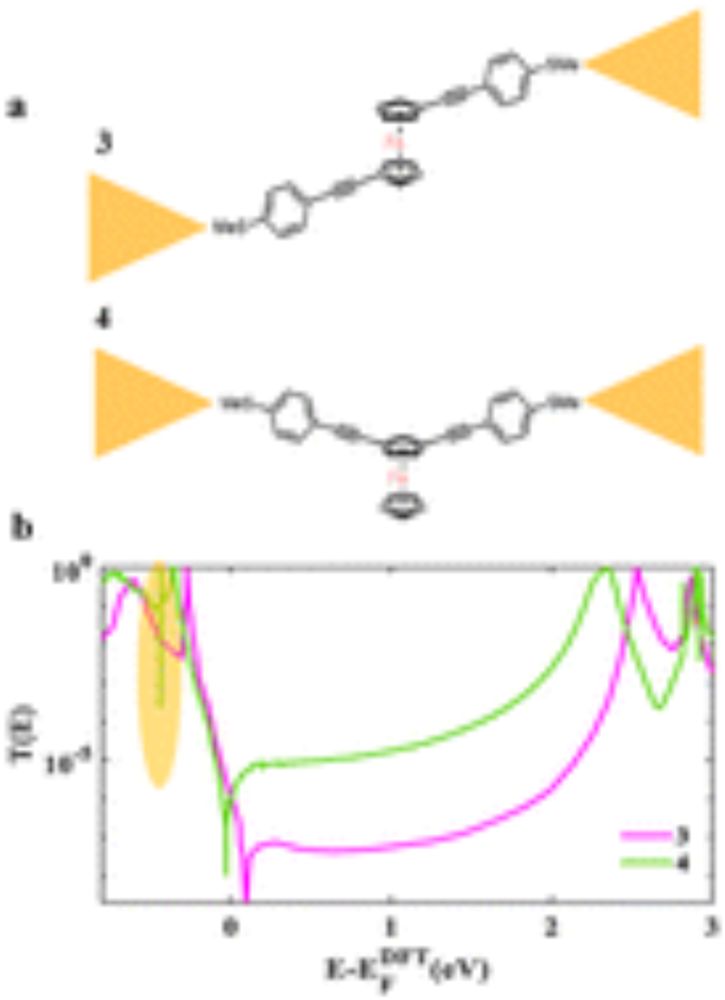
Orientational control of quantum interference in ferrocene single-molecule junctions
In single-molecule junctions, quantum interference (QI) effects manifest even at room temperature and can be explained by simple quantum circuit rules (QCR), and a rather intuitive magic ratio (MR), t...
doi.org
October 27, 2025 at 9:51 AM
👉𝐎𝐫𝐢𝐞𝐧𝐭𝐚𝐭𝐢𝐨𝐧𝐚𝐥 𝐜𝐨𝐧𝐭𝐫𝐨𝐥 𝐨𝐟 𝐪𝐮𝐚𝐧𝐭𝐮𝐦 𝐢𝐧𝐭𝐞𝐫𝐟𝐞𝐫𝐞𝐧𝐜𝐞 𝐢𝐧 𝐟𝐞𝐫𝐫𝐨𝐜𝐞𝐧𝐞 𝐬𝐢𝐧𝐠𝐥𝐞-𝐦𝐨𝐥𝐞𝐜𝐮𝐥𝐞 𝐣𝐮𝐧𝐜𝐭𝐢𝐨𝐧𝐬 by Ali Ismael 𝘦𝘵 𝘢𝘭.
The authors examine the electrical conductance of a single-ferrocene junction when the two metal electrodes connect to both upper and lower cyclopentadienyl rings.
🔗 doi.org/10.1039/D5QM00487J
The authors examine the electrical conductance of a single-ferrocene junction when the two metal electrodes connect to both upper and lower cyclopentadienyl rings.
🔗 doi.org/10.1039/D5QM00487J
Welcom to Issue 21! You can read the cover article for free now.
𝐂𝐨𝐧𝐬𝐭𝐫𝐮𝐜𝐭𝐢𝐧𝐠 𝐡𝐢𝐠𝐡𝐥𝐲 𝐞𝐟𝐟𝐢𝐜𝐢𝐞𝐧𝐭 𝐝𝐮𝐚𝐥-𝐜𝐨𝐧𝐟𝐢𝐧𝐞𝐦𝐞𝐧𝐭 𝐩𝐡𝐨𝐬𝐩𝐡𝐨𝐫𝐞𝐬𝐜𝐞𝐧𝐜𝐞 𝐬𝐮𝐩𝐫𝐚𝐦𝐨𝐥𝐞𝐜𝐮𝐥𝐚𝐫 𝐧𝐚𝐩𝐡𝐭𝐡𝐚𝐥𝐢𝐦𝐢𝐝𝐞 𝐩𝐲𝐫𝐢𝐝𝐢𝐧𝐢𝐮𝐦 𝐧𝐞𝐭𝐰𝐨𝐫𝐤𝐬 𝐯𝐢𝐚 𝐞𝐜𝐨-𝐟𝐫𝐢𝐞𝐧𝐝𝐥𝐲 𝐩𝐨𝐬𝐭-𝐩𝐨𝐥𝐲𝐦𝐞𝐫𝐢𝐳𝐚𝐭𝐢𝐨𝐧 𝐚𝐬𝐬𝐞𝐦𝐛𝐥𝐲 by Xianyin Dai 𝘦𝘵 𝘢𝘭.
🔗 doi.org/10.1039/D5QM00579E
𝐂𝐨𝐧𝐬𝐭𝐫𝐮𝐜𝐭𝐢𝐧𝐠 𝐡𝐢𝐠𝐡𝐥𝐲 𝐞𝐟𝐟𝐢𝐜𝐢𝐞𝐧𝐭 𝐝𝐮𝐚𝐥-𝐜𝐨𝐧𝐟𝐢𝐧𝐞𝐦𝐞𝐧𝐭 𝐩𝐡𝐨𝐬𝐩𝐡𝐨𝐫𝐞𝐬𝐜𝐞𝐧𝐜𝐞 𝐬𝐮𝐩𝐫𝐚𝐦𝐨𝐥𝐞𝐜𝐮𝐥𝐚𝐫 𝐧𝐚𝐩𝐡𝐭𝐡𝐚𝐥𝐢𝐦𝐢𝐝𝐞 𝐩𝐲𝐫𝐢𝐝𝐢𝐧𝐢𝐮𝐦 𝐧𝐞𝐭𝐰𝐨𝐫𝐤𝐬 𝐯𝐢𝐚 𝐞𝐜𝐨-𝐟𝐫𝐢𝐞𝐧𝐝𝐥𝐲 𝐩𝐨𝐬𝐭-𝐩𝐨𝐥𝐲𝐦𝐞𝐫𝐢𝐳𝐚𝐭𝐢𝐨𝐧 𝐚𝐬𝐬𝐞𝐦𝐛𝐥𝐲 by Xianyin Dai 𝘦𝘵 𝘢𝘭.
🔗 doi.org/10.1039/D5QM00579E

October 22, 2025 at 7:39 AM
Welcom to Issue 21! You can read the cover article for free now.
𝐂𝐨𝐧𝐬𝐭𝐫𝐮𝐜𝐭𝐢𝐧𝐠 𝐡𝐢𝐠𝐡𝐥𝐲 𝐞𝐟𝐟𝐢𝐜𝐢𝐞𝐧𝐭 𝐝𝐮𝐚𝐥-𝐜𝐨𝐧𝐟𝐢𝐧𝐞𝐦𝐞𝐧𝐭 𝐩𝐡𝐨𝐬𝐩𝐡𝐨𝐫𝐞𝐬𝐜𝐞𝐧𝐜𝐞 𝐬𝐮𝐩𝐫𝐚𝐦𝐨𝐥𝐞𝐜𝐮𝐥𝐚𝐫 𝐧𝐚𝐩𝐡𝐭𝐡𝐚𝐥𝐢𝐦𝐢𝐝𝐞 𝐩𝐲𝐫𝐢𝐝𝐢𝐧𝐢𝐮𝐦 𝐧𝐞𝐭𝐰𝐨𝐫𝐤𝐬 𝐯𝐢𝐚 𝐞𝐜𝐨-𝐟𝐫𝐢𝐞𝐧𝐝𝐥𝐲 𝐩𝐨𝐬𝐭-𝐩𝐨𝐥𝐲𝐦𝐞𝐫𝐢𝐳𝐚𝐭𝐢𝐨𝐧 𝐚𝐬𝐬𝐞𝐦𝐛𝐥𝐲 by Xianyin Dai 𝘦𝘵 𝘢𝘭.
🔗 doi.org/10.1039/D5QM00579E
𝐂𝐨𝐧𝐬𝐭𝐫𝐮𝐜𝐭𝐢𝐧𝐠 𝐡𝐢𝐠𝐡𝐥𝐲 𝐞𝐟𝐟𝐢𝐜𝐢𝐞𝐧𝐭 𝐝𝐮𝐚𝐥-𝐜𝐨𝐧𝐟𝐢𝐧𝐞𝐦𝐞𝐧𝐭 𝐩𝐡𝐨𝐬𝐩𝐡𝐨𝐫𝐞𝐬𝐜𝐞𝐧𝐜𝐞 𝐬𝐮𝐩𝐫𝐚𝐦𝐨𝐥𝐞𝐜𝐮𝐥𝐚𝐫 𝐧𝐚𝐩𝐡𝐭𝐡𝐚𝐥𝐢𝐦𝐢𝐝𝐞 𝐩𝐲𝐫𝐢𝐝𝐢𝐧𝐢𝐮𝐦 𝐧𝐞𝐭𝐰𝐨𝐫𝐤𝐬 𝐯𝐢𝐚 𝐞𝐜𝐨-𝐟𝐫𝐢𝐞𝐧𝐝𝐥𝐲 𝐩𝐨𝐬𝐭-𝐩𝐨𝐥𝐲𝐦𝐞𝐫𝐢𝐳𝐚𝐭𝐢𝐨𝐧 𝐚𝐬𝐬𝐞𝐦𝐛𝐥𝐲 by Xianyin Dai 𝘦𝘵 𝘢𝘭.
🔗 doi.org/10.1039/D5QM00579E
👉𝟑𝐃-𝐏𝐫𝐢𝐧𝐭𝐚𝐛𝐥𝐞 𝐨𝐫𝐠𝐚𝐧𝐢𝐜 𝐫𝐨𝐨𝐦-𝐭𝐞𝐦𝐩𝐞𝐫𝐚𝐭𝐮𝐫𝐞 𝐩𝐡𝐨𝐬𝐩𝐡𝐨𝐫𝐞𝐬𝐜𝐞𝐧𝐭 𝐞𝐥𝐚𝐬𝐭𝐨𝐦𝐞𝐫𝐬 𝐛𝐚𝐬𝐞𝐝 𝐨𝐧 𝐍-𝐞𝐭𝐡𝐲𝐥𝐜𝐚𝐫𝐛𝐚𝐳𝐨𝐥𝐞 𝐝𝐞𝐫𝐢𝐯𝐚𝐭𝐢𝐯𝐞𝐬 by Tao Yu 𝘦𝘵 𝘢𝘭.
This article has been included in following collections:
Room-temperature phosphorescence
Materials Chemistry Frontiers Emerging Investigator Series
🔗 doi.org/10.1039/D5QM00508F
This article has been included in following collections:
Room-temperature phosphorescence
Materials Chemistry Frontiers Emerging Investigator Series
🔗 doi.org/10.1039/D5QM00508F

3D-Printable organic room-temperature phosphorescent elastomers based on N-ethylcarbazole derivatives
Achieving stable, persistent room-temperature phosphorescence (RTP) within flexible and deformable elastomer matrices, particularly those that are amenable to advanced manufacturing techniques like 3D...
doi.org
October 17, 2025 at 8:28 AM
👉𝟑𝐃-𝐏𝐫𝐢𝐧𝐭𝐚𝐛𝐥𝐞 𝐨𝐫𝐠𝐚𝐧𝐢𝐜 𝐫𝐨𝐨𝐦-𝐭𝐞𝐦𝐩𝐞𝐫𝐚𝐭𝐮𝐫𝐞 𝐩𝐡𝐨𝐬𝐩𝐡𝐨𝐫𝐞𝐬𝐜𝐞𝐧𝐭 𝐞𝐥𝐚𝐬𝐭𝐨𝐦𝐞𝐫𝐬 𝐛𝐚𝐬𝐞𝐝 𝐨𝐧 𝐍-𝐞𝐭𝐡𝐲𝐥𝐜𝐚𝐫𝐛𝐚𝐳𝐨𝐥𝐞 𝐝𝐞𝐫𝐢𝐯𝐚𝐭𝐢𝐯𝐞𝐬 by Tao Yu 𝘦𝘵 𝘢𝘭.
This article has been included in following collections:
Room-temperature phosphorescence
Materials Chemistry Frontiers Emerging Investigator Series
🔗 doi.org/10.1039/D5QM00508F
This article has been included in following collections:
Room-temperature phosphorescence
Materials Chemistry Frontiers Emerging Investigator Series
🔗 doi.org/10.1039/D5QM00508F