



Martina Kavan
@martinakavan.bsky.social
Thinking about heat pumps, energy and decarbonisation at @nestauk.bsky.social
Reposted by Martina Kavan

Ever wondered how Santa Claus heats and powers his workshop (and how big it is?) 🎅 - @nestauk.bsky.social's @martinakavan.bsky.social has done the analysis and heat pumps are a better bet for keeping elves toasty!
Read the @businessgreen.bsky.social piece here www.businessgreen.com/news/4523629...
Read the @businessgreen.bsky.social piece here www.businessgreen.com/news/4523629...

'Gas boilers are skating on thin ice': Study makes case for heat pumps at Santa's toy workshop
Festive research from Nesta calculates Father Christmas could slash his energy use by 78 per cent by ditching fossil gas boilers for heat pumps at his Lapland toy factory
www.businessgreen.com
December 24, 2025 at 10:35 AM
Ever wondered how Santa Claus heats and powers his workshop (and how big it is?) 🎅 - @nestauk.bsky.social's @martinakavan.bsky.social has done the analysis and heat pumps are a better bet for keeping elves toasty!
Read the @businessgreen.bsky.social piece here www.businessgreen.com/news/4523629...
Read the @businessgreen.bsky.social piece here www.businessgreen.com/news/4523629...
What is the ECO scheme that the government wants to scrap? 💰
An explainer by @mashley.bsky.social on the programme that isn't working well, but could be key to bringing low income households along on the green transition and lowering bills.
www.nesta.org.uk/project-upda...
An explainer by @mashley.bsky.social on the programme that isn't working well, but could be key to bringing low income households along on the green transition and lowering bills.
www.nesta.org.uk/project-upda...

What is the Energy Company Obligation (ECO)?
This explainer breaks down the history of the Energy Company Obligation - from its inception through to its delivery and future.
www.nesta.org.uk
November 14, 2025 at 2:10 PM
What is the ECO scheme that the government wants to scrap? 💰
An explainer by @mashley.bsky.social on the programme that isn't working well, but could be key to bringing low income households along on the green transition and lowering bills.
www.nesta.org.uk/project-upda...
An explainer by @mashley.bsky.social on the programme that isn't working well, but could be key to bringing low income households along on the green transition and lowering bills.
www.nesta.org.uk/project-upda...
Reposted by Martina Kavan

Every day is a good day to point out that 92% of Reform's donations were found to come from figures and groups linked to the fossil fuel industry. @desmog.com

Nigel Farage’s Reform Party Has Accepted £2.3 Million from Fossil Fuel Interests, Climate Deniers, and Polluters Since 2019 Election
Reform UK has received more than £2.3 million from oil and gas interests, highly polluting industries, and climate science deniers since December 2019, amounting to 92 percent of the party’s donations...
www.desmog.com
October 12, 2025 at 8:45 AM
Every day is a good day to point out that 92% of Reform's donations were found to come from figures and groups linked to the fossil fuel industry. @desmog.com
It's an advisory ruling, but opens the door for more climate lawsuits.
And all started by a group of law students - Pacific Islands Students Fighting Climate Change. 🥊
And all started by a group of law students - Pacific Islands Students Fighting Climate Change. 🥊
a hand holding a sign that says climate change is an existential threat
ALT: a hand holding a sign that says climate change is an existential threat
media.tenor.com
July 25, 2025 at 12:49 PM
It's an advisory ruling, but opens the door for more climate lawsuits.
And all started by a group of law students - Pacific Islands Students Fighting Climate Change. 🥊
And all started by a group of law students - Pacific Islands Students Fighting Climate Change. 🥊
"Failure to take appropriate action [...], including through the production and consumption of fossil fuels, the granting of fossil fuel exploration licences or the provision of fossil fuel subsidies, “may constitute an international wrongful act which is attributable to that state”. "
❗
❗
July 25, 2025 at 12:49 PM
"Failure to take appropriate action [...], including through the production and consumption of fossil fuels, the granting of fossil fuel exploration licences or the provision of fossil fuel subsidies, “may constitute an international wrongful act which is attributable to that state”. "
❗
❗
This week's big win 🎉 of the International Court of Justice ruling could change the way states approach NDCs.
What did ICJ say?
⚖️ States are obligated to protect the climate under international law
⚖️ They must adopt ambitions NDCs
⚖️ Failure to do so can trigger reparations to affected countries
What did ICJ say?
⚖️ States are obligated to protect the climate under international law
⚖️ They must adopt ambitions NDCs
⚖️ Failure to do so can trigger reparations to affected countries

Nations who fail to curb fossil fuels could be ordered to pay reparations, top UN court rules
Landmark opinion says those that fail to prevent climate harm could be liable for compensation and restitution
www.theguardian.com
July 25, 2025 at 12:49 PM
This week's big win 🎉 of the International Court of Justice ruling could change the way states approach NDCs.
What did ICJ say?
⚖️ States are obligated to protect the climate under international law
⚖️ They must adopt ambitions NDCs
⚖️ Failure to do so can trigger reparations to affected countries
What did ICJ say?
⚖️ States are obligated to protect the climate under international law
⚖️ They must adopt ambitions NDCs
⚖️ Failure to do so can trigger reparations to affected countries
Reposted by Martina Kavan

There's been a lot of talk about Labour's £13.2bn Warm Homes Plan, which may or may not be confirmed in the spending review tomorrow.
But what is the £13.2bn for? My colleagues @tomleach.bsky.social and @martinakavan.bsky.social have written a nice explainer...
www.nesta.org.uk/blog/what-co...
But what is the £13.2bn for? My colleagues @tomleach.bsky.social and @martinakavan.bsky.social have written a nice explainer...
www.nesta.org.uk/blog/what-co...
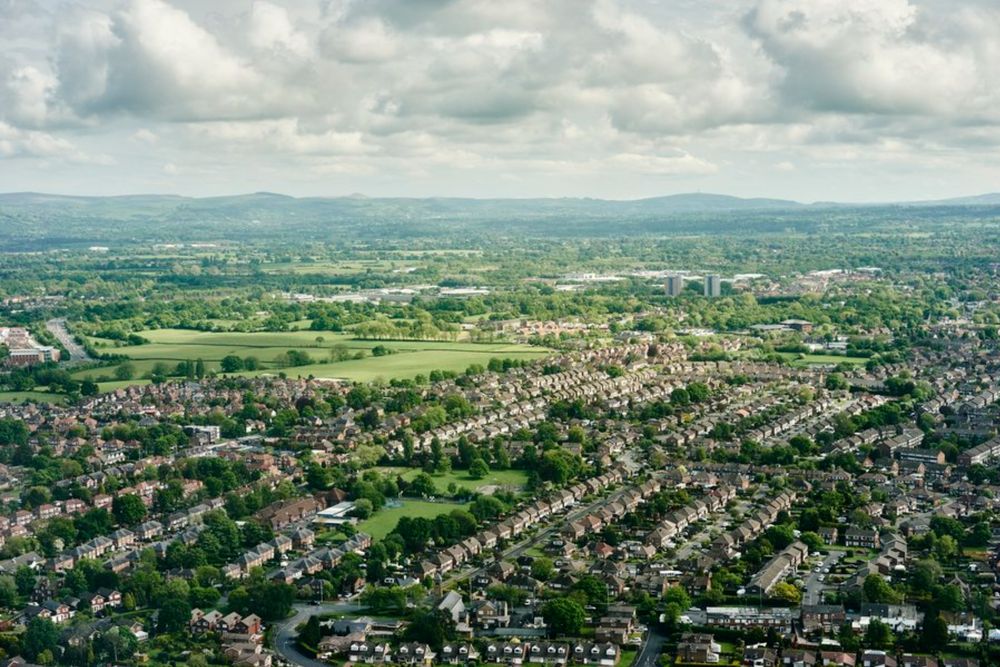
What could £13.2 billion do to improve British homes?
As the Spending Review approaches, we analyse Labour's £13.2 billion Warm Homes Plan. While the pledge may survive, what will it take to make it a success?
www.nesta.org.uk
June 10, 2025 at 11:13 AM
There's been a lot of talk about Labour's £13.2bn Warm Homes Plan, which may or may not be confirmed in the spending review tomorrow.
But what is the £13.2bn for? My colleagues @tomleach.bsky.social and @martinakavan.bsky.social have written a nice explainer...
www.nesta.org.uk/blog/what-co...
But what is the £13.2bn for? My colleagues @tomleach.bsky.social and @martinakavan.bsky.social have written a nice explainer...
www.nesta.org.uk/blog/what-co...
You can also play with this chart and see how moving levies to gas would affect different types of households.
public.flourish.studio/visualisatio...
(keeping in mind that under status quo, low-income households, and especially those who use electric heating, contribute disproportionately)
public.flourish.studio/visualisatio...
(keeping in mind that under status quo, low-income households, and especially those who use electric heating, contribute disproportionately)
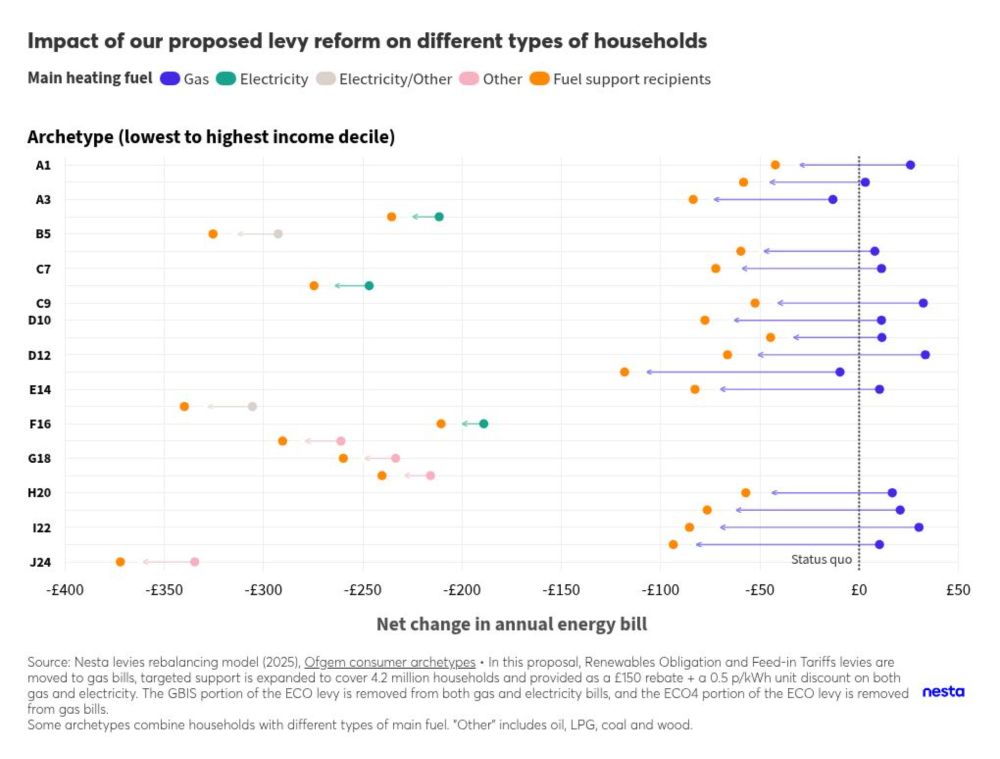
Figure 2. Archetype bill changes
A Flourish data visualization by Shaan Jindal
public.flourish.studio
June 5, 2025 at 2:23 PM
You can also play with this chart and see how moving levies to gas would affect different types of households.
public.flourish.studio/visualisatio...
(keeping in mind that under status quo, low-income households, and especially those who use electric heating, contribute disproportionately)
public.flourish.studio/visualisatio...
(keeping in mind that under status quo, low-income households, and especially those who use electric heating, contribute disproportionately)
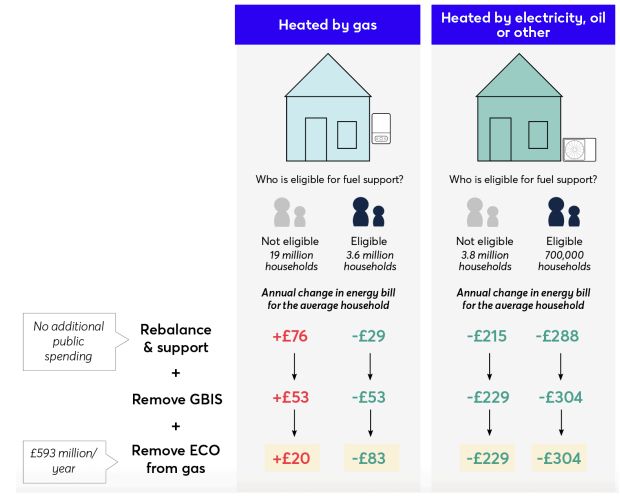
There are different ways to reduce levies on electricity. The last row here shows average changes in annual bill compared to today under our preferred solution:
Shifting levies from electricity to gas + moving ECO off gas bills + increasing fuel support
Shifting levies from electricity to gas + moving ECO off gas bills + increasing fuel support
June 5, 2025 at 2:23 PM
There are different ways to reduce levies on electricity. The last row here shows average changes in annual bill compared to today under our preferred solution:
Shifting levies from electricity to gas + moving ECO off gas bills + increasing fuel support
Shifting levies from electricity to gas + moving ECO off gas bills + increasing fuel support
We've just published our work on reforming energy levies.
Current levies inflate electricity bills by ~20%, and favor fossil fuels over clean energy.
We project impacts of levy reform on a range of households and show that it's possible to make them both fairer and more climate friendly.
Current levies inflate electricity bills by ~20%, and favor fossil fuels over clean energy.
We project impacts of levy reform on a range of households and show that it's possible to make them both fairer and more climate friendly.

How to make electricity cheaper
Reforming the levies on energy bills
www.nesta.org.uk
June 5, 2025 at 2:23 PM
We've just published our work on reforming energy levies.
Current levies inflate electricity bills by ~20%, and favor fossil fuels over clean energy.
We project impacts of levy reform on a range of households and show that it's possible to make them both fairer and more climate friendly.
Current levies inflate electricity bills by ~20%, and favor fossil fuels over clean energy.
We project impacts of levy reform on a range of households and show that it's possible to make them both fairer and more climate friendly.
Overall our response to the fuel poverty consultation argues that:
1. Heat pumps needs to play a bigger role,
2. Rebalancing levies resolves the tension between net zero and affordability,
3. Schemes should move away from “worst first” and treat a lot more homes.
www.nesta.org.uk/blog/we-need...
1. Heat pumps needs to play a bigger role,
2. Rebalancing levies resolves the tension between net zero and affordability,
3. Schemes should move away from “worst first” and treat a lot more homes.
www.nesta.org.uk/blog/we-need...

We need cheaper electricity to unlock a more effective fuel poverty strategy
As fuel poverty rates remain stubbornly high, we call for a stronger role for low-carbon heat, cheaper electricity through levy reform and a move away from deep retrofits in hard-to-treat homes
www.nesta.org.uk
June 2, 2025 at 12:01 PM
Overall our response to the fuel poverty consultation argues that:
1. Heat pumps needs to play a bigger role,
2. Rebalancing levies resolves the tension between net zero and affordability,
3. Schemes should move away from “worst first” and treat a lot more homes.
www.nesta.org.uk/blog/we-need...
1. Heat pumps needs to play a bigger role,
2. Rebalancing levies resolves the tension between net zero and affordability,
3. Schemes should move away from “worst first” and treat a lot more homes.
www.nesta.org.uk/blog/we-need...
Our take at @nestauk.bsky.social is that making electricity cheaper is necessary in making any fuel poverty strategy sustainable (ie. aligned with net zero).
Without cheap electricity, it is still difficult to fund heat pumps for gas-using low-income households and promise reliable savings.
Without cheap electricity, it is still difficult to fund heat pumps for gas-using low-income households and promise reliable savings.
June 2, 2025 at 12:01 PM
Our take at @nestauk.bsky.social is that making electricity cheaper is necessary in making any fuel poverty strategy sustainable (ie. aligned with net zero).
Without cheap electricity, it is still difficult to fund heat pumps for gas-using low-income households and promise reliable savings.
Without cheap electricity, it is still difficult to fund heat pumps for gas-using low-income households and promise reliable savings.
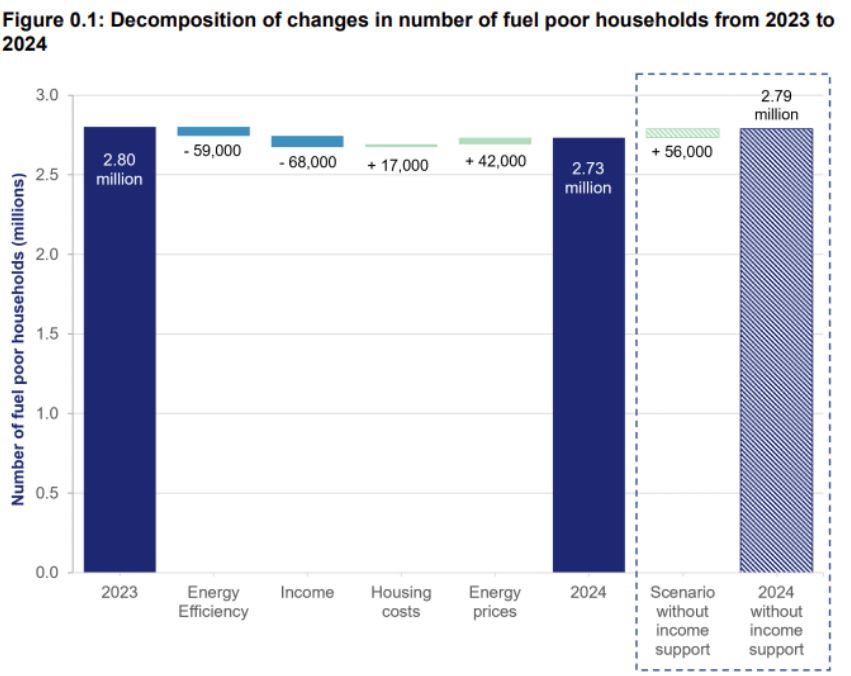
Government recently consulted on a new fuel poverty strategy for England. Recognizing that what they're doing now isn't making much of a dent in the problem.
Asking questions like "How should we implement the sustainability principle".
Asking questions like "How should we implement the sustainability principle".
June 2, 2025 at 12:01 PM
Government recently consulted on a new fuel poverty strategy for England. Recognizing that what they're doing now isn't making much of a dent in the problem.
Asking questions like "How should we implement the sustainability principle".
Asking questions like "How should we implement the sustainability principle".
I wrote a blog on the role of electricity prices in helping people in fuel poverty.
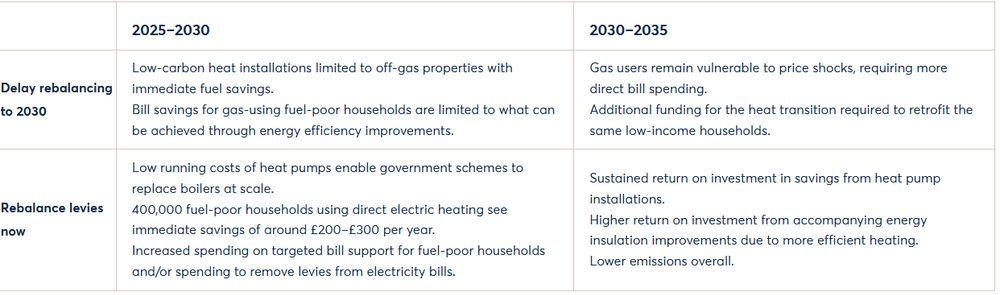
These are two illustrative scenarios I used to describe the long-term effects of cheap/expensive electricity on public spending and fuel poverty:
🧵
These are two illustrative scenarios I used to describe the long-term effects of cheap/expensive electricity on public spending and fuel poverty:
🧵
June 2, 2025 at 12:01 PM
I wrote a blog on the role of electricity prices in helping people in fuel poverty.
These are two illustrative scenarios I used to describe the long-term effects of cheap/expensive electricity on public spending and fuel poverty:
🧵
These are two illustrative scenarios I used to describe the long-term effects of cheap/expensive electricity on public spending and fuel poverty:
🧵
Reposted by Martina Kavan

What if we had no electricity and everything ran on fossil fuels?
This ad keeps making me chuckle.
Enjoy if you have not seen it or rewatch as it is just gold!
This ad keeps making me chuckle.
Enjoy if you have not seen it or rewatch as it is just gold!
April 30, 2025 at 1:58 PM
What if we had no electricity and everything ran on fossil fuels?
This ad keeps making me chuckle.
Enjoy if you have not seen it or rewatch as it is just gold!
This ad keeps making me chuckle.
Enjoy if you have not seen it or rewatch as it is just gold!
The ratio of electricity to gas needs to drop to well below 3.5 and stay there, otherwise mass electrification won't happen because electricity won't be a good deal.
Chart from:
www.nesta.org.uk/blog/fixing-...
Chart from:
www.nesta.org.uk/blog/fixing-...

Fixing the levy system could save billions on heat pump subsidies
Rebalancing levies would reduce the need for public subsidies, make heat pumps more attractive to households, and support a fairer, faster transition
www.nesta.org.uk
April 30, 2025 at 2:06 PM
The ratio of electricity to gas needs to drop to well below 3.5 and stay there, otherwise mass electrification won't happen because electricity won't be a good deal.
Chart from:
www.nesta.org.uk/blog/fixing-...
Chart from:
www.nesta.org.uk/blog/fixing-...
Electricity needs to get cheaper, but realistically, low gas prices will also threaten the transition to clean energy.
If we added levies to the price of gas, the wholesale component (currently 58%) would play a relatively smaller role. Cheap gas wouldn't affect the price ratio as much.
If we added levies to the price of gas, the wholesale component (currently 58%) would play a relatively smaller role. Cheap gas wouldn't affect the price ratio as much.
April 30, 2025 at 2:06 PM
Electricity needs to get cheaper, but realistically, low gas prices will also threaten the transition to clean energy.
If we added levies to the price of gas, the wholesale component (currently 58%) would play a relatively smaller role. Cheap gas wouldn't affect the price ratio as much.
If we added levies to the price of gas, the wholesale component (currently 58%) would play a relatively smaller role. Cheap gas wouldn't affect the price ratio as much.
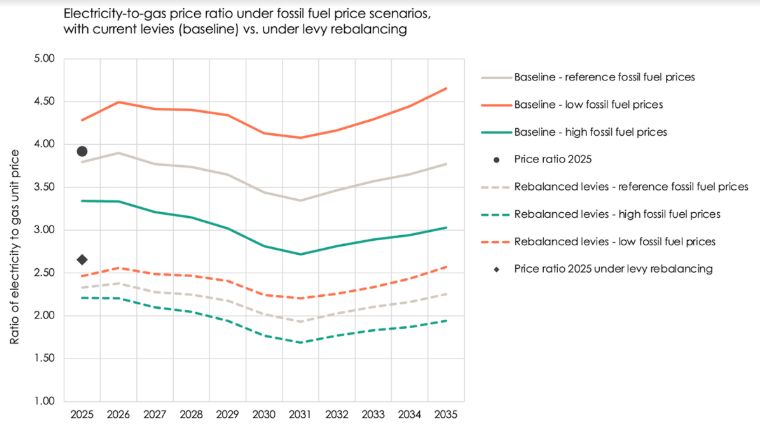
Moving levies from electricity to gas would protect decarbonisation efforts from volatility in gas prices. 📉 This chart shows the future electricity-to-gas price ratio (key metric for incentivizing electrification) under wholesale price scenarios with (full lines) and without (dashed) rebalancing.
April 30, 2025 at 2:06 PM
Moving levies from electricity to gas would protect decarbonisation efforts from volatility in gas prices. 📉 This chart shows the future electricity-to-gas price ratio (key metric for incentivizing electrification) under wholesale price scenarios with (full lines) and without (dashed) rebalancing.
I'm afraid it'd have to scale up substantially. Levies paid per unit are currently calculated by estimating the total UK consumption in kWh and dividing the revenue needed by that. If the revenue was covered only from a portion of total consumption, levy rate would need to increase by quite a lot
April 30, 2025 at 1:51 PM
I'm afraid it'd have to scale up substantially. Levies paid per unit are currently calculated by estimating the total UK consumption in kWh and dividing the revenue needed by that. If the revenue was covered only from a portion of total consumption, levy rate would need to increase by quite a lot
So it would have the same negative effect on the average household while not delivering as big an incentive for larger households on gas to switch (because gas prices would remain the same)?
The good bonus is that it'd massively help fuel-poor households with direct electric heating.
The good bonus is that it'd massively help fuel-poor households with direct electric heating.
April 27, 2025 at 5:49 PM
So it would have the same negative effect on the average household while not delivering as big an incentive for larger households on gas to switch (because gas prices would remain the same)?
The good bonus is that it'd massively help fuel-poor households with direct electric heating.
The good bonus is that it'd massively help fuel-poor households with direct electric heating.
Interesting, so what you're suggesting is the opposite of a rising block tariff. My first thoughts are that you'd have to increase the levy per kWh (maybe triple?) so much that it might disproportionately hit low-income households with low consumption.
April 27, 2025 at 5:49 PM
Interesting, so what you're suggesting is the opposite of a rising block tariff. My first thoughts are that you'd have to increase the levy per kWh (maybe triple?) so much that it might disproportionately hit low-income households with low consumption.
Making electricity cheaper by shifting the unfair levies away from bills isn’t just good climate policy, it’s good value for money.
Full @nestauk.bsky.social blog here:
Full @nestauk.bsky.social blog here:

Fixing the levy system could save billions on heat pump subsidies
Rebalancing levies would reduce the need for public subsidies, make heat pumps more attractive to households, and support a fairer, faster transition
www.nesta.org.uk
April 25, 2025 at 12:15 PM
Making electricity cheaper by shifting the unfair levies away from bills isn’t just good climate policy, it’s good value for money.
Full @nestauk.bsky.social blog here:
Full @nestauk.bsky.social blog here:
The @thecccuk.bsky.social advises ~440,000 heat pump installations in 2030. With a £6k grant for each, the government would pay £2.65bn.
With a £2k grant under levy rebalancing, it's just £880m. A difference of £1.8bn/year.
Not rebalancing levies could cost extra £13.8bn over the next parliament.
With a £2k grant under levy rebalancing, it's just £880m. A difference of £1.8bn/year.
Not rebalancing levies could cost extra £13.8bn over the next parliament.
April 25, 2025 at 12:15 PM
The @thecccuk.bsky.social advises ~440,000 heat pump installations in 2030. With a £6k grant for each, the government would pay £2.65bn.
With a £2k grant under levy rebalancing, it's just £880m. A difference of £1.8bn/year.
Not rebalancing levies could cost extra £13.8bn over the next parliament.
With a £2k grant under levy rebalancing, it's just £880m. A difference of £1.8bn/year.
Not rebalancing levies could cost extra £13.8bn over the next parliament.
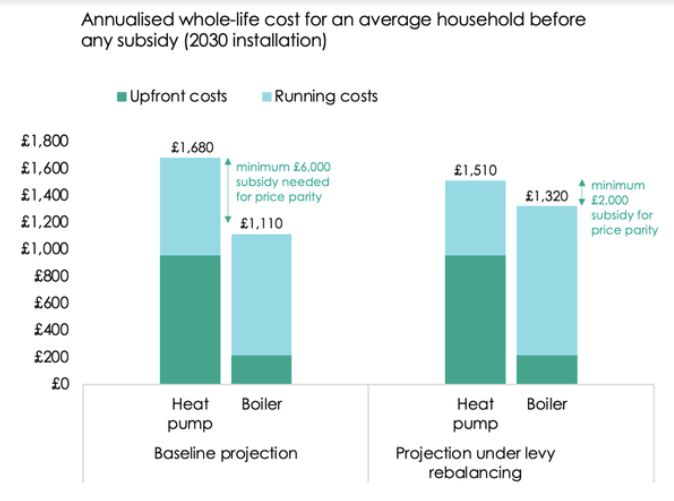
By 2030 without rebalancing levies, BUS would need to be at £6,000 to maintain price parity between heat pumps and boilers.
On the other hand, if levies are rebalanced, £2,000 should be enough for the average household.
(chart shows annualised costs over 15 years)
On the other hand, if levies are rebalanced, £2,000 should be enough for the average household.
(chart shows annualised costs over 15 years)
April 25, 2025 at 12:15 PM
By 2030 without rebalancing levies, BUS would need to be at £6,000 to maintain price parity between heat pumps and boilers.
On the other hand, if levies are rebalanced, £2,000 should be enough for the average household.
(chart shows annualised costs over 15 years)
On the other hand, if levies are rebalanced, £2,000 should be enough for the average household.
(chart shows annualised costs over 15 years)
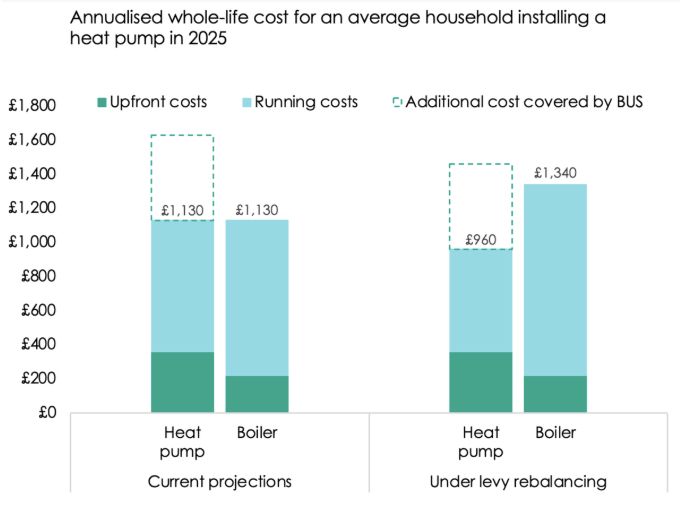
Moving the majority of levies from electricity to gas bills would bring the ratio of electricity to gas prices from 3.9 to 2.7. And it would technically cost the government nothing.
Heat pump owners would pay on avg. £380/year less than households on gas, even including upfront costs and interest.
Heat pump owners would pay on avg. £380/year less than households on gas, even including upfront costs and interest.
April 25, 2025 at 12:15 PM
Moving the majority of levies from electricity to gas bills would bring the ratio of electricity to gas prices from 3.9 to 2.7. And it would technically cost the government nothing.
Heat pump owners would pay on avg. £380/year less than households on gas, even including upfront costs and interest.
Heat pump owners would pay on avg. £380/year less than households on gas, even including upfront costs and interest.