



Mar Pineda
@marpineda.bsky.social
Postdoctoral researcher exploring fish ecophysiology, behaviour, and evolution 🐠 | FSBI Scholar | University of Glasgow @uofgsbohvm.bsky.social
📣 Calling fish biologists & conservation scientists!
We’re convening a session at #ICBF2026 (UBC, Vancouver):
Bridging experimental biology & conservation
If your research connects mechanism to real-world application- from lab to field- we want your abstract!
Apply by March 3rd! 🐟🌎
icbf2026.com
We’re convening a session at #ICBF2026 (UBC, Vancouver):
Bridging experimental biology & conservation
If your research connects mechanism to real-world application- from lab to field- we want your abstract!
Apply by March 3rd! 🐟🌎
icbf2026.com

February 11, 2026 at 3:42 PM
📣 Calling fish biologists & conservation scientists!
We’re convening a session at #ICBF2026 (UBC, Vancouver):
Bridging experimental biology & conservation
If your research connects mechanism to real-world application- from lab to field- we want your abstract!
Apply by March 3rd! 🐟🌎
icbf2026.com
We’re convening a session at #ICBF2026 (UBC, Vancouver):
Bridging experimental biology & conservation
If your research connects mechanism to real-world application- from lab to field- we want your abstract!
Apply by March 3rd! 🐟🌎
icbf2026.com
Reposted by Mar Pineda

When studying animal physiology we carefully control temperature, oxygen…but often ignore who animals live with.
Social context such as parents (1), social environment (2), litter mates (3) can shape physiology and later plasticity (4). We discuss it in this commentary 👉 doi.org/10.1242/jeb....
Social context such as parents (1), social environment (2), litter mates (3) can shape physiology and later plasticity (4). We discuss it in this commentary 👉 doi.org/10.1242/jeb....

February 9, 2026 at 1:49 PM
When studying animal physiology we carefully control temperature, oxygen…but often ignore who animals live with.
Social context such as parents (1), social environment (2), litter mates (3) can shape physiology and later plasticity (4). We discuss it in this commentary 👉 doi.org/10.1242/jeb....
Social context such as parents (1), social environment (2), litter mates (3) can shape physiology and later plasticity (4). We discuss it in this commentary 👉 doi.org/10.1242/jeb....
🚨New paper out now! Excited to see this commentary, led by @shaunkillen.bsky.social, showing that social context is key in comparative physiology and must be integrated! Read more here: doi.org/10.1242/jeb.... #ComparativePhysiology #Behaviour #Ecophysiology @sbohvm.gla.ac.uk @jexpbiol.bsky.social

Further integrating social context into comparative and environmental physiology
Summary: Social environments affect all aspects of animal physiology. We highlight how overlooking social effects might lead to inaccurate physiology-based predictions of species’ responses to environ...
doi.org
February 9, 2026 at 2:05 PM
🚨New paper out now! Excited to see this commentary, led by @shaunkillen.bsky.social, showing that social context is key in comparative physiology and must be integrated! Read more here: doi.org/10.1242/jeb.... #ComparativePhysiology #Behaviour #Ecophysiology @sbohvm.gla.ac.uk @jexpbiol.bsky.social
Reposted by Mar Pineda

We face two potential missteps in ecophysiology: 1) measuring animals under socially unrealistic conditions & 2) extrapolating results to nature, where social dynamics alter trait expression, plasticity, & evolutionary outcomes. Our new commentary in @jexpbiol.bsky.social : doi.org/10.1242/jeb....

February 9, 2026 at 1:24 PM
We face two potential missteps in ecophysiology: 1) measuring animals under socially unrealistic conditions & 2) extrapolating results to nature, where social dynamics alter trait expression, plasticity, & evolutionary outcomes. Our new commentary in @jexpbiol.bsky.social : doi.org/10.1242/jeb....
An open database for absolutely anybody interested in fish social behaviour. Open to hobbyists, divers, fishers, researchers and more. If you’ve seen it, share it! Or if you want to find out more, explore the contributions posted from all over the globe! 🌍 🐠 🐟
🧵1/9 There are 35,000+ fish species, but we have formal social-behaviour classifications for a tiny fraction. Most knowledge lives in the experience of researchers, fishers, divers, aquarists, naturalists, and Indigenous communities, but almost none of it is centralised. So we built ShoalBase.org.

ShoalBase | Join, Explore, Contribute Now
ShoalBase offers a global database on fish social behaviour, supporting research, conservation, and ecology through community contributions and visual data mapping.
ShoalBase.org
November 25, 2025 at 4:02 PM
An open database for absolutely anybody interested in fish social behaviour. Open to hobbyists, divers, fishers, researchers and more. If you’ve seen it, share it! Or if you want to find out more, explore the contributions posted from all over the globe! 🌍 🐠 🐟
Reposted by Mar Pineda
Fisheries can drive selection, but what about small-scale ornamental fisheries? Our new study shows Amazonian fishes interact w/ traps in species- & environment-specific ways, hinting at overlooked selective potential. Led by @marpineda.bsky.social Read here: onlinelibrary.wiley.com/doi/epdf/10....


September 9, 2025 at 10:37 AM
Fisheries can drive selection, but what about small-scale ornamental fisheries? Our new study shows Amazonian fishes interact w/ traps in species- & environment-specific ways, hinting at overlooked selective potential. Led by @marpineda.bsky.social Read here: onlinelibrary.wiley.com/doi/epdf/10....
Reposted by Mar Pineda

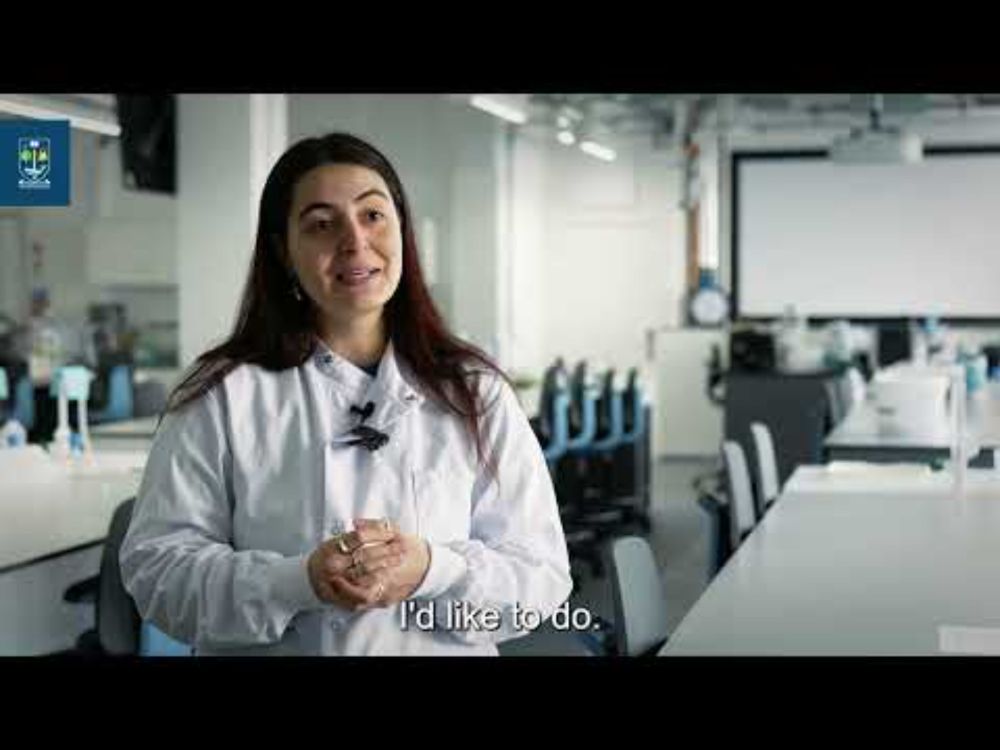
In the first of our 'What our PGR Students Say' series this week, meet Mar. @marpineda.bsky.social
Mar Pineda is a PhD student in the School of Biodiversity, One Health and Veterinary Medicine at the University of Glasgow.
#universityofglasgow #MVLS #SBOHVM #PhD
youtu.be/O0LhSrBtyc0?...
Mar Pineda is a PhD student in the School of Biodiversity, One Health and Veterinary Medicine at the University of Glasgow.
#universityofglasgow #MVLS #SBOHVM #PhD
youtu.be/O0LhSrBtyc0?...
What our PGR students say: Mar
YouTube video by UofG MVLS
youtu.be
May 27, 2025 at 11:03 AM
In the first of our 'What our PGR Students Say' series this week, meet Mar. @marpineda.bsky.social
Mar Pineda is a PhD student in the School of Biodiversity, One Health and Veterinary Medicine at the University of Glasgow.
#universityofglasgow #MVLS #SBOHVM #PhD
youtu.be/O0LhSrBtyc0?...
Mar Pineda is a PhD student in the School of Biodiversity, One Health and Veterinary Medicine at the University of Glasgow.
#universityofglasgow #MVLS #SBOHVM #PhD
youtu.be/O0LhSrBtyc0?...
Incredibly excited to travel to Japan tomorrow for the Japanese Society of Fisheries Science Spring Meeting! Thank you JSFS for hosting and @thefsbi.bsky.social for allowing me to represent you! The FSBI have also kindly sent me goodies to distribute. Please stay tuned for talk and merch! 🐟 🌸


March 24, 2025 at 5:55 PM
Incredibly excited to travel to Japan tomorrow for the Japanese Society of Fisheries Science Spring Meeting! Thank you JSFS for hosting and @thefsbi.bsky.social for allowing me to represent you! The FSBI have also kindly sent me goodies to distribute. Please stay tuned for talk and merch! 🐟 🌸
Fantastic sunny day up at @sceneuog.bsky.social running our first ever Aquatic Research Away Day! Great talks and discussions at our beautiful field station- thank you for hosting us! @sbohvm.gla.ac.uk


March 24, 2025 at 11:22 AM
Fantastic sunny day up at @sceneuog.bsky.social running our first ever Aquatic Research Away Day! Great talks and discussions at our beautiful field station- thank you for hosting us! @sbohvm.gla.ac.uk
Reposted by Mar Pineda
Science is not only done in English!!
We show that by doing searches in other languages we increased our understanding of the $ cost of invasive species (by a lot!!)
This is Specially important in areas where English is not widely spoken www.sciencedirect.com/science/arti...
We show that by doing searches in other languages we increased our understanding of the $ cost of invasive species (by a lot!!)
This is Specially important in areas where English is not widely spoken www.sciencedirect.com/science/arti...

Non-English languages enrich scientific knowledge: The example of economic costs of biological invasions
We contend that the exclusive focus on the English language in scientific research might hinder effective communication between scientists and practit…
www.sciencedirect.com
October 23, 2024 at 10:45 AM
Science is not only done in English!!
We show that by doing searches in other languages we increased our understanding of the $ cost of invasive species (by a lot!!)
This is Specially important in areas where English is not widely spoken www.sciencedirect.com/science/arti...
We show that by doing searches in other languages we increased our understanding of the $ cost of invasive species (by a lot!!)
This is Specially important in areas where English is not widely spoken www.sciencedirect.com/science/arti...