



Benoit Lacombe
@lacombeb.bsky.social
CNRS researcher in plant biology, Montpellier, France
Visit our Web site, register and subit your abstract for the next Plant Energy Mangement Meeting next july on Montpellier
pem26.cnrs.fr
@frannybarbs.bsky.social @lacombeb.bsky.social @franzificht.bsky.social @ccf-claire.bsky.social @msubrandizzilab.bsky.social @hatem-rouached.bsky.social
pem26.cnrs.fr
@frannybarbs.bsky.social @lacombeb.bsky.social @franzificht.bsky.social @ccf-claire.bsky.social @msubrandizzilab.bsky.social @hatem-rouached.bsky.social

January 28, 2026 at 5:29 PM
Visit our Web site, register and subit your abstract for the next Plant Energy Mangement Meeting next july on Montpellier
pem26.cnrs.fr
@frannybarbs.bsky.social @lacombeb.bsky.social @franzificht.bsky.social @ccf-claire.bsky.social @msubrandizzilab.bsky.social @hatem-rouached.bsky.social
pem26.cnrs.fr
@frannybarbs.bsky.social @lacombeb.bsky.social @franzificht.bsky.social @ccf-claire.bsky.social @msubrandizzilab.bsky.social @hatem-rouached.bsky.social
Reposted by Benoit Lacombe

(🧵 5/5) ... Laura Morales de Los Rios, Dan Pham, Myriam Ben Amar, Thibaut Perez (AQUI manager), and Claire Corratge-Faillie (PEP manager). The senior authors are @frannybarbs.bsky.social and @lacombeb.bsky.social, internationally recognized for pioneering contributions to NPF transporter biology.
November 26, 2025 at 3:35 PM
(🧵 5/5) ... Laura Morales de Los Rios, Dan Pham, Myriam Ben Amar, Thibaut Perez (AQUI manager), and Claire Corratge-Faillie (PEP manager). The senior authors are @frannybarbs.bsky.social and @lacombeb.bsky.social, internationally recognized for pioneering contributions to NPF transporter biology.
Reposted by Benoit Lacombe
(🧵 4/5) … investigates how nutrient and hormone signaling regulate plant growth and development. A major focus is the functional characterization of NPF transporters and their roles in integrating nutrient and hormonal pathways. This Tansley review was co-authored by...
November 26, 2025 at 3:35 PM
(🧵 4/5) … investigates how nutrient and hormone signaling regulate plant growth and development. A major focus is the functional characterization of NPF transporters and their roles in integrating nutrient and hormonal pathways. This Tansley review was co-authored by...
Reposted by Benoit Lacombe
🌱 The authors behind the paper 🌱
(🧵 3/5) The Hormones, Nutrients & Development group (HONUDE) at Institute for Plant Sciences of Montpellier (IPSiM, France), with the Isotopes Quantification (AQUI) and Plant Electrophysiology (PEP) platforms, led by Benoît Lacombe...
(🧵 3/5) The Hormones, Nutrients & Development group (HONUDE) at Institute for Plant Sciences of Montpellier (IPSiM, France), with the Isotopes Quantification (AQUI) and Plant Electrophysiology (PEP) platforms, led by Benoît Lacombe...
November 26, 2025 at 3:35 PM
🌱 The authors behind the paper 🌱
(🧵 3/5) The Hormones, Nutrients & Development group (HONUDE) at Institute for Plant Sciences of Montpellier (IPSiM, France), with the Isotopes Quantification (AQUI) and Plant Electrophysiology (PEP) platforms, led by Benoît Lacombe...
(🧵 3/5) The Hormones, Nutrients & Development group (HONUDE) at Institute for Plant Sciences of Montpellier (IPSiM, France), with the Isotopes Quantification (AQUI) and Plant Electrophysiology (PEP) platforms, led by Benoît Lacombe...
Reposted by Benoit Lacombe
(🧵 2/5) The aim of this Tansley review by Morales de los Ríos et al. is to give an overview of this family of transport proteins, including characterization.
November 26, 2025 at 3:35 PM
(🧵 2/5) The aim of this Tansley review by Morales de los Ríos et al. is to give an overview of this family of transport proteins, including characterization.
Reposted by Benoit Lacombe
✨ Paper spotlight ✨
(🧵 1/5) Functional characterization of NRT1/PTR FAMILY (NPF) transporters: looking for a needle in a haystack
nph.onlinelibrary.wiley.com/doi/10.1111/...
NITRATE TRANSPORT 1/PTR FAMILY (NPF) substrates are very diverse, and include nutrients, secondary metabolites and hormones.
(🧵 1/5) Functional characterization of NRT1/PTR FAMILY (NPF) transporters: looking for a needle in a haystack
nph.onlinelibrary.wiley.com/doi/10.1111/...
NITRATE TRANSPORT 1/PTR FAMILY (NPF) substrates are very diverse, and include nutrients, secondary metabolites and hormones.

November 26, 2025 at 3:35 PM
✨ Paper spotlight ✨
(🧵 1/5) Functional characterization of NRT1/PTR FAMILY (NPF) transporters: looking for a needle in a haystack
nph.onlinelibrary.wiley.com/doi/10.1111/...
NITRATE TRANSPORT 1/PTR FAMILY (NPF) substrates are very diverse, and include nutrients, secondary metabolites and hormones.
(🧵 1/5) Functional characterization of NRT1/PTR FAMILY (NPF) transporters: looking for a needle in a haystack
nph.onlinelibrary.wiley.com/doi/10.1111/...
NITRATE TRANSPORT 1/PTR FAMILY (NPF) substrates are very diverse, and include nutrients, secondary metabolites and hormones.
Reposted by Benoit Lacombe
Cracking the code of NPF transporters: function, specificity, and evolution in plants
#TansleyReview by Laura Morales de Los Ríos et al. @frannybarbs.bsky.social @lacombeb.bsky.social
nph.onlinelibrary.wiley.com/doi/10.1111/...
#plantscience
#TansleyReview by Laura Morales de Los Ríos et al. @frannybarbs.bsky.social @lacombeb.bsky.social
nph.onlinelibrary.wiley.com/doi/10.1111/...
#plantscience

November 25, 2025 at 11:17 PM
Cracking the code of NPF transporters: function, specificity, and evolution in plants
#TansleyReview by Laura Morales de Los Ríos et al. @frannybarbs.bsky.social @lacombeb.bsky.social
nph.onlinelibrary.wiley.com/doi/10.1111/...
#plantscience
#TansleyReview by Laura Morales de Los Ríos et al. @frannybarbs.bsky.social @lacombeb.bsky.social
nph.onlinelibrary.wiley.com/doi/10.1111/...
#plantscience
Tansley review: Functional characterization of NRT1/PTR FAMILY transporters: looking for a needle in a haystack
@ccf-claire.bsky.social @inrae-france.bsky.social @cnrsbiologie.bsky.social @umontpellier.bsky.social @institutagro.bsky.social nph.onlinelibrary.wiley.com/doi/10.1111/np…
@ccf-claire.bsky.social @inrae-france.bsky.social @cnrsbiologie.bsky.social @umontpellier.bsky.social @institutagro.bsky.social nph.onlinelibrary.wiley.com/doi/10.1111/np…

November 25, 2025 at 8:06 AM
Tansley review: Functional characterization of NRT1/PTR FAMILY transporters: looking for a needle in a haystack
@ccf-claire.bsky.social @inrae-france.bsky.social @cnrsbiologie.bsky.social @umontpellier.bsky.social @institutagro.bsky.social nph.onlinelibrary.wiley.com/doi/10.1111/np…
@ccf-claire.bsky.social @inrae-france.bsky.social @cnrsbiologie.bsky.social @umontpellier.bsky.social @institutagro.bsky.social nph.onlinelibrary.wiley.com/doi/10.1111/np…
Reposted by Benoit Lacombe

Excited to share our pre-print on how Sphingolipid-driven interleaflet coupling orchestrates ROP6 recruitment to nanodomains upon auxin. Great job from my PhD student Matheus Montrazi, @arthur-poitout.bsky.social, @alexmartiniere.bsky.social, @yvonjaillais.bsky.social
www.biorxiv.org/content/10.1...
www.biorxiv.org/content/10.1...

November 10, 2025 at 8:58 AM
Excited to share our pre-print on how Sphingolipid-driven interleaflet coupling orchestrates ROP6 recruitment to nanodomains upon auxin. Great job from my PhD student Matheus Montrazi, @arthur-poitout.bsky.social, @alexmartiniere.bsky.social, @yvonjaillais.bsky.social
www.biorxiv.org/content/10.1...
www.biorxiv.org/content/10.1...
Reposted by Benoit Lacombe

Very happy to see our work out examining guard cell transcriptomes over the course of a slowly developing drought. Thanks to @bradylabs.bsky.social and @kaisakajala.bsky.social for the inspiration, way back in Davis in 2013! The data are available in bar.utoronto.ca/eplant & doi.org/10.1093/plce...


October 22, 2025 at 4:56 PM
Very happy to see our work out examining guard cell transcriptomes over the course of a slowly developing drought. Thanks to @bradylabs.bsky.social and @kaisakajala.bsky.social for the inspiration, way back in Davis in 2013! The data are available in bar.utoronto.ca/eplant & doi.org/10.1093/plce...
Reposted by Benoit Lacombe

We warmly welcome Professor @uhammes.bsky.social as the new Head of the Department of #Botany I at our university! He is investigating the proteins that help #plant #hormones reach their sites of action. We wish him every success in his research and teaching!
➡️ www.uni-wuerzburg.de/en/news-and-...
➡️ www.uni-wuerzburg.de/en/news-and-...

October 21, 2025 at 12:25 PM
We warmly welcome Professor @uhammes.bsky.social as the new Head of the Department of #Botany I at our university! He is investigating the proteins that help #plant #hormones reach their sites of action. We wish him every success in his research and teaching!
➡️ www.uni-wuerzburg.de/en/news-and-...
➡️ www.uni-wuerzburg.de/en/news-and-...
Reposted by Benoit Lacombe
💧🌱 RESEARCH 🌱💧
Hygrophila difformis, a heterophyllous amphibious plant, shows differing carbon uptake capacities in leaves developed under terrestrial & submerged conditions due to biochemical characteristics & epidermal structures - Horiguchi et al.
🔗 doi.org/10.1093/jxb/...
#PlantScience 🧪
Hygrophila difformis, a heterophyllous amphibious plant, shows differing carbon uptake capacities in leaves developed under terrestrial & submerged conditions due to biochemical characteristics & epidermal structures - Horiguchi et al.
🔗 doi.org/10.1093/jxb/...
#PlantScience 🧪

October 22, 2025 at 11:22 AM
💧🌱 RESEARCH 🌱💧
Hygrophila difformis, a heterophyllous amphibious plant, shows differing carbon uptake capacities in leaves developed under terrestrial & submerged conditions due to biochemical characteristics & epidermal structures - Horiguchi et al.
🔗 doi.org/10.1093/jxb/...
#PlantScience 🧪
Hygrophila difformis, a heterophyllous amphibious plant, shows differing carbon uptake capacities in leaves developed under terrestrial & submerged conditions due to biochemical characteristics & epidermal structures - Horiguchi et al.
🔗 doi.org/10.1093/jxb/...
#PlantScience 🧪
Reposted by Benoit Lacombe
Out in @science.org The crazy sequence of events from planting maize in dense fields. Density-dependent linalool release triggers release of compounds into the soil affecting microbes and plants.
Article: www.science.org/doi/10.1126/...
Perspective: www.science.org/doi/10.1126/...
#PlantScience
Article: www.science.org/doi/10.1126/...
Perspective: www.science.org/doi/10.1126/...
#PlantScience

Linalool-triggered plant-soil feedback drives defense adaptation in dense maize plantings
High planting density boosts crop yields but also heightens pest and pathogen risks. How plants adapt their defenses under these conditions remains unclear. In this study, we reveal that maize enhance...
www.science.org
August 15, 2025 at 11:05 AM
Out in @science.org The crazy sequence of events from planting maize in dense fields. Density-dependent linalool release triggers release of compounds into the soil affecting microbes and plants.
Article: www.science.org/doi/10.1126/...
Perspective: www.science.org/doi/10.1126/...
#PlantScience
Article: www.science.org/doi/10.1126/...
Perspective: www.science.org/doi/10.1126/...
#PlantScience
Reposted by Benoit Lacombe
Out now:
Our review about the relationship between the root angle and nutrient uptake in cereal crops
We recommend combining genetics, molecular biology, physiology & agronomy to develop crop improvement strategies
▶️ doi.org/10.1111/nph....
Our review about the relationship between the root angle and nutrient uptake in cereal crops
We recommend combining genetics, molecular biology, physiology & agronomy to develop crop improvement strategies
▶️ doi.org/10.1111/nph....

August 11, 2025 at 11:49 AM
Out now:
Our review about the relationship between the root angle and nutrient uptake in cereal crops
We recommend combining genetics, molecular biology, physiology & agronomy to develop crop improvement strategies
▶️ doi.org/10.1111/nph....
Our review about the relationship between the root angle and nutrient uptake in cereal crops
We recommend combining genetics, molecular biology, physiology & agronomy to develop crop improvement strategies
▶️ doi.org/10.1111/nph....
Reposted by Benoit Lacombe

Save the date: "Plant Energy Management, Molecular mecanisms of growth ans stress responses" will take place in Montpellier next year july 12-15
@hatem-rouached.bsky.social @ccf-claire.bsky.social @msubrandizzilab.bsky.social @franzificht.bsky.social @lacombeb.bsky.social
@hatem-rouached.bsky.social @ccf-claire.bsky.social @msubrandizzilab.bsky.social @franzificht.bsky.social @lacombeb.bsky.social

July 16, 2025 at 1:07 PM
Save the date: "Plant Energy Management, Molecular mecanisms of growth ans stress responses" will take place in Montpellier next year july 12-15
@hatem-rouached.bsky.social @ccf-claire.bsky.social @msubrandizzilab.bsky.social @franzificht.bsky.social @lacombeb.bsky.social
@hatem-rouached.bsky.social @ccf-claire.bsky.social @msubrandizzilab.bsky.social @franzificht.bsky.social @lacombeb.bsky.social
Reposted by Benoit Lacombe

We have a postdoc position that just opened up in the Brady lab on reprogramming tomato root system architecture in response to changes in nutrient availability - please consider applying! recruit.ucdavis.edu/JPF07095
Postdoctoral Researcher- Brady Lab
University of California, Davis is hiring. Apply now!
recruit.ucdavis.edu
April 19, 2025 at 2:15 PM
We have a postdoc position that just opened up in the Brady lab on reprogramming tomato root system architecture in response to changes in nutrient availability - please consider applying! recruit.ucdavis.edu/JPF07095
Reposted by Benoit Lacombe

Explore the single-cell multi-omics atlas of rice: 116,564 cells, 8 organs, revealing unique gene networks and new cell states like transitional floral meristems. PMID:40634611, Nature 2025, @Nature https://doi.org/10.1038/s41586-025-09251-0 #Medsky #Pharmsky #RNA #ASHG #ESHG 🧪

A single-cell multi-omics atlas of rice | Nature
Cell functions across eukaryotes are driven by specific gene expression programs, which are dependent on chromatin structure1–3. Here we report a single-cell multi-omics atlas of rice, one of the world’s major crops. By simultaneously profiling chromatin accessibility and RNA expression in 116,564 cells from eight organs, we identified cell-type-specific gene regulatory networks and described novel cell states, such as a ‘transitional state’ in floral meristems. On the basis of our network analyses, we uncovered the function of the cell-type-specific regulatory hubs RSR1, F3H and LTPL120 during rice development. Our analysis revealed correlations between cell type and agronomic traits, as well as conserved and divergent cell-type functions during evolution. In summary, this study not only offers a unique single-cell multi-omics resource for a major crop but also advances our understanding of cell-type functions and the underlying molecular programs in rice. A single-cell multi-omics at
doi.org
July 12, 2025 at 4:10 AM
Reposted by Benoit Lacombe
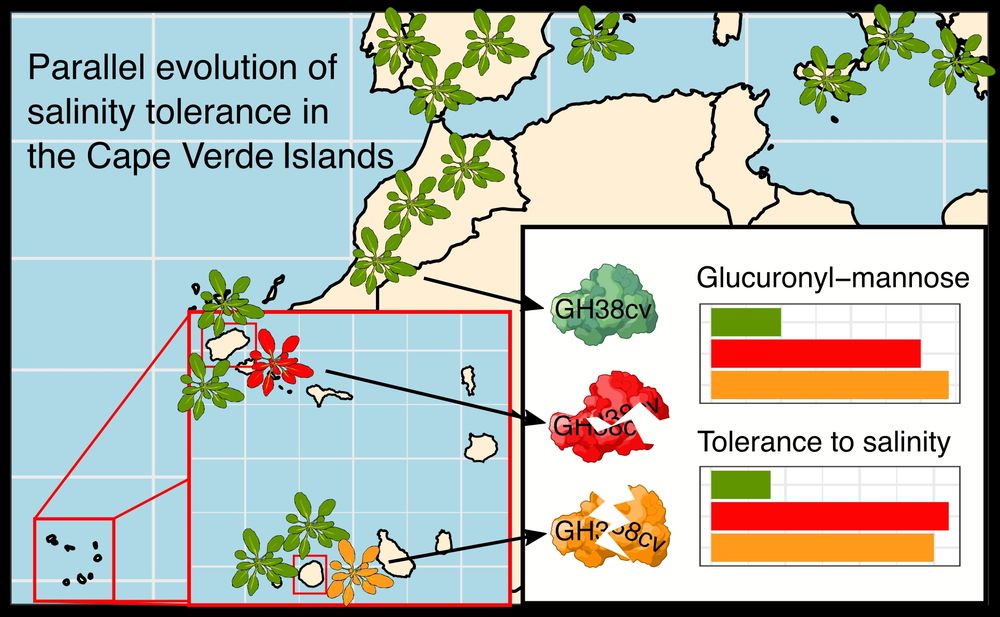
We just published our work in #ScienceAdvances
"Parallel evolution of salinity tolerance in Arabidopsis thaliana accessions from Cape Verde Islands"
www.science.org/doi/10.1126/...
Short summary and credits follow:
"Parallel evolution of salinity tolerance in Arabidopsis thaliana accessions from Cape Verde Islands"
www.science.org/doi/10.1126/...
Short summary and credits follow:
July 12, 2025 at 2:40 PM
We just published our work in #ScienceAdvances
"Parallel evolution of salinity tolerance in Arabidopsis thaliana accessions from Cape Verde Islands"
www.science.org/doi/10.1126/...
Short summary and credits follow:
"Parallel evolution of salinity tolerance in Arabidopsis thaliana accessions from Cape Verde Islands"
www.science.org/doi/10.1126/...
Short summary and credits follow:
Reposted by Benoit Lacombe
Out First Release in @science.org today, nice work finding that redox regulates multimerisation of Aux/IAA proteins during root xerobranching:
www.science.org/doi/10.1126/...
www.science.org/doi/10.1126/...
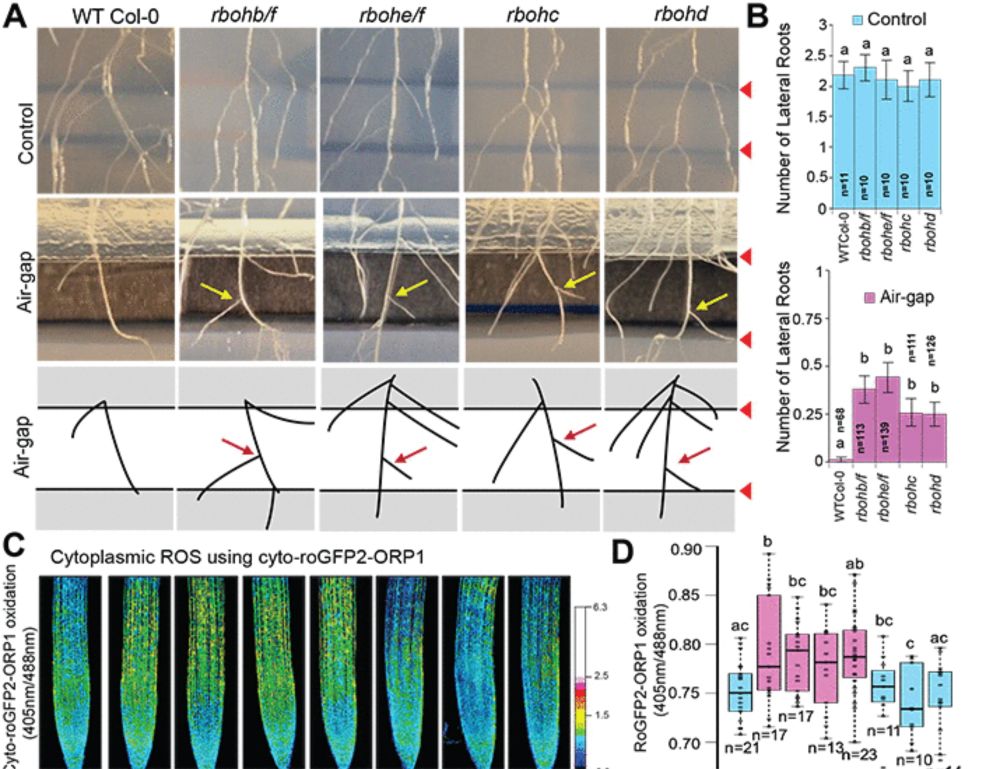
Redox-regulated Aux/IAA multimerization modulates auxin responses
Reactive oxygen species function as key signals in plant adaptation to environmental stresses like drought. Roots respond to transient water unavailability by temporarily ceasing branching through the...
www.science.org
June 13, 2025 at 9:20 AM
Out First Release in @science.org today, nice work finding that redox regulates multimerisation of Aux/IAA proteins during root xerobranching:
www.science.org/doi/10.1126/...
www.science.org/doi/10.1126/...
Reposted by Benoit Lacombe
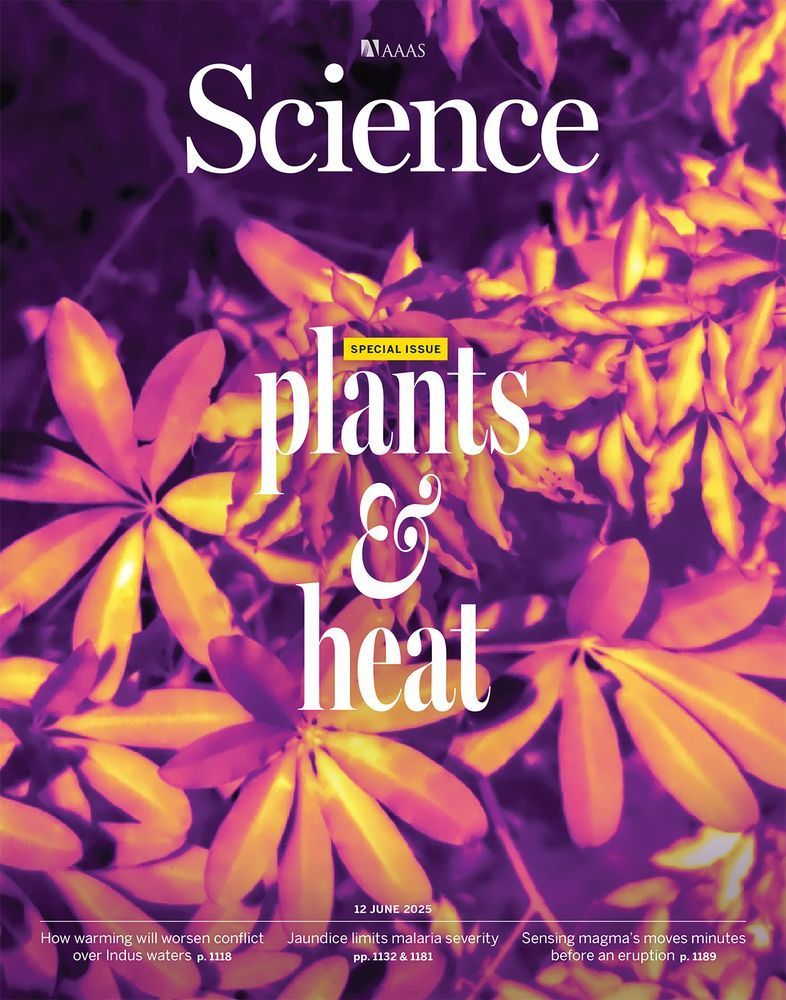
I'm delighted to present this Science special issue on Plants and Heat! Through a series of Reviews and Perspective articles, covering topics from cell signalling to ecology there is something for everyone here. (1/8)

As the world warms, plants in natural ecosystems and agricultural settings find ways to respond to the heat.
In a new special issue of Science, researchers examine how heat affects plants at multiple scales, from the molecular level to the biosphere. scim.ag/44cSw3Z
In a new special issue of Science, researchers examine how heat affects plants at multiple scales, from the molecular level to the biosphere. scim.ag/44cSw3Z
June 13, 2025 at 9:14 AM
I'm delighted to present this Science special issue on Plants and Heat! Through a series of Reviews and Perspective articles, covering topics from cell signalling to ecology there is something for everyone here. (1/8)
Reposted by Benoit Lacombe

Paper alert! #Meiosis4Ever
Maximizing meiotic crossover rates reveals the map of Crossover Potential
Juli Jing, Qiachao Lian and Stephanie Durand
www.nature.com/articles/s41...
We pushed meiotic crossover as much has we could, and had some surprises
A thread 👇
Maximizing meiotic crossover rates reveals the map of Crossover Potential
Juli Jing, Qiachao Lian and Stephanie Durand
www.nature.com/articles/s41...
We pushed meiotic crossover as much has we could, and had some surprises
A thread 👇
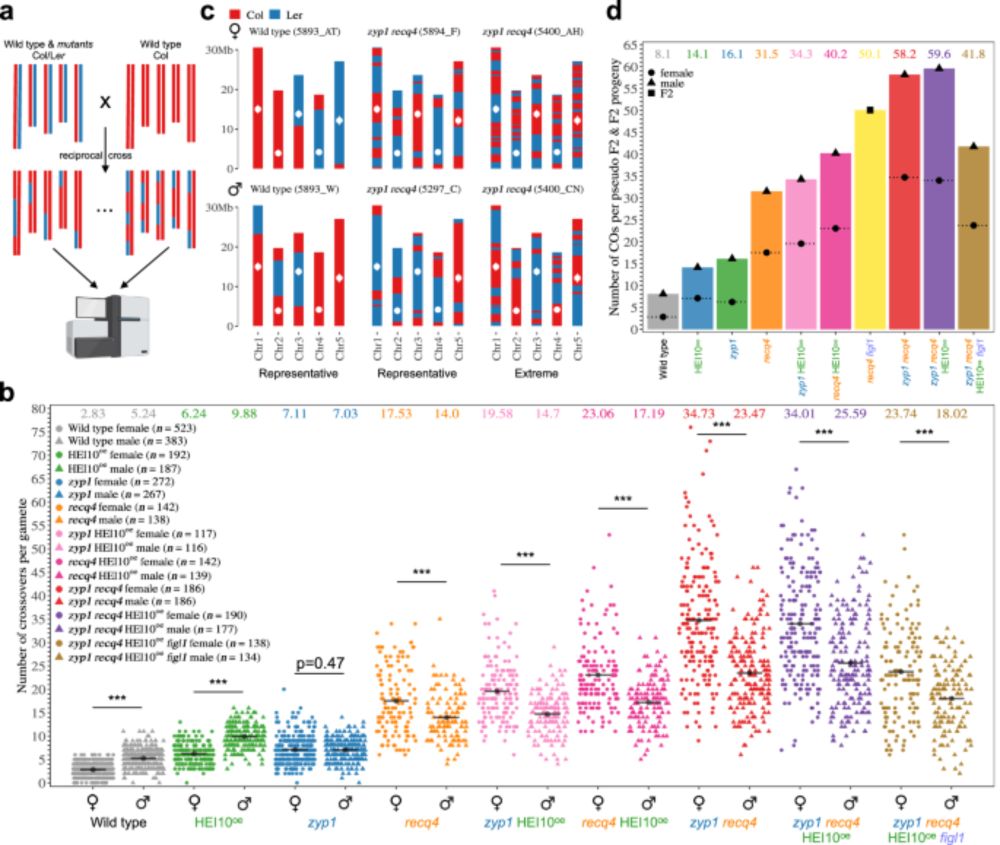
Maximizing meiotic crossover rates reveals the map of Crossover Potential - Nature Communications
Meiotic crossovers enhance genetic diversity in sexually reproducing organisms. Here, the authors propose that the higher-order spatial organization of the meiotic chromosomes shapes sexual dimorphism...
www.nature.com
June 12, 2025 at 2:53 PM
Paper alert! #Meiosis4Ever
Maximizing meiotic crossover rates reveals the map of Crossover Potential
Juli Jing, Qiachao Lian and Stephanie Durand
www.nature.com/articles/s41...
We pushed meiotic crossover as much has we could, and had some surprises
A thread 👇
Maximizing meiotic crossover rates reveals the map of Crossover Potential
Juli Jing, Qiachao Lian and Stephanie Durand
www.nature.com/articles/s41...
We pushed meiotic crossover as much has we could, and had some surprises
A thread 👇
Reposted by Benoit Lacombe
What started as a 'funky' observation back in 2017 while visiting the lab of @labcosta.bsky.social, and after skilfull execution of Dominic Kuang, Shanna Romand, and many more, now found a home in Current Biology. www.sciencedirect.com/science/arti...
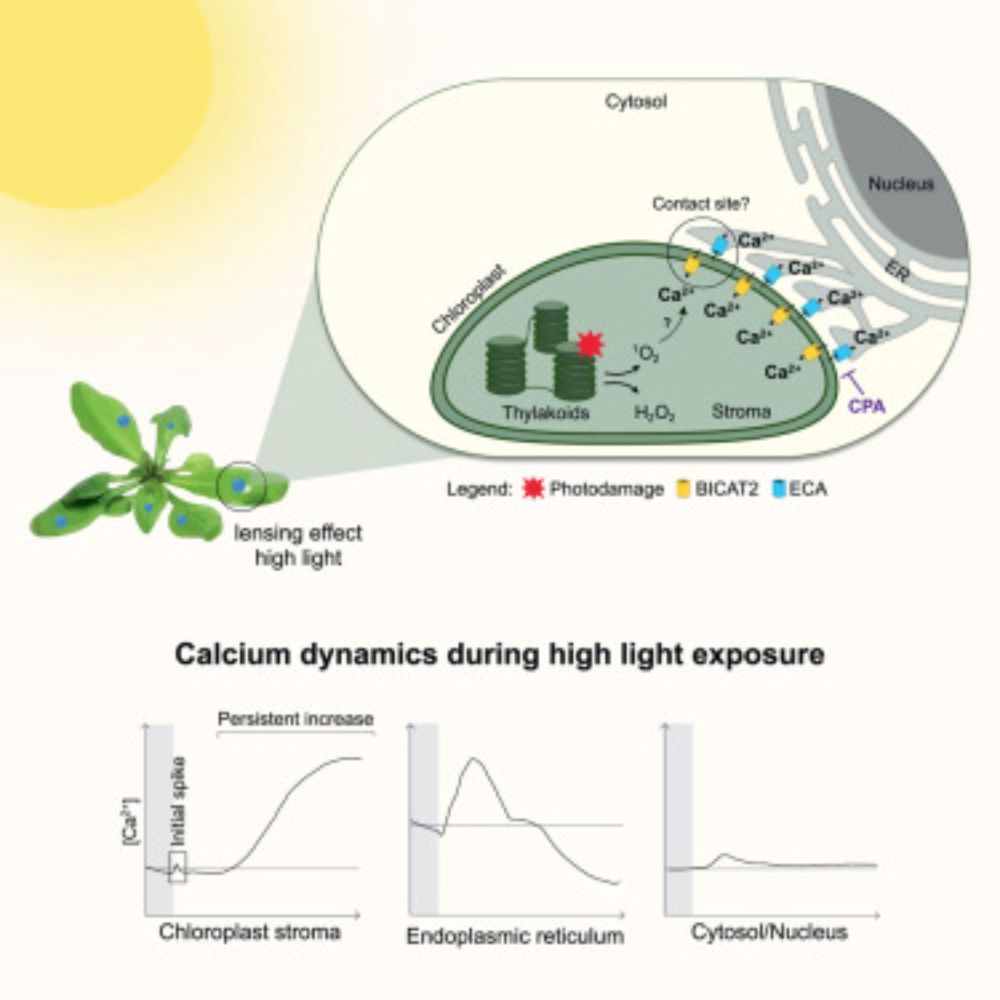
The burning glass effect of water droplets triggers a high light-induced calcium response in the chloroplast stroma
Plants rely on water and light for photosynthesis, but water droplets on leaves can focus light into high-intensity spots, risking photodamage. Excess…
www.sciencedirect.com
May 20, 2025 at 3:21 PM
What started as a 'funky' observation back in 2017 while visiting the lab of @labcosta.bsky.social, and after skilfull execution of Dominic Kuang, Shanna Romand, and many more, now found a home in Current Biology. www.sciencedirect.com/science/arti...
Our last review published in @annualreviews.bsky.social of plant biology
@inrae-france.bsky.social @cnrs.fr @cnrsbiologie.bsky.social @umontpellier.bsky.social @hatem-rouached.bsky.social
www.annualreviews.org/content/jour...
@inrae-france.bsky.social @cnrs.fr @cnrsbiologie.bsky.social @umontpellier.bsky.social @hatem-rouached.bsky.social
www.annualreviews.org/content/jour...

May 21, 2025 at 8:19 AM
Our last review published in @annualreviews.bsky.social of plant biology
@inrae-france.bsky.social @cnrs.fr @cnrsbiologie.bsky.social @umontpellier.bsky.social @hatem-rouached.bsky.social
www.annualreviews.org/content/jour...
@inrae-france.bsky.social @cnrs.fr @cnrsbiologie.bsky.social @umontpellier.bsky.social @hatem-rouached.bsky.social
www.annualreviews.org/content/jour...
Reposted by Benoit Lacombe

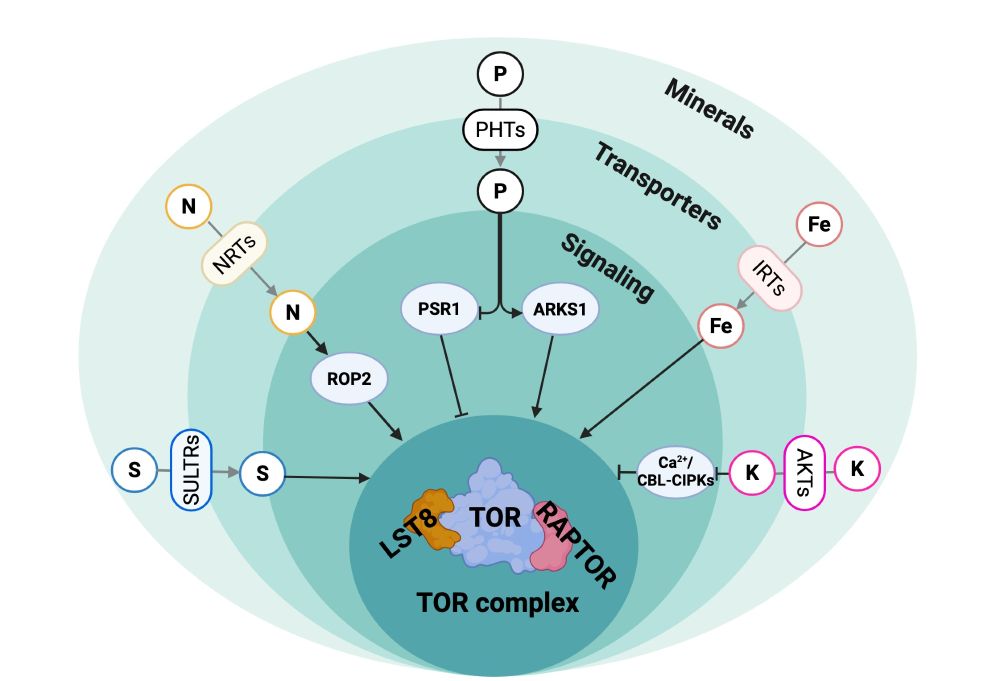
Our lab explores how TOR signaling shapes plant responses to nutrient stress—especially phosphorus.
Don’t miss this in-depth review!
academic.oup.com/jxb/article/...
Don’t miss this in-depth review!
academic.oup.com/jxb/article/...
May 19, 2025 at 11:43 PM
Our lab explores how TOR signaling shapes plant responses to nutrient stress—especially phosphorus.
Don’t miss this in-depth review!
academic.oup.com/jxb/article/...
Don’t miss this in-depth review!
academic.oup.com/jxb/article/...
Reposted by Benoit Lacombe
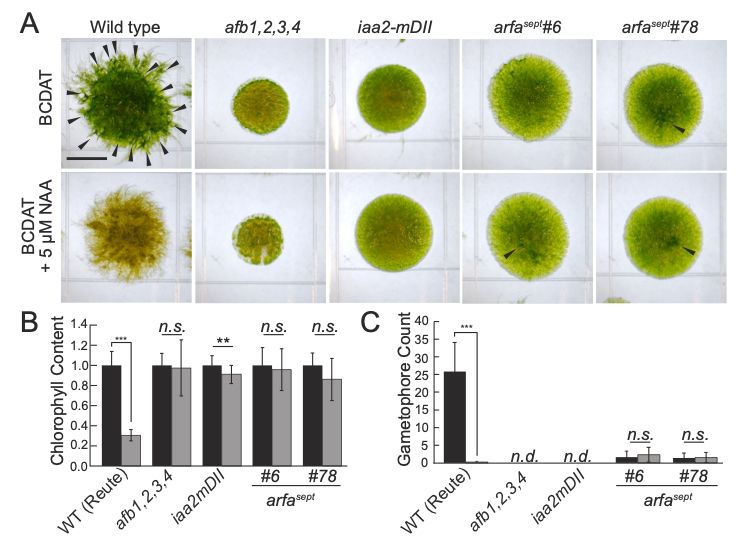
The second new paper from the Estelle lab out this week describes the phenotype of moss lines lacking all seven Class-A ARFs (Activating ARFs) and was lead former postdoc Carlisle Bascom, Jr.
academic.oup.com/jxb/advance-...
academic.oup.com/jxb/advance-...
May 5, 2025 at 10:39 PM
The second new paper from the Estelle lab out this week describes the phenotype of moss lines lacking all seven Class-A ARFs (Activating ARFs) and was lead former postdoc Carlisle Bascom, Jr.
academic.oup.com/jxb/advance-...
academic.oup.com/jxb/advance-...