



Schneeberger Lab
@labschneeberger.bsky.social
Genome Plasticity and Computational Genetics.
We develop cutting-edge technologies to explore genome evolution!
Lab Website: https://schneebergerlab.org/
We develop cutting-edge technologies to explore genome evolution!
Lab Website: https://schneebergerlab.org/
Just in time for Karneval, we present coelsch ! 🎭🥳
A platform-agnostic framework for single-cell recombination analysis. We study crossover variation in mutants & natural lines, identifying the largest natural inversion in A. thaliana to date!
📄 doi.org/10.64898/202...
🐱 github.com/schneeberger...
A platform-agnostic framework for single-cell recombination analysis. We study crossover variation in mutants & natural lines, identifying the largest natural inversion in A. thaliana to date!
📄 doi.org/10.64898/202...
🐱 github.com/schneeberger...
doi.org
February 5, 2026 at 12:21 PM
Just in time for Karneval, we present coelsch ! 🎭🥳
A platform-agnostic framework for single-cell recombination analysis. We study crossover variation in mutants & natural lines, identifying the largest natural inversion in A. thaliana to date!
📄 doi.org/10.64898/202...
🐱 github.com/schneeberger...
A platform-agnostic framework for single-cell recombination analysis. We study crossover variation in mutants & natural lines, identifying the largest natural inversion in A. thaliana to date!
📄 doi.org/10.64898/202...
🐱 github.com/schneeberger...
Reposted by Schneeberger Lab
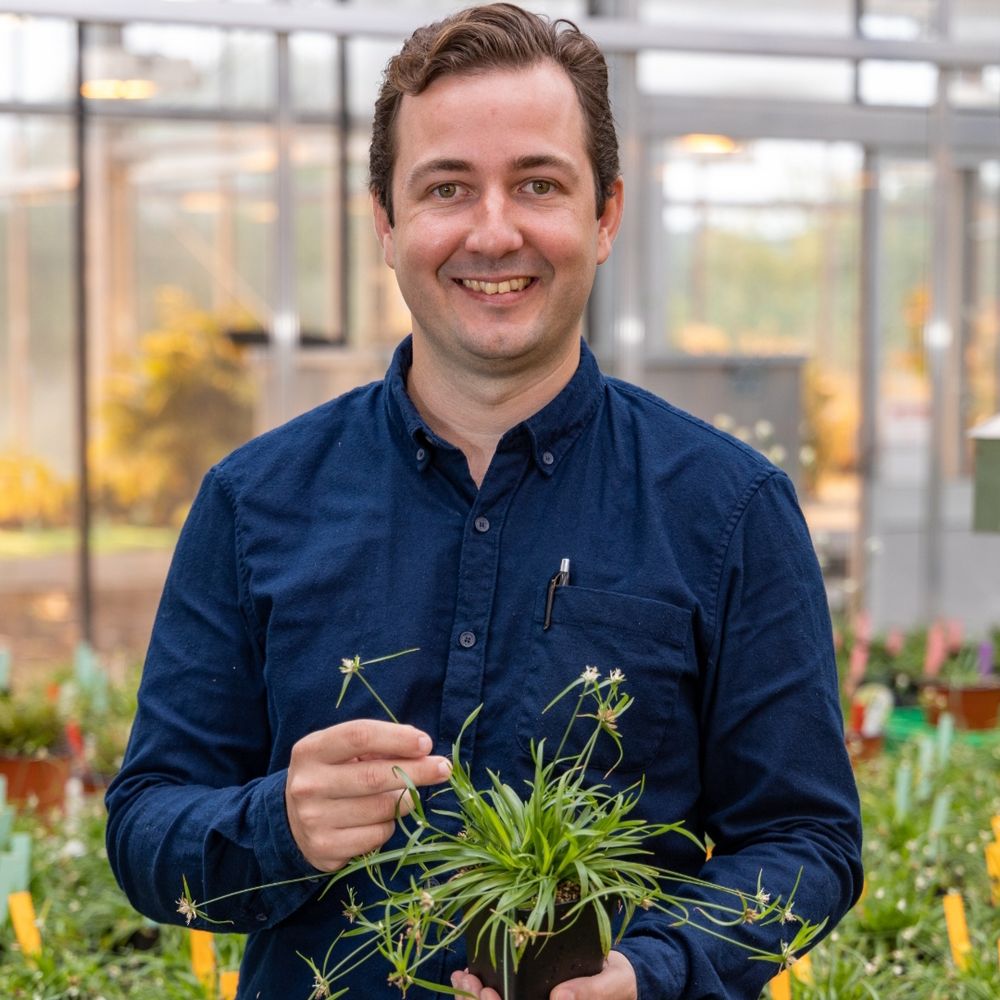
3️⃣ Sex without crossovers mimics clonal reproduction in Rhynchospora tenuis
🌱 An extreme meiotic outcome: faithful segregation without crossovers in a holocentric plant.
🔗 doi.org/10.64898/202...
#Preprint #GenomeEvolution #Meiosis4eva #centromere #Pangenomics
🌱 An extreme meiotic outcome: faithful segregation without crossovers in a holocentric plant.
🔗 doi.org/10.64898/202...
#Preprint #GenomeEvolution #Meiosis4eva #centromere #Pangenomics
Sex without crossovers mimics clonal reproduction in the holocentric plant Rhynchospora tenuis
Meiotic recombination ensures accurate chromosome segregation and promotes genetic diversity by generating crossovers between homologous chromosomes. While essential in most sexually reproducing organisms, recombination is variably regulated and can be absent in some lineages, a condition known as achiasmy. However, obligate achiasmy in both sexes of a sexual species has not been previously documented. Here, we investigate the beak-sedge Rhynchospora tenuis, a holocentric plant with the lowest known chromosome number among flowering plants (n = 2) and inverted meiosis. Using chromosome-scale genome assemblies from nine accessions, molecular cytogenetics, immunocytochemistry, high-throughput single-gamete sequencing and whole-genome sequencing of controlled crosses, we show that R. tenuis undergoes obligate, genome-wide achiasmy in both male and female meiosis. Despite normal early meiotic axis formation, synapsis fails, crossovers are not detected cytologically or genetically, and univalents persist at metaphase I. Extensive haplotype-specific accumulation of transposable elements (TEs) generates segregation distortion (e.g. meiotic drive), favouring the transmission of larger, TE-rich chromosomes. Remarkably, sexual reproduction is retained with fertilisation producing viable seeds only when translocation-compatible gametes meet, indicating strong post-meiotic selection that eliminates incompatible homozygous combinations. As a result, all surviving offspring are genetically identical to the maternal genotype, effectively restoring heterozygosity each generation and mimicking clonal reproduction. We propose that the combined effects of recombination loss, low chromosome number, holocentricity, inverted meiosis, and selective transmission of longer chromosomes enable faithful segregation and clonal-like inheritance despite sexual reproduction. These findings challenge the boundary between sex and clonality, revealing a unique evolutionary strategy linking genome architecture, recombination loss, and transmission bias. ### Competing Interest Statement The authors have declared no competing interest.
doi.org
January 21, 2026 at 2:45 PM
3️⃣ Sex without crossovers mimics clonal reproduction in Rhynchospora tenuis
🌱 An extreme meiotic outcome: faithful segregation without crossovers in a holocentric plant.
🔗 doi.org/10.64898/202...
#Preprint #GenomeEvolution #Meiosis4eva #centromere #Pangenomics
🌱 An extreme meiotic outcome: faithful segregation without crossovers in a holocentric plant.
🔗 doi.org/10.64898/202...
#Preprint #GenomeEvolution #Meiosis4eva #centromere #Pangenomics
Reposted by Schneeberger Lab
📢 Three new #bioRxiv preprints from our team on holocentric chromosomes.
Together, they connect centromere repeat evolution, karyotype dynamics, and meiotic recombination outcomes, revealing how holocentric genomes evolve and function. 🧬👇
Together, they connect centromere repeat evolution, karyotype dynamics, and meiotic recombination outcomes, revealing how holocentric genomes evolve and function. 🧬👇

January 21, 2026 at 2:45 PM
📢 Three new #bioRxiv preprints from our team on holocentric chromosomes.
Together, they connect centromere repeat evolution, karyotype dynamics, and meiotic recombination outcomes, revealing how holocentric genomes evolve and function. 🧬👇
Together, they connect centromere repeat evolution, karyotype dynamics, and meiotic recombination outcomes, revealing how holocentric genomes evolve and function. 🧬👇
🌱 Postdoc position in Plant Genomics/Bioinformatics!
Love genome plasticity, computational methods, and solving big questions in plant biology? Join our newly established Institute for Crop Biology at HHU Düsseldorf.
More info on schneebergerlab.org/career/
Apply by Nov. 30 | 3-year position
Love genome plasticity, computational methods, and solving big questions in plant biology? Join our newly established Institute for Crop Biology at HHU Düsseldorf.
More info on schneebergerlab.org/career/
Apply by Nov. 30 | 3-year position
Career – Schneeberger Lab
schneebergerlab.org
November 11, 2025 at 9:50 AM
🌱 Postdoc position in Plant Genomics/Bioinformatics!
Love genome plasticity, computational methods, and solving big questions in plant biology? Join our newly established Institute for Crop Biology at HHU Düsseldorf.
More info on schneebergerlab.org/career/
Apply by Nov. 30 | 3-year position
Love genome plasticity, computational methods, and solving big questions in plant biology? Join our newly established Institute for Crop Biology at HHU Düsseldorf.
More info on schneebergerlab.org/career/
Apply by Nov. 30 | 3-year position
Reposted by Schneeberger Lab
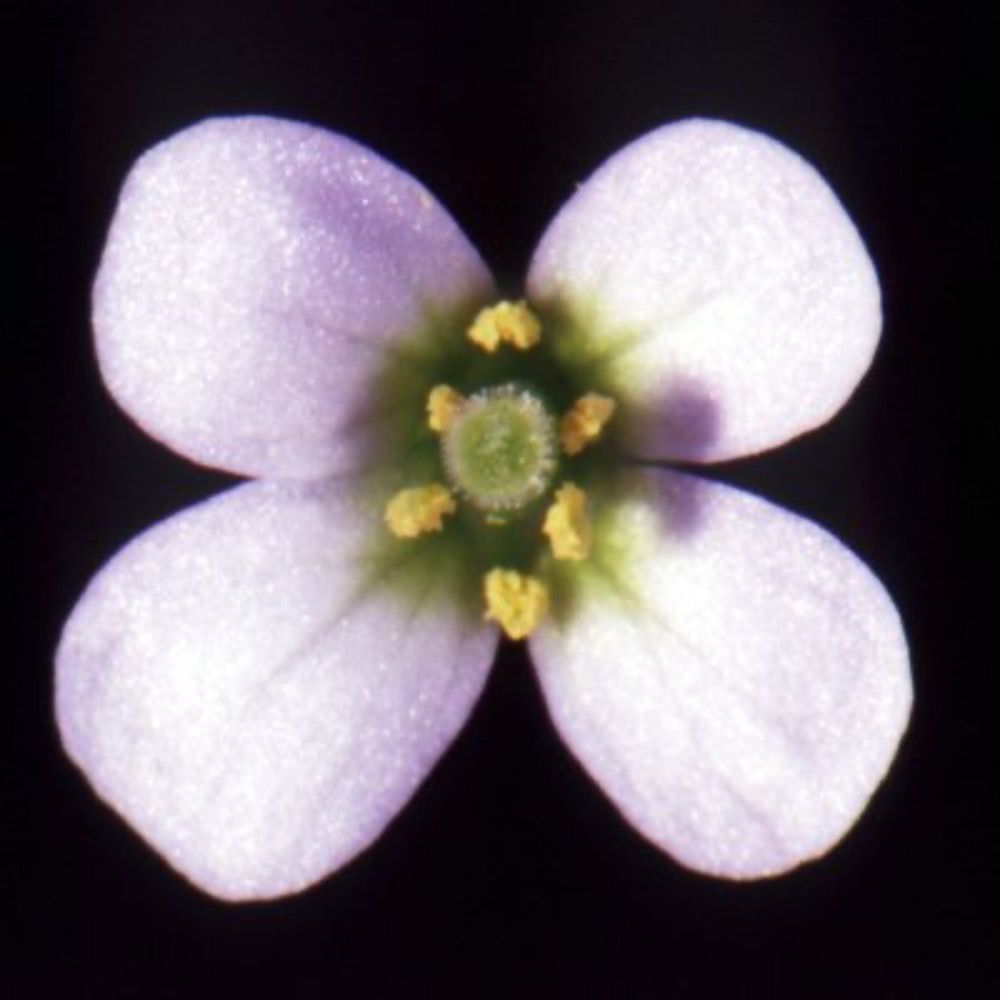
1/2 Want to become up to date with pangenomes and genome graphs and their history? Check out this fantastic review by @zbao.bsky.social!
Complexity welcome: Pangenome graphs for comprehensive population genomics
#pangenomes #plantscience #genomegraphs
www.cambridge.org/core/journal...
Complexity welcome: Pangenome graphs for comprehensive population genomics
#pangenomes #plantscience #genomegraphs
www.cambridge.org/core/journal...

October 27, 2025 at 5:53 PM
1/2 Want to become up to date with pangenomes and genome graphs and their history? Check out this fantastic review by @zbao.bsky.social!
Complexity welcome: Pangenome graphs for comprehensive population genomics
#pangenomes #plantscience #genomegraphs
www.cambridge.org/core/journal...
Complexity welcome: Pangenome graphs for comprehensive population genomics
#pangenomes #plantscience #genomegraphs
www.cambridge.org/core/journal...
Reposted by Schneeberger Lab
Awesome new work from @labschneeberger.bsky.social (with a small contribution from the Weigel lab). Experimentally observed mutational patterns in centromeres underpin a model that recapitulates intra-specific centromere divergence!
www.biorxiv.org/content/10.1...
www.biorxiv.org/content/10.1...

June 6, 2025 at 2:19 PM
Awesome new work from @labschneeberger.bsky.social (with a small contribution from the Weigel lab). Experimentally observed mutational patterns in centromeres underpin a model that recapitulates intra-specific centromere divergence!
www.biorxiv.org/content/10.1...
www.biorxiv.org/content/10.1...
New preprint out from our lab, showing how mutations drive centromere evolution! 🧬
Check out this thread from Xiao Dong to learn more.
Check out this thread from Xiao Dong to learn more.

1/
🚨 My first PhD preprint is out on bioRxiv!
We show how tiny mutations—point mutations and kb-level indels—can shape the massive structure of Arabidopsis centromeres.
📄 Read it here: doi.org/10.1101/2025...
🧵 A short thread 👇
🚨 My first PhD preprint is out on bioRxiv!
We show how tiny mutations—point mutations and kb-level indels—can shape the massive structure of Arabidopsis centromeres.
📄 Read it here: doi.org/10.1101/2025...
🧵 A short thread 👇
doi.org
June 6, 2025 at 2:50 PM
New preprint out from our lab, showing how mutations drive centromere evolution! 🧬
Check out this thread from Xiao Dong to learn more.
Check out this thread from Xiao Dong to learn more.
Reposted by Schneeberger Lab

🍹In our new #PlantersPunch CEPLAS Postdoc Craig Dent from @labschneeberger.bsky.social @mpipz.bsky.social pz.bsky.social explains why the DNA of the European potato is at the same time diverse...and not diverse🤔! Very exciting story! One question remains: which one tastes best 🥔🍟😜?
➡️ bit.ly/42Mys6F
➡️ bit.ly/42Mys6F

April 23, 2025 at 11:45 AM
🍹In our new #PlantersPunch CEPLAS Postdoc Craig Dent from @labschneeberger.bsky.social @mpipz.bsky.social pz.bsky.social explains why the DNA of the European potato is at the same time diverse...and not diverse🤔! Very exciting story! One question remains: which one tastes best 🥔🍟😜?
➡️ bit.ly/42Mys6F
➡️ bit.ly/42Mys6F
Interested in hearing more about the story behind our latest paper?
Check out our blog post and the latest @naturepodcast.bsky.social episode!
📝 go.nature.com/3G73vT7
🎙️ www.nature.com/articles/d41...
Check out our blog post and the latest @naturepodcast.bsky.social episode!
📝 go.nature.com/3G73vT7
🎙️ www.nature.com/articles/d41...
A Recipe for Complexity: Building the Potato Pan-Genome
go.nature.com
April 16, 2025 at 4:01 PM
Interested in hearing more about the story behind our latest paper?
Check out our blog post and the latest @naturepodcast.bsky.social episode!
📝 go.nature.com/3G73vT7
🎙️ www.nature.com/articles/d41...
Check out our blog post and the latest @naturepodcast.bsky.social episode!
📝 go.nature.com/3G73vT7
🎙️ www.nature.com/articles/d41...
📢 Excited to share our work out now in @nature.com! 📢
We present the phased pan-genome of tetraploid European potato, based on 10 historical cultivars representing 85% of European potato diversity.
Learn more below!
🔗 www.nature.com/articles/s41...
1/7
We present the phased pan-genome of tetraploid European potato, based on 10 historical cultivars representing 85% of European potato diversity.
Learn more below!
🔗 www.nature.com/articles/s41...
1/7
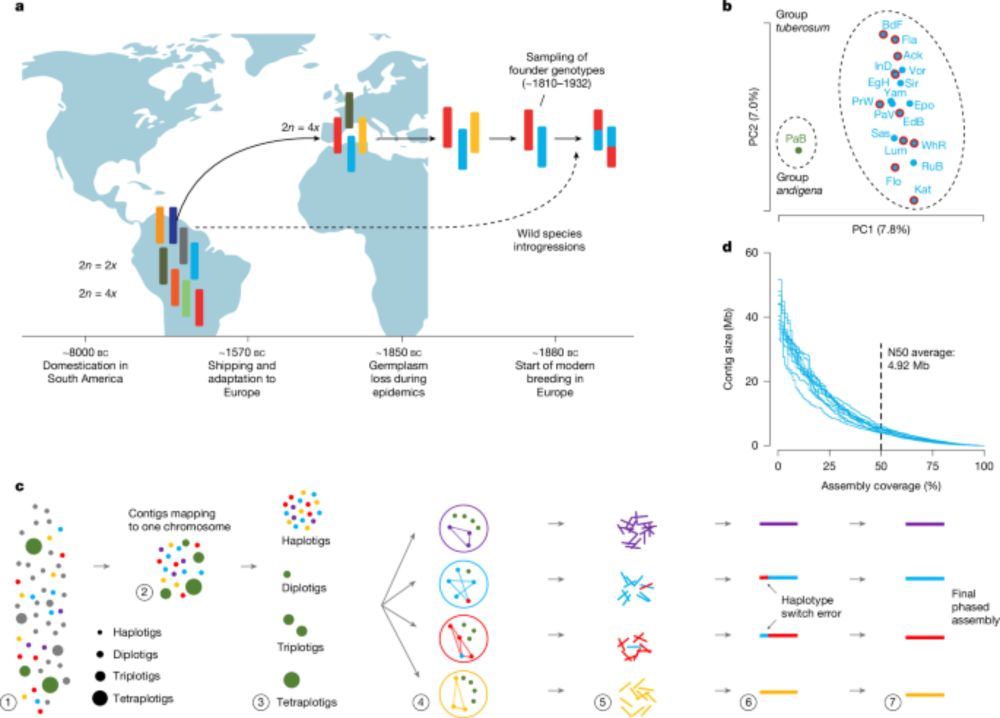
The phased pan-genome of tetraploid European potato - Nature
A haplotype-resolved pan-genome of autotetraploid European potato founder lines shows high nucleotide diversity at remarkably low haplotype diversity, which is probably the result of hybridization eve...
www.nature.com
April 16, 2025 at 3:14 PM
📢 Excited to share our work out now in @nature.com! 📢
We present the phased pan-genome of tetraploid European potato, based on 10 historical cultivars representing 85% of European potato diversity.
Learn more below!
🔗 www.nature.com/articles/s41...
1/7
We present the phased pan-genome of tetraploid European potato, based on 10 historical cultivars representing 85% of European potato diversity.
Learn more below!
🔗 www.nature.com/articles/s41...
1/7