



John Fallon
@john-fallon-econ.com
BU Econ PhD candidate. Labor, Education.
www.john-fallon-econ.com
www.john-fallon-econ.com
Pinned
John Fallon
@john-fallon-econ.com
· Nov 24

I'm John Fallon, a labor economist on the job market. My JMP uncovers something wild: when chiropractors got licensed in the early 1900s, medical boards responded by making it HARDER to become a doctor.
Why would competition lead to stricter regulations?
🧵
john-fallon-econ.com
(1/9)
Why would competition lead to stricter regulations?
🧵
john-fallon-econ.com
(1/9)
Reposted by John Fallon

🚨📰New WP 🚨📰
How does social housing design affect neighborhoods decades later? We study London gangs to show that postwar urban planning—specifically high-rise public housing construction—had lasting effects on gang formation
@cep-lse.bsky.social
How does social housing design affect neighborhoods decades later? We study London gangs to show that postwar urban planning—specifically high-rise public housing construction—had lasting effects on gang formation
@cep-lse.bsky.social

February 5, 2026 at 11:50 AM
🚨📰New WP 🚨📰
How does social housing design affect neighborhoods decades later? We study London gangs to show that postwar urban planning—specifically high-rise public housing construction—had lasting effects on gang formation
@cep-lse.bsky.social
How does social housing design affect neighborhoods decades later? We study London gangs to show that postwar urban planning—specifically high-rise public housing construction—had lasting effects on gang formation
@cep-lse.bsky.social
Reposted by John Fallon
🧵 New version of our paper (@bcegerod.bsky.social) is finally online: "How Many is Enough? Sample Size in Staggered Difference-in-Differences Designs"
We show that even well-identified DiD studies are often underpowered; sample sizes needed are surprisingly large
Paper: osf.io/preprints/os... 1/6
We show that even well-identified DiD studies are often underpowered; sample sizes needed are surprisingly large
Paper: osf.io/preprints/os... 1/6

February 3, 2026 at 2:46 PM
🧵 New version of our paper (@bcegerod.bsky.social) is finally online: "How Many is Enough? Sample Size in Staggered Difference-in-Differences Designs"
We show that even well-identified DiD studies are often underpowered; sample sizes needed are surprisingly large
Paper: osf.io/preprints/os... 1/6
We show that even well-identified DiD studies are often underpowered; sample sizes needed are surprisingly large
Paper: osf.io/preprints/os... 1/6
Reposted by John Fallon

Today's cool young researcher #econtwitter #econsky is @karansinghal93 @uni_lu @liserinlux who works on topics related to gender, labor + social protection

February 2, 2026 at 4:47 PM
Today's cool young researcher #econtwitter #econsky is @karansinghal93 @uni_lu @liserinlux who works on topics related to gender, labor + social protection
Reposted by John Fallon

New JOE Listings were posted today (02-01-2026).
February 1, 2026 at 11:30 PM
New JOE Listings were posted today (02-01-2026).
Reposted by John Fallon

📣Hi #EconSky! I am on the job market! 📣
My JMP builds a 20-year panel showing an after-school care reform increased university grad. rates. 🎓
The key: moving children from home 🏠 to care centers 🧑🧒🧒, where peer interactions shaped preferences and beliefs — not skills🧮.
For more: sevinkaytan.com
My JMP builds a 20-year panel showing an after-school care reform increased university grad. rates. 🎓
The key: moving children from home 🏠 to care centers 🧑🧒🧒, where peer interactions shaped preferences and beliefs — not skills🧮.
For more: sevinkaytan.com

November 5, 2025 at 11:34 AM
📣Hi #EconSky! I am on the job market! 📣
My JMP builds a 20-year panel showing an after-school care reform increased university grad. rates. 🎓
The key: moving children from home 🏠 to care centers 🧑🧒🧒, where peer interactions shaped preferences and beliefs — not skills🧮.
For more: sevinkaytan.com
My JMP builds a 20-year panel showing an after-school care reform increased university grad. rates. 🎓
The key: moving children from home 🏠 to care centers 🧑🧒🧒, where peer interactions shaped preferences and beliefs — not skills🧮.
For more: sevinkaytan.com
Could you use the IRB at one institution and then test at other IRBs?
January 12, 2026 at 8:37 PM
Could you use the IRB at one institution and then test at other IRBs?
Reposted by John Fallon

I was delighted to have the opportunity to present my Job Market Paper, 'The Price of Parenthood: Childcare Costs and Fertility' at the ASSA Annual Meeting in Philadelphia #ASSA2026 in a great session on fertility. Draft available on my website: abigaildow.com
January 8, 2026 at 4:49 PM
I was delighted to have the opportunity to present my Job Market Paper, 'The Price of Parenthood: Childcare Costs and Fertility' at the ASSA Annual Meeting in Philadelphia #ASSA2026 in a great session on fertility. Draft available on my website: abigaildow.com
I know today's news is heavy.
If you're at #ASSA2026 and looking to engage with research this morning, I'm presenting in the Peer Effects in Education session at 10:15 AM, Philadelphia Convention Center, 107-AB.
www.aeaweb.org/conference/2...
If you're at #ASSA2026 and looking to engage with research this morning, I'm presenting in the Peer Effects in Education session at 10:15 AM, Philadelphia Convention Center, 107-AB.
www.aeaweb.org/conference/2...
January 3, 2026 at 2:19 PM
I know today's news is heavy.
If you're at #ASSA2026 and looking to engage with research this morning, I'm presenting in the Peer Effects in Education session at 10:15 AM, Philadelphia Convention Center, 107-AB.
www.aeaweb.org/conference/2...
If you're at #ASSA2026 and looking to engage with research this morning, I'm presenting in the Peer Effects in Education session at 10:15 AM, Philadelphia Convention Center, 107-AB.
www.aeaweb.org/conference/2...
Reposted by John Fallon

Putting together the list of papers and posters that I want to see at the ASSA Annual Meeting, and this poster session project (by @michaelbriskin.bsky.social) looks interesting
Paper is here: mbbriskin.github.io/files/Briski...
Paper is here: mbbriskin.github.io/files/Briski...

January 2, 2026 at 8:37 PM
Putting together the list of papers and posters that I want to see at the ASSA Annual Meeting, and this poster session project (by @michaelbriskin.bsky.social) looks interesting
Paper is here: mbbriskin.github.io/files/Briski...
Paper is here: mbbriskin.github.io/files/Briski...
Reposted by John Fallon

Joining the throng of economists taking a delayed Amtrak to PHL today to present my JMP at #ASSA2026!
📍 Philadelphia Convention Center, 204-A (Elementary & Secondary Education)
⏰ Sunday, 1/4, 10:15-12:15
#EconConf
📍 Philadelphia Convention Center, 204-A (Elementary & Secondary Education)
⏰ Sunday, 1/4, 10:15-12:15
#EconConf
👋 I'm Danielle, and I'm on the #econjobmarket this year!
Let's start with a student describing her segregated school:
"The school felt temporary. Built like a warehouse with aluminum siding . . . I had a slipshod education"
The twist? The student is white, and her school is private.
A JMP 🧵 -->
Let's start with a student describing her segregated school:
"The school felt temporary. Built like a warehouse with aluminum siding . . . I had a slipshod education"
The twist? The student is white, and her school is private.
A JMP 🧵 -->
January 2, 2026 at 9:10 PM
ICYMI: Do workers actually learn from collaboration, or just benefit from the help?
New paper uses teacher co-teaching to answer this question. Spoiler: genuine skill transfer is real, but partner experience matters a lot.
john-fallon-econ.com/Files/LBDT.pdf
#ASSA2026 #EconSky
New paper uses teacher co-teaching to answer this question. Spoiler: genuine skill transfer is real, but partner experience matters a lot.
john-fallon-econ.com/Files/LBDT.pdf
#ASSA2026 #EconSky
December 29, 2025 at 4:48 PM
ICYMI: Do workers actually learn from collaboration, or just benefit from the help?
New paper uses teacher co-teaching to answer this question. Spoiler: genuine skill transfer is real, but partner experience matters a lot.
john-fallon-econ.com/Files/LBDT.pdf
#ASSA2026 #EconSky
New paper uses teacher co-teaching to answer this question. Spoiler: genuine skill transfer is real, but partner experience matters a lot.
john-fallon-econ.com/Files/LBDT.pdf
#ASSA2026 #EconSky
Implications beyond education: Any workplace where workers can transfer knowledge may benefit from similar programs.
Collaboration's value isn't just immediate productivity—it's lasting skill development.
Full paper: john-fallon-econ.com
Feedback welcome! See you at #ASSA2026! #EconSky
Collaboration's value isn't just immediate productivity—it's lasting skill development.
Full paper: john-fallon-econ.com
Feedback welcome! See you at #ASSA2026! #EconSky
John Fallon
john-fallon-econ.com
December 26, 2025 at 6:37 PM
Implications beyond education: Any workplace where workers can transfer knowledge may benefit from similar programs.
Collaboration's value isn't just immediate productivity—it's lasting skill development.
Full paper: john-fallon-econ.com
Feedback welcome! See you at #ASSA2026! #EconSky
Collaboration's value isn't just immediate productivity—it's lasting skill development.
Full paper: john-fallon-econ.com
Feedback welcome! See you at #ASSA2026! #EconSky
Something about highly experienced teachers seems to help more. Maybe accumulated tacit knowledge transfers through close interaction?
Effects peak around 15-20 years of partner experience, then decline slightly.
Effects peak around 15-20 years of partner experience, then decline slightly.

December 26, 2025 at 6:37 PM
Something about highly experienced teachers seems to help more. Maybe accumulated tacit knowledge transfers through close interaction?
Effects peak around 15-20 years of partner experience, then decline slightly.
Effects peak around 15-20 years of partner experience, then decline slightly.
But here's the problem: Schools most commonly pair two inexperienced teachers together.
Only highly experienced partners (16+ years) produce lasting benefits. Organizations are missing opportunities to accelerate skill development through strategic pairing.
Only highly experienced partners (16+ years) produce lasting benefits. Organizations are missing opportunities to accelerate skill development through strategic pairing.

December 26, 2025 at 6:37 PM
But here's the problem: Schools most commonly pair two inexperienced teachers together.
Only highly experienced partners (16+ years) produce lasting benefits. Organizations are missing opportunities to accelerate skill development through strategic pairing.
Only highly experienced partners (16+ years) produce lasting benefits. Organizations are missing opportunities to accelerate skill development through strategic pairing.
Do pairs improve at working together over time?
Without controls, longer duration predicts better outcomes. With teacher fixed effects, this reverses—better teachers stay together; pairs don't improve through practice.
May even be a cost to not managing a class alone.
Without controls, longer duration predicts better outcomes. With teacher fixed effects, this reverses—better teachers stay together; pairs don't improve through practice.
May even be a cost to not managing a class alone.

December 26, 2025 at 6:37 PM
Do pairs improve at working together over time?
Without controls, longer duration predicts better outcomes. With teacher fixed effects, this reverses—better teachers stay together; pairs don't improve through practice.
May even be a cost to not managing a class alone.
Without controls, longer duration predicts better outcomes. With teacher fixed effects, this reverses—better teachers stay together; pairs don't improve through practice.
May even be a cost to not managing a class alone.
We know teachers improve with experience (Papay & @matthewakraft.com 2015), but how? And can we accelerate it?
Strategic collaboration might be one answer—pairing with experienced colleagues could compress years of learning-by-doing into shorter periods.
Strategic collaboration might be one answer—pairing with experienced colleagues could compress years of learning-by-doing into shorter periods.

December 26, 2025 at 6:37 PM
We know teachers improve with experience (Papay & @matthewakraft.com 2015), but how? And can we accelerate it?
Strategic collaboration might be one answer—pairing with experienced colleagues could compress years of learning-by-doing into shorter periods.
Strategic collaboration might be one answer—pairing with experienced colleagues could compress years of learning-by-doing into shorter periods.
Context: 0.10 standard deviations is larger than typical effects from certification type or National Board Certification (Kane et al. 2008; Clotfelter et al. 2007; @cedr.bsky.social & Brewer 2000).
Lasting productivity gains from brief collaboration—genuine skill transfer, not just temporary help!
Lasting productivity gains from brief collaboration—genuine skill transfer, not just temporary help!
December 26, 2025 at 6:37 PM
Context: 0.10 standard deviations is larger than typical effects from certification type or National Board Certification (Kane et al. 2008; Clotfelter et al. 2007; @cedr.bsky.social & Brewer 2000).
Lasting productivity gains from brief collaboration—genuine skill transfer, not just temporary help!
Lasting productivity gains from brief collaboration—genuine skill transfer, not just temporary help!
Main result: Teachers paired with highly experienced special ed colleagues (16+ years) improve by 0.10 standard deviations—and this persists after returning to solo teaching.
Partners with 0-7 or 8-15 years show no lasting benefit. The experience level matters.
Partners with 0-7 or 8-15 years show no lasting benefit. The experience level matters.

December 26, 2025 at 6:37 PM
Main result: Teachers paired with highly experienced special ed colleagues (16+ years) improve by 0.10 standard deviations—and this persists after returning to solo teaching.
Partners with 0-7 or 8-15 years show no lasting benefit. The experience level matters.
Partners with 0-7 or 8-15 years show no lasting benefit. The experience level matters.
Advantage: I track general education teachers before pairing with a special ed teacher, during collaboration, and after returning to solo teaching.
This lets me separate temporary help from genuine skill transfer.
Most pairs break up after a year, so I observe many returning to solo classrooms.
This lets me separate temporary help from genuine skill transfer.
Most pairs break up after a year, so I observe many returning to solo classrooms.

December 26, 2025 at 6:37 PM
Advantage: I track general education teachers before pairing with a special ed teacher, during collaboration, and after returning to solo teaching.
This lets me separate temporary help from genuine skill transfer.
Most pairs break up after a year, so I observe many returning to solo classrooms.
This lets me separate temporary help from genuine skill transfer.
Most pairs break up after a year, so I observe many returning to solo classrooms.
The setting: Co-teaching pairs one general education teacher with one special education teacher in the same classroom (to comply with inclusion mandates).
Assignment driven by special ed enrollment & scheduling. Since it happens early in careers, quality is less well known—good for identification!
Assignment driven by special ed enrollment & scheduling. Since it happens early in careers, quality is less well known—good for identification!

December 26, 2025 at 6:37 PM
The setting: Co-teaching pairs one general education teacher with one special education teacher in the same classroom (to comply with inclusion mandates).
Assignment driven by special ed enrollment & scheduling. Since it happens early in careers, quality is less well known—good for identification!
Assignment driven by special ed enrollment & scheduling. Since it happens early in careers, quality is less well known—good for identification!
🚨🚨🚨New working paper! 🚨🚨🚨
"Learning by Doing (Together): Collaboration and Teacher Skill Formation"
Do workers genuinely learn from collaboration, or just benefit while working together? I study teacher partnerships to find out.
Paper: john-fallon-econ.com
Presenting at #ASSA2026 #EconSky
1/10
"Learning by Doing (Together): Collaboration and Teacher Skill Formation"
Do workers genuinely learn from collaboration, or just benefit while working together? I study teacher partnerships to find out.
Paper: john-fallon-econ.com
Presenting at #ASSA2026 #EconSky
1/10

December 26, 2025 at 6:37 PM
🚨🚨🚨New working paper! 🚨🚨🚨
"Learning by Doing (Together): Collaboration and Teacher Skill Formation"
Do workers genuinely learn from collaboration, or just benefit while working together? I study teacher partnerships to find out.
Paper: john-fallon-econ.com
Presenting at #ASSA2026 #EconSky
1/10
"Learning by Doing (Together): Collaboration and Teacher Skill Formation"
Do workers genuinely learn from collaboration, or just benefit while working together? I study teacher partnerships to find out.
Paper: john-fallon-econ.com
Presenting at #ASSA2026 #EconSky
1/10
This matters beyond just doctors and chiropractors. Think:
Nurse practitioners vs doctors
Psychologists vs LICSWs
Any profession where substitutes have separate boards
Competitive licensing changes everything about how we evaluate regulation.
Full Paper: john-fallon-econ.com/Files/JMP.pdf
(9/9)
Nurse practitioners vs doctors
Psychologists vs LICSWs
Any profession where substitutes have separate boards
Competitive licensing changes everything about how we evaluate regulation.
Full Paper: john-fallon-econ.com/Files/JMP.pdf
(9/9)

November 24, 2025 at 8:55 PM
This matters beyond just doctors and chiropractors. Think:
Nurse practitioners vs doctors
Psychologists vs LICSWs
Any profession where substitutes have separate boards
Competitive licensing changes everything about how we evaluate regulation.
Full Paper: john-fallon-econ.com/Files/JMP.pdf
(9/9)
Nurse practitioners vs doctors
Psychologists vs LICSWs
Any profession where substitutes have separate boards
Competitive licensing changes everything about how we evaluate regulation.
Full Paper: john-fallon-econ.com/Files/JMP.pdf
(9/9)
The model estimates reveal that boards act like profit-maximizing cartels (Stackelberg equilibrium), not benevolent regulators.
This is regulatory capture in action - boards prioritize incumbent profits over public welfare.
(8/9)
This is regulatory capture in action - boards prioritize incumbent profits over public welfare.
(8/9)

November 24, 2025 at 8:52 PM
The model estimates reveal that boards act like profit-maximizing cartels (Stackelberg equilibrium), not benevolent regulators.
This is regulatory capture in action - boards prioritize incumbent profits over public welfare.
(8/9)
This is regulatory capture in action - boards prioritize incumbent profits over public welfare.
(8/9)
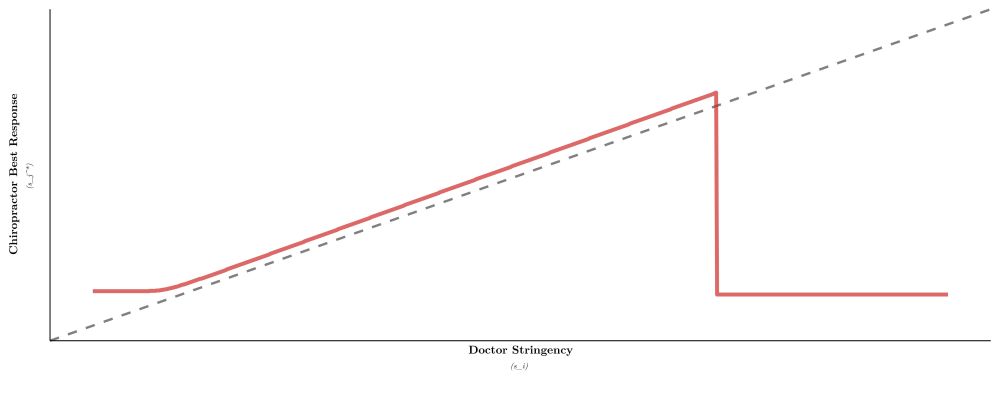
So why would raising YOUR barriers help when competitors enter?
I build a structural model showing boards want to engage in "cream-skimming" - they want to set standards just high enough to poach high-ability workers from rival professions.
(7/9)
I build a structural model showing boards want to engage in "cream-skimming" - they want to set standards just high enough to poach high-ability workers from rival professions.
(7/9)
November 24, 2025 at 8:50 PM
So why would raising YOUR barriers help when competitors enter?
I build a structural model showing boards want to engage in "cream-skimming" - they want to set standards just high enough to poach high-ability workers from rival professions.
(7/9)
I build a structural model showing boards want to engage in "cream-skimming" - they want to set standards just high enough to poach high-ability workers from rival professions.
(7/9)
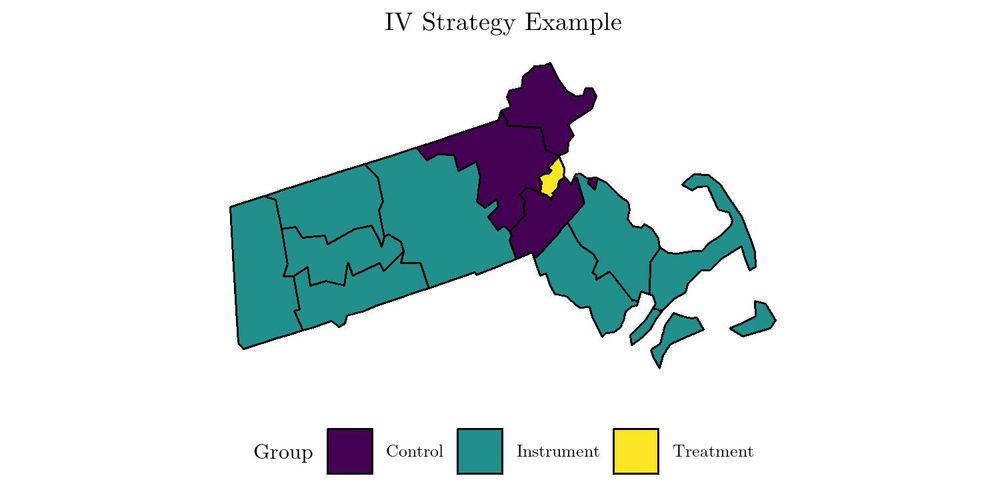
The tricky part: does licensing cause these changes, or do areas with more chiropractors just adopt licensing?
I use an IV strategy with non-bordering counties (F-stats 338-699) and find chiropractors actually INCREASED 2-12 per 100k despite now facing barriers.
(6/9)
I use an IV strategy with non-bordering counties (F-stats 338-699) and find chiropractors actually INCREASED 2-12 per 100k despite now facing barriers.
(6/9)
November 24, 2025 at 8:48 PM
The tricky part: does licensing cause these changes, or do areas with more chiropractors just adopt licensing?
I use an IV strategy with non-bordering counties (F-stats 338-699) and find chiropractors actually INCREASED 2-12 per 100k despite now facing barriers.
(6/9)
I use an IV strategy with non-bordering counties (F-stats 338-699) and find chiropractors actually INCREASED 2-12 per 100k despite now facing barriers.
(6/9)