




Josephine Flockton
@jflockton.bsky.social
Cog Neuro PhD @york.ac.uk 🧠 Using MEG/OPM & EEG - interested in Predictive Coding, AI/ML, Sensory Integration, Consciousness, & ASMR
Officially Dr Flockton 🎉 Thanks to my brilliant supervisors for their support & great humour throughout my PhD @cejpreston.bsky.social @cademccall.bsky.social @bakerdh.bsky.social & to my lovely examiners for the exciting discussions in yesterday's viva! @mggaskell.bsky.social & Helge Gillmeister

January 17, 2026 at 3:43 PM
Officially Dr Flockton 🎉 Thanks to my brilliant supervisors for their support & great humour throughout my PhD @cejpreston.bsky.social @cademccall.bsky.social @bakerdh.bsky.social & to my lovely examiners for the exciting discussions in yesterday's viva! @mggaskell.bsky.social & Helge Gillmeister
Reposted by Josephine Flockton

Same sound, different perception: Do expectations change what you hear?👂🧠
We paired faces w topics and played the same ambiguous speech w different faces. The brain sharpened sensory signals toward predictions and showed gated prediction errors at higher levels.
Read @plosbiology.org. Blueprint👇
We paired faces w topics and played the same ambiguous speech w different faces. The brain sharpened sensory signals toward predictions and showed gated prediction errors at higher levels.
Read @plosbiology.org. Blueprint👇

Sensory sharpening and semantic prediction errors unify competing models of predictive processing in human speech comprehension
Speech comprehension relies on predictive mechanisms, but models disagree on whether the brain prioritizes expected or unexpected information. This study shows that sharpening of sensory representatio...
dx.plos.org
January 12, 2026 at 10:34 AM
Same sound, different perception: Do expectations change what you hear?👂🧠
We paired faces w topics and played the same ambiguous speech w different faces. The brain sharpened sensory signals toward predictions and showed gated prediction errors at higher levels.
Read @plosbiology.org. Blueprint👇
We paired faces w topics and played the same ambiguous speech w different faces. The brain sharpened sensory signals toward predictions and showed gated prediction errors at higher levels.
Read @plosbiology.org. Blueprint👇
Reposted by Josephine Flockton

Episodic memory consolidation by reactivation of human concept neurons during sleep reflects contents, not sequence of events https://www.biorxiv.org/content/10.64898/2026.01.10.698827v1
January 11, 2026 at 8:16 AM
Episodic memory consolidation by reactivation of human concept neurons during sleep reflects contents, not sequence of events https://www.biorxiv.org/content/10.64898/2026.01.10.698827v1
Reposted by Josephine Flockton

New paper in Imaging Neuroscience by Nils Harmening, Alexander von Lühmann, and Benjamin Blankertz:
Data-driven head model individualization from digitized electrode positions or photogrammetry improves M/EEG source localization accuracy
doi.org/10.1162/IMAG...
Data-driven head model individualization from digitized electrode positions or photogrammetry improves M/EEG source localization accuracy
doi.org/10.1162/IMAG...

January 10, 2026 at 2:46 PM
New paper in Imaging Neuroscience by Nils Harmening, Alexander von Lühmann, and Benjamin Blankertz:
Data-driven head model individualization from digitized electrode positions or photogrammetry improves M/EEG source localization accuracy
doi.org/10.1162/IMAG...
Data-driven head model individualization from digitized electrode positions or photogrammetry improves M/EEG source localization accuracy
doi.org/10.1162/IMAG...
Reposted by Josephine Flockton
What if we could tell you how well you’ll remember your next visit to your local coffee shop? ☕️
In our new Nature Human Behaviour paper, we show that the 𝗾𝘂𝗮𝗹𝗶𝘁𝘆 𝗼𝗳 𝗮 𝘀𝗽𝗮𝘁𝗶𝗮𝗹 𝗿𝗲𝗽𝗿𝗲𝘀𝗲𝗻𝘁𝗮𝘁𝗶𝗼𝗻 can be measured with neuroimaging – and 𝘁𝗵𝗮𝘁 𝘀𝗰𝗼𝗿𝗲 𝗽𝗿𝗲𝗱𝗶𝗰𝘁𝘀 𝗵𝗼𝘄 𝘄𝗲𝗹𝗹 𝗻𝗲𝘄 𝗲𝘅𝗽𝗲𝗿𝗶𝗲𝗻𝗰𝗲𝘀 𝘄𝗶𝗹𝗹 𝘀𝘁𝗶𝗰𝗸.
In our new Nature Human Behaviour paper, we show that the 𝗾𝘂𝗮𝗹𝗶𝘁𝘆 𝗼𝗳 𝗮 𝘀𝗽𝗮𝘁𝗶𝗮𝗹 𝗿𝗲𝗽𝗿𝗲𝘀𝗲𝗻𝘁𝗮𝘁𝗶𝗼𝗻 can be measured with neuroimaging – and 𝘁𝗵𝗮𝘁 𝘀𝗰𝗼𝗿𝗲 𝗽𝗿𝗲𝗱𝗶𝗰𝘁𝘀 𝗵𝗼𝘄 𝘄𝗲𝗹𝗹 𝗻𝗲𝘄 𝗲𝘅𝗽𝗲𝗿𝗶𝗲𝗻𝗰𝗲𝘀 𝘄𝗶𝗹𝗹 𝘀𝘁𝗶𝗰𝗸.

New study by @xrmasiso.bsky.social et al shows that spatial contexts with more reliable brain representations better support memory for future experiences within them, revealing how stable neural maps help the brain organize and recall life events.

Spatial contexts with reliable neural representations support reinstatement of subsequently placed objects - Nature Human Behaviour
This study shows that spatial contexts with more reliable brain representations better support memory for future experiences within them, revealing how stable neural maps help the brain organize and recall life events.
www.nature.com
January 5, 2026 at 6:43 PM
What if we could tell you how well you’ll remember your next visit to your local coffee shop? ☕️
In our new Nature Human Behaviour paper, we show that the 𝗾𝘂𝗮𝗹𝗶𝘁𝘆 𝗼𝗳 𝗮 𝘀𝗽𝗮𝘁𝗶𝗮𝗹 𝗿𝗲𝗽𝗿𝗲𝘀𝗲𝗻𝘁𝗮𝘁𝗶𝗼𝗻 can be measured with neuroimaging – and 𝘁𝗵𝗮𝘁 𝘀𝗰𝗼𝗿𝗲 𝗽𝗿𝗲𝗱𝗶𝗰𝘁𝘀 𝗵𝗼𝘄 𝘄𝗲𝗹𝗹 𝗻𝗲𝘄 𝗲𝘅𝗽𝗲𝗿𝗶𝗲𝗻𝗰𝗲𝘀 𝘄𝗶𝗹𝗹 𝘀𝘁𝗶𝗰𝗸.
In our new Nature Human Behaviour paper, we show that the 𝗾𝘂𝗮𝗹𝗶𝘁𝘆 𝗼𝗳 𝗮 𝘀𝗽𝗮𝘁𝗶𝗮𝗹 𝗿𝗲𝗽𝗿𝗲𝘀𝗲𝗻𝘁𝗮𝘁𝗶𝗼𝗻 can be measured with neuroimaging – and 𝘁𝗵𝗮𝘁 𝘀𝗰𝗼𝗿𝗲 𝗽𝗿𝗲𝗱𝗶𝗰𝘁𝘀 𝗵𝗼𝘄 𝘄𝗲𝗹𝗹 𝗻𝗲𝘄 𝗲𝘅𝗽𝗲𝗿𝗶𝗲𝗻𝗰𝗲𝘀 𝘄𝗶𝗹𝗹 𝘀𝘁𝗶𝗰𝗸.
Reposted by Josephine Flockton
Alpha oscillations and aperiodic neural dynamics jointly predict visual temporal resolution, confidence, and dependence on prior experience https://www.biorxiv.org/content/10.64898/2026.01.05.697694v1
January 5, 2026 at 10:15 PM
Alpha oscillations and aperiodic neural dynamics jointly predict visual temporal resolution, confidence, and dependence on prior experience https://www.biorxiv.org/content/10.64898/2026.01.05.697694v1
Reposted by Josephine Flockton

for years, I've said my favorite conspiracy theory about the brain is that "neurons are a front, glial cells do all the real work", mostly (but not completely) as a joke. Welp...
"Astrocyte ensembles are sufficient and necessary for recall" 👀👀👀
www.nature.com/articles/s41...
"Astrocyte ensembles are sufficient and necessary for recall" 👀👀👀
www.nature.com/articles/s41...

Astroengrams: rethinking the cellular substrate for memory
Nature Reviews Neuroscience - Recent evidence suggests that astrocytes, through coordinated activation in sparse ensembles, contribute to memory traces — termed ‘astro-neuronal...
www.nature.com
January 2, 2026 at 8:43 PM
for years, I've said my favorite conspiracy theory about the brain is that "neurons are a front, glial cells do all the real work", mostly (but not completely) as a joke. Welp...
"Astrocyte ensembles are sufficient and necessary for recall" 👀👀👀
www.nature.com/articles/s41...
"Astrocyte ensembles are sufficient and necessary for recall" 👀👀👀
www.nature.com/articles/s41...
Reposted by Josephine Flockton
Our group has been looking at beta bursts for the last 5 years, but we do it a little differently than most - we group into types them based on their waveforms. In this open access article we lay out why and what we think this might mean
journals.sagepub.com/doi/10.1177/...
#neuroskyence
journals.sagepub.com/doi/10.1177/...
#neuroskyence

December 12, 2025 at 10:00 AM
Our group has been looking at beta bursts for the last 5 years, but we do it a little differently than most - we group into types them based on their waveforms. In this open access article we lay out why and what we think this might mean
journals.sagepub.com/doi/10.1177/...
#neuroskyence
journals.sagepub.com/doi/10.1177/...
#neuroskyence
Reposted by Josephine Flockton

📣 Our latest brain-to-text decoding results from our Brain team is out:
"Towards decoding individual words from non-invasive brain recordings"
📄 www.nature.com/articles/s41...
👥 Led by Stéphane d'Ascoli & w/ Corentin Bel, Jérémy RAPIN, Hubert Banville, Yohann Benchetrit and Christophe Pallier
"Towards decoding individual words from non-invasive brain recordings"
📄 www.nature.com/articles/s41...
👥 Led by Stéphane d'Ascoli & w/ Corentin Bel, Jérémy RAPIN, Hubert Banville, Yohann Benchetrit and Christophe Pallier
December 4, 2025 at 2:41 PM
📣 Our latest brain-to-text decoding results from our Brain team is out:
"Towards decoding individual words from non-invasive brain recordings"
📄 www.nature.com/articles/s41...
👥 Led by Stéphane d'Ascoli & w/ Corentin Bel, Jérémy RAPIN, Hubert Banville, Yohann Benchetrit and Christophe Pallier
"Towards decoding individual words from non-invasive brain recordings"
📄 www.nature.com/articles/s41...
👥 Led by Stéphane d'Ascoli & w/ Corentin Bel, Jérémy RAPIN, Hubert Banville, Yohann Benchetrit and Christophe Pallier
Reposted by Josephine Flockton

I'm happy to share my debut as first-author with the recent publication of our article in #JNeurosci:
www.jneurosci.org/content/earl...
Big thanks again to @tschreiner.bsky.social and the whole team who made this possible! 🧠🌬️
www.jneurosci.org/content/earl...
Big thanks again to @tschreiner.bsky.social and the whole team who made this possible! 🧠🌬️
December 4, 2025 at 8:09 AM
I'm happy to share my debut as first-author with the recent publication of our article in #JNeurosci:
www.jneurosci.org/content/earl...
Big thanks again to @tschreiner.bsky.social and the whole team who made this possible! 🧠🌬️
www.jneurosci.org/content/earl...
Big thanks again to @tschreiner.bsky.social and the whole team who made this possible! 🧠🌬️
Reposted by Josephine Flockton
🎉 Our paper has been selected for a Neurips Spotlight:
“Scaling and Context Steer LLMs along the Same Computational Path as the Human Brain”
👥led by J Raugel, w/ S. Ascoli, Rapin & @valentinwyart.bsky.social
📄https://openreview.net/pdf?id=4YKlo58RcQ
📍 Hall C-E Poster #2006
🧵thread 👇
“Scaling and Context Steer LLMs along the Same Computational Path as the Human Brain”
👥led by J Raugel, w/ S. Ascoli, Rapin & @valentinwyart.bsky.social
📄https://openreview.net/pdf?id=4YKlo58RcQ
📍 Hall C-E Poster #2006
🧵thread 👇
December 3, 2025 at 8:37 AM
🎉 Our paper has been selected for a Neurips Spotlight:
“Scaling and Context Steer LLMs along the Same Computational Path as the Human Brain”
👥led by J Raugel, w/ S. Ascoli, Rapin & @valentinwyart.bsky.social
📄https://openreview.net/pdf?id=4YKlo58RcQ
📍 Hall C-E Poster #2006
🧵thread 👇
“Scaling and Context Steer LLMs along the Same Computational Path as the Human Brain”
👥led by J Raugel, w/ S. Ascoli, Rapin & @valentinwyart.bsky.social
📄https://openreview.net/pdf?id=4YKlo58RcQ
📍 Hall C-E Poster #2006
🧵thread 👇
Fab time at #MEGNord - a smorgasbord of both research & sandwiches! Laminar MEG, fetal OPM, & the wonders of the cerebellum were highlights, as were all the lovely folks I got to meet 🧠 ✨


November 29, 2025 at 10:21 AM
Fab time at #MEGNord - a smorgasbord of both research & sandwiches! Laminar MEG, fetal OPM, & the wonders of the cerebellum were highlights, as were all the lovely folks I got to meet 🧠 ✨
As a grapheme synesthete always trying to convince people it wasn't made up as a kid, adult me is thrilled to see this super cool work 👁️🌈

Synesthetes claim sensory experiences, such as seeing color when reading or hearing a (black) number.
But how genuine are these reports and sensations? We introduce a rather direct measure of synesthetic perception: Synesthetes’ pupils respond to evoked color as if it was real color #vision! 👁️🎨🧪

November 26, 2025 at 8:12 PM
As a grapheme synesthete always trying to convince people it wasn't made up as a kid, adult me is thrilled to see this super cool work 👁️🌈
Reposted by Josephine Flockton
Distinct Roles of Deep and Superficial Cortical Layers in Tone Prediction, Comparison, and Adaptation in Human Auditory Cortex https://www.biorxiv.org/content/10.1101/2025.11.24.687809v1
November 25, 2025 at 10:16 AM
Distinct Roles of Deep and Superficial Cortical Layers in Tone Prediction, Comparison, and Adaptation in Human Auditory Cortex https://www.biorxiv.org/content/10.1101/2025.11.24.687809v1
Reposted by Josephine Flockton

Excited to share that the main work of my PhD has been published!
We found that having control over pain makes expectations more precise, and changes pain perception. This is accompanied by activation changes in the PAG, SMA and ACC.
You can read the full version of the paper here: rdcu.be/eQy6X
We found that having control over pain makes expectations more precise, and changes pain perception. This is accompanied by activation changes in the PAG, SMA and ACC.
You can read the full version of the paper here: rdcu.be/eQy6X

Controllability changes pain perception by increasing the precision of expectations
Nature Communications - Control over pain changes how intense it is perceived. Here, the authors show that this effect results from increased expectation precision with control, which changes...
rdcu.be
November 22, 2025 at 1:50 PM
Excited to share that the main work of my PhD has been published!
We found that having control over pain makes expectations more precise, and changes pain perception. This is accompanied by activation changes in the PAG, SMA and ACC.
You can read the full version of the paper here: rdcu.be/eQy6X
We found that having control over pain makes expectations more precise, and changes pain perception. This is accompanied by activation changes in the PAG, SMA and ACC.
You can read the full version of the paper here: rdcu.be/eQy6X
Anyone else going to #MEGNord at Aarhus next week? 🇩🇰 Interested in predictive coding of touch from sound, beta & gamma dynamics, or somatosensory echoes? 🧠 Boy do I have the poster for you! Come say hi 😊
November 22, 2025 at 1:35 PM
Anyone else going to #MEGNord at Aarhus next week? 🇩🇰 Interested in predictive coding of touch from sound, beta & gamma dynamics, or somatosensory echoes? 🧠 Boy do I have the poster for you! Come say hi 😊
Reposted by Josephine Flockton

What happens if you hook up an energy-efficiency optimising RNN on active vision input?
It learns predictive remapping and path integration into allocentric scene coordinates.
Now out in patterns: www.cell.com/patterns/ful...
It learns predictive remapping and path integration into allocentric scene coordinates.
Now out in patterns: www.cell.com/patterns/ful...
November 21, 2025 at 8:01 AM
What happens if you hook up an energy-efficiency optimising RNN on active vision input?
It learns predictive remapping and path integration into allocentric scene coordinates.
Now out in patterns: www.cell.com/patterns/ful...
It learns predictive remapping and path integration into allocentric scene coordinates.
Now out in patterns: www.cell.com/patterns/ful...
Reposted by Josephine Flockton
More exciting psychophysics suggesting that imagery instantiates sensory representations through suppression, not activation: psycnet.apa.org/record/2026-....
This paper demonstrated similar effects: pubmed.ncbi.nlm.nih.gov/37782827/
Could this explain decreased activation and increased decoding?
This paper demonstrated similar effects: pubmed.ncbi.nlm.nih.gov/37782827/
Could this explain decreased activation and increased decoding?
APA PsycNet
psycnet.apa.org
November 14, 2025 at 5:27 PM
More exciting psychophysics suggesting that imagery instantiates sensory representations through suppression, not activation: psycnet.apa.org/record/2026-....
This paper demonstrated similar effects: pubmed.ncbi.nlm.nih.gov/37782827/
Could this explain decreased activation and increased decoding?
This paper demonstrated similar effects: pubmed.ncbi.nlm.nih.gov/37782827/
Could this explain decreased activation and increased decoding?
Reposted by Josephine Flockton
How to Improve the Reliability of Aperiodic Parameter Estimates in M/EEG: A Method Comparison and Recommendations for Best Practices https://www.biorxiv.org/content/10.1101/2025.11.10.687541v1
November 11, 2025 at 11:17 PM
How to Improve the Reliability of Aperiodic Parameter Estimates in M/EEG: A Method Comparison and Recommendations for Best Practices https://www.biorxiv.org/content/10.1101/2025.11.10.687541v1
Reposted by Josephine Flockton

🚨 New preprint!
One idea, many ways to say it – but does your brain track those options while you speak?
Using LLMs, we put this to the test.
www.biorxiv.org/content/10.1...
We show for the 1st time that the brain represents multiple alternatives simultaneously in both listening and speaking.
🧵
One idea, many ways to say it – but does your brain track those options while you speak?
Using LLMs, we put this to the test.
www.biorxiv.org/content/10.1...
We show for the 1st time that the brain represents multiple alternatives simultaneously in both listening and speaking.
🧵
November 11, 2025 at 8:41 AM
🚨 New preprint!
One idea, many ways to say it – but does your brain track those options while you speak?
Using LLMs, we put this to the test.
www.biorxiv.org/content/10.1...
We show for the 1st time that the brain represents multiple alternatives simultaneously in both listening and speaking.
🧵
One idea, many ways to say it – but does your brain track those options while you speak?
Using LLMs, we put this to the test.
www.biorxiv.org/content/10.1...
We show for the 1st time that the brain represents multiple alternatives simultaneously in both listening and speaking.
🧵
Reposted by Josephine Flockton
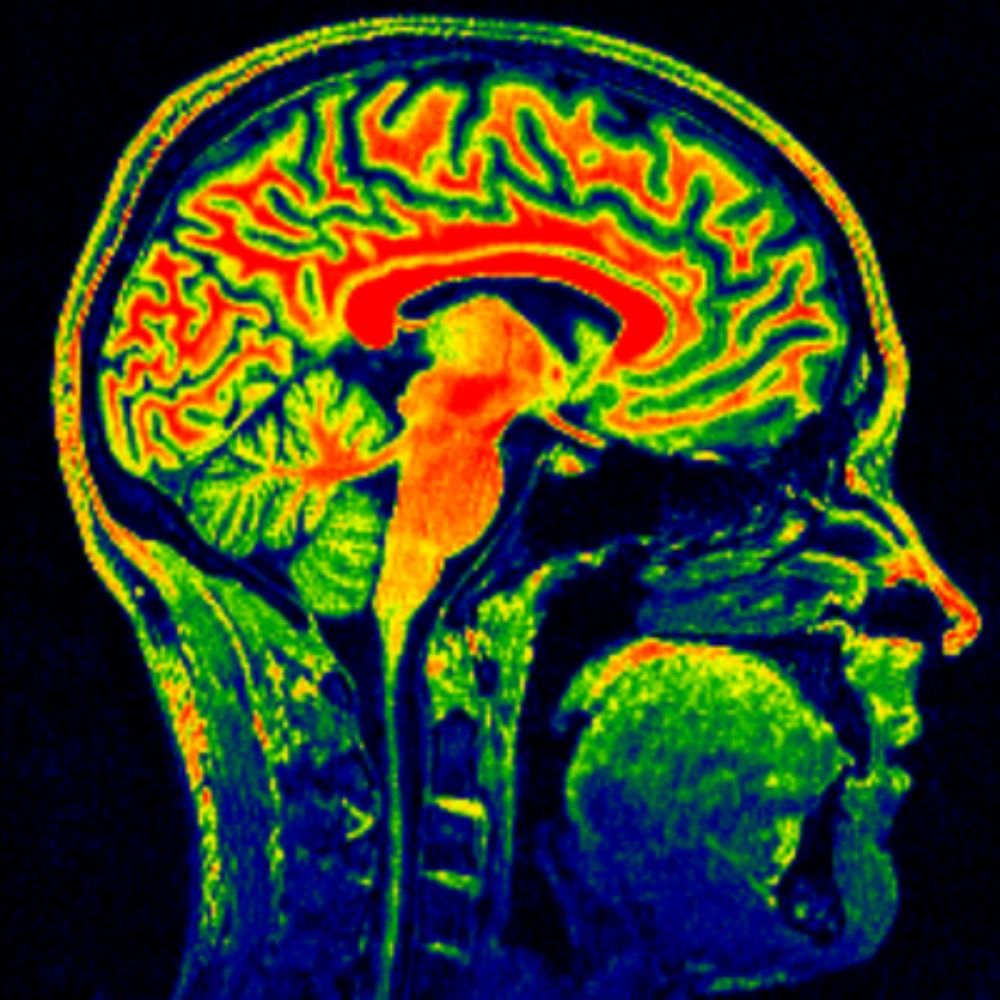
Do you like RSA analysis, M/EEG and Bayes? Then you'll love Variational RSA for M/EEG, by recently completed PhD student @alexlepauvre.bsky.social from Lucia Melloni's group. It's a method and SPM toolbox for multivariate analysis of M/EEG data. arxiv.org/pdf/2511.01784 . 🧵 [1/4]

November 6, 2025 at 2:03 PM
Do you like RSA analysis, M/EEG and Bayes? Then you'll love Variational RSA for M/EEG, by recently completed PhD student @alexlepauvre.bsky.social from Lucia Melloni's group. It's a method and SPM toolbox for multivariate analysis of M/EEG data. arxiv.org/pdf/2511.01784 . 🧵 [1/4]
Reposted by Josephine Flockton

Delighted to share our new preprint!
We show that rhythmic light stimulation produces multiplexed oscillatory responses at fundamental and harmonic frequencies that are spatially, temporally, and functionally distinct.
Read on for the details [1/6]
www.biorxiv.org/content/10.1...
#neuroskyence
We show that rhythmic light stimulation produces multiplexed oscillatory responses at fundamental and harmonic frequencies that are spatially, temporally, and functionally distinct.
Read on for the details [1/6]
www.biorxiv.org/content/10.1...
#neuroskyence

Rhythmic light stimulation elicits multiple concurrent neural responses that separably shape human perception
Rhythmic light stimulation offers solutions to innumerable cognitive and neurological disorders. However, like any neuromodulatory technique, responses to rhythmic light stimulation are highly variabl...
www.biorxiv.org
November 7, 2025 at 11:55 AM
Delighted to share our new preprint!
We show that rhythmic light stimulation produces multiplexed oscillatory responses at fundamental and harmonic frequencies that are spatially, temporally, and functionally distinct.
Read on for the details [1/6]
www.biorxiv.org/content/10.1...
#neuroskyence
We show that rhythmic light stimulation produces multiplexed oscillatory responses at fundamental and harmonic frequencies that are spatially, temporally, and functionally distinct.
Read on for the details [1/6]
www.biorxiv.org/content/10.1...
#neuroskyence
Reposted by Josephine Flockton
New preprint with amazing work from @nchalas.bsky.social:
How does respiration influence (un-)predictable near-threshold perception? MEG, arousal modulation, excitability states, respiration phase-resolved connectivity changes - it's all there :)
#neuroskyence
www.biorxiv.org/content/10.1...
How does respiration influence (un-)predictable near-threshold perception? MEG, arousal modulation, excitability states, respiration phase-resolved connectivity changes - it's all there :)
#neuroskyence
www.biorxiv.org/content/10.1...

Respiration as a dynamic modulator of sensory sampling
Respiration dynamically modulates sensory perception by orchestrating transient states of the brain and the body. Using simultaneous recordings of high-density magneto-encephalography (MEG), respirati...
www.biorxiv.org
June 30, 2025 at 12:20 PM
New preprint with amazing work from @nchalas.bsky.social:
How does respiration influence (un-)predictable near-threshold perception? MEG, arousal modulation, excitability states, respiration phase-resolved connectivity changes - it's all there :)
#neuroskyence
www.biorxiv.org/content/10.1...
How does respiration influence (un-)predictable near-threshold perception? MEG, arousal modulation, excitability states, respiration phase-resolved connectivity changes - it's all there :)
#neuroskyence
www.biorxiv.org/content/10.1...
Reposted by Josephine Flockton
Accessing Meaning During Encoding Shapes Subsequent Memory Reactivation in the Brain https://www.biorxiv.org/content/10.1101/2025.11.02.686134v1
November 4, 2025 at 3:15 PM
Accessing Meaning During Encoding Shapes Subsequent Memory Reactivation in the Brain https://www.biorxiv.org/content/10.1101/2025.11.02.686134v1
Reposted by Josephine Flockton
Introducing CorText: a framework that fuses brain data directly into a large language model, allowing for interactive neural readout using natural language.
tl;dr: you can now chat with a brain scan 🧠💬
1/n
tl;dr: you can now chat with a brain scan 🧠💬
1/n

November 3, 2025 at 3:17 PM
Introducing CorText: a framework that fuses brain data directly into a large language model, allowing for interactive neural readout using natural language.
tl;dr: you can now chat with a brain scan 🧠💬
1/n
tl;dr: you can now chat with a brain scan 🧠💬
1/n