




Japan Art and Culture Lab
@japanartculturelab.bsky.social
Meguro Moto-Fuji (目黒元不二)
By Utagawa Hiroshige
By Utagawa Hiroshige

December 14, 2025 at 2:01 PM
Meguro Moto-Fuji (目黒元不二)
By Utagawa Hiroshige
By Utagawa Hiroshige
One Hundred Famous Views of Edo: Asakusa Kinryuzan (Meisho Edo Hyakkei: Asakusa Kinryuzan)
By Utagawa Hiroshige
By Utagawa Hiroshige

December 13, 2025 at 3:14 PM
One Hundred Famous Views of Edo: Asakusa Kinryuzan (Meisho Edo Hyakkei: Asakusa Kinryuzan)
By Utagawa Hiroshige
By Utagawa Hiroshige
One Hundred Famous Views of Edo: Onagigawa Gohonmatsu (Meisho Edo Hyakkei: Onagigawa Gohonmatsu)
By Utagawa Hiroshige
The view on Onagi Canal, a vital waterway connecting the Sumida and Nakagawa rivers
The canal played a crucial role in Edo's development as a major transportation route
By Utagawa Hiroshige
The view on Onagi Canal, a vital waterway connecting the Sumida and Nakagawa rivers
The canal played a crucial role in Edo's development as a major transportation route

December 12, 2025 at 1:26 AM
One Hundred Famous Views of Edo: Onagigawa Gohonmatsu (Meisho Edo Hyakkei: Onagigawa Gohonmatsu)
By Utagawa Hiroshige
The view on Onagi Canal, a vital waterway connecting the Sumida and Nakagawa rivers
The canal played a crucial role in Edo's development as a major transportation route
By Utagawa Hiroshige
The view on Onagi Canal, a vital waterway connecting the Sumida and Nakagawa rivers
The canal played a crucial role in Edo's development as a major transportation route
One Hundred Famous Views of Edo: Kanda Kon'yacho (Meisho Edo Hyakkei: Kanda Konyacho)
By Utagawa Hiroshige
This work depicts the dyers' district of Kanda, where indigo-dyed cotton fabrics dry in the breeze
The patterns on the cloths bear the publisher's mark and Hiroshige's seal
By Utagawa Hiroshige
This work depicts the dyers' district of Kanda, where indigo-dyed cotton fabrics dry in the breeze
The patterns on the cloths bear the publisher's mark and Hiroshige's seal

December 10, 2025 at 12:30 AM
One Hundred Famous Views of Edo: Kanda Kon'yacho (Meisho Edo Hyakkei: Kanda Konyacho)
By Utagawa Hiroshige
This work depicts the dyers' district of Kanda, where indigo-dyed cotton fabrics dry in the breeze
The patterns on the cloths bear the publisher's mark and Hiroshige's seal
By Utagawa Hiroshige
This work depicts the dyers' district of Kanda, where indigo-dyed cotton fabrics dry in the breeze
The patterns on the cloths bear the publisher's mark and Hiroshige's seal
One Hundred Famous Views of Edo: Nihonbashi Clearing After Snow (Meisho Edo Hyakkei: Nihonbashi Yukibare)
By Utagawa Hiroshige
This print captures a snowy morning at Nihonbashi Bridge
The view looks west toward Edo Castle and Mount Fuji, symbolizing Edo as the nation's center
By Utagawa Hiroshige
This print captures a snowy morning at Nihonbashi Bridge
The view looks west toward Edo Castle and Mount Fuji, symbolizing Edo as the nation's center

December 6, 2025 at 1:17 AM
One Hundred Famous Views of Edo: Nihonbashi Clearing After Snow (Meisho Edo Hyakkei: Nihonbashi Yukibare)
By Utagawa Hiroshige
This print captures a snowy morning at Nihonbashi Bridge
The view looks west toward Edo Castle and Mount Fuji, symbolizing Edo as the nation's center
By Utagawa Hiroshige
This print captures a snowy morning at Nihonbashi Bridge
The view looks west toward Edo Castle and Mount Fuji, symbolizing Edo as the nation's center
One Hundred Famous Views of Edo: Takanawa Ushimachi
By Utagawa Hiroshige
This woodblock print depicts a scene in Ushimachi (Cow Town), Takanawa, known for its many oxen used to transport goods
A large ox-cart wheel frames the view, while a puppy plays with sandal straps
By Utagawa Hiroshige
This woodblock print depicts a scene in Ushimachi (Cow Town), Takanawa, known for its many oxen used to transport goods
A large ox-cart wheel frames the view, while a puppy plays with sandal straps

December 5, 2025 at 1:26 AM
One Hundred Famous Views of Edo: Takanawa Ushimachi
By Utagawa Hiroshige
This woodblock print depicts a scene in Ushimachi (Cow Town), Takanawa, known for its many oxen used to transport goods
A large ox-cart wheel frames the view, while a puppy plays with sandal straps
By Utagawa Hiroshige
This woodblock print depicts a scene in Ushimachi (Cow Town), Takanawa, known for its many oxen used to transport goods
A large ox-cart wheel frames the view, while a puppy plays with sandal straps
Tigers Folding Screen
By Otomo Gekko
By Otomo Gekko

November 30, 2025 at 2:00 PM
Tigers Folding Screen
By Otomo Gekko
By Otomo Gekko
Zegai-bō Emaki
By Unknown
An *emaki* (picture scroll) preserved at Manshuin
It narrates the story of a Tengu who traveled from China only to be defeated by a Japanese monk
By Unknown
An *emaki* (picture scroll) preserved at Manshuin
It narrates the story of a Tengu who traveled from China only to be defeated by a Japanese monk

November 29, 2025 at 3:14 PM
Zegai-bō Emaki
By Unknown
An *emaki* (picture scroll) preserved at Manshuin
It narrates the story of a Tengu who traveled from China only to be defeated by a Japanese monk
By Unknown
An *emaki* (picture scroll) preserved at Manshuin
It narrates the story of a Tengu who traveled from China only to be defeated by a Japanese monk
Kannon, Monkeys, Crane Triptych
By Muqi
Zen ink painting (3 scrolls) highly valued in Japan as Tōbutsu (Chinese import)
Part of the Shogun Ashikaga Yoshimitsu's Higashiyama Gyobutsu collection
By Muqi
Zen ink painting (3 scrolls) highly valued in Japan as Tōbutsu (Chinese import)
Part of the Shogun Ashikaga Yoshimitsu's Higashiyama Gyobutsu collection

November 29, 2025 at 1:17 AM
Kannon, Monkeys, Crane Triptych
By Muqi
Zen ink painting (3 scrolls) highly valued in Japan as Tōbutsu (Chinese import)
Part of the Shogun Ashikaga Yoshimitsu's Higashiyama Gyobutsu collection
By Muqi
Zen ink painting (3 scrolls) highly valued in Japan as Tōbutsu (Chinese import)
Part of the Shogun Ashikaga Yoshimitsu's Higashiyama Gyobutsu collection
Amanohashidate
By Sesshū
He applied Chinese techniques that he had learned to depict Japanese scenery in ink painting
By Sesshū
He applied Chinese techniques that he had learned to depict Japanese scenery in ink painting

November 27, 2025 at 1:36 AM
Amanohashidate
By Sesshū
He applied Chinese techniques that he had learned to depict Japanese scenery in ink painting
By Sesshū
He applied Chinese techniques that he had learned to depict Japanese scenery in ink painting
Figure of the ranking sumo wrestler while traveling Oi-gawa over a river
By Kunisada Utagawa
By Kunisada Utagawa

November 22, 2025 at 3:14 PM
Figure of the ranking sumo wrestler while traveling Oi-gawa over a river
By Kunisada Utagawa
By Kunisada Utagawa
Coin purse(Hayamichi)
An Edo Period coin purse (*Hayamichi*)
It was an essential tool for carrying small change immediately accessible while traveling
An Edo Period coin purse (*Hayamichi*)
It was an essential tool for carrying small change immediately accessible while traveling

November 22, 2025 at 1:17 AM
Coin purse(Hayamichi)
An Edo Period coin purse (*Hayamichi*)
It was an essential tool for carrying small change immediately accessible while traveling
An Edo Period coin purse (*Hayamichi*)
It was an essential tool for carrying small change immediately accessible while traveling
Two-storied pagoda
By Unknown
This wooden miniature *Tahōtō* (dated 1450) was made by a Nara carpenter
It served as a miniature stupa to house sacred relics
By Unknown
This wooden miniature *Tahōtō* (dated 1450) was made by a Nara carpenter
It served as a miniature stupa to house sacred relics

November 20, 2025 at 1:36 AM
Two-storied pagoda
By Unknown
This wooden miniature *Tahōtō* (dated 1450) was made by a Nara carpenter
It served as a miniature stupa to house sacred relics
By Unknown
This wooden miniature *Tahōtō* (dated 1450) was made by a Nara carpenter
It served as a miniature stupa to house sacred relics
Dutchman with Servants
Published by Hariya, Nagasaki
A Nagasaki woodblock print in mid-18th century
It shows a Dutchman (Capitan) with an attendant holding a sunshade and a junior sailor
Published by Hariya, Nagasaki
A Nagasaki woodblock print in mid-18th century
It shows a Dutchman (Capitan) with an attendant holding a sunshade and a junior sailor

November 18, 2025 at 12:03 AM
Dutchman with Servants
Published by Hariya, Nagasaki
A Nagasaki woodblock print in mid-18th century
It shows a Dutchman (Capitan) with an attendant holding a sunshade and a junior sailor
Published by Hariya, Nagasaki
A Nagasaki woodblock print in mid-18th century
It shows a Dutchman (Capitan) with an attendant holding a sunshade and a junior sailor

Early Christian Church in Kyoto (都の南蛮寺図)
By Kano Soshu Kano
This is the only known visual artifact of Kyoto's Namban-dera (Assumption Church)
Built in Japanese style by Jesuits under Nobunaga, it was demolished in 1587
By Kano Soshu Kano
This is the only known visual artifact of Kyoto's Namban-dera (Assumption Church)
Built in Japanese style by Jesuits under Nobunaga, it was demolished in 1587

November 16, 2025 at 2:02 PM
Early Christian Church in Kyoto (都の南蛮寺図)
By Kano Soshu Kano
This is the only known visual artifact of Kyoto's Namban-dera (Assumption Church)
Built in Japanese style by Jesuits under Nobunaga, it was demolished in 1587
By Kano Soshu Kano
This is the only known visual artifact of Kyoto's Namban-dera (Assumption Church)
Built in Japanese style by Jesuits under Nobunaga, it was demolished in 1587
**Procession of Korean Mission in Edo** (朝鮮通信使来朝図)
By Hanegawa Tōei
This landscape depicts the 10th Korean Mission in Edo
By Hanegawa Tōei
This landscape depicts the 10th Korean Mission in Edo

November 15, 2025 at 3:14 PM
**Procession of Korean Mission in Edo** (朝鮮通信使来朝図)
By Hanegawa Tōei
This landscape depicts the 10th Korean Mission in Edo
By Hanegawa Tōei
This landscape depicts the 10th Korean Mission in Edo
Reposted by Japan Art and Culture Lab
駐車場の柿があかるんできました。
しかし、とても渋いのでそのままでは食べられません。
しかし、とても渋いのでそのままでは食べられません。

November 15, 2025 at 12:04 AM
駐車場の柿があかるんできました。
しかし、とても渋いのでそのままでは食べられません。
しかし、とても渋いのでそのままでは食べられません。
Mandara of Birds and Beasts (鳥獣曼荼羅)
By Noboru Kitawaki
A surrealist work combining two ducks and a cat to form a human face, resembling Kabuki makeup
Kitawaki found "human faces" in ordinary objects
By Noboru Kitawaki
A surrealist work combining two ducks and a cat to form a human face, resembling Kabuki makeup
Kitawaki found "human faces" in ordinary objects

November 14, 2025 at 1:26 AM
Mandara of Birds and Beasts (鳥獣曼荼羅)
By Noboru Kitawaki
A surrealist work combining two ducks and a cat to form a human face, resembling Kabuki makeup
Kitawaki found "human faces" in ordinary objects
By Noboru Kitawaki
A surrealist work combining two ducks and a cat to form a human face, resembling Kabuki makeup
Kitawaki found "human faces" in ordinary objects
Reposted by Japan Art and Culture Lab
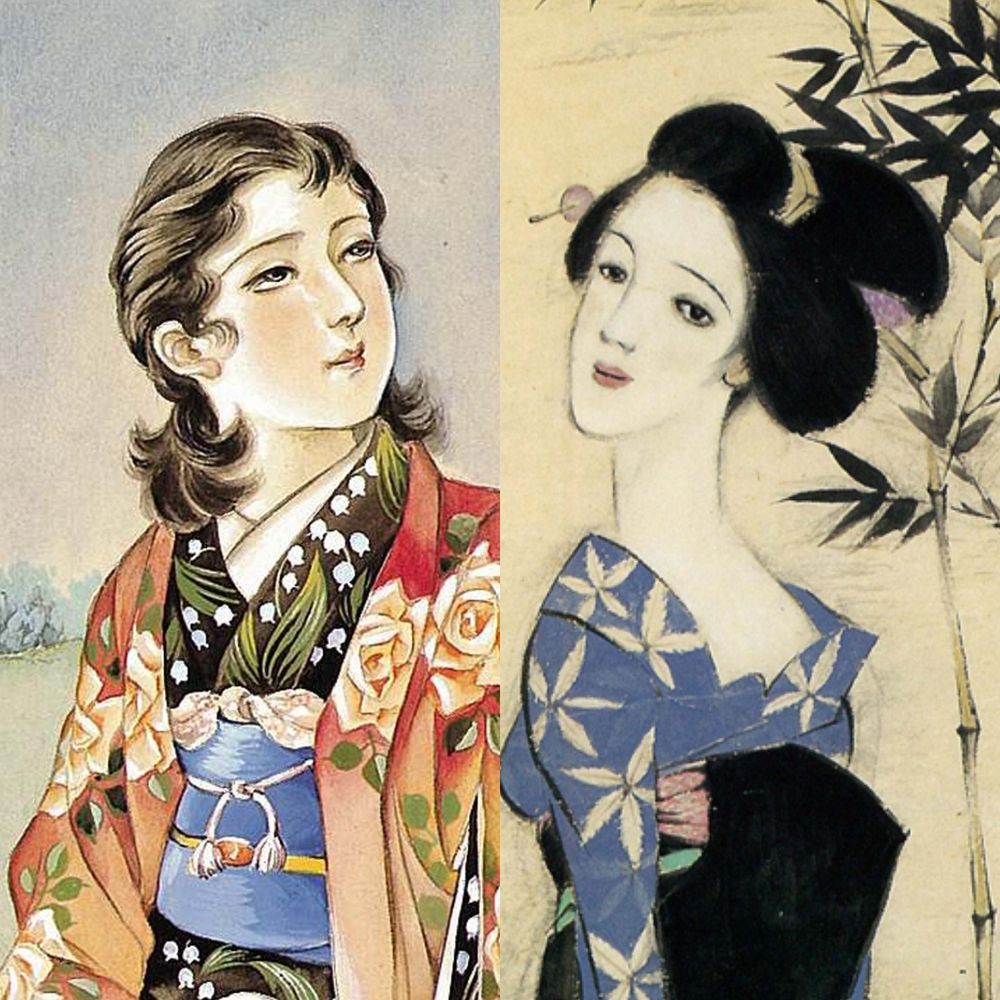
稲垣足穂は「少年愛の美学」の中で #彦造 描く青少年を「動物の血がその血管を流れているのではないかと思われるような、一種狂乱的な人間群」と書いた。確かに彼らは狂的な獣性を持ち、しかし同時に端正で貴族的ですらある。獣的で貴族的と、相矛盾する感覚の共存が彦造の魅力。画像は「双龍戀慕草紙」
#伊藤彦造
#挿絵
#イラストレーション
#ペン画
#伊藤彦造
#挿絵
#イラストレーション
#ペン画

November 13, 2025 at 1:02 AM
稲垣足穂は「少年愛の美学」の中で #彦造 描く青少年を「動物の血がその血管を流れているのではないかと思われるような、一種狂乱的な人間群」と書いた。確かに彼らは狂的な獣性を持ち、しかし同時に端正で貴族的ですらある。獣的で貴族的と、相矛盾する感覚の共存が彦造の魅力。画像は「双龍戀慕草紙」
#伊藤彦造
#挿絵
#イラストレーション
#ペン画
#伊藤彦造
#挿絵
#イラストレーション
#ペン画
Tiresome, a Girl of the Kansei Era, from the "Thirty-Two Aspects of Customs and Manners" series (風俗三十二相 うるさそう 寛政年間処女之風俗)
By Tsukioka Yoshitoshi
From this 1888 series, the theme is "bothering" (Urusasō). Note the cat's fluffy coat rendered with *karazuri* (空摺), an embossing technique
By Tsukioka Yoshitoshi
From this 1888 series, the theme is "bothering" (Urusasō). Note the cat's fluffy coat rendered with *karazuri* (空摺), an embossing technique

November 12, 2025 at 12:30 AM
Tiresome, a Girl of the Kansei Era, from the "Thirty-Two Aspects of Customs and Manners" series (風俗三十二相 うるさそう 寛政年間処女之風俗)
By Tsukioka Yoshitoshi
From this 1888 series, the theme is "bothering" (Urusasō). Note the cat's fluffy coat rendered with *karazuri* (空摺), an embossing technique
By Tsukioka Yoshitoshi
From this 1888 series, the theme is "bothering" (Urusasō). Note the cat's fluffy coat rendered with *karazuri* (空摺), an embossing technique
Imoseyama (妹背山)
By Utagawa Toyokuni
This ukiyo-e depicts a scene from the tragic drama, "Imoseyama Onna Teikin"
It is known as the Japanese version of Romeo and Juliet
By Utagawa Toyokuni
This ukiyo-e depicts a scene from the tragic drama, "Imoseyama Onna Teikin"
It is known as the Japanese version of Romeo and Juliet

November 11, 2025 at 12:03 AM
Imoseyama (妹背山)
By Utagawa Toyokuni
This ukiyo-e depicts a scene from the tragic drama, "Imoseyama Onna Teikin"
It is known as the Japanese version of Romeo and Juliet
By Utagawa Toyokuni
This ukiyo-e depicts a scene from the tragic drama, "Imoseyama Onna Teikin"
It is known as the Japanese version of Romeo and Juliet
Two Ladies with a Telescope, from Series "Seven Habits of Grace and Disgrace" (風流無くてななくせ [遠目鏡])
By Katsushika Hokusai
A representative large-head portrait of a beauty (*ōkubi-e*) by Hokusai
By Katsushika Hokusai
A representative large-head portrait of a beauty (*ōkubi-e*) by Hokusai

November 9, 2025 at 2:01 PM
Two Ladies with a Telescope, from Series "Seven Habits of Grace and Disgrace" (風流無くてななくせ [遠目鏡])
By Katsushika Hokusai
A representative large-head portrait of a beauty (*ōkubi-e*) by Hokusai
By Katsushika Hokusai
A representative large-head portrait of a beauty (*ōkubi-e*) by Hokusai
Fish-market near Nihonbashi Bridge (日本橋魚河岸図)
By Aōdō Denzen
Early 19th-century copperplate print depicts the Nihonbashi fish market
Until early 20th century, Nihonbashi was the fish market in Edo
By Aōdō Denzen
Early 19th-century copperplate print depicts the Nihonbashi fish market
Until early 20th century, Nihonbashi was the fish market in Edo

November 8, 2025 at 3:14 PM
Fish-market near Nihonbashi Bridge (日本橋魚河岸図)
By Aōdō Denzen
Early 19th-century copperplate print depicts the Nihonbashi fish market
Until early 20th century, Nihonbashi was the fish market in Edo
By Aōdō Denzen
Early 19th-century copperplate print depicts the Nihonbashi fish market
Until early 20th century, Nihonbashi was the fish market in Edo
Interior of Kabuki Theater: Act Seven from "The Forty-seven Loyal Retiners of Akō” (仮名手本忠臣蔵七段目謀酔之段)
Attributed to Torii Kiyotada
It shows Act Seven of Chūshingura, focusing on the audience's chaos and use of perspective, rather than the stage and kabuki actors
Attributed to Torii Kiyotada
It shows Act Seven of Chūshingura, focusing on the audience's chaos and use of perspective, rather than the stage and kabuki actors

November 8, 2025 at 1:17 AM
Interior of Kabuki Theater: Act Seven from "The Forty-seven Loyal Retiners of Akō” (仮名手本忠臣蔵七段目謀酔之段)
Attributed to Torii Kiyotada
It shows Act Seven of Chūshingura, focusing on the audience's chaos and use of perspective, rather than the stage and kabuki actors
Attributed to Torii Kiyotada
It shows Act Seven of Chūshingura, focusing on the audience's chaos and use of perspective, rather than the stage and kabuki actors