



Innis Lab
@innislab.bsky.social
Molecular and structural biology lab at the ARNA laboratory in Bordeaux, France. Ribosomes, antimicrobials and bacterial adaptation.
www.innislab.org
www.innislab.org
Because iTP-seq uses custom transcript libraries and needs fewer reads per condition than Ribo-seq, you can test in parallel how multiple antibiotics, translation factors, engineered ribosomes, or other perturbations shape translation.
🔗 Read our paper here: rdcu.be/eZbiI
🔗 Read our paper here: rdcu.be/eZbiI

iTP-seq: a scalable profiling workflow to characterize bacterial translation landscapes in vitro
Nature Protocols - This protocol describes inverse toeprinting coupled to next-generation sequencing, an in vitro approach to characterize bacterial translation at codon resolution that can...
rdcu.be
January 17, 2026 at 2:22 PM
Because iTP-seq uses custom transcript libraries and needs fewer reads per condition than Ribo-seq, you can test in parallel how multiple antibiotics, translation factors, engineered ribosomes, or other perturbations shape translation.
🔗 Read our paper here: rdcu.be/eZbiI
🔗 Read our paper here: rdcu.be/eZbiI
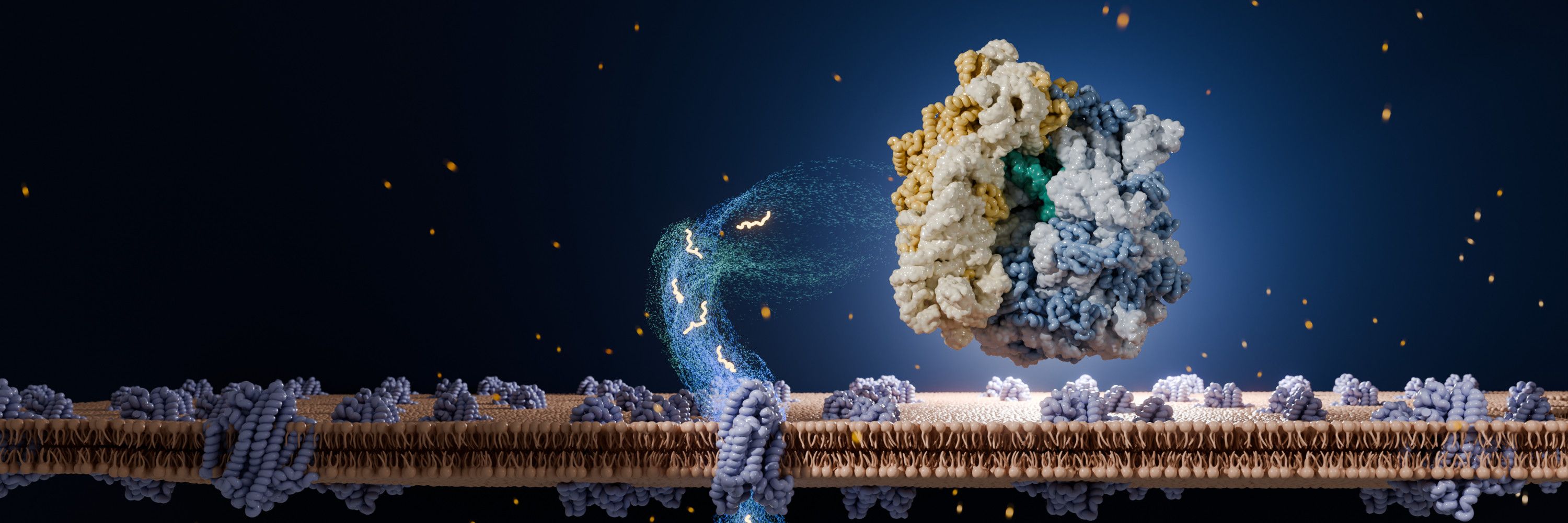
Using RNase R to generate ribosome-protected “inverse toeprints” and deep sequencing, iTP-seq reveals where ribosomes stall and what they’ve translated, with codon-level resolution and without needing a reference genome.
January 17, 2026 at 2:22 PM
Using RNase R to generate ribosome-protected “inverse toeprints” and deep sequencing, iTP-seq reveals where ribosomes stall and what they’ve translated, with codon-level resolution and without needing a reference genome.
We’re thrilled to share our latest iTP-seq protocol for mapping bacterial translation landscapes in vitro — with a complete experimental workflow streamlined by Mélanie Gillard and an open source Python library for data analysis developed by Thibaud Renault.
January 17, 2026 at 2:22 PM
We’re thrilled to share our latest iTP-seq protocol for mapping bacterial translation landscapes in vitro — with a complete experimental workflow streamlined by Mélanie Gillard and an open source Python library for data analysis developed by Thibaud Renault.