



James Albert
@gymnotus.bsky.social
Ecology and Evolution of Amazonian Fishes
Pinned
James Albert
@gymnotus.bsky.social
· Nov 20

New paper alert: A time-calibrated phylogeny of Neotropical freshwater fishes, the most diverse continental fauna on Earth.
Built from a supermatrix of 51 genomic markers for 3,167 species, the most species-rich phylogeny of this fauna to date.
frontiersin.org/journals/bio...
Built from a supermatrix of 51 genomic markers for 3,167 species, the most species-rich phylogeny of this fauna to date.
frontiersin.org/journals/bio...
Reposted by James Albert

Becoming a part of the @systbiol.bsky.social community is one of my greatest scientific achievements. I am happy to celebrate this today with a journal cover and a nomination to the editorial team

January 19, 2026 at 11:47 PM
Becoming a part of the @systbiol.bsky.social community is one of my greatest scientific achievements. I am happy to celebrate this today with a journal cover and a nomination to the editorial team
Reposted by James Albert

Phylogenomics of Cypriniformes, the most diverse order of freshwater fishes: consensus, challenges and limitations https://www.biorxiv.org/content/10.64898/2026.01.14.699467v1
January 14, 2026 at 10:32 PM
Phylogenomics of Cypriniformes, the most diverse order of freshwater fishes: consensus, challenges and limitations https://www.biorxiv.org/content/10.64898/2026.01.14.699467v1
Reposted by James Albert
The Genomic Basis of Electric Signal Diversity https://www.biorxiv.org/content/10.64898/2026.01.14.699493v1
January 14, 2026 at 10:32 PM
The Genomic Basis of Electric Signal Diversity https://www.biorxiv.org/content/10.64898/2026.01.14.699493v1
Reposted by James Albert

They're talking about the new Directorate TIP: www.nsf.gov/tip/latest
December 18, 2025 at 7:17 PM
They're talking about the new Directorate TIP: www.nsf.gov/tip/latest
Reposted by James Albert

Very happy to share that I just published a new paper from my thesis! 🎉
We analysed 546 species of ant to understand how extreme specialisation into reproductive and non-reproductive roles evolved.
Key discoveries in thread🧵 👇
Full paper here: academic.oup.com/evolut/advan...
We analysed 546 species of ant to understand how extreme specialisation into reproductive and non-reproductive roles evolved.
Key discoveries in thread🧵 👇
Full paper here: academic.oup.com/evolut/advan...

December 18, 2025 at 3:31 PM
Very happy to share that I just published a new paper from my thesis! 🎉
We analysed 546 species of ant to understand how extreme specialisation into reproductive and non-reproductive roles evolved.
Key discoveries in thread🧵 👇
Full paper here: academic.oup.com/evolut/advan...
We analysed 546 species of ant to understand how extreme specialisation into reproductive and non-reproductive roles evolved.
Key discoveries in thread🧵 👇
Full paper here: academic.oup.com/evolut/advan...
Reposted by James Albert

My story on the Borax Lake chub & how @nature.org protected the single lake it is found.
#25DaysofFishmas
#25DaysofFishmas

Borax Lake Chub: Conserving a High Desert Survivor
This fish has adapted to a lake high in arsenic and heavy metals. But human activity poses a greater challenge.
blog.nature.org
December 18, 2025 at 2:15 PM
My story on the Borax Lake chub & how @nature.org protected the single lake it is found.
#25DaysofFishmas
#25DaysofFishmas
Doing the tardigrade shuffle.
December 17, 2025 at 11:23 PM
Doing the tardigrade shuffle.
Reposted by James Albert
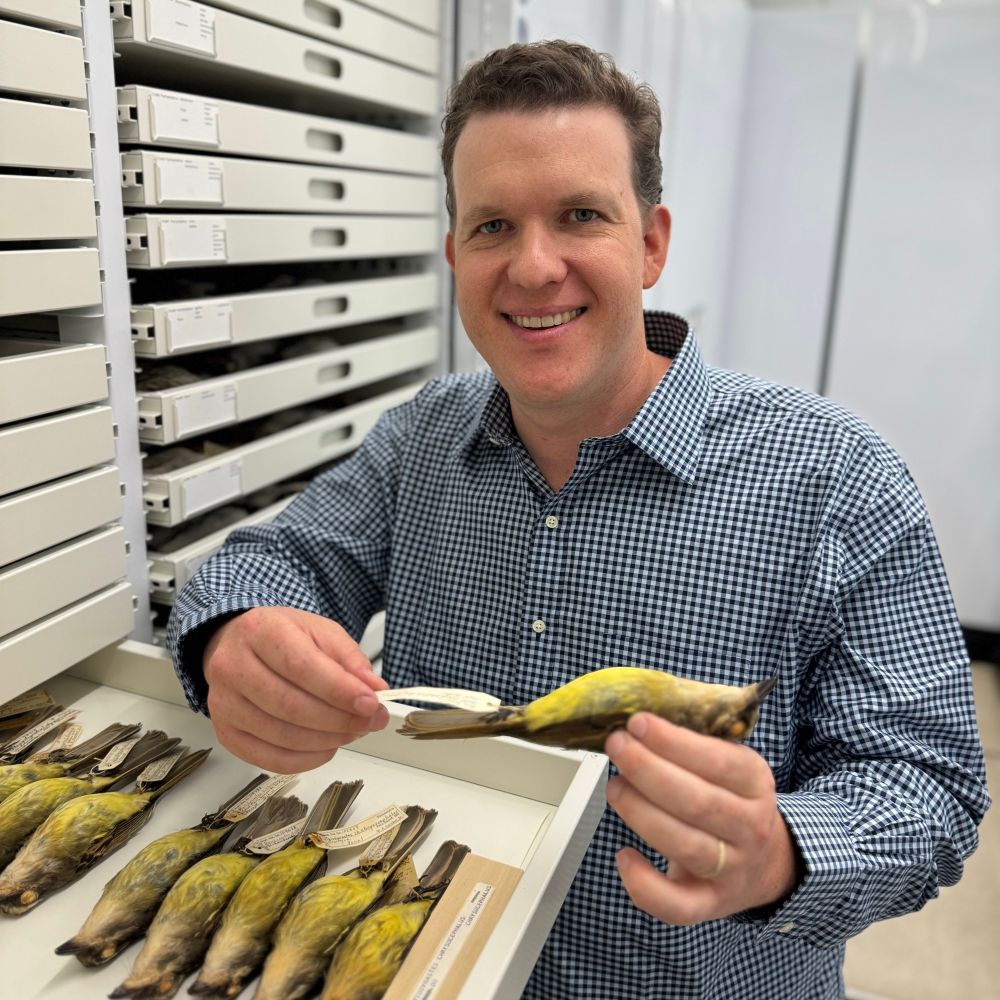
My new paper on Amazonian biogeography and genomics is out in early view in Biological Reviews!
onlinelibrary.wiley.com/doi/10.1111/...
onlinelibrary.wiley.com/doi/10.1111/...

The biogeographic and genomic signatures of dynamic river networks for terrestrial species in Amazonia
Amazonia contains Earth's largest freshwater basin, largest contiguous stretch of tropical forest, and most species-rich terrestrial biota on Earth. Rivers are key geographic features that drive dive...
onlinelibrary.wiley.com
May 29, 2025 at 4:06 PM
My new paper on Amazonian biogeography and genomics is out in early view in Biological Reviews!
onlinelibrary.wiley.com/doi/10.1111/...
onlinelibrary.wiley.com/doi/10.1111/...
Reposted by James Albert
Our paper on tinamou evolution is finally out in @systbiol.bsky.social. academic.oup.com/sysbio/advan...

November 9, 2025 at 4:26 AM
Our paper on tinamou evolution is finally out in @systbiol.bsky.social. academic.oup.com/sysbio/advan...
Reposted by James Albert

Look forward to more about Solomon Island phylogeography in the future, but in the mean time, @lukemusher.bsky.social and I have a pre-print that highlights how a similar phenomenon can occur on continents (with bias in both topology and branch lengths): doi.org/10.1101/2025...

November 21, 2025 at 6:29 PM
Look forward to more about Solomon Island phylogeography in the future, but in the mean time, @lukemusher.bsky.social and I have a pre-print that highlights how a similar phenomenon can occur on continents (with bias in both topology and branch lengths): doi.org/10.1101/2025...
What an amazing resource, illustrating fundamental biogeographic patterns. Here are two closely related species of the minnow Alburnus, restricted to small areas of the Caspian sea and western Anatolia, respectively.

December 3, 2025 at 9:40 PM
What an amazing resource, illustrating fundamental biogeographic patterns. Here are two closely related species of the minnow Alburnus, restricted to small areas of the Caspian sea and western Anatolia, respectively.
Fish diversity of the Fertile Crescent, origin of civilization.

December 3, 2025 at 9:35 PM
Fish diversity of the Fertile Crescent, origin of civilization.
The book documents all 632 species of freshwater fish in the region, including 597 native species, 467 of which are endemic and 35 non-native species. What is fascinating is that 41 % of the species have been described since the year 2000.

December 3, 2025 at 9:25 PM
The book documents all 632 species of freshwater fish in the region, including 597 native species, 467 of which are endemic and 35 non-native species. What is fascinating is that 41 % of the species have been described since the year 2000.
From the Preface: "From the outside, West Asia is not a hostile place for freshwater biodiversity. It is largely an arid region facing increasing water stress caused by unsustainable water use and climate change... Not every visit to a water body is a pleasant one."

December 3, 2025 at 9:22 PM
From the Preface: "From the outside, West Asia is not a hostile place for freshwater biodiversity. It is largely an arid region facing increasing water stress caused by unsustainable water use and climate change... Not every visit to a water body is a pleasant one."
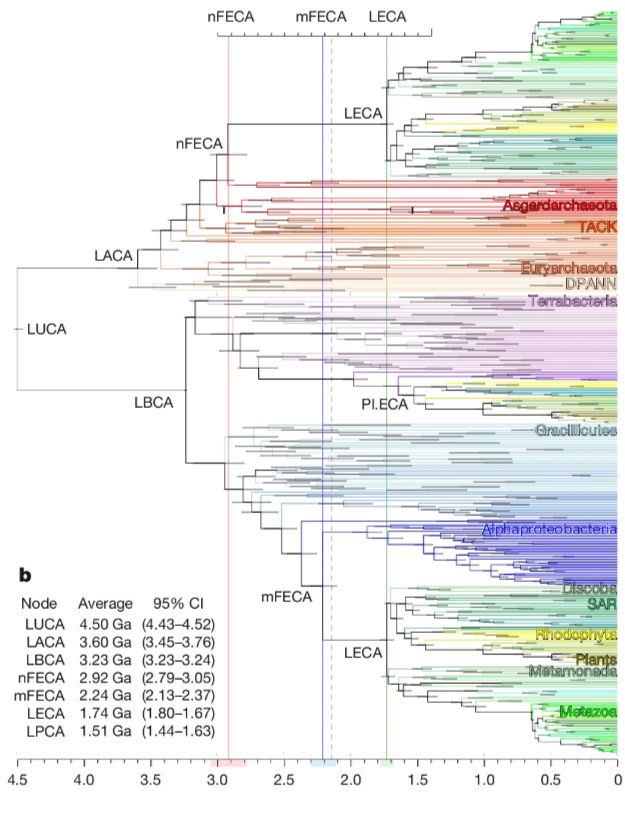
Yet another study supporting the rule of allopatry between sister species of continental vertebrates.

December 3, 2025 at 9:17 PM
Yet another study supporting the rule of allopatry between sister species of continental vertebrates.
Reposted by James Albert
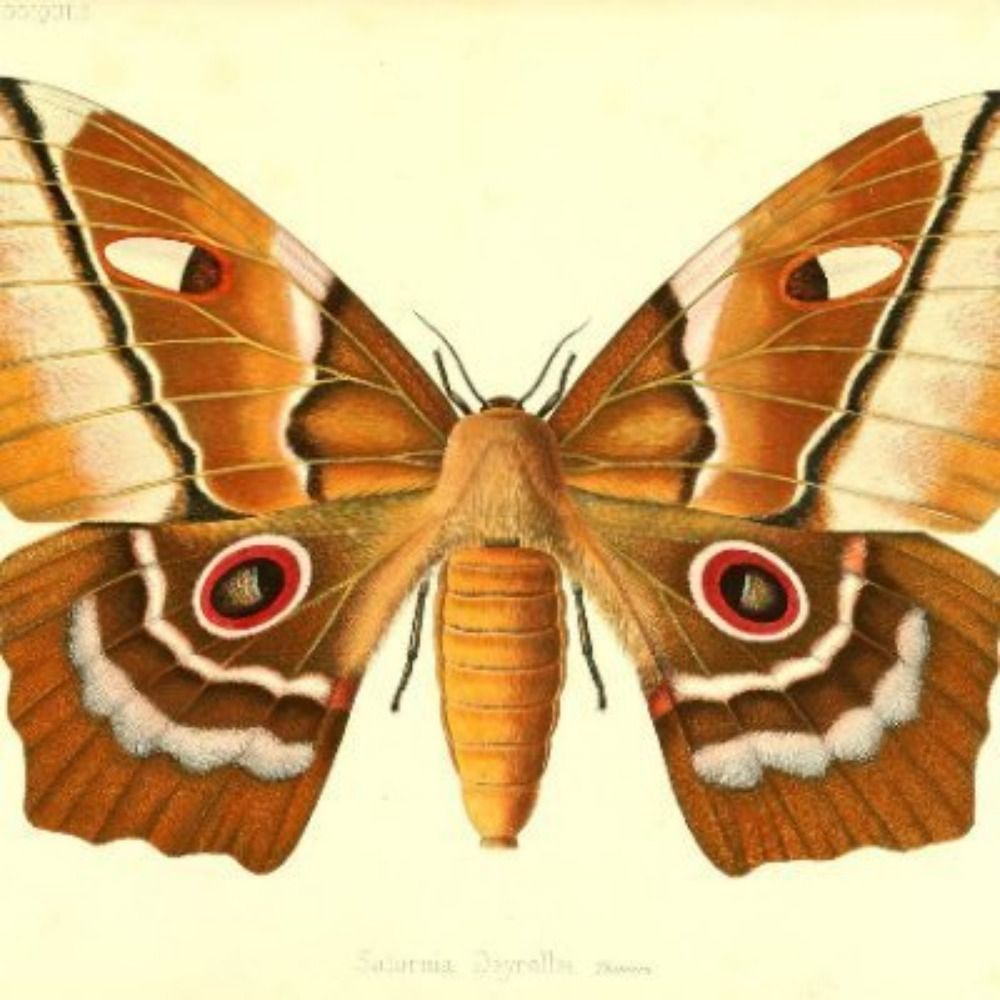
🐢 The gigantic land-tortoises (living and extinct) in the collection of the British Museum
London: Printed by order of the Trustees, 1877.
[Source]
London: Printed by order of the Trustees, 1877.
[Source]

December 2, 2025 at 7:23 AM
🐢 The gigantic land-tortoises (living and extinct) in the collection of the British Museum
London: Printed by order of the Trustees, 1877.
[Source]
London: Printed by order of the Trustees, 1877.
[Source]
Reposted by James Albert

Huge News from the Western Amazon: it's the year 2025 and we are still describing entirely new, strikingly-distinctive large-bodied bird species! Behold Tinamus resonans sp. nov. the Slaty-masked Tinamou mapress.com/zt/article/v... #Ornithology @tetzoo.bsky.social 🪶

December 2, 2025 at 7:20 AM
Huge News from the Western Amazon: it's the year 2025 and we are still describing entirely new, strikingly-distinctive large-bodied bird species! Behold Tinamus resonans sp. nov. the Slaty-masked Tinamou mapress.com/zt/article/v... #Ornithology @tetzoo.bsky.social 🪶
Reposted by James Albert
And just a reminder that this isn't the last new terrestrial bird from the wider region.... #ornithology 🪶

December 2, 2025 at 11:25 AM
And just a reminder that this isn't the last new terrestrial bird from the wider region.... #ornithology 🪶
Reposted by James Albert
"The N.S.F. started the year with funding delays...it lost about a third of its employees in layoffs or forced retirements. The agency ended the year awarding 25 percent fewer new grants."
The nuanced impacts of internal budget decisions made due to fiscal crisis.
www.nytimes.com/interactive/...
The nuanced impacts of internal budget decisions made due to fiscal crisis.
www.nytimes.com/interactive/...

The U.S. Is Funding Fewer Grants in Every Area of Science and Medicine (Gift Article)
A quiet policy change means the government is making fewer bets on long-term science.
www.nytimes.com
December 2, 2025 at 1:51 PM
"The N.S.F. started the year with funding delays...it lost about a third of its employees in layoffs or forced retirements. The agency ended the year awarding 25 percent fewer new grants."
The nuanced impacts of internal budget decisions made due to fiscal crisis.
www.nytimes.com/interactive/...
The nuanced impacts of internal budget decisions made due to fiscal crisis.
www.nytimes.com/interactive/...
Reposted by James Albert

Time to publish responsibly: DAFNEE, a database of academia-friendly journals in ecology and evolutionary biology url: academic.oup.com/jeb/article/...

Time to publish responsibly: DAFNEE, a database of academia-friendly journals in ecology and evolutionary biology
Abstract. The current economics of scientific publishing reveal a profound imbalance: academia pays prices far exceeding the actual costs of publication. R
academic.oup.com
December 1, 2025 at 9:01 PM
Time to publish responsibly: DAFNEE, a database of academia-friendly journals in ecology and evolutionary biology url: academic.oup.com/jeb/article/...
Adult brains of human (A), Mormyrid (B), pigeon (C), and goldfish (D) are shown in lateral view (rostral to the left). Each animal has differentially developed specific parts of the brain.
www.researchgate.net/publication/...
www.researchgate.net/publication/...

November 24, 2025 at 1:37 AM
Adult brains of human (A), Mormyrid (B), pigeon (C), and goldfish (D) are shown in lateral view (rostral to the left). Each animal has differentially developed specific parts of the brain.
www.researchgate.net/publication/...
www.researchgate.net/publication/...
Then again, it does not always come down to microevolutionary causes. Species with extreme (large and small) body sizes have higher extinction risk, meaning ancestors tend to have intermediate body sizes. A similar pattern may exist for relative brain size too.
www.pnas.org/doi/full/10....
www.pnas.org/doi/full/10....

November 23, 2025 at 8:55 PM
Then again, it does not always come down to microevolutionary causes. Species with extreme (large and small) body sizes have higher extinction risk, meaning ancestors tend to have intermediate body sizes. A similar pattern may exist for relative brain size too.
www.pnas.org/doi/full/10....
www.pnas.org/doi/full/10....
Large brains are useful when conditions favor plastic behaviors, smaller brains when reliable behaviors increase fitness. Or: why are there so many minnows?

November 23, 2025 at 8:48 PM
Large brains are useful when conditions favor plastic behaviors, smaller brains when reliable behaviors increase fitness. Or: why are there so many minnows?
From the Abstract: "cooler and varying brain temperatures reduce brain performance and thus fitness"
But there are always trade-off, see:
Robin, E. D. (1973). The evolutionary advantages of being stupid. Perspectives in Biology and Medicine, 16(3), 369-380.
scholar.google.com/scholar?hl=e...
But there are always trade-off, see:
Robin, E. D. (1973). The evolutionary advantages of being stupid. Perspectives in Biology and Medicine, 16(3), 369-380.
scholar.google.com/scholar?hl=e...
November 23, 2025 at 8:45 PM
From the Abstract: "cooler and varying brain temperatures reduce brain performance and thus fitness"
But there are always trade-off, see:
Robin, E. D. (1973). The evolutionary advantages of being stupid. Perspectives in Biology and Medicine, 16(3), 369-380.
scholar.google.com/scholar?hl=e...
But there are always trade-off, see:
Robin, E. D. (1973). The evolutionary advantages of being stupid. Perspectives in Biology and Medicine, 16(3), 369-380.
scholar.google.com/scholar?hl=e...
Same problem with this other paper in the recent PNAS issue with a grandiose title and tremendous variance.
www.researchgate.net/publication/...
www.researchgate.net/publication/...

November 23, 2025 at 8:08 PM
Same problem with this other paper in the recent PNAS issue with a grandiose title and tremendous variance.
www.researchgate.net/publication/...
www.researchgate.net/publication/...