



Duncan Yellowlees
@dyellowlees.bsky.social
Academic Research talks don't have to be shit!
✨ Researcher trainer
✨ Opinions about research culture
✨ Maker and fan of anything with dragons
Supporting phd's/ecrs/academics to do better more engaged and effective presentations
| He/Him
✨ Researcher trainer
✨ Opinions about research culture
✨ Maker and fan of anything with dragons
Supporting phd's/ecrs/academics to do better more engaged and effective presentations
| He/Him
Pinned


Hello to my new followers!
I'll do a little intro
• I teach researchers how to present their work effectively
• Storytelling, slides, preparation, I got you!
• Opinionated about research culture
• Background in sci comm & museums
• I also make stuff, pics below!
I'll do a little intro
• I teach researchers how to present their work effectively
• Storytelling, slides, preparation, I got you!
• Opinionated about research culture
• Background in sci comm & museums
• I also make stuff, pics below!
Body language
Broadly speaking, the impression you give off comes down to the shoulders.
Folding your arms closes off your body language & can give off "nervous" or "disinterested". Try arms apart, chest open - this says "friendly, welcoming, happy to be here"
#Academia #PHDChat #Research
Broadly speaking, the impression you give off comes down to the shoulders.
Folding your arms closes off your body language & can give off "nervous" or "disinterested". Try arms apart, chest open - this says "friendly, welcoming, happy to be here"
#Academia #PHDChat #Research
January 19, 2026 at 8:46 AM
If you want to really really get better at presenting, training and courses will only take you so far.
There comes a point where you need to DO it, get feedback and do it again.
The feedback loop is what helps you improve.
There comes a point where you need to DO it, get feedback and do it again.
The feedback loop is what helps you improve.

January 16, 2026 at 10:22 AM
If you want to really really get better at presenting, training and courses will only take you so far.
There comes a point where you need to DO it, get feedback and do it again.
The feedback loop is what helps you improve.
There comes a point where you need to DO it, get feedback and do it again.
The feedback loop is what helps you improve.
“It’s more of a comment than a question.”
We’ve all been there – and you don’t have to put up with it. If you’re the speaker, you own the space. Tactfully suggest that you’re prioritising people with questions? Roll your eyes? Throw things at them? The choice is yours!
#PHDChat #Presentations
We’ve all been there – and you don’t have to put up with it. If you’re the speaker, you own the space. Tactfully suggest that you’re prioritising people with questions? Roll your eyes? Throw things at them? The choice is yours!
#PHDChat #Presentations
January 15, 2026 at 8:37 AM
“It’s more of a comment than a question.”
We’ve all been there – and you don’t have to put up with it. If you’re the speaker, you own the space. Tactfully suggest that you’re prioritising people with questions? Roll your eyes? Throw things at them? The choice is yours!
#PHDChat #Presentations
We’ve all been there – and you don’t have to put up with it. If you’re the speaker, you own the space. Tactfully suggest that you’re prioritising people with questions? Roll your eyes? Throw things at them? The choice is yours!
#PHDChat #Presentations
"How can I ensure that my key points are remembered by my audience?"
- Link them to things the audience cares about
- Quickly highlight them at the end
- Give them examples and stories to help them understand
- Link them to things the audience cares about
- Quickly highlight them at the end
- Give them examples and stories to help them understand
January 14, 2026 at 9:22 AM
"How can I ensure that my key points are remembered by my audience?"
- Link them to things the audience cares about
- Quickly highlight them at the end
- Give them examples and stories to help them understand
- Link them to things the audience cares about
- Quickly highlight them at the end
- Give them examples and stories to help them understand
Presentation mistakes come in 2 types.
Ones that are obvious
Ones that aren’t
We worry overly about both. Most of the time people will forgive you anything.
And remember - they don't know how it's supposd to go.
Ones that are obvious
Ones that aren’t
We worry overly about both. Most of the time people will forgive you anything.
And remember - they don't know how it's supposd to go.
January 13, 2026 at 7:49 AM
Presentation mistakes come in 2 types.
Ones that are obvious
Ones that aren’t
We worry overly about both. Most of the time people will forgive you anything.
And remember - they don't know how it's supposd to go.
Ones that are obvious
Ones that aren’t
We worry overly about both. Most of the time people will forgive you anything.
And remember - they don't know how it's supposd to go.
There are only really two kinds of slide in a research talk.
1. Slides that take complex stuff & make it easier to take in (Graphs, infographics etc)
2. Signposting slides that remind your audience where we are in the flow of the talk.
Neither kind is about putting up a wall of text!
#PHDChat
1. Slides that take complex stuff & make it easier to take in (Graphs, infographics etc)
2. Signposting slides that remind your audience where we are in the flow of the talk.
Neither kind is about putting up a wall of text!
#PHDChat
January 12, 2026 at 8:18 AM
There are only really two kinds of slide in a research talk.
1. Slides that take complex stuff & make it easier to take in (Graphs, infographics etc)
2. Signposting slides that remind your audience where we are in the flow of the talk.
Neither kind is about putting up a wall of text!
#PHDChat
1. Slides that take complex stuff & make it easier to take in (Graphs, infographics etc)
2. Signposting slides that remind your audience where we are in the flow of the talk.
Neither kind is about putting up a wall of text!
#PHDChat
So many talks are just lists!
Here's all the things we did, all the papers published, all the grants won.
Much better to make a point! Have a key message, an agenda, something that the talk revolves around. Say something of note.
#Academia #PHDChat #Research #Presentations
Here's all the things we did, all the papers published, all the grants won.
Much better to make a point! Have a key message, an agenda, something that the talk revolves around. Say something of note.
#Academia #PHDChat #Research #Presentations
January 9, 2026 at 10:40 AM
So many talks are just lists!
Here's all the things we did, all the papers published, all the grants won.
Much better to make a point! Have a key message, an agenda, something that the talk revolves around. Say something of note.
#Academia #PHDChat #Research #Presentations
Here's all the things we did, all the papers published, all the grants won.
Much better to make a point! Have a key message, an agenda, something that the talk revolves around. Say something of note.
#Academia #PHDChat #Research #Presentations
Communication isn’t just the words you say. Saying “I’m fine!” with a smile, vs saying it with gritted teeth – big difference.
The emotion behind the words can change or reinforce their meaning. Speakers who emote, just a little, give their words more emphasis and guide the audience on how to feel.
The emotion behind the words can change or reinforce their meaning. Speakers who emote, just a little, give their words more emphasis and guide the audience on how to feel.
January 8, 2026 at 8:44 AM
Communication isn’t just the words you say. Saying “I’m fine!” with a smile, vs saying it with gritted teeth – big difference.
The emotion behind the words can change or reinforce their meaning. Speakers who emote, just a little, give their words more emphasis and guide the audience on how to feel.
The emotion behind the words can change or reinforce their meaning. Speakers who emote, just a little, give their words more emphasis and guide the audience on how to feel.
People who learn scripts can get very caught up in saying the right word.
To the point they stumble if they use a different one of the script.
But is almost never words that matter... its the meaning you make, and there are lots of different routes to that meaning.
To the point they stumble if they use a different one of the script.
But is almost never words that matter... its the meaning you make, and there are lots of different routes to that meaning.

January 7, 2026 at 9:38 AM
People who learn scripts can get very caught up in saying the right word.
To the point they stumble if they use a different one of the script.
But is almost never words that matter... its the meaning you make, and there are lots of different routes to that meaning.
To the point they stumble if they use a different one of the script.
But is almost never words that matter... its the meaning you make, and there are lots of different routes to that meaning.
Right, let me talk about slide templates.
Most universities have an official slide template everyone is told to use.
More often than not these are rubbish.
Focusing on splashing the university logo around so much there is no space for actual content.
#PHD #Research #Presenting #PHDChat
Most universities have an official slide template everyone is told to use.
More often than not these are rubbish.
Focusing on splashing the university logo around so much there is no space for actual content.
#PHD #Research #Presenting #PHDChat
January 6, 2026 at 7:31 AM
Right, let me talk about slide templates.
Most universities have an official slide template everyone is told to use.
More often than not these are rubbish.
Focusing on splashing the university logo around so much there is no space for actual content.
#PHD #Research #Presenting #PHDChat
Most universities have an official slide template everyone is told to use.
More often than not these are rubbish.
Focusing on splashing the university logo around so much there is no space for actual content.
#PHD #Research #Presenting #PHDChat
Audience switching off during a talk?
Could be cognitive overload.
Audiences need to take in a lot: there's visual stimulus, audio stimulus, background stuff.
And then you need them to think and process the information.
Don't make the problem worse with cluttered slides or lots of jargon.
Could be cognitive overload.
Audiences need to take in a lot: there's visual stimulus, audio stimulus, background stuff.
And then you need them to think and process the information.
Don't make the problem worse with cluttered slides or lots of jargon.
January 5, 2026 at 8:51 AM
Audience switching off during a talk?
Could be cognitive overload.
Audiences need to take in a lot: there's visual stimulus, audio stimulus, background stuff.
And then you need them to think and process the information.
Don't make the problem worse with cluttered slides or lots of jargon.
Could be cognitive overload.
Audiences need to take in a lot: there's visual stimulus, audio stimulus, background stuff.
And then you need them to think and process the information.
Don't make the problem worse with cluttered slides or lots of jargon.
If you want people to care about your data you have to show them the 'meaning'...
This line is higher than this line....so what??
This spiky bit is cool... so what??
Data is an idicator of something, never forget to tell your audience what that something is!
This line is higher than this line....so what??
This spiky bit is cool... so what??
Data is an idicator of something, never forget to tell your audience what that something is!

January 2, 2026 at 10:05 AM
If you want people to care about your data you have to show them the 'meaning'...
This line is higher than this line....so what??
This spiky bit is cool... so what??
Data is an idicator of something, never forget to tell your audience what that something is!
This line is higher than this line....so what??
This spiky bit is cool... so what??
Data is an idicator of something, never forget to tell your audience what that something is!
We all get nervous.
Presenting nerves appear because we fear the unknown/the unfamiliar.
Dry throat, hot face, queasy stomach all happen because of our fight or flight response to the unknown. This is why rehearsal matters - you are making the unknown known.
#Academia #PHDChat #Presentations
Presenting nerves appear because we fear the unknown/the unfamiliar.
Dry throat, hot face, queasy stomach all happen because of our fight or flight response to the unknown. This is why rehearsal matters - you are making the unknown known.
#Academia #PHDChat #Presentations
January 1, 2026 at 8:13 AM
We all get nervous.
Presenting nerves appear because we fear the unknown/the unfamiliar.
Dry throat, hot face, queasy stomach all happen because of our fight or flight response to the unknown. This is why rehearsal matters - you are making the unknown known.
#Academia #PHDChat #Presentations
Presenting nerves appear because we fear the unknown/the unfamiliar.
Dry throat, hot face, queasy stomach all happen because of our fight or flight response to the unknown. This is why rehearsal matters - you are making the unknown known.
#Academia #PHDChat #Presentations
“Always make eye contact” – really?
Directed, sustained, unbroken eye contact is a bit creepy.
An audience just needs to know that you’re including them – a bit of eye contact here & there, even just scanning across the room, is enough.
And it’s harder for some than others – so don’t judge.
Directed, sustained, unbroken eye contact is a bit creepy.
An audience just needs to know that you’re including them – a bit of eye contact here & there, even just scanning across the room, is enough.
And it’s harder for some than others – so don’t judge.
December 31, 2025 at 9:27 AM
“Always make eye contact” – really?
Directed, sustained, unbroken eye contact is a bit creepy.
An audience just needs to know that you’re including them – a bit of eye contact here & there, even just scanning across the room, is enough.
And it’s harder for some than others – so don’t judge.
Directed, sustained, unbroken eye contact is a bit creepy.
An audience just needs to know that you’re including them – a bit of eye contact here & there, even just scanning across the room, is enough.
And it’s harder for some than others – so don’t judge.
5 ways to simplify complex topics so audiences understand them.
1. Simplify your language, both technical jargon and just words
2. Chunk the information- break it down
3. Use metaphors and examples to help them 'see'
4. Provide relevant context
5. Go slowly
1. Simplify your language, both technical jargon and just words
2. Chunk the information- break it down
3. Use metaphors and examples to help them 'see'
4. Provide relevant context
5. Go slowly
December 30, 2025 at 7:41 AM
5 ways to simplify complex topics so audiences understand them.
1. Simplify your language, both technical jargon and just words
2. Chunk the information- break it down
3. Use metaphors and examples to help them 'see'
4. Provide relevant context
5. Go slowly
1. Simplify your language, both technical jargon and just words
2. Chunk the information- break it down
3. Use metaphors and examples to help them 'see'
4. Provide relevant context
5. Go slowly
A pause in a presentation is great for your audience. It gives them time to process what you just said and builds anticipation for what you are about to say.
You don't have to fill ALL the space with words.
You don't have to fill ALL the space with words.

December 29, 2025 at 8:16 AM
A pause in a presentation is great for your audience. It gives them time to process what you just said and builds anticipation for what you are about to say.
You don't have to fill ALL the space with words.
You don't have to fill ALL the space with words.
You can communicate complex/detailed information slowly
OR Simple information fast.
You can't do complex info fast
Presenting is usually a FAST medium.
Do less stuff, slower!
OR Simple information fast.
You can't do complex info fast
Presenting is usually a FAST medium.
Do less stuff, slower!

December 26, 2025 at 10:41 AM
You can communicate complex/detailed information slowly
OR Simple information fast.
You can't do complex info fast
Presenting is usually a FAST medium.
Do less stuff, slower!
OR Simple information fast.
You can't do complex info fast
Presenting is usually a FAST medium.
Do less stuff, slower!
Don’t know the answer to a question? Say “I don’t know” – it’s fine.
Maybe you don’t know right now but could look it up – or you’ve forgotten cause of the stress of public speaking, It’s fine.
You are allowed – nay entitled – to say you don’t know. “Let’s chat afterwards” is a great follow up.
Maybe you don’t know right now but could look it up – or you’ve forgotten cause of the stress of public speaking, It’s fine.
You are allowed – nay entitled – to say you don’t know. “Let’s chat afterwards” is a great follow up.
December 25, 2025 at 8:22 AM
Don’t know the answer to a question? Say “I don’t know” – it’s fine.
Maybe you don’t know right now but could look it up – or you’ve forgotten cause of the stress of public speaking, It’s fine.
You are allowed – nay entitled – to say you don’t know. “Let’s chat afterwards” is a great follow up.
Maybe you don’t know right now but could look it up – or you’ve forgotten cause of the stress of public speaking, It’s fine.
You are allowed – nay entitled – to say you don’t know. “Let’s chat afterwards” is a great follow up.
To be an effective modern research lead, it’s no longer enough to just be good at the research.
You have to collaborate, fundraise, profile build, project manage, people manage, budget, report, strategize and generally be on top of things.
The current system does not prepare new leads to do this.
You have to collaborate, fundraise, profile build, project manage, people manage, budget, report, strategize and generally be on top of things.
The current system does not prepare new leads to do this.
December 24, 2025 at 9:09 AM
To be an effective modern research lead, it’s no longer enough to just be good at the research.
You have to collaborate, fundraise, profile build, project manage, people manage, budget, report, strategize and generally be on top of things.
The current system does not prepare new leads to do this.
You have to collaborate, fundraise, profile build, project manage, people manage, budget, report, strategize and generally be on top of things.
The current system does not prepare new leads to do this.
Doing Research Impact requires; explaining, discussing, persuading, encouraging, teamwork, collective problem solving, inspiring.
All of which require the skills of speaking and presenting.
All of which require the skills of speaking and presenting.
December 23, 2025 at 7:17 AM
Doing Research Impact requires; explaining, discussing, persuading, encouraging, teamwork, collective problem solving, inspiring.
All of which require the skills of speaking and presenting.
All of which require the skills of speaking and presenting.
Body Language analysis can get really nitpicky.
"Do this, don't do that. Pay attention to every tiny thing"
For a good presentation, it's really the overall impression that matters.
What are you doing and how does it make the audience feel? Is that the feeling you want to create?
#PHDChat
"Do this, don't do that. Pay attention to every tiny thing"
For a good presentation, it's really the overall impression that matters.
What are you doing and how does it make the audience feel? Is that the feeling you want to create?
#PHDChat
December 22, 2025 at 8:28 AM
Body Language analysis can get really nitpicky.
"Do this, don't do that. Pay attention to every tiny thing"
For a good presentation, it's really the overall impression that matters.
What are you doing and how does it make the audience feel? Is that the feeling you want to create?
#PHDChat
"Do this, don't do that. Pay attention to every tiny thing"
For a good presentation, it's really the overall impression that matters.
What are you doing and how does it make the audience feel? Is that the feeling you want to create?
#PHDChat
Reposted by Duncan Yellowlees

Every friend group has at least one person who cannot recommend a single book. You ask them what you should read next, and they're like 'The Dying Stars' and you're like OK is that one book or- and they say 'oh it's book one of the dying sky trilogy, each of which is 19 books'
December 20, 2025 at 3:13 PM
Every friend group has at least one person who cannot recommend a single book. You ask them what you should read next, and they're like 'The Dying Stars' and you're like OK is that one book or- and they say 'oh it's book one of the dying sky trilogy, each of which is 19 books'
If you don’t think strategically about how, when, where and to whom you are presenting your research, you’re unlikely to be able to achieve your impact goals.
Speaking is an incredibly powerful pathway to impact, but few people use it strategically at team or project level.
Speaking is an incredibly powerful pathway to impact, but few people use it strategically at team or project level.
December 19, 2025 at 10:53 AM
If you don’t think strategically about how, when, where and to whom you are presenting your research, you’re unlikely to be able to achieve your impact goals.
Speaking is an incredibly powerful pathway to impact, but few people use it strategically at team or project level.
Speaking is an incredibly powerful pathway to impact, but few people use it strategically at team or project level.
Reposted by Duncan Yellowlees

My top five favourite words to pronounce like they’re Greek philosophers…
5. Monocles
4. Bicycles
3. Popsicles
2. Obstacles
1. Testicles
5. Monocles
4. Bicycles
3. Popsicles
2. Obstacles
1. Testicles
December 18, 2025 at 12:13 PM
My top five favourite words to pronounce like they’re Greek philosophers…
5. Monocles
4. Bicycles
3. Popsicles
2. Obstacles
1. Testicles
5. Monocles
4. Bicycles
3. Popsicles
2. Obstacles
1. Testicles
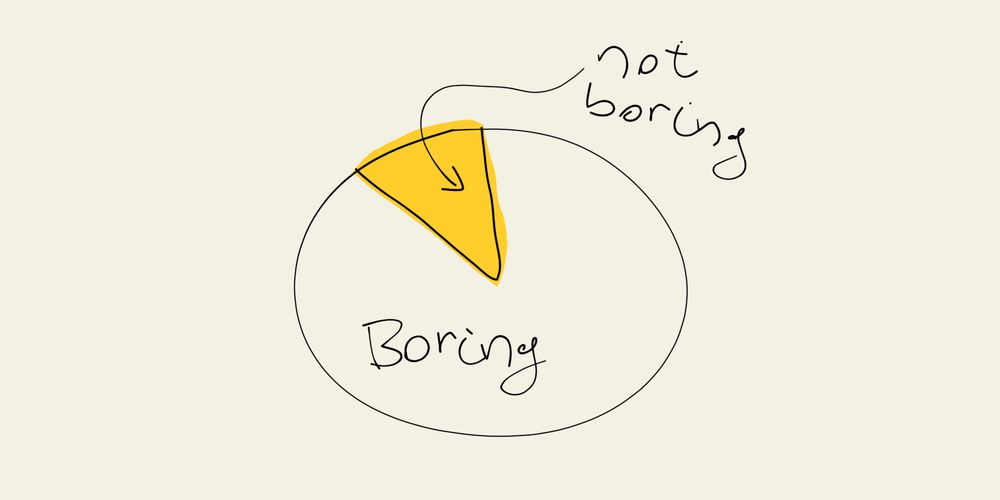
If most of the presentations you see are kinda boring... if you want to be better you have to be different.
We won't get exciting energised presentations by doing the same as everyone else.
We won't get exciting energised presentations by doing the same as everyone else.
December 18, 2025 at 8:27 AM
If most of the presentations you see are kinda boring... if you want to be better you have to be different.
We won't get exciting energised presentations by doing the same as everyone else.
We won't get exciting energised presentations by doing the same as everyone else.