




Titus Seilheimer
@drfishsg.bsky.social
Aquatic ecology & Fisheries with Wisconsin Sea Grant. Science Communication. Helping improve the Great Lakes since 2001. #Freshwater, #Fish, #GreatLakes! He/Him. Manitowoc, WI go.wisc.edu/j0c989
Pinned



Welcome new Bluesky folks!
I'm Titus, an aquatic ecologist and fisheries specialist with Wisconsin Sea Grant. I work on all things #GreatLakes and freshwater from teaching 6th graders on a beach, surveying fish in a coastal wetland, or getting seasick on a commercial fishing boat!
🧪
I'm Titus, an aquatic ecologist and fisheries specialist with Wisconsin Sea Grant. I work on all things #GreatLakes and freshwater from teaching 6th graders on a beach, surveying fish in a coastal wetland, or getting seasick on a commercial fishing boat!
🧪
Alongshore transport gradients at Long Point in Lake Erie
#GreatLakes 🧪
www.sciencedirect.com/science/arti...
#GreatLakes 🧪
www.sciencedirect.com/science/arti...

Alongshore transport gradients at Long Point in Lake Erie
The evolution and future resiliency of Long Point, a barrier spit on the north shore of Lake Erie, is associated with the eastward alongshore transpor…
www.sciencedirect.com
January 9, 2026 at 9:04 PM
Alongshore transport gradients at Long Point in Lake Erie
#GreatLakes 🧪
www.sciencedirect.com/science/arti...
#GreatLakes 🧪
www.sciencedirect.com/science/arti...
Fat content and condition factor explain levels of dioxins and PCBs in whitefish (Coregonus sp.) from Sweden’s major lakes
🧪
www.sciencedirect.com/science/arti...
🧪
www.sciencedirect.com/science/arti...
Fat content and condition factor explain levels of dioxins and PCBs in whitefish (Coregonus sp.) from Sweden’s major lakes
Whitefish (Coregonus sp.) are an ecologically and economically important species in large, temperate lake ecosystems, including North America’s Lauren…
www.sciencedirect.com
January 9, 2026 at 9:03 PM
Fat content and condition factor explain levels of dioxins and PCBs in whitefish (Coregonus sp.) from Sweden’s major lakes
🧪
www.sciencedirect.com/science/arti...
🧪
www.sciencedirect.com/science/arti...
Reposted by Titus Seilheimer
National assessment of river protection in the U.S.
Article: doi.org/10.1038/s418...
Policy Brief: doi.org/10.1038/s418...
Rivers Explorer: map.myriver.americanrivers.org
Collaboration b/t American Rivers, Conservation Science Partners, Univ WA @americanrivers.bsky.social
Thread 👇 | DM for PDF
Article: doi.org/10.1038/s418...
Policy Brief: doi.org/10.1038/s418...
Rivers Explorer: map.myriver.americanrivers.org
Collaboration b/t American Rivers, Conservation Science Partners, Univ WA @americanrivers.bsky.social
Thread 👇 | DM for PDF

January 9, 2026 at 6:18 PM
National assessment of river protection in the U.S.
Article: doi.org/10.1038/s418...
Policy Brief: doi.org/10.1038/s418...
Rivers Explorer: map.myriver.americanrivers.org
Collaboration b/t American Rivers, Conservation Science Partners, Univ WA @americanrivers.bsky.social
Thread 👇 | DM for PDF
Article: doi.org/10.1038/s418...
Policy Brief: doi.org/10.1038/s418...
Rivers Explorer: map.myriver.americanrivers.org
Collaboration b/t American Rivers, Conservation Science Partners, Univ WA @americanrivers.bsky.social
Thread 👇 | DM for PDF
Reposted by Titus Seilheimer

Bird lovers, this one's for you. 🦅
The latest Chronicle profiles the work of the Great Lakes Eagle Health Project, which is investigating how PFAS impact the health of bald eagles. Learn how the team finds eagles, scales trees, and takes blood samples.
https://chronicle.aqua.wisc.edu/
The latest Chronicle profiles the work of the Great Lakes Eagle Health Project, which is investigating how PFAS impact the health of bald eagles. Learn how the team finds eagles, scales trees, and takes blood samples.
https://chronicle.aqua.wisc.edu/


January 9, 2026 at 5:01 PM
Bird lovers, this one's for you. 🦅
The latest Chronicle profiles the work of the Great Lakes Eagle Health Project, which is investigating how PFAS impact the health of bald eagles. Learn how the team finds eagles, scales trees, and takes blood samples.
https://chronicle.aqua.wisc.edu/
The latest Chronicle profiles the work of the Great Lakes Eagle Health Project, which is investigating how PFAS impact the health of bald eagles. Learn how the team finds eagles, scales trees, and takes blood samples.
https://chronicle.aqua.wisc.edu/
28-Year review of acute toxicity in rainbow trout and Daphnia magna exposed to industrial effluents in Ontario, Canada
#GreatLakes 🧪
www.sciencedirect.com/science/arti...
pollution reduction led to a significant decrease in acute toxicity in Ontario industrial effluents
#GreatLakes 🧪
www.sciencedirect.com/science/arti...
pollution reduction led to a significant decrease in acute toxicity in Ontario industrial effluents
28-Year review of acute toxicity in rainbow trout and Daphnia magna exposed to industrial effluents in Ontario, Canada
Ontario’s Municipal/Industrial Strategy for Abatement (MISA) was a collaborative effort between government and industry to reduce the environmental im…
www.sciencedirect.com
January 8, 2026 at 8:53 PM
28-Year review of acute toxicity in rainbow trout and Daphnia magna exposed to industrial effluents in Ontario, Canada
#GreatLakes 🧪
www.sciencedirect.com/science/arti...
pollution reduction led to a significant decrease in acute toxicity in Ontario industrial effluents
#GreatLakes 🧪
www.sciencedirect.com/science/arti...
pollution reduction led to a significant decrease in acute toxicity in Ontario industrial effluents
Reposted by Titus Seilheimer
Meet the tree climbers behind the Great Lakes Eagle Health Project. Watch what it takes to get that eagle-eye view 🦅.
https://youtube.com/shorts/iydZJwrl87s?feature=share
https://youtube.com/shorts/iydZJwrl87s?feature=share
January 8, 2026 at 4:00 PM
Meet the tree climbers behind the Great Lakes Eagle Health Project. Watch what it takes to get that eagle-eye view 🦅.
https://youtube.com/shorts/iydZJwrl87s?feature=share
https://youtube.com/shorts/iydZJwrl87s?feature=share
Assessing nutrient and chlorophyll drivers in Lake of the Woods: A complex system shared among Indigenous communities, Canada, and the USA
🧪
www.sciencedirect.com/science/arti...
🧪
www.sciencedirect.com/science/arti...
Assessing nutrient and chlorophyll drivers in Lake of the Woods: A complex system shared among Indigenous communities, Canada, and the USA
Lake of the Woods (LotW) is a large, morphologically complex water body shared between Indigenous communities, Canada, and the US with a history of eu…
www.sciencedirect.com
January 7, 2026 at 8:41 PM
Assessing nutrient and chlorophyll drivers in Lake of the Woods: A complex system shared among Indigenous communities, Canada, and the USA
🧪
www.sciencedirect.com/science/arti...
🧪
www.sciencedirect.com/science/arti...
Historical PFAS trends in the Great Lakes using four decades of archived fish.
#GreatLakes 🧪
www.sciencedirect.com/science/arti...
#GreatLakes 🧪
www.sciencedirect.com/science/arti...

January 6, 2026 at 8:40 PM
Historical PFAS trends in the Great Lakes using four decades of archived fish.
#GreatLakes 🧪
www.sciencedirect.com/science/arti...
#GreatLakes 🧪
www.sciencedirect.com/science/arti...
Reposted by Titus Seilheimer

The JGLR/Elsevier Student Award is awarded annually to the top-ranked paper in the current volume of the Journal of Great Lakes Research whose lead author was a student at the time of acceptance. Nomination information and portal: https://bit.ly/4j49wyN

December 31, 2025 at 6:00 PM
The JGLR/Elsevier Student Award is awarded annually to the top-ranked paper in the current volume of the Journal of Great Lakes Research whose lead author was a student at the time of acceptance. Nomination information and portal: https://bit.ly/4j49wyN
Reposted by Titus Seilheimer
The JGLR/Elsevier Early Career Award is awarded to the top-ranked paper in the current volume of the Journal of Great Lakes Research whose lead author is within five years of graduation from their terminal degree. Nomination information and portal: https://bit.ly/3DbQK8f

January 5, 2026 at 6:00 PM
The JGLR/Elsevier Early Career Award is awarded to the top-ranked paper in the current volume of the Journal of Great Lakes Research whose lead author is within five years of graduation from their terminal degree. Nomination information and portal: https://bit.ly/3DbQK8f
Reposted by Titus Seilheimer
The Chandler-Misener Award is presented annually to the author(s) of the peer-reviewed paper in the current volume of the Journal of Great Lakes Research judged to be "most notable." Nomination information and portal: https://bit.ly/4giKyJU #GreatLakesSci

January 6, 2026 at 6:30 PM
The Chandler-Misener Award is presented annually to the author(s) of the peer-reviewed paper in the current volume of the Journal of Great Lakes Research judged to be "most notable." Nomination information and portal: https://bit.ly/4giKyJU #GreatLakesSci
Reposted by Titus Seilheimer
What can bald eagles tell us about “forever chemicals”? In our latest feature, follow the Great Lakes Eagle Health Project team as they study bald eagles as a sentinel species.
https://www.seagrant.wisc.edu/news/eagles/
https://www.seagrant.wisc.edu/news/eagles/
January 6, 2026 at 5:10 PM
What can bald eagles tell us about “forever chemicals”? In our latest feature, follow the Great Lakes Eagle Health Project team as they study bald eagles as a sentinel species.
https://www.seagrant.wisc.edu/news/eagles/
https://www.seagrant.wisc.edu/news/eagles/
Reposted by Titus Seilheimer
Our new paper in @natrevbiodiv.nature.com highlights the untapped potential of CMS for enhancing the conservation of migratory freshwater fishes, which are currently underrepresented in Appendices I & II of CMS. Check the full text here: rdcu.be/eXOlk

January 6, 2026 at 3:07 PM
Our new paper in @natrevbiodiv.nature.com highlights the untapped potential of CMS for enhancing the conservation of migratory freshwater fishes, which are currently underrepresented in Appendices I & II of CMS. Check the full text here: rdcu.be/eXOlk
Reposted by Titus Seilheimer
I'm hiring a postdoc to work with myself, Dr Jim Lyons and the entire NOAA Firebird team on the adaptive management part of our larger project focused on the impacts of prescribed fire on Gulf Coast wetlands
Accepting applications until Feb 15th
blogs.illinois.edu/view/7426/19...
Accepting applications until Feb 15th
blogs.illinois.edu/view/7426/19...
Postdoctoral Research Associate - NOAA Firebird - Illinois Natural History Survey/PRI - Application Deadline: February 15, 2026
blogs.illinois.edu
January 6, 2026 at 1:29 PM
I'm hiring a postdoc to work with myself, Dr Jim Lyons and the entire NOAA Firebird team on the adaptive management part of our larger project focused on the impacts of prescribed fire on Gulf Coast wetlands
Accepting applications until Feb 15th
blogs.illinois.edu/view/7426/19...
Accepting applications until Feb 15th
blogs.illinois.edu/view/7426/19...
Reposted by Titus Seilheimer

It’s simple. Many of us share #science. Please join up.
go.bsky.app/H3qcvgP
Please add your name below and expertise and you’ll be added!
#scientistswhocommunicatescience #scicomm #womeninsciencw
go.bsky.app/H3qcvgP
Please add your name below and expertise and you’ll be added!
#scientistswhocommunicatescience #scicomm #womeninsciencw
December 2, 2024 at 2:07 AM
It’s simple. Many of us share #science. Please join up.
go.bsky.app/H3qcvgP
Please add your name below and expertise and you’ll be added!
#scientistswhocommunicatescience #scicomm #womeninsciencw
go.bsky.app/H3qcvgP
Please add your name below and expertise and you’ll be added!
#scientistswhocommunicatescience #scicomm #womeninsciencw
Reposted by Titus Seilheimer
Teachers and students, join us on January 14 for another edition of Students Ask Scientists! Professor Ben Peterson will be talking about mercury and microbes in aquatic environments.
https://www.seagrant.wisc.edu/news/join-us-for-students-ask-scientists-on-january-14/
https://www.seagrant.wisc.edu/news/join-us-for-students-ask-scientists-on-january-14/

Join us for Students Ask Scientists on January 14
Professor Ben Peterson will discuss how mercury becomes toxic in aquatic environments.
www.seagrant.wisc.edu
January 5, 2026 at 4:55 PM
Teachers and students, join us on January 14 for another edition of Students Ask Scientists! Professor Ben Peterson will be talking about mercury and microbes in aquatic environments.
https://www.seagrant.wisc.edu/news/join-us-for-students-ask-scientists-on-january-14/
https://www.seagrant.wisc.edu/news/join-us-for-students-ask-scientists-on-january-14/
I went to the Olympic trials for long track speed skating this weekend, so here's a fish that can put in a real burst of speed, the muskellunge! #SundayFishSketch

January 5, 2026 at 3:15 AM
I went to the Olympic trials for long track speed skating this weekend, so here's a fish that can put in a real burst of speed, the muskellunge! #SundayFishSketch
January 2, 2026 at 5:35 PM
Happy New Year's Eel!

December 31, 2025 at 3:03 PM
Happy New Year's Eel!
Wrapping up the final four #25DaysOfFishmas plus three more for #SundayFishSketch. Ohio Lamprey, Ghost Shiner, American Shad, Atlantic Sturgeon, Common Shiner, Whale Shark, and a Cisco in a pear tree!


December 29, 2025 at 3:14 AM
Wrapping up the final four #25DaysOfFishmas plus three more for #SundayFishSketch. Ohio Lamprey, Ghost Shiner, American Shad, Atlantic Sturgeon, Common Shiner, Whale Shark, and a Cisco in a pear tree!
Reposted by Titus Seilheimer
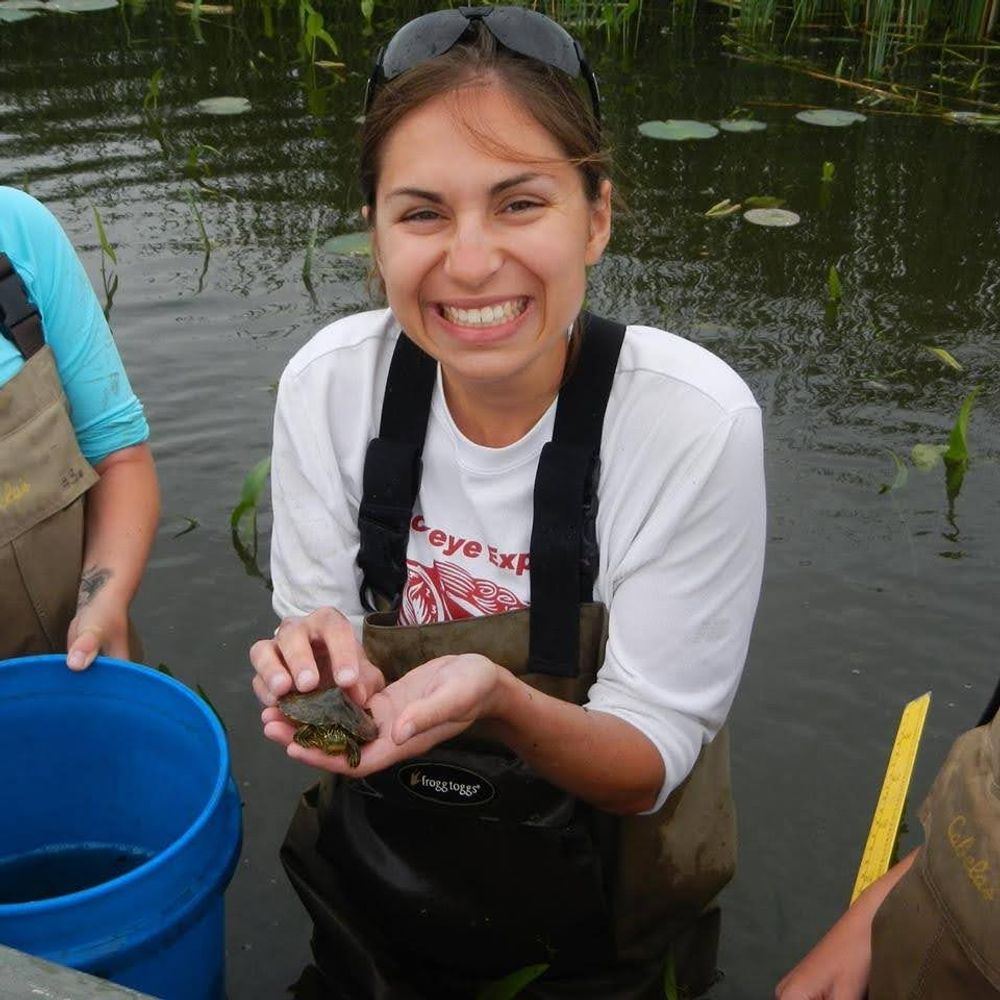
That's a wrap on 2025's #25DaysofFishmas - the 10th year of #Fishmas silliness! Thanks to everyone who has followed along as we explored some of the amazing fish that call the US home.
From Atlantic to Pacific, there's a lot worth protecting - wishing everyone peace and renewal of hope for 2026.
From Atlantic to Pacific, there's a lot worth protecting - wishing everyone peace and renewal of hope for 2026.

December 25, 2025 at 9:12 PM
That's a wrap on 2025's #25DaysofFishmas - the 10th year of #Fishmas silliness! Thanks to everyone who has followed along as we explored some of the amazing fish that call the US home.
From Atlantic to Pacific, there's a lot worth protecting - wishing everyone peace and renewal of hope for 2026.
From Atlantic to Pacific, there's a lot worth protecting - wishing everyone peace and renewal of hope for 2026.
Reposted by Titus Seilheimer
Everybody's gone sturgeon'
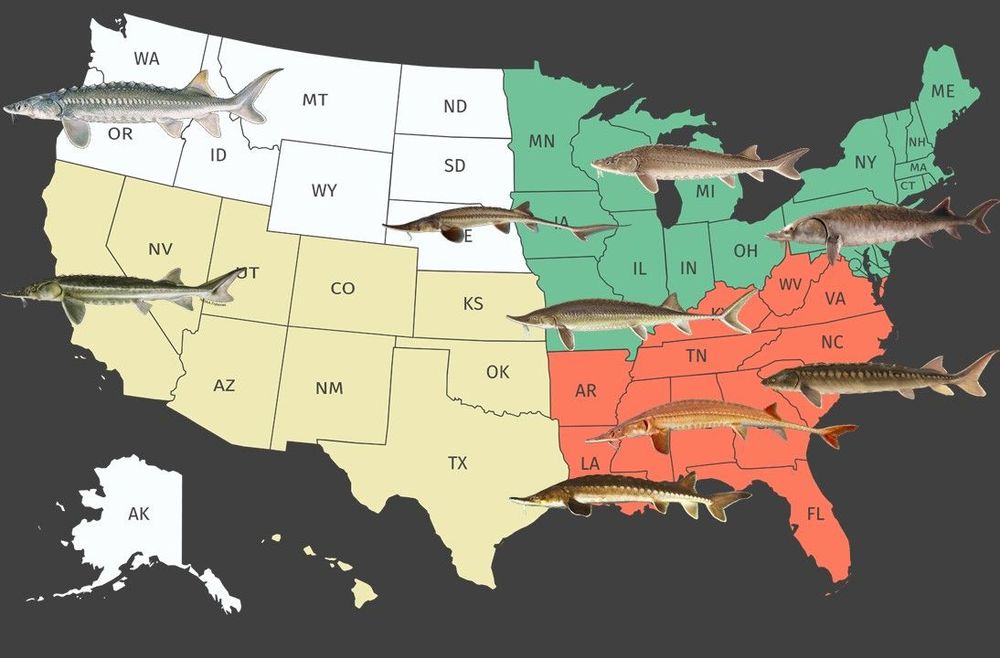
Sturgeon' U.S.A
Though we ended #25DaysofFishmas with the Atlantic sturgeon on the East Coast, there are several species of sturgeon all across North America - from Atlantic to Pacific. Maybe even in your own backyard!
Sturgeon' U.S.A
Though we ended #25DaysofFishmas with the Atlantic sturgeon on the East Coast, there are several species of sturgeon all across North America - from Atlantic to Pacific. Maybe even in your own backyard!
December 25, 2025 at 2:41 PM
Everybody's gone sturgeon'
Sturgeon' U.S.A
Though we ended #25DaysofFishmas with the Atlantic sturgeon on the East Coast, there are several species of sturgeon all across North America - from Atlantic to Pacific. Maybe even in your own backyard!
Sturgeon' U.S.A
Though we ended #25DaysofFishmas with the Atlantic sturgeon on the East Coast, there are several species of sturgeon all across North America - from Atlantic to Pacific. Maybe even in your own backyard!
Reposted by Titus Seilheimer
Despite these challenges, Atlantic sturgeon are showing signs of recovery in places like the Chesapeake Bay. Habitat restoration + dam removal have improved spawning success, but since females take a while to mature + may only spawn once every 2-5 years, it takes time to see results #25DaysofFishmas

December 25, 2025 at 2:35 PM
Despite these challenges, Atlantic sturgeon are showing signs of recovery in places like the Chesapeake Bay. Habitat restoration + dam removal have improved spawning success, but since females take a while to mature + may only spawn once every 2-5 years, it takes time to see results #25DaysofFishmas
Reposted by Titus Seilheimer
Fishing for Atlantic sturgeon has mostly ended + protections have been put in place via the endangered/threatened listing, but they still face other threats to recovery including dams that cut off access to spawning rivers, entanglement in fishing gear + mortality from ship strikes #25DaysofFishmas

December 25, 2025 at 2:29 PM
Fishing for Atlantic sturgeon has mostly ended + protections have been put in place via the endangered/threatened listing, but they still face other threats to recovery including dams that cut off access to spawning rivers, entanglement in fishing gear + mortality from ship strikes #25DaysofFishmas
Reposted by Titus Seilheimer
By the late 1800s, Atlantic sturgeon had become the focus of intense harvesting for their eggs/roe that were prized as caviar - for a time, New Jersey supplied more of the world’s caviar than anywhere else. Since females were targeted, this contributed to dramatic population crashes #25DaysofFishmas

December 25, 2025 at 2:24 PM
By the late 1800s, Atlantic sturgeon had become the focus of intense harvesting for their eggs/roe that were prized as caviar - for a time, New Jersey supplied more of the world’s caviar than anywhere else. Since females were targeted, this contributed to dramatic population crashes #25DaysofFishmas