




Dalila De Caro
@daliladecaro.bsky.social

Reposted by Dalila De Caro

And today it was the turn of the Megalopolis delegation to present our work at Marathousa 1 (Greece) 🙂
With dalil@daliladecaro.bsky.social
With dalil@daliladecaro.bsky.social


November 26, 2025 at 11:12 AM
And today it was the turn of the Megalopolis delegation to present our work at Marathousa 1 (Greece) 🙂
With dalil@daliladecaro.bsky.social
With dalil@daliladecaro.bsky.social
Reposted by Dalila De Caro
A great pleasure to be invited, together with @daliladecaro.bsky.social, to participate in the symposium celebrating the 60th anniversary of the Vertesszolos discovery! Wonderful venue at the Hungarian National Museum 🤩 Many thanks to our hosts, the organizers G. Lengyel & Y. Zaidner


November 24, 2025 at 4:34 PM
A great pleasure to be invited, together with @daliladecaro.bsky.social, to participate in the symposium celebrating the 60th anniversary of the Vertesszolos discovery! Wonderful venue at the Hungarian National Museum 🤩 Many thanks to our hosts, the organizers G. Lengyel & Y. Zaidner
We had the pleasure of presenting our new study on lithic analysis and spatial modelling of different sites in the Megalopolis Basin at the Lithic Studies Society Conference in Leicester.
Many thanks to the organisers for their work! @lithicstudiessoc.bsky.social
Many thanks to the organisers for their work! @lithicstudiessoc.bsky.social


November 16, 2025 at 8:25 AM
We had the pleasure of presenting our new study on lithic analysis and spatial modelling of different sites in the Megalopolis Basin at the Lithic Studies Society Conference in Leicester.
Many thanks to the organisers for their work! @lithicstudiessoc.bsky.social
Many thanks to the organisers for their work! @lithicstudiessoc.bsky.social
CONEXP 2025 was just amazing! We presented our experiments, but we also enjoyed all the activities that @traceolab.bsky.social organised! A big thanks to all the organisers, participants and volunteers


October 28, 2025 at 12:40 PM
CONEXP 2025 was just amazing! We presented our experiments, but we also enjoyed all the activities that @traceolab.bsky.social organised! A big thanks to all the organisers, participants and volunteers
Reposted by Dalila De Caro

What an amazing second day at CONEXP 2025! It’s been an inspiring day filled with presentations, discussions, cultural activities, and fresh perspectives on diverse topics. We’re excited for tomorrow! #conexp2025


October 23, 2025 at 6:25 PM
What an amazing second day at CONEXP 2025! It’s been an inspiring day filled with presentations, discussions, cultural activities, and fresh perspectives on diverse topics. We’re excited for tomorrow! #conexp2025
Reposted by Dalila De Caro

New discoveries from the Pleistocene-age Gantangqing site in southwestern China reveal a diverse collection of wooden tools dated from ~361,000 to 250,000 years ago, marking the earliest known evidence of complex wooden tool technology in East Asia.
Learn more in Science: scim.ag/4krE5y3
Learn more in Science: scim.ag/4krE5y3

July 4, 2025 at 4:22 PM
New discoveries from the Pleistocene-age Gantangqing site in southwestern China reveal a diverse collection of wooden tools dated from ~361,000 to 250,000 years ago, marking the earliest known evidence of complex wooden tool technology in East Asia.
Learn more in Science: scim.ag/4krE5y3
Learn more in Science: scim.ag/4krE5y3
Press release of our new paper. Read it also in English: www.senckenberg.de/en/pressemel...
July 2, 2025 at 8:23 AM
Press release of our new paper. Read it also in English: www.senckenberg.de/en/pressemel...
Reposted by Dalila De Caro
Congratulations to PhD student Dalila DeCaro for the publication of her paper on the Marathousa 1 lithics at PLOS: dx.plos.org/10.1371/jour...!
Well done Dalila!!
Well done Dalila!!
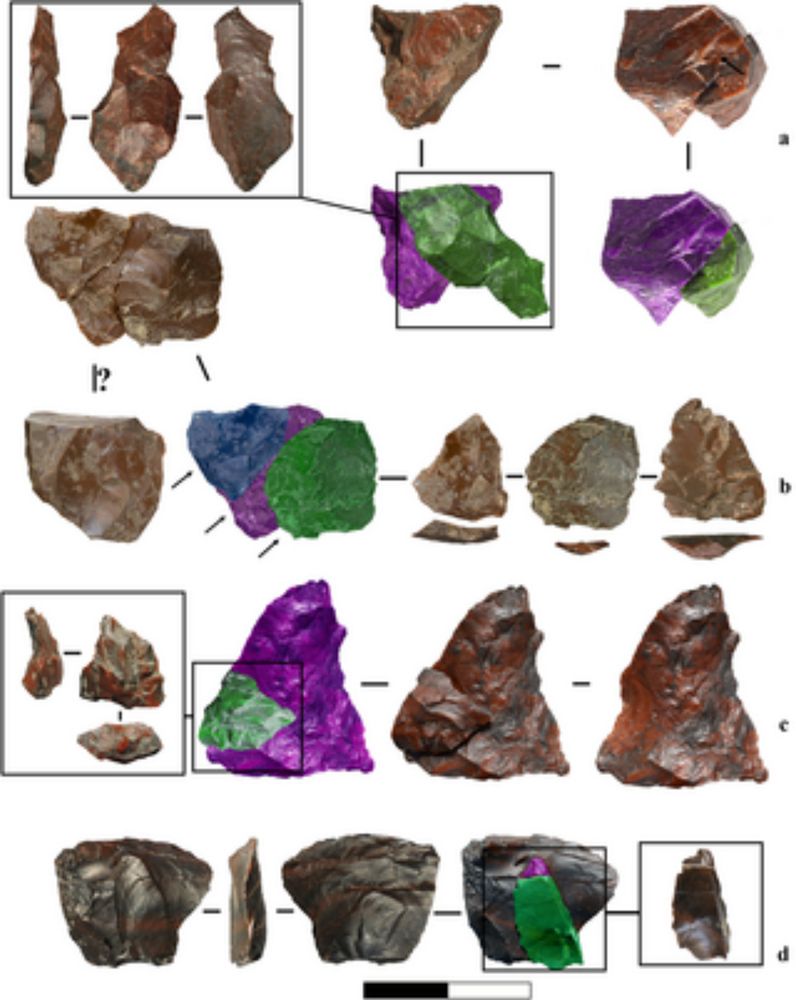
Small flakes for sharp needs: Technological behaviour in the Lower Palaeolithic site of Marathousa 1, Greece
Marathousa 1 (~430 ka BP), located in the Megalopolis Basin, Greece, represents the earliest documented butchery site in the Southern Balkans, providing clear evidence of a direct association between ...
dx.plos.org
June 30, 2025 at 7:23 PM
Congratulations to PhD student Dalila DeCaro for the publication of her paper on the Marathousa 1 lithics at PLOS: dx.plos.org/10.1371/jour...!
Well done Dalila!!
Well done Dalila!!
New paper alert! We looked at how Middle Pleistocene hominins in the southern Balkans produced Small tools around 430 Ka. The results show a flexible, locally adapted technology, reflecting “a strategy that moves beyond the dichotomy of expediency and curation”. journals.plos.org/plosone/arti...


July 1, 2025 at 8:43 AM
New paper alert! We looked at how Middle Pleistocene hominins in the southern Balkans produced Small tools around 430 Ka. The results show a flexible, locally adapted technology, reflecting “a strategy that moves beyond the dichotomy of expediency and curation”. journals.plos.org/plosone/arti...
TraCEr International seminar 2025 at @tracer-leiza.bsky.social Amazing researchers, amazing people.

April 29, 2025 at 12:44 PM
TraCEr International seminar 2025 at @tracer-leiza.bsky.social Amazing researchers, amazing people.
Reposted by Dalila De Caro
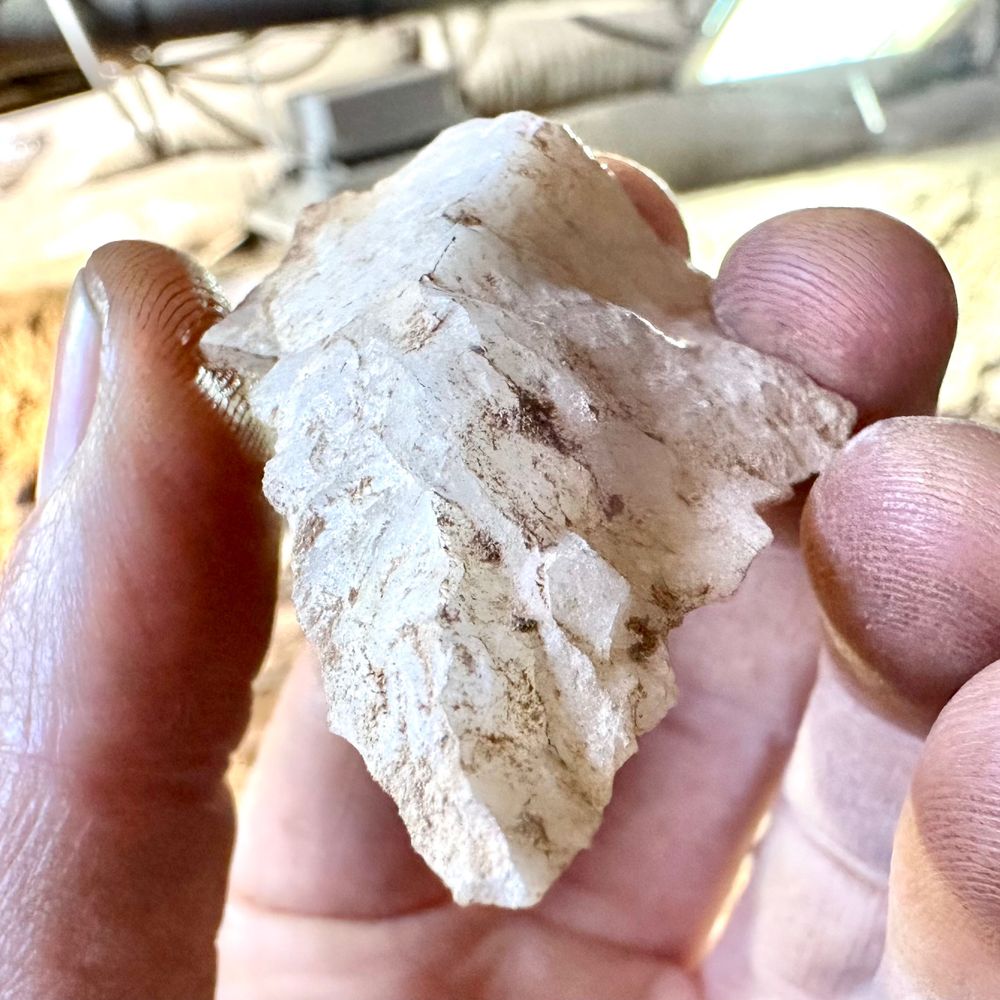
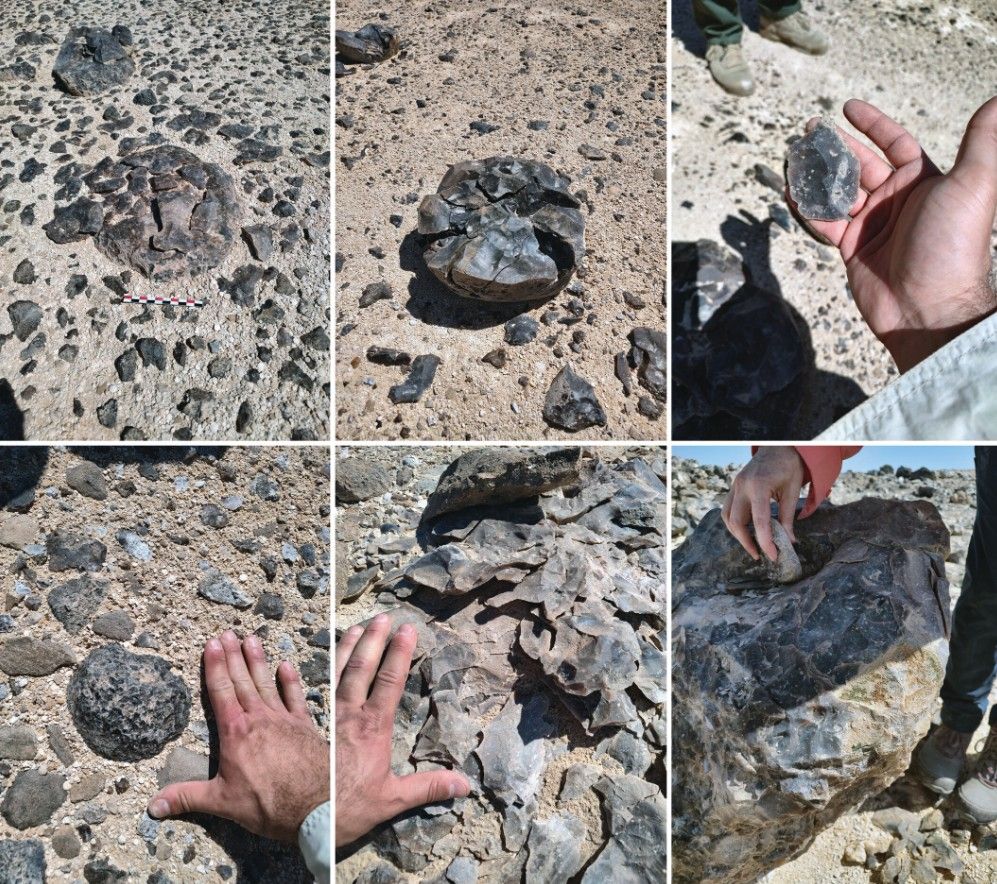
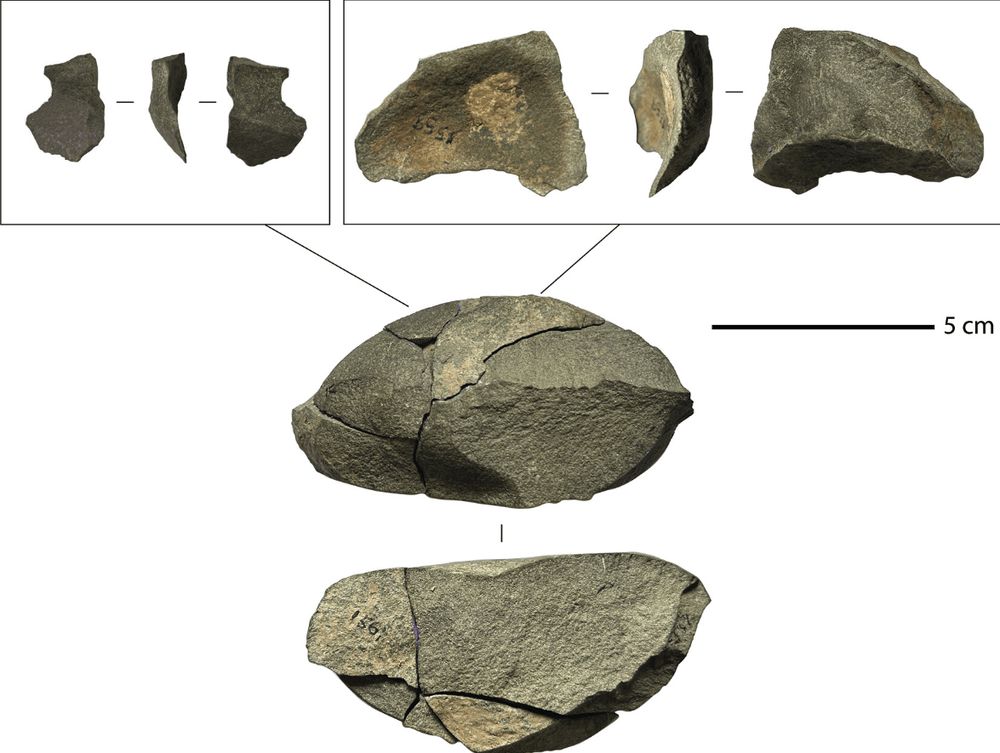
Here, we propose a new perspective on early stone tool technology: emulation of naturally occurring sharp-edged stones (naturaliths) instead of inventing via 'Eureka!' moments. Nature provided the blueprint; hominins took it further.
🔗 doi.org/10.1111/arcm...
#Archaeology #Stonetools
🔗 doi.org/10.1111/arcm...
#Archaeology #Stonetools
March 17, 2025 at 1:09 PM
Here, we propose a new perspective on early stone tool technology: emulation of naturally occurring sharp-edged stones (naturaliths) instead of inventing via 'Eureka!' moments. Nature provided the blueprint; hominins took it further.
🔗 doi.org/10.1111/arcm...
#Archaeology #Stonetools
🔗 doi.org/10.1111/arcm...
#Archaeology #Stonetools
Reposted by Dalila De Caro

And in news from 1.5 million years ago: early humans made axes out of elephant bones. Here's my story. Gift link: nyti.ms/3F7llVt

Trove of Ancient Axes Shows Early Humans Made Tools From Bones (Gift Article)
Deep in a trench in Tanzania, researchers found dozens of tools crafted from animal bones some 1.5 million years old.
www.nytimes.com
March 5, 2025 at 4:58 PM
And in news from 1.5 million years ago: early humans made axes out of elephant bones. Here's my story. Gift link: nyti.ms/3F7llVt
Reposted by Dalila De Caro
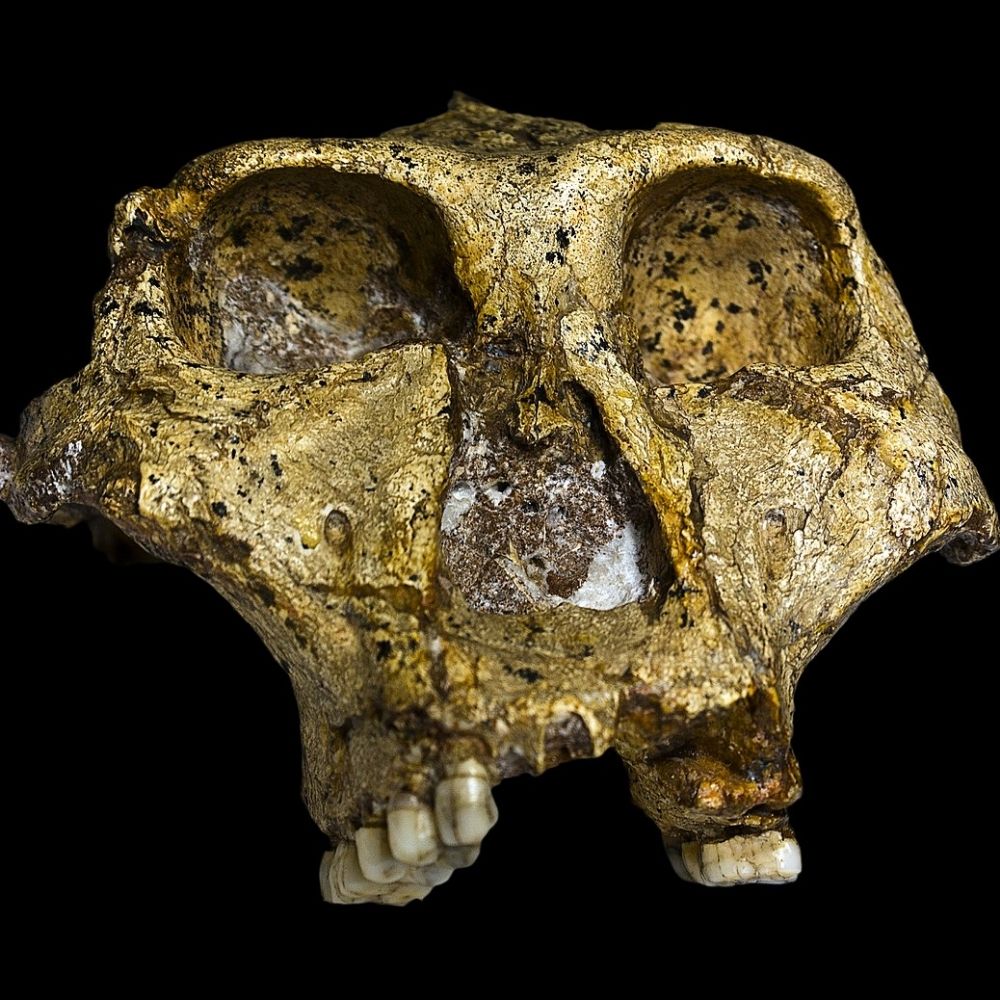
New fossils described in the Journal of Human Evolution - The first articulated Paranthropus robustus hip, femur, and tibia from Swartkrans (~2.3–1.7 Ma) reveal one of the smallest known adult hominins. Morphological analysis provides new insights into Early Pleistocene locomotion:

First articulating os coxae, femur, and tibia of a small adult Paranthropus robustus from Member 1 (Hanging Remnant) of the Swartkrans Formation, South Africa
Since paleontological work began there in 1948, Swartkrans (South Africa) has yielded hundreds of Early Pleistocene hominin fossils, currently attribu…
www.sciencedirect.com
March 6, 2025 at 6:57 AM
New fossils described in the Journal of Human Evolution - The first articulated Paranthropus robustus hip, femur, and tibia from Swartkrans (~2.3–1.7 Ma) reveal one of the smallest known adult hominins. Morphological analysis provides new insights into Early Pleistocene locomotion: