



Comparative Cytogenetics
@compcytogen.pensoft.net
Open-access, peer-reviewed academic journal for all aspects of plant and animal cytogenetics, karyosystematics and molecular systematics.
Published by @pensoft.net. Powered by ARPHA.
Website: compcytogen.pensoft.net
Published by @pensoft.net. Powered by ARPHA.
Website: compcytogen.pensoft.net
From two natural populations in the Inya River of Western Siberia, data on chromosomal polymorphism of 𝐶ℎ𝑖𝑟𝑜𝑛𝑜𝑚𝑢𝑠 sp. J - a sibling species from the 𝐶ℎ𝑖𝑟𝑜𝑛𝑜𝑚𝑢𝑠 𝑝𝑙𝑢𝑚𝑜𝑠𝑢𝑠 group - are presented for the first time.
🔗 doi.org/10.3897/comp...
🔗 doi.org/10.3897/comp...

Chironomus sp. J – an elusive species from the Chironomus plumosus (Linnaeus, 1758) sibling-species group (Diptera, Chironomidae)
Data on chromosomal polymorphism in two natural populations from the Inya River in Western Siberia (Novosibirsk province) of Chironomus sp. J (Kiknadze, 1991) —one of the sibling species from the Chir...
doi.org
November 21, 2025 at 8:29 AM
From two natural populations in the Inya River of Western Siberia, data on chromosomal polymorphism of 𝐶ℎ𝑖𝑟𝑜𝑛𝑜𝑚𝑢𝑠 sp. J - a sibling species from the 𝐶ℎ𝑖𝑟𝑜𝑛𝑜𝑚𝑢𝑠 𝑝𝑙𝑢𝑚𝑜𝑠𝑢𝑠 group - are presented for the first time.
🔗 doi.org/10.3897/comp...
🔗 doi.org/10.3897/comp...
New cytogenetic research reveals contrasting chromosome diversity in two 𝐵𝑜𝑡ℎ𝑟𝑖𝑢𝑟𝑢𝑠 scorpion species from Brazil.
🔗 doi.org/10.3897/comp...
🔗 doi.org/10.3897/comp...

Comparative cytogenetics among populations of two Bothriurus species (Scorpiones, Bothriuridae)
Bothriurus Peters, 1861 is one of the most diverse genera within the family Bothriuridae. However, to date, only five species have been analyzed using a cytogenetic approach. In this study...
doi.org
November 14, 2025 at 8:04 AM
New cytogenetic research reveals contrasting chromosome diversity in two 𝐵𝑜𝑡ℎ𝑟𝑖𝑢𝑟𝑢𝑠 scorpion species from Brazil.
🔗 doi.org/10.3897/comp...
🔗 doi.org/10.3897/comp...
Comparative cytogenetics of 𝑃ℎ𝑦𝑠𝑎𝑙𝑎𝑒𝑚𝑢𝑠 𝑔𝑟𝑎𝑐𝑖𝑙𝑖𝑠 group frogs highlights karyotypic variation and improves understanding of chromosome evolution and species diversity in South American anurans.
🔗 doi.org/10.3897/comp...
🔗 doi.org/10.3897/comp...

Comparative cytogenetics of the Physalaemus gracilis group (Anura, Leptodactylidae) with characterization of the karyotype of Physalaemus evangelistai Bokermann, 1967
The anuran species group Physalaemus gracilis comprises six species, and variation in the location of nucleolus organizer regions (NORs) was observed across the four species that have been karyotyped ...
doi.org
November 10, 2025 at 6:51 AM
Comparative cytogenetics of 𝑃ℎ𝑦𝑠𝑎𝑙𝑎𝑒𝑚𝑢𝑠 𝑔𝑟𝑎𝑐𝑖𝑙𝑖𝑠 group frogs highlights karyotypic variation and improves understanding of chromosome evolution and species diversity in South American anurans.
🔗 doi.org/10.3897/comp...
🔗 doi.org/10.3897/comp...

October 8, 2025 at 6:04 AM
A study of the karyotype and evolutionary history of the Taiwanese salamander Hynobius fucus: doi.org/10.3897/comp...
#karyotype #evolution #salamander
#karyotype #evolution #salamander

August 15, 2025 at 9:01 AM
A study of the karyotype and evolutionary history of the Taiwanese salamander Hynobius fucus: doi.org/10.3897/comp...
#karyotype #evolution #salamander
#karyotype #evolution #salamander
Researchers present the first molecular cytogenetic characterisation of the scleractinian (stony) coral 𝑀𝑖𝑐𝑟𝑜𝑚𝑢𝑠𝑠𝑎 𝑎𝑚𝑎𝑘𝑢𝑠𝑒𝑛𝑠𝑖𝑠, employing fluorescence in situ hybridization (FISH) to isolate and map five DNA markers.
🔗 doi.org/10.3897/comp...
🔗 doi.org/10.3897/comp...

Molecular cytogenetic study on the scleractinian coral Micromussa amakusensis (Veron, 1990) (Hexacorallia, Anthozoa, Cnidaria): isolation of five fluorescence in situ hybridization markers
Scleractinian (stony) corals are foundational to reef ecosystems, yet their taxonomy remains unresolved due to morphological plasticity and limited cytogenetic data. This study presents the first molecular cytogenetic characterization of the scleractinian coral Micromussa amakusensis (Veron, 1990), employing fluorescence in situ hybridization (FISH) to isolate and map five DNA markers. Using the conventional Giemsa staining technique, M. amakusensis was found to have a diploid karyotype of 2n = 28, with a prominent homogeneously staining region (HSR) on the long arm of chromosome 12. Subsequently, five FISH markers designated as MA-H3 for histone H3, MA-5S for 5S rRNA, MA-18/28S for 18S-28S rRNA, MA-13C for centromeric region, and MA-TEL for telomeric region were cloned, sequenced, and mapped using FISH. FISH analysis revealed that the MA-H3 localized to the centromeric region of chromosome 1, MA-5S to the telomeric region of chromosome 4, MA-18/28S to the terminal region of chromosome 12 (coinciding with the HSR), MA-13C to the centromere of chromosome 13, and MA-TEL to multiple telomeric regions across several chromosomes. Sequence analysis confirmed marker identities and revealed conserved and novel repetitive elements. Furthermore, Genomic DNA hybridization (GDH) of whole-sperm DNA revealed signals collected at several telomeric regions, suggesting the presence of repetitive sequences. These cytogenetic markers enable the identification of at least 3 out of 14 chromosome pairs, allow for more precise karyotyping, and highlight chromosomal features that may help resolve coral classification and improve understanding of genome evolution. This research demonstrates the utility of molecular cytogenetics in stony coral systematics and provides new FISH markers for future comparative genomic studies.
doi.org
August 8, 2025 at 6:05 AM
Researchers present the first molecular cytogenetic characterisation of the scleractinian (stony) coral 𝑀𝑖𝑐𝑟𝑜𝑚𝑢𝑠𝑠𝑎 𝑎𝑚𝑎𝑘𝑢𝑠𝑒𝑛𝑠𝑖𝑠, employing fluorescence in situ hybridization (FISH) to isolate and map five DNA markers.
🔗 doi.org/10.3897/comp...
🔗 doi.org/10.3897/comp...
Karyotypes of triploid female Helophorus brevipalpis from France are analysed using chromosome morphology and C-banding, appearing identical to Spanish material but not Italian.
🔗 doi.org/10.3897/comp...
🔗 doi.org/10.3897/comp...

Triploid female Helophorus brevipalpis Bedel, 1881 in Provence, France, with additional data on C-banding in both triploid and diploid material, and discussion of chromosomal variation in H. brevipalp...
Triploid female Helophorus brevipalpis Bedel, 1881 are recorded from two localities in Provence, France. Their karyotypes are analysed using both chromosome morphology and C-banding. Their karyotypes ...
doi.org
July 24, 2025 at 12:29 PM
Karyotypes of triploid female Helophorus brevipalpis from France are analysed using chromosome morphology and C-banding, appearing identical to Spanish material but not Italian.
🔗 doi.org/10.3897/comp...
🔗 doi.org/10.3897/comp...
Researchers present the first evidence of telomere structure in the family Geocoridae and the first finding of the telomeric sequence (TTAGGGGTGG)n in the large superfamily Lygaeoidea.
doi.org/10.3897/comp...
doi.org/10.3897/comp...
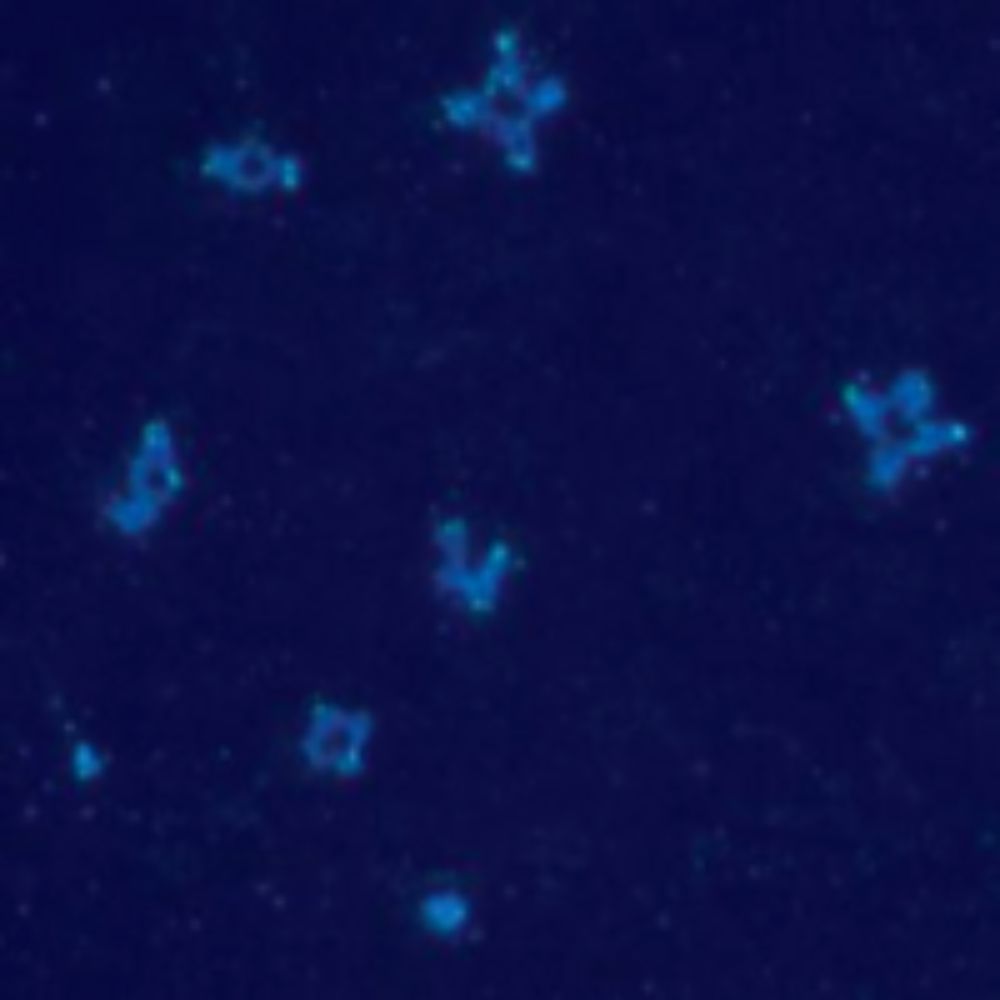
Non-canonical telomeric motif TTAGGGGTGG in the true bug species Geocoris dispar Waga, 1839 (Heteroptera, Geocoridae)
We report on the results of a chromosomal study of the big-eyed true bug Geocoris dispar Waga, 1839 (Heteroptera: Geocoridae) aimed at obtaining data on its telomeres. Using fluorescence in situ hybri...
doi.org
July 18, 2025 at 6:52 AM
Researchers present the first evidence of telomere structure in the family Geocoridae and the first finding of the telomeric sequence (TTAGGGGTGG)n in the large superfamily Lygaeoidea.
doi.org/10.3897/comp...
doi.org/10.3897/comp...
We have moved from X to Bluesky! To keep up to date with the latest research in cytogenetics, follow us here!

June 27, 2025 at 7:04 AM
We have moved from X to Bluesky! To keep up to date with the latest research in cytogenetics, follow us here!