



Camellia Tea Ceremony
@camelliakyoto.bsky.social
Welcoming guests to our two teahouses and kimono studio in Kyōto. Join us as we explore Japanese culture, tea and history!
Website: https://tea-kyoto.com/
You can also find us over on...
insta: http://camellia.kyoto &
@camelliakyoto@mastodon.social
Website: https://tea-kyoto.com/
You can also find us over on...
insta: http://camellia.kyoto &
@camelliakyoto@mastodon.social
💛WAXING WINTER💛
Around the lunar New Year guests are served 'rōbai' (蝋梅), named after the fragrant 'yellow wax plum' which blooms at this time of year.
As the name suggests, the beehive-yellow blossoms look as if they have been carefully crafted from wax.
#Kyoto #Japan #wagashi
Around the lunar New Year guests are served 'rōbai' (蝋梅), named after the fragrant 'yellow wax plum' which blooms at this time of year.
As the name suggests, the beehive-yellow blossoms look as if they have been carefully crafted from wax.
#Kyoto #Japan #wagashi


February 12, 2026 at 1:44 AM
🎌NATIONAL FOUNDATION DAY🎌
February 11th's 'Kenkoku Kinen-no-hi' (建国記念の日 'National Foundation Day') celebrates the 'founding' of Japan by the first emperor, Jimmu (神武天皇 711-585BC).
#Kyoto #京都 #建国記念の日 #NationalFoundationDay
February 11th's 'Kenkoku Kinen-no-hi' (建国記念の日 'National Foundation Day') celebrates the 'founding' of Japan by the first emperor, Jimmu (神武天皇 711-585BC).
#Kyoto #京都 #建国記念の日 #NationalFoundationDay


February 11, 2026 at 3:10 AM
🎌NATIONAL FOUNDATION DAY🎌
February 11th's 'Kenkoku Kinen-no-hi' (建国記念の日 'National Foundation Day') celebrates the 'founding' of Japan by the first emperor, Jimmu (神武天皇 711-585BC).
#Kyoto #京都 #建国記念の日 #NationalFoundationDay
February 11th's 'Kenkoku Kinen-no-hi' (建国記念の日 'National Foundation Day') celebrates the 'founding' of Japan by the first emperor, Jimmu (神武天皇 711-585BC).
#Kyoto #京都 #建国記念の日 #NationalFoundationDay
👋🌿WELCOMING SPRING🐦🎶
In the traditional calendar spring has arrived.
During 'Risshun' (立春) the 'east wind melts the ice' (東風解凍 Feb 4th-8th), 'bush warblers begin singing in the mountains' (黄鶯睍睆 9-13th), and mysteriously 'fish emerge from the ice' (魚上氷 14-18th).
#snow #spring #Kyoto #Tojiin
In the traditional calendar spring has arrived.
During 'Risshun' (立春) the 'east wind melts the ice' (東風解凍 Feb 4th-8th), 'bush warblers begin singing in the mountains' (黄鶯睍睆 9-13th), and mysteriously 'fish emerge from the ice' (魚上氷 14-18th).
#snow #spring #Kyoto #Tojiin


February 10, 2026 at 1:23 AM
💌AMULETS OF ATTRACTION🙏
At Suga-jinja (須賀神社 - twinned with Kōtsū-jinja) a rather different sort of event takes place at Setsubun (and the day before).
There are no oni, but there are 'Kesōbumi-uri' (懸想文売), 'vendors of love letters', with their faces carefully hidden.
#京都 #Kyoto #懸想文売
At Suga-jinja (須賀神社 - twinned with Kōtsū-jinja) a rather different sort of event takes place at Setsubun (and the day before).
There are no oni, but there are 'Kesōbumi-uri' (懸想文売), 'vendors of love letters', with their faces carefully hidden.
#京都 #Kyoto #懸想文売


February 5, 2026 at 1:18 AM
🫘👋DRIVING OUT DEMONS👹💨
It is time to gather your lucky beans, 'fukumame' (福豆), for Setsubun and the first day of lunar spring is almost here!
Let's drive away misfortune for another year!
🫘👹🚪➡️
"Oni wa soto! Fuku wa uchi!"
🍀➡️🚪😊
"Devils out! Fortune in!"
(鬼は外! 福は内!)
It is time to gather your lucky beans, 'fukumame' (福豆), for Setsubun and the first day of lunar spring is almost here!
Let's drive away misfortune for another year!
🫘👹🚪➡️
"Oni wa soto! Fuku wa uchi!"
🍀➡️🚪😊
"Devils out! Fortune in!"
(鬼は外! 福は内!)
January 29, 2026 at 2:11 AM
🫘👋DRIVING OUT DEMONS👹💨
It is time to gather your lucky beans, 'fukumame' (福豆), for Setsubun and the first day of lunar spring is almost here!
Let's drive away misfortune for another year!
🫘👹🚪➡️
"Oni wa soto! Fuku wa uchi!"
🍀➡️🚪😊
"Devils out! Fortune in!"
(鬼は外! 福は内!)
It is time to gather your lucky beans, 'fukumame' (福豆), for Setsubun and the first day of lunar spring is almost here!
Let's drive away misfortune for another year!
🫘👹🚪➡️
"Oni wa soto! Fuku wa uchi!"
🍀➡️🚪😊
"Devils out! Fortune in!"
(鬼は外! 福は内!)


💸🍡FIRST MARKETS👘🙏
The most important markets of the year fall just before and just after the New Year.
Hatsu Kōbō (初弘法 'the 1st Kōbō market of the year'), held on the 21st of January at Tō-ji, is one of the city's largest.
Nao-san ventured through snow last year to explore.
#Japan
The most important markets of the year fall just before and just after the New Year.
Hatsu Kōbō (初弘法 'the 1st Kōbō market of the year'), held on the 21st of January at Tō-ji, is one of the city's largest.
Nao-san ventured through snow last year to explore.
#Japan
January 20, 2026 at 2:24 AM
💸🍡FIRST MARKETS👘🙏
The most important markets of the year fall just before and just after the New Year.
Hatsu Kōbō (初弘法 'the 1st Kōbō market of the year'), held on the 21st of January at Tō-ji, is one of the city's largest.
Nao-san ventured through snow last year to explore.
#Japan
The most important markets of the year fall just before and just after the New Year.
Hatsu Kōbō (初弘法 'the 1st Kōbō market of the year'), held on the 21st of January at Tō-ji, is one of the city's largest.
Nao-san ventured through snow last year to explore.
#Japan
🙏🐴GIFT HORSES, RAIN CLOUDS & REVENGE💦👹
In times past, during extreme weather events, the imperial court would turn to one particular shrine.
Kifune-jinja (貴船神社), nestled in the mountains north of Kyōto, is home to the god of rain. Horses were gifted to the shrine in an attempt to alter the weather.
In times past, during extreme weather events, the imperial court would turn to one particular shrine.
Kifune-jinja (貴船神社), nestled in the mountains north of Kyōto, is home to the god of rain. Horses were gifted to the shrine in an attempt to alter the weather.


January 19, 2026 at 1:26 AM
🙏🐴GIFT HORSES, RAIN CLOUDS & REVENGE💦👹
In times past, during extreme weather events, the imperial court would turn to one particular shrine.
Kifune-jinja (貴船神社), nestled in the mountains north of Kyōto, is home to the god of rain. Horses were gifted to the shrine in an attempt to alter the weather.
In times past, during extreme weather events, the imperial court would turn to one particular shrine.
Kifune-jinja (貴船神社), nestled in the mountains north of Kyōto, is home to the god of rain. Horses were gifted to the shrine in an attempt to alter the weather.
🔥🥵HELL'S HOLIDAY🎒👋
January 16th is 'Hatsu Enma' (初閻魔), a big holiday for hell.
It was on this day, mirroring the break taken by public officials immediately after the end of traditional New Year observances, that the King of Hell opened the lids of the cauldrons in the underworld.
#初閻魔
January 16th is 'Hatsu Enma' (初閻魔), a big holiday for hell.
It was on this day, mirroring the break taken by public officials immediately after the end of traditional New Year observances, that the King of Hell opened the lids of the cauldrons in the underworld.
#初閻魔


January 16, 2026 at 1:25 AM
🔥🥵HELL'S HOLIDAY🎒👋
January 16th is 'Hatsu Enma' (初閻魔), a big holiday for hell.
It was on this day, mirroring the break taken by public officials immediately after the end of traditional New Year observances, that the King of Hell opened the lids of the cauldrons in the underworld.
#初閻魔
January 16th is 'Hatsu Enma' (初閻魔), a big holiday for hell.
It was on this day, mirroring the break taken by public officials immediately after the end of traditional New Year observances, that the King of Hell opened the lids of the cauldrons in the underworld.
#初閻魔
🎍SAYING GOODBYE TO THE NEW YEAR🤔
In many countries Christmas decorations are taken down on the 12th day of Christmas (January 6th), also known as Epiphany. To keep them up any longer is nowadays considered bad luck.
But what about Japan? Well, that depends where you live.
#traditions #NewYear
In many countries Christmas decorations are taken down on the 12th day of Christmas (January 6th), also known as Epiphany. To keep them up any longer is nowadays considered bad luck.
But what about Japan? Well, that depends where you live.
#traditions #NewYear


January 15, 2026 at 2:12 AM
🎍SAYING GOODBYE TO THE NEW YEAR🤔
In many countries Christmas decorations are taken down on the 12th day of Christmas (January 6th), also known as Epiphany. To keep them up any longer is nowadays considered bad luck.
But what about Japan? Well, that depends where you live.
#traditions #NewYear
In many countries Christmas decorations are taken down on the 12th day of Christmas (January 6th), also known as Epiphany. To keep them up any longer is nowadays considered bad luck.
But what about Japan? Well, that depends where you live.
#traditions #NewYear
🌾LITTLE NEW YEAR🙏
Before the New Year celebrations wrap up, there is one more observance to be made on January 15th.
Tōrin-in preserves the tradition of 'Koshōgatsu' (小正月 'Little New Year'), a once-popular ritual in rural areas, where people would pray for good harvests.
#小正月
Before the New Year celebrations wrap up, there is one more observance to be made on January 15th.
Tōrin-in preserves the tradition of 'Koshōgatsu' (小正月 'Little New Year'), a once-popular ritual in rural areas, where people would pray for good harvests.
#小正月


January 14, 2026 at 1:22 AM
🌾LITTLE NEW YEAR🙏
Before the New Year celebrations wrap up, there is one more observance to be made on January 15th.
Tōrin-in preserves the tradition of 'Koshōgatsu' (小正月 'Little New Year'), a once-popular ritual in rural areas, where people would pray for good harvests.
#小正月
Before the New Year celebrations wrap up, there is one more observance to be made on January 15th.
Tōrin-in preserves the tradition of 'Koshōgatsu' (小正月 'Little New Year'), a once-popular ritual in rural areas, where people would pray for good harvests.
#小正月
🚸🧒COMING OF AGE DAY👩🦱👘
Today is 'Seijin-no-hi' (成人の日), a national holiday set aside to congratulate those who have reached -or are soon to reach- the age of majority (20 years old).
The tradition of celebrating 'coming of age' is recorded as early as 714!
#Japan #Kyoto #成人の日
Today is 'Seijin-no-hi' (成人の日), a national holiday set aside to congratulate those who have reached -or are soon to reach- the age of majority (20 years old).
The tradition of celebrating 'coming of age' is recorded as early as 714!
#Japan #Kyoto #成人の日


January 12, 2026 at 3:36 AM
🌿WHOLESOME HERBS🥣
After all that New Year excess it's time for a hearty porridge to help fortify the body for the year ahead.
For over a thousand years herbs have been gathered, mixed into a rice gruel and consumed on the 7th day of the 1st month as a prayer for health and luck.
After all that New Year excess it's time for a hearty porridge to help fortify the body for the year ahead.
For over a thousand years herbs have been gathered, mixed into a rice gruel and consumed on the 7th day of the 1st month as a prayer for health and luck.

January 7, 2026 at 1:34 AM
🌿WHOLESOME HERBS🥣
After all that New Year excess it's time for a hearty porridge to help fortify the body for the year ahead.
For over a thousand years herbs have been gathered, mixed into a rice gruel and consumed on the 7th day of the 1st month as a prayer for health and luck.
After all that New Year excess it's time for a hearty porridge to help fortify the body for the year ahead.
For over a thousand years herbs have been gathered, mixed into a rice gruel and consumed on the 7th day of the 1st month as a prayer for health and luck.
🍵NEW YEAR, NEW SWEETS😋
The New Year in Japan starts with a wave of 'firsts': hatsumōde (初詣 'first shrine visit'), hatsuyume (初夢 'first dream'), and hatsugama (初釜 'first tea ceremony') to name a few.
There is one sweet in particular we begin the year with in the tearoom...hanabiramochi.
The New Year in Japan starts with a wave of 'firsts': hatsumōde (初詣 'first shrine visit'), hatsuyume (初夢 'first dream'), and hatsugama (初釜 'first tea ceremony') to name a few.
There is one sweet in particular we begin the year with in the tearoom...hanabiramochi.


January 5, 2026 at 2:17 AM
🍵NEW YEAR, NEW SWEETS😋
The New Year in Japan starts with a wave of 'firsts': hatsumōde (初詣 'first shrine visit'), hatsuyume (初夢 'first dream'), and hatsugama (初釜 'first tea ceremony') to name a few.
There is one sweet in particular we begin the year with in the tearoom...hanabiramochi.
The New Year in Japan starts with a wave of 'firsts': hatsumōde (初詣 'first shrine visit'), hatsuyume (初夢 'first dream'), and hatsugama (初釜 'first tea ceremony') to name a few.
There is one sweet in particular we begin the year with in the tearoom...hanabiramochi.
🎍😴HATSU-YUME 'FIRST DREAM' (初夢)💤🪙
shaping
my year's first dream...
a cold night
初夢を拵へて売る夜寒哉
-Kobayashi Issa (小林一茶), 1824.
On the first three days of the New Year people pay close attention to their dreams, for they may well predict what fortune or disaster is lying in wait.
#NewYear
shaping
my year's first dream...
a cold night
初夢を拵へて売る夜寒哉
-Kobayashi Issa (小林一茶), 1824.
On the first three days of the New Year people pay close attention to their dreams, for they may well predict what fortune or disaster is lying in wait.
#NewYear


January 2, 2026 at 4:26 AM
🎍😴HATSU-YUME 'FIRST DREAM' (初夢)💤🪙
shaping
my year's first dream...
a cold night
初夢を拵へて売る夜寒哉
-Kobayashi Issa (小林一茶), 1824.
On the first three days of the New Year people pay close attention to their dreams, for they may well predict what fortune or disaster is lying in wait.
#NewYear
shaping
my year's first dream...
a cold night
初夢を拵へて売る夜寒哉
-Kobayashi Issa (小林一茶), 1824.
On the first three days of the New Year people pay close attention to their dreams, for they may well predict what fortune or disaster is lying in wait.
#NewYear
❄️FESTIVE FANCIES🦌
looking delicious
the snow falling softly
softly
うまさふな雪やふふはりふふはりと
-Kobayashi Issa.
As we wait impatiently for snow (and Christmas), Oimatsu's (老松) 'kazahana' (風花) brings festive cheer to the tearoom. The sweet imagines snowflakes sparkling as they fall.
#Kyoto #wagashi
looking delicious
the snow falling softly
softly
うまさふな雪やふふはりふふはりと
-Kobayashi Issa.
As we wait impatiently for snow (and Christmas), Oimatsu's (老松) 'kazahana' (風花) brings festive cheer to the tearoom. The sweet imagines snowflakes sparkling as they fall.
#Kyoto #wagashi


December 23, 2025 at 1:12 AM
🍊THE WINTER SOLSTICE🍃
Today is 'Tōji' (冬至), the Winter Solstice. On this day we traditionally enjoy 'yuzu-yu' (柚子湯), a bath steeped in yuzu🍊☺️♨️
#Japan #Kyoto #tōji' #冬至 #wintersolstice #yuzuyu #柚子湯
Today is 'Tōji' (冬至), the Winter Solstice. On this day we traditionally enjoy 'yuzu-yu' (柚子湯), a bath steeped in yuzu🍊☺️♨️
#Japan #Kyoto #tōji' #冬至 #wintersolstice #yuzuyu #柚子湯
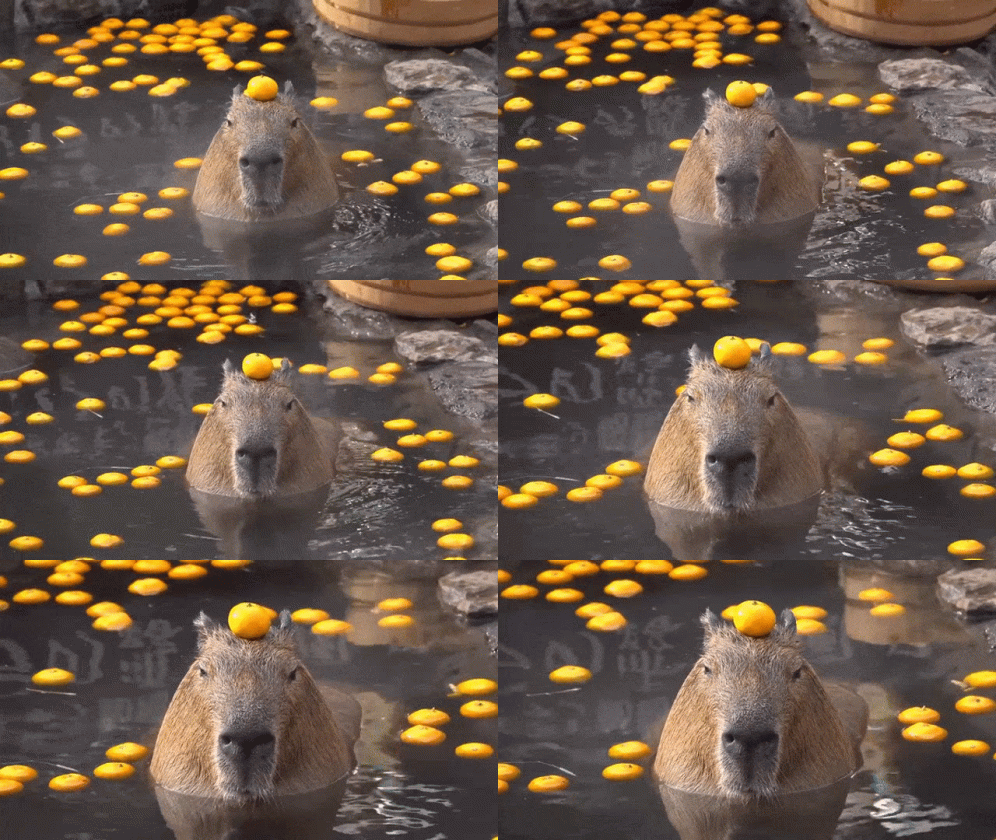
a capybara with a yellow ball on its head is swimming in a pool
ALT: a capybara with a yellow ball on its head is swimming in a pool
media.tenor.com
December 22, 2025 at 3:52 AM
🎅🦌🎁SANTA'S ON HIS WAY🛷🎄🙌
Father Christmas, Santa Claus, Kris Kringle, Papa Noël, Père Noël, Weihnachtsmann, Babbo Natale, Papai Noel, Ded Moroz...
...whatever you call this festive fellow, may I now present Ho-ho-hotei and Nao Noel👼
#Christmas #サンタクロース #Japan #京都
Father Christmas, Santa Claus, Kris Kringle, Papa Noël, Père Noël, Weihnachtsmann, Babbo Natale, Papai Noel, Ded Moroz...
...whatever you call this festive fellow, may I now present Ho-ho-hotei and Nao Noel👼
#Christmas #サンタクロース #Japan #京都


December 18, 2025 at 1:23 AM
🎅🦌🎁SANTA'S ON HIS WAY🛷🎄🙌
Father Christmas, Santa Claus, Kris Kringle, Papa Noël, Père Noël, Weihnachtsmann, Babbo Natale, Papai Noel, Ded Moroz...
...whatever you call this festive fellow, may I now present Ho-ho-hotei and Nao Noel👼
#Christmas #サンタクロース #Japan #京都
Father Christmas, Santa Claus, Kris Kringle, Papa Noël, Père Noël, Weihnachtsmann, Babbo Natale, Papai Noel, Ded Moroz...
...whatever you call this festive fellow, may I now present Ho-ho-hotei and Nao Noel👼
#Christmas #サンタクロース #Japan #京都


Absolutely thrilled to be invited on to the Krewe of Japan podcast, and could easily have chatted all day. Next time we must do a live record from the teahouse!
And even if you are not interested in tea ceremony, there are so many interesting topics covered on the podcast. Get listening🙇
And even if you are not interested in tea ceremony, there are so many interesting topics covered on the podcast. Get listening🙇

This week, with Atsuko Mori of Camellia Tea Ceremony (@camelliakyoto.bsky.social) as our guide, the Krewe dives deep into everything involved in the Japanese Tea Ceremony & how it's stood the test of time.
🎧 krewe-of-japan.simplecast.com/episodes/jap...
🔗 linktr.ee/kojpodcast
📺 youtu.be/o67bo8jFBQw
🎧 krewe-of-japan.simplecast.com/episodes/jap...
🔗 linktr.ee/kojpodcast
📺 youtu.be/o67bo8jFBQw
December 15, 2025 at 12:42 AM
Absolutely thrilled to be invited on to the Krewe of Japan podcast, and could easily have chatted all day. Next time we must do a live record from the teahouse!
And even if you are not interested in tea ceremony, there are so many interesting topics covered on the podcast. Get listening🙇
And even if you are not interested in tea ceremony, there are so many interesting topics covered on the podcast. Get listening🙇
🥣RADISH GOBBLING😊
It's time once again to eat up Daihōon-ji's (大報恩寺) blessed daikon for another year of protection against sickness and disease.
On December 7th and 8th about 5000 radishes are cooked and 10,000 meals consumed during the 'Radish Boiling Festival' (大根焚 'Daikon-daki').
#大根焚 #daikon
It's time once again to eat up Daihōon-ji's (大報恩寺) blessed daikon for another year of protection against sickness and disease.
On December 7th and 8th about 5000 radishes are cooked and 10,000 meals consumed during the 'Radish Boiling Festival' (大根焚 'Daikon-daki').
#大根焚 #daikon


December 11, 2025 at 4:03 AM
🐗🙏1000 BOARS HELP FOUND A TEMPLE📿🐗
Known affectionately as 'Matsu-no-dera' (松の寺 the 'Temple of the Pine'), Yoshimine-dera (善峯寺) is the 20th of 33 temples on the famed Saigoku Kannon Pilgrimage (西国三十三所).
It is a famous spot for enjoying hydrangea in early summer, and the fall colours.
Known affectionately as 'Matsu-no-dera' (松の寺 the 'Temple of the Pine'), Yoshimine-dera (善峯寺) is the 20th of 33 temples on the famed Saigoku Kannon Pilgrimage (西国三十三所).
It is a famous spot for enjoying hydrangea in early summer, and the fall colours.


December 10, 2025 at 1:55 AM
🐗🙏1000 BOARS HELP FOUND A TEMPLE📿🐗
Known affectionately as 'Matsu-no-dera' (松の寺 the 'Temple of the Pine'), Yoshimine-dera (善峯寺) is the 20th of 33 temples on the famed Saigoku Kannon Pilgrimage (西国三十三所).
It is a famous spot for enjoying hydrangea in early summer, and the fall colours.
Known affectionately as 'Matsu-no-dera' (松の寺 the 'Temple of the Pine'), Yoshimine-dera (善峯寺) is the 20th of 33 temples on the famed Saigoku Kannon Pilgrimage (西国三十三所).
It is a famous spot for enjoying hydrangea in early summer, and the fall colours.