



Brian Levine
@brianlevine.bsky.social
Neuropsychologist and Cognitive Neuroscientist
www.levinelab.ca
www.levinelab.ca
Thrilled to see this review by the spectacular @hannahtarder-stoll.bsky.social et al. published.

How do memories guide behaviour?
Multiple memory representations, from detailed to gist-like, let us flexibly reconstruct or reproduce past experiences to behave adaptively across species.
Now out in Physiological Reviews with Morris Moscovitch, Melanie Sekeres & @brianlevine.bsky.social!
Multiple memory representations, from detailed to gist-like, let us flexibly reconstruct or reproduce past experiences to behave adaptively across species.
Now out in Physiological Reviews with Morris Moscovitch, Melanie Sekeres & @brianlevine.bsky.social!

Adaptive episodic memory: how multiple memory representations drive behavior in humans and nonhumans | Physiological Reviews | American Physiological Society
Episodic memory is a declarative long-term memory of a specific past experience. As such, it is multifaceted, encompassing both the objective and subjective components of that experience. These components can be flexibly represented at different levels of granularity, from precise, context-specific details to generalized, gistlike representations. In this review, we suggest that 1) multiple representations of an episodic memory at different levels of granularity are simultaneously encoded into a memory trace and 2) the relative weighting of these representations determines the extent to which a memory is reconstructed or reproduced at retrieval. We propose that this representational flexibility drives adaptive behavior by prioritizing reconstruction or reproduction depending on the age of the memory, its relationship to prior knowledge, current attentional goals or task demands, and individual differences. Drawing on research in humans and nonhuman animals, we show a close correspondence between psychological and neural representations of a memory across encoding, consolidation, and retrieval. Specifically, we discuss how hippocampal activity in humans and engram formation and activation in rodents support the reproduction of detailed memory representations, whereas schema formation across species, mediated by the medial prefrontal cortex, facilitates reconstruction and generalization to guide behavior. Finally, we consider how species- and individual-level differences shape episodic memory representations. By integrating findings across species, we illustrate how the correspondence between neural and psychological representations enables multiple memory representations to balance stability and flexibility, ultimately driving adaptive behavior.
journals.physiology.org
February 13, 2026 at 4:02 AM
Thrilled to see this review by the spectacular @hannahtarder-stoll.bsky.social et al. published.
Congrats to @hmsokolowski.bsky.social on seeing this 3-study paper on imagery, occupation, and gender through!
New paper from my postdoc with
@brianlevine.bsky.social now out in #PersonalityandIndividualDifferences!
We examined how different types of visual imagery relate to #STEM occupations across genders using a dimensional approach to code occupational attributes.
🔗 t.co/jX6214ZY2X
@brianlevine.bsky.social now out in #PersonalityandIndividualDifferences!
We examined how different types of visual imagery relate to #STEM occupations across genders using a dimensional approach to code occupational attributes.
🔗 t.co/jX6214ZY2X
https://sciencedirect.com/science/article/pii/S019188692500515X
t.co
December 1, 2025 at 9:42 PM
Congrats to @hmsokolowski.bsky.social on seeing this 3-study paper on imagery, occupation, and gender through!
Aligning eye tracking and free recall time series, we found that increased saccades predict episodic (vs. non-episodic) by 0.5 s.
Just out in @cognitionjournal.bsky.social, led by Ryan Barker with the inimitable @drjenryan.bsky.social.
www.sciencedirect.com/science/arti...
Just out in @cognitionjournal.bsky.social, led by Ryan Barker with the inimitable @drjenryan.bsky.social.
www.sciencedirect.com/science/arti...

November 24, 2025 at 4:09 PM
Aligning eye tracking and free recall time series, we found that increased saccades predict episodic (vs. non-episodic) by 0.5 s.
Just out in @cognitionjournal.bsky.social, led by Ryan Barker with the inimitable @drjenryan.bsky.social.
www.sciencedirect.com/science/arti...
Just out in @cognitionjournal.bsky.social, led by Ryan Barker with the inimitable @drjenryan.bsky.social.
www.sciencedirect.com/science/arti...
Honoured to add my name to the ledger book of the @src-rsc.bsky.social last week in Montreal, joining those of my mentors
With thanks to my trainees, colleagues, @baycrest.bsky.social and my family
#rscBRAVOsrc video: lnkd.in/gXvwR2e4
@baycrestfoundation.bsky.social
@uoftpsychology.bsky.social
With thanks to my trainees, colleagues, @baycrest.bsky.social and my family
#rscBRAVOsrc video: lnkd.in/gXvwR2e4
@baycrestfoundation.bsky.social
@uoftpsychology.bsky.social


November 21, 2025 at 9:18 PM
Honoured to add my name to the ledger book of the @src-rsc.bsky.social last week in Montreal, joining those of my mentors
With thanks to my trainees, colleagues, @baycrest.bsky.social and my family
#rscBRAVOsrc video: lnkd.in/gXvwR2e4
@baycrestfoundation.bsky.social
@uoftpsychology.bsky.social
With thanks to my trainees, colleagues, @baycrest.bsky.social and my family
#rscBRAVOsrc video: lnkd.in/gXvwR2e4
@baycrestfoundation.bsky.social
@uoftpsychology.bsky.social
Pleased to see this @newyorker.com piece featuring our work on imagery and autobiographical memory. @baycrest.bsky.social @baycrestfoundation.bsky.social @uoftpsychology.bsky.social

Mental imagery is associated with a bewildering variety of human traits and capacities: a propensity to hold grudges; a vulnerability to trauma; emotional awareness; ways of making art; memory of one’s life. What happens if you can’t see it?

Some People Can’t See Mental Images. The Consequences Are Profound
Research has linked the ability to visualize to a bewildering variety of human traits—how we experience trauma, hold grudges, and, above all, remember our lives.
www.newyorker.com
November 1, 2025 at 11:49 AM
Pleased to see this @newyorker.com piece featuring our work on imagery and autobiographical memory. @baycrest.bsky.social @baycrestfoundation.bsky.social @uoftpsychology.bsky.social
I was delighted to receive the Edith Kaplan Award from the Massachusetts Neuropsychological Society and to reunite with my postdoctoral companions maxine krengel, Susan McGlynn and former supervisors Nancy Hebben and Bill Milberg!


October 18, 2025 at 4:44 AM
I was delighted to receive the Edith Kaplan Award from the Massachusetts Neuropsychological Society and to reunite with my postdoctoral companions maxine krengel, Susan McGlynn and former supervisors Nancy Hebben and Bill Milberg!
Thrilled to see this award to the outstanding Dr. Ryan Yeung for his work on subjectivity and the brain!

We're excited to welcome Ryan Yeung as a Cohort 3 #SchmidtAIinSci Fellow!
Ryan works with Professors Brian Levine and Bradley Buchsbaum.
His project uses deep neural networks to objectively decode subjective experiences in the brain.🧠
Ryan works with Professors Brian Levine and Bradley Buchsbaum.
His project uses deep neural networks to objectively decode subjective experiences in the brain.🧠

October 1, 2025 at 11:57 PM
Thrilled to see this award to the outstanding Dr. Ryan Yeung for his work on subjectivity and the brain!
I was honoured to be elected to the 2025 class of Fellows of the Royal Society of Canada.
I am grateful to my trainees, research assistants, funders, and donors who have made our research possible.
I am grateful to my trainees, research assistants, funders, and donors who have made our research possible.

September 5, 2025 at 1:21 AM
I was honoured to be elected to the 2025 class of Fellows of the Royal Society of Canada.
I am grateful to my trainees, research assistants, funders, and donors who have made our research possible.
I am grateful to my trainees, research assistants, funders, and donors who have made our research possible.
Saying "so long" to our outstanding summer students Jennifer Zhavoronkova & Rivka Van Klei. We will miss you!

August 13, 2025 at 1:55 AM
Saying "so long" to our outstanding summer students Jennifer Zhavoronkova & Rivka Van Klei. We will miss you!
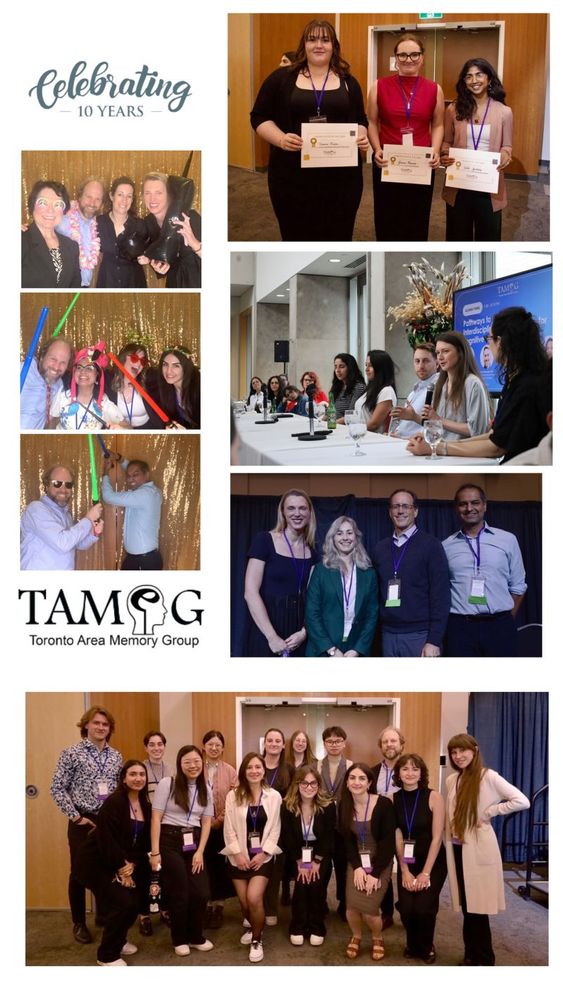
Thx for #TAMeG2025!
🎸 @charan-neuro.bsky.social's keynote
🎤+ SciComm panel C Boyce & J Schall
🧑🏻🎓Alum panel S Pishdadian @diamondn.bsky.social
@ivabrunec.bsky.social S Parimoo
🏆Awardees V Cramm G Mariotti & T Ignatius
💪🏼Vltrs led by @msorlando.bsky.social & M Varizi
🙌🏼And the 28 trainees who presented!
🎸 @charan-neuro.bsky.social's keynote
🎤+ SciComm panel C Boyce & J Schall
🧑🏻🎓Alum panel S Pishdadian @diamondn.bsky.social
@ivabrunec.bsky.social S Parimoo
🏆Awardees V Cramm G Mariotti & T Ignatius
💪🏼Vltrs led by @msorlando.bsky.social & M Varizi
🙌🏼And the 28 trainees who presented!
June 2, 2025 at 9:08 PM
Thx for #TAMeG2025!
🎸 @charan-neuro.bsky.social's keynote
🎤+ SciComm panel C Boyce & J Schall
🧑🏻🎓Alum panel S Pishdadian @diamondn.bsky.social
@ivabrunec.bsky.social S Parimoo
🏆Awardees V Cramm G Mariotti & T Ignatius
💪🏼Vltrs led by @msorlando.bsky.social & M Varizi
🙌🏼And the 28 trainees who presented!
🎸 @charan-neuro.bsky.social's keynote
🎤+ SciComm panel C Boyce & J Schall
🧑🏻🎓Alum panel S Pishdadian @diamondn.bsky.social
@ivabrunec.bsky.social S Parimoo
🏆Awardees V Cramm G Mariotti & T Ignatius
💪🏼Vltrs led by @msorlando.bsky.social & M Varizi
🙌🏼And the 28 trainees who presented!
Reposted by Brian Levine
Just coming back after an exhilarating meeting at #TAMeG2025. Thank you to @brianlevine.bsky.social & the amazing student organizing committee for putting together a stellar day of science. Coming back inspired for organizing the Bay Area Memory Meeting! #BAMM
The keynote presentation of #TAMeG2025 10th Anniversary 🌟 was by Dr. Charan Ranganath on “Why (and how) we remember🧠 Thank you Dr. Ranganath for an *incredible* presentation on the organization of narrative recall @charan-neuro.bsky.social @brianlevine.bsky.social
🔑 takeaways below⬇️
🔑 takeaways below⬇️
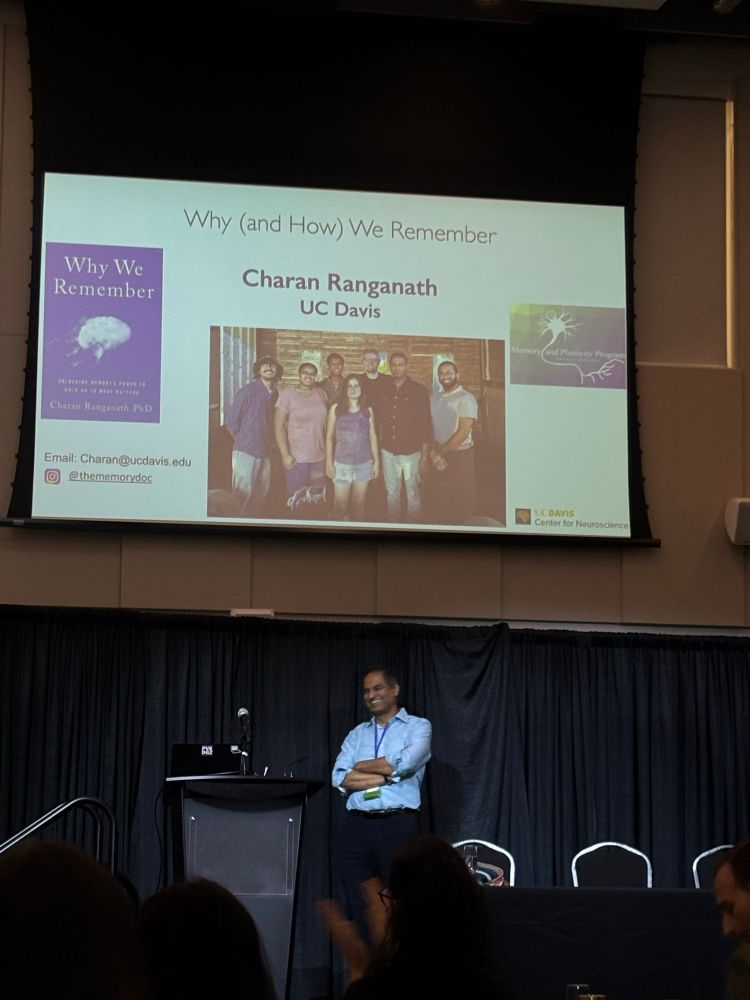
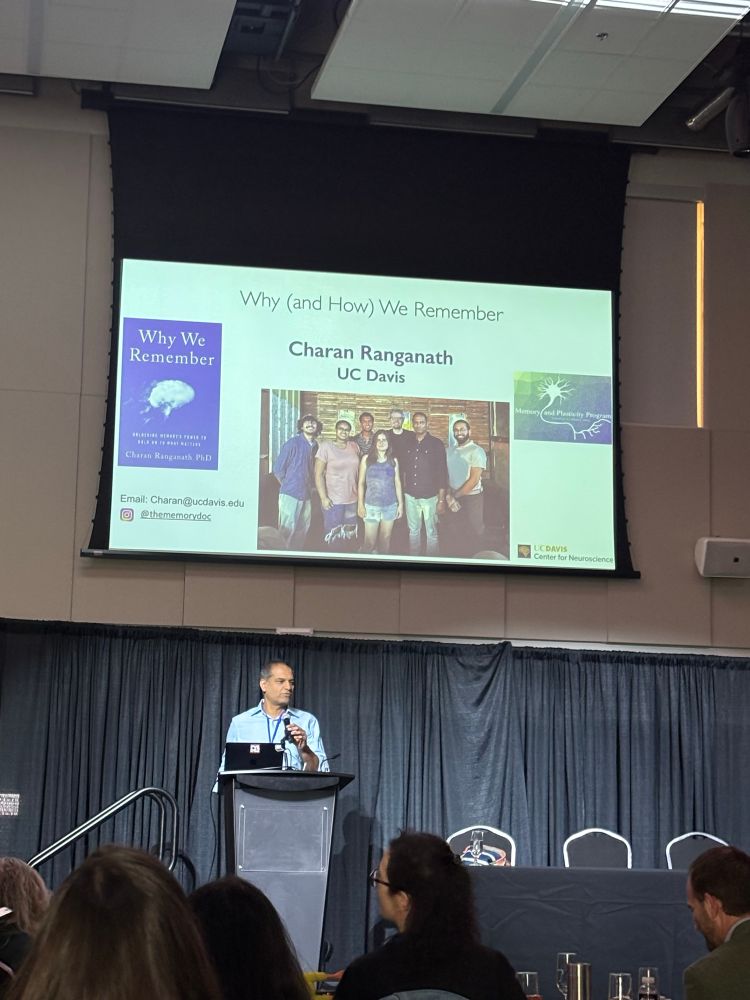
May 31, 2025 at 5:38 PM
Just coming back after an exhilarating meeting at #TAMeG2025. Thank you to @brianlevine.bsky.social & the amazing student organizing committee for putting together a stellar day of science. Coming back inspired for organizing the Bay Area Memory Meeting! #BAMM
Reposted by Brian Levine
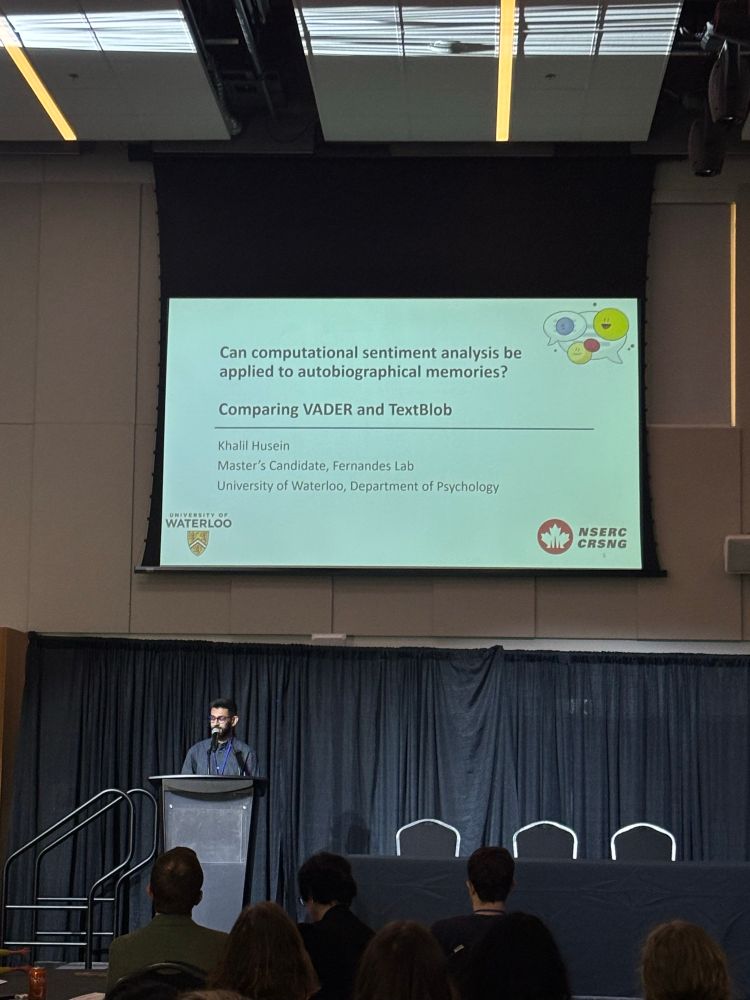
The Data Blitz session wrapped up with Khalil Husein from the Fernandes and Stastna Labs on “Can computational sentiment analysis classify autobiographical memories? Comparing VADER and TextBlob” 🧠 #TAMeG2025
May 28, 2025 at 12:47 AM
The Data Blitz session wrapped up with Khalil Husein from the Fernandes and Stastna Labs on “Can computational sentiment analysis classify autobiographical memories? Comparing VADER and TextBlob” 🧠 #TAMeG2025
Reposted by Brian Levine
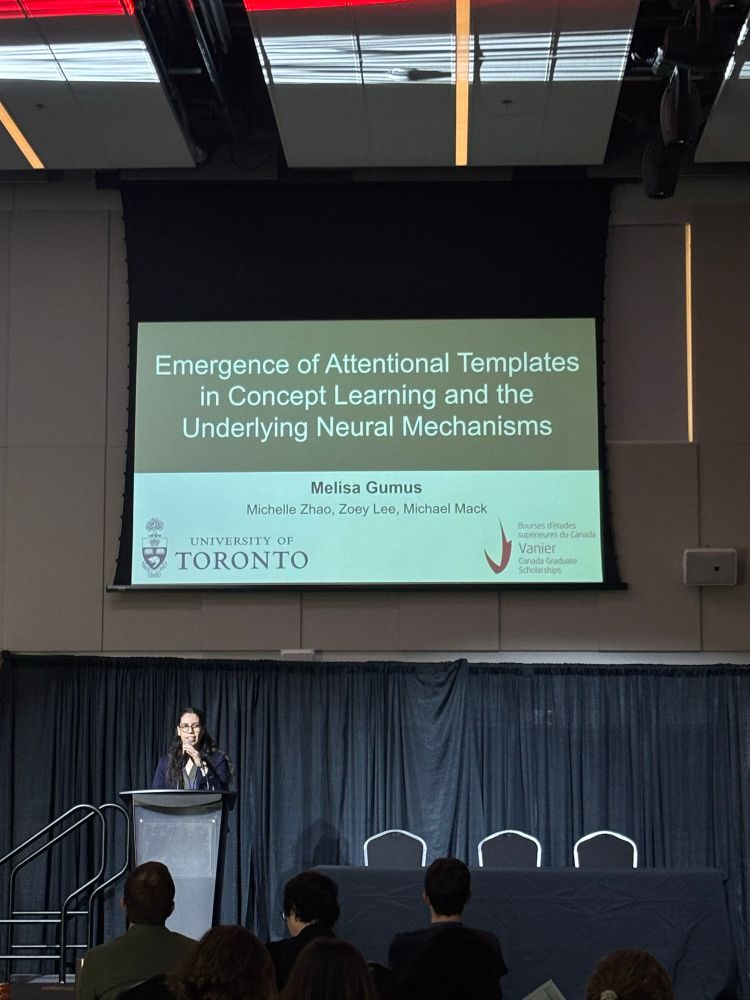
Melisa Gumus from the Mack Lab on “Emergence of attentional templates in concept learning and the underlying neural mechanisms” ⚙️🧠 #TAMeG2025
May 28, 2025 at 12:47 AM
Melisa Gumus from the Mack Lab on “Emergence of attentional templates in concept learning and the underlying neural mechanisms” ⚙️🧠 #TAMeG2025
Reposted by Brian Levine
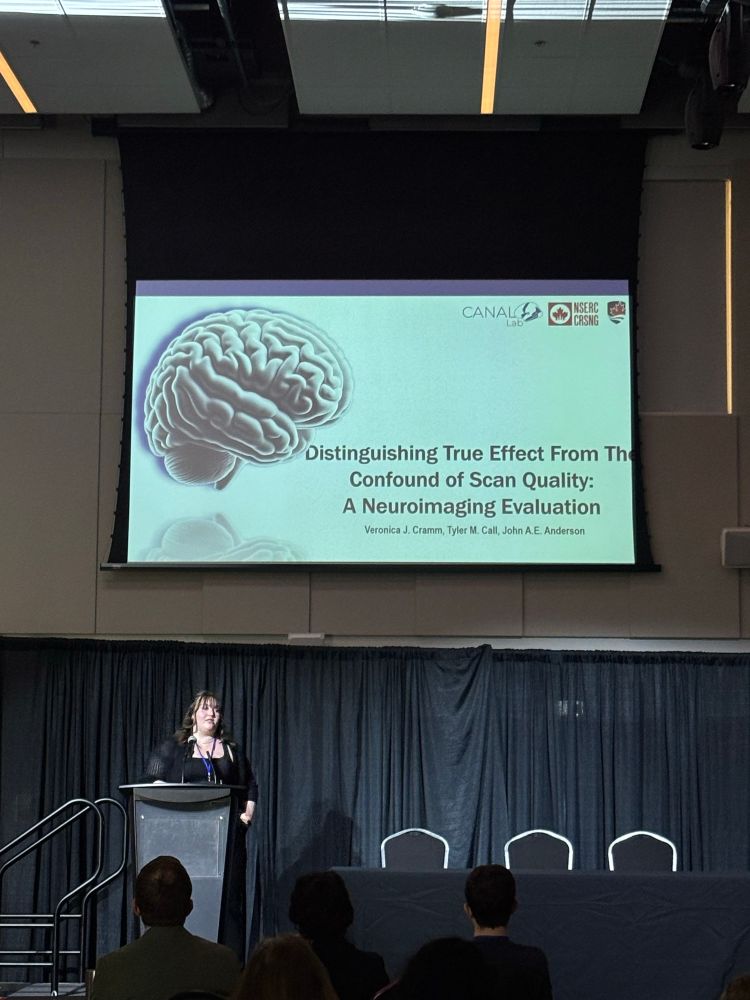
Veronica Cramm from the J. Anderson Lab on “Distinguishing true effect from the confound of scan quality” #TAMeG2025
May 28, 2025 at 12:47 AM
Veronica Cramm from the J. Anderson Lab on “Distinguishing true effect from the confound of scan quality” #TAMeG2025
Reposted by Brian Levine
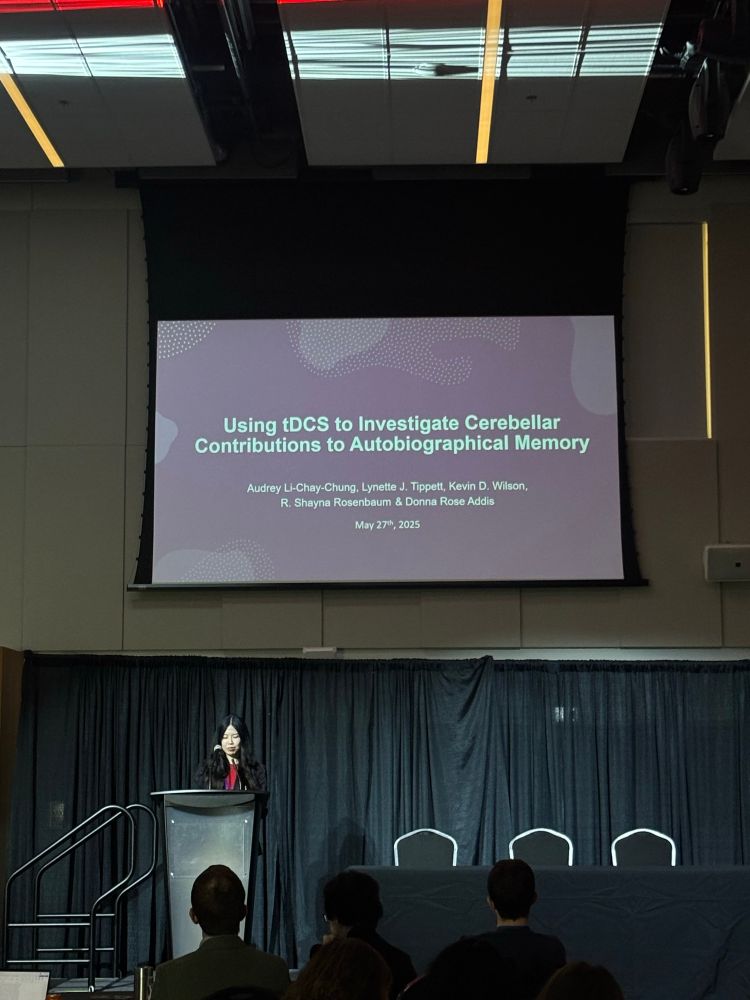
Audrey Li-Chay-Chung from the Addis and Rosenbaum Labs on “Using tDCS to investigate cerebellar contributions to autobiographical memory” 🧠 #TAMeG2025
May 28, 2025 at 12:47 AM
Audrey Li-Chay-Chung from the Addis and Rosenbaum Labs on “Using tDCS to investigate cerebellar contributions to autobiographical memory” 🧠 #TAMeG2025
Reposted by Brian Levine
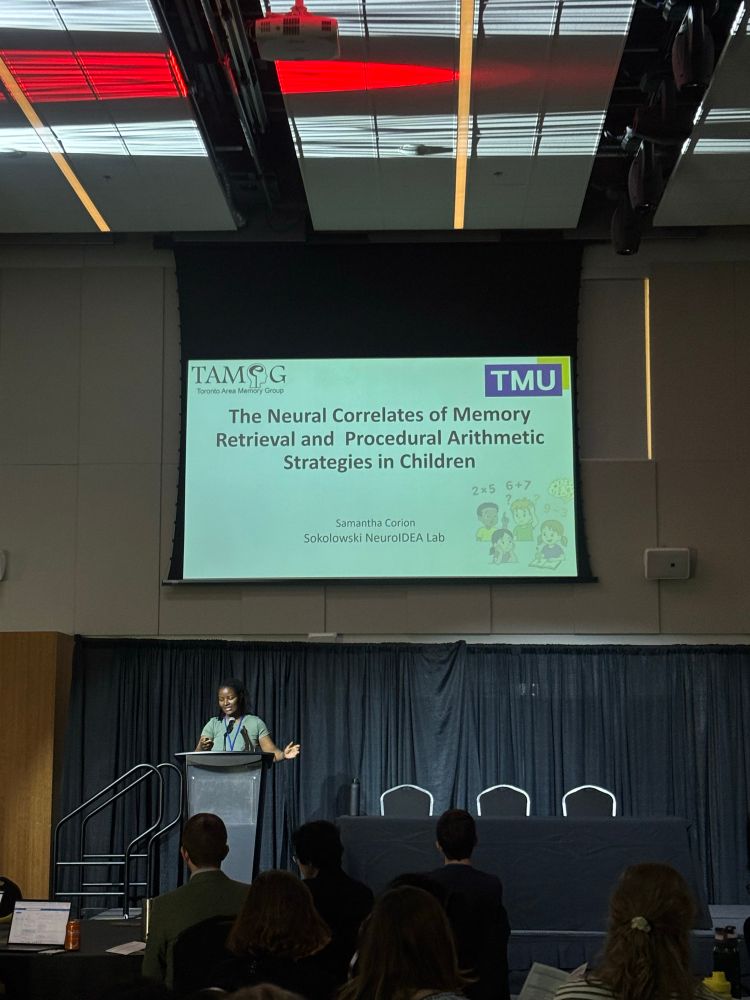
Samantha Corion from the Sokolowski Lab on “Neural correlates of mental arithmetic strategies: An fMRI meta-analysis” 🔢🧠 #TAMeG2025
May 28, 2025 at 12:47 AM
Samantha Corion from the Sokolowski Lab on “Neural correlates of mental arithmetic strategies: An fMRI meta-analysis” 🔢🧠 #TAMeG2025
Reposted by Brian Levine
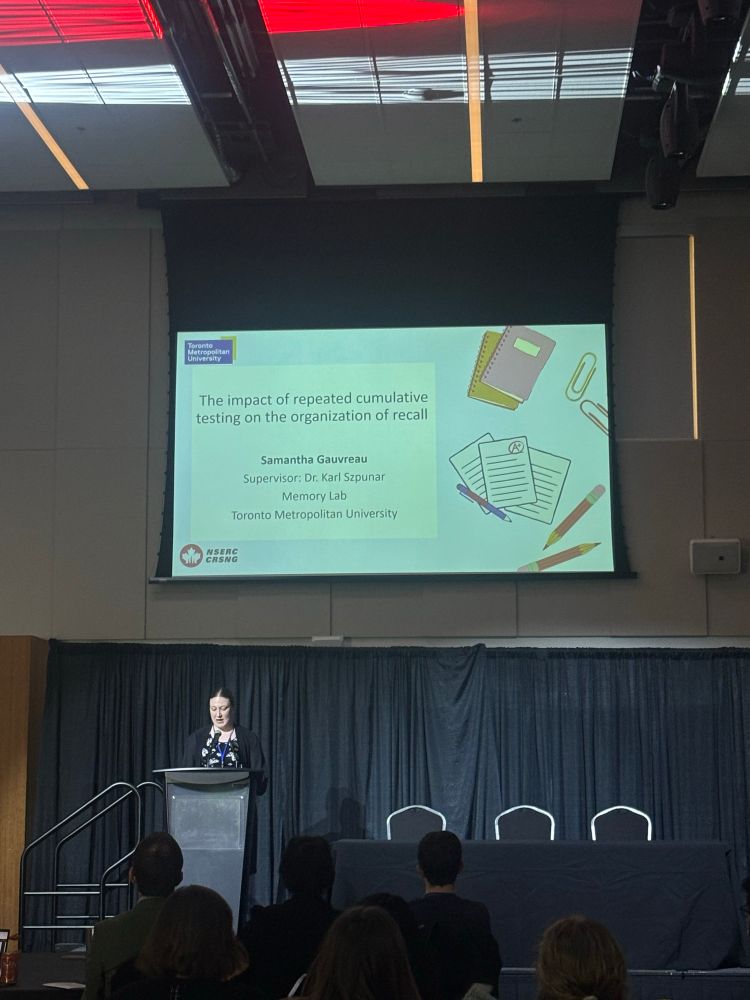
Samantha Gauvreau from the Szpunar Lab on “The impact of repeated cumulative testing on the organization of recall” 📝🧠 #TAMeG2025
May 28, 2025 at 12:47 AM
Samantha Gauvreau from the Szpunar Lab on “The impact of repeated cumulative testing on the organization of recall” 📝🧠 #TAMeG2025
Reposted by Brian Levine
🌟 Data Blitz Session 2 also featured:
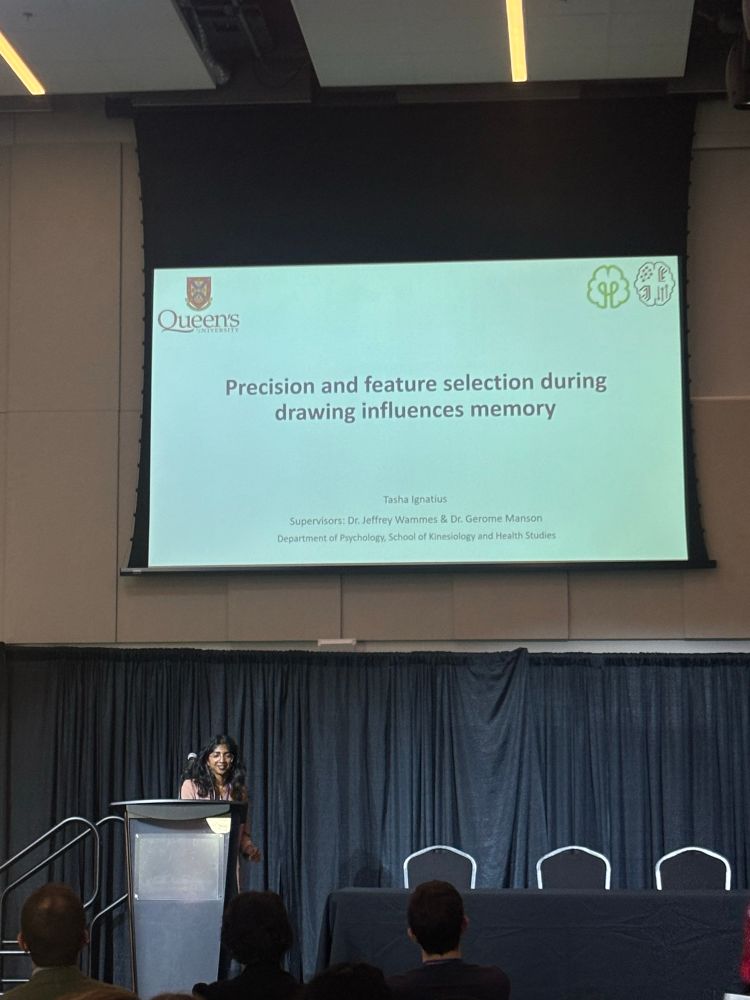
Tasha Ignatius from the Wammes Lab on “Precision and feature selection during drawing influences memory” 🎯🧠 #TAMeG2025
Tasha Ignatius from the Wammes Lab on “Precision and feature selection during drawing influences memory” 🎯🧠 #TAMeG2025
May 28, 2025 at 12:47 AM
🌟 Data Blitz Session 2 also featured:
Tasha Ignatius from the Wammes Lab on “Precision and feature selection during drawing influences memory” 🎯🧠 #TAMeG2025
Tasha Ignatius from the Wammes Lab on “Precision and feature selection during drawing influences memory” 🎯🧠 #TAMeG2025
Reposted by Brian Levine
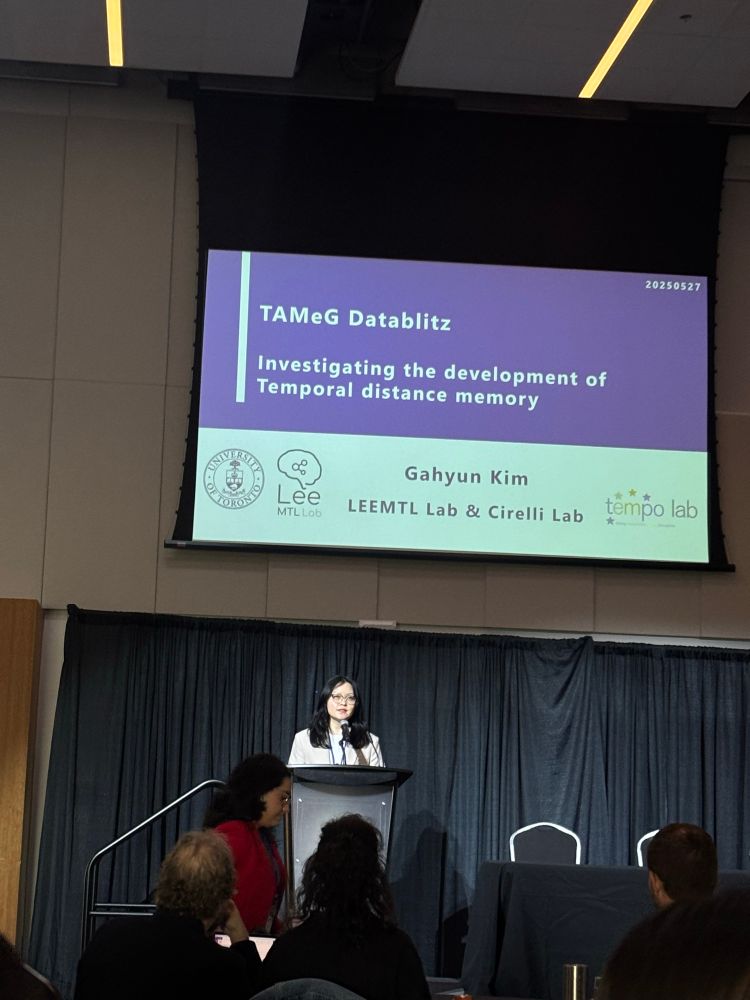
#TAMeG2025 Data Blitz 2 kicked off with a talk by Gahyun Kim from the LEEMTL Lab & Cirelli Lab titled “Investigating the development of temporal distance memory”🧠
May 28, 2025 at 12:47 AM
#TAMeG2025 Data Blitz 2 kicked off with a talk by Gahyun Kim from the LEEMTL Lab & Cirelli Lab titled “Investigating the development of temporal distance memory”🧠
Reposted by Brian Levine
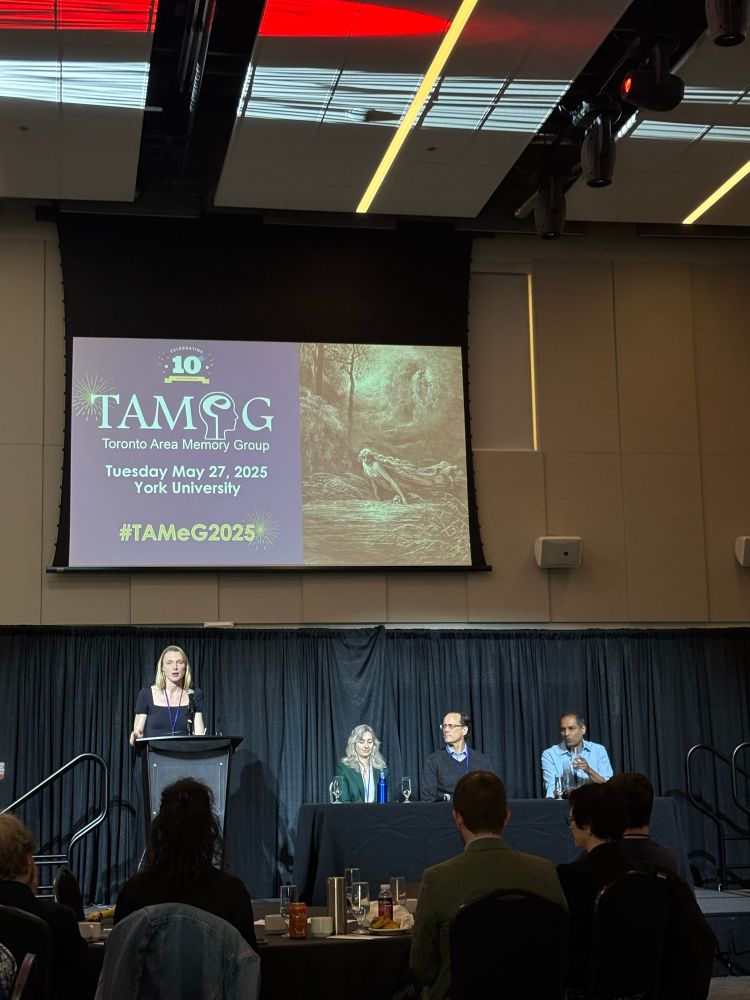
#TAMeG2025 wrapped up with a panel discussion on “Science communication and combating disinformation” featuring:
🌟 Jeffery Schall, PhD
🌟 Carrie Boyce, MA
🌟 Charan Ranganath, PhD
Chaired by Morgan Barense, PhD
Thank you to everyone who attended, and see you next year at #TAMeG2026!🧠
🌟 Jeffery Schall, PhD
🌟 Carrie Boyce, MA
🌟 Charan Ranganath, PhD
Chaired by Morgan Barense, PhD
Thank you to everyone who attended, and see you next year at #TAMeG2026!🧠
May 28, 2025 at 12:56 AM
#TAMeG2025 wrapped up with a panel discussion on “Science communication and combating disinformation” featuring:
🌟 Jeffery Schall, PhD
🌟 Carrie Boyce, MA
🌟 Charan Ranganath, PhD
Chaired by Morgan Barense, PhD
Thank you to everyone who attended, and see you next year at #TAMeG2026!🧠
🌟 Jeffery Schall, PhD
🌟 Carrie Boyce, MA
🌟 Charan Ranganath, PhD
Chaired by Morgan Barense, PhD
Thank you to everyone who attended, and see you next year at #TAMeG2026!🧠
Reposted by Brian Levine
The keynote presentation of #TAMeG2025 10th Anniversary 🌟 was by Dr. Charan Ranganath on “Why (and how) we remember🧠 Thank you Dr. Ranganath for an *incredible* presentation on the organization of narrative recall @charan-neuro.bsky.social @brianlevine.bsky.social
🔑 takeaways below⬇️
🔑 takeaways below⬇️
May 28, 2025 at 12:54 AM
The keynote presentation of #TAMeG2025 10th Anniversary 🌟 was by Dr. Charan Ranganath on “Why (and how) we remember🧠 Thank you Dr. Ranganath for an *incredible* presentation on the organization of narrative recall @charan-neuro.bsky.social @brianlevine.bsky.social
🔑 takeaways below⬇️
🔑 takeaways below⬇️
Reposted by Brian Levine

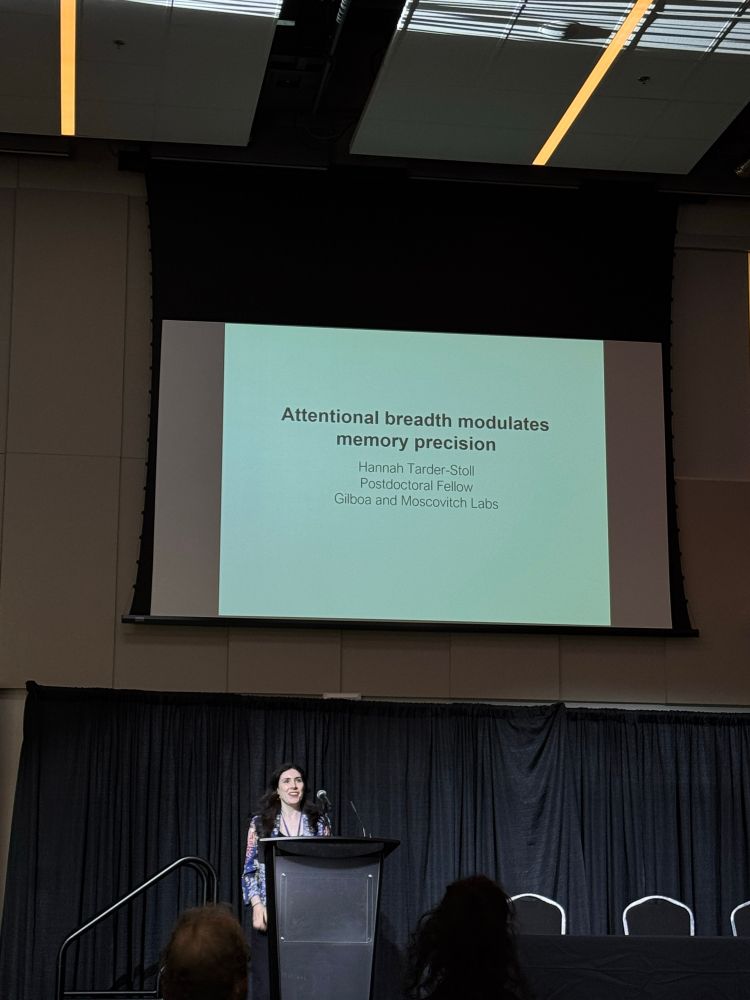
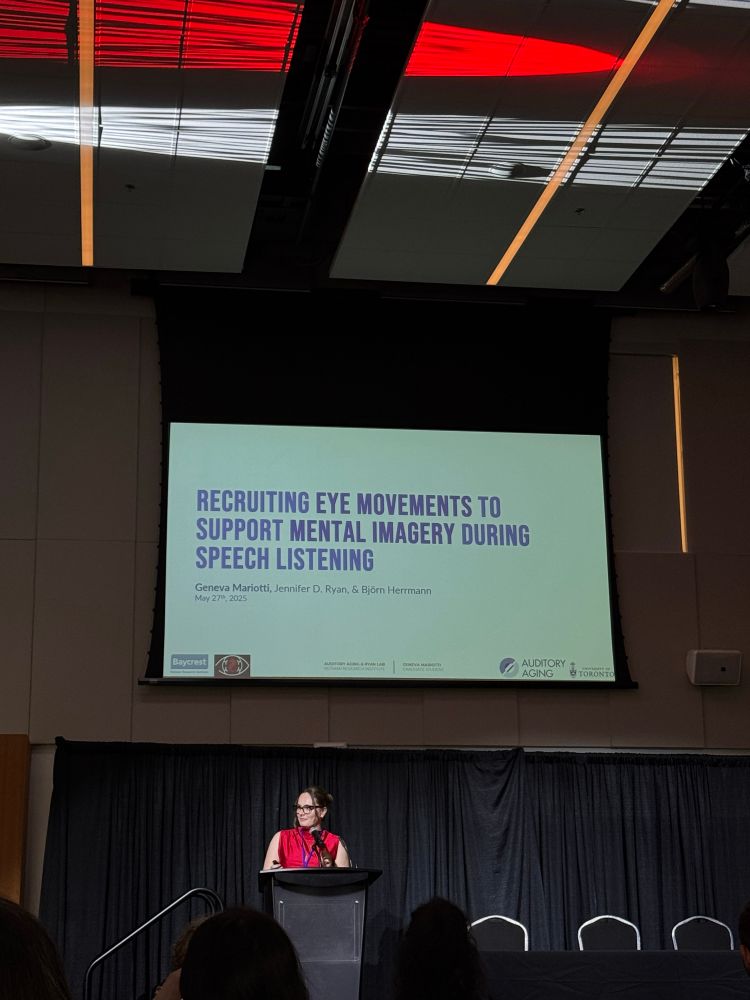
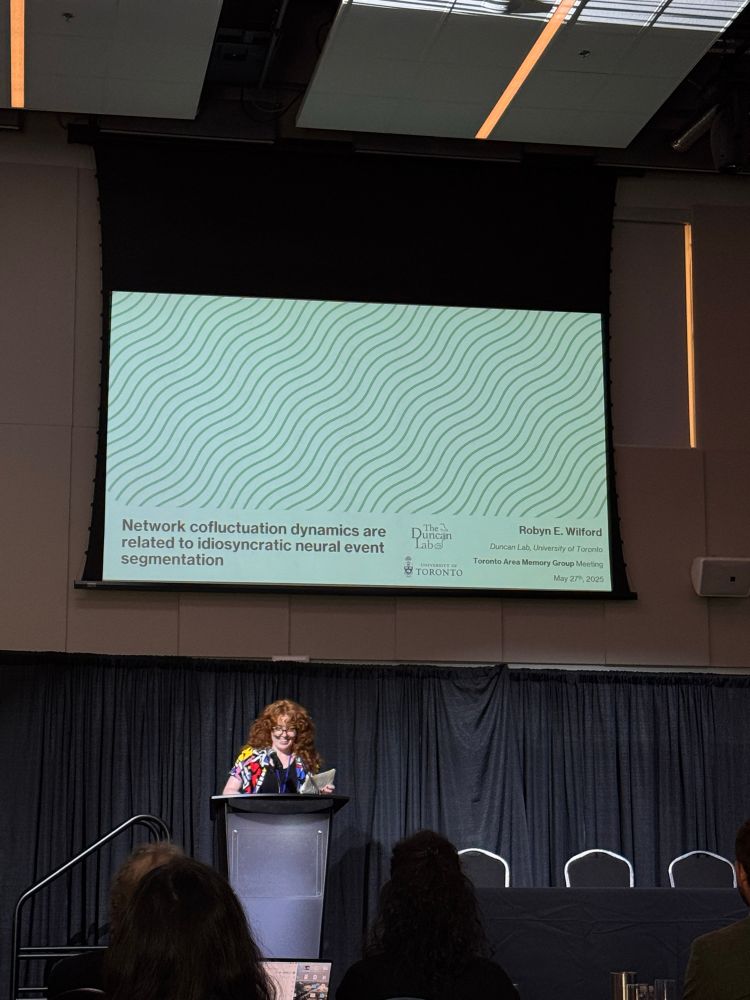
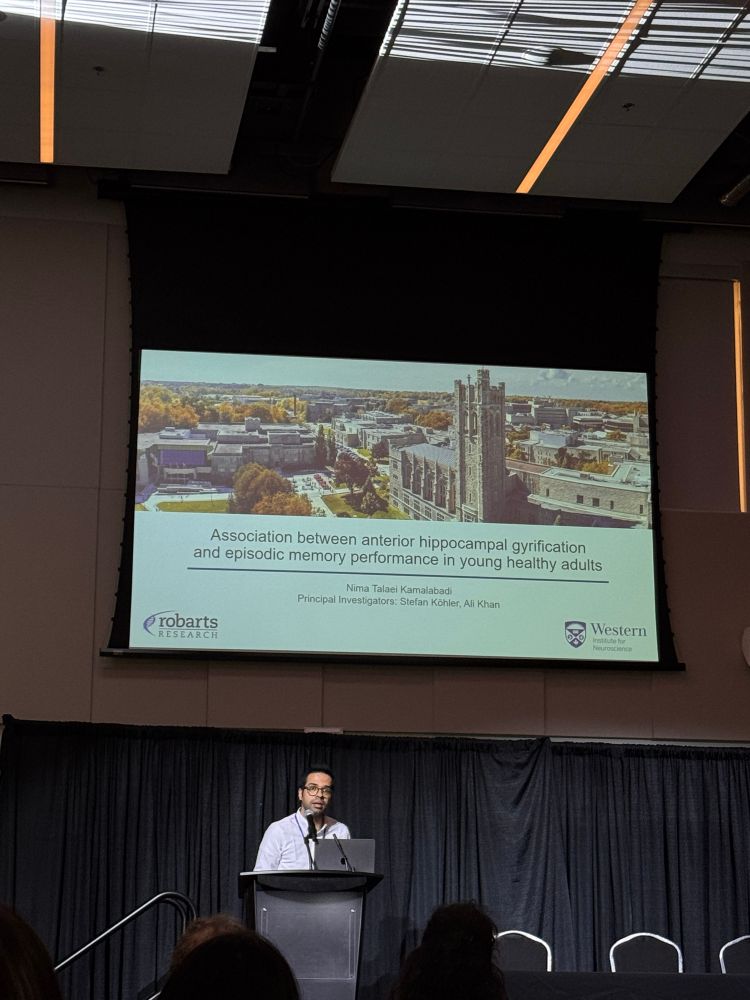
Wrapping up with our final talk session of #TAMeG2025, some incredible talks on memory using non-behavioural methods 🧠🔬
May 27, 2025 at 7:04 PM
Wrapping up with our final talk session of #TAMeG2025, some incredible talks on memory using non-behavioural methods 🧠🔬
Reposted by Brian Levine
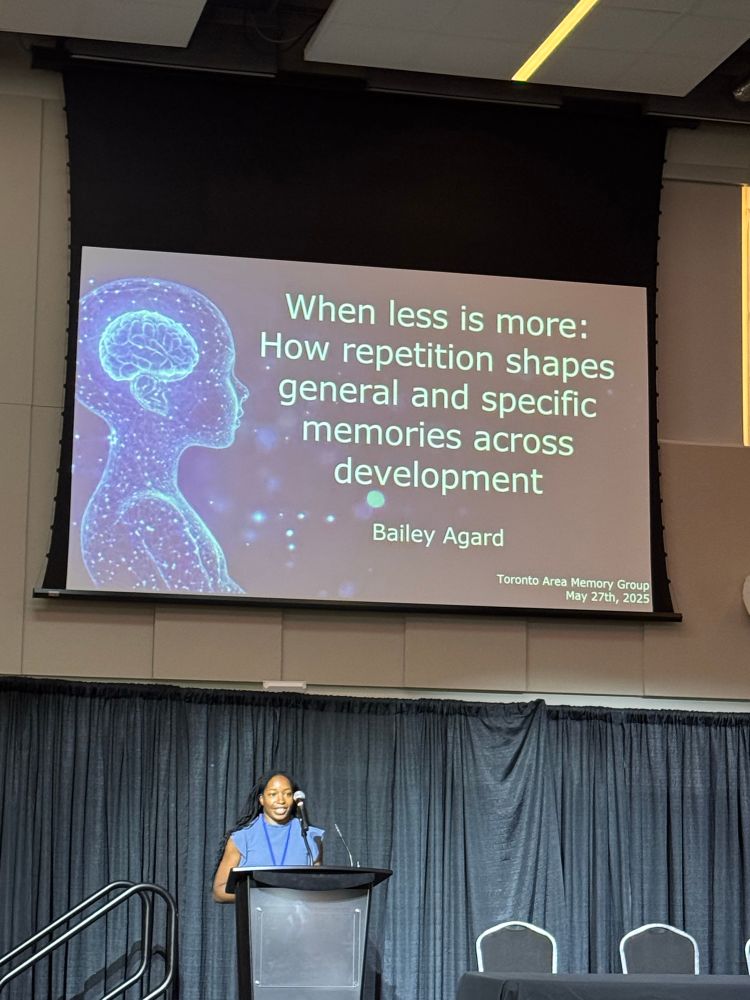
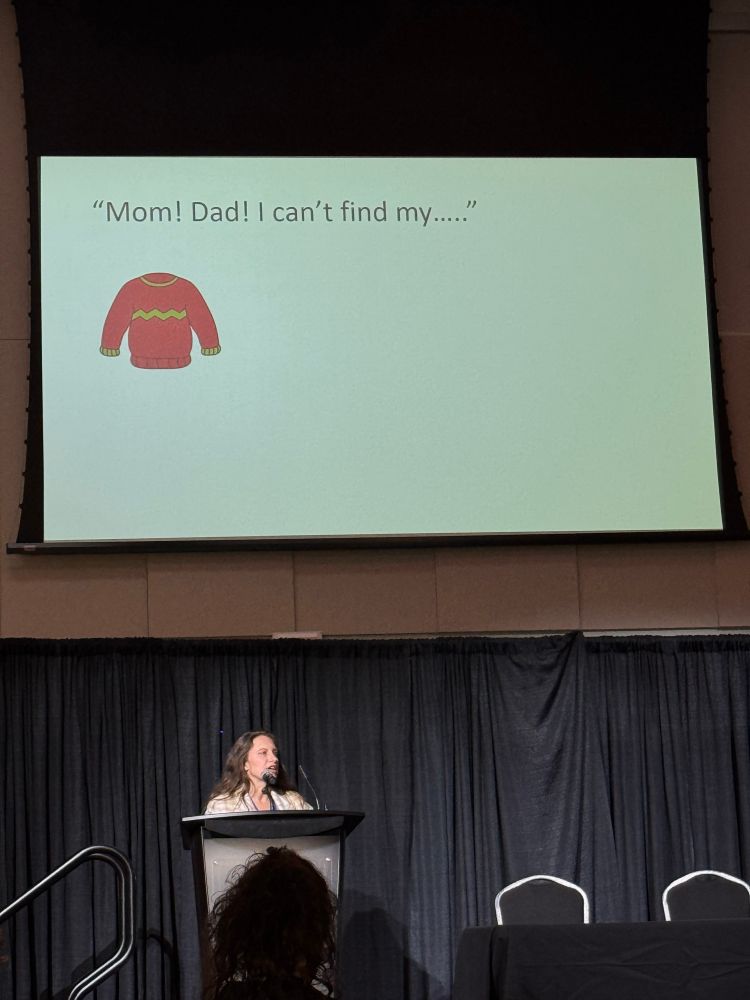
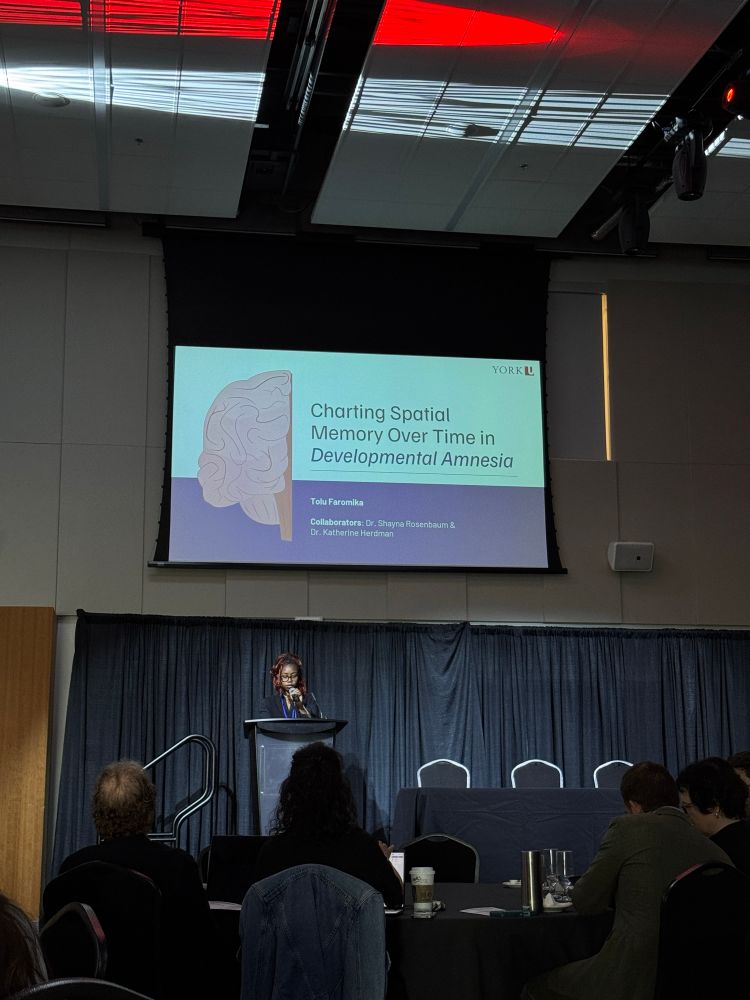
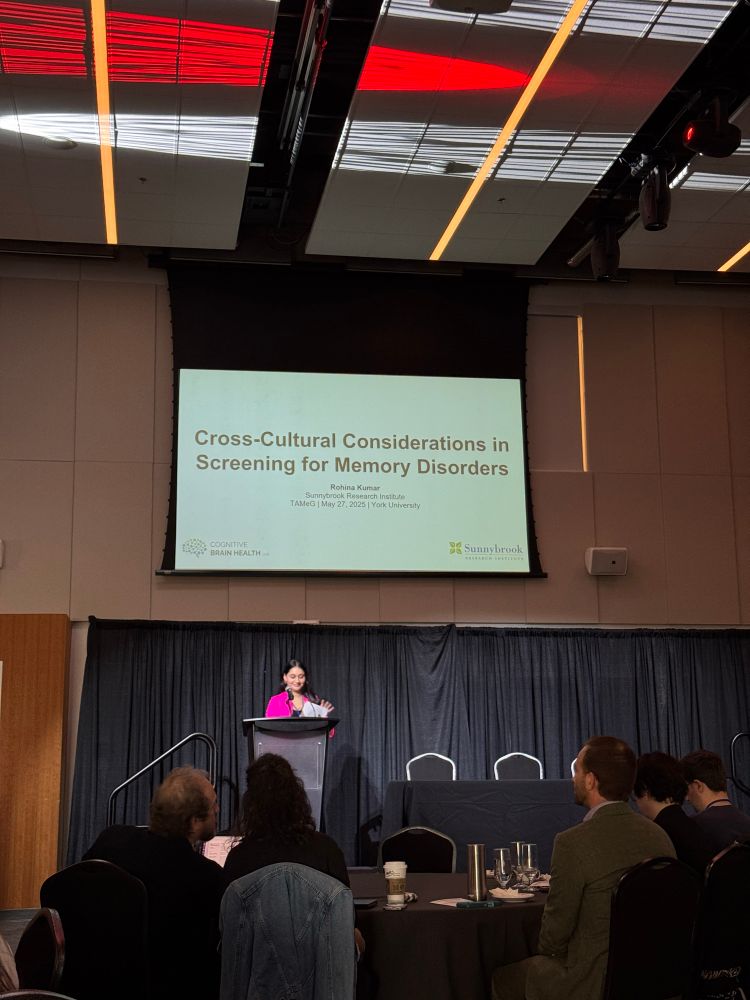
The second talk session of #TAMeG2025 is underway featuring talks on memory across development and cultural considerations for memory disorders 👶🏽🧠
May 27, 2025 at 4:06 PM
The second talk session of #TAMeG2025 is underway featuring talks on memory across development and cultural considerations for memory disorders 👶🏽🧠
Reposted by Brian Levine
The second half of Data Blitz 1 #TAMeG2025 featured talks on childhood neural synchrony driving broader attention, cardiac modulation of familiarity in aging, vascular risk impacting midlife female brain connectivity, and lastly how semantic congruence steers episodic recall in children & adults🧠
May 27, 2025 at 4:46 PM
The second half of Data Blitz 1 #TAMeG2025 featured talks on childhood neural synchrony driving broader attention, cardiac modulation of familiarity in aging, vascular risk impacting midlife female brain connectivity, and lastly how semantic congruence steers episodic recall in children & adults🧠
Reposted by Brian Levine
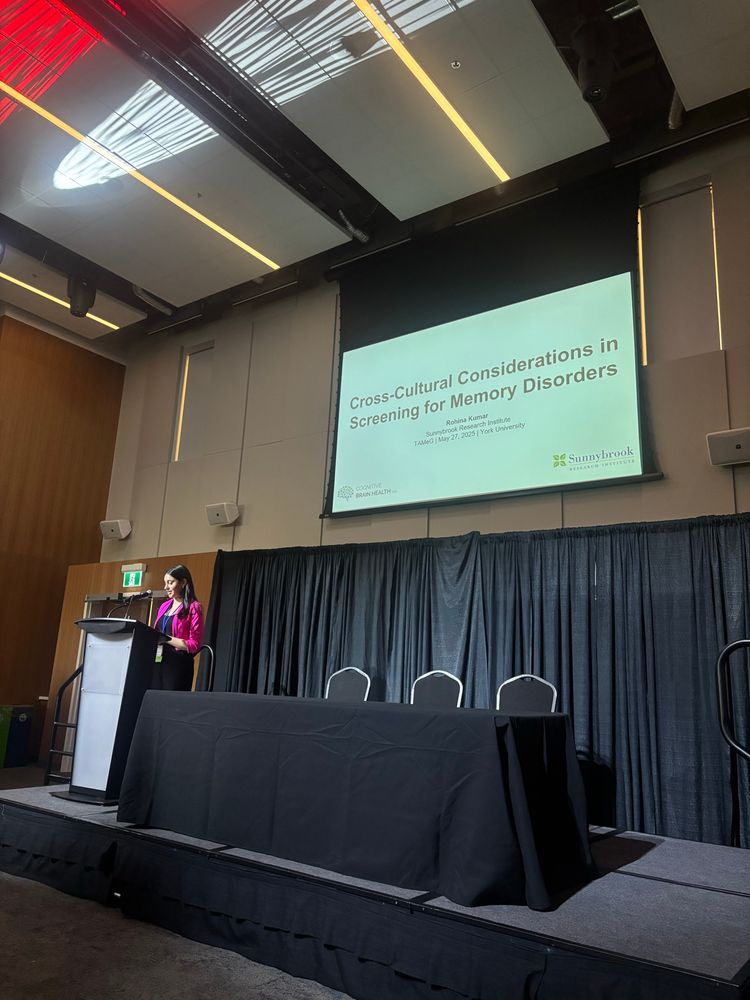
🌟 Rohina Kumar, RA at CBH Lab presenting at the #TAMeG2025 on “Cross-Cultural Considerations in Screening for Memory Disorders” - findings from the Canadian Multi-Ethnic Research on Aging (CAMERA) study led by Dr. Jenny Rabin @jennyrabin.bsky.social @sunnybrookhsc.bsky.social
May 27, 2025 at 5:10 PM
🌟 Rohina Kumar, RA at CBH Lab presenting at the #TAMeG2025 on “Cross-Cultural Considerations in Screening for Memory Disorders” - findings from the Canadian Multi-Ethnic Research on Aging (CAMERA) study led by Dr. Jenny Rabin @jennyrabin.bsky.social @sunnybrookhsc.bsky.social