




Black Bird Group
@blackbirdgroup.bsky.social
@Black_BirdGroup
Finnish OSINT group. Currently following the Russian invasion of Ukraine.
Don't DM, Email us:
contact@blackbirdgroup.fi
Map:
https://tinyurl.com/BlackbirdMap
Our site:
https://blackbirdgroup.fi/
Finnish OSINT group. Currently following the Russian invasion of Ukraine.
Don't DM, Email us:
contact@blackbirdgroup.fi
Map:
https://tinyurl.com/BlackbirdMap
Our site:
https://blackbirdgroup.fi/
Pinned

The War in Ukraine
Map depicting the frontlines of the Russian invasion of Ukraine, as analysed by Black Bird Group
www.scribblemaps.com
We have noticed a trend of OSINT and Ukraine experts expanding their presence here in Bluesky over the past week. In order to continue our work around Russias invasion of Ukraine, we have also decided to establish a presence here.
You can find our map at:
www.scribblemaps.com/maps/view/Th...
You can find our map at:
www.scribblemaps.com/maps/view/Th...
Reposted by Black Bird Group

On June 1, Ukraine conducted a successful operation targeting Russian strategic bombers and other aircraft.
Our battle damage assessment can confirm the following losses: 12 destroyed and 3 damaged aircraft, of which 14 are strategic bombers and 1 is a transport aircraft. 1/
Our battle damage assessment can confirm the following losses: 12 destroyed and 3 damaged aircraft, of which 14 are strategic bombers and 1 is a transport aircraft. 1/

June 5, 2025 at 5:23 PM
On June 1, Ukraine conducted a successful operation targeting Russian strategic bombers and other aircraft.
Our battle damage assessment can confirm the following losses: 12 destroyed and 3 damaged aircraft, of which 14 are strategic bombers and 1 is a transport aircraft. 1/
Our battle damage assessment can confirm the following losses: 12 destroyed and 3 damaged aircraft, of which 14 are strategic bombers and 1 is a transport aircraft. 1/
Reposted by Black Bird Group
Russia is developing its military infrastructure and conducting organizational reforms near Nato’s northern flank, especially near Finland. News agencies from different countries have asked me about the topic, and in this thread I will share some recent observations. 1/

May 2, 2025 at 5:30 PM
Russia is developing its military infrastructure and conducting organizational reforms near Nato’s northern flank, especially near Finland. News agencies from different countries have asked me about the topic, and in this thread I will share some recent observations. 1/
Reposted by Black Bird Group
We have updated the map to reflect the emerging situation in the Kursk salient, where recent Russian offensive have forced the Ukrainians to withdraw from large areas.
The northern part of the salient has been abandoned, with Russians capturing Malaya Lokanaya.
1/
The northern part of the salient has been abandoned, with Russians capturing Malaya Lokanaya.
1/

March 9, 2025 at 4:10 PM
We have updated the map to reflect the emerging situation in the Kursk salient, where recent Russian offensive have forced the Ukrainians to withdraw from large areas.
The northern part of the salient has been abandoned, with Russians capturing Malaya Lokanaya.
1/
The northern part of the salient has been abandoned, with Russians capturing Malaya Lokanaya.
1/
We have updated the map to reflect the emerging situation in the Kursk salient, where recent Russian offensive have forced the Ukrainians to withdraw from large areas.
The northern part of the salient has been abandoned, with Russians capturing Malaya Lokanaya.
1/
The northern part of the salient has been abandoned, with Russians capturing Malaya Lokanaya.
1/
March 9, 2025 at 4:10 PM
We have updated the map to reflect the emerging situation in the Kursk salient, where recent Russian offensive have forced the Ukrainians to withdraw from large areas.
The northern part of the salient has been abandoned, with Russians capturing Malaya Lokanaya.
1/
The northern part of the salient has been abandoned, with Russians capturing Malaya Lokanaya.
1/
Reposted by Black Bird Group
Ukraine has carried out a series of counterattacks in several directions, especially southeast of Pokrovsk. They have entered Pishchane, but currently it's unclear if they have fully retaken the village.
At the same time, the Russians are still attacking in the area too. 1/
At the same time, the Russians are still attacking in the area too. 1/

February 10, 2025 at 5:16 PM
Ukraine has carried out a series of counterattacks in several directions, especially southeast of Pokrovsk. They have entered Pishchane, but currently it's unclear if they have fully retaken the village.
At the same time, the Russians are still attacking in the area too. 1/
At the same time, the Russians are still attacking in the area too. 1/
Reposted by Black Bird Group
After six months of combat in the Kursk salient, the Ukrainians launched another attack in the southeastern direction of Sudzha. The Ukrainians seemingly breached the first Russian defences, and an armored column managed to advance up to 5-7 kilometers deep towards Ulanok. 1/

February 7, 2025 at 3:52 PM
After six months of combat in the Kursk salient, the Ukrainians launched another attack in the southeastern direction of Sudzha. The Ukrainians seemingly breached the first Russian defences, and an armored column managed to advance up to 5-7 kilometers deep towards Ulanok. 1/
Reposted by Black Bird Group

Even though the Russians were able to capture Velyka Novosilka and secure rest of Kurakhove, the overall pace of Russian advance continued to slow down during January. Russian armed forces were able to conquer 332 square kilometers of Ukraine and regain some 68 sq km in Kursk. 1/


February 3, 2025 at 10:43 AM
Even though the Russians were able to capture Velyka Novosilka and secure rest of Kurakhove, the overall pace of Russian advance continued to slow down during January. Russian armed forces were able to conquer 332 square kilometers of Ukraine and regain some 68 sq km in Kursk. 1/
Reposted by Black Bird Group
Vellyka Novosilka and Kurakhove have fallen, and Russians continue their offensive towards Pokrovsk.
In this thread I will examine what is to be expected of the most critical area of the eastern front in the near future, and what can the Russians realistically achieve. 1/
In this thread I will examine what is to be expected of the most critical area of the eastern front in the near future, and what can the Russians realistically achieve. 1/

February 2, 2025 at 6:28 PM
Vellyka Novosilka and Kurakhove have fallen, and Russians continue their offensive towards Pokrovsk.
In this thread I will examine what is to be expected of the most critical area of the eastern front in the near future, and what can the Russians realistically achieve. 1/
In this thread I will examine what is to be expected of the most critical area of the eastern front in the near future, and what can the Russians realistically achieve. 1/
Reposted by Black Bird Group
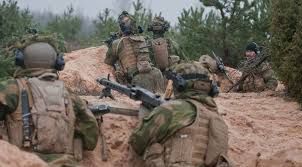
Our group did a dive into light infantry tactics. There has been much talk about human waves in Ukraine, and the narratives don't always reflect the realities. This thread aims to clarify a few things about this subject.
Light Infantry Attacks – A Thread
Why does our @jjhelin.bsky.social keep rejecting the "human waves" narrative, instead calling the reported North Korean attacks in Kursk "basic infantry drills"?
Let’s dive into light infantry on the attack and why this distinction matters.
1/
Why does our @jjhelin.bsky.social keep rejecting the "human waves" narrative, instead calling the reported North Korean attacks in Kursk "basic infantry drills"?
Let’s dive into light infantry on the attack and why this distinction matters.
1/
January 17, 2025 at 8:14 AM
Our group did a dive into light infantry tactics. There has been much talk about human waves in Ukraine, and the narratives don't always reflect the realities. This thread aims to clarify a few things about this subject.
Reposted by Black Bird Group
Light Infantry Attacks – A Thread
Why does our @jjhelin.bsky.social keep rejecting the "human waves" narrative, instead calling the reported North Korean attacks in Kursk "basic infantry drills"?
Let’s dive into light infantry on the attack and why this distinction matters.
1/
Why does our @jjhelin.bsky.social keep rejecting the "human waves" narrative, instead calling the reported North Korean attacks in Kursk "basic infantry drills"?
Let’s dive into light infantry on the attack and why this distinction matters.
1/
January 16, 2025 at 8:19 PM
Light Infantry Attacks – A Thread
Why does our @jjhelin.bsky.social keep rejecting the "human waves" narrative, instead calling the reported North Korean attacks in Kursk "basic infantry drills"?
Let’s dive into light infantry on the attack and why this distinction matters.
1/
Why does our @jjhelin.bsky.social keep rejecting the "human waves" narrative, instead calling the reported North Korean attacks in Kursk "basic infantry drills"?
Let’s dive into light infantry on the attack and why this distinction matters.
1/
Light Infantry Attacks – A Thread
Why does our @jjhelin.bsky.social keep rejecting the "human waves" narrative, instead calling the reported North Korean attacks in Kursk "basic infantry drills"?
Let’s dive into light infantry on the attack and why this distinction matters.
1/
Why does our @jjhelin.bsky.social keep rejecting the "human waves" narrative, instead calling the reported North Korean attacks in Kursk "basic infantry drills"?
Let’s dive into light infantry on the attack and why this distinction matters.
1/
January 16, 2025 at 8:19 PM
Light Infantry Attacks – A Thread
Why does our @jjhelin.bsky.social keep rejecting the "human waves" narrative, instead calling the reported North Korean attacks in Kursk "basic infantry drills"?
Let’s dive into light infantry on the attack and why this distinction matters.
1/
Why does our @jjhelin.bsky.social keep rejecting the "human waves" narrative, instead calling the reported North Korean attacks in Kursk "basic infantry drills"?
Let’s dive into light infantry on the attack and why this distinction matters.
1/
Reposted by Black Bird Group
Ukrainians have continued their attacks in Kursk. Today, an armored column advanced towards Bolshoye Soldatskoye, and reportedly fighting is ongoing in other villages too.
Unfortunately, I find it unlikely that these actions could produce very significant results. 1/
Unfortunately, I find it unlikely that these actions could produce very significant results. 1/

January 5, 2025 at 12:45 PM
Ukrainians have continued their attacks in Kursk. Today, an armored column advanced towards Bolshoye Soldatskoye, and reportedly fighting is ongoing in other villages too.
Unfortunately, I find it unlikely that these actions could produce very significant results. 1/
Unfortunately, I find it unlikely that these actions could produce very significant results. 1/
Reposted by Black Bird Group
During the past year, there have been several attacks against critical infrastructure near Finland. Russians are being increasingly apparent in their will to escalate the situation in the Baltic Sea.
These events must be set in the right context to understand why they happen. 1/
These events must be set in the right context to understand why they happen. 1/

December 29, 2024 at 4:51 PM
During the past year, there have been several attacks against critical infrastructure near Finland. Russians are being increasingly apparent in their will to escalate the situation in the Baltic Sea.
These events must be set in the right context to understand why they happen. 1/
These events must be set in the right context to understand why they happen. 1/
Reposted by Black Bird Group

With the recent Russian advances, two dangerous salients are emerging in Southern Donetsk.
In Velyka Novosilka and Kurakhove, the Ukrainian supply routes are under significant threat.
A quick look at the logistics in South Donetsk.
1/
In Velyka Novosilka and Kurakhove, the Ukrainian supply routes are under significant threat.
A quick look at the logistics in South Donetsk.
1/

December 23, 2024 at 1:05 AM
With the recent Russian advances, two dangerous salients are emerging in Southern Donetsk.
In Velyka Novosilka and Kurakhove, the Ukrainian supply routes are under significant threat.
A quick look at the logistics in South Donetsk.
1/
In Velyka Novosilka and Kurakhove, the Ukrainian supply routes are under significant threat.
A quick look at the logistics in South Donetsk.
1/
Reposted by Black Bird Group
It seems that the Ukrainian defenders in Hannivka may be encircled, as Russians pushed deeper into Uspenivka.
Based on geolocated footage and both Russian and Ukrainian Telegram channels, a Ukrainian detachment of unknown size has been cut off from the rest of the troops. 1/
Based on geolocated footage and both Russian and Ukrainian Telegram channels, a Ukrainian detachment of unknown size has been cut off from the rest of the troops. 1/

December 13, 2024 at 5:36 PM
It seems that the Ukrainian defenders in Hannivka may be encircled, as Russians pushed deeper into Uspenivka.
Based on geolocated footage and both Russian and Ukrainian Telegram channels, a Ukrainian detachment of unknown size has been cut off from the rest of the troops. 1/
Based on geolocated footage and both Russian and Ukrainian Telegram channels, a Ukrainian detachment of unknown size has been cut off from the rest of the troops. 1/
Reposted by Black Bird Group
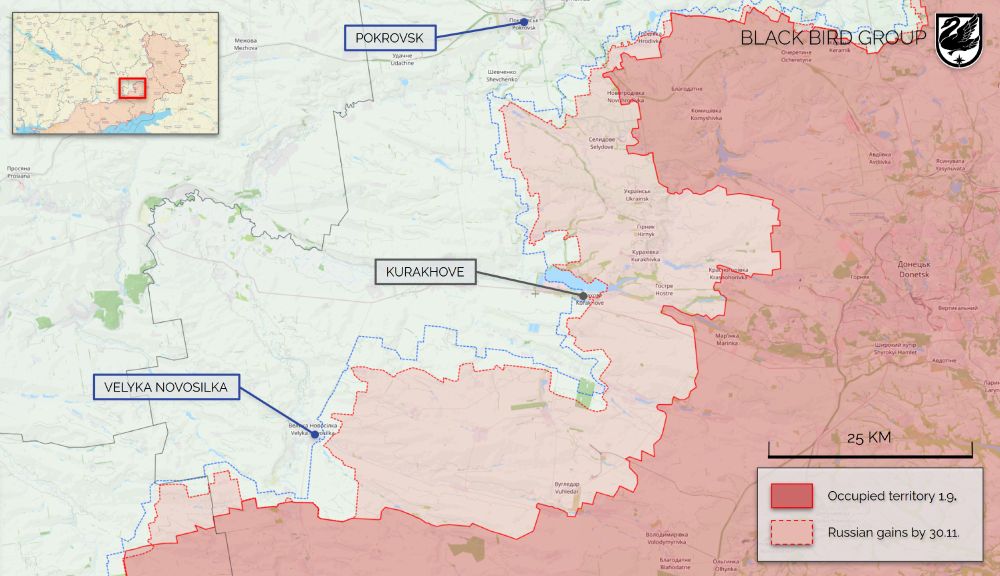
This fall has been grim for Ukraine.
According to our assessment, between 1 September and 30 November, the Russians captured over 1600 km2 in Ukraine, and retook roughly 500 km2 in Kursk. The rate of advance accelerated every month, despite the Russians suffering heavy losses. 1/
According to our assessment, between 1 September and 30 November, the Russians captured over 1600 km2 in Ukraine, and retook roughly 500 km2 in Kursk. The rate of advance accelerated every month, despite the Russians suffering heavy losses. 1/
December 1, 2024 at 4:51 PM
This fall has been grim for Ukraine.
According to our assessment, between 1 September and 30 November, the Russians captured over 1600 km2 in Ukraine, and retook roughly 500 km2 in Kursk. The rate of advance accelerated every month, despite the Russians suffering heavy losses. 1/
According to our assessment, between 1 September and 30 November, the Russians captured over 1600 km2 in Ukraine, and retook roughly 500 km2 in Kursk. The rate of advance accelerated every month, despite the Russians suffering heavy losses. 1/
Reposted by Black Bird Group

Decided to visualize the range that of both ATACMS and SCALP/Storm Shadow could theoretically have inside of Russia. The darker blue line is the range of ATACMS and the lighter blue is the range of SCALP/Storm Shadow.
ATACMS has been limited to be used only within Kursk oblast.
ATACMS has been limited to be used only within Kursk oblast.

November 19, 2024 at 9:38 AM
Decided to visualize the range that of both ATACMS and SCALP/Storm Shadow could theoretically have inside of Russia. The darker blue line is the range of ATACMS and the lighter blue is the range of SCALP/Storm Shadow.
ATACMS has been limited to be used only within Kursk oblast.
ATACMS has been limited to be used only within Kursk oblast.
Reposted by Black Bird Group
Around 1% from my X followers have found me here. Nice! I hope we can continue our conversations about Ukraine and other security & defence topics.
I don't know if the algorithm prefers images with the posts, but here's a photo I took of the largest crater I've seen. Dovhenke, Kharkiv oblast, 2024.
I don't know if the algorithm prefers images with the posts, but here's a photo I took of the largest crater I've seen. Dovhenke, Kharkiv oblast, 2024.

November 15, 2024 at 2:53 PM
Around 1% from my X followers have found me here. Nice! I hope we can continue our conversations about Ukraine and other security & defence topics.
I don't know if the algorithm prefers images with the posts, but here's a photo I took of the largest crater I've seen. Dovhenke, Kharkiv oblast, 2024.
I don't know if the algorithm prefers images with the posts, but here's a photo I took of the largest crater I've seen. Dovhenke, Kharkiv oblast, 2024.
Reposted by Black Bird Group
Russia is advancing relatively quickly, but it’s also spending significant amounts of men and material in the process.
In this thread I’ll take a look on two important directions: Kurakhove and the concerning developments there, and the politically motivated Kursk counteroffensive. 1/
In this thread I’ll take a look on two important directions: Kurakhove and the concerning developments there, and the politically motivated Kursk counteroffensive. 1/

November 13, 2024 at 8:34 PM
Russia is advancing relatively quickly, but it’s also spending significant amounts of men and material in the process.
In this thread I’ll take a look on two important directions: Kurakhove and the concerning developments there, and the politically motivated Kursk counteroffensive. 1/
In this thread I’ll take a look on two important directions: Kurakhove and the concerning developments there, and the politically motivated Kursk counteroffensive. 1/
We have noticed a trend of OSINT and Ukraine experts expanding their presence here in Bluesky over the past week. In order to continue our work around Russias invasion of Ukraine, we have also decided to establish a presence here.
You can find our map at:
www.scribblemaps.com/maps/view/Th...
You can find our map at:
www.scribblemaps.com/maps/view/Th...
The War in Ukraine
Map depicting the frontlines of the Russian invasion of Ukraine, as analysed by Black Bird Group
www.scribblemaps.com
November 13, 2024 at 1:18 PM
We have noticed a trend of OSINT and Ukraine experts expanding their presence here in Bluesky over the past week. In order to continue our work around Russias invasion of Ukraine, we have also decided to establish a presence here.
You can find our map at:
www.scribblemaps.com/maps/view/Th...
You can find our map at:
www.scribblemaps.com/maps/view/Th...