



Gasper Begus
@begus.bsky.social
Assoc. Professor at UC Berkeley
Artificial and biological intelligence and language
Linguistics Lead at Project CETI 🐳
PI Berkeley Biological and Artificial Language Lab 🗣️
College Principal of Bowles Hall 🏰
https://www.gasperbegus.com
Artificial and biological intelligence and language
Linguistics Lead at Project CETI 🐳
PI Berkeley Biological and Artificial Language Lab 🗣️
College Principal of Bowles Hall 🏰
https://www.gasperbegus.com
Understanding AI can bring us closer to the natural world and can have profound legal implications.
I'm honored to give a Distinguished Speaker Series lecture at NYU Law on AI, language, and rights of animals.
www.law.nyu.edu/events/disti...
I'm honored to give a Distinguished Speaker Series lecture at NYU Law on AI, language, and rights of animals.
www.law.nyu.edu/events/disti...


February 17, 2026 at 5:41 PM
Understanding AI can bring us closer to the natural world and can have profound legal implications.
I'm honored to give a Distinguished Speaker Series lecture at NYU Law on AI, language, and rights of animals.
www.law.nyu.edu/events/disti...
I'm honored to give a Distinguished Speaker Series lecture at NYU Law on AI, language, and rights of animals.
www.law.nyu.edu/events/disti...
The one construction by which I recognize LLM writing is the “it’s not X, it’s Y” construction.
It reminds me so much of the Slavic antithesis. We should call it the LLM antithesis. Where did LLMs get this from?
It reminds me so much of the Slavic antithesis. We should call it the LLM antithesis. Where did LLMs get this from?

February 16, 2026 at 6:04 AM
The one construction by which I recognize LLM writing is the “it’s not X, it’s Y” construction.
It reminds me so much of the Slavic antithesis. We should call it the LLM antithesis. Where did LLMs get this from?
It reminds me so much of the Slavic antithesis. We should call it the LLM antithesis. Where did LLMs get this from?
A great piece on exploring the latent spaces by poetic engineering
open.substack.com/pub/poeticen...
open.substack.com/pub/poeticen...

February 14, 2026 at 5:15 PM
A great piece on exploring the latent spaces by poetic engineering
open.substack.com/pub/poeticen...
open.substack.com/pub/poeticen...
Whales exchange vowels in conversations. It was wonderful to speak to our CBS News station about this wonderful species.
@projectceti.bsky.social
@projectceti.bsky.social
February 13, 2026 at 8:33 PM
Whales exchange vowels in conversations. It was wonderful to speak to our CBS News station about this wonderful species.
@projectceti.bsky.social
@projectceti.bsky.social
Check out the book on how millennia old Pygmalion myth becomes one of the most relevant topics of our time!
Humanities offer crucial tools for the development of AI. Now companies are realizing this. Check out Nina Begus book for guidelines on how to use the humanities in AI development:
www.fulcrum.org/concern/mono...
@ninabegus.bsky.social
www.fulcrum.org/concern/mono...
@ninabegus.bsky.social


February 9, 2026 at 11:19 PM
Check out the book on how millennia old Pygmalion myth becomes one of the most relevant topics of our time!
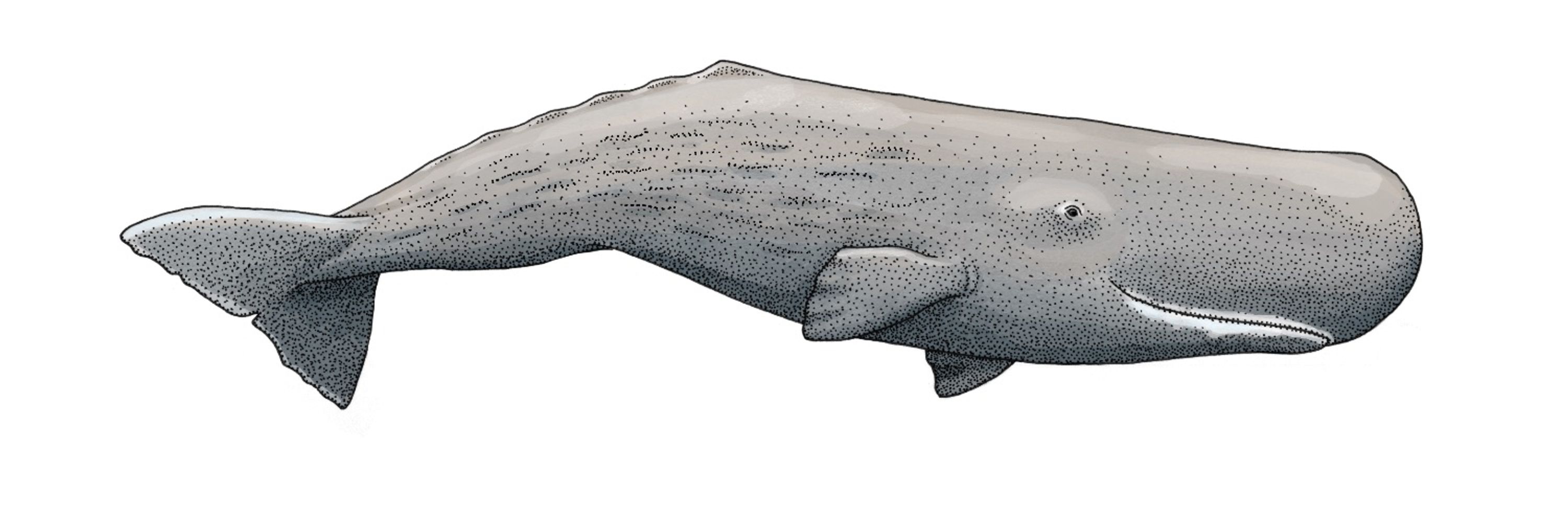
The first time I see a whale drawing on a talk announcement 💙 come to my talk and hear about AI interpretability, building realistic models of human learning and animal communication.

February 9, 2026 at 9:49 PM
The first time I see a whale drawing on a talk announcement 💙 come to my talk and hear about AI interpretability, building realistic models of human learning and animal communication.
Reposted by Gasper Begus
Imagining will be more important than executing in the future. That’s where fiction and humanities excels.
Humanities offer crucial tools for the development of AI. Now companies are realizing this. Check out Nina Begus book for guidelines on how to use the humanities in AI development:
www.fulcrum.org/concern/mono...
@ninabegus.bsky.social
www.fulcrum.org/concern/mono...
@ninabegus.bsky.social
February 8, 2026 at 10:54 PM
Imagining will be more important than executing in the future. That’s where fiction and humanities excels.
Imagining will be more important than executing in the future. That’s where fiction and humanities excels.
Humanities offer crucial tools for the development of AI. Now companies are realizing this. Check out Nina Begus book for guidelines on how to use the humanities in AI development:
www.fulcrum.org/concern/mono...
@ninabegus.bsky.social
www.fulcrum.org/concern/mono...
@ninabegus.bsky.social
February 8, 2026 at 10:54 PM
Imagining will be more important than executing in the future. That’s where fiction and humanities excels.
Reposted by Gasper Begus
Humanities offer crucial tools for the development of AI. Now companies are realizing this. Check out Nina Begus book for guidelines on how to use the humanities in AI development:
www.fulcrum.org/concern/mono...
@ninabegus.bsky.social
www.fulcrum.org/concern/mono...
@ninabegus.bsky.social
February 8, 2026 at 7:28 PM
Humanities offer crucial tools for the development of AI. Now companies are realizing this. Check out Nina Begus book for guidelines on how to use the humanities in AI development:
www.fulcrum.org/concern/mono...
@ninabegus.bsky.social
www.fulcrum.org/concern/mono...
@ninabegus.bsky.social
Humanities offer crucial tools for the development of AI. Now companies are realizing this. Check out Nina Begus book for guidelines on how to use the humanities in AI development:
www.fulcrum.org/concern/mono...
@ninabegus.bsky.social
www.fulcrum.org/concern/mono...
@ninabegus.bsky.social
February 8, 2026 at 7:28 PM
Humanities offer crucial tools for the development of AI. Now companies are realizing this. Check out Nina Begus book for guidelines on how to use the humanities in AI development:
www.fulcrum.org/concern/mono...
@ninabegus.bsky.social
www.fulcrum.org/concern/mono...
@ninabegus.bsky.social
Reposted by Gasper Begus

Latent Spacecraft pertains to latent space as an interiority of AI which can be made navigable. The piece tests this idea for fiwGAN (for Featural InfoWaveGAN), a speech-generating artificial neural network by @begus.bsky.social et al - see latentspacecraft.antikythera.org cc @ninabegus.bsky.social
February 8, 2026 at 8:56 AM
Latent Spacecraft pertains to latent space as an interiority of AI which can be made navigable. The piece tests this idea for fiwGAN (for Featural InfoWaveGAN), a speech-generating artificial neural network by @begus.bsky.social et al - see latentspacecraft.antikythera.org cc @ninabegus.bsky.social
Right, we inhabit a locked hole, but can we use it?
—— FinneGAN, 2026
—— FinneGAN, 2026
pre-speech edge, further into entropic interiority. Generated outputs portray limits of intelligibility and make the model’s interior layers a site for interpretative exploration.
- Language is a final linearizing layer over a richer prelinguistic space.
- Language is a final linearizing layer over a richer prelinguistic space.
February 8, 2026 at 5:17 AM
Right, we inhabit a locked hole, but can we use it?
—— FinneGAN, 2026
—— FinneGAN, 2026
Reposted by Gasper Begus

✨👀✨🧵✨
- AI has a physical interior space.
- By exploring language’s uncharted cognitive terrain both in humans and machines, we bring attention to the interiority of speech in brains and in computational models.
- By exploring language’s uncharted cognitive terrain both in humans and machines, we bring attention to the interiority of speech in brains and in computational models.
February 7, 2026 at 10:06 AM
✨👀✨🧵✨
Reposted by Gasper Begus
"Latent Spacecraft: Brains, GANs, Finnegans" (DOI 10.1162/ANTI.5KP1) creates a craft to explore the interior space of a GAN. By @ninabegus.bsky.social @metahaven.bsky.social & @begus.bsky.social Interface(s) by @metahaven.bsky.social & Riccardo Petrini - latentspacecraft.antikythera.org
February 6, 2026 at 4:16 PM
"Latent Spacecraft: Brains, GANs, Finnegans" (DOI 10.1162/ANTI.5KP1) creates a craft to explore the interior space of a GAN. By @ninabegus.bsky.social @metahaven.bsky.social & @begus.bsky.social Interface(s) by @metahaven.bsky.social & Riccardo Petrini - latentspacecraft.antikythera.org
Reposted by Gasper Begus
Here's the paper, where you can explore the model's internal representations in real time. One of the rare artistic collaborations where the models are actually initialized live:
latentspacecraft.antikythera.org
latentspacecraft.antikythera.org
Latent Spacecraft: Brains, GANs, Finnegans.
Latent Spacecraft combines computational linguistics, neuroscience, and literary analysis to investigate latent space, i.e. the hidden internal structure that enables both humans and machines to produ...
latentspacecraft.antikythera.org
February 4, 2026 at 6:17 PM
Here's the paper, where you can explore the model's internal representations in real time. One of the rare artistic collaborations where the models are actually initialized live:
latentspacecraft.antikythera.org
latentspacecraft.antikythera.org
Reposted by Gasper Begus

We're excited to welcome @begus.bsky.social as a keynote speaker for IC2S2 2026!

February 5, 2026 at 2:44 PM
We're excited to welcome @begus.bsky.social as a keynote speaker for IC2S2 2026!
Reposted by Gasper Begus
- AI has a physical interior space.
- By exploring language’s uncharted cognitive terrain both in humans and machines, we bring attention to the interiority of speech in brains and in computational models.
- By exploring language’s uncharted cognitive terrain both in humans and machines, we bring attention to the interiority of speech in brains and in computational models.
February 4, 2026 at 6:17 PM
- AI has a physical interior space.
- By exploring language’s uncharted cognitive terrain both in humans and machines, we bring attention to the interiority of speech in brains and in computational models.
- By exploring language’s uncharted cognitive terrain both in humans and machines, we bring attention to the interiority of speech in brains and in computational models.
Reposted by Gasper Begus
pre-speech edge, further into entropic interiority. Generated outputs portray limits of intelligibility and make the model’s interior layers a site for interpretative exploration.
- Language is a final linearizing layer over a richer prelinguistic space.
- Language is a final linearizing layer over a richer prelinguistic space.
February 4, 2026 at 6:17 PM
pre-speech edge, further into entropic interiority. Generated outputs portray limits of intelligibility and make the model’s interior layers a site for interpretative exploration.
- Language is a final linearizing layer over a richer prelinguistic space.
- Language is a final linearizing layer over a richer prelinguistic space.
Reposted by Gasper Begus
AI is creating a new kind of space, the latent space. We pair art and internal interpretability techniques to explore philosophical implications of these new spaces.
FinneGAN generates speech, based on the text of the novel, and pushes the language of Finnegans Wake toward the
FinneGAN generates speech, based on the text of the novel, and pushes the language of Finnegans Wake toward the
February 4, 2026 at 6:17 PM
AI is creating a new kind of space, the latent space. We pair art and internal interpretability techniques to explore philosophical implications of these new spaces.
FinneGAN generates speech, based on the text of the novel, and pushes the language of Finnegans Wake toward the
FinneGAN generates speech, based on the text of the novel, and pushes the language of Finnegans Wake toward the
Reposted by Gasper Begus

Fascinating paper and exploration of language through AI and Finnegans Wake 🤯
Can’t wait to dig in more
Can’t wait to dig in more
February 4, 2026 at 6:30 PM
Fascinating paper and exploration of language through AI and Finnegans Wake 🤯
Can’t wait to dig in more
Can’t wait to dig in more
AI is creating a new kind of space, the latent space. We pair art and internal interpretability techniques to explore philosophical implications of these new spaces.
FinneGAN generates speech, based on the text of the novel, and pushes the language of Finnegans Wake toward the
FinneGAN generates speech, based on the text of the novel, and pushes the language of Finnegans Wake toward the
February 4, 2026 at 6:17 PM
AI is creating a new kind of space, the latent space. We pair art and internal interpretability techniques to explore philosophical implications of these new spaces.
FinneGAN generates speech, based on the text of the novel, and pushes the language of Finnegans Wake toward the
FinneGAN generates speech, based on the text of the novel, and pushes the language of Finnegans Wake toward the
UC Merced has a fabulous cognitive science department. It was a pleasure giving a talk on defining language as “informative imitation” there.


February 4, 2026 at 1:15 AM
UC Merced has a fabulous cognitive science department. It was a pleasure giving a talk on defining language as “informative imitation” there.
Reposted by Gasper Begus
How can AI interpretability help us make new discoveries in science? I had an awesome time at OpenAI yesterday giving a talk and a fireside chat with Kevin Weil.
.
I outlined three use cases how AI can help push science forward:
.
I outlined three use cases how AI can help push science forward:

January 30, 2026 at 7:23 PM
How can AI interpretability help us make new discoveries in science? I had an awesome time at OpenAI yesterday giving a talk and a fireside chat with Kevin Weil.
.
I outlined three use cases how AI can help push science forward:
.
I outlined three use cases how AI can help push science forward:
Reposted by Gasper Begus
- LLMs as probes of the limits of silicon intelligence
- LLMs for synthetic data, expanding the space of what we can even imagine testing
- Internal interpretability + custom models to narrow the hypothesis space and accelerate discovery
- LLMs for synthetic data, expanding the space of what we can even imagine testing
- Internal interpretability + custom models to narrow the hypothesis space and accelerate discovery


January 30, 2026 at 7:23 PM
- LLMs as probes of the limits of silicon intelligence
- LLMs for synthetic data, expanding the space of what we can even imagine testing
- Internal interpretability + custom models to narrow the hypothesis space and accelerate discovery
- LLMs for synthetic data, expanding the space of what we can even imagine testing
- Internal interpretability + custom models to narrow the hypothesis space and accelerate discovery
Reposted by Gasper Begus
