




Austin Kuba
@austinkuba.bsky.social
Just trying to make the world a little better than I found it.
Scientist at EPFL
Scientist at EPFL
Reposted by Austin Kuba

Come do a PhD with us! 🧪☀️
This position is part of a collaborative project to understand and improve the stability of perovskite-silicon tandem solar cells. You'd be based at @uni-freiburg.de working in close collaboration with @fraunhoferise.bsky.social.
Deadline 30.11.2025
This position is part of a collaborative project to understand and improve the stability of perovskite-silicon tandem solar cells. You'd be based at @uni-freiburg.de working in close collaboration with @fraunhoferise.bsky.social.
Deadline 30.11.2025
Universität Freiburg
uni-freiburg.de
November 15, 2025 at 6:36 AM
Come do a PhD with us! 🧪☀️
This position is part of a collaborative project to understand and improve the stability of perovskite-silicon tandem solar cells. You'd be based at @uni-freiburg.de working in close collaboration with @fraunhoferise.bsky.social.
Deadline 30.11.2025
This position is part of a collaborative project to understand and improve the stability of perovskite-silicon tandem solar cells. You'd be based at @uni-freiburg.de working in close collaboration with @fraunhoferise.bsky.social.
Deadline 30.11.2025
Reposted by Austin Kuba

🚨 Only 15 days left! 🚨
A quick reminder that the deadline to apply for our PhD position is approaching fast. The 1st of November is the last day to apply!
🔁 Please share this post widely in your networks — it really helps us reach great candidates!
A quick reminder that the deadline to apply for our PhD position is approaching fast. The 1st of November is the last day to apply!
🔁 Please share this post widely in your networks — it really helps us reach great candidates!
🔬 PhD opening @ SDU CAPE:
Join the R2-D2 project to build a self-driving lab for perovskite solar cells!
Work with robotics, machine learning & high-throughput experiments.
📍Sønderborg 🇩🇰
📅Start: Jan 2026
🔗 fa-eosd-saasfaprod1.fa.ocs.oraclecloud.com/hcmUI/Candid...
Join the R2-D2 project to build a self-driving lab for perovskite solar cells!
Work with robotics, machine learning & high-throughput experiments.
📍Sønderborg 🇩🇰
📅Start: Jan 2026
🔗 fa-eosd-saasfaprod1.fa.ocs.oraclecloud.com/hcmUI/Candid...
PhD Position in Robotic Research platform and automated Device Doctor for Perovskite Solar Cells
The Centre for Advanced Photovoltaics and Thin-Film Energy Devices (SDU CAPE), part of the Mads Clausen Institute, University of Southern Denmark (SDU), invites applications for one or more 3-year PhD...
fa-eosd-saasfaprod1.fa.ocs.oraclecloud.com
October 16, 2025 at 3:22 PM
🚨 Only 15 days left! 🚨
A quick reminder that the deadline to apply for our PhD position is approaching fast. The 1st of November is the last day to apply!
🔁 Please share this post widely in your networks — it really helps us reach great candidates!
A quick reminder that the deadline to apply for our PhD position is approaching fast. The 1st of November is the last day to apply!
🔁 Please share this post widely in your networks — it really helps us reach great candidates!
Everyone says spin-coating is not a scalable technique for perovskite solar cells as we push for large scale manufacturing. I tend to agree. However, Kerem’s new paper pushes the limits of this assumption. www.nature.com/articles/s41...

60 cm2 perovskite-silicon tandem solar cells with an efficiency of 28.9% by homogeneous passivation - Nature Communications
The performance of inverted perovskite solar cells has been limited by non-radiative recombination at the perovskite surfaces. Here, authors employ phosphonic acids and piperazinium chloride for homogeneous passivation, achieving certified efficiency of 28.9% for 60 cm2 perovskite-silicon tandems.
www.nature.com
October 13, 2025 at 7:16 AM
Everyone says spin-coating is not a scalable technique for perovskite solar cells as we push for large scale manufacturing. I tend to agree. However, Kerem’s new paper pushes the limits of this assumption. www.nature.com/articles/s41...
Reposted by Austin Kuba

Kerem pushed the limit of perovskite/silicon tandem solar cells once more!
www.nature.com/articles/s41...
wafer-scale homogeneous passivation enabled 60cm2 tandem devices with 29% efficiency! #tandem #solar #pv #perovskite
www.nature.com/articles/s41...
wafer-scale homogeneous passivation enabled 60cm2 tandem devices with 29% efficiency! #tandem #solar #pv #perovskite

October 12, 2025 at 5:18 PM
Kerem pushed the limit of perovskite/silicon tandem solar cells once more!
www.nature.com/articles/s41...
wafer-scale homogeneous passivation enabled 60cm2 tandem devices with 29% efficiency! #tandem #solar #pv #perovskite
www.nature.com/articles/s41...
wafer-scale homogeneous passivation enabled 60cm2 tandem devices with 29% efficiency! #tandem #solar #pv #perovskite
Reposted by Austin Kuba

A full circle moment: presenting the results of one of the research projects I came to Switzerland to join 3 years ago.
Our poster was featured at the ‘congress on trends in medical mycology’ and the ‘annual meeting of the swiss society of infectious diseases’, where I also gave a presentation.
Our poster was featured at the ‘congress on trends in medical mycology’ and the ‘annual meeting of the swiss society of infectious diseases’, where I also gave a presentation.


September 26, 2025 at 3:56 PM
A full circle moment: presenting the results of one of the research projects I came to Switzerland to join 3 years ago.
Our poster was featured at the ‘congress on trends in medical mycology’ and the ‘annual meeting of the swiss society of infectious diseases’, where I also gave a presentation.
Our poster was featured at the ‘congress on trends in medical mycology’ and the ‘annual meeting of the swiss society of infectious diseases’, where I also gave a presentation.
Reposted by Austin Kuba
Andddd it's now out in Advanced Materials!
doi.org/10.1002/adma...
Here, we show a new method of transforming hydrogels into ceramics and metals with low conversion shrinkages and high material densities. (1/7)
#chemsky #matsky
doi.org/10.1002/adma...
Here, we show a new method of transforming hydrogels into ceramics and metals with low conversion shrinkages and high material densities. (1/7)
#chemsky #matsky
September 24, 2025 at 7:34 PM
Andddd it's now out in Advanced Materials!
doi.org/10.1002/adma...
Here, we show a new method of transforming hydrogels into ceramics and metals with low conversion shrinkages and high material densities. (1/7)
#chemsky #matsky
doi.org/10.1002/adma...
Here, we show a new method of transforming hydrogels into ceramics and metals with low conversion shrinkages and high material densities. (1/7)
#chemsky #matsky
Reposted by Austin Kuba

Every mathematical instinct I have would tell me not to push THAT button.

September 18, 2025 at 6:46 PM
Every mathematical instinct I have would tell me not to push THAT button.
Reposted by Austin Kuba
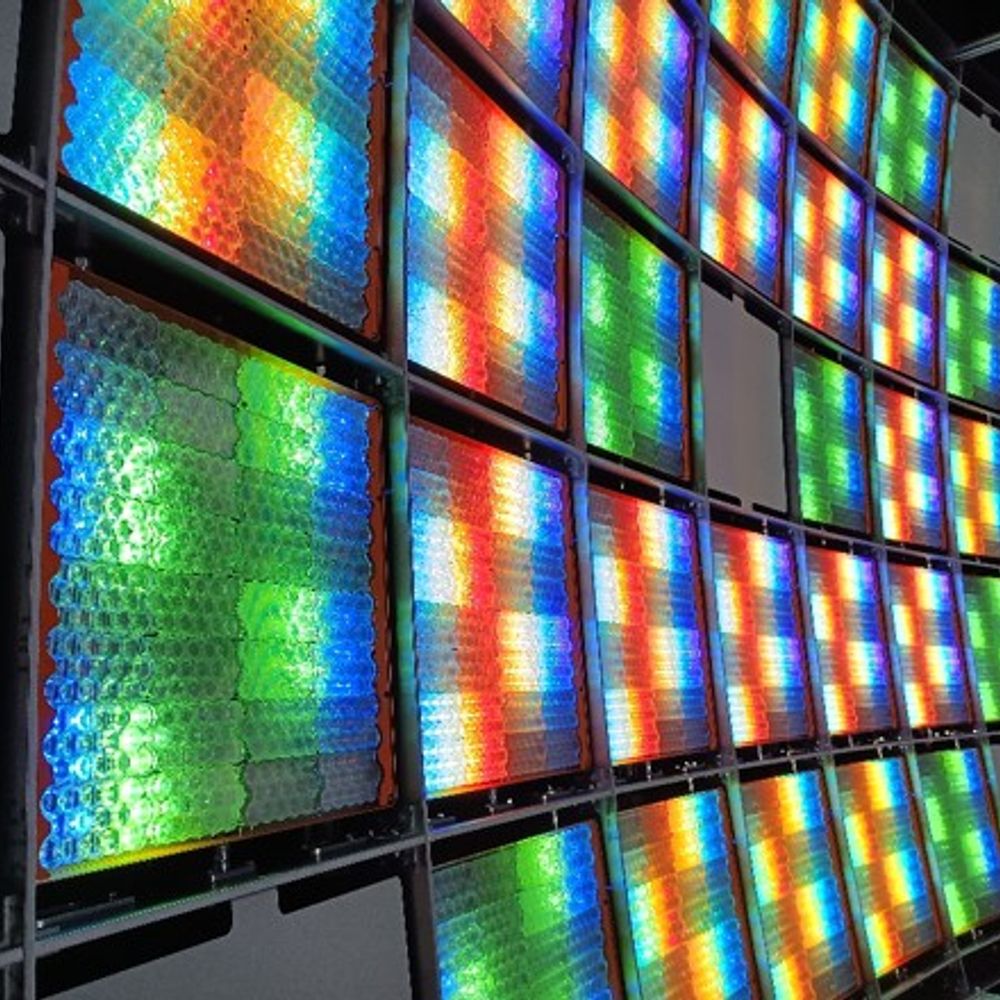
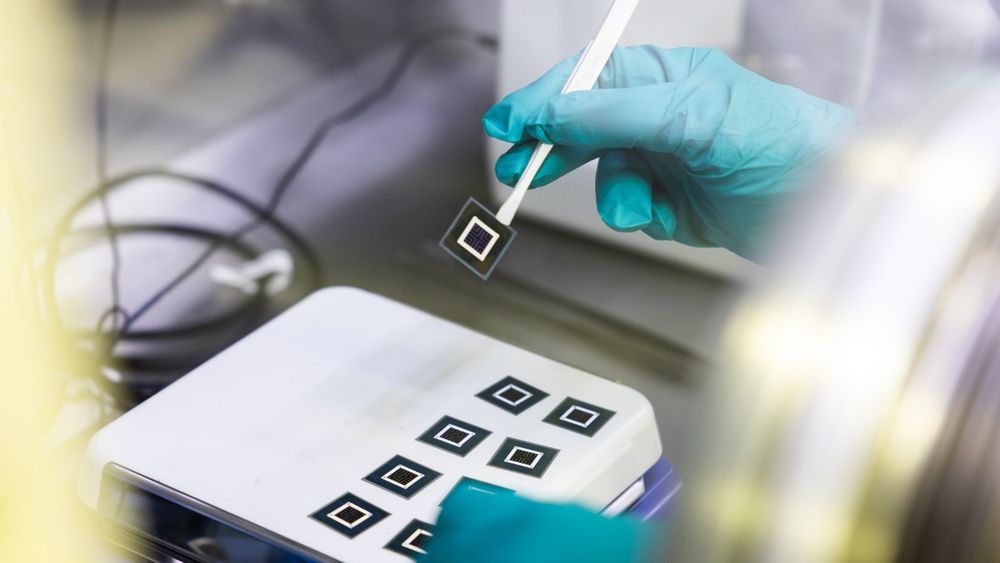
Scratching the surface is not enough!
This should be a guiding principle of good science - and politics 😉 .
But it also applies to #photovoltaics!
www.ise.fraunhofer.de/en/press-med...
© Universität Freiburg / Foto: Silvia Wolf
This should be a guiding principle of good science - and politics 😉 .
But it also applies to #photovoltaics!
www.ise.fraunhofer.de/en/press-med...
© Universität Freiburg / Foto: Silvia Wolf
September 5, 2025 at 8:17 AM
Scratching the surface is not enough!
This should be a guiding principle of good science - and politics 😉 .
But it also applies to #photovoltaics!
www.ise.fraunhofer.de/en/press-med...
© Universität Freiburg / Foto: Silvia Wolf
This should be a guiding principle of good science - and politics 😉 .
But it also applies to #photovoltaics!
www.ise.fraunhofer.de/en/press-med...
© Universität Freiburg / Foto: Silvia Wolf
Reposted by Austin Kuba
Incredibly proud of this and of your work, in all, Hilal Aybike Can. Any semiconductor meant for absorbing light can be tested this way in an accelerated fashion - rebuilt and adapt! pubs.rsc.org/en/content/a...

Accelerating optimization of halide perovskites: two blueprints for automation
The fine-tuning of halide perovskite materials for both performance and stability calls for innovative tools that streamline high-throughput experimentation. Here, we present two complementary systems...
pubs.rsc.org
August 27, 2025 at 11:30 PM
Incredibly proud of this and of your work, in all, Hilal Aybike Can. Any semiconductor meant for absorbing light can be tested this way in an accelerated fashion - rebuilt and adapt! pubs.rsc.org/en/content/a...
I accomplished something today that I’ve been working towards for 9 years 🤩🤩🤩 such a surreal feeling
August 6, 2025 at 4:09 PM
I accomplished something today that I’ve been working towards for 9 years 🤩🤩🤩 such a surreal feeling
Reposted by Austin Kuba

Join our faculty and be my colleague at an amazing school! We are #hiring at EPFL! www.epfl.ch/about/workin...
Tenure Track Assistant Professor in Experimental Physical or Analytical Chemistry
EPFL is a leading university with strong emphasis on basic sciences, engineering and life sciences. Research within its Institute of Chemical Sciences and Engineering (ISIC) includes synthetic, biolog...
www.epfl.ch
July 22, 2025 at 2:20 PM
Join our faculty and be my colleague at an amazing school! We are #hiring at EPFL! www.epfl.ch/about/workin...
Reposted by Austin Kuba
Out now in ACS Materials Letters pubs.acs.org/doi/10.1021/...
We developed a method to fabricate composites with volumetric additive manufacturing (VAM). The study was led by Yiming Ji, a grad student in my group, with support from @xolo3d.bsky.social
Here's a little 🧵(1/8)
We developed a method to fabricate composites with volumetric additive manufacturing (VAM). The study was led by Yiming Ji, a grad student in my group, with support from @xolo3d.bsky.social
Here's a little 🧵(1/8)
July 10, 2025 at 3:19 PM
Out now in ACS Materials Letters pubs.acs.org/doi/10.1021/...
We developed a method to fabricate composites with volumetric additive manufacturing (VAM). The study was led by Yiming Ji, a grad student in my group, with support from @xolo3d.bsky.social
Here's a little 🧵(1/8)
We developed a method to fabricate composites with volumetric additive manufacturing (VAM). The study was led by Yiming Ji, a grad student in my group, with support from @xolo3d.bsky.social
Here's a little 🧵(1/8)
Reposted by Austin Kuba
Excited to share in @nature.com today: Broadband transient full-Stokes luminescence spectroscopy - detecting the most subtle changes in light polarization over time with unprecedented sensitivity. Grateful for the team that made this possible!😊 www.nature.com/articles/s41... #chirality #light
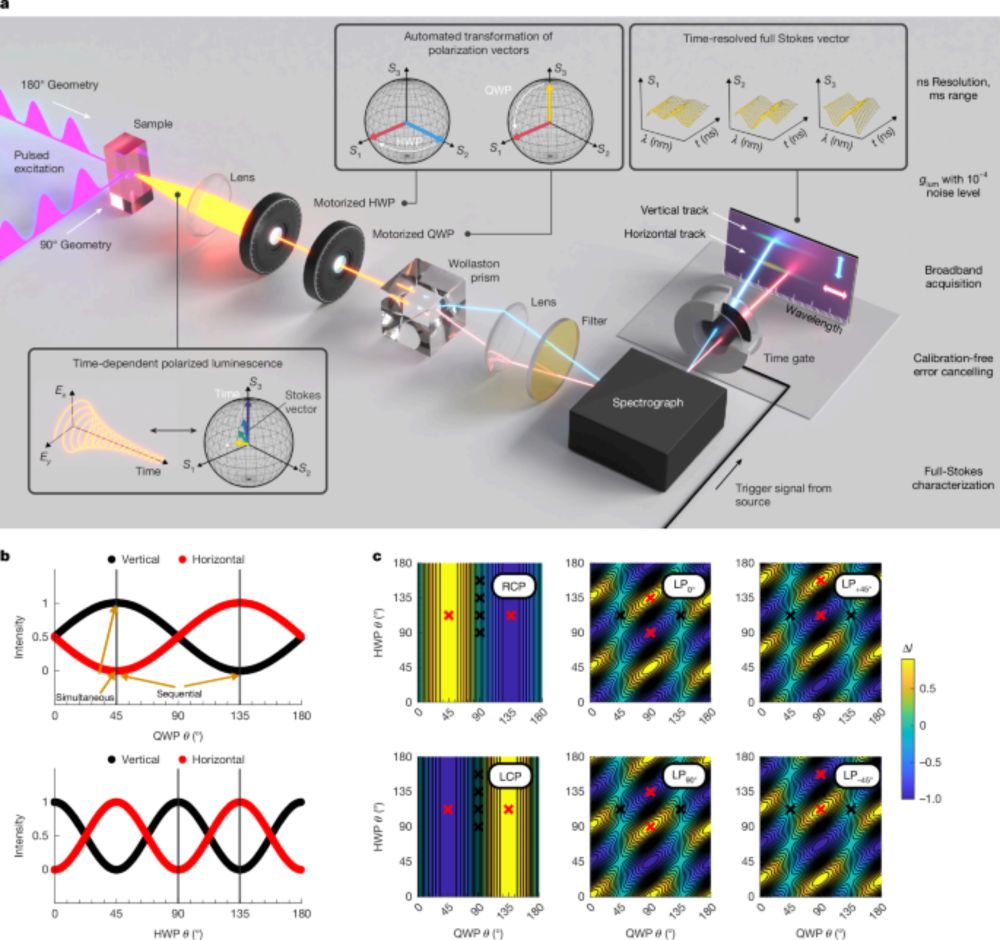
Broadband transient full-Stokes luminescence spectroscopy - Nature
A high-sensitivity, broadband, transient, full-Stokes spectroscopy setup is demonstrated, which can detect quickly varying small signals from chiral emitters.
www.nature.com
June 26, 2025 at 6:23 AM
Excited to share in @nature.com today: Broadband transient full-Stokes luminescence spectroscopy - detecting the most subtle changes in light polarization over time with unprecedented sensitivity. Grateful for the team that made this possible!😊 www.nature.com/articles/s41... #chirality #light
Reposted by Austin Kuba
Say goodbye to 1.5°C. But remember, the next target is 1.51°C and not 2°C. We need to keep fighting.
Every tonne of CO₂ emitted makes the job of future CO₂ removal harder, and every 0.01°C of temperature increase makes the world more chaotic and dangerous.
Every tonne of CO₂ emitted makes the job of future CO₂ removal harder, and every 0.01°C of temperature increase makes the world more chaotic and dangerous.
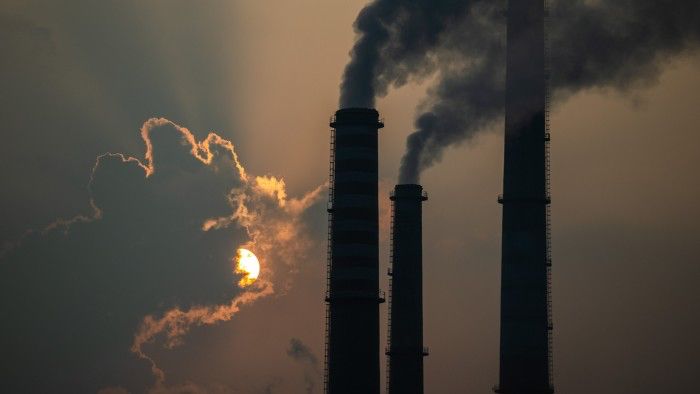
Earth set to exhaust ‘carbon budget’ within 3 years as Paris hopes fade
Goal of limiting warming to 1.5C looks increasingly out of reach, study finds
on.ft.com
June 18, 2025 at 10:25 PM
Say goodbye to 1.5°C. But remember, the next target is 1.51°C and not 2°C. We need to keep fighting.
Every tonne of CO₂ emitted makes the job of future CO₂ removal harder, and every 0.01°C of temperature increase makes the world more chaotic and dangerous.
Every tonne of CO₂ emitted makes the job of future CO₂ removal harder, and every 0.01°C of temperature increase makes the world more chaotic and dangerous.
Reposted by Austin Kuba

As my colleagues said "2+ years and it's never been more relevant" - I hope to work with many of you to show the true potential of this technology.

Haven't had much appetite to post but we just published a perspective on durability research for perovskite solar cells in nature energy have a look.
rdcu.be/eqRY0
rdcu.be/eqRY0

Durability research is pivotal for perovskite photovoltaics
Nature Energy - Perovskite photovoltaics have achieved high power conversion efficiencies, yet their durability remains to be proven. This Perspective presents a number of approaches with a view to...
rdcu.be
June 13, 2025 at 5:28 PM
As my colleagues said "2+ years and it's never been more relevant" - I hope to work with many of you to show the true potential of this technology.
Reposted by Austin Kuba
Can we grow #layered #low #dimensional #halides with #PLD?⚡And use this to make #stable 2D/3D #perovskite #heterostructures? The answers in our recently published work 👇.
www.nature.com/articles/s41...
@erc.europa.eu. Great job Junia and collaborators from SAV, FZU and ITQ @pablopboix.bsky.social
www.nature.com/articles/s41...
@erc.europa.eu. Great job Junia and collaborators from SAV, FZU and ITQ @pablopboix.bsky.social

Oriented 2D Ruddlesden-Popper metal halides by pulsed laser deposition - npj 2D Materials and Applications
npj 2D Materials and Applications - Oriented 2D Ruddlesden-Popper metal halides by pulsed laser deposition
www.nature.com
June 16, 2025 at 8:35 AM
Can we grow #layered #low #dimensional #halides with #PLD?⚡And use this to make #stable 2D/3D #perovskite #heterostructures? The answers in our recently published work 👇.
www.nature.com/articles/s41...
@erc.europa.eu. Great job Junia and collaborators from SAV, FZU and ITQ @pablopboix.bsky.social
www.nature.com/articles/s41...
@erc.europa.eu. Great job Junia and collaborators from SAV, FZU and ITQ @pablopboix.bsky.social
Reposted by Austin Kuba
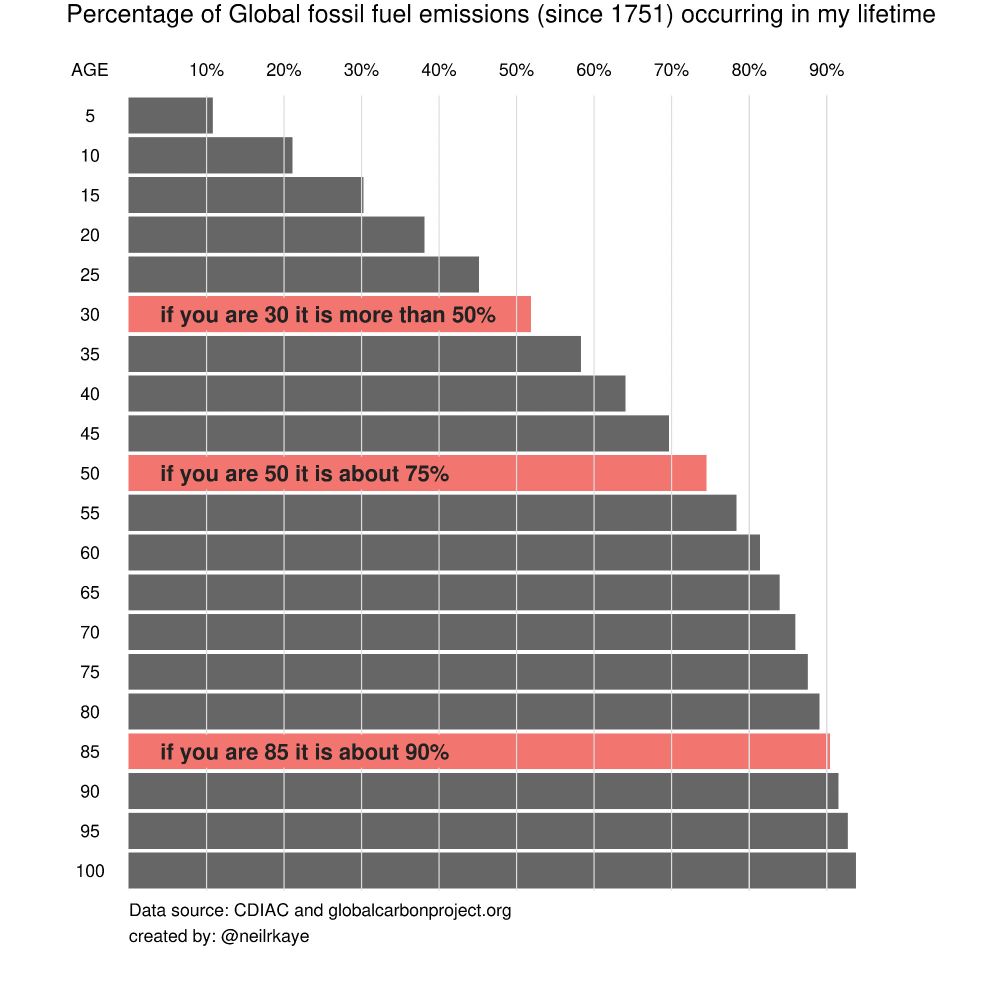
If you think climate change has gotten worse during your lifetime, you're right and there's a good reason.
If you're Gen X like me, more than 3/4 of fossil fuel CO₂ emissions have occurred in your lifetime. Even if you're a Millennial, it's at least half.
📊: @neilrkaye.bsky.social
If you're Gen X like me, more than 3/4 of fossil fuel CO₂ emissions have occurred in your lifetime. Even if you're a Millennial, it's at least half.
📊: @neilrkaye.bsky.social
June 10, 2025 at 10:22 AM
If you think climate change has gotten worse during your lifetime, you're right and there's a good reason.
If you're Gen X like me, more than 3/4 of fossil fuel CO₂ emissions have occurred in your lifetime. Even if you're a Millennial, it's at least half.
📊: @neilrkaye.bsky.social
If you're Gen X like me, more than 3/4 of fossil fuel CO₂ emissions have occurred in your lifetime. Even if you're a Millennial, it's at least half.
📊: @neilrkaye.bsky.social
Reposted by Austin Kuba

What makes a science superpower? Funding, freedom, and the world’s brightest minds.
You can’t lead the world in science while banning immigrants and defunding discovery. The Trump admin is sabatoging the future of U.S. science.
zurl.co/7P2av
You can’t lead the world in science while banning immigrants and defunding discovery. The Trump admin is sabatoging the future of U.S. science.
zurl.co/7P2av
Is the US losing its place as the world leader in science?
Will the double whammy of cracking down on immigrants and defunding research weaken the US as a research hub?
www.aljazeera.com
June 8, 2025 at 10:54 AM
What makes a science superpower? Funding, freedom, and the world’s brightest minds.
You can’t lead the world in science while banning immigrants and defunding discovery. The Trump admin is sabatoging the future of U.S. science.
zurl.co/7P2av
You can’t lead the world in science while banning immigrants and defunding discovery. The Trump admin is sabatoging the future of U.S. science.
zurl.co/7P2av
Reposted by Austin Kuba
How to Reliably Measure Carrier Mobility in Highly Resistive Lead Halide Perovskites with Photo-Hall Experiment | ACS Energy Letters pubs.acs.org/doi/10.1021/...
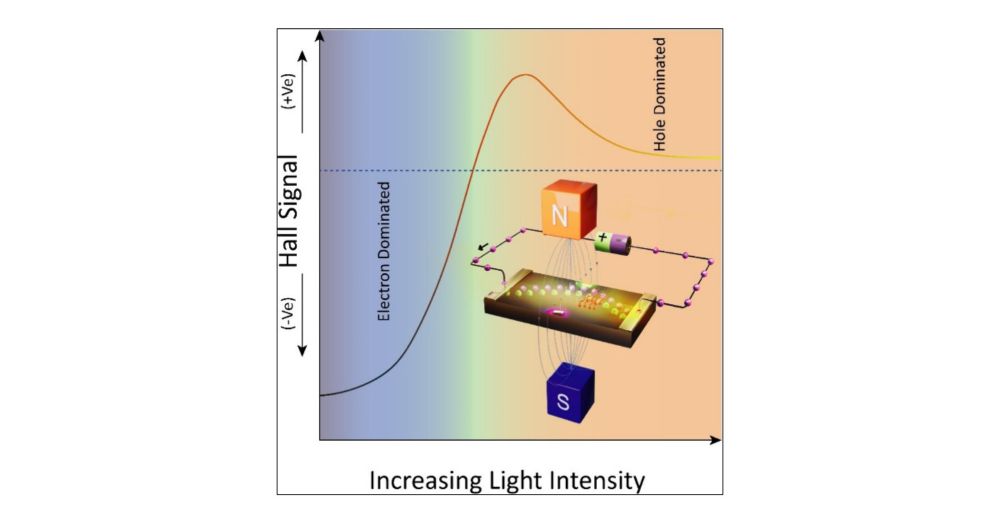
How to Reliably Measure Carrier Mobility in Highly Resistive Lead Halide Perovskites with Photo-Hall Experiment
Mobility measurements in highly resistive methylammonium lead iodide (MAPI) are challenging due to high impedance, ion drift, and low mobility. We show that we can address the challenge using intensity-dependent photo-Hall measurements. The key is an improved photo-Hall setup, which enables reliable Hall measurements in the dark and under low-intensity illumination. By tuning the illumination over 4 orders of magnitude, we get the additional information to simultaneously extract hole mobility, electron mobility, and background doping. For the first time, we show that a MAPI single crystal, exhibiting n-type behavior in the dark, can show p-type behavior under light due to the difference in hole and electron mobility. The data partly explain the variability in mobility reported in the literature. We show that one can erroneously extract any mobility from 0 to 25 cm2/(V s) if we restrict the experiment to a small range of illumination intensities. For our MAPI (310) crystal, the measured hole and electron mobilities are 40 and 25.5 cm2/(V s), respectively.
pubs.acs.org
June 6, 2025 at 6:04 PM
How to Reliably Measure Carrier Mobility in Highly Resistive Lead Halide Perovskites with Photo-Hall Experiment | ACS Energy Letters pubs.acs.org/doi/10.1021/...
Funding of science is an important investment for the future, both in terms of raw value from discoveries and training of scientists and engineers. By reducing funding for the NIH, NSF, NASA, etc, this administration will, in the long term, cost the USA much more than they ‘save’ in the short term.
June 1, 2025 at 12:25 PM
Funding of science is an important investment for the future, both in terms of raw value from discoveries and training of scientists and engineers. By reducing funding for the NIH, NSF, NASA, etc, this administration will, in the long term, cost the USA much more than they ‘save’ in the short term.
New paper!
pubs.acs.org/doi/10.1021/...
Vapor processing of FA based perovskites is tricky. Material usage/accessible deposition rates can be low because of degradation reactions in the vapor phase, and high vacuum or close space is usually required.
pubs.acs.org/doi/10.1021/...
Vapor processing of FA based perovskites is tricky. Material usage/accessible deposition rates can be low because of degradation reactions in the vapor phase, and high vacuum or close space is usually required.

Making from Breaking: Degradation Inversion Enables Vapor-Phase Synthesis of Halide Perovskites in Ambient Conditions
Vapor phase deposition of formamidinium-rich perovskites is hampered by the decomposition of formamidine in the vapor phase. We use the reversibility of this reaction to establish a dynamic equilibriu...
pubs.acs.org
May 12, 2025 at 11:23 AM
New paper!
pubs.acs.org/doi/10.1021/...
Vapor processing of FA based perovskites is tricky. Material usage/accessible deposition rates can be low because of degradation reactions in the vapor phase, and high vacuum or close space is usually required.
pubs.acs.org/doi/10.1021/...
Vapor processing of FA based perovskites is tricky. Material usage/accessible deposition rates can be low because of degradation reactions in the vapor phase, and high vacuum or close space is usually required.
Reposted by Austin Kuba
🚀 New work out!
We show how thermal evaporation enables structural control of quasi-2D perovskites — overcoming disorder from solution processing.
Synchrotron X-rays + ultrafast spectroscopy reveal how phosphonic acids tune dimensionality.
pubs.acs.org/doi/10.1021/...
@gatechengineers.bsky.social
We show how thermal evaporation enables structural control of quasi-2D perovskites — overcoming disorder from solution processing.
Synchrotron X-rays + ultrafast spectroscopy reveal how phosphonic acids tune dimensionality.
pubs.acs.org/doi/10.1021/...
@gatechengineers.bsky.social

Dimensional Control in Phase-Pure Coevaporated Quasi-2D Ruddlesden–Popper Structures
Fast, uncontrolled crystallization with several competing pathways makes solution-processing of phase-pure quasi-two-dimensional (quasi-2D) metal halide Ruddlesden–Popper thin films challenging. Typic...
pubs.acs.org
April 29, 2025 at 5:04 PM
🚀 New work out!
We show how thermal evaporation enables structural control of quasi-2D perovskites — overcoming disorder from solution processing.
Synchrotron X-rays + ultrafast spectroscopy reveal how phosphonic acids tune dimensionality.
pubs.acs.org/doi/10.1021/...
@gatechengineers.bsky.social
We show how thermal evaporation enables structural control of quasi-2D perovskites — overcoming disorder from solution processing.
Synchrotron X-rays + ultrafast spectroscopy reveal how phosphonic acids tune dimensionality.
pubs.acs.org/doi/10.1021/...
@gatechengineers.bsky.social
Reposted by Austin Kuba
Excited to share our latest on exciton-phonon coupling in amazing Ge-based 2D metal halide semiconductors from the Sargent & Kanatzidis labs—narrow emission & great low-temp properties! Thanks to all these incredible coauthors! doi.org/10.1002/adma...
#ChemSky 🧪⚗️
#ChemSky 🧪⚗️
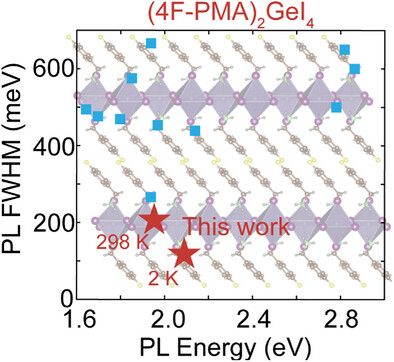
Narrow‐Linewidth Emission and Weak Exciton‐Phonon Coupling in 2D Layered Germanium Halide Perovskites
The structural and photophysical properties of the 2D layered metal halides (4F-PMA)2GeI4 and (4F-PMA)2PbI4 are reported. For the Ge composition, reduced exciton-phonon coupling is found and the abse....
doi.org
April 29, 2025 at 6:41 PM
Excited to share our latest on exciton-phonon coupling in amazing Ge-based 2D metal halide semiconductors from the Sargent & Kanatzidis labs—narrow emission & great low-temp properties! Thanks to all these incredible coauthors! doi.org/10.1002/adma...
#ChemSky 🧪⚗️
#ChemSky 🧪⚗️
Reposted by Austin Kuba
Now in Adv.Mater. @zacharyvanorman.bsky.social & Ben find there is hope for Ge 2D perovskites for #light-emitting and other applications:
We show narrow linewidth emission & reduced phonon coupling💡🔦Nice collab. w/ Kanatzidis, Sargent & Voznyy groups!
advanced.onlinelibrary.wiley.com/doi/10.1002/...
We show narrow linewidth emission & reduced phonon coupling💡🔦Nice collab. w/ Kanatzidis, Sargent & Voznyy groups!
advanced.onlinelibrary.wiley.com/doi/10.1002/...
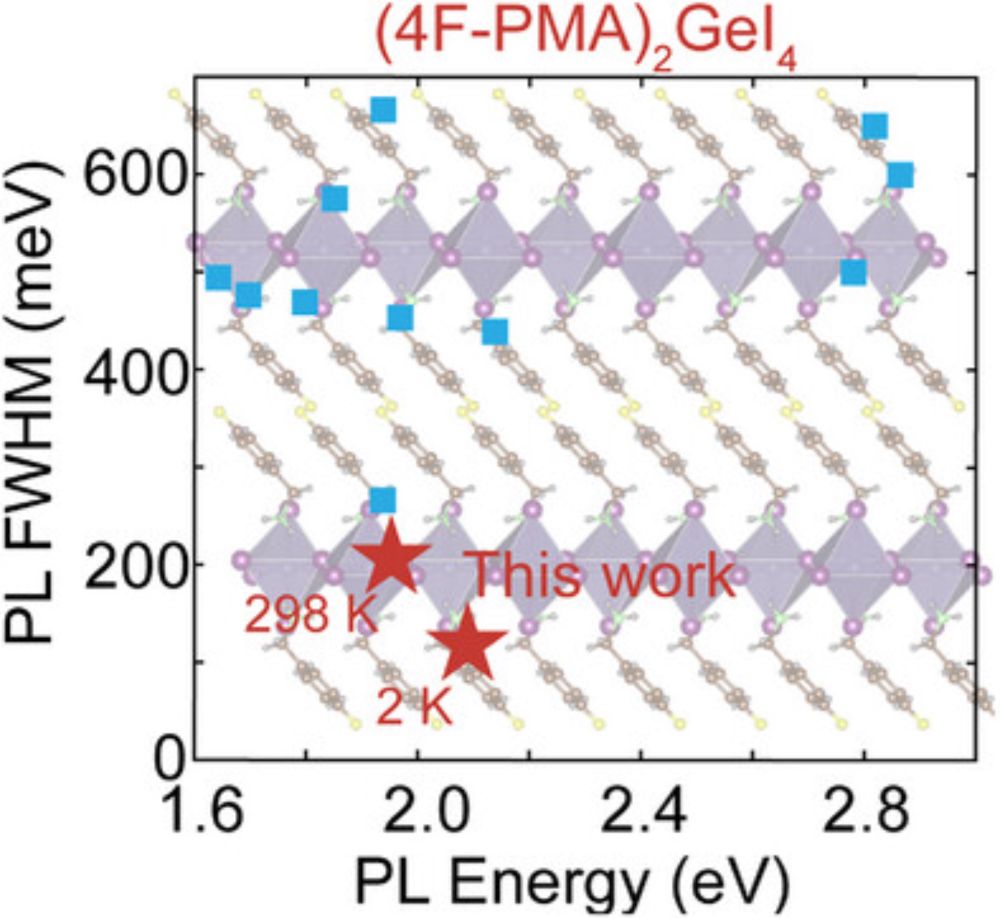
Narrow‐Linewidth Emission and Weak Exciton‐Phonon Coupling in 2D Layered Germanium Halide Perovskites
The structural and photophysical properties of the 2D layered metal halides (4F-PMA)2GeI4 and (4F-PMA)2PbI4 are reported. For the Ge composition, reduced exciton-phonon coupling is found and the abse....
advanced.onlinelibrary.wiley.com
April 30, 2025 at 6:35 AM
Now in Adv.Mater. @zacharyvanorman.bsky.social & Ben find there is hope for Ge 2D perovskites for #light-emitting and other applications:
We show narrow linewidth emission & reduced phonon coupling💡🔦Nice collab. w/ Kanatzidis, Sargent & Voznyy groups!
advanced.onlinelibrary.wiley.com/doi/10.1002/...
We show narrow linewidth emission & reduced phonon coupling💡🔦Nice collab. w/ Kanatzidis, Sargent & Voznyy groups!
advanced.onlinelibrary.wiley.com/doi/10.1002/...
Reposted by Austin Kuba

There are many sides to "defect tolerance" in metal halide perovskite solar cells 🛑. Our discussions with @hoyegroupox.bsky.social led to a new review in @natrevchem.bsky.social led by @ireaml.bsky.social. Out today #ChemSky: rdcu.be/egK3Z
![Illustrative map of the theoretical power conversion efficiency (PCE) of a single junction solar cell, depending on the capture coefficient (C_defect) and concentration ([Defect]) of point defects in the bulk of the absorber material.](https://cdn.bsky.app/img/feed_thumbnail/plain/did:plc:attf35twdliz775dorg4y3z6/bafkreierhcxnjvoxtlb3ht5ial35ztf4zzkh3f554a5ckhkjogq74j6ise@jpeg)
April 7, 2025 at 7:47 PM
There are many sides to "defect tolerance" in metal halide perovskite solar cells 🛑. Our discussions with @hoyegroupox.bsky.social led to a new review in @natrevchem.bsky.social led by @ireaml.bsky.social. Out today #ChemSky: rdcu.be/egK3Z