


Astronomy Live
@astronomylive.bsky.social
Amateur astronomer and neuroscientist, opinions are my own, please don't harass my employer

And this is just what I get with HRIT, there are other options in satdump I haven't tried out yet as well.
January 13, 2026 at 3:22 AM
And this is just what I get with HRIT, there are other options in satdump I haven't tried out yet as well.
No I get mesoscale 1 and 2 images as well, along with a load of text files of regional forecasts and a few images transferred from goes 18 on the West Coast as well
January 13, 2026 at 3:20 AM
No I get mesoscale 1 and 2 images as well, along with a load of text files of regional forecasts and a few images transferred from goes 18 on the West Coast as well
Yeah, I'm in communication with a couple of other radio guys who are helping me out as well. Scott Tilly is certainly a good suggestion as well.
January 13, 2026 at 3:10 AM
Yeah, I'm in communication with a couple of other radio guys who are helping me out as well. Scott Tilly is certainly a good suggestion as well.
First light on my home made radio telescope. Its first task was to receive images and data from the GOES 19 geostationary weather satellite. Still need to tweak the setup, but it works! Having never done this before, getting satellite image data on the first attempt was quite a thrill.
#radio
#radio


January 13, 2026 at 3:00 AM
First light on my home made radio telescope. Its first task was to receive images and data from the GOES 19 geostationary weather satellite. Still need to tweak the setup, but it works! Having never done this before, getting satellite image data on the first attempt was quite a thrill.
#radio
#radio
Yes, it is! Thin enough to slip between the petals and with the same diameter hole for the bolts used to hold the dish together. Strong enough to hold at least a lightweight feed horn. And best of all, cheap.
January 13, 2026 at 2:56 AM
Yes, it is! Thin enough to slip between the petals and with the same diameter hole for the bolts used to hold the dish together. Strong enough to hold at least a lightweight feed horn. And best of all, cheap.
My latest telescope is my largest, but it's a radio telescope rather than an optical telescope. I'm hoping to be able to download GOES images, conduct 21cm observations, and more.

January 12, 2026 at 3:11 AM
My latest telescope is my largest, but it's a radio telescope rather than an optical telescope. I'm hoping to be able to download GOES images, conduct 21cm observations, and more.
Nope. It's a one shot color camera.
January 7, 2026 at 1:36 AM
Nope. It's a one shot color camera.
17x300s on M17, the Omega Nebula. Processed with VeraLux hypermetric stretch in Siril. 8" Meade LX200 Classic with an SBIG ST-2000XCM CCD camera.
#astrophotography
#astrophotography

January 7, 2026 at 12:22 AM
17x300s on M17, the Omega Nebula. Processed with VeraLux hypermetric stretch in Siril. 8" Meade LX200 Classic with an SBIG ST-2000XCM CCD camera.
#astrophotography
#astrophotography
Here is the result of reprocessing 6 hours of light on M101 with the VeraLux scripts in Siril. The SN 2023ixf is visible here in one of the spiral arms in this image data from May and June 2023, captured using an 8" LX200 Classic and SBIG ST-2000XCM with an AO-7.
#astrophotography
#astrophotography

January 1, 2026 at 4:01 PM
Here is the result of reprocessing 6 hours of light on M101 with the VeraLux scripts in Siril. The SN 2023ixf is visible here in one of the spiral arms in this image data from May and June 2023, captured using an 8" LX200 Classic and SBIG ST-2000XCM with an AO-7.
#astrophotography
#astrophotography
Trying out the new VeraLux scripts for processing my astrophotography in Siril! Really liking these results, like this 6.5 hour stack on the Whirlpool galaxy.
#astrophotography #M51
#astrophotography #M51

January 1, 2026 at 12:28 AM
Trying out the new VeraLux scripts for processing my astrophotography in Siril! Really liking these results, like this 6.5 hour stack on the Whirlpool galaxy.
#astrophotography #M51
#astrophotography #M51
Plus just for my own enjoyment and collection, I love having the negatives. There's something magic about it compared to shooting astro digitally. Especially when manually guiding, you feel very connected to the resulting tangible product.

December 12, 2025 at 6:22 PM
Plus just for my own enjoyment and collection, I love having the negatives. There's something magic about it compared to shooting astro digitally. Especially when manually guiding, you feel very connected to the resulting tangible product.
The difference with film is that you have the physical negatives, and I can offer to shoot it with them in person and go with them to have it developed later that day. No room for digital chicanery with a mechanical film SLR.
December 12, 2025 at 6:15 PM
The difference with film is that you have the physical negatives, and I can offer to shoot it with them in person and go with them to have it developed later that day. No room for digital chicanery with a mechanical film SLR.
I started shooting astro on film 25 years ago but never had the chance to try deep space on film before switching to digital, so mostly it's nostalgia. Partly it's to debunk those who claim digital astrophotography is a hoax.
December 12, 2025 at 2:48 PM
I started shooting astro on film 25 years ago but never had the chance to try deep space on film before switching to digital, so mostly it's nostalgia. Partly it's to debunk those who claim digital astrophotography is a hoax.
The film was developed by the DarkRoom in California, I took the scans of the negatives through additional processing in astrophotography software to see what I could get out of it. That software wasn't designed for film scans of course, it's designed for modern CCDs, but it still did a good job.
December 12, 2025 at 1:38 PM
The film was developed by the DarkRoom in California, I took the scans of the negatives through additional processing in astrophotography software to see what I could get out of it. That software wasn't designed for film scans of course, it's designed for modern CCDs, but it still did a good job.
No shame in trying an older camera, the Minolta SRT-100 I used for this photo is a very old mechanical film camera!
December 12, 2025 at 3:52 AM
No shame in trying an older camera, the Minolta SRT-100 I used for this photo is a very old mechanical film camera!
M31 Andromeda galaxy, 1 hour exposure on CineStill T800 film with an 8" Meade LX200 and .65 focal reducer. Processed automatically using Riccardo Paterniti's VeraLux HyperMetric script in Siril, automatic background extraction in GraXpert. #astrophotography #filmisnotdead

December 12, 2025 at 3:31 AM
M31 Andromeda galaxy, 1 hour exposure on CineStill T800 film with an 8" Meade LX200 and .65 focal reducer. Processed automatically using Riccardo Paterniti's VeraLux HyperMetric script in Siril, automatic background extraction in GraXpert. #astrophotography #filmisnotdead
Trying out Riccardo Paterniti's VeraLux HyperMetric Python script in Siril. Although it isn't necessarily designed for it, it even works on #film #astrophotography scans, like this 30 minute manually guided exposure of the Bubble Nebula! #filmisnotdead

December 12, 2025 at 3:23 AM
Trying out Riccardo Paterniti's VeraLux HyperMetric Python script in Siril. Although it isn't necessarily designed for it, it even works on #film #astrophotography scans, like this 30 minute manually guided exposure of the Bubble Nebula! #filmisnotdead
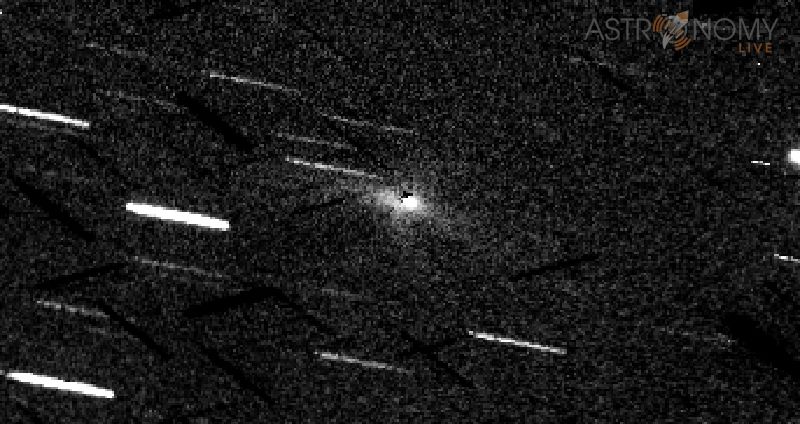
#3I/ATLAS on Saturday morning. I stacked a total of 20 frames 2 minutes long binned 2x2 from my ST-2000XCM SBIG, which was attached to an AO-7 and 8" LX200 classic. A prominent sun facing jet can be seen along with a hint of the tail facing away from the sun and a jet 90 degrees to the side. #comet


November 25, 2025 at 12:56 PM
I recorded a 4 hour time lapse of the moon to show how the shadows change along the lunar terminator. The lunar libration was enough to create a 3D stereo image to see the shape of the moon and the terrain. Be sure to check it out if you have 3D glasses or a VR headset! #VR
youtu.be/vtygobDfPZ0
youtu.be/vtygobDfPZ0

Viewing the Moon in 3D!
YouTube video by Astronomy Live
youtu.be
November 8, 2025 at 12:16 PM
I recorded a 4 hour time lapse of the moon to show how the shadows change along the lunar terminator. The lunar libration was enough to create a 3D stereo image to see the shape of the moon and the terrain. Be sure to check it out if you have 3D glasses or a VR headset! #VR
youtu.be/vtygobDfPZ0
youtu.be/vtygobDfPZ0
C/2025 A6 Lemmon tonight

October 25, 2025 at 2:53 AM
C/2025 A6 Lemmon tonight
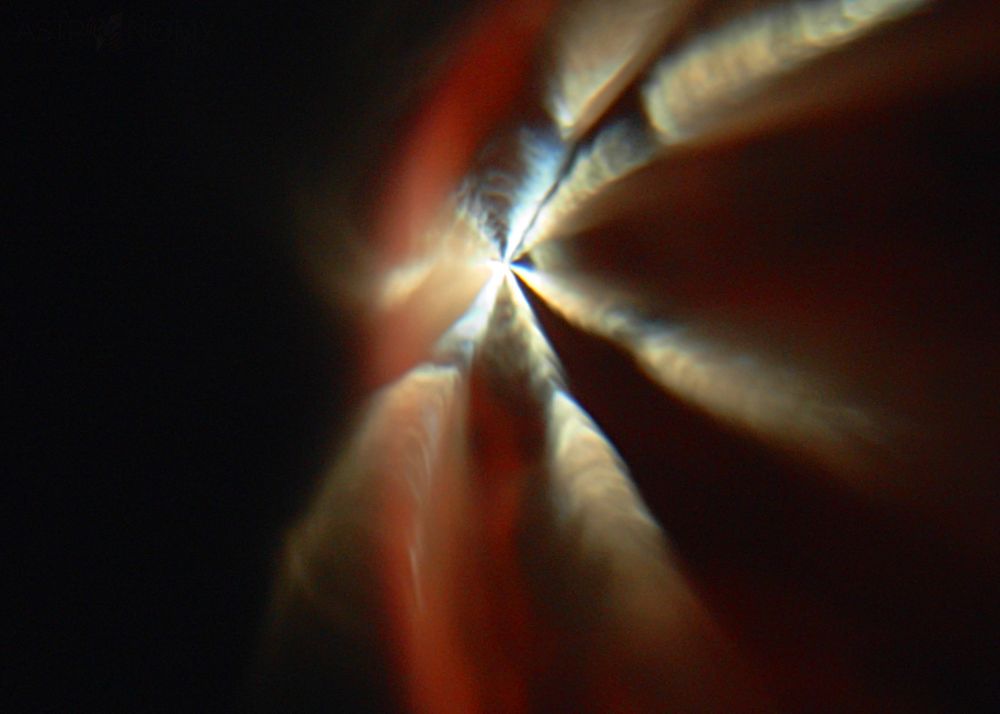

Here's a 34 frame stack. Stacking loses the turbulence in the exhaust but improves the grain. You can even just start to make out the front flaps in the silhouette.

October 15, 2025 at 3:09 AM
Here's a 34 frame stack. Stacking loses the turbulence in the exhaust but improves the grain. You can even just start to make out the front flaps in the silhouette.
Here is my 4K telescopic tracking footage of #SpaceX Starship from Florida during flight 11 last night!
youtu.be/Kspmn3YUqpI
The vehicle and exhaust were illuminated by the sun while twilight was fading here in Florida, the perfect timing for a gorgeous "jellyfish" effect!
youtu.be/Kspmn3YUqpI
The vehicle and exhaust were illuminated by the sun while twilight was fading here in Florida, the perfect timing for a gorgeous "jellyfish" effect!

SpaceX Starship Flight 11 From Florida!
YouTube video by Astronomy Live
youtu.be
October 14, 2025 at 11:16 AM
Here is my 4K telescopic tracking footage of #SpaceX Starship from Florida during flight 11 last night!
youtu.be/Kspmn3YUqpI
The vehicle and exhaust were illuminated by the sun while twilight was fading here in Florida, the perfect timing for a gorgeous "jellyfish" effect!
youtu.be/Kspmn3YUqpI
The vehicle and exhaust were illuminated by the sun while twilight was fading here in Florida, the perfect timing for a gorgeous "jellyfish" effect!