


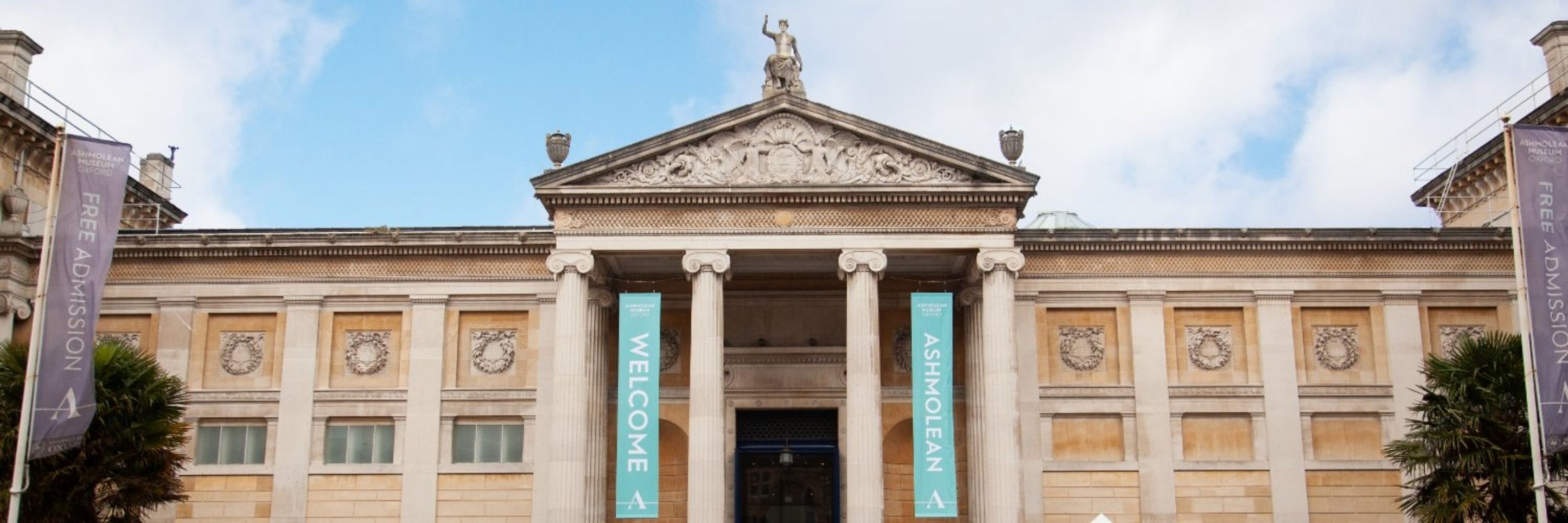

Ashmolean Museum, Oxford
@ashmoleanmuseum.bsky.social
🖼 🏺 World famous collections, from Egyptian mummies to contemporary art
🕙 Open every day 10am–5pm 🏛 linktr.ee/ashmoleanmuseum
🕙 Open every day 10am–5pm 🏛 linktr.ee/ashmoleanmuseum
How beautiful are the colours of this ewer from the Tang dynasty (618-907 CE)?
A ewer is a traditional pitcher or jug with a spout used for pouring liquids. In Tang dynasty China, the elite would have used ewers made of silver.
A ewer is a traditional pitcher or jug with a spout used for pouring liquids. In Tang dynasty China, the elite would have used ewers made of silver.

February 9, 2026 at 8:01 AM
How beautiful are the colours of this ewer from the Tang dynasty (618-907 CE)?
A ewer is a traditional pitcher or jug with a spout used for pouring liquids. In Tang dynasty China, the elite would have used ewers made of silver.
A ewer is a traditional pitcher or jug with a spout used for pouring liquids. In Tang dynasty China, the elite would have used ewers made of silver.
If the hashtag #SuperBowl has you wondering where the superb owls are…we got you!
🦉Detail from Owl, 1601–1800. EA2012.344.b
🦉An owl on a branch, 1893–1898, Sir Edward Coley Burne-Jones (1833–1898). WA2015.68.29
🦉Owl, 1865, Arthur Burgess (1843–1886). WA.RS.RUD.046
🦉Detail from Owl, 1601–1800. EA2012.344.b
🦉An owl on a branch, 1893–1898, Sir Edward Coley Burne-Jones (1833–1898). WA2015.68.29
🦉Owl, 1865, Arthur Burgess (1843–1886). WA.RS.RUD.046


February 8, 2026 at 5:02 PM
If the hashtag #SuperBowl has you wondering where the superb owls are…we got you!
🦉Detail from Owl, 1601–1800. EA2012.344.b
🦉An owl on a branch, 1893–1898, Sir Edward Coley Burne-Jones (1833–1898). WA2015.68.29
🦉Owl, 1865, Arthur Burgess (1843–1886). WA.RS.RUD.046
🦉Detail from Owl, 1601–1800. EA2012.344.b
🦉An owl on a branch, 1893–1898, Sir Edward Coley Burne-Jones (1833–1898). WA2015.68.29
🦉Owl, 1865, Arthur Burgess (1843–1886). WA.RS.RUD.046
John Ruskin was born on this day in 1819.
Ruskin was one of the most influential writers on art and architecture in 19th-century Britain.
The use of colour in art was important to Ruskin. He believed that the colours of the natural world could inspire and guide artists.
WA.RS.RUD.201
Ruskin was one of the most influential writers on art and architecture in 19th-century Britain.
The use of colour in art was important to Ruskin. He believed that the colours of the natural world could inspire and guide artists.
WA.RS.RUD.201

February 8, 2026 at 8:00 AM
John Ruskin was born on this day in 1819.
Ruskin was one of the most influential writers on art and architecture in 19th-century Britain.
The use of colour in art was important to Ruskin. He believed that the colours of the natural world could inspire and guide artists.
WA.RS.RUD.201
Ruskin was one of the most influential writers on art and architecture in 19th-century Britain.
The use of colour in art was important to Ruskin. He believed that the colours of the natural world could inspire and guide artists.
WA.RS.RUD.201
Today we’re bringing you this charming print by Ohara Koson.
Koson was a Japanese painter and woodblock print designer. He was famous as a master of bird-and-flower designs and was a prolific artist, creating around 500 print designs during his lifetime.
🦆 EA1957.81
Koson was a Japanese painter and woodblock print designer. He was famous as a master of bird-and-flower designs and was a prolific artist, creating around 500 print designs during his lifetime.
🦆 EA1957.81

February 7, 2026 at 8:00 AM
Today we’re bringing you this charming print by Ohara Koson.
Koson was a Japanese painter and woodblock print designer. He was famous as a master of bird-and-flower designs and was a prolific artist, creating around 500 print designs during his lifetime.
🦆 EA1957.81
Koson was a Japanese painter and woodblock print designer. He was famous as a master of bird-and-flower designs and was a prolific artist, creating around 500 print designs during his lifetime.
🦆 EA1957.81
As today marks the opening of the 2026 Winter Olympics, we are sharing this late 18th century coin featuring an ice skater on the reverse.
It is a private 1/2 penny token struck by Gamaliel Skidmore (c.1775–1822).
It is a private 1/2 penny token struck by Gamaliel Skidmore (c.1775–1822).


February 6, 2026 at 8:00 AM
As today marks the opening of the 2026 Winter Olympics, we are sharing this late 18th century coin featuring an ice skater on the reverse.
It is a private 1/2 penny token struck by Gamaliel Skidmore (c.1775–1822).
It is a private 1/2 penny token struck by Gamaliel Skidmore (c.1775–1822).
Reposted by Ashmolean Museum, Oxford

Came across this lovely exhibition @ashmoleanmuseum.bsky.social. Brings together work by Pat Suet Bik Hui & other others re. 3 perfections - poetry, calligraphy and abstract painting.
Wonderful colours, brings to life verse on love, loss, time. See it if you can.
www.ashmolean.org/exhibition/p...
Wonderful colours, brings to life verse on love, loss, time. See it if you can.
www.ashmolean.org/exhibition/p...

PAT SUET-BIK HUI & THE THREE PERFECTIONS
This free exhibition showcases the work of US-based Hong Kong artist Pat Suet-Bik Hui alongside other artists who celebrate the tradition of the 'three perfections', poetry, calligraphy and painting.
www.ashmolean.org
February 2, 2026 at 10:44 PM
Came across this lovely exhibition @ashmoleanmuseum.bsky.social. Brings together work by Pat Suet Bik Hui & other others re. 3 perfections - poetry, calligraphy and abstract painting.
Wonderful colours, brings to life verse on love, loss, time. See it if you can.
www.ashmolean.org/exhibition/p...
Wonderful colours, brings to life verse on love, loss, time. See it if you can.
www.ashmolean.org/exhibition/p...
Happy #NationalHedgehogDay 🥺
This little Egyptian faience model of a hedgehog is from a tomb at Abydos, and was made around 1,500–1,300 BCE.
Hedgehogs had a favourable reputation in ancient Egypt, and were often seen as a symbol of rebirth and renewal of life.
This little Egyptian faience model of a hedgehog is from a tomb at Abydos, and was made around 1,500–1,300 BCE.
Hedgehogs had a favourable reputation in ancient Egypt, and were often seen as a symbol of rebirth and renewal of life.

February 2, 2026 at 8:00 AM
Happy #NationalHedgehogDay 🥺
This little Egyptian faience model of a hedgehog is from a tomb at Abydos, and was made around 1,500–1,300 BCE.
Hedgehogs had a favourable reputation in ancient Egypt, and were often seen as a symbol of rebirth and renewal of life.
This little Egyptian faience model of a hedgehog is from a tomb at Abydos, and was made around 1,500–1,300 BCE.
Hedgehogs had a favourable reputation in ancient Egypt, and were often seen as a symbol of rebirth and renewal of life.
These striking objects are Chinese brush rests, which were often made in the shape of a five-peak mountain range.
When scholars wrote with a brush and ink, this practical and ornamental desk accessory would serve as a place to rest the brush during a pause in their writing.
🖌️EAX.1360
🖌️EAX.1813
When scholars wrote with a brush and ink, this practical and ornamental desk accessory would serve as a place to rest the brush during a pause in their writing.
🖌️EAX.1360
🖌️EAX.1813


January 31, 2026 at 8:00 AM
These striking objects are Chinese brush rests, which were often made in the shape of a five-peak mountain range.
When scholars wrote with a brush and ink, this practical and ornamental desk accessory would serve as a place to rest the brush during a pause in their writing.
🖌️EAX.1360
🖌️EAX.1813
When scholars wrote with a brush and ink, this practical and ornamental desk accessory would serve as a place to rest the brush during a pause in their writing.
🖌️EAX.1360
🖌️EAX.1813
🌷🌿 Tickets are now available for In Bloom: How Plants Changed Our World.
Opening 19 March, this exhibition will take you from Oxford to the farthest corners of the world and back, uncovering the global stories behind some of Britain’s most beloved blooms. Details: www.ashmolean.org/exhibition/i...
Opening 19 March, this exhibition will take you from Oxford to the farthest corners of the world and back, uncovering the global stories behind some of Britain’s most beloved blooms. Details: www.ashmolean.org/exhibition/i...


January 30, 2026 at 8:32 AM
🌷🌿 Tickets are now available for In Bloom: How Plants Changed Our World.
Opening 19 March, this exhibition will take you from Oxford to the farthest corners of the world and back, uncovering the global stories behind some of Britain’s most beloved blooms. Details: www.ashmolean.org/exhibition/i...
Opening 19 March, this exhibition will take you from Oxford to the farthest corners of the world and back, uncovering the global stories behind some of Britain’s most beloved blooms. Details: www.ashmolean.org/exhibition/i...
This painting by the artist Adriaen Coorte, made in 1699, shows a simple bunch of dramatically lit asparagus, on a stone shelf.
Still life paintings of food, often called Vanitas, were a common theme in Dutch art in the 17th century and alluded to moral themes such as the brevity of life.
Still life paintings of food, often called Vanitas, were a common theme in Dutch art in the 17th century and alluded to moral themes such as the brevity of life.

January 29, 2026 at 8:00 AM
This painting by the artist Adriaen Coorte, made in 1699, shows a simple bunch of dramatically lit asparagus, on a stone shelf.
Still life paintings of food, often called Vanitas, were a common theme in Dutch art in the 17th century and alluded to moral themes such as the brevity of life.
Still life paintings of food, often called Vanitas, were a common theme in Dutch art in the 17th century and alluded to moral themes such as the brevity of life.
This exquisite 6th-century brooch features an oval sardonyx stone cameo with a female portrait bust positioned in the centre of a gold disc. This is decorated with a cabled border and circles and shapes made of fine wire, or filigree.

January 28, 2026 at 8:01 AM
This exquisite 6th-century brooch features an oval sardonyx stone cameo with a female portrait bust positioned in the centre of a gold disc. This is decorated with a cabled border and circles and shapes made of fine wire, or filigree.
This brilliantly coloured Japanese woodblock print is by Utagawa Hiroshige.
Here Mount Fuji is viewed beyond a waterfall in the Izu peninsula to the south-east of Mount Fuji.
The waterfall is probably Jōren waterfall, a well-known Izu landmark.
Here Mount Fuji is viewed beyond a waterfall in the Izu peninsula to the south-east of Mount Fuji.
The waterfall is probably Jōren waterfall, a well-known Izu landmark.

January 26, 2026 at 8:01 AM
This brilliantly coloured Japanese woodblock print is by Utagawa Hiroshige.
Here Mount Fuji is viewed beyond a waterfall in the Izu peninsula to the south-east of Mount Fuji.
The waterfall is probably Jōren waterfall, a well-known Izu landmark.
Here Mount Fuji is viewed beyond a waterfall in the Izu peninsula to the south-east of Mount Fuji.
The waterfall is probably Jōren waterfall, a well-known Izu landmark.
Tonight is Burns Night, the anniversary of the birth of Robert Burns, the national poet of Scotland.
This medal, made in 1859 by the Pinches family business in London, commemorates a hundred years since his birth on January 25, 1759.
This medal, made in 1859 by the Pinches family business in London, commemorates a hundred years since his birth on January 25, 1759.

January 25, 2026 at 8:00 AM
Tonight is Burns Night, the anniversary of the birth of Robert Burns, the national poet of Scotland.
This medal, made in 1859 by the Pinches family business in London, commemorates a hundred years since his birth on January 25, 1759.
This medal, made in 1859 by the Pinches family business in London, commemorates a hundred years since his birth on January 25, 1759.
The Ashmolean 🤝 The Traitors
🖤 Vase with violet-blue glaze, Qing Dynasty, Yongzheng Period (1723 - 1735)
🕯️Guy Fawkes' lantern, c. 1605
🖼️ Portrait of a Lady, Johannes Cornelisz. Verspronck, c.1640
🚂 Detail of A Landscape with Two Steam Trains, likely by Félix Pissarro, c.1895
🖤 Vase with violet-blue glaze, Qing Dynasty, Yongzheng Period (1723 - 1735)
🕯️Guy Fawkes' lantern, c. 1605
🖼️ Portrait of a Lady, Johannes Cornelisz. Verspronck, c.1640
🚂 Detail of A Landscape with Two Steam Trains, likely by Félix Pissarro, c.1895


January 23, 2026 at 5:35 PM
The Ashmolean 🤝 The Traitors
🖤 Vase with violet-blue glaze, Qing Dynasty, Yongzheng Period (1723 - 1735)
🕯️Guy Fawkes' lantern, c. 1605
🖼️ Portrait of a Lady, Johannes Cornelisz. Verspronck, c.1640
🚂 Detail of A Landscape with Two Steam Trains, likely by Félix Pissarro, c.1895
🖤 Vase with violet-blue glaze, Qing Dynasty, Yongzheng Period (1723 - 1735)
🕯️Guy Fawkes' lantern, c. 1605
🖼️ Portrait of a Lady, Johannes Cornelisz. Verspronck, c.1640
🚂 Detail of A Landscape with Two Steam Trains, likely by Félix Pissarro, c.1895
Édouard Manet was born on this day in 1832.
After twice failing the entrance exam to train as a naval officer, Manet went to Paris to pursue a career in the arts. By the late 1860s, he was one of the most celebrated artists in the city.
After twice failing the entrance exam to train as a naval officer, Manet went to Paris to pursue a career in the arts. By the late 1860s, he was one of the most celebrated artists in the city.

January 23, 2026 at 8:01 AM
Édouard Manet was born on this day in 1832.
After twice failing the entrance exam to train as a naval officer, Manet went to Paris to pursue a career in the arts. By the late 1860s, he was one of the most celebrated artists in the city.
After twice failing the entrance exam to train as a naval officer, Manet went to Paris to pursue a career in the arts. By the late 1860s, he was one of the most celebrated artists in the city.
This beautiful amethyst-tinted serving bottle is made from a type of glass developed during the 1670s that contained a high percentage of lead.
This so-called ‘lead-glass’ or ‘crystal’ was much heavier, less fragile and more brilliant than that produced previously in either England or Europe.
This so-called ‘lead-glass’ or ‘crystal’ was much heavier, less fragile and more brilliant than that produced previously in either England or Europe.

January 22, 2026 at 8:00 AM
This beautiful amethyst-tinted serving bottle is made from a type of glass developed during the 1670s that contained a high percentage of lead.
This so-called ‘lead-glass’ or ‘crystal’ was much heavier, less fragile and more brilliant than that produced previously in either England or Europe.
This so-called ‘lead-glass’ or ‘crystal’ was much heavier, less fragile and more brilliant than that produced previously in either England or Europe.
This ring, featuring a fragment of gold-glass, depicts a roaring lion. At only 1.8 cm across, the animal is depicted in extraordinary detail.
Roman gold-glass images began as parts of glass bowls. Images were made by engraving a picture onto a sheet of gold leaf.
Roman gold-glass images began as parts of glass bowls. Images were made by engraving a picture onto a sheet of gold leaf.

January 21, 2026 at 8:00 AM
This ring, featuring a fragment of gold-glass, depicts a roaring lion. At only 1.8 cm across, the animal is depicted in extraordinary detail.
Roman gold-glass images began as parts of glass bowls. Images were made by engraving a picture onto a sheet of gold leaf.
Roman gold-glass images began as parts of glass bowls. Images were made by engraving a picture onto a sheet of gold leaf.
Forget #BlueMonday, what is something that always makes you smile?
💙 Girl in a Bonnet with her Head on a Blue Pillow, 1902, Anna Alma-Tadema (1876–1943). Watercolour on paper. WA1964.81
💙 Girl in a Bonnet with her Head on a Blue Pillow, 1902, Anna Alma-Tadema (1876–1943). Watercolour on paper. WA1964.81


January 19, 2026 at 8:00 AM
Forget #BlueMonday, what is something that always makes you smile?
💙 Girl in a Bonnet with her Head on a Blue Pillow, 1902, Anna Alma-Tadema (1876–1943). Watercolour on paper. WA1964.81
💙 Girl in a Bonnet with her Head on a Blue Pillow, 1902, Anna Alma-Tadema (1876–1943). Watercolour on paper. WA1964.81
This Japanese netsuke features a beautiful Chinese woman by a vase of plum blossom.
The subject refers to a famous poem by the Chinese poet Zhao Shixiong (589–618). When climbing Mount Luofu in Southern China, the poet fell asleep under a flowering plum tree and the Spirit of the Plum Tree appeared
The subject refers to a famous poem by the Chinese poet Zhao Shixiong (589–618). When climbing Mount Luofu in Southern China, the poet fell asleep under a flowering plum tree and the Spirit of the Plum Tree appeared


January 16, 2026 at 8:00 AM
This Japanese netsuke features a beautiful Chinese woman by a vase of plum blossom.
The subject refers to a famous poem by the Chinese poet Zhao Shixiong (589–618). When climbing Mount Luofu in Southern China, the poet fell asleep under a flowering plum tree and the Spirit of the Plum Tree appeared
The subject refers to a famous poem by the Chinese poet Zhao Shixiong (589–618). When climbing Mount Luofu in Southern China, the poet fell asleep under a flowering plum tree and the Spirit of the Plum Tree appeared
Berthe Morisot, French painter and one of the founding members of the Impressionist movement, was born on this day in 1841.
This watercolour was made in Jersey where Berthe Morisot spent the summer of 1886. Morisot painted watercolours, mainly of landscape, throughout her life.
This watercolour was made in Jersey where Berthe Morisot spent the summer of 1886. Morisot painted watercolours, mainly of landscape, throughout her life.

January 14, 2026 at 4:03 PM
Berthe Morisot, French painter and one of the founding members of the Impressionist movement, was born on this day in 1841.
This watercolour was made in Jersey where Berthe Morisot spent the summer of 1886. Morisot painted watercolours, mainly of landscape, throughout her life.
This watercolour was made in Jersey where Berthe Morisot spent the summer of 1886. Morisot painted watercolours, mainly of landscape, throughout her life.
John Singer Sargent was born on this day in 1856.
Sargent's output as a portrait painter was impressive, but he also produced a large number of landscapes on his travels in Spain, Italy, and Switzerland.
Sargent's output as a portrait painter was impressive, but he also produced a large number of landscapes on his travels in Spain, Italy, and Switzerland.

January 12, 2026 at 8:01 AM
John Singer Sargent was born on this day in 1856.
Sargent's output as a portrait painter was impressive, but he also produced a large number of landscapes on his travels in Spain, Italy, and Switzerland.
Sargent's output as a portrait painter was impressive, but he also produced a large number of landscapes on his travels in Spain, Italy, and Switzerland.
📣 Last chance to see This Is What You Get: Stanley Donwood, Radiohead, Thom Yorke – this exhibition closes 18 January 📣
Don't miss this unique opportunity to look at the creative forces behind some of the most important and influential music of the past few decades.
Don't miss this unique opportunity to look at the creative forces behind some of the most important and influential music of the past few decades.

January 8, 2026 at 6:15 PM
📣 Last chance to see This Is What You Get: Stanley Donwood, Radiohead, Thom Yorke – this exhibition closes 18 January 📣
Don't miss this unique opportunity to look at the creative forces behind some of the most important and influential music of the past few decades.
Don't miss this unique opportunity to look at the creative forces behind some of the most important and influential music of the past few decades.
Sir Lawrence Alma-Tadema was born on this day in 1836.
During a visit to Rome from December 1875 to April 1876, Alma-Tadema collected material for future paintings. He made three studies of parts of the city, including this one in the gardens of the Villa Borghese.
🍃 Detail from WA1966.13.1
During a visit to Rome from December 1875 to April 1876, Alma-Tadema collected material for future paintings. He made three studies of parts of the city, including this one in the gardens of the Villa Borghese.
🍃 Detail from WA1966.13.1

January 8, 2026 at 8:01 AM
Sir Lawrence Alma-Tadema was born on this day in 1836.
During a visit to Rome from December 1875 to April 1876, Alma-Tadema collected material for future paintings. He made three studies of parts of the city, including this one in the gardens of the Villa Borghese.
🍃 Detail from WA1966.13.1
During a visit to Rome from December 1875 to April 1876, Alma-Tadema collected material for future paintings. He made three studies of parts of the city, including this one in the gardens of the Villa Borghese.
🍃 Detail from WA1966.13.1
This wintery scene of Imado Bridge and Matsuchi Hill is by Japanese print designer Utagawa Hiroshige II.
Hiroshige II was one of the most successful students of the great print artist Hiroshige I. He continued the landscape style pioneered by his master, creating many series of landscape prints.
Hiroshige II was one of the most successful students of the great print artist Hiroshige I. He continued the landscape style pioneered by his master, creating many series of landscape prints.

January 7, 2026 at 8:00 AM
This wintery scene of Imado Bridge and Matsuchi Hill is by Japanese print designer Utagawa Hiroshige II.
Hiroshige II was one of the most successful students of the great print artist Hiroshige I. He continued the landscape style pioneered by his master, creating many series of landscape prints.
Hiroshige II was one of the most successful students of the great print artist Hiroshige I. He continued the landscape style pioneered by his master, creating many series of landscape prints.
John R R Tolkien was born on this day in 1892.
Tolkien, the author of 'The Hobbit' and 'The Lord of the Rings', was a student and eventually a professor at University of Oxford. Back in 1977, the Ashmolean hosted an exhibition of his drawings.
Tolkien, the author of 'The Hobbit' and 'The Lord of the Rings', was a student and eventually a professor at University of Oxford. Back in 1977, the Ashmolean hosted an exhibition of his drawings.

January 3, 2026 at 9:36 AM
John R R Tolkien was born on this day in 1892.
Tolkien, the author of 'The Hobbit' and 'The Lord of the Rings', was a student and eventually a professor at University of Oxford. Back in 1977, the Ashmolean hosted an exhibition of his drawings.
Tolkien, the author of 'The Hobbit' and 'The Lord of the Rings', was a student and eventually a professor at University of Oxford. Back in 1977, the Ashmolean hosted an exhibition of his drawings.