



Allen Holub
@allenholub.bsky.social
Author, international speaker, consultant, software architect, kitchen-sink wrangler.
We need a single word that means "videotape" or "film" that does not involve either tape or film. "Record a video" is too much of a mouthful. This is the verbal equivalent of using an 8-inch floppy disk icon to mean "save." How many people who click that even know what that square thing even _is_?
February 16, 2026 at 6:18 PM
We need a single word that means "videotape" or "film" that does not involve either tape or film. "Record a video" is too much of a mouthful. This is the verbal equivalent of using an 8-inch floppy disk icon to mean "save." How many people who click that even know what that square thing even _is_?
Quality maps directly to trust. Nobody trusts buggy software. If those bugs somehow got you to market first, those same bugs will drive your customers into your competitor's open arms in a heartbeat. Once trust is lost, it's lost forever.
1/3
1/3
February 15, 2026 at 7:25 PM
Quality maps directly to trust. Nobody trusts buggy software. If those bugs somehow got you to market first, those same bugs will drive your customers into your competitor's open arms in a heartbeat. Once trust is lost, it's lost forever.
1/3
1/3
I just want to throw this out to all the "all AI is garbage with no redeeming value" folks. This is not an LLM, of course, but it is AI.
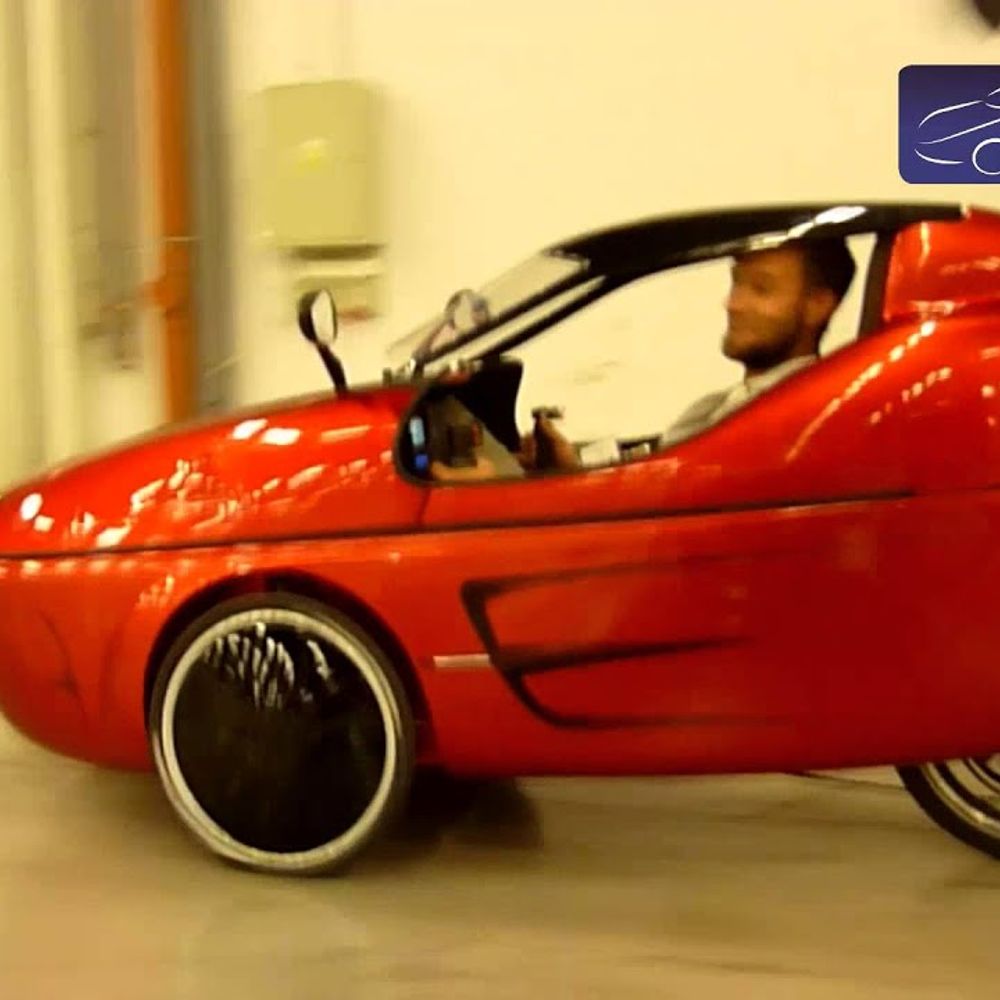
3D printing working prototypes and letting the public test them solves most of this problem by identifying the point where theory meets reality.
In many cases, niche products will never be mainstream. But they're still useful to those who need them. This autonomous wheelchair is an example.
In many cases, niche products will never be mainstream. But they're still useful to those who need them. This autonomous wheelchair is an example.
February 15, 2026 at 6:26 PM
I just want to throw this out to all the "all AI is garbage with no redeeming value" folks. This is not an LLM, of course, but it is AI.
AI is a bubble, but too many people confuse a bad investment strategy with the tech itself. AI will not go away after the bubble bursts any more than websites went away after the dot-com crash. The tech is too useful (though not the panacea the hype mongers would have us believe).
1/3
1/3
February 14, 2026 at 5:45 PM
AI is a bubble, but too many people confuse a bad investment strategy with the tech itself. AI will not go away after the bubble bursts any more than websites went away after the dot-com crash. The tech is too useful (though not the panacea the hype mongers would have us believe).
1/3
1/3
Reposted by Allen Holub

AOC: "Extreme level of wealth inequality leads to social instability and drives authoritarianism, right-wing populism, and really dangerous domestic internal politics. That is a direct outcome of the failure of democracies over decades to deliver."
February 13, 2026 at 5:50 PM
AOC: "Extreme level of wealth inequality leads to social instability and drives authoritarianism, right-wing populism, and really dangerous domestic internal politics. That is a direct outcome of the failure of democracies over decades to deliver."
Many of the comments on this post 👇 have gone of on a I-hate-VCs tangent. (That wasn't the point I was trying to make 😄). I, personally, would avoid VC money if I could—too many strings attached—but most of the software we use daily was VC funded. The system is not ideal, but it does get results.
Of VC-backed products, 78% fail:
42% fail because nobody wants them.
17% because they don't really solve the problem they claim to solve.
19% because they were no different from competing products or couldn't evolve with the market.
And that's just VC-backed companies.
1/2
42% fail because nobody wants them.
17% because they don't really solve the problem they claim to solve.
19% because they were no different from competing products or couldn't evolve with the market.
And that's just VC-backed companies.
1/2
February 14, 2026 at 2:41 AM
Many of the comments on this post 👇 have gone of on a I-hate-VCs tangent. (That wasn't the point I was trying to make 😄). I, personally, would avoid VC money if I could—too many strings attached—but most of the software we use daily was VC funded. The system is not ideal, but it does get results.
Of VC-backed products, 78% fail:
42% fail because nobody wants them.
17% because they don't really solve the problem they claim to solve.
19% because they were no different from competing products or couldn't evolve with the market.
And that's just VC-backed companies.
1/2
42% fail because nobody wants them.
17% because they don't really solve the problem they claim to solve.
19% because they were no different from competing products or couldn't evolve with the market.
And that's just VC-backed companies.
1/2
February 13, 2026 at 10:43 PM
Of VC-backed products, 78% fail:
42% fail because nobody wants them.
17% because they don't really solve the problem they claim to solve.
19% because they were no different from competing products or couldn't evolve with the market.
And that's just VC-backed companies.
1/2
42% fail because nobody wants them.
17% because they don't really solve the problem they claim to solve.
19% because they were no different from competing products or couldn't evolve with the market.
And that's just VC-backed companies.
1/2
In honor of today's 25th anniversary of the Agile Manifesto, I'd like to remind everybody that the very first sentence starts with: "We are uncovering better ways of developing software by doing it…" The critical word in that sentence is "uncovering." They didn't say "uncovered," which would
1/12
1/12
February 11, 2026 at 8:55 PM
In honor of today's 25th anniversary of the Agile Manifesto, I'd like to remind everybody that the very first sentence starts with: "We are uncovering better ways of developing software by doing it…" The critical word in that sentence is "uncovering." They didn't say "uncovered," which would
1/12
1/12
A user story is not a code word for specification or a requirement or any description of work. It is not a ticket. It is not a to-do item. It is not something you can build.
1/5
1/5
February 9, 2026 at 9:04 PM
A user story is not a code word for specification or a requirement or any description of work. It is not a ticket. It is not a to-do item. It is not something you can build.
1/5
1/5
I've been using the term "AI-assisted software engineering" as a counter to "vibe coding," which I see as something else entirely. The term itself is a mouthful, though. Can anybody recommend something more pithy?
February 9, 2026 at 7:11 PM
I've been using the term "AI-assisted software engineering" as a counter to "vibe coding," which I see as something else entirely. The term itself is a mouthful, though. Can anybody recommend something more pithy?
No metric improves product decisions. You do that by talking to your customers.
What does improve product decisions is empathy, feedback, and understanding the market.
What does improve product decisions is empathy, feedback, and understanding the market.
February 9, 2026 at 6:39 PM
No metric improves product decisions. You do that by talking to your customers.
What does improve product decisions is empathy, feedback, and understanding the market.
What does improve product decisions is empathy, feedback, and understanding the market.
I keep reading that quality needs to take a back seat to profit, but I'm beginning to think that the people who say that don't define "quality" the same way I do.
Let's take "well architected" as an example.
1/9
Let's take "well architected" as an example.
1/9
February 9, 2026 at 6:03 PM
I keep reading that quality needs to take a back seat to profit, but I'm beginning to think that the people who say that don't define "quality" the same way I do.
Let's take "well architected" as an example.
1/9
Let's take "well architected" as an example.
1/9
Demanding an estimate guarantees the estimate will not be useful to the business and will always drive costs up.
Software engineers all know that estimates are useless.
1/6
Software engineers all know that estimates are useless.
1/6
February 6, 2026 at 7:15 PM
Demanding an estimate guarantees the estimate will not be useful to the business and will always drive costs up.
Software engineers all know that estimates are useless.
1/6
Software engineers all know that estimates are useless.
1/6
I'm not a fan of story points; I don't use or recommend them.
That said, they can have some value inside the team when used as originally intended. The original XP team invented story points to obfuscate time estimates from management.
1/5
That said, they can have some value inside the team when used as originally intended. The original XP team invented story points to obfuscate time estimates from management.
1/5
February 5, 2026 at 7:59 PM
I'm not a fan of story points; I don't use or recommend them.
That said, they can have some value inside the team when used as originally intended. The original XP team invented story points to obfuscate time estimates from management.
1/5
That said, they can have some value inside the team when used as originally intended. The original XP team invented story points to obfuscate time estimates from management.
1/5
“Too many GPUs make you lazy.” One way to address AI energy usage is to improve (and specialize) the models. Mistral is a good example of that: t.ly/6dTxd
February 5, 2026 at 6:01 PM
“Too many GPUs make you lazy.” One way to address AI energy usage is to improve (and specialize) the models. Mistral is a good example of that: t.ly/6dTxd
The AI/LLM haters are legion, but they have a very real concern about the environmental cost of the tech. To say that all LLMs burn down the planet is simplistic, however. We have to evaluate the vendors and models and choose based on their commitment to clean energy.
1/11
1/11
February 4, 2026 at 6:56 PM
The AI/LLM haters are legion, but they have a very real concern about the environmental cost of the tech. To say that all LLMs burn down the planet is simplistic, however. We have to evaluate the vendors and models and choose based on their commitment to clean energy.
1/11
1/11
Maybe the third time's a charm 😄. Yesterday, I posted that we could eliminate things like country-name dropdowns and replace them with free text, perhaps using an LLM to correct errors.
1/8
1/8

February 2, 2026 at 11:05 PM
Maybe the third time's a charm 😄. Yesterday, I posted that we could eliminate things like country-name dropdowns and replace them with free text, perhaps using an LLM to correct errors.
1/8
1/8
So, a few weeks ago, I posted about those ridiculous country-name drop-downs with 100 or more lines and similar 50-line ones for US state codes. (Don't get me started on year-picker dropdowns with 100+ sequential numbers in them 🙄.
1/6
1/6

February 1, 2026 at 5:40 PM
So, a few weeks ago, I posted about those ridiculous country-name drop-downs with 100 or more lines and similar 50-line ones for US state codes. (Don't get me started on year-picker dropdowns with 100+ sequential numbers in them 🙄.
1/6
1/6
I keep reading posts about people who wrote applications entirely with "zero coding." They say they don't read the code and instead refine the application using increasingly precise prompts. I have some questions:
* Is the application nontrivial?
1/7
* Is the application nontrivial?
1/7
January 31, 2026 at 6:32 PM
I keep reading posts about people who wrote applications entirely with "zero coding." They say they don't read the code and instead refine the application using increasingly precise prompts. I have some questions:
* Is the application nontrivial?
1/7
* Is the application nontrivial?
1/7
If we need to invest $206,756.00 in 40 Mac minis (fully loaded), something's seriously wrong with the way we do our work.

January 26, 2026 at 9:23 PM
If we need to invest $206,756.00 in 40 Mac minis (fully loaded), something's seriously wrong with the way we do our work.
I've noticed that the new way trolls discount ideas that make them uncomfortable is by accusing me of being an LLM. Since these comments almost always refer to me as "that guy" or "buddy," I can't help but wonder if they are LLM-generated 😄.
January 26, 2026 at 8:14 PM
I've noticed that the new way trolls discount ideas that make them uncomfortable is by accusing me of being an LLM. Since these comments almost always refer to me as "that guy" or "buddy," I can't help but wonder if they are LLM-generated 😄.
Reposted by Allen Holub

High school students using AI to write college application essays that are then graded by AI from admissions departments is a great example of how AI usage devalues systems while people can accurately point to “productivity gains” from using AI.
January 26, 2026 at 2:04 AM
High school students using AI to write college application essays that are then graded by AI from admissions departments is a great example of how AI usage devalues systems while people can accurately point to “productivity gains” from using AI.
A few days back, I wrote about how AI can be useful, and that we ignore or reject it at our peril. Paradoxically, as several people pointed out, some not very politely, longer-term productivity in many (maybe most) shops that use AI code generation has gone down. That's absolutely true.
1/8
1/8
January 26, 2026 at 7:59 PM
A few days back, I wrote about how AI can be useful, and that we ignore or reject it at our peril. Paradoxically, as several people pointed out, some not very politely, longer-term productivity in many (maybe most) shops that use AI code generation has gone down. That's absolutely true.
1/8
1/8
How do you measure productivity? Let’s start by talking about the engineering obsession with quantitative metrics. You can easily measure productivity on an assembly line. The faster a car comes off the line at a given quality level, the more productive you are.
1/10
1/10
January 25, 2026 at 7:25 PM
How do you measure productivity? Let’s start by talking about the engineering obsession with quantitative metrics. You can easily measure productivity on an assembly line. The faster a car comes off the line at a given quality level, the more productive you are.
1/10
1/10
This image is a perfect example of everything that is wrong with the usual code-review process. People debate the grammar, even though there's no universe in which the prepositional phrase "of cell phones and earbuds" can be the subject of a sentence.
1/9
1/9

January 23, 2026 at 5:53 PM
This image is a perfect example of everything that is wrong with the usual code-review process. People debate the grammar, even though there's no universe in which the prepositional phrase "of cell phones and earbuds" can be the subject of a sentence.
1/9
1/9