


Alexis Licht
@alexislicht.bsky.social
Geologist, paleobiologist, @CNRS.fr research scientist, co-director of the Climate team at CEREGE @climatecerege.bsky.social, PI of ERC-funded
@dispersal-erc.bsky.social project
@dispersal-erc.bsky.social project
Reposted by Alexis Licht
Big shout-out to Leny Montheil!
His first ERC Dispersal interview is now live and comes with a brand-new paper on how Asian mammals crossed shifting continents during the Eocene (-80 to -40 Ma) doi.org/10.1016/j.ea...
Watch continents move 🌍
His first ERC Dispersal interview is now live and comes with a brand-new paper on how Asian mammals crossed shifting continents during the Eocene (-80 to -40 Ma) doi.org/10.1016/j.ea...
Watch continents move 🌍
February 6, 2026 at 5:32 PM
Big shout-out to Leny Montheil!
His first ERC Dispersal interview is now live and comes with a brand-new paper on how Asian mammals crossed shifting continents during the Eocene (-80 to -40 Ma) doi.org/10.1016/j.ea...
Watch continents move 🌍
His first ERC Dispersal interview is now live and comes with a brand-new paper on how Asian mammals crossed shifting continents during the Eocene (-80 to -40 Ma) doi.org/10.1016/j.ea...
Watch continents move 🌍
The first PhD paper of @benjaminraynaud.bsky.social, also featuring @carinahoorn.bsky.social, @mustafayk.bsky.social, and many others! A dive into the Eocene flora of Balkanatolia.
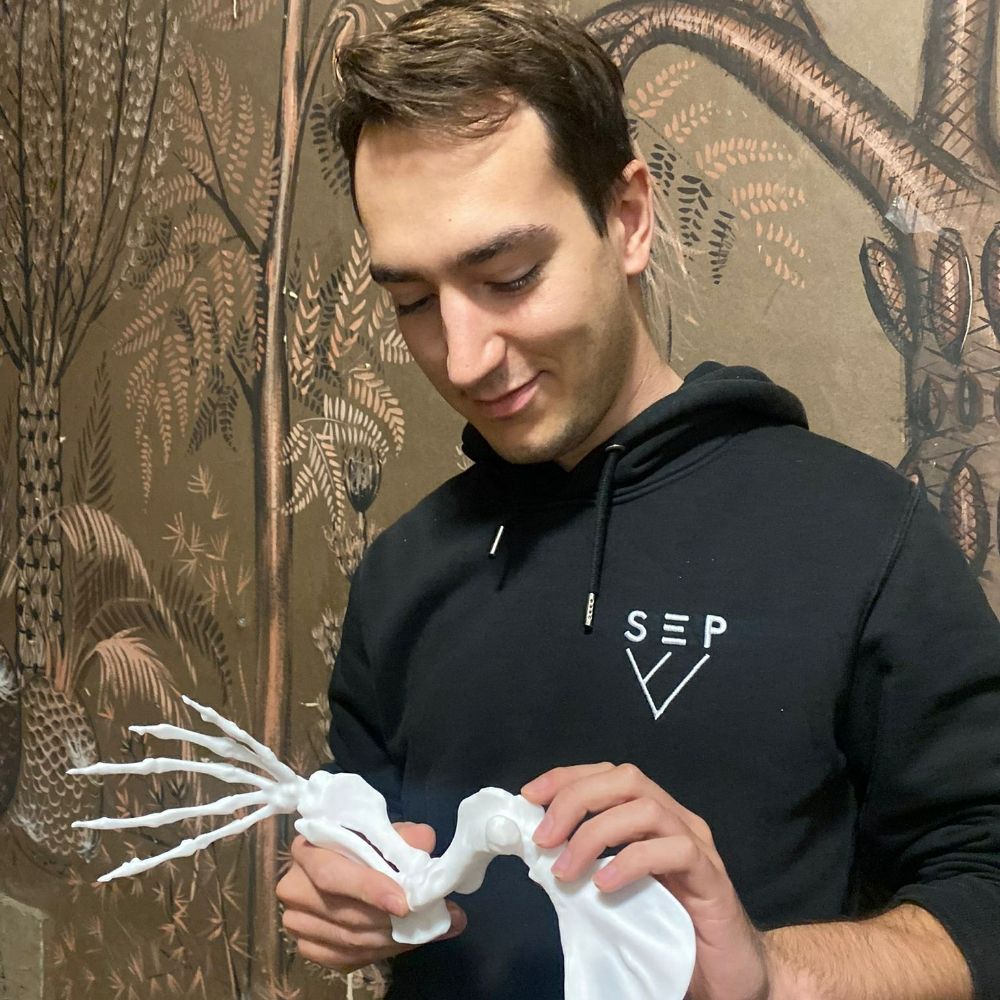
The first article from my PhD has just been published in JAES: "Lutetian swamp-freshwater palynoflora from Bultu-Zile (central Anatolia, Türkiye): implications for Eocene ecosystems of Balkanatolia".
doi.org/10.1016/j.js...
This work has been conducted as part of @dispersal-erc.bsky.social
1/4
doi.org/10.1016/j.js...
This work has been conducted as part of @dispersal-erc.bsky.social
1/4
Redirecting
doi.org
February 4, 2026 at 8:59 AM
The first PhD paper of @benjaminraynaud.bsky.social, also featuring @carinahoorn.bsky.social, @mustafayk.bsky.social, and many others! A dive into the Eocene flora of Balkanatolia.
A new video of the @dispersal-erc.bsky.social featuring the work of Leny Montheil, who has been working with us for 18 months !
🎙️ Our first interview is out!
Meet Leny Montheil, geodynamicist and paleogeography specialist, as he takes us back to the Eocene to explore how primates dispersed across a changing world.
▶️ Watch it now on YouTube
youtu.be/bjzU_UIXseU
Meet Leny Montheil, geodynamicist and paleogeography specialist, as he takes us back to the Eocene to explore how primates dispersed across a changing world.
▶️ Watch it now on YouTube
youtu.be/bjzU_UIXseU

The People Behind the ERC Dispersal project | Scientist Interview #1
YouTube video by CEREGE
youtu.be
February 3, 2026 at 6:31 PM
A new video of the @dispersal-erc.bsky.social featuring the work of Leny Montheil, who has been working with us for 18 months !
Today, I celebrate the end of an experiment. It has been five years, during COVID times, that I set up this climate station in Collias, in southern France. Every first day of the month, I came here to get my rainwater sample. And today was the final sampling day. (1/n)

February 1, 2026 at 3:37 PM
Today, I celebrate the end of an experiment. It has been five years, during COVID times, that I set up this climate station in Collias, in southern France. Every first day of the month, I came here to get my rainwater sample. And today was the final sampling day. (1/n)


The first clumped isotope results from our platform at @cerege.bsky.social. Two long years of hardwork in the lab.
A new preprint from our research group is online!
In this paper, Paul Botté, PhD student in the project at @climatecerege.bsky.social, studied the evolution of continental environmental through the late Eocene and earliest Oligocene in central Anatolia.
egusphere.copernicus.org/preprints/20...
In this paper, Paul Botté, PhD student in the project at @climatecerege.bsky.social, studied the evolution of continental environmental through the late Eocene and earliest Oligocene in central Anatolia.
egusphere.copernicus.org/preprints/20...
January 26, 2026 at 1:16 PM
The first clumped isotope results from our platform at @cerege.bsky.social. Two long years of hardwork in the lab.
Reposted by Alexis Licht
A new preprint from our research group is online!
In this paper, Paul Botté, PhD student in the project at @climatecerege.bsky.social, studied the evolution of continental environmental through the late Eocene and earliest Oligocene in central Anatolia.
egusphere.copernicus.org/preprints/20...
In this paper, Paul Botté, PhD student in the project at @climatecerege.bsky.social, studied the evolution of continental environmental through the late Eocene and earliest Oligocene in central Anatolia.
egusphere.copernicus.org/preprints/20...
January 26, 2026 at 1:12 PM
A new preprint from our research group is online!
In this paper, Paul Botté, PhD student in the project at @climatecerege.bsky.social, studied the evolution of continental environmental through the late Eocene and earliest Oligocene in central Anatolia.
egusphere.copernicus.org/preprints/20...
In this paper, Paul Botté, PhD student in the project at @climatecerege.bsky.social, studied the evolution of continental environmental through the late Eocene and earliest Oligocene in central Anatolia.
egusphere.copernicus.org/preprints/20...
A short video on our work about Eocene primate dispersal, part of the project @dispersal-erc.bsky.social.
And a great opportunity to hear one of the best Frenglish accents around.
And a great opportunity to hear one of the best Frenglish accents around.
How did mammals cross oceans millions of years ago?
Our first video introducing the ERC-funded DISPERSAL project is live on YouTube 🎉
👇 Check it out!
youtu.be/COdGQYkdraw
🎙️ First episode of a series of interviews with the scientists involved. Stay tuned — more interviews coming soon!
Our first video introducing the ERC-funded DISPERSAL project is live on YouTube 🎉
👇 Check it out!
youtu.be/COdGQYkdraw
🎙️ First episode of a series of interviews with the scientists involved. Stay tuned — more interviews coming soon!

🐒🌊 Crossing oceans without boats: the mysterious overwater dispersals of ancient mammals
YouTube video by CEREGE
youtu.be
January 20, 2026 at 3:44 PM
A short video on our work about Eocene primate dispersal, part of the project @dispersal-erc.bsky.social.
And a great opportunity to hear one of the best Frenglish accents around.
And a great opportunity to hear one of the best Frenglish accents around.
Un grand botaniste et un grand penseur de notre rapport à la nature.

Francis Hallé, botaniste et infatigable défenseur des arbres, est mort à l’âge de 87 ans

Francis Hallé, botaniste et infatigable défenseur des arbres, est mort à l’âge de 87 ans
Le dendrologue, spécialiste des forêts tropicales et de l’architecture des arbres, avait réussi, grâce à ses talents de pédagogue et à ses dons de dessinateur, à capter l’attention et la sympathie du grand public. Il est mort le 31 décembre.
www.lemonde.fr
January 4, 2026 at 10:18 AM
Un grand botaniste et un grand penseur de notre rapport à la nature.

Closing out my year with a journal editor shocker 🧵
Checking new manuscripts today I reviewed a paper attributing 2 papers to me I did not write. A daft thing for an author to do of course. But intrigued I web searched up one of the titles and that's when it got real weird...
Checking new manuscripts today I reviewed a paper attributing 2 papers to me I did not write. A daft thing for an author to do of course. But intrigued I web searched up one of the titles and that's when it got real weird...
December 21, 2025 at 11:41 AM
🚨New paper alert🚨 40 million years ago, anthropoid primates and rodents dispersed from East Asia to Africa and South America, across two wide oceans (the Neotethys and the Southern Atlantic). So Which way did they pass? @dispersal-erc.bsky.social (1/n)
doi.org/10.1016/j.ea...
doi.org/10.1016/j.ea...
Redirecting
doi.org
December 16, 2025 at 9:12 AM
🚨New paper alert🚨 40 million years ago, anthropoid primates and rodents dispersed from East Asia to Africa and South America, across two wide oceans (the Neotethys and the Southern Atlantic). So Which way did they pass? @dispersal-erc.bsky.social (1/n)
doi.org/10.1016/j.ea...
doi.org/10.1016/j.ea...
Reposted by Alexis Licht

#exoCeanadvent Day 9: Meet Maxime (again). At @exoceanlab.bsky.social and @climatecerege.bsky.social Maxime has been conducting several experiments focusing on the culture of marine organisms. One project involved culturing foraminifera in the presence of olivine (Mg,Fe)2SiO4, an igneous mineral.

December 9, 2025 at 4:25 PM
#exoCeanadvent Day 9: Meet Maxime (again). At @exoceanlab.bsky.social and @climatecerege.bsky.social Maxime has been conducting several experiments focusing on the culture of marine organisms. One project involved culturing foraminifera in the presence of olivine (Mg,Fe)2SiO4, an igneous mineral.
Reposted by Alexis Licht

🌍🔬 Calling all aspiring palaeontologists!
Here are 10 open PhD opportunities from across the palaeo world 🦖📚
Explore the projects, find deadlines, and start your research journey!
👉 More info on our official website:
palass.org/phd-opportun...
#PhD #PalAss #Opportunity
Here are 10 open PhD opportunities from across the palaeo world 🦖📚
Explore the projects, find deadlines, and start your research journey!
👉 More info on our official website:
palass.org/phd-opportun...
#PhD #PalAss #Opportunity


December 5, 2025 at 9:47 PM
🌍🔬 Calling all aspiring palaeontologists!
Here are 10 open PhD opportunities from across the palaeo world 🦖📚
Explore the projects, find deadlines, and start your research journey!
👉 More info on our official website:
palass.org/phd-opportun...
#PhD #PalAss #Opportunity
Here are 10 open PhD opportunities from across the palaeo world 🦖📚
Explore the projects, find deadlines, and start your research journey!
👉 More info on our official website:
palass.org/phd-opportun...
#PhD #PalAss #Opportunity
🚨New paper alert🚨 The last PhD paper of Clay Campbell, part of the tectonic investigations we did in Turkey to understand the paleogeographic history of #Balkanatolia -- with @megomueller.bsky.social and our paleontologists collaborators.
doi.org/10.1130/B384... (1/n)
doi.org/10.1130/B384... (1/n)
The Late Paleogene Çankırı Basin of Türkiye: The geologic record of lithospheric foundering beneath the Central Anatolian Plateau | GSA Bulletin | GeoScienceWorld
doi.org
December 1, 2025 at 2:44 PM
🚨New paper alert🚨 The last PhD paper of Clay Campbell, part of the tectonic investigations we did in Turkey to understand the paleogeographic history of #Balkanatolia -- with @megomueller.bsky.social and our paleontologists collaborators.
doi.org/10.1130/B384... (1/n)
doi.org/10.1130/B384... (1/n)
Reposted by Alexis Licht

Join us as a postdoc at CEREGE !
If you are looking for a postdoc, here is a chance to join for one year the @cnrs-insu.bsky.social in France (and more locally @cerege.bsky.social / @climatecerege.bsky.social group) www.campusfrance.org/en/mopga-2026

MOPGA 2026: Visiting Fellowship Program for Early Career Researchers | Campus France
www.campusfrance.org
November 18, 2025 at 2:37 PM
Join us as a postdoc at CEREGE !
Reposted by Alexis Licht
How did the hydroclimate of central America responded to Glacial conditions? Find out in the first paper of Elise Luciani, PhD student of @guillaume-leduc.bsky.social in our team!
doi.org/10.1016/j.ep...
doi.org/10.1016/j.ep...
Redirecting
doi.org
November 13, 2025 at 10:32 AM
How did the hydroclimate of central America responded to Glacial conditions? Find out in the first paper of Elise Luciani, PhD student of @guillaume-leduc.bsky.social in our team!
doi.org/10.1016/j.ep...
doi.org/10.1016/j.ep...
The amazing, brilliant, and adventurous professor Jay Quade of @uarizona.bsky.social and @nationalacademies.org passed away peacefully last Friday in Tucson, surrounded by loved ones. He was probably the brightest and most honest scientist and human being I had the opportunity to work with.
October 19, 2025 at 6:35 PM
The amazing, brilliant, and adventurous professor Jay Quade of @uarizona.bsky.social and @nationalacademies.org passed away peacefully last Friday in Tucson, surrounded by loved ones. He was probably the brightest and most honest scientist and human being I had the opportunity to work with.
Reposted by Alexis Licht
🚨Aidez le GREC-SUD !🚨
Le GREC-Sud (porté par l’association AIR climat) a pour objectif de faciliter la décision et le passage à l’action face au changement climatique en région PACA. Pendant 10 ans, il a rédigé une vingtaine de cahiers thématiques tous disponibles gratuitement, www.grec-sud.fr (1/2)
Le GREC-Sud (porté par l’association AIR climat) a pour objectif de faciliter la décision et le passage à l’action face au changement climatique en région PACA. Pendant 10 ans, il a rédigé une vingtaine de cahiers thématiques tous disponibles gratuitement, www.grec-sud.fr (1/2)
GREC-SUD
www.grec-sud.fr
October 15, 2025 at 11:38 AM
🚨Aidez le GREC-SUD !🚨
Le GREC-Sud (porté par l’association AIR climat) a pour objectif de faciliter la décision et le passage à l’action face au changement climatique en région PACA. Pendant 10 ans, il a rédigé une vingtaine de cahiers thématiques tous disponibles gratuitement, www.grec-sud.fr (1/2)
Le GREC-Sud (porté par l’association AIR climat) a pour objectif de faciliter la décision et le passage à l’action face au changement climatique en région PACA. Pendant 10 ans, il a rédigé une vingtaine de cahiers thématiques tous disponibles gratuitement, www.grec-sud.fr (1/2)
A great paper in LeMonde about the work of my friend and colleague Jeremy Martin from @lgltpe.bsky.social, on the discovery of a complete Jurassic crocodile in southern France! www.lemonde.fr/sciences/art...

Un crocodile du Jurassique quasi complet découvert dans l’Hérault
Le squelette de ce fossile de crocodile, datant de 180 millions d’années, a été dévoilé vendredi au Musée de Lodève.
www.lemonde.fr
October 11, 2025 at 3:34 PM
A great paper in LeMonde about the work of my friend and colleague Jeremy Martin from @lgltpe.bsky.social, on the discovery of a complete Jurassic crocodile in southern France! www.lemonde.fr/sciences/art...
Reposted by Alexis Licht
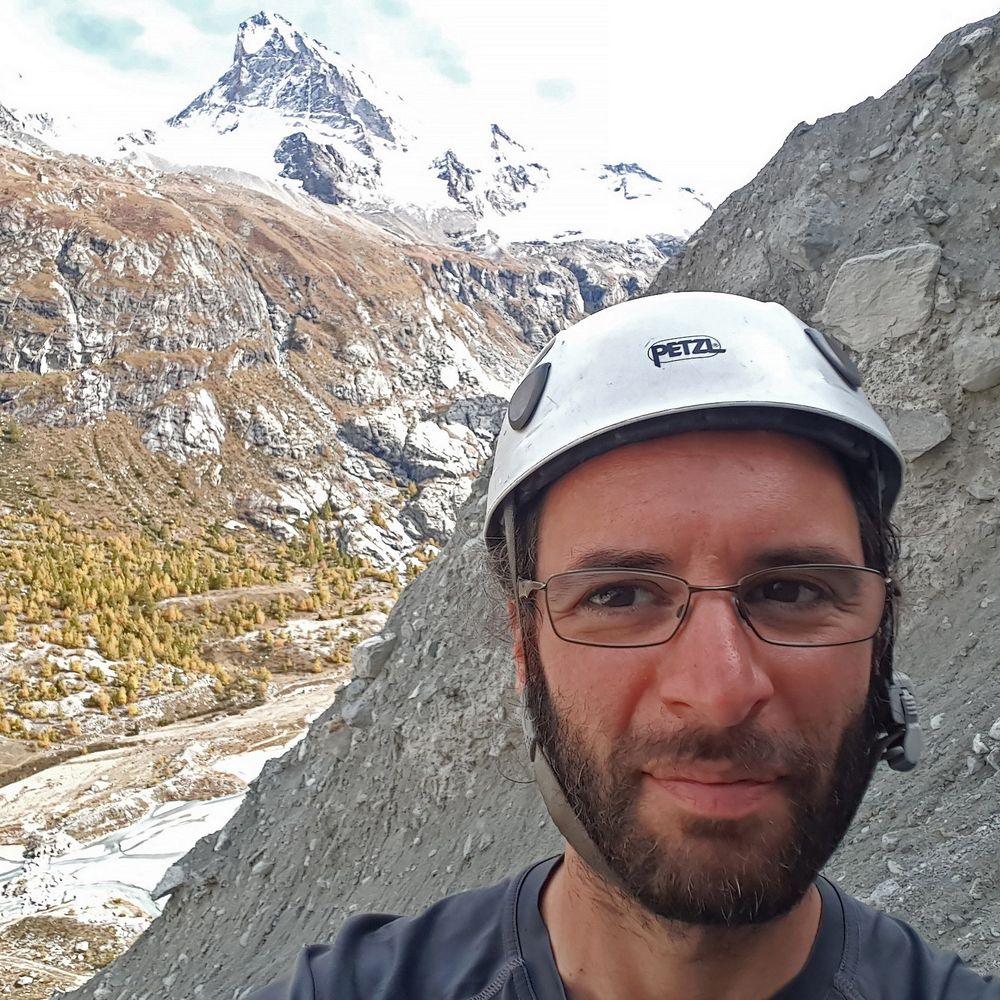
📣 Today is the last day to order your piece of glacier subfossil wood! 🧊
A smelly and friendly companion that will take you on a journey through time and the history of climate and mankind! 🌲💍
It's here:
wemakeit.com/projects/gla...
🙏🙏 Please share widely! 🙏🙏
A smelly and friendly companion that will take you on a journey through time and the history of climate and mankind! 🌲💍
It's here:
wemakeit.com/projects/gla...
🙏🙏 Please share widely! 🙏🙏

October 10, 2025 at 5:44 AM
📣 Today is the last day to order your piece of glacier subfossil wood! 🧊
A smelly and friendly companion that will take you on a journey through time and the history of climate and mankind! 🌲💍
It's here:
wemakeit.com/projects/gla...
🙏🙏 Please share widely! 🙏🙏
A smelly and friendly companion that will take you on a journey through time and the history of climate and mankind! 🌲💍
It's here:
wemakeit.com/projects/gla...
🙏🙏 Please share widely! 🙏🙏
Don't miss the Final!

#MinCup25 Final: After a month of learning and laughter, we’re at the final match to determine the 2025 Mineral Cup Champion! We have blue blades of #kyanite up against optical magician #tugtupite.
Vote: www.mineralcup.org/2025/vote/r5...
Results: www.mineralcup.org/2025/results...
Vote: www.mineralcup.org/2025/vote/r5...
Results: www.mineralcup.org/2025/results...

Vote in 2025 Final Match — Mineral Cup
Click here to vote in Kyanite vs Tugtupite Photo credits: John Sobolewski and Parent Géry
www.mineralcup.org
October 1, 2025 at 7:58 PM
Don't miss the Final!
Reposted by Alexis Licht
🚨 We are hiring - Nature Climate Change is recruiting for a full time editor to join our team. This is a great opportunity for a PhD trained researcher to move into editorial. Applications close 23 October
www.nature.com/naturecareer...
www.nature.com/naturecareer...

Associate or Senior Editor, Nature Climate Change - Shanghai (CN) /Beijing/New York job with Springer Nature Ltd | 12845336
Job Title: Associate or Senior Editor (Nature Climate Change) Organisation: Nature Portfolio Location: Shanghai, Beijing, New York, New Jersey - hy...
www.nature.com
September 30, 2025 at 8:55 AM
🚨 We are hiring - Nature Climate Change is recruiting for a full time editor to join our team. This is a great opportunity for a PhD trained researcher to move into editorial. Applications close 23 October
www.nature.com/naturecareer...
www.nature.com/naturecareer...
🚨postdoc opportunity🚨 come and join our team at @climatecerege.bsky.social to work with @sulpis.bsky.social and his @exoceanlab.bsky.social lab!
Sediments dissolving on the seafloor can act as a long term sink for carbon dioxide emissions. We're bringing it to the lab, deep sea research from the comfort of Southern France!
Postdoctoral position for 2 years available working with @sulpis.bsky.social in the @exoceanlab.bsky.social.
Postdoctoral position for 2 years available working with @sulpis.bsky.social in the @exoceanlab.bsky.social.

🌟 Postdoc Opportunity in Marine Biogeochemistry at CNRS-CEREGE!
🚢 Are you a passionate researcher ready to tackle climate change? Dive into the ERC-funded Deep-C project in Aix-en-Provence, France!
⬇️
🚢 Are you a passionate researcher ready to tackle climate change? Dive into the ERC-funded Deep-C project in Aix-en-Provence, France!
⬇️
September 29, 2025 at 5:27 PM
🚨postdoc opportunity🚨 come and join our team at @climatecerege.bsky.social to work with @sulpis.bsky.social and his @exoceanlab.bsky.social lab!
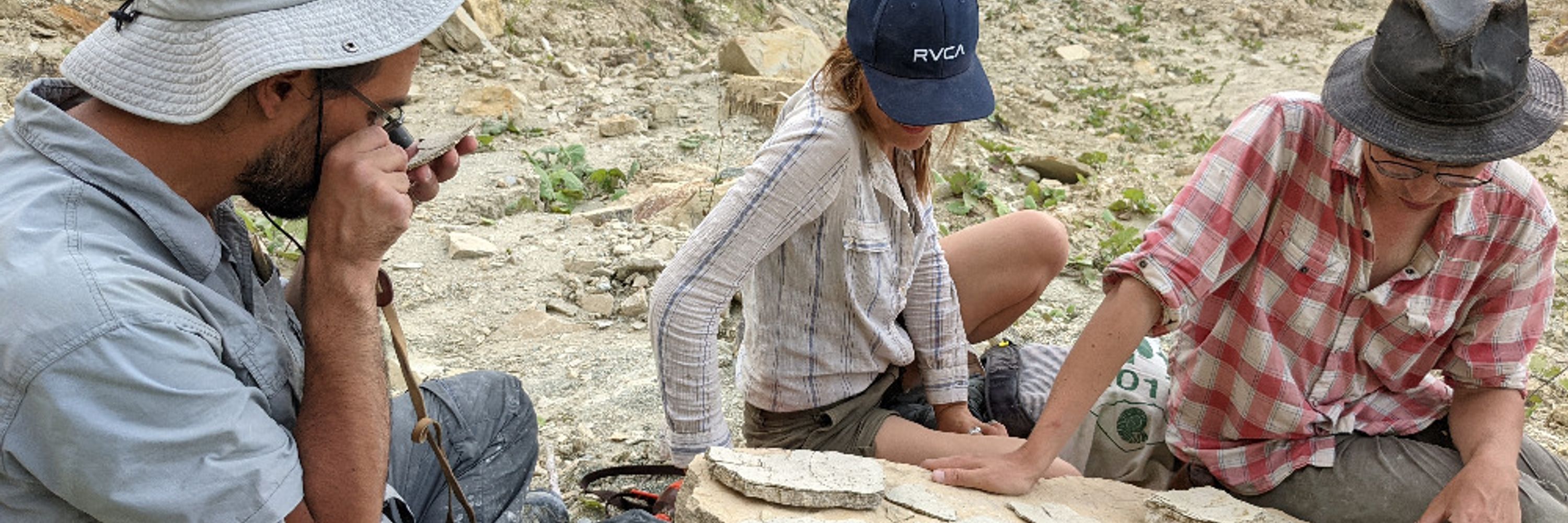
Last days of fieldwork in Anatolia, with Serkan Akkiraz, Paul Botté and @benjaminraynaud.bsky.social! Exploring the Sivas Basin to date the onset of the modern steppe landscape with various stratigraphic and paleobotanical tools. Part of the @dispersal-erc.bsky.social project!


September 28, 2025 at 9:16 PM
Last days of fieldwork in Anatolia, with Serkan Akkiraz, Paul Botté and @benjaminraynaud.bsky.social! Exploring the Sivas Basin to date the onset of the modern steppe landscape with various stratigraphic and paleobotanical tools. Part of the @dispersal-erc.bsky.social project!
Reposted by Alexis Licht
This change without warning is devastating to a bunch of students who had the rug pulled out from under them! A 1-cycle warning, or even a warning a few months ago would have been game changing for a lot of junior scientists.
I can understand why NSF is limiting GRFP apps to undergrads and 1st year grad students .
What I can't why they didn't wait one cycle to implement after making the announcement.
But I do trust that the program officers are doing their best to keep science afloat under extraordinary conditions.
What I can't why they didn't wait one cycle to implement after making the announcement.
But I do trust that the program officers are doing their best to keep science afloat under extraordinary conditions.
September 26, 2025 at 8:16 PM
This change without warning is devastating to a bunch of students who had the rug pulled out from under them! A 1-cycle warning, or even a warning a few months ago would have been game changing for a lot of junior scientists.