



Reposted by Ayush Raman
To the top of the "to-read" list. Looks like a heroic amount of work from the Hahn lab (large-scale ChEC-seq compendium!) www.nature.com/articles/s41...
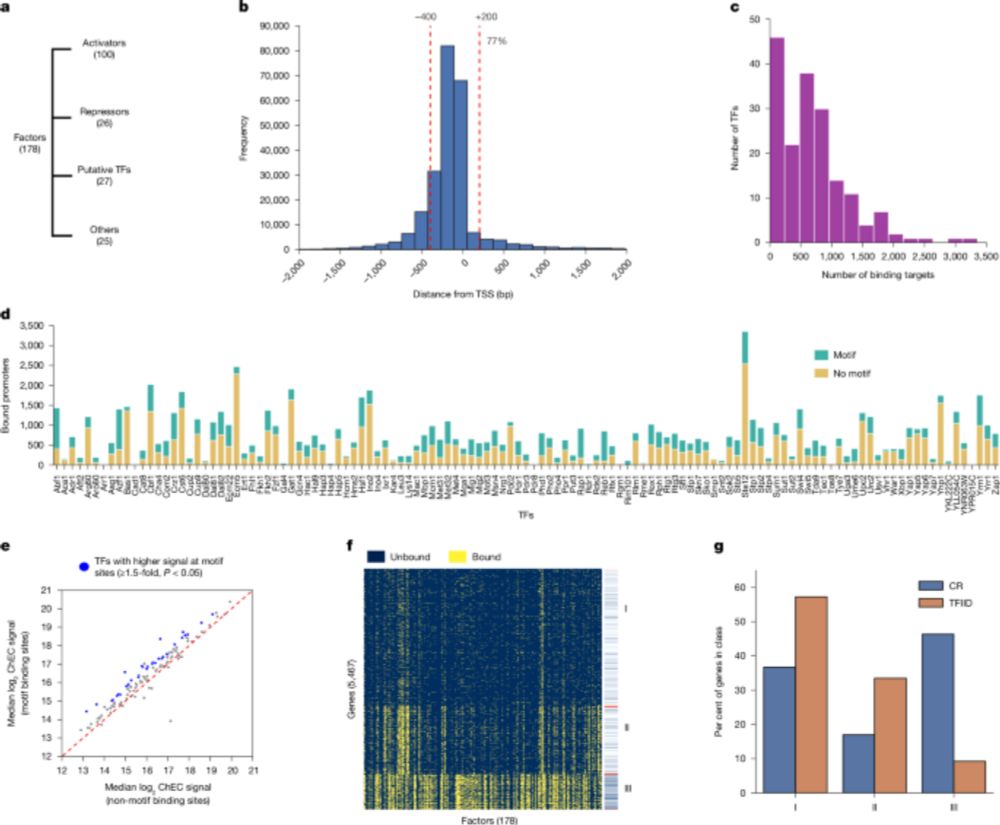
Low overlap of transcription factor DNA binding and regulatory targets - Nature
A near-complete survey of transcription factor activities in Saccharomyces cerevisiae reveals that most transcription factors have both activator and repressor activities and limited overlap between t...
www.nature.com
April 16, 2025 at 4:04 PM
To the top of the "to-read" list. Looks like a heroic amount of work from the Hahn lab (large-scale ChEC-seq compendium!) www.nature.com/articles/s41...
Reposted by Ayush Raman
Disease diagnostics using machine learning of B cell and T cell receptor sequences
www.science.org/doi/10.1126/...
TL;DR: BCRs ARE ALL YOU NEED!
(Well actually .... keep reading) 1/
www.science.org/doi/10.1126/...
TL;DR: BCRs ARE ALL YOU NEED!
(Well actually .... keep reading) 1/

Disease diagnostics using machine learning of B cell and T cell receptor sequences
Clinical diagnosis typically incorporates physical examination, patient history, various laboratory tests, and imaging studies but makes limited use of the human immune system’s own record of antigen ...
www.science.org
February 21, 2025 at 1:12 AM
Disease diagnostics using machine learning of B cell and T cell receptor sequences
www.science.org/doi/10.1126/...
TL;DR: BCRs ARE ALL YOU NEED!
(Well actually .... keep reading) 1/
www.science.org/doi/10.1126/...
TL;DR: BCRs ARE ALL YOU NEED!
(Well actually .... keep reading) 1/
Reposted by Ayush Raman

Epigenetic ageing clocks: statistical methods and emerging computational challenges www.nature.com/articles/s4...
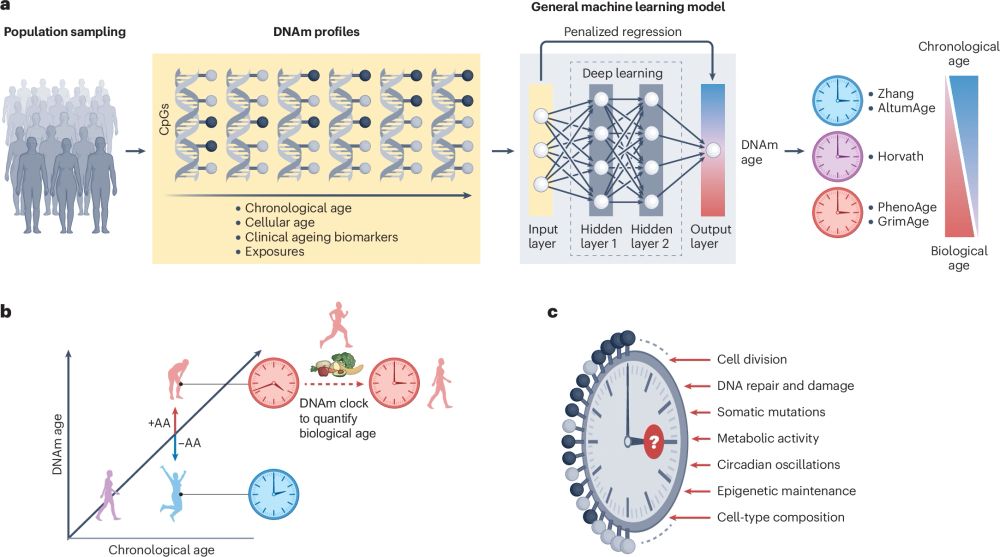
Epigenetic ageing clocks: statistical methods and emerging computational challenges
Nature Reviews Genetics - Epigenetic clocks based on DNA methylation data are machine learning tools used to estimate chronological and biological age. The authors review computational and...
www.nature.com
January 28, 2025 at 3:15 PM
Epigenetic ageing clocks: statistical methods and emerging computational challenges www.nature.com/articles/s4...
Reposted by Ayush Raman

There has been a couple of manuscripts released regarding transcription factor footprinting - or digital genomic footprinting (DGF) as we call it. I would like to put some of the claims, results and conclusions in context, since I have worked and published on this for ~15 years. 1/n
January 24, 2025 at 10:54 PM
There has been a couple of manuscripts released regarding transcription factor footprinting - or digital genomic footprinting (DGF) as we call it. I would like to put some of the claims, results and conclusions in context, since I have worked and published on this for ~15 years. 1/n
Reposted by Ayush Raman
Congrats to the @jbuenrostro.bsky.social lab on this recent paper.
www.nature.com/articles/s41...
Unfortunately, it makes several misleading claims that we disagree with. We will address these technical & other issues with this work over the next few months.
www.nature.com/articles/s41...
Unfortunately, it makes several misleading claims that we disagree with. We will address these technical & other issues with this work over the next few months.

Multiscale footprints reveal the organization of cis-regulatory elements - Nature
We developed PRINT, a computational method that identifies footprints of DNA–protein interactions from bulk and single-cell chromatin accessibility data across multiple scales of protein size.
www.nature.com
January 23, 2025 at 7:18 PM
Congrats to the @jbuenrostro.bsky.social lab on this recent paper.
www.nature.com/articles/s41...
Unfortunately, it makes several misleading claims that we disagree with. We will address these technical & other issues with this work over the next few months.
www.nature.com/articles/s41...
Unfortunately, it makes several misleading claims that we disagree with. We will address these technical & other issues with this work over the next few months.
Reposted by Ayush Raman
Here we describe an unsupervised deep-learning framework for the generation of low-dimensional latent spaces for gene-expression data from 50,211 transcriptomes across 18 human cancers. www.nature.com/articles/s4...

Deep profiling of gene expression across 18 human cancers
Nature Biomedical Engineering - Using unsupervised deep learning to generate low-dimensional latent spaces for gene-expression data can unveil biological insight across cancers.
www.nature.com
January 10, 2025 at 3:15 PM
Here we describe an unsupervised deep-learning framework for the generation of low-dimensional latent spaces for gene-expression data from 50,211 transcriptomes across 18 human cancers. www.nature.com/articles/s4...
Reposted by Ayush Raman
Happy New Year everyone. I having pleasing maths to share (courtesy of my 18yo who saw it on insta). 2025 is the only square this century! 🤓

January 1, 2025 at 10:05 AM
Happy New Year everyone. I having pleasing maths to share (courtesy of my 18yo who saw it on insta). 2025 is the only square this century! 🤓
Reposted by Ayush Raman
Our ChromBPNet preprint out!
www.biorxiv.org/content/10.1...
Huge congrats to Anusri! This was quite a slog (for both of us) but we r very proud of this one! It is a long read but worth it IMHO. Methods r in the supp. materials. Bluetorial coming soon below 1/
www.biorxiv.org/content/10.1...
Huge congrats to Anusri! This was quite a slog (for both of us) but we r very proud of this one! It is a long read but worth it IMHO. Methods r in the supp. materials. Bluetorial coming soon below 1/
December 25, 2024 at 11:48 PM
Our ChromBPNet preprint out!
www.biorxiv.org/content/10.1...
Huge congrats to Anusri! This was quite a slog (for both of us) but we r very proud of this one! It is a long read but worth it IMHO. Methods r in the supp. materials. Bluetorial coming soon below 1/
www.biorxiv.org/content/10.1...
Huge congrats to Anusri! This was quite a slog (for both of us) but we r very proud of this one! It is a long read but worth it IMHO. Methods r in the supp. materials. Bluetorial coming soon below 1/
Reposted by Ayush Raman

Very cool paper. Something I have always been curious about is the extent to which rare burden trait-specific genes are themselves regulators of pleiotropic genes. I.e. the genes on the bottom are TFs for the variants on the top.

December 18, 2024 at 3:15 PM
Very cool paper. Something I have always been curious about is the extent to which rare burden trait-specific genes are themselves regulators of pleiotropic genes. I.e. the genes on the bottom are TFs for the variants on the top.
Reposted by Ayush Raman
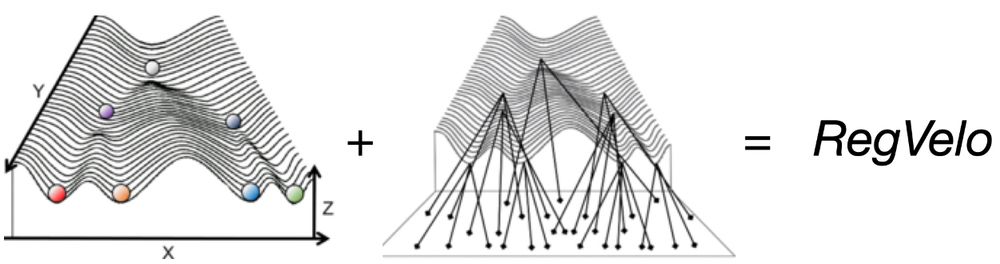
1/🚀 Excited to share RegVelo, our new cell model combining RNA velocity with gene regulatory network (GRN) dynamics to model cellular changes and predict in silico perturbations. Here's how it works and why it matters! 🧵👇
biorxiv.org/content/10.1101/2024.12.11.627935v1
biorxiv.org/content/10.1101/2024.12.11.627935v1
December 12, 2024 at 2:48 PM
1/🚀 Excited to share RegVelo, our new cell model combining RNA velocity with gene regulatory network (GRN) dynamics to model cellular changes and predict in silico perturbations. Here's how it works and why it matters! 🧵👇
biorxiv.org/content/10.1101/2024.12.11.627935v1
biorxiv.org/content/10.1101/2024.12.11.627935v1
Doctors/hospitals should be equally blamed from this idiotic move.

Blue Cross Blue Shield in Connecticut, New York and Missouri has declared it will no longer pay for anesthesia for the full length of some surgeries.
It the procedure goes over a certain time, anesthesia will not be covered for the duration.
www.asahq.org/about-asa/ne...
It the procedure goes over a certain time, anesthesia will not be covered for the duration.
www.asahq.org/about-asa/ne...

Anthem Blue Cross Blue Shield Won’t Pay for the Complete Duration of Anesthesia for Patients’ Surgical Procedures
In an unprecedented move, Anthem Blue Cross Blue Shield plans representing Connecticut, New York and Missouri have unilaterally declared it will no longer pay for anesthesia care if the surgery or pro...
www.asahq.org
December 4, 2024 at 10:40 PM
Doctors/hospitals should be equally blamed from this idiotic move.
Congratulations to the authors @rothbartlab.bsky.social, shows the role of UHRF1 in the redistribution of H3K9me3 following DNA hypomethylation, a lingering question in the field and may have implications for the field of aging.
www.cell.com/molecular-ce...
www.cell.com/molecular-ce...

DNA hypomethylation promotes UHRF1-and SUV39H1/H2-dependent crosstalk between H3K18ub and H3K9me3 to reinforce heterochromatin states
Liu et al. report that DNMT1 inhibition causes transient accumulation of hemi-methylated DNA at CpG islands, which stimulates UHRF1-mediated H3K18ub. This enhances SUV39H1/H2 activity, nucleates new H3K9me3 domains, and impedes PRC2 activity at DNA-methylation-silenced TSG promoters. Targeting this previously unrecognized H3K18ub-H3K9me3 crosstalk offers new strategies to enhance DNMT1 inhibitor therapy.
www.cell.com
December 4, 2024 at 5:41 PM
Congratulations to the authors @rothbartlab.bsky.social, shows the role of UHRF1 in the redistribution of H3K9me3 following DNA hypomethylation, a lingering question in the field and may have implications for the field of aging.
www.cell.com/molecular-ce...
www.cell.com/molecular-ce...