




Héctor Miranda-Cebrián
@hector-m.bsky.social
PhD, Ecologist
CIDE - CSIC
Plants, R & Stats
Environmental science
61%
Geography
15%


I'm teaching Statistical Rethinking again starting Jan 2026. This time with live lectures, divided into Beginner and Experienced sections. Will be a lot more work for me, but I hope much better for students.
I will record lectures & all will be found at this link: github.com/rmcelreath/s...
I will record lectures & all will be found at this link: github.com/rmcelreath/s...

Sam England
@samjakeengland.bsky.social
· Jul 24
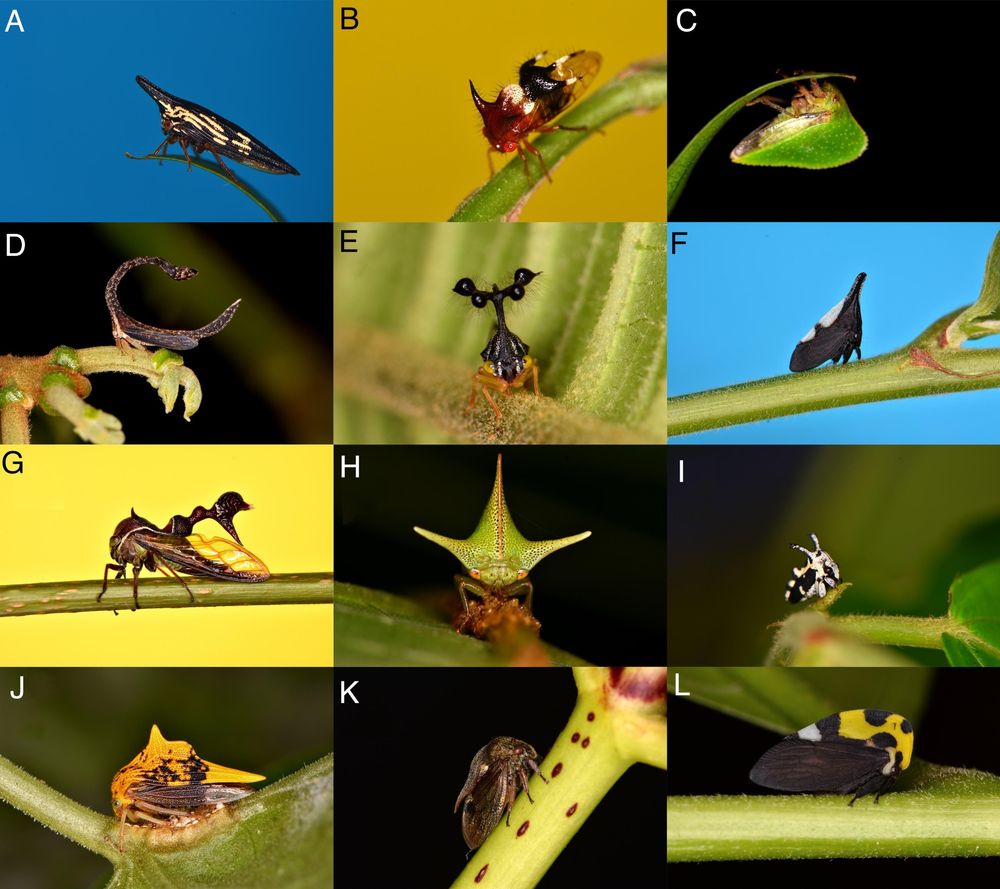
Electroreception in treehoppers: How extreme morphologies can increase electrical sensitivity | PNAS
The link between form and function of an organism’s morphology is usually apparent
or intuitive. However, some clades of organisms show remarkable ...
doi.org
Why do treehoppers look so weird?! Our latest paper, out this week in @pnas.org, suggests a perhaps unexpected reason - static electricity ⚡ We show that treehoppers can detect the electrostatic cues of predators and that their crazy shapes may boost their electrosensitivity! doi.org/10.1073/pnas...

Tomorrow at 16:00 I'll be at poster station F of @lifewatcheric.bsky.social's conference in Crete showing the first results of the BIOTREND project. Come say hi!

Esta tarde a las 19:00 en la casa de la ciencia de Valencia hablaremos de fenología, cambio global y ciencia ciudadana
Reposted by Héctor Miranda Cebrián


Hay una ciencia que sale del laboratorio y se construye entre caminos y preguntas.
HOY te invitamos a vivirla.
🎬 Proyectamos El ritmo de las plantas está cambiando: un documental en clave de blues que muestra la ciencia que camina contigo.
Después de la proyección, ¡no te vayas!! 👇
HOY te invitamos a vivirla.
🎬 Proyectamos El ritmo de las plantas está cambiando: un documental en clave de blues que muestra la ciencia que camina contigo.
Después de la proyección, ¡no te vayas!! 👇

Sampling design and estimates of observation error greatly reduce quasi-extinction probability in plant populations
Estimates of population dynamics and risk of extinction are sensitive to both mean rates of annual change and also the variation in these rates caused…
www.sciencedirect.com
After a year-long reviewing process, I am happy to announce our latest paper. We explore how observation error biases extinction probability in more than 150 plant populations monitored through a community science program www.sciencedirect.com/science/arti...