




Zvi Hasnes Beninson
@zvihb.bsky.social
PhD candidate at Tel Aviv University. History & philosophy of biology. Studying formal models and the assumptions they embody.
https://philpeople.org/profiles/zvi-h-hasnes-beninson
https://www.researchgate.net/profile/Zvi-Hasnes-Beninson
https://philpeople.org/profiles/zvi-h-hasnes-beninson
https://www.researchgate.net/profile/Zvi-Hasnes-Beninson
Congratulations Alejandro! 👏👏👏
August 21, 2025 at 2:53 PM
Congratulations Alejandro! 👏👏👏
Primatology might also work…
August 10, 2025 at 11:55 AM
Primatology might also work…
Model-formulation
June 27, 2025 at 11:04 AM
Model-formulation
Congratulations! These are wonderful news. Well done. 👏👏👏👏👏👏👏👏
February 14, 2025 at 9:56 PM
Congratulations! These are wonderful news. Well done. 👏👏👏👏👏👏👏👏
The timing of their publication is entirely fortuitous.
The paper on FECs was (on my part) a first stab at the issue. I think that there is a lot more to unpack there.
If you have a related idea that you would like to develop, please feel free to dm me. I’ll be happy to collaborate.
The paper on FECs was (on my part) a first stab at the issue. I think that there is a lot more to unpack there.
If you have a related idea that you would like to develop, please feel free to dm me. I’ll be happy to collaborate.
November 26, 2024 at 4:22 PM
The timing of their publication is entirely fortuitous.
The paper on FECs was (on my part) a first stab at the issue. I think that there is a lot more to unpack there.
If you have a related idea that you would like to develop, please feel free to dm me. I’ll be happy to collaborate.
The paper on FECs was (on my part) a first stab at the issue. I think that there is a lot more to unpack there.
If you have a related idea that you would like to develop, please feel free to dm me. I’ll be happy to collaborate.
Finally, I will add that my advisor @duhe.bsky.social and I are thinking about the distinction between good and bad science, and I am under the impression that such differentiation involves some normative dimension. I cannot speak for Ehud, but for me normativity is not a naughty word.
Fin
Fin
November 20, 2024 at 1:08 PM
Finally, I will add that my advisor @duhe.bsky.social and I are thinking about the distinction between good and bad science, and I am under the impression that such differentiation involves some normative dimension. I cannot speak for Ehud, but for me normativity is not a naughty word.
Fin
Fin
Third, while your suggestion is plausible, I still think that it is shifts the circularity to the normative domain. That does not mean that this sort of defusing is worthless, but it does mean that not all justifications are necessarily done on epistemic grounds.
5/?
5/?
November 20, 2024 at 1:03 PM
Third, while your suggestion is plausible, I still think that it is shifts the circularity to the normative domain. That does not mean that this sort of defusing is worthless, but it does mean that not all justifications are necessarily done on epistemic grounds.
5/?
5/?
That there is a way for thick concepts to play central role within the regular practices in science, and that such regular practices (model formulation for one) could be mechanisms to make such introductions. In this sense, psychological unacceptability becomes a valid consideration.
4/?
4/?
November 20, 2024 at 12:54 PM
That there is a way for thick concepts to play central role within the regular practices in science, and that such regular practices (model formulation for one) could be mechanisms to make such introductions. In this sense, psychological unacceptability becomes a valid consideration.
4/?
4/?
Second, regarding agents seeking to make their thick concepts coherent, this is not far removed from my idea that they seek to introduce their commitment to their communities such that the community adopts these commitments as standards. My point was that this introduction means …
3/?
3/?
November 20, 2024 at 12:50 PM
Second, regarding agents seeking to make their thick concepts coherent, this is not far removed from my idea that they seek to introduce their commitment to their communities such that the community adopts these commitments as standards. My point was that this introduction means …
3/?
3/?
For me, the circularity of FEPs is one of the features that gives them their compelling power over their adherents. While it may be a problem, I don’t know that there is a solution, and whether such solution is indeed epistemic. So non-epistemic justification seems like a reasonable approach.
2/?
2/?
November 20, 2024 at 12:47 PM
For me, the circularity of FEPs is one of the features that gives them their compelling power over their adherents. While it may be a problem, I don’t know that there is a solution, and whether such solution is indeed epistemic. So non-epistemic justification seems like a reasonable approach.
2/?
2/?
Thank you for that, Angela. There is a lot to unpack in your replies, and I will address them as best I can.
First, Michael Lynch is probably more bothered than I am from the circularity problem. For him, it is important that this issue is solved, and solved on epistemological grounds.
1/?
First, Michael Lynch is probably more bothered than I am from the circularity problem. For him, it is important that this issue is solved, and solved on epistemological grounds.
1/?
November 20, 2024 at 12:43 PM
Thank you for that, Angela. There is a lot to unpack in your replies, and I will address them as best I can.
First, Michael Lynch is probably more bothered than I am from the circularity problem. For him, it is important that this issue is solved, and solved on epistemological grounds.
1/?
First, Michael Lynch is probably more bothered than I am from the circularity problem. For him, it is important that this issue is solved, and solved on epistemological grounds.
1/?
2/2 Since you brought up these questions, I allow myself a degree of self promotion; my previous paper (published three weeks ago) deals specifically with loop analysis and the way it embodies a dialectical approach. Available here:
link.springer.com/article/10.1...
link.springer.com/article/10.1...
Epistemic commitments have no “Off” button: on the embodiment of commitments by way of model formulation - Biology & Philosophy
The current paper examines how a commitment to a principle, adhered to by an individual agent, becomes an accepted standard of an epistemic community. Addressing this question requires three steps: fi...
link.springer.com
November 20, 2024 at 9:51 AM
2/2 Since you brought up these questions, I allow myself a degree of self promotion; my previous paper (published three weeks ago) deals specifically with loop analysis and the way it embodies a dialectical approach. Available here:
link.springer.com/article/10.1...
link.springer.com/article/10.1...
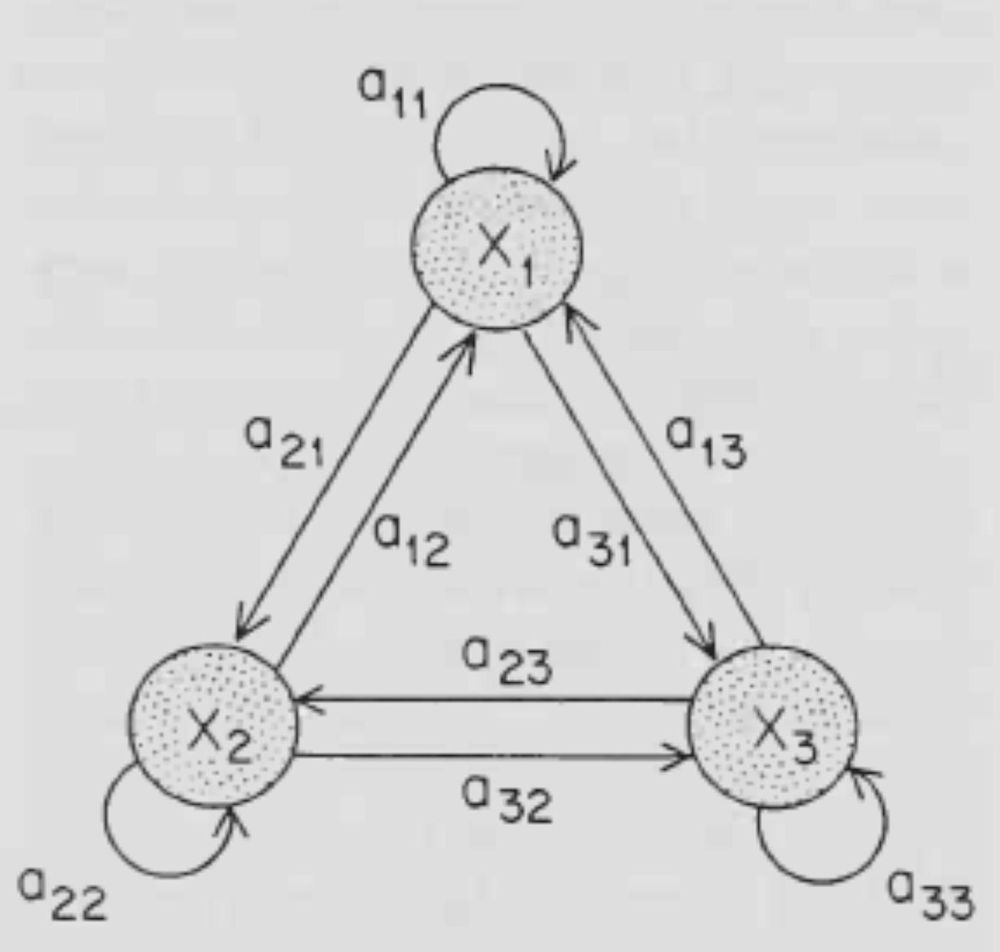
1/2 The grain of some of these questions does go back to the Strategy paper, and Levins was also concerned about making this complexity tractable. The approach he developed after 1966 to dealing with this problem was loop analysis.
November 20, 2024 at 9:46 AM
1/2 The grain of some of these questions does go back to the Strategy paper, and Levins was also concerned about making this complexity tractable. The approach he developed after 1966 to dealing with this problem was loop analysis.
Thank you very much Daniel. Very happy to make your digital acquaintance 😎
November 19, 2024 at 10:22 AM
Thank you very much Daniel. Very happy to make your digital acquaintance 😎