




Stephen Watson
@watson7t.bsky.social
Reposted by Stephen Watson

Check out the vibrant Orion nebula ... Stephen Montag in Livingston, New Jersey, took this photo of the beautiful #Orionnebula last Friday. Thank you, Brian! 🌌🔭📸
buff.ly/EdbQ9BB
Go to EarthSky Community Photos to see more great images, and submit your own recent photos:
buff.ly/DpWJ0d0
buff.ly/EdbQ9BB
Go to EarthSky Community Photos to see more great images, and submit your own recent photos:
buff.ly/DpWJ0d0

December 2, 2025 at 1:00 AM
Check out the vibrant Orion nebula ... Stephen Montag in Livingston, New Jersey, took this photo of the beautiful #Orionnebula last Friday. Thank you, Brian! 🌌🔭📸
buff.ly/EdbQ9BB
Go to EarthSky Community Photos to see more great images, and submit your own recent photos:
buff.ly/DpWJ0d0
buff.ly/EdbQ9BB
Go to EarthSky Community Photos to see more great images, and submit your own recent photos:
buff.ly/DpWJ0d0
Reposted by Stephen Watson

#otd in #space: In 2013 #china launched its first #rover, Yutu, to the #moon! Read more about what inspired the rover's name and its mission goals on our #website
www.space.com/39251-on-thi...
#spacehistory #onthisdayinspace #onthisday #history #science #spacescience #astronomy #astronomyfacts
www.space.com/39251-on-thi...
#spacehistory #onthisdayinspace #onthisday #history #science #spacescience #astronomy #astronomyfacts
December 1, 2025 at 2:32 PM
#otd in #space: In 2013 #china launched its first #rover, Yutu, to the #moon! Read more about what inspired the rover's name and its mission goals on our #website
www.space.com/39251-on-thi...
#spacehistory #onthisdayinspace #onthisday #history #science #spacescience #astronomy #astronomyfacts
www.space.com/39251-on-thi...
#spacehistory #onthisdayinspace #onthisday #history #science #spacescience #astronomy #astronomyfacts
Reposted by Stephen Watson

Scientists Detect “Switchback” Phenomenon In Earth’s Magnetosphere For The First Time
www.iflscience.com/scientists-d...
www.iflscience.com/scientists-d...

Scientists Detect “Switchback” Phenomenon In Earth’s Magnetosphere For The First Time
A probe detected a zigzag-like disturbance in the magnetic frontier between the Earth and the Sun.
www.iflscience.com
December 1, 2025 at 12:30 PM
Scientists Detect “Switchback” Phenomenon In Earth’s Magnetosphere For The First Time
www.iflscience.com/scientists-d...
www.iflscience.com/scientists-d...
Reposted by Stephen Watson

Putting a spiral galaxy in your TL just for the sake of it! 🔭
This is the NGC-4569/M90 galaxy as seen by Hubble and processed by me. It is located some 60M light years away from us!
HD: flic.kr/p/2rJqjVV
This is the NGC-4569/M90 galaxy as seen by Hubble and processed by me. It is located some 60M light years away from us!
HD: flic.kr/p/2rJqjVV

December 1, 2025 at 3:59 PM
Putting a spiral galaxy in your TL just for the sake of it! 🔭
This is the NGC-4569/M90 galaxy as seen by Hubble and processed by me. It is located some 60M light years away from us!
HD: flic.kr/p/2rJqjVV
This is the NGC-4569/M90 galaxy as seen by Hubble and processed by me. It is located some 60M light years away from us!
HD: flic.kr/p/2rJqjVV
Reposted by Stephen Watson
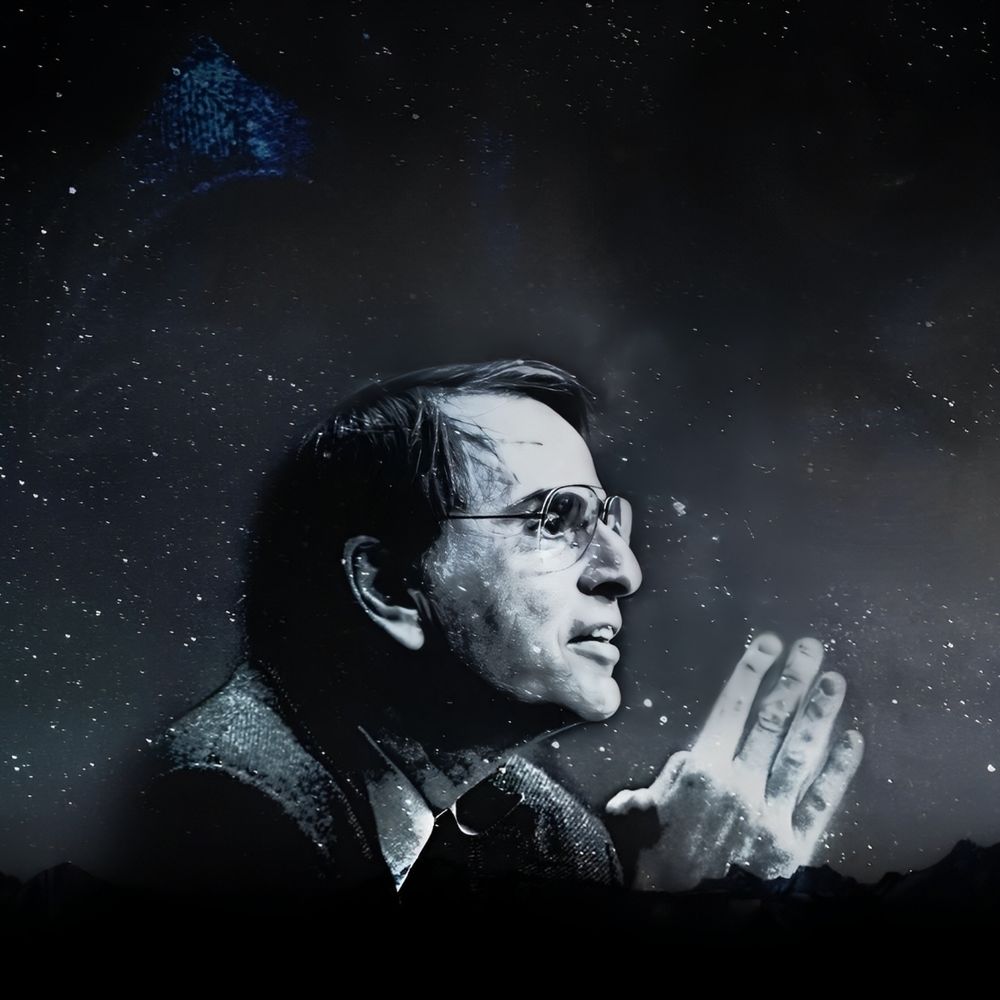
“Every carbon atom in every living thing on the planet was produced in the heart of a dying star.”
― Brian Cox, Wonders of the Universe
― Brian Cox, Wonders of the Universe

November 25, 2025 at 11:27 PM
“Every carbon atom in every living thing on the planet was produced in the heart of a dying star.”
― Brian Cox, Wonders of the Universe
― Brian Cox, Wonders of the Universe
Reposted by Stephen Watson


Reposted by Stephen Watson

Using tracking data, scientists found African penguins are far more likely to forage near fishing vessels in years when fish are scarce. This intensified overlap, measured by a new “overlap intensity” metric, is linked to steep population declines.
How can we help the penguins? 🐧
How can we help the penguins? 🐧

November 30, 2025 at 6:24 PM
Using tracking data, scientists found African penguins are far more likely to forage near fishing vessels in years when fish are scarce. This intensified overlap, measured by a new “overlap intensity” metric, is linked to steep population declines.
How can we help the penguins? 🐧
How can we help the penguins? 🐧
Reposted by Stephen Watson

Tonight’s waxing gibbous #Moon features the sunlit scarp of the lunar Jura Mountains on the west side of Sinus Iridum, the Bay of Rainbows, which can look like a detached piece of the #Moon. It is also known as the "Golden Handle." #astronomy

December 1, 2025 at 3:32 AM
Tonight’s waxing gibbous #Moon features the sunlit scarp of the lunar Jura Mountains on the west side of Sinus Iridum, the Bay of Rainbows, which can look like a detached piece of the #Moon. It is also known as the "Golden Handle." #astronomy
Reposted by Stephen Watson

Comet Churyumov-Gerasimenko - Rosetta - From Aster Cowart (terrasabaea.bsky.social) - https://flic.kr/p/FWXDoV

November 30, 2025 at 12:00 PM
Comet Churyumov-Gerasimenko - Rosetta - From Aster Cowart (terrasabaea.bsky.social) - https://flic.kr/p/FWXDoV
Reposted by Stephen Watson
Saturn - From Gordan Ugarković (ugordan.bsky.social) - https://flic.kr/p/8FBpk9

November 29, 2025 at 8:00 PM
Saturn - From Gordan Ugarković (ugordan.bsky.social) - https://flic.kr/p/8FBpk9
Reposted by Stephen Watson
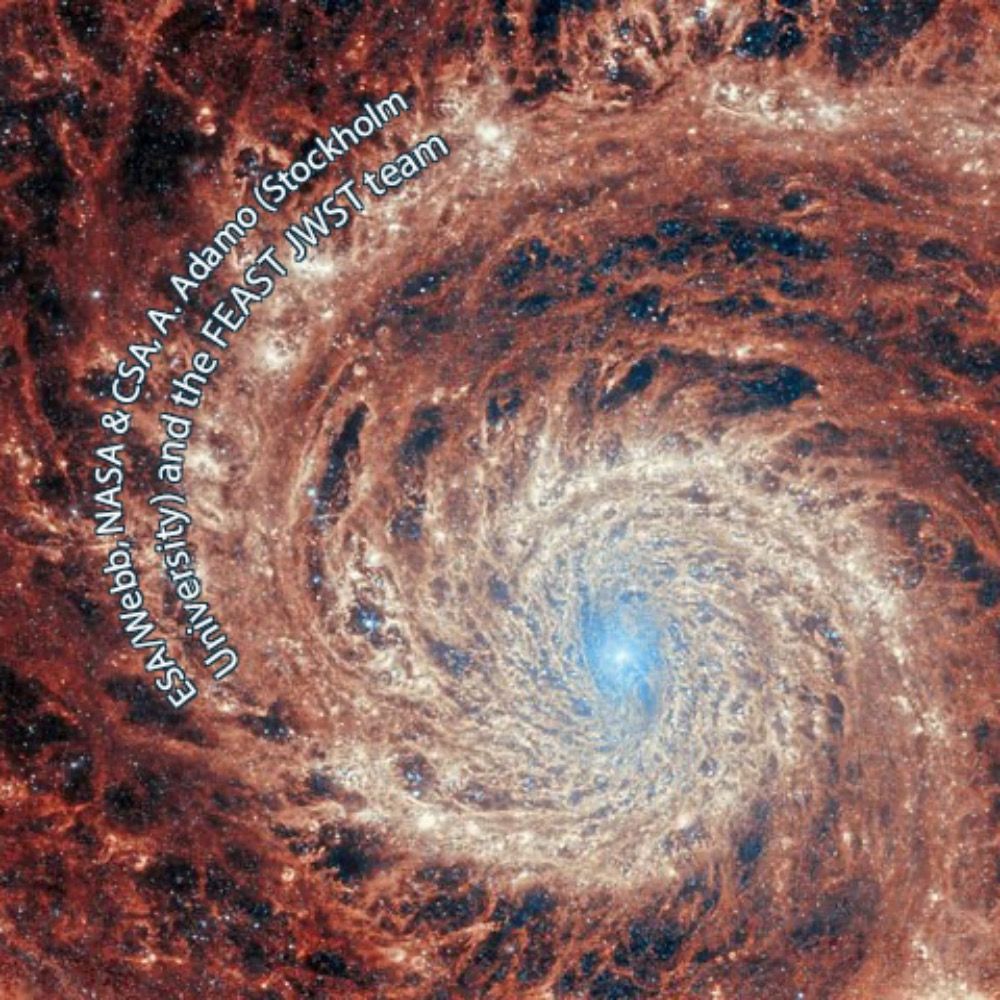
A barred spiral galaxy, observed with the Apache Point 2.5m Telescope in the SDSS survey.
It is at redshift 0.039 (lookback time 549.7 million years) with coordinates (18.36340, 0.15248).
51 volunteers classified this galaxy in Galaxy Zoo 2.
It is at redshift 0.039 (lookback time 549.7 million years) with coordinates (18.36340, 0.15248).
51 volunteers classified this galaxy in Galaxy Zoo 2.

November 30, 2025 at 5:19 AM
A barred spiral galaxy, observed with the Apache Point 2.5m Telescope in the SDSS survey.
It is at redshift 0.039 (lookback time 549.7 million years) with coordinates (18.36340, 0.15248).
51 volunteers classified this galaxy in Galaxy Zoo 2.
It is at redshift 0.039 (lookback time 549.7 million years) with coordinates (18.36340, 0.15248).
51 volunteers classified this galaxy in Galaxy Zoo 2.
Reposted by Stephen Watson
A spiral galaxy, observed with the Apache Point 2.5m Telescope in the SDSS survey.
It is at redshift 0.028 (lookback time 397.0 million years) with coordinates (173.18857, 25.04905).
37 volunteers classified this galaxy in Galaxy Zoo 2.
It is at redshift 0.028 (lookback time 397.0 million years) with coordinates (173.18857, 25.04905).
37 volunteers classified this galaxy in Galaxy Zoo 2.

November 30, 2025 at 7:17 AM
A spiral galaxy, observed with the Apache Point 2.5m Telescope in the SDSS survey.
It is at redshift 0.028 (lookback time 397.0 million years) with coordinates (173.18857, 25.04905).
37 volunteers classified this galaxy in Galaxy Zoo 2.
It is at redshift 0.028 (lookback time 397.0 million years) with coordinates (173.18857, 25.04905).
37 volunteers classified this galaxy in Galaxy Zoo 2.
Reposted by Stephen Watson
A barred spiral galaxy with a ring, observed with the Apache Point 2.5m Telescope in the SDSS survey.
It is at redshift 0.028 (lookback time 397.0 million years) with coordinates (235.09312, 7.28323).
38 volunteers classified this galaxy in Galaxy Zoo 2.
It is at redshift 0.028 (lookback time 397.0 million years) with coordinates (235.09312, 7.28323).
38 volunteers classified this galaxy in Galaxy Zoo 2.

November 30, 2025 at 9:18 AM
A barred spiral galaxy with a ring, observed with the Apache Point 2.5m Telescope in the SDSS survey.
It is at redshift 0.028 (lookback time 397.0 million years) with coordinates (235.09312, 7.28323).
38 volunteers classified this galaxy in Galaxy Zoo 2.
It is at redshift 0.028 (lookback time 397.0 million years) with coordinates (235.09312, 7.28323).
38 volunteers classified this galaxy in Galaxy Zoo 2.
Reposted by Stephen Watson

Reposted by Stephen Watson

'Echoes from the Edge'
Light from a sudden outburst echoes across pre-existing dust shells around V838 Mon, progressively illuminating ever more distant regions.
(Credit: NASA, ESA)
Light from a sudden outburst echoes across pre-existing dust shells around V838 Mon, progressively illuminating ever more distant regions.
(Credit: NASA, ESA)

November 29, 2025 at 10:31 PM
'Echoes from the Edge'
Light from a sudden outburst echoes across pre-existing dust shells around V838 Mon, progressively illuminating ever more distant regions.
(Credit: NASA, ESA)
Light from a sudden outburst echoes across pre-existing dust shells around V838 Mon, progressively illuminating ever more distant regions.
(Credit: NASA, ESA)
Reposted by Stephen Watson
Aayan Shaikh in Sindhudurg, Maharashtra, India, captured this image of the #Orion constellation. Thank you, Aayan!
buff.ly/xkhTjnz
Have a photo of your own to share? Submit it here!
buff.ly/UmUXfzv
buff.ly/xkhTjnz
Have a photo of your own to share? Submit it here!
buff.ly/UmUXfzv

November 29, 2025 at 5:33 PM
Aayan Shaikh in Sindhudurg, Maharashtra, India, captured this image of the #Orion constellation. Thank you, Aayan!
buff.ly/xkhTjnz
Have a photo of your own to share? Submit it here!
buff.ly/UmUXfzv
buff.ly/xkhTjnz
Have a photo of your own to share? Submit it here!
buff.ly/UmUXfzv
Reposted by Stephen Watson

Dr. Souvik Bose focuses on unravelling the dynamics of the solar atmosphere with coordinated high-resolution ground- and space-based observations, using instruments on NASA’s IRIS, SDO and NASA-JAXA’s Hinode missions, among others.
#SETI #NotJustAliens 🧪 🔭
#SETI #NotJustAliens 🧪 🔭


November 29, 2025 at 4:00 PM
Dr. Souvik Bose focuses on unravelling the dynamics of the solar atmosphere with coordinated high-resolution ground- and space-based observations, using instruments on NASA’s IRIS, SDO and NASA-JAXA’s Hinode missions, among others.
#SETI #NotJustAliens 🧪 🔭
#SETI #NotJustAliens 🧪 🔭
Reposted by Stephen Watson

Hey! Check out my latest Substack post, commemorating our fabulous Cassini discoveries at Enceladus on this day, November 27, 20 years ago.
Check it out! It was the day we realized the geophysical significance of what Cassini's instruments had been seeing & detecting since Jan 2005. 📰🔭🚀#planetsci
Check it out! It was the day we realized the geophysical significance of what Cassini's instruments had been seeing & detecting since Jan 2005. 📰🔭🚀#planetsci

Remembering Cassini: The Geysering Basin of Enceladus
November 27, 2025
carolynporco.substack.com
November 28, 2025 at 3:08 AM
Hey! Check out my latest Substack post, commemorating our fabulous Cassini discoveries at Enceladus on this day, November 27, 20 years ago.
Check it out! It was the day we realized the geophysical significance of what Cassini's instruments had been seeing & detecting since Jan 2005. 📰🔭🚀#planetsci
Check it out! It was the day we realized the geophysical significance of what Cassini's instruments had been seeing & detecting since Jan 2005. 📰🔭🚀#planetsci
Reposted by Stephen Watson
The #moon, very early in its waxing #gibbous phase, will float near the steady golden light of Saturn this evening, November 29. They’ll set around midnight.
For more sky events, visit EarthSky’s night sky guide at: buff.ly/vX1n5Cm
For more sky events, visit EarthSky’s night sky guide at: buff.ly/vX1n5Cm

November 29, 2025 at 4:33 PM
The #moon, very early in its waxing #gibbous phase, will float near the steady golden light of Saturn this evening, November 29. They’ll set around midnight.
For more sky events, visit EarthSky’s night sky guide at: buff.ly/vX1n5Cm
For more sky events, visit EarthSky’s night sky guide at: buff.ly/vX1n5Cm
Reposted by Stephen Watson
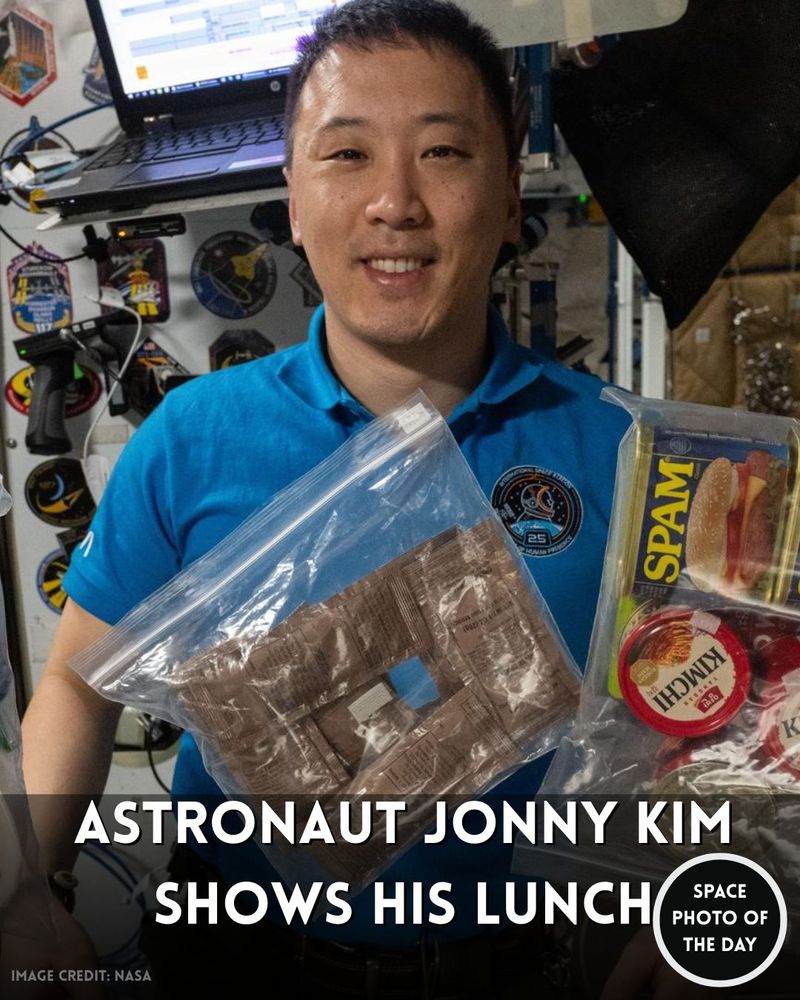
Happy #thanksgiving to all who celebrate! What's for #lunch on the #iss? #astronaut Jonny Kim shows some of the many #spacefood options aboard the International #space #station. Read more on our website.
#image #picoftheday #photo #astronomy #nasa #spacephotos #spacephoto #science
#image #picoftheday #photo #astronomy #nasa #spacephotos #spacephoto #science
November 27, 2025 at 8:00 PM
Happy #thanksgiving to all who celebrate! What's for #lunch on the #iss? #astronaut Jonny Kim shows some of the many #spacefood options aboard the International #space #station. Read more on our website.
#image #picoftheday #photo #astronomy #nasa #spacephotos #spacephoto #science
#image #picoftheday #photo #astronomy #nasa #spacephotos #spacephoto #science
Reposted by Stephen Watson

The team behind Google’s tool for predicting how proteins “fold” won a 2024 Nobel Prize in chemistry. Here's the state of that tech and how it’s being used in health research today. ⬇️

How Alphafold Has Changed Biology Research, 5 Years On
Google's tool for predicting how proteins “fold” turns 5 this year. How is it fitting into biological research—and where is it going?
buff.ly
November 29, 2025 at 1:51 AM
The team behind Google’s tool for predicting how proteins “fold” won a 2024 Nobel Prize in chemistry. Here's the state of that tech and how it’s being used in health research today. ⬇️
Reposted by Stephen Watson
Hubble Servicing Missi#256F - From Goddard Space Flight Center - https://flic.kr/p/2cjpYhs

November 29, 2025 at 2:00 PM
Hubble Servicing Missi#256F - From Goddard Space Flight Center - https://flic.kr/p/2cjpYhs
Reposted by Stephen Watson
A smooth galaxy, observed with the Apache Point 2.5m Telescope in the SDSS survey.
It is at redshift 0.028 (lookback time 397.0 million years) with coordinates (241.37263, 17.92862).
37 volunteers classified this galaxy in Galaxy Zoo 2.
It is at redshift 0.028 (lookback time 397.0 million years) with coordinates (241.37263, 17.92862).
37 volunteers classified this galaxy in Galaxy Zoo 2.

November 29, 2025 at 12:36 PM
A smooth galaxy, observed with the Apache Point 2.5m Telescope in the SDSS survey.
It is at redshift 0.028 (lookback time 397.0 million years) with coordinates (241.37263, 17.92862).
37 volunteers classified this galaxy in Galaxy Zoo 2.
It is at redshift 0.028 (lookback time 397.0 million years) with coordinates (241.37263, 17.92862).
37 volunteers classified this galaxy in Galaxy Zoo 2.
Reposted by Stephen Watson
Spectacular: the spiral arm of galaxy NGC 772, created by tidal interactions with an unruly neighbour!
Credit: International Gemini Observatory/NOIRLab/NSF/AURA - Image processing: T.A. Rector (University of Alaska Anchorage), J. Miller (Gemini Observatory/NSF's NOIRLab), M. Zamani & D. de Martin
Credit: International Gemini Observatory/NOIRLab/NSF/AURA - Image processing: T.A. Rector (University of Alaska Anchorage), J. Miller (Gemini Observatory/NSF's NOIRLab), M. Zamani & D. de Martin

November 29, 2025 at 12:26 AM
Spectacular: the spiral arm of galaxy NGC 772, created by tidal interactions with an unruly neighbour!
Credit: International Gemini Observatory/NOIRLab/NSF/AURA - Image processing: T.A. Rector (University of Alaska Anchorage), J. Miller (Gemini Observatory/NSF's NOIRLab), M. Zamani & D. de Martin
Credit: International Gemini Observatory/NOIRLab/NSF/AURA - Image processing: T.A. Rector (University of Alaska Anchorage), J. Miller (Gemini Observatory/NSF's NOIRLab), M. Zamani & D. de Martin
Reposted by Stephen Watson

A clear and chilly night. (Hoping this head cold passes quickly.)

November 29, 2025 at 1:29 AM
A clear and chilly night. (Hoping this head cold passes quickly.)