


Veerle Dossche
@veerledossche.bsky.social
EU hydrogen policy. Agora Industrie. Addicted to my bike
Reposted by Veerle Dossche

@janke.bsky.social
@veerledossche.bsky.social
@mathiaskoch.bsky.social
@emircolak1.bsky.social
@paulmuennich.bsky.social
@andreasgraf.bsky.social
@ulfneuling.bsky.social
@christianredl.bsky.social
@frankjordans.bsky.social
@eleanorbt.bsky.social
@frape0101.bsky.social
2/
December 20, 2024 at 10:08 AM
Reposted by Veerle Dossche

Still, producing hydrogen from renewables will always be more expensive than using the same electricity directly, due to the energy conversion loss from electron to molecule. Whenever possible, the direct use of electricity should therefore be prioritised. 6/7
July 3, 2024 at 4:25 PM
Still, producing hydrogen from renewables will always be more expensive than using the same electricity directly, due to the energy conversion loss from electron to molecule. Whenever possible, the direct use of electricity should therefore be prioritised. 6/7
Reposted by Veerle Dossche
Over time, the costs are also likely to be influenced by the falling price of electrolysers and the growing share of wind and solar in the electricity mix, allowing for new business models where green hydrogen is produced according to price signals from the power markets. 5/7
July 3, 2024 at 4:25 PM
Over time, the costs are also likely to be influenced by the falling price of electrolysers and the growing share of wind and solar in the electricity mix, allowing for new business models where green hydrogen is produced according to price signals from the power markets. 5/7
Reposted by Veerle Dossche
It’s important to note that the final price of green hydrogen for off-takers is affected by additional factors and will be higher than the projected production costs calculated here. 4/7
July 3, 2024 at 4:24 PM
It’s important to note that the final price of green hydrogen for off-takers is affected by additional factors and will be higher than the projected production costs calculated here. 4/7
Reposted by Veerle Dossche
The Levelised Cost of Hydrogen (LCOH) map shows that windy coastal areas around the North and Baltic Seas and solar-rich regions in Southern Europe could become hotspots for the production of green hydrogen that would then be delivered to off-takers across the continent by pipeline. 3/7
July 3, 2024 at 4:24 PM
The Levelised Cost of Hydrogen (LCOH) map shows that windy coastal areas around the North and Baltic Seas and solar-rich regions in Southern Europe could become hotspots for the production of green hydrogen that would then be delivered to off-takers across the continent by pipeline. 3/7
Reposted by Veerle Dossche
Try the Levelised Cost of Hydrogen tool yourself here: www.agora-industry.org/data-tools/a... 7/7
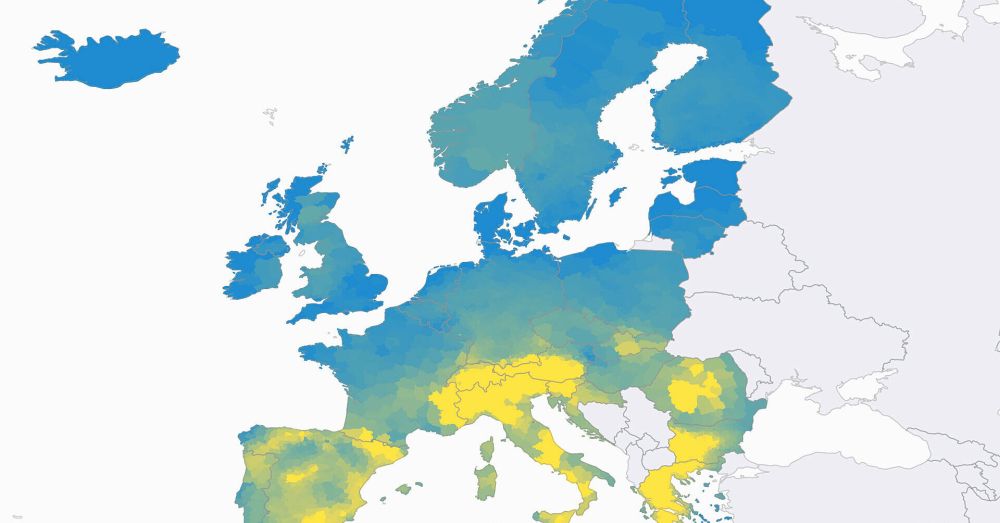
EU map of hydrogen production costs
A tool that helps to understand where and how the first wave of renewable hydrogen could be produced cost-effectively in Europe by 2030.
www.agora-industry.org
July 3, 2024 at 4:26 PM
Try the Levelised Cost of Hydrogen tool yourself here: www.agora-industry.org/data-tools/a... 7/7
Reposted by Veerle Dossche
A new tool developed by Agora Industry shows which European regions can be most competitive when deploying additional wind and solar power facilities for the first wave of renewable hydrogen production by 2030. 2/7
July 3, 2024 at 4:24 PM
A new tool developed by Agora Industry shows which European regions can be most competitive when deploying additional wind and solar power facilities for the first wave of renewable hydrogen production by 2030. 2/7
Maar Bram ja, dit zijn kraanvogels! Wat een mooie waarneming!
March 9, 2024 at 8:45 AM
Maar Bram ja, dit zijn kraanvogels! Wat een mooie waarneming!
Er waren heel wat waarnemingen van kraanvogels boven Vlaanderen vandaag
March 8, 2024 at 9:39 PM
Er waren heel wat waarnemingen van kraanvogels boven Vlaanderen vandaag