




ari
@toomuchpiano.bsky.social
singer-songwriter (https://linktr.ee/toomuchpiano), aspiring semiticist :D
Reposted by ari

But anyway the thing that has stuck with me about "April is the cruelest month" was something Suzanne Stetkevych pointed out once, which is that in premodern agricultural societies, planting had begun in April but winter stores were running out. So you had to starve while you used seed you could eat
December 7, 2025 at 12:27 AM
But anyway the thing that has stuck with me about "April is the cruelest month" was something Suzanne Stetkevych pointed out once, which is that in premodern agricultural societies, planting had begun in April but winter stores were running out. So you had to starve while you used seed you could eat
The winter wrote, with ink of rain and showers
and shining lightning pen and hand of cloud,
a blue and purple letter upon the garden
no craftsman in his cunning could devise.
So, when the earth desired the heavens’ face,
it wrought stars in the linen of its beds.
— Solomon ibn Gabirol, tr. mine
and shining lightning pen and hand of cloud,
a blue and purple letter upon the garden
no craftsman in his cunning could devise.
So, when the earth desired the heavens’ face,
it wrought stars in the linen of its beds.
— Solomon ibn Gabirol, tr. mine

December 7, 2025 at 10:37 AM
The winter wrote, with ink of rain and showers
and shining lightning pen and hand of cloud,
a blue and purple letter upon the garden
no craftsman in his cunning could devise.
So, when the earth desired the heavens’ face,
it wrought stars in the linen of its beds.
— Solomon ibn Gabirol, tr. mine
and shining lightning pen and hand of cloud,
a blue and purple letter upon the garden
no craftsman in his cunning could devise.
So, when the earth desired the heavens’ face,
it wrought stars in the linen of its beds.
— Solomon ibn Gabirol, tr. mine
realizing that my fuṣḥà is a little all over the place phonologically. i think it's mostly Moroccan (ج [ʒ], a fairly back final /a/), but these days i've had a little Egyptian bleeding in (madrása-type stress).
December 6, 2025 at 9:55 AM
realizing that my fuṣḥà is a little all over the place phonologically. i think it's mostly Moroccan (ج [ʒ], a fairly back final /a/), but these days i've had a little Egyptian bleeding in (madrása-type stress).
thought Hebrew qinnāmōn, "cinnamon", was a recent internationalism, but it turns out it's in the Pentateuch!
the borrowing's the other way around: Greek κιννάμωμον is a borrowing from Canaanite (Herodotus says Phoenician, Klein says Hebrew).
the borrowing's the other way around: Greek κιννάμωμον is a borrowing from Canaanite (Herodotus says Phoenician, Klein says Hebrew).

December 4, 2025 at 9:58 PM
thought Hebrew qinnāmōn, "cinnamon", was a recent internationalism, but it turns out it's in the Pentateuch!
the borrowing's the other way around: Greek κιννάμωμον is a borrowing from Canaanite (Herodotus says Phoenician, Klein says Hebrew).
the borrowing's the other way around: Greek κιννάμωμον is a borrowing from Canaanite (Herodotus says Phoenician, Klein says Hebrew).
Reposted by ari

1 Dec: Lk 2:1:
وكان فى تلك الايام خرج امر من قبل قيصر اغسطس ان يعدل الدنيا كلها
wa-kāna fī tilka l-ʔayyām ḫaraǧa min qibali Qayṣar ʔAġusṭus ʔamr ʔan yuʕaddala d-dunyā kulluhā
'In these days, a decree was issued by Emperor Augustus that [the number of people of]* the entire world should be measured'
وكان فى تلك الايام خرج امر من قبل قيصر اغسطس ان يعدل الدنيا كلها
wa-kāna fī tilka l-ʔayyām ḫaraǧa min qibali Qayṣar ʔAġusṭus ʔamr ʔan yuʕaddala d-dunyā kulluhā
'In these days, a decree was issued by Emperor Augustus that [the number of people of]* the entire world should be measured'

December 1, 2025 at 10:27 AM
1 Dec: Lk 2:1:
وكان فى تلك الايام خرج امر من قبل قيصر اغسطس ان يعدل الدنيا كلها
wa-kāna fī tilka l-ʔayyām ḫaraǧa min qibali Qayṣar ʔAġusṭus ʔamr ʔan yuʕaddala d-dunyā kulluhā
'In these days, a decree was issued by Emperor Augustus that [the number of people of]* the entire world should be measured'
وكان فى تلك الايام خرج امر من قبل قيصر اغسطس ان يعدل الدنيا كلها
wa-kāna fī tilka l-ʔayyām ḫaraǧa min qibali Qayṣar ʔAġusṭus ʔamr ʔan yuʕaddala d-dunyā kulluhā
'In these days, a decree was issued by Emperor Augustus that [the number of people of]* the entire world should be measured'
Reposted by ari

“The orthographic principles followed, in seemingly haphazard permutation, in the writing of Pahlavi, besides the ideographic, include the phonetic (within the limits of the alphabet), the historical, the pseudohistorical, and others so indeterminable as scarcely to merit the name.”
- DN Mackenzie
- DN Mackenzie

November 29, 2025 at 1:37 PM
“The orthographic principles followed, in seemingly haphazard permutation, in the writing of Pahlavi, besides the ideographic, include the phonetic (within the limits of the alphabet), the historical, the pseudohistorical, and others so indeterminable as scarcely to merit the name.”
- DN Mackenzie
- DN Mackenzie
Reposted by ari

after the de gruyter and brill merger they should combine de gruyter serif and brill to a new font
March 28, 2025 at 3:22 PM
after the de gruyter and brill merger they should combine de gruyter serif and brill to a new font
happy World Linguistics Day from Granada, Spain !!

Happy World Linguistics Day from Montreal, Canada!
(I wonder how many different places we can get world linguistics day wishes from this year!)
(I wonder how many different places we can get world linguistics day wishes from this year!)

Happy World Linguistics Day from Melbourne, Australia!
November 26, 2025 at 7:11 AM
happy World Linguistics Day from Granada, Spain !!
Reposted by ari

My uncle's copy of Sefer Yetzirah, acquired so from his friend, has the best inscription of this sort I've ever seen
It goes as follows
אסור ליקח בלי רשות. ואם תקח, אהפוך אותך לצפרדע.
It goes as follows
אסור ליקח בלי רשות. ואם תקח, אהפוך אותך לצפרדע.
November 24, 2025 at 12:22 AM
My uncle's copy of Sefer Yetzirah, acquired so from his friend, has the best inscription of this sort I've ever seen
It goes as follows
אסור ליקח בלי רשות. ואם תקח, אהפוך אותך לצפרדע.
It goes as follows
אסור ליקח בלי רשות. ואם תקח, אהפוך אותך לצפרדע.
fun fact: Turkish hoca, "teacher", Arabic xawāǧa, "Westerner" are all borrowings of the Persian xwāja, "lord, gentleman; eunuch"
the Persian, Hindustani ojhā, "shaman", and Chinese héshàng "Buddhist monk", all come from the Prakrit word uvajjhāa, "teacher" (← Sanskrit upādhyāya)
the Persian, Hindustani ojhā, "shaman", and Chinese héshàng "Buddhist monk", all come from the Prakrit word uvajjhāa, "teacher" (← Sanskrit upādhyāya)
November 22, 2025 at 10:45 AM
fun fact: Turkish hoca, "teacher", Arabic xawāǧa, "Westerner" are all borrowings of the Persian xwāja, "lord, gentleman; eunuch"
the Persian, Hindustani ojhā, "shaman", and Chinese héshàng "Buddhist monk", all come from the Prakrit word uvajjhāa, "teacher" (← Sanskrit upādhyāya)
the Persian, Hindustani ojhā, "shaman", and Chinese héshàng "Buddhist monk", all come from the Prakrit word uvajjhāa, "teacher" (← Sanskrit upādhyāya)
Reposted by ari

Thanks google very useful

November 18, 2025 at 6:33 PM
Thanks google very useful
is there any variety of Arabic that handles relative clauses ("the man who went to Damascus") and content clauses ("i thought he was drunk") the same way? iirc the division between the two is fuzzy in Hebrew and Aramaic

the word اللي lli, usually a relativizer (الزلمة اللي هون l-zalame lli hōn "the man that's here"), has a weird alternate usage: منيح اللي جيت mnīḥ lli jīt "good that you came"
i was proud of the og idea in the 2nd pic - BUT what prob actually happened (3rd pic) is so cool
(forgive clunky writing!)
i was proud of the og idea in the 2nd pic - BUT what prob actually happened (3rd pic) is so cool
(forgive clunky writing!)

![screenshot of the following wiktionary etymology with a mythbusters sorta "BUSTED" stamp overlaid on top:
Etymology 2:
Difficult to understand as an extension of the above [i.e. the relativizer اللي] due to the differences in syntax. Instead, perhaps a construction like *مْلِيح إِن (*mlīḥ ʔin, literally “good that”) underwent assimilation to become *مْلِيح ال (*mlīḥ (ʔ)il, “good that”), where the resulting *ال (*(ʔ)il) was reanalyzed as اللي (lli)'s byform ال (l-). This reanalysis would have allowed all other byforms, including اللي (lli) itself, to be used in this construction. Only later would the construction have spread to allow for adjectives other than مْلِيح (mlīḥ, “good”) as described in the usage note below.
Both terms of the proposed original *مْلِيح إِن (*mlīḥ ʔin, literally “good that”) are now unorthodox: مْلِيح (mlīḥ) is an archaic or rural form of what is now predominantly مْنِيح (mnīḥ, “good”), and a bare إِنْ (ʔin, “that”, complementizer) is absent from most Levantine varieties today in favor of a form with a fused expletive pronoun, إِنُّو (ʔinno). This reanalysis would have occurred before both of these terms fell from prominence. (Note, however, that Henri Fleisch recorded multiple Lebanese varieties that retained forms like إِنْ (ʔin) in his 1946–1974 studies of Lebanese Arabic.)
An alternative possibility is that the original phrase was already *مْنِيح إِن (*mnīḥ ʔin, literally “good that”) and that it shifted to *مْنِيح ال (*mnīḥ (ʔ)il, “good that”) in the process of dissimilation rather than assimilation.](https://cdn.bsky.app/img/feed_thumbnail/plain/did:plc:5gvygd24ilrqmbgsii2zzp3v/bafkreigj6t6uuvdk2jm2olanmr53vjuxusde2y4uy3iql4rtz23qy6d6sa@jpeg)

![screenshot of wiktionary quotation. the words اللي and illi are highlighted and bolded:
1902, Henry Minor Huxley, “Syrian Songs, Proverbs, and Stories: Collected, Translated, and Annotated”, in Journal of the American Oriental Society[1], volume 23 (overall work in English), Harvard University, Cambridge, Massachusetts: American Oriental Society, passage #103, pages 242–244:
الوزير علّم مرة حتّى توقف على الدرب وصارت تسبّ وتقول الحمد للّه اللي مات الشيخ الفاخوري يخرب بيته اللّه يغمّق له عمره ما يرجع. قال لها لو كنت مش ميّت كنت بقوم ليكي.
l-wazīr ʕallam mara ḥatta tūʔaf ʕala d-darb w ṣārit tasibb w tʔūl l-ḥumdilla illi māt š-šayḵ l-fāḵūri yaḵrub baytu ʔaḷḷa yiḡammiʔlu ʕomru ma yərjaʕ. ʔallha law kunt muš mayyit kunt baʔūm layki.
[original: il-wezîr 3allem mara ḥɒtta tûʾaf 3ala'd-derb ū-ṣârit tesibb witʾûl il-ḥomd ílla illī mä̂t iš-šêḫ il-fāḫûrī yaḫrub bêtu ɒlla yiǧɒmmíʾlū 3omrū ma yörja3. ʾallha lau kunt muš mêyit kunt beʾ̂ūm lêki.]
The vizîr instructed a woman to stand on the road; she began to curse and say, "Praise be to God that he who has died is the jar-maker, (who was) an elder. May his house be destroyed; may God make his grave deep, and may his life not return." The jar-maker replied, "Were I not dead, I would rise against you!"
The given English translation is Huxley's. He somewhat misunderstands the expression عُمْرُه مَا يِرْجَع (ʕumro ma yirjaʕ, “may he never return for his entire life”, used this way even though the sheikh is allegedly already dead). It is unknown whether he similarly misunderstood the expression with اللي (lli), which in modern times would be understood as الحمدالله اللي مات الشيخ (l-ḥamdilla lli māt š-šayḵ, “thank God that the sheikh died”), or if it had indeed not yet undergone the reanalysis in question in 1902.](https://cdn.bsky.app/img/feed_thumbnail/plain/did:plc:5gvygd24ilrqmbgsii2zzp3v/bafkreihjnaws7q4u5yskyfed7pkq62ns3yh5qd57mvde6ghn4tq2clkv6q@jpeg)
November 9, 2025 at 10:31 PM
is there any variety of Arabic that handles relative clauses ("the man who went to Damascus") and content clauses ("i thought he was drunk") the same way? iirc the division between the two is fuzzy in Hebrew and Aramaic
Reposted by ari
Classical Arabic is great because you look up some noun like "tomato" and it's like "here is a verb meaning to be or become red and squishy, to be or become ketchupable, to be or become ambiguously fruit and vegetable"
November 9, 2025 at 2:00 AM
Classical Arabic is great because you look up some noun like "tomato" and it's like "here is a verb meaning to be or become red and squishy, to be or become ketchupable, to be or become ambiguously fruit and vegetable"
tracked it down! this is from Strich and Jochnowitz's chapter in Brill's "Handbook of Jewish Languages" (ed. Kahn and Rubin, 2016)
16) the best historical pronunciation of Hebrew is the Provençal one, for the sheer audacity of its consonant shifts.
sorry, I mean:
fe beff hiftorical pronunfiasing of Hebrew iv fe Provençal wung, fokh fe seekh audafity of iff confonanf siff.
sorry, I mean:
fe beff hiftorical pronunfiasing of Hebrew iv fe Provençal wung, fokh fe seekh audafity of iff confonanf siff.
![The very unusual pronunciation tradition of Hebrew can be seen in these examples: the characteristic pronunciation of Hebrew ṯ, s, ś, ṣ, and word-final ṭ and ḏ as [f], z as [v], and š as [s], word-final r as [χ], and syllable-final /n/ and /m/ as [ŋ].](https://cdn.bsky.app/img/feed_thumbnail/plain/did:plc:fujsnmqkn7n4pcmd5ybt7jld/bafkreihdjlyzfdte2j3caycwnw7vpnlzajr236hjpenbtm5dec7ttceaga@jpeg)
November 7, 2025 at 11:01 PM
tracked it down! this is from Strich and Jochnowitz's chapter in Brill's "Handbook of Jewish Languages" (ed. Kahn and Rubin, 2016)
Reposted by ari
16) the best historical pronunciation of Hebrew is the Provençal one, for the sheer audacity of its consonant shifts.
sorry, I mean:
fe beff hiftorical pronunfiasing of Hebrew iv fe Provençal wung, fokh fe seekh audafity of iff confonanf siff.
sorry, I mean:
fe beff hiftorical pronunfiasing of Hebrew iv fe Provençal wung, fokh fe seekh audafity of iff confonanf siff.
November 7, 2025 at 9:26 AM
16) the best historical pronunciation of Hebrew is the Provençal one, for the sheer audacity of its consonant shifts.
sorry, I mean:
fe beff hiftorical pronunfiasing of Hebrew iv fe Provençal wung, fokh fe seekh audafity of iff confonanf siff.
sorry, I mean:
fe beff hiftorical pronunfiasing of Hebrew iv fe Provençal wung, fokh fe seekh audafity of iff confonanf siff.
Reposted by ari
For that first verb, cf. Al-Idrīsī describing Gafsa:
wa-ahluhā mutabarbirūna wa-aktharuhum yatakallamu bi-l-lughati l-laṭīniyy il-ifrīqiyy
"And its people are Berberised, and most of them speak the African Latin language"
lughat.blogspot.com/2007/07/berb...
wa-ahluhā mutabarbirūna wa-aktharuhum yatakallamu bi-l-lughati l-laṭīniyy il-ifrīqiyy
"And its people are Berberised, and most of them speak the African Latin language"
lughat.blogspot.com/2007/07/berb...
Latin-speaking Muslims in medieval Africa
In the Middle Ages as today, Christians and Jews regularly called God "Allah" when speaking Arabic, just as Muslims did . It is perhaps no...
lughat.blogspot.com
November 6, 2025 at 8:30 PM
For that first verb, cf. Al-Idrīsī describing Gafsa:
wa-ahluhā mutabarbirūna wa-aktharuhum yatakallamu bi-l-lughati l-laṭīniyy il-ifrīqiyy
"And its people are Berberised, and most of them speak the African Latin language"
lughat.blogspot.com/2007/07/berb...
wa-ahluhā mutabarbirūna wa-aktharuhum yatakallamu bi-l-lughati l-laṭīniyy il-ifrīqiyy
"And its people are Berberised, and most of them speak the African Latin language"
lughat.blogspot.com/2007/07/berb...
cf. Ibn Šuhayd's "Elegy for Córdoba" (ما في الطلول من الأحبة مخبر), which has the stunning hemistich "tabarbarū wa-taġarrabū wa-tamaṣṣarū" (v. 7), three denominal verbs roughly translating to "they went into exile on the Barbary Coast, in Morocco and in Egypt"

November 4, 2025 at 2:21 PM
cf. Ibn Šuhayd's "Elegy for Córdoba" (ما في الطلول من الأحبة مخبر), which has the stunning hemistich "tabarbarū wa-taġarrabū wa-tamaṣṣarū" (v. 7), three denominal verbs roughly translating to "they went into exile on the Barbary Coast, in Morocco and in Egypt"
Reposted by ari
This article contains the longest consonant cluster I've ever come across in a Semitic language other than Moroccan Arabic, from a Hebrew article written in 1897:
hit-ašknz-u "they Germanised", a denominal verb from Ashkenaz (which, in this context, meant "Germany")
hit-ašknz-u "they Germanised", a denominal verb from Ashkenaz (which, in this context, meant "Germany")

In a new article (open access!) I argue that the Ottoman state played a crucial role in creating Ashkenazi identity in Jerusalem - as an overarching category for Yiddish speaking Jews from Central and East European countries.
www.tandfonline.com/doi/full/10....
www.tandfonline.com/doi/full/10....

The Ottoman Production of Ashkenazi Identity
The familiar grouping of Yiddish speaking Jews of Central and Eastern Europe into the single overarching identity of ‘Ashkenazim’, emerged initially in multi-lingual Jewish contexts. This article e...
www.tandfonline.com
November 4, 2025 at 10:12 AM
This article contains the longest consonant cluster I've ever come across in a Semitic language other than Moroccan Arabic, from a Hebrew article written in 1897:
hit-ašknz-u "they Germanised", a denominal verb from Ashkenaz (which, in this context, meant "Germany")
hit-ašknz-u "they Germanised", a denominal verb from Ashkenaz (which, in this context, meant "Germany")
Reposted by ari
in some alternate reality King Alfred overboiled his bīeġelas
November 3, 2025 at 8:11 PM
in some alternate reality King Alfred overboiled his bīeġelas
Reposted by ari
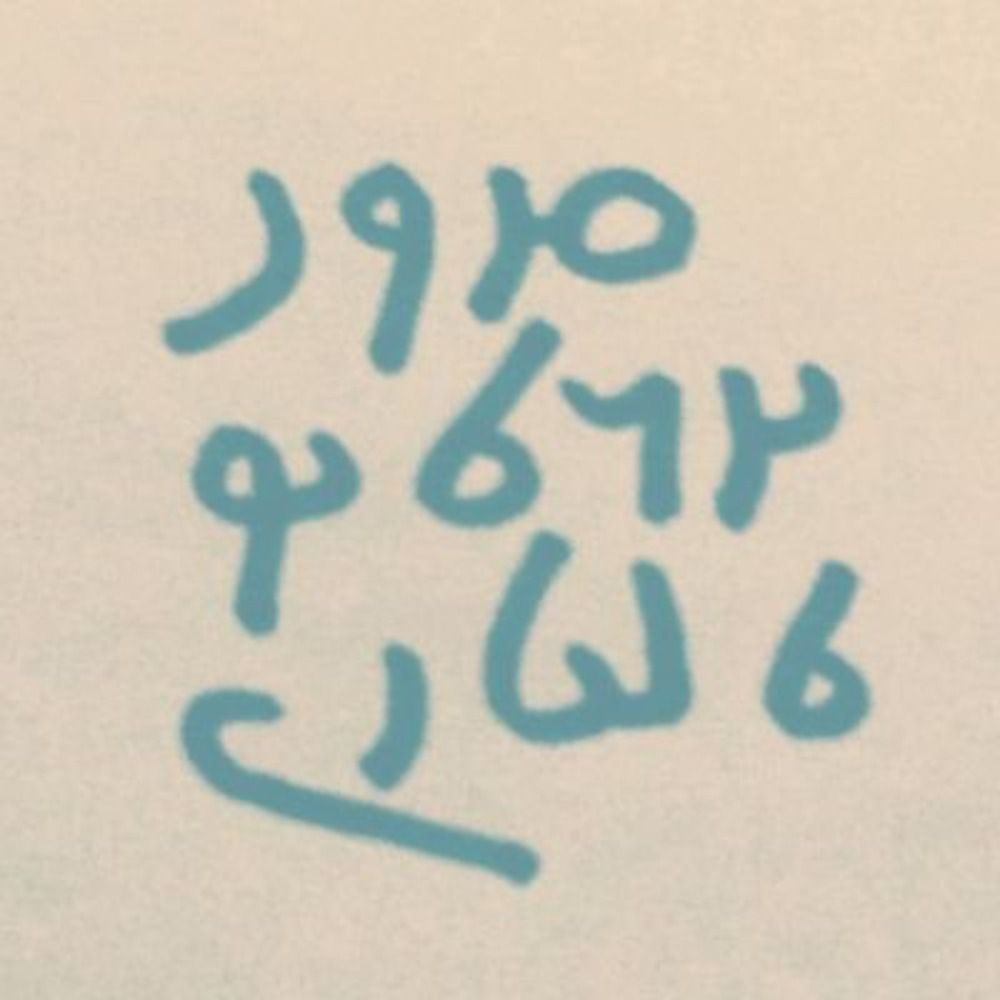
Incidentally these hollow maqyûl forms are quite interesting. It's a place where the medieval grammarians also report some amount of variation, but in Quranic Arabic passive participles of hollow verbs have the shape maCîC/maCûC. Nice to see these non-quranic forms continue in modern dialects.

November 2, 2025 at 3:22 PM
Incidentally these hollow maqyûl forms are quite interesting. It's a place where the medieval grammarians also report some amount of variation, but in Quranic Arabic passive participles of hollow verbs have the shape maCîC/maCûC. Nice to see these non-quranic forms continue in modern dialects.
someone stopped me!!
interesting to see Zohran managing Arabic diglossia. he’s definitely not speaking full fusha, but the vernacularisms are half egyptian, half levantine (!)
interesting to see Zohran managing Arabic diglossia. he’s definitely not speaking full fusha, but the vernacularisms are half egyptian, half levantine (!)

November 2, 2025 at 10:34 AM
someone stopped me!!
interesting to see Zohran managing Arabic diglossia. he’s definitely not speaking full fusha, but the vernacularisms are half egyptian, half levantine (!)
interesting to see Zohran managing Arabic diglossia. he’s definitely not speaking full fusha, but the vernacularisms are half egyptian, half levantine (!)
ܚܫ̇ܒ ܐ̄ܢܐ ܕܝܠܦ̇ܝܢ ܟܠܢ ܐܪܡܐܝܬ

why aren't we all learning Aramaic
October 31, 2025 at 5:19 PM
ܚܫ̇ܒ ܐ̄ܢܐ ܕܝܠܦ̇ܝܢ ܟܠܢ ܐܪܡܐܝܬ
Reposted by ari
Four different stress placements for كتبتا 'two women wrote' in Standard Arabic
ˈka.ta.ba.taa (Upper Egypt)
ka.ˈta.ba.taa (Jordan)
ka.ta.ˈba.taa (Cairo)
ka.ta. ba.ˈtaa (Lebanon)
ˈka.ta.ba.taa (Upper Egypt)
ka.ˈta.ba.taa (Jordan)
ka.ta.ˈba.taa (Cairo)
ka.ta. ba.ˈtaa (Lebanon)
October 30, 2025 at 4:27 AM
Four different stress placements for كتبتا 'two women wrote' in Standard Arabic
ˈka.ta.ba.taa (Upper Egypt)
ka.ˈta.ba.taa (Jordan)
ka.ta.ˈba.taa (Cairo)
ka.ta. ba.ˈtaa (Lebanon)
ˈka.ta.ba.taa (Upper Egypt)
ka.ˈta.ba.taa (Jordan)
ka.ta.ˈba.taa (Cairo)
ka.ta. ba.ˈtaa (Lebanon)
does anybody have a favorite reference grammar of modern Cairene vernacular Arabic? i am currently looking through a glass darkly, and would love something voluminous to clear up some lingering doubts
October 28, 2025 at 3:54 PM
does anybody have a favorite reference grammar of modern Cairene vernacular Arabic? i am currently looking through a glass darkly, and would love something voluminous to clear up some lingering doubts
Reposted by ari

not to be confused with quesadilla

October 27, 2025 at 7:21 PM
not to be confused with quesadilla