



Sven Askes
@svenaskes.bsky.social
Scientist with a passion for photochemistry, plasmonics, catalysis, and nanotechnology. Assistent Professor at Vrije Universiteit Amsterdam.
Reposted by Sven Askes

Systematic design methods can face further fragmentation of nanoplasmonics. We propose a pipeline combining Bayesian optimisation & simulations to accelerate the design of gold nanoparticles with superior plasmonic performance. A guide for experimentalists.
doi.org/10.26434/che...
doi.org/10.26434/che...

February 28, 2025 at 10:18 AM
Systematic design methods can face further fragmentation of nanoplasmonics. We propose a pipeline combining Bayesian optimisation & simulations to accelerate the design of gold nanoparticles with superior plasmonic performance. A guide for experimentalists.
doi.org/10.26434/che...
doi.org/10.26434/che...
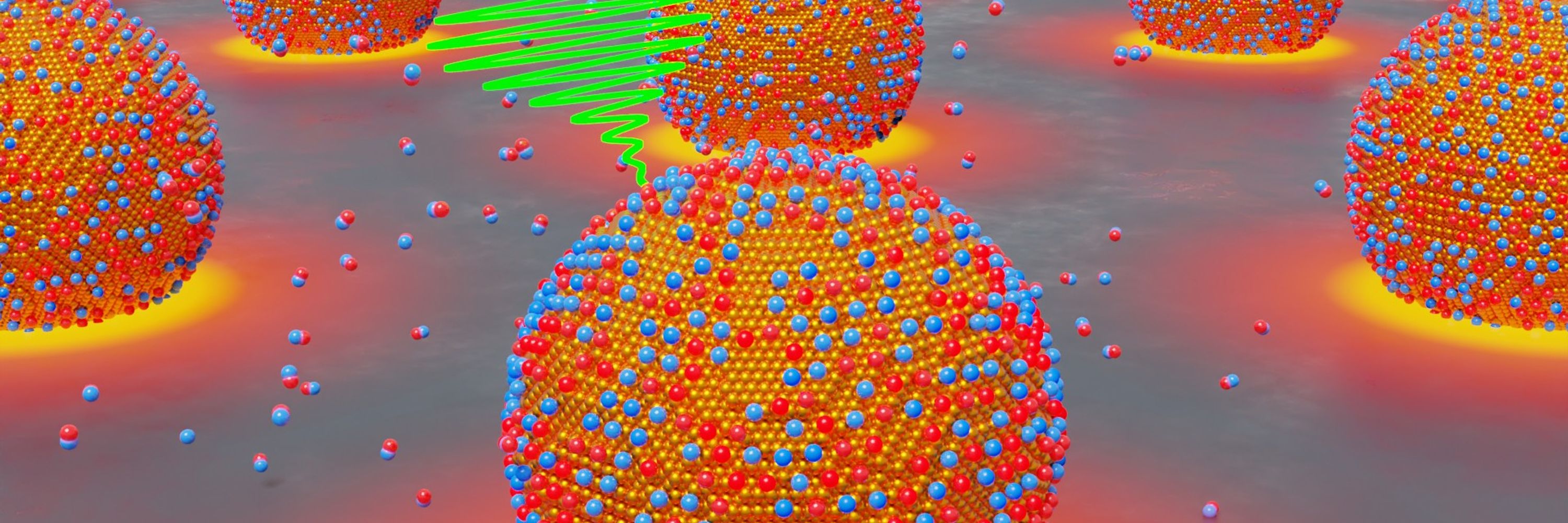
New paper out in ACS Catalysis! We explored the impact of light intensity on the product distribution of CO₂ hydrogenation. We addressed how the local temperature at catalytic sites can be modeled, and demonstrated that in a Ru-based photothermal catalyst, collective heating dominates.

Solving the Conundrum of the Influence of Irradiation Power on Photothermal CO2 Hydrogenation
Solar photocatalysis appears as a viable approach for the production of value-added chemicals from CO2. However, up to now, there is no information on the influence of the light intensity on the product distribution of CO2 hydrogenation and the modeling of the actual local temperature at the catalytic sites for typical nanoparticulate photocatalysts. Herein, it is shown that for a photothermal catalyst containing a high density of homogeneously distributed Ru nanoparticles, the collective heating prevails, resulting in a homogeneous temperature distribution in the material that should be relatively close to that of the support and that can be measured macroscopically. Moreover, light intensity has a clear influence on product distribution due to the differences in the local temperature, and therefore, attention should be paid to stable operating conditions, temperature, and CO2 conversion that can result in remarkable differences in product selectivity for the same catalyst as a function of light intensity.
pubs.acs.org
February 20, 2025 at 1:05 PM
New paper out in ACS Catalysis! We explored the impact of light intensity on the product distribution of CO₂ hydrogenation. We addressed how the local temperature at catalytic sites can be modeled, and demonstrated that in a Ru-based photothermal catalyst, collective heating dominates.