




The Apiarist
@social.theapiarist.org.ap.brid.gy
The science, art, and practice of sustainable beekeeping ... so much more than honey
🌉 bridged from https://theapiarist.org/ on the fediverse by https://fed.brid.gy/
🌉 bridged from https://theapiarist.org/ on the fediverse by https://fed.brid.gy/


Two rights make a wrong. Individually, honey and chocolate are great … but chocolate-flavoured honey?
https://pubs.acs.org/doi/10.1021/acssuschemeng.5c04842
https://pubs.acs.org/doi/10.1021/acssuschemeng.5c04842
November 20, 2025 at 9:31 AM
Two rights make a wrong. Individually, honey and chocolate are great … but chocolate-flavoured honey?
https://pubs.acs.org/doi/10.1021/acssuschemeng.5c04842
https://pubs.acs.org/doi/10.1021/acssuschemeng.5c04842
Words matter … an interesting study of the words used to describe managed (e.g. commercial, backyard) and non-managed (e.g. wild, feral, native, endemic) bees, some of which are loaded terms with significant positive or negative connotations. These words have changed over the last few decades […]
Original post on theapiarist.org
theapiarist.org
November 16, 2025 at 11:10 PM
Words matter … an interesting study of the words used to describe managed (e.g. commercial, backyard) and non-managed (e.g. wild, feral, native, endemic) bees, some of which are loaded terms with significant positive or negative connotations. These words have changed over the last few decades […]


Interesting new paper on supersedure and the role of virus infections in suppressing pheromone production.
DWV and BQCV both reduce methyl oleate production. Lots of graphs and lipidomic analysis (😱) so I'll try to write a more digestible account in a future […]
[Original post on theapiarist.org]
DWV and BQCV both reduce methyl oleate production. Lots of graphs and lipidomic analysis (😱) so I'll try to write a more digestible account in a future […]
[Original post on theapiarist.org]

October 28, 2025 at 9:05 AM
Interesting new paper on supersedure and the role of virus infections in suppressing pheromone production.
DWV and BQCV both reduce methyl oleate production. Lots of graphs and lipidomic analysis (😱) so I'll try to write a more digestible account in a future […]
[Original post on theapiarist.org]
DWV and BQCV both reduce methyl oleate production. Lots of graphs and lipidomic analysis (😱) so I'll try to write a more digestible account in a future […]
[Original post on theapiarist.org]


(Honey bee) Waggle dance followers expect landscape features as well as distance/vector information. I wonder if it's the optic flow rate/regularity that they 'match' to ensure the distance travelled is correct? More amazing insights into the language of bees […]
Original post on theapiarist.org
theapiarist.org
September 30, 2025 at 7:34 AM
(Honey bee) Waggle dance followers expect landscape features as well as distance/vector information. I wonder if it's the optic flow rate/regularity that they 'match' to ensure the distance travelled is correct? More amazing insights into the language of bees […]


What on earth do they think they're doing? It's the end of August. It's Scotland. Eejits.
#beekeeping #butnotthesebees
#beekeeping #butnotthesebees

August 29, 2025 at 7:36 PM
What on earth do they think they're doing? It's the end of August. It's Scotland. Eejits.
#beekeeping #butnotthesebees
#beekeeping #butnotthesebees

No, but it's the one my bees wake up to 😉. However, the view I wake up to every day is also pretty good, though my immediate focus is the coffee in front of me ☕️.
August 28, 2025 at 2:41 PM
No, but it's the one my bees wake up to 😉. However, the view I wake up to every day is also pretty good, though my immediate focus is the coffee in front of me ☕️.
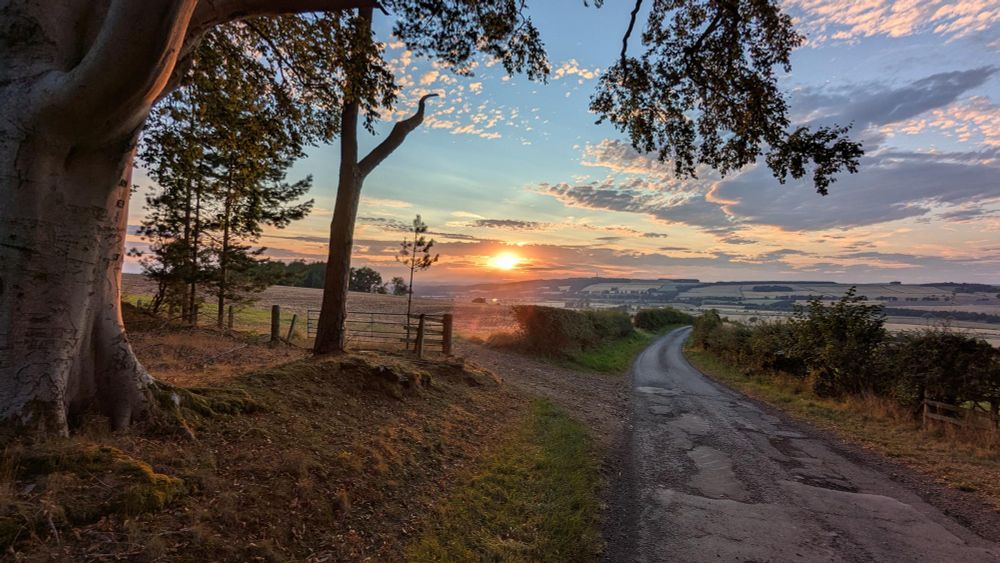
Moving hives in the gloaming last night., the apiaries full of the sounds and smells of honey being ripened. Wonderful, but a sure sign that the season is almost over.
#beekeeping #honey #notenoughofeither
#beekeeping #honey #notenoughofeither
August 26, 2025 at 4:52 PM
Moving hives in the gloaming last night., the apiaries full of the sounds and smells of honey being ripened. Wonderful, but a sure sign that the season is almost over.
#beekeeping #honey #notenoughofeither
#beekeeping #honey #notenoughofeither

More than you'd ever want to know about bees at https://theapiarist.org 😄 on Ghost at MagicPages … and I like some help to embed the visitor counter on my homepage 😉.

The Apiarist
The science, art, and practice of sustainable beekeeping ... so much more than honey
theapiarist.org
August 18, 2025 at 8:30 PM
More than you'd ever want to know about bees at https://theapiarist.org 😄 on Ghost at MagicPages … and I like some help to embed the visitor counter on my homepage 😉.
I'm not sure which was more enjoyable … adding a second super to my hives at the heather, or watching a local peregrine falcon 'jousting' overhead with the ravens for 15 minutes. An idyllic spot 😄.

August 15, 2025 at 7:42 PM
I'm not sure which was more enjoyable … adding a second super to my hives at the heather, or watching a local peregrine falcon 'jousting' overhead with the ravens for 15 minutes. An idyllic spot 😄.