



Roman Jerala
@rjerala.bsky.social
scientist, synthetic biology and immunology
HCQ can be added to mRNA/LNP & viral vector formulations and emerges as a practical drug that decouples reactogenicity from efficacy in nucleic-acid therapeutics, opening a path toward safer, repeatable #mRNATherapy and viral-vector #GeneTherapy.
www.biorxiv.org/content/10.1...
www.biorxiv.org/content/10.1...

Hydroxychloroquine decouples reactogenicity from efficacy in mRNA and viral-vector gene delivery
Programmable nucleic-acid therapeutics, including lipid nanoparticle (LNP)–formulated mRNA vaccines, genome editors delivered as mRNA, and viral vectors, are transforming precision medicine but remain...
www.biorxiv.org
November 21, 2025 at 3:01 PM
HCQ can be added to mRNA/LNP & viral vector formulations and emerges as a practical drug that decouples reactogenicity from efficacy in nucleic-acid therapeutics, opening a path toward safer, repeatable #mRNATherapy and viral-vector #GeneTherapy.
www.biorxiv.org/content/10.1...
www.biorxiv.org/content/10.1...
This work was a several year collaborative effort by
Duško Lainšček, and other team members from @KemijskiInstitut 🇸🇮 &
@TU_Muenchen
🇩🇪
Proud of this outstanding team! 👏🧵
Duško Lainšček, and other team members from @KemijskiInstitut 🇸🇮 &
@TU_Muenchen
🇩🇪
Proud of this outstanding team! 👏🧵
November 21, 2025 at 3:01 PM
This work was a several year collaborative effort by
Duško Lainšček, and other team members from @KemijskiInstitut 🇸🇮 &
@TU_Muenchen
🇩🇪
Proud of this outstanding team! 👏🧵
Duško Lainšček, and other team members from @KemijskiInstitut 🇸🇮 &
@TU_Muenchen
🇩🇪
Proud of this outstanding team! 👏🧵
These are data on human cels and preclinical (mouse) data, showing a strong and reproducible anti-reactogenic effect.
The next step: clinical studies to test how robustly this effect translates to humans, where exposure, metabolism, and immune tone differ.🧵
The next step: clinical studies to test how robustly this effect translates to humans, where exposure, metabolism, and immune tone differ.🧵
November 21, 2025 at 3:01 PM
These are data on human cels and preclinical (mouse) data, showing a strong and reproducible anti-reactogenic effect.
The next step: clinical studies to test how robustly this effect translates to humans, where exposure, metabolism, and immune tone differ.🧵
The next step: clinical studies to test how robustly this effect translates to humans, where exposure, metabolism, and immune tone differ.🧵
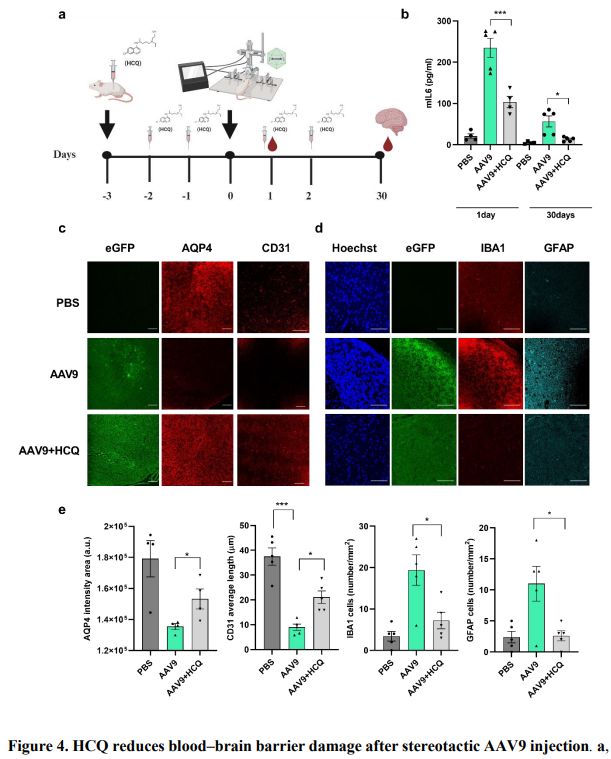
HCQ also prevented #AAV9 - induced blood–brain-barrier damage (#GeneTherapy) and #LNP-mRNA liver enzyme elevations, and thrombocytopenia, while keeping Pcsk9 base-editing fully active (#mRNAtherapy #genomeediting), with strong potential for prevention of cardiovascular disease.🧵

November 21, 2025 at 3:01 PM
HCQ also prevented #AAV9 - induced blood–brain-barrier damage (#GeneTherapy) and #LNP-mRNA liver enzyme elevations, and thrombocytopenia, while keeping Pcsk9 base-editing fully active (#mRNAtherapy #genomeediting), with strong potential for prevention of cardiovascular disease.🧵
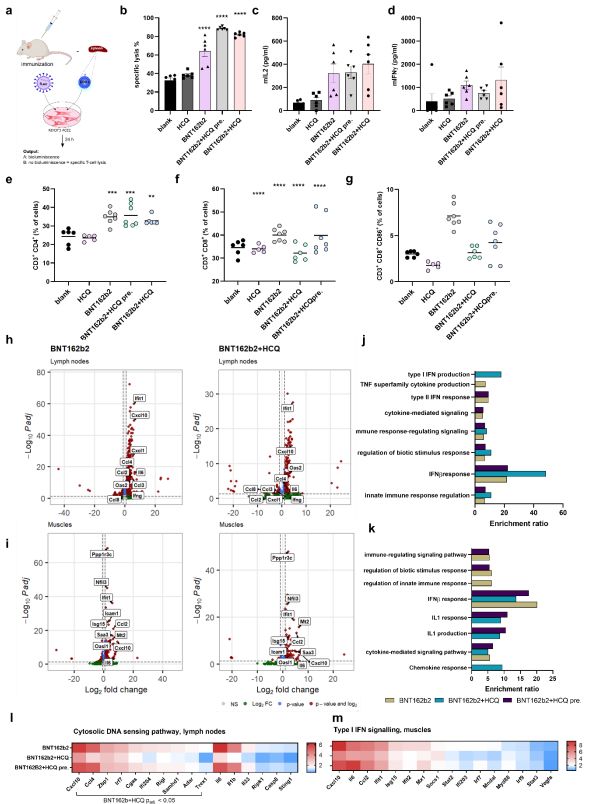
Transcriptomics showed TLR / cGAS–STING pathways selectively dampened, while type-I IFN programs supporting adaptive immunity persisted - a “filtered” innate response rather than broad immunosuppression. 🧵
November 21, 2025 at 3:01 PM
Transcriptomics showed TLR / cGAS–STING pathways selectively dampened, while type-I IFN programs supporting adaptive immunity persisted - a “filtered” innate response rather than broad immunosuppression. 🧵
Yes.
HCQ sharply reduced cytokine and chemokine induction across LNP-mRNA, AdV, and AAV9 delivery, yet translation, immune priming, and base editing remained intact.
Efficacy = preserved, inflammation = gone.🧵
HCQ sharply reduced cytokine and chemokine induction across LNP-mRNA, AdV, and AAV9 delivery, yet translation, immune priming, and base editing remained intact.
Efficacy = preserved, inflammation = gone.🧵
November 21, 2025 at 3:01 PM
Yes.
HCQ sharply reduced cytokine and chemokine induction across LNP-mRNA, AdV, and AAV9 delivery, yet translation, immune priming, and base editing remained intact.
Efficacy = preserved, inflammation = gone.🧵
HCQ sharply reduced cytokine and chemokine induction across LNP-mRNA, AdV, and AAV9 delivery, yet translation, immune priming, and base editing remained intact.
Efficacy = preserved, inflammation = gone.🧵
We previously showed (Kužnik et al., J Immunol 2011) that hydroxychloroquine (HCQ), a drug used to treat autoimmune disease and malaria, suppresses innate sensing of RNA and DNA TLRs and inflammatory response.
Could it also mitigate this universal burst? 🧵
Could it also mitigate this universal burst? 🧵
November 21, 2025 at 3:01 PM
We previously showed (Kužnik et al., J Immunol 2011) that hydroxychloroquine (HCQ), a drug used to treat autoimmune disease and malaria, suppresses innate sensing of RNA and DNA TLRs and inflammatory response.
Could it also mitigate this universal burst? 🧵
Could it also mitigate this universal burst? 🧵
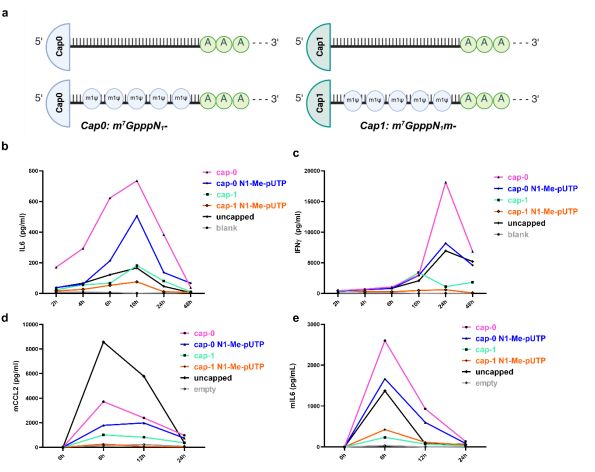
Across mRNA/LNP, adenoviral & AAV9 vectors, we detected a conserved innate burst: IL-6, CCL2, IFN-γ, peaking ~6 h post-dose. This "inflammatory signature” limits dosing and safety across therapeutic platforms. Even m1ψ modified mRNA retains substantial reactogenicity.🧵
November 21, 2025 at 3:01 PM
Across mRNA/LNP, adenoviral & AAV9 vectors, we detected a conserved innate burst: IL-6, CCL2, IFN-γ, peaking ~6 h post-dose. This "inflammatory signature” limits dosing and safety across therapeutic platforms. Even m1ψ modified mRNA retains substantial reactogenicity.🧵