




Timo Rittweg
@otolitimo.bsky.social
Researcher at Thünen-Institute of Fisheries Ecology. I investigate fish life histories, migrations, diet and growth. Otolith nerd. Flyfisher, diver, and general fish enthusiast.
><)));°> ><)));°> ><)));°>
ORCID: 0000-0002-9487-5718
><)));°> ><)));°> ><)));°>
ORCID: 0000-0002-9487-5718
Otolith cake pudding to finish the post (also made by @crocodiledunphd.bsky.social)☺️

March 31, 2025 at 1:00 PM
Otolith cake pudding to finish the post (also made by @crocodiledunphd.bsky.social)☺️
But just as important, a supportive family and frinds. Big shoutout also to @crocodiledunphd.bsky.social for proof-reading the thesis, listening to my ramblings (i.e. my defense talk),and being allround supportive and wonderful!

March 31, 2025 at 1:00 PM
But just as important, a supportive family and frinds. Big shoutout also to @crocodiledunphd.bsky.social for proof-reading the thesis, listening to my ramblings (i.e. my defense talk),and being allround supportive and wonderful!
Impossible without a great team! (goes for a lot of things, not just PhD theses) 😅

March 31, 2025 at 1:00 PM
Impossible without a great team! (goes for a lot of things, not just PhD theses) 😅
Convinced them in the end it seems 🤓

March 31, 2025 at 1:00 PM
Convinced them in the end it seems 🤓
Wait, I can explain...!

March 31, 2025 at 1:00 PM
Wait, I can explain...!
The committee, sharp questions locked and loaded! @profchrisharrod.bsky.social @rarlinghausfish.bsky.social @clivetrue.bsky.social

March 31, 2025 at 1:00 PM
The committee, sharp questions locked and loaded! @profchrisharrod.bsky.social @rarlinghausfish.bsky.social @clivetrue.bsky.social
Little milestones which don´t mean a lot in the grand scheme of things, but I´m chuffed to have crossed 100 citations on my google scholar & RG profiles! Testimony to the fact there´s some people out there reading my stuff, thinking "well, that seems to make sense"! 😆🐟🧪

March 11, 2025 at 3:20 PM
Little milestones which don´t mean a lot in the grand scheme of things, but I´m chuffed to have crossed 100 citations on my google scholar & RG profiles! Testimony to the fact there´s some people out there reading my stuff, thinking "well, that seems to make sense"! 😆🐟🧪
Question for any ecology peeps that might read my tweets (blues? Do we have a new word for this by now? 😅): Do you know of any courses teaching species distribution modelling techniques (correlative/causative) that you can recommend?
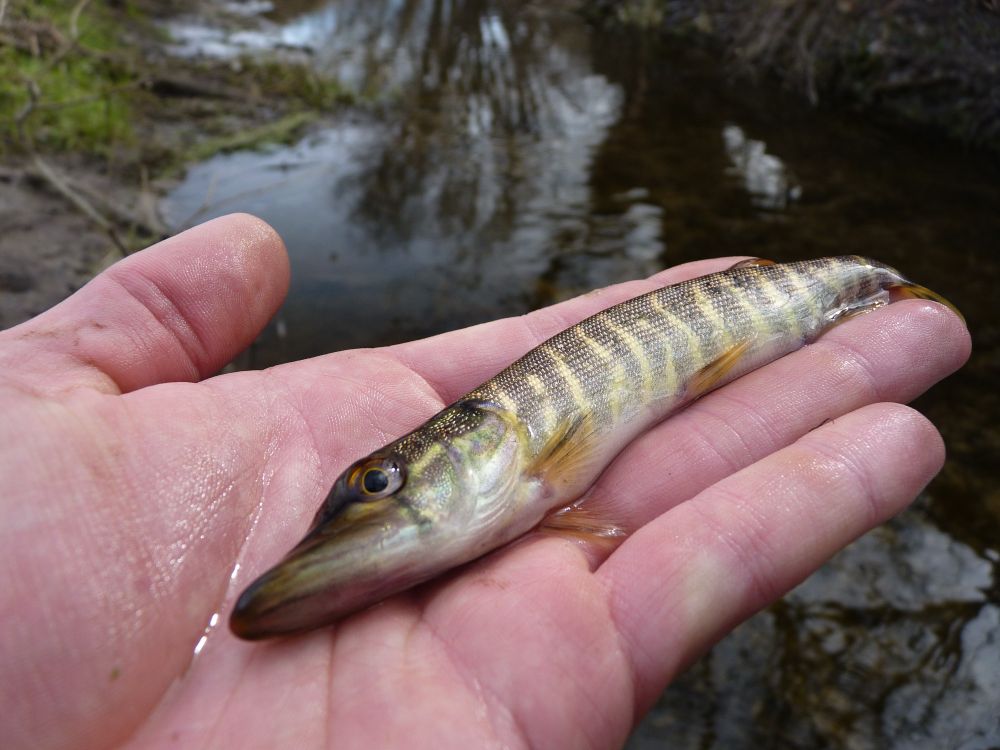
Grateful for any advice (baby pike pic for attention) 🙏🧪
Grateful for any advice (baby pike pic for attention) 🙏🧪
March 6, 2025 at 8:03 AM
Question for any ecology peeps that might read my tweets (blues? Do we have a new word for this by now? 😅): Do you know of any courses teaching species distribution modelling techniques (correlative/causative) that you can recommend?
Grateful for any advice (baby pike pic for attention) 🙏🧪
Grateful for any advice (baby pike pic for attention) 🙏🧪
In conclusion, we found significant effects of organics on otolith d18O, introducing bias into temperature and thermal tolerance estimates. We recommend future work to carefully check for organic bias (either by SIMS and EPMA , or microdrilling and LA-ICPMS), and, ideally, correct for them. 🐟🧪

December 25, 2024 at 3:09 PM
In conclusion, we found significant effects of organics on otolith d18O, introducing bias into temperature and thermal tolerance estimates. We recommend future work to carefully check for organic bias (either by SIMS and EPMA , or microdrilling and LA-ICPMS), and, ideally, correct for them. 🐟🧪
The shift in d18O introduced by organic content would´ve equated to an overestimation in experienced temperatures of up to 4 °C, had these values been used for temperature backcalculation. This could severely affect estimates of thermal tolerances, especially in vulnerable juvenile stages!

December 25, 2024 at 3:09 PM
The shift in d18O introduced by organic content would´ve equated to an overestimation in experienced temperatures of up to 4 °C, had these values been used for temperature backcalculation. This could severely affect estimates of thermal tolerances, especially in vulnerable juvenile stages!
Yes, it did! The correction shifted values closer to what would be predicted by ambient water temperatures and water d18O. However, some discrepancies remained between predictions and measurements. Therefore, we suspect other factors (such as e.g., active thermoregulation) may be at work, too.

December 25, 2024 at 3:09 PM
Yes, it did! The correction shifted values closer to what would be predicted by ambient water temperatures and water d18O. However, some discrepancies remained between predictions and measurements. Therefore, we suspect other factors (such as e.g., active thermoregulation) may be at work, too.
This led to a dynamic correction of intraotolith d18O values, which differed between the different habitat use types. As expected, the offset introduced by organics seemed to be highest in juvenile stages, where pike grow fastest. But, did our correction improve the realism of our d18O measurements?

December 25, 2024 at 3:09 PM
This led to a dynamic correction of intraotolith d18O values, which differed between the different habitat use types. As expected, the offset introduced by organics seemed to be highest in juvenile stages, where pike grow fastest. But, did our correction improve the realism of our d18O measurements?
We therefore developed a individual-level correction based on pairwise measurements of d18O and OH made with SIMS. This allowed us to correct both for individual ontogenetic effects as well as for habitat-related effects. Image shows three example individuals. 🐟🐟🐟

December 25, 2024 at 3:09 PM
We therefore developed a individual-level correction based on pairwise measurements of d18O and OH made with SIMS. This allowed us to correct both for individual ontogenetic effects as well as for habitat-related effects. Image shows three example individuals. 🐟🐟🐟
We detected population-level differences in the relationship between organic content and d18O between different subpopulations in our study species (northern pike inhabiting Baltic coastal lagoons and adjacent freshwater tributaries, plus some pikefrom a control freshwater lake). Complicated…

December 25, 2024 at 3:09 PM
We detected population-level differences in the relationship between organic content and d18O between different subpopulations in our study species (northern pike inhabiting Baltic coastal lagoons and adjacent freshwater tributaries, plus some pikefrom a control freshwater lake). Complicated…
Combining different methods, such as secondary ion mass spectrometry (SIMS) and electron microprobe (EPMA), we established OH-ions as a proxy for organics. As expected, organics biased d18O towards lighter values (translating to warmer reconstructed temperature), but the correlation varied…

December 25, 2024 at 3:09 PM
Combining different methods, such as secondary ion mass spectrometry (SIMS) and electron microprobe (EPMA), we established OH-ions as a proxy for organics. As expected, organics biased d18O towards lighter values (translating to warmer reconstructed temperature), but the correlation varied…
We investigated the influence of organic matter on measurements of oxygen isotope composition in fish otoliths. We expected organic contents to correlate negatively with otolith d18O values, with different ontogenetic stages differing in organic content, introducing bias into isotope values.

December 25, 2024 at 3:09 PM
We investigated the influence of organic matter on measurements of oxygen isotope composition in fish otoliths. We expected organic contents to correlate negatively with otolith d18O values, with different ontogenetic stages differing in organic content, introducing bias into isotope values.
Oxyen isotope values (d18O) from fish otoliths are commonly used to backcalculate past temperatures, making them useful natural archives, enabling retrospective description of climate change impacts on fishes. However, organics in otoliths may bias isotope values and temperature estimates.

December 25, 2024 at 3:09 PM
Oxyen isotope values (d18O) from fish otoliths are commonly used to backcalculate past temperatures, making them useful natural archives, enabling retrospective description of climate change impacts on fishes. However, organics in otoliths may bias isotope values and temperature estimates.
I see Freshwater Megafauna Christmas, and raise you Hecht Ruprecht! Germans will get it, Knecht Ruprecht is a partially demonic helper of Santa, carrying a cudgel/rod and a sack to punish naughty children. Figure comes from the same folklore as the better known Krampus. And Hecht means pike. 😁

December 20, 2024 at 10:32 AM
I see Freshwater Megafauna Christmas, and raise you Hecht Ruprecht! Germans will get it, Knecht Ruprecht is a partially demonic helper of Santa, carrying a cudgel/rod and a sack to punish naughty children. Figure comes from the same folklore as the better known Krampus. And Hecht means pike. 😁
Second half of the little otolith workshop, this time we extracted some eel otoliths, took some muscle samples for PFAS analysis and measured some standard life history stage params (eye diameter, fat content). Love eels, they´re sooo fascinating (alive even more so! 😀) #Scicomm #Science #Otoliths 🧪


November 29, 2024 at 2:40 PM
Second half of the little otolith workshop, this time we extracted some eel otoliths, took some muscle samples for PFAS analysis and measured some standard life history stage params (eye diameter, fat content). Love eels, they´re sooo fascinating (alive even more so! 😀) #Scicomm #Science #Otoliths 🧪
Here the corresponding recapture numbers to the input. Doesn't bring joy... (graphics are from three smaller tributaries of the Elbe river catchment)

November 27, 2024 at 1:45 PM
Here the corresponding recapture numbers to the input. Doesn't bring joy... (graphics are from three smaller tributaries of the Elbe river catchment)
One of the main take homes (for me): Stocking doesn't work (who would've thought 😅)! Millions of young fish go in, recaps usually range below 50 ind. SMH...

November 27, 2024 at 1:32 PM
One of the main take homes (for me): Stocking doesn't work (who would've thought 😅)! Millions of young fish go in, recaps usually range below 50 ind. SMH...
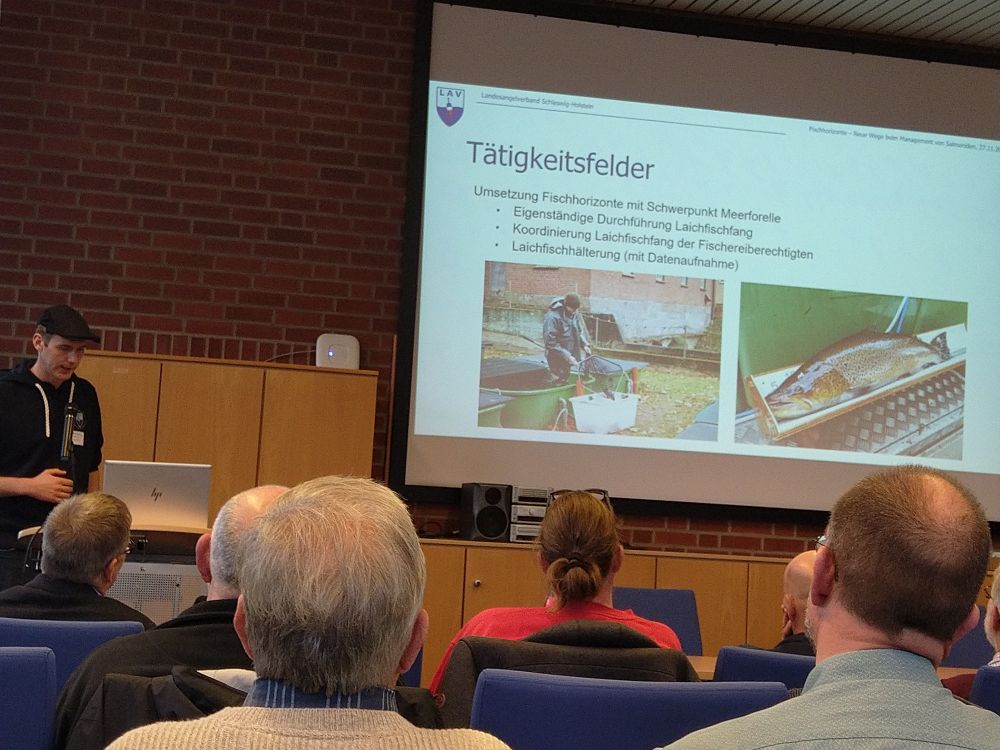
Talking migration barriers, river restauration, and stocking (blerg) of migratory salmonids in Germany 🎏🐟 #migratoryfish #connectivity #conservation #fishscience



November 27, 2024 at 12:47 PM
Talking migration barriers, river restauration, and stocking (blerg) of migratory salmonids in Germany 🎏🐟 #migratoryfish #connectivity #conservation #fishscience
Day one and two of a little otolith science crashcourse I´m giving here at Thünen Institute of Fisheries Ecology in Bremerhaven. Great fun with a motivated group of students and interesting speciemens, such as twaite shad (Alosa fallax), which was new for me! 😀🐟 #Scicomm #Science #Otoliths


November 22, 2024 at 10:36 AM
We found high intraspecific diversity in coastal pike, and a behavioral gradient between habitat extremes, suggesting partial migration. We don´t know how these ecotypes coexist. Likely, food and abiotic adaptations play a joint role, but that´s a story for another day... 😉
November 18, 2024 at 1:33 PM
We found high intraspecific diversity in coastal pike, and a behavioral gradient between habitat extremes, suggesting partial migration. We don´t know how these ecotypes coexist. Likely, food and abiotic adaptations play a joint role, but that´s a story for another day... 😉
… we did not detect any differences in lifelong growth, assessed by individual- and phenotype level hierarchiacal von Bertalanffy growth models. This might indicate similar lifelong fitness between the ecotypes, which may be a mechanism for sympatric coexistence.

November 18, 2024 at 1:33 PM
… we did not detect any differences in lifelong growth, assessed by individual- and phenotype level hierarchiacal von Bertalanffy growth models. This might indicate similar lifelong fitness between the ecotypes, which may be a mechanism for sympatric coexistence.