


Noga Sharlin
@nogasharlin.bsky.social
PhD student at the University of Calgary
Studying human coronaviruses in the Corcoran Lab
Studying human coronaviruses in the Corcoran Lab
Reposted by Noga Sharlin

The IFIT2–IFIT3 antiviral complex targets short 5’ untranslated regions on viral mRNAs for translation inhibition
By Dustin Glasner, Matthew Daugherty & colleagues.
#microsky
www.nature.com/articles/s41...
By Dustin Glasner, Matthew Daugherty & colleagues.
#microsky
www.nature.com/articles/s41...

The IFIT2–IFIT3 antiviral complex targets short 5’ untranslated regions on viral mRNAs for translation inhibition - Nature Microbiology
Viruses generally have compact genomes, resulting in many viral mRNAs with short 5’ untranslated regions. An antiviral complex exploits this feature of viral mRNAs to selectively inhibit viral protein...
www.nature.com
October 15, 2025 at 4:59 PM
The IFIT2–IFIT3 antiviral complex targets short 5’ untranslated regions on viral mRNAs for translation inhibition
By Dustin Glasner, Matthew Daugherty & colleagues.
#microsky
www.nature.com/articles/s41...
By Dustin Glasner, Matthew Daugherty & colleagues.
#microsky
www.nature.com/articles/s41...
Reposted by Noga Sharlin

An awesome preprint on the novel, unsung SARS-CoV-2 N* protein came out recently, authored by @corcoranlab.bsky.social and @rorymulloy.bsky.social. I’ve previously written on N*’s demise in XEC, the top variant for several months, but… threadreaderapp.com/thread/18373...
1/34
1/34

May 26, 2025 at 4:11 PM
An awesome preprint on the novel, unsung SARS-CoV-2 N* protein came out recently, authored by @corcoranlab.bsky.social and @rorymulloy.bsky.social. I’ve previously written on N*’s demise in XEC, the top variant for several months, but… threadreaderapp.com/thread/18373...
1/34
1/34
Reposted by Noga Sharlin

Our manuscript on dsRNA sensor OAS2 from the lab of @oliveiramann.bsky.social is now out in @cp-molcell.bsky.social ! Thanks again to the whole team for their effort putting this story together!

Online Now: Structural basis for OAS2 regulation and its antiviral function Online now:
Structural basis for OAS2 regulation and its antiviral function
Merold and Bekere et al. reveal that OAS2 exists as a zinc-mediated dimer in an autoinhibited state, preventing autoreactivity to short RNAs. Dimer-to-monomer transition, dsRNA binding to a non-canonical interface, and targeting to the Golgi by myristoylation are necessary for OAS2 activation and restriction of viruses that form double membrane vesicles.
dlvr.it
May 23, 2025 at 4:31 PM
Our manuscript on dsRNA sensor OAS2 from the lab of @oliveiramann.bsky.social is now out in @cp-molcell.bsky.social ! Thanks again to the whole team for their effort putting this story together!
Reposted by Noga Sharlin
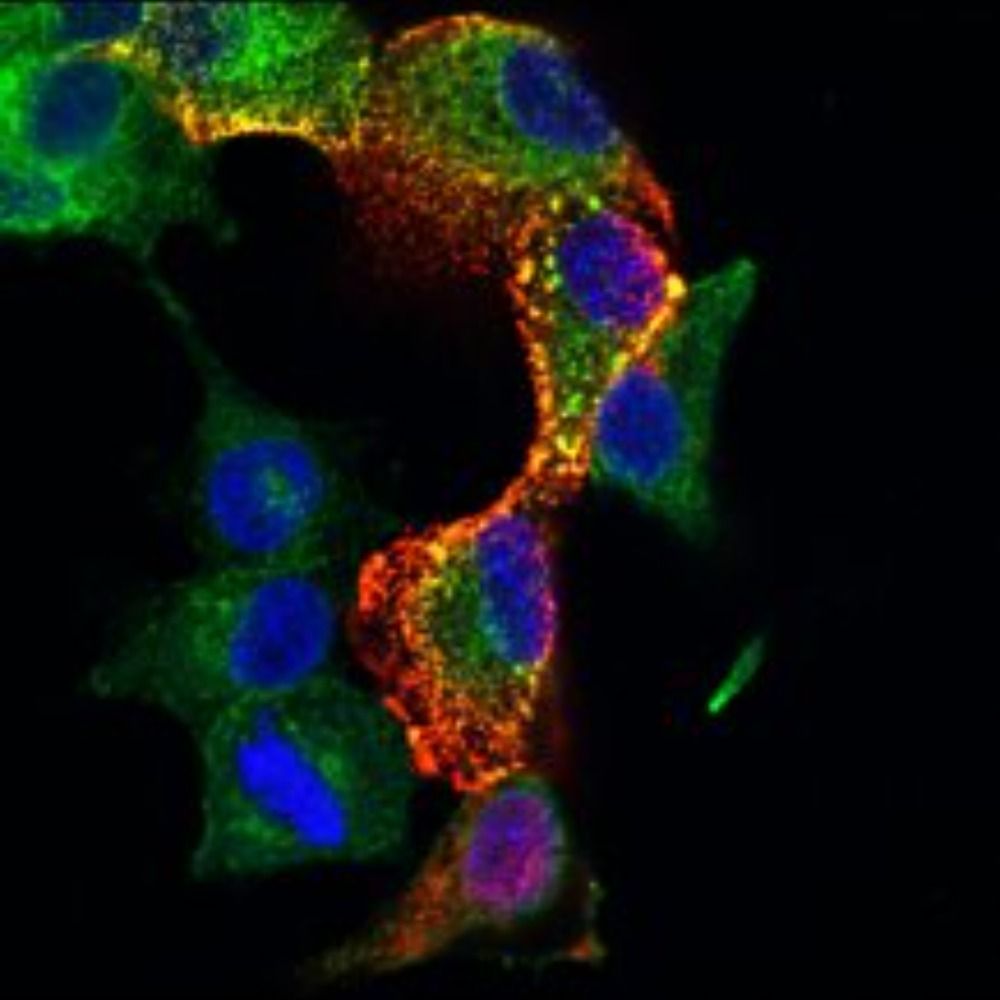
Very happy that this story is now published in @plosbiology.org. It includes lots of additional data, (creation of the G215S mutant) & demonstrates the increased growth/ oligomerization of N is specific to the cysteine at 215. Thanks to the coauthors, reviewers and editors who helped improve it!
1/n Very excited to share my lab's latest manuscript, 3 years after I started my independent group! This was a fantastic collaboration with Bryan Johnson and @themenacherylab.bsky.social , led by joint 1st authors Hannah Kubinski and Hannah Despres in my lab www.biorxiv.org/content/10.1...

Variant mutation in SARS-CoV-2 nucleocapsid enhances viral infection via altered genomic encapsidation
bioRxiv - the preprint server for biology, operated by Cold Spring Harbor Laboratory, a research and educational institution
www.biorxiv.org
April 29, 2025 at 8:46 PM
Very happy that this story is now published in @plosbiology.org. It includes lots of additional data, (creation of the G215S mutant) & demonstrates the increased growth/ oligomerization of N is specific to the cysteine at 215. Thanks to the coauthors, reviewers and editors who helped improve it!
Reposted by Noga Sharlin

Previously, KO and overexpression showed host RNA 5’ triphosphatase DUSP11 can reduce RIG-I sensitivity.
Here, we show poxviruses code for viral DUSP11 that can regulate host RNP III transcripts and RIG-I, providing evolutionary support DUSP11 can be pro-viral.
journals.plos.org/plospathogen...
Here, we show poxviruses code for viral DUSP11 that can regulate host RNP III transcripts and RIG-I, providing evolutionary support DUSP11 can be pro-viral.
journals.plos.org/plospathogen...
Viral piracy of host RNA phosphatase DUSP11 by avipoxviruses
Author summary Viruses face a critical challenge of disabling or avoiding host immune defenses. Cells typically recognize the presence of a virus through specific molecular markers, including triphosp...
journals.plos.org
April 22, 2025 at 1:22 PM
Previously, KO and overexpression showed host RNA 5’ triphosphatase DUSP11 can reduce RIG-I sensitivity.
Here, we show poxviruses code for viral DUSP11 that can regulate host RNP III transcripts and RIG-I, providing evolutionary support DUSP11 can be pro-viral.
journals.plos.org/plospathogen...
Here, we show poxviruses code for viral DUSP11 that can regulate host RNP III transcripts and RIG-I, providing evolutionary support DUSP11 can be pro-viral.
journals.plos.org/plospathogen...
Reposted by Noga Sharlin

Check out this fun preview of my postdoctoral work! It highlights our findings plus lots of intriguing questions that I’m super excited to tackle in the coming years. (And the model is beautiful! Thank you! 🧑🎨 )
Now you see me, now you don’t: What and how viral RNAs are detected by cytoplasmic pattern-recognition receptors
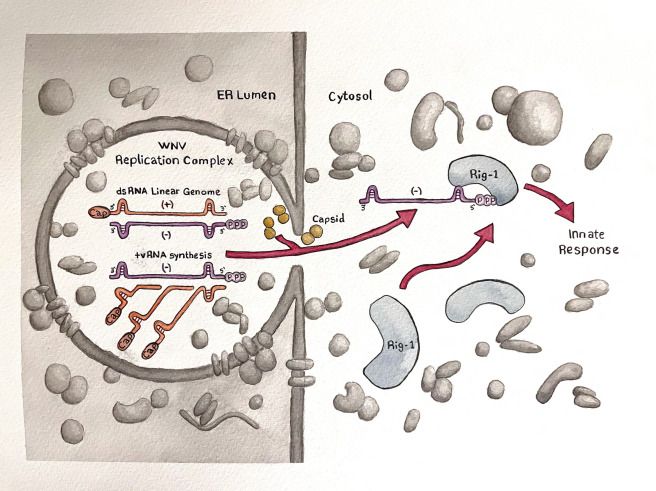
Now you see me, now you don’t: What and how viral RNAs are detected by cytoplasmic pattern-recognition receptors
In a recent issue of Molecular Cell, Genoyer et al. show that during West Nile virus infection, escaped, cytoplasmic, anti-genomic negative-sense viral RNA triggers an antiviral response via RIG-I activation. Flaviviruses typically hide −vRNA in replication compartments to avoid detection, but some −vRNA leaks, possibly aided by viral capsid proteins.
dlvr.it
April 18, 2025 at 6:19 PM
Check out this fun preview of my postdoctoral work! It highlights our findings plus lots of intriguing questions that I’m super excited to tackle in the coming years. (And the model is beautiful! Thank you! 🧑🎨 )
Reposted by Noga Sharlin

After 150,000 articles and 17 million genome sequences, what has science taught us about SARS-CoV-2?
https://go.nature.com/4iDKrtw
https://go.nature.com/4iDKrtw
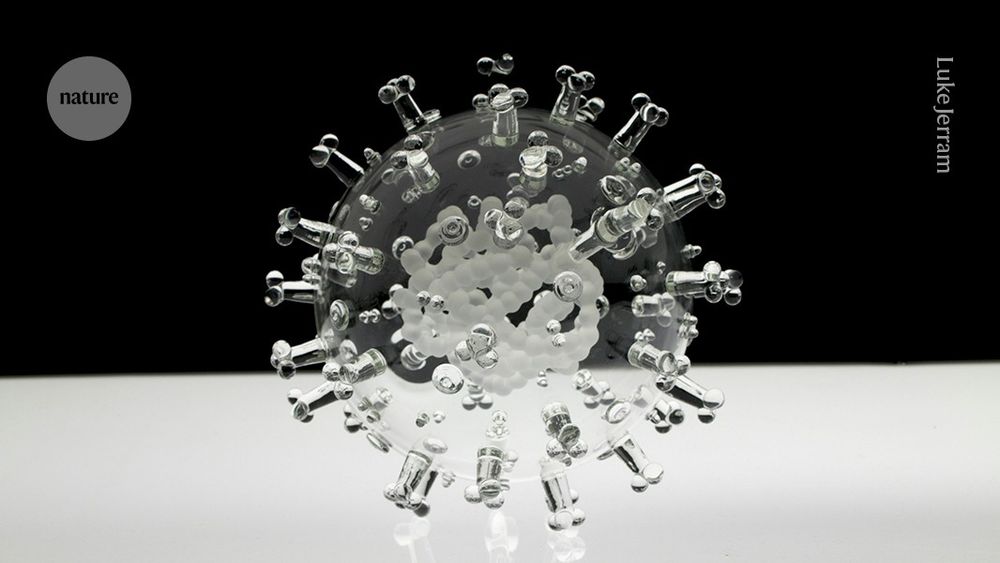
Four ways COVID changed virology: lessons from the most sequenced virus of all time
After 150,000 articles and 17 million genome sequences, what has science taught us about SARS-Cov-2?
go.nature.com
March 12, 2025 at 11:19 AM
After 150,000 articles and 17 million genome sequences, what has science taught us about SARS-CoV-2?
https://go.nature.com/4iDKrtw
https://go.nature.com/4iDKrtw
Reposted by Noga Sharlin

Our newest work reveals that SARS-CoV-2 evolved to produce a truncated version of its N protein to antagonize antiviral responses. This 'mini' N, called N*M210, sequesters dsRNA, blocks interferon activation, defeats RNaseL & disassembles stress granules and p-bodies. www.biorxiv.org/content/10.1...

A truncated SARS-CoV-2 nucleocapsid protein enhances virus fitness by evading antiviral responses
Viruses face a selective pressure to evade cellular antiviral responses to control the outcome of an infection. However, due to their limited genome size, viruses must adopt unique strategies to confr...
www.biorxiv.org
February 27, 2025 at 3:35 AM
Our newest work reveals that SARS-CoV-2 evolved to produce a truncated version of its N protein to antagonize antiviral responses. This 'mini' N, called N*M210, sequesters dsRNA, blocks interferon activation, defeats RNaseL & disassembles stress granules and p-bodies. www.biorxiv.org/content/10.1...