


Scott Anderson
@nematode1.bsky.social
Doctor of plant pathology, focusing on the molecular biology of plant and root-knot nematodes interactions. Studied in the Gleason lab at WSU. Other interests: sports, books, running, and cats (duh)
Reposted by Scott Anderson

I would have loved this assignment as an undergrad:
Learning how an instrument works by taking one apart 🧪
Learning how an instrument works by taking one apart 🧪
'Increasing Student Understanding and Technical Skills in Instrumental Analysis: Piloting a Student-Led Instrument Deconstruction with a Decommissioned ICP-MS' from Journal of Chemical Education is currently free to read as an #ACSEditorsChoice.
📖 Read the article: buff.ly/A8FsoUG
📖 Read the article: buff.ly/A8FsoUG

October 30, 2025 at 12:13 PM
I would have loved this assignment as an undergrad:
Learning how an instrument works by taking one apart 🧪
Learning how an instrument works by taking one apart 🧪
Reposted by Scott Anderson

New pre-print from the team!
The manuscript is @emma-raven.bsky.social's PhD work showing that whether a leaf is a carbon sink or a carbon source influences how they execute immune responses.
Have a read!
#PlantScience
@johninnescentre.bsky.social
The manuscript is @emma-raven.bsky.social's PhD work showing that whether a leaf is a carbon sink or a carbon source influences how they execute immune responses.
Have a read!
#PlantScience
@johninnescentre.bsky.social

Primary metabolism underpins the execution of immune responses in different tissues of the same plant https://www.biorxiv.org/content/10.1101/2025.10.11.681807v1
October 14, 2025 at 7:16 AM
New pre-print from the team!
The manuscript is @emma-raven.bsky.social's PhD work showing that whether a leaf is a carbon sink or a carbon source influences how they execute immune responses.
Have a read!
#PlantScience
@johninnescentre.bsky.social
The manuscript is @emma-raven.bsky.social's PhD work showing that whether a leaf is a carbon sink or a carbon source influences how they execute immune responses.
Have a read!
#PlantScience
@johninnescentre.bsky.social
Reposted by Scott Anderson
Recognition of a phytocytokine by the DEPR1-SERK2 receptor complex confers multi-pathogen resistance in wheat #research #MolecularPlant cell.com/molecular-pl...

October 12, 2025 at 2:48 PM
Recognition of a phytocytokine by the DEPR1-SERK2 receptor complex confers multi-pathogen resistance in wheat #research #MolecularPlant cell.com/molecular-pl...
Reposted by Scott Anderson
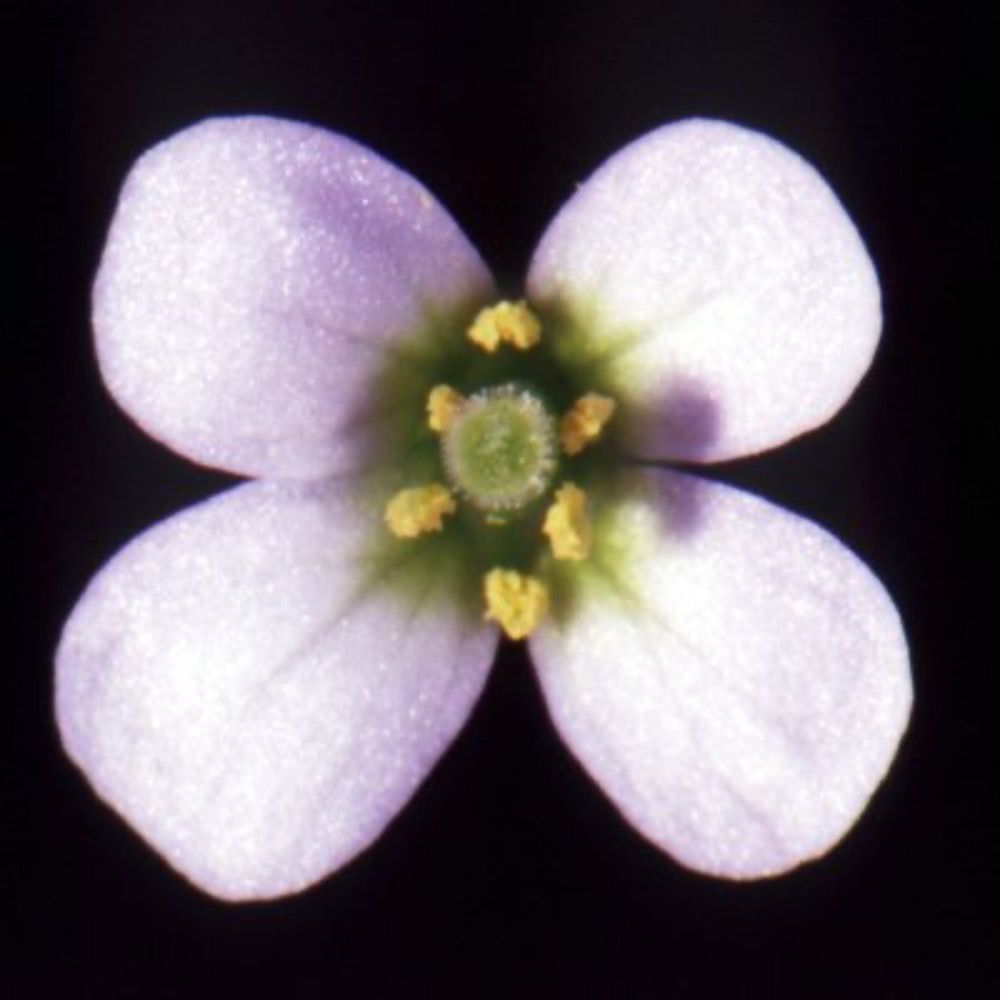
Game changer for cell-based plant genetics: the labs of Caixia Gao & Jin-Long Qiu have developed very efficient self-replicating vectors and they just published a very nice proof-of-concept paper.
#plantscience
www.science.org/doi/10.1126/...
#plantscience
www.science.org/doi/10.1126/...

October 7, 2025 at 9:54 AM
Game changer for cell-based plant genetics: the labs of Caixia Gao & Jin-Long Qiu have developed very efficient self-replicating vectors and they just published a very nice proof-of-concept paper.
#plantscience
www.science.org/doi/10.1126/...
#plantscience
www.science.org/doi/10.1126/...
Reposted by Scott Anderson

Out in @science.org this week:
A new FRET sensor for salicylic acid gives insight into spatial dynamics of pathogen infection www.science.org/doi/10.1126/...
(1/2)
#PlantScience
A new FRET sensor for salicylic acid gives insight into spatial dynamics of pathogen infection www.science.org/doi/10.1126/...
(1/2)
#PlantScience

SALICYLIC ACID SENSOR1 reveals the propagation of an SA hormone surge during plant pathogen advance
Salicylic acid (SA) is a key phytohormone that orchestrates immune responses against pathogens, including Pseudomonas syringae bacteria. The timing and extent of SA accumulation are tightly controlled...
www.science.org
October 10, 2025 at 9:12 AM
Out in @science.org this week:
A new FRET sensor for salicylic acid gives insight into spatial dynamics of pathogen infection www.science.org/doi/10.1126/...
(1/2)
#PlantScience
A new FRET sensor for salicylic acid gives insight into spatial dynamics of pathogen infection www.science.org/doi/10.1126/...
(1/2)
#PlantScience
Reposted by Scott Anderson

Plant scientists solved old puzzle around protein distribution in plant cells. The team around Prof. Chriostopher Grefen and first author Dr. Lei Zhang from @ruhr-uni-bochum.de report findings in @pnas.org (DOI: 10.1073/pnas.251435412) #PlantSci
news.rub.de/english/pres...
news.rub.de/english/pres...

Old Puzzle around Protein Distribution in Plant Cells Solved
Researchers in Bochum have discovered a control mechanism that may also operate beyond plants.
news.rub.de
October 10, 2025 at 11:22 AM
Plant scientists solved old puzzle around protein distribution in plant cells. The team around Prof. Chriostopher Grefen and first author Dr. Lei Zhang from @ruhr-uni-bochum.de report findings in @pnas.org (DOI: 10.1073/pnas.251435412) #PlantSci
news.rub.de/english/pres...
news.rub.de/english/pres...
Reposted by Scott Anderson
1/13 Thankfully, both you and your plants have a lot of sophisticated ways to fight off invading pathogens.
In our new preprint, we describe a new way in which animals and plants share a common strategy to ward off harmful bacteria.
www.biorxiv.org/content/10.1...
In our new preprint, we describe a new way in which animals and plants share a common strategy to ward off harmful bacteria.
www.biorxiv.org/content/10.1...

A secreted citrus protease cleaves an outer membrane protein of the Huanglongbing pathogen
Plants secrete a variety of proteases as a defense response during infection by microbial pathogens. However, the relationship between their catalytic activities and antimicrobial functions remains la...
www.biorxiv.org
October 10, 2025 at 2:15 PM
1/13 Thankfully, both you and your plants have a lot of sophisticated ways to fight off invading pathogens.
In our new preprint, we describe a new way in which animals and plants share a common strategy to ward off harmful bacteria.
www.biorxiv.org/content/10.1...
In our new preprint, we describe a new way in which animals and plants share a common strategy to ward off harmful bacteria.
www.biorxiv.org/content/10.1...
Reposted by Scott Anderson

FRET sensor for SA developed. www.science.org/doi/10.1126/...

SALICYLIC ACID SENSOR1 reveals the propagation of an SA hormone surge during plant pathogen advance
Salicylic acid (SA) is a key phytohormone that orchestrates immune responses against pathogens, including Pseudomonas syringae bacteria. The timing and extent of SA accumulation are tightly controlled...
www.science.org
October 9, 2025 at 9:11 PM
FRET sensor for SA developed. www.science.org/doi/10.1126/...
Reposted by Scott Anderson
Out First Release in @science.org this week:
The development of a directed evolution strategy with proof of concept in plant immune protein engineering.
www.science.org/doi/10.1126/...
The development of a directed evolution strategy with proof of concept in plant immune protein engineering.
www.science.org/doi/10.1126/...

Engineered geminivirus replicons enable rapid in planta directed evolution
Directed evolution can rapidly generate genetic variants with new and enhanced properties, yet efficient platforms for performing such evolution directly in plant cells have been lacking. We developed...
www.science.org
October 7, 2025 at 9:54 AM
Out First Release in @science.org this week:
The development of a directed evolution strategy with proof of concept in plant immune protein engineering.
www.science.org/doi/10.1126/...
The development of a directed evolution strategy with proof of concept in plant immune protein engineering.
www.science.org/doi/10.1126/...
Reposted by Scott Anderson
“Overexpression of α-SNAPRhg1 Can Improve rhg1-a-Mediated Soybean Resistance to Soybean Cyst Nematode,” by Deepak Haarith et al. Available open access in Phytopathology, Volume 115, Number 9: https://doi.org/10.1094/PHYTO-02-25-0077-R

October 8, 2025 at 7:45 PM
“Overexpression of α-SNAPRhg1 Can Improve rhg1-a-Mediated Soybean Resistance to Soybean Cyst Nematode,” by Deepak Haarith et al. Available open access in Phytopathology, Volume 115, Number 9: https://doi.org/10.1094/PHYTO-02-25-0077-R
Reposted by Scott Anderson
HY5 integrates light and electrical signaling to trigger a jasmonate burst for nematode defense in tomato
www.nature.com/articles/s41...
#plantscience
www.nature.com/articles/s41...
#plantscience

October 3, 2025 at 11:26 AM
HY5 integrates light and electrical signaling to trigger a jasmonate burst for nematode defense in tomato
www.nature.com/articles/s41...
#plantscience
www.nature.com/articles/s41...
#plantscience
Reposted by Scott Anderson

Very happy to see this work finally online!
Resistance against necrotrophic pathogens is not generally conserved. When comparing five wild tomato spp, we saw that one spp co-opted a different mechanism against Sclerotinia infection!
Resistance against necrotrophic pathogens is not generally conserved. When comparing five wild tomato spp, we saw that one spp co-opted a different mechanism against Sclerotinia infection!
This looks very interesting. Congrats @rstam.bsky.social et al. Co-option of transcription factors drives evolution of quantitative disease resistance against a necrotrophic pathogen url: academic.oup.com/plcell/artic...

Co-option of transcription factors drives evolution of quantitative disease resistance against a necrotrophic pathogen
Quantitative disease resistance in a wild tomato genotype evolved through species-specific regulatory network rewiring, with an ancient transcription facto
academic.oup.com
October 1, 2025 at 12:48 PM
Very happy to see this work finally online!
Resistance against necrotrophic pathogens is not generally conserved. When comparing five wild tomato spp, we saw that one spp co-opted a different mechanism against Sclerotinia infection!
Resistance against necrotrophic pathogens is not generally conserved. When comparing five wild tomato spp, we saw that one spp co-opted a different mechanism against Sclerotinia infection!
Reposted by Scott Anderson

Epigenetic Mechanisms Explain Inheritance of Longevity Markers in C. Elegans
https://www.newsbeep.com/nz/43497/
New research in C. elegans from scientists at Howard Hughes Medical Institute (HHMI) helps explain how changes in…
https://www.newsbeep.com/nz/43497/
New research in C. elegans from scientists at Howard Hughes Medical Institute (HHMI) helps explain how changes in…

Epigenetic Mechanisms Explain Inheritance of Longevity Markers in C. Elegans - New Zealand News Beep
New research in C. elegans from scientists at Howard Hughes Medical Institute (HHMI) helps explain how changes in the parents’ lysosomes that promote
www.newsbeep.com
September 26, 2025 at 1:00 AM
Epigenetic Mechanisms Explain Inheritance of Longevity Markers in C. Elegans
https://www.newsbeep.com/nz/43497/
New research in C. elegans from scientists at Howard Hughes Medical Institute (HHMI) helps explain how changes in…
https://www.newsbeep.com/nz/43497/
New research in C. elegans from scientists at Howard Hughes Medical Institute (HHMI) helps explain how changes in…
Reposted by Scott Anderson

Get a First Look 🔍: “Occurrence of Plant-Parasitic Nematodes in Pacific Northwest Hopyards,” by Lester Antonio Núñez Rodríguez et al.: https://doi.org/10.1094/PHP-01-25-0011-RS
https://doi.org/10.1094/PHP-01-25-0011-RS
t.co
September 18, 2025 at 9:30 PM
Get a First Look 🔍: “Occurrence of Plant-Parasitic Nematodes in Pacific Northwest Hopyards,” by Lester Antonio Núñez Rodríguez et al.: https://doi.org/10.1094/PHP-01-25-0011-RS
Reposted by Scott Anderson

"With 2 weeks left before the end of this fiscal year, USDA’s [NIFA] had awarded just 558 competitive grants ... 68% fewer than during the prior fiscal year—and $741 million less in competitively awarded research funds"
Don't forget #PlantSci and ag research, folks.
www.science.org/content/arti...
Don't forget #PlantSci and ag research, folks.
www.science.org/content/arti...

USDA funding delays under Trump compromise agricultural research
Sharp drop in grant awards leaves researchers frustrated
www.science.org
September 18, 2025 at 2:43 PM
"With 2 weeks left before the end of this fiscal year, USDA’s [NIFA] had awarded just 558 competitive grants ... 68% fewer than during the prior fiscal year—and $741 million less in competitively awarded research funds"
Don't forget #PlantSci and ag research, folks.
www.science.org/content/arti...
Don't forget #PlantSci and ag research, folks.
www.science.org/content/arti...
Reposted by Scott Anderson

Pleased to share our new article in Cell Host & Microbe, a collaboration with the group of Zhong Wei at NJAU
Common mycorrhizal networks facilitate plant disease resistance by altering rhizosphere microbiome assembly
Free share link: authors.elsevier.com/c/1lnTD6t8JE...
Common mycorrhizal networks facilitate plant disease resistance by altering rhizosphere microbiome assembly
Free share link: authors.elsevier.com/c/1lnTD6t8JE...

September 16, 2025 at 11:16 PM
Pleased to share our new article in Cell Host & Microbe, a collaboration with the group of Zhong Wei at NJAU
Common mycorrhizal networks facilitate plant disease resistance by altering rhizosphere microbiome assembly
Free share link: authors.elsevier.com/c/1lnTD6t8JE...
Common mycorrhizal networks facilitate plant disease resistance by altering rhizosphere microbiome assembly
Free share link: authors.elsevier.com/c/1lnTD6t8JE...
Reposted by Scott Anderson

A new EPPO Datasheet on the rice root-knot nematode Meloidogyne graminicola is now online in the EPPO Bulletin. Thanks to Giovanna Curto, Italy.
onlinelibrary.wiley.com/doi/epdf/10....
onlinelibrary.wiley.com/doi/epdf/10....

September 17, 2025 at 7:25 AM
A new EPPO Datasheet on the rice root-knot nematode Meloidogyne graminicola is now online in the EPPO Bulletin. Thanks to Giovanna Curto, Italy.
onlinelibrary.wiley.com/doi/epdf/10....
onlinelibrary.wiley.com/doi/epdf/10....
Reposted by Scott Anderson

🍅 #NEMEMERGE partners at the Agricultural Institute of #Slovenia are testing the #virulence of root-knot #nematodes on #tomatoes with varying degrees of #geneticresistance🌱
The #results will be announced soon, but in the meantime, here are the details of the #experiment 🌐 bit.ly/4lKbHYt
Stay tuned❗️
The #results will be announced soon, but in the meantime, here are the details of the #experiment 🌐 bit.ly/4lKbHYt
Stay tuned❗️


August 28, 2025 at 12:40 PM
🍅 #NEMEMERGE partners at the Agricultural Institute of #Slovenia are testing the #virulence of root-knot #nematodes on #tomatoes with varying degrees of #geneticresistance🌱
The #results will be announced soon, but in the meantime, here are the details of the #experiment 🌐 bit.ly/4lKbHYt
Stay tuned❗️
The #results will be announced soon, but in the meantime, here are the details of the #experiment 🌐 bit.ly/4lKbHYt
Stay tuned❗️
Reposted by Scott Anderson

A new preprint involving the labs of @jonathandgjones.bsky.social and @kamounlab.bsky.social unveils the structure of the largest plant resistosome to date 🌱
The octameric WAI3 resistosome was found in wheat, but similar arrangements can be found in other plants 🌾
Check it out 👉 buff.ly/yBhLYz6
The octameric WAI3 resistosome was found in wheat, but similar arrangements can be found in other plants 🌾
Check it out 👉 buff.ly/yBhLYz6

August 28, 2025 at 12:29 PM
A new preprint involving the labs of @jonathandgjones.bsky.social and @kamounlab.bsky.social unveils the structure of the largest plant resistosome to date 🌱
The octameric WAI3 resistosome was found in wheat, but similar arrangements can be found in other plants 🌾
Check it out 👉 buff.ly/yBhLYz6
The octameric WAI3 resistosome was found in wheat, but similar arrangements can be found in other plants 🌾
Check it out 👉 buff.ly/yBhLYz6
Reposted by Scott Anderson

My new paper is out in Current Biology!
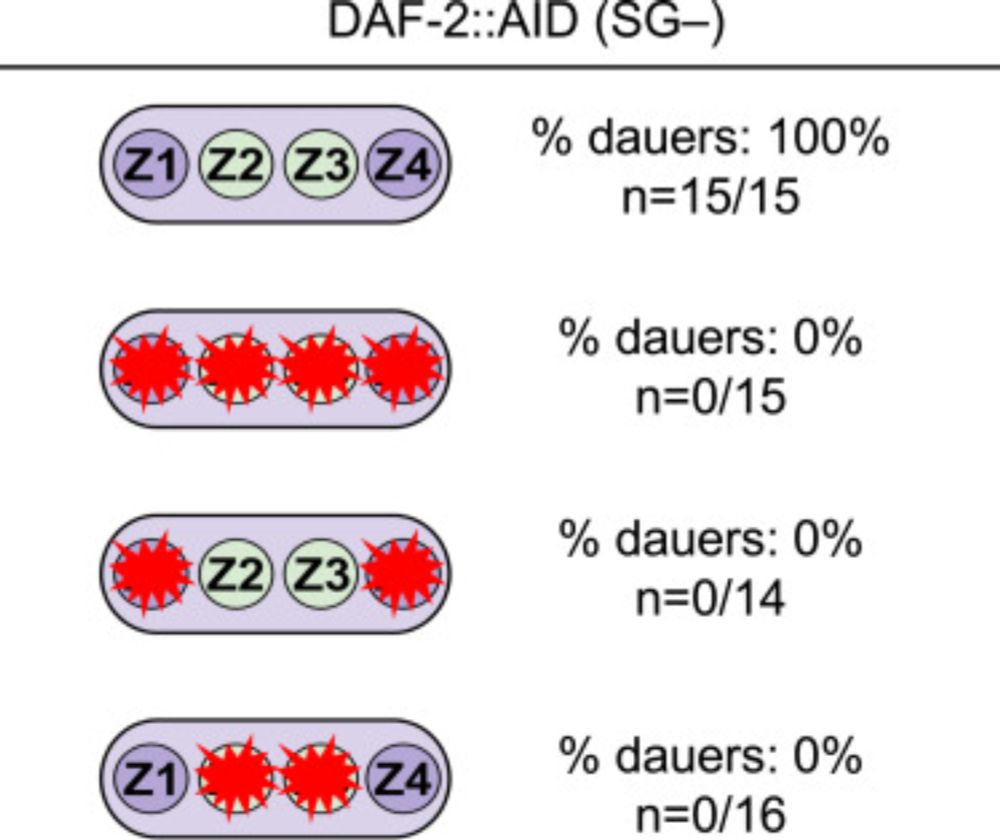
Insulin signaling activity in the somatic gonad controls dauer entry via the germ line in C. elegans
C. elegans dauer diapause is a facultative state of cellular and developmental quiescence
that enables survival in adverse conditions. Przybyl et al. show that a canonical
insulin signaling pathway ac...
www.cell.com
August 27, 2025 at 5:39 PM
My new paper is out in Current Biology!
Reposted by Scott Anderson

The endoplasmic reticulum donates lipids through a tunnel-like protein to help lysosomes expand.
Learn more in a new #SciencePerspective: https://scim.ag/45GWQrS
Learn more in a new #SciencePerspective: https://scim.ag/45GWQrS

A protein tunnel helps stressed lysosomes swell
The endoplasmic reticulum donates lipids through a tunnel-like protein to help lysosomes expand
scim.ag
August 27, 2025 at 1:07 PM
The endoplasmic reticulum donates lipids through a tunnel-like protein to help lysosomes expand.
Learn more in a new #SciencePerspective: https://scim.ag/45GWQrS
Learn more in a new #SciencePerspective: https://scim.ag/45GWQrS
Reposted by Scott Anderson

This always blows my mind. Dude mapped qtl for a quantitative trait to a chromosome in 1923!
Related but cool combo of cytogenetics and phenotype. Know when the first QTL was mapped?
Sax, K. 1923. The association of size differences with seed coat pattern and pigmentation in Phaseolus vulgaris. Genetics 8:552-560.
Sax, K. 1923. The association of size differences with seed coat pattern and pigmentation in Phaseolus vulgaris. Genetics 8:552-560.
August 27, 2025 at 3:14 AM
This always blows my mind. Dude mapped qtl for a quantitative trait to a chromosome in 1923!
Reposted by Scott Anderson

Specificity and Selectivity of Raman Spectroscopy for the Detection of Dose-Dependent Heavy Metal Toxicities (Isaac D. Juárez, Nicholas Shepard, Cole Sebok, Sudip Biswas, Endang Septiningsih, Dmitry Kurouski) doi.org/10.1002/pld3... #PlantScience

An Agilent Resolve hand-held Raman spectrophotometer was used to collect spectra from the rice leaves at 830 nm. Acquisition time was 1 s at a laser power of 495 mW; 24 Raman spectra were acquired for each group of plants once a week, stopping at Week 6. Photographs of the crops were also collected at these time points. All spectra were baselined and normalized at the 1440-cm−1 peak.
doi.org
August 27, 2025 at 3:07 PM
Reposted by Scott Anderson

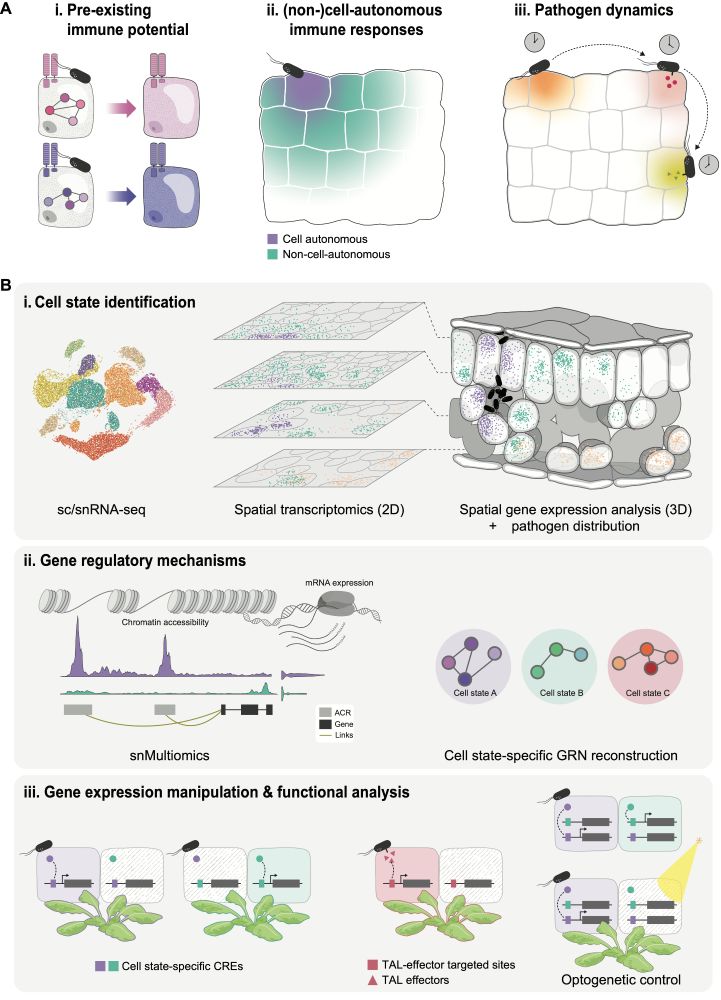
How can we better understand the plant immune system? In my new @cp-cellhostmicrobe.bsky.social piece, I propose “immune cell states” as a framework for uniting molecular and cellular perspectives.
www.cell.com/cell-host-mi...
www.cell.com/cell-host-mi...
August 13, 2025 at 3:12 PM
How can we better understand the plant immune system? In my new @cp-cellhostmicrobe.bsky.social piece, I propose “immune cell states” as a framework for uniting molecular and cellular perspectives.
www.cell.com/cell-host-mi...
www.cell.com/cell-host-mi...
Reposted by Scott Anderson

We are excited to announce our next Trends in Nematology Webinar on Nematode Genomics and Effectoromics!
When: 18th September, 2025
Time: 16:00-17:15 CEST
How can I join: Register using the QR code below 🪱
Looking forward to seeing you there!
When: 18th September, 2025
Time: 16:00-17:15 CEST
How can I join: Register using the QR code below 🪱
Looking forward to seeing you there!

August 14, 2025 at 10:06 AM
We are excited to announce our next Trends in Nematology Webinar on Nematode Genomics and Effectoromics!
When: 18th September, 2025
Time: 16:00-17:15 CEST
How can I join: Register using the QR code below 🪱
Looking forward to seeing you there!
When: 18th September, 2025
Time: 16:00-17:15 CEST
How can I join: Register using the QR code below 🪱
Looking forward to seeing you there!