


Michal Lipinski, PhD
@mich-lipi.bsky.social
Senior Scientist @broadinstitute.org |
Chief Academic Officer @sci-mi.org |
Professionally #spatial #transcriptomics and cell biology. Privately houseplants, easily distracted, doing my best ⭐
Chief Academic Officer @sci-mi.org |
Professionally #spatial #transcriptomics and cell biology. Privately houseplants, easily distracted, doing my best ⭐
After seeing the ad for NDT's Masterclass with him saying "One of the great challenges in life is knowing enough to think you’re right but not enough to know you’re wrong." I keep thinking it is either poorly worded or a complete misinterpretation of Dunning-Kruger effect. Just had to let it out
June 19, 2025 at 3:53 PM
After seeing the ad for NDT's Masterclass with him saying "One of the great challenges in life is knowing enough to think you’re right but not enough to know you’re wrong." I keep thinking it is either poorly worded or a complete misinterpretation of Dunning-Kruger effect. Just had to let it out
Reposted by Michal Lipinski, PhD
My favourite talk so far, @mich-lipi.bsky.social from @broadinstitute.org presented stacked #Illumina spatial slides of the mouse brain transcriptome with subcellular resolution #AGBTGM
I'm sold on spatial now...
I'm sold on spatial now...
February 26, 2025 at 5:27 AM
My favourite talk so far, @mich-lipi.bsky.social from @broadinstitute.org presented stacked #Illumina spatial slides of the mouse brain transcriptome with subcellular resolution #AGBTGM
I'm sold on spatial now...
I'm sold on spatial now...
Reposted by Michal Lipinski, PhD

STP collaborating with Illumina, Inc. soon offering unbiased whole-transcriptome, high resolution, high sensitivity 50mm x 15mm capture areas!
www.illumina.com/company/news...
www.illumina.com/company/news...

Illumina unveils first-of-its-kind spatial transcriptomics technology
www.illumina.com
February 19, 2025 at 5:38 PM
STP collaborating with Illumina, Inc. soon offering unbiased whole-transcriptome, high resolution, high sensitivity 50mm x 15mm capture areas!
www.illumina.com/company/news...
www.illumina.com/company/news...
Reposted by Michal Lipinski, PhD
Fascinating work showing that ants working in groups outperform individual ants in solving the piano movers’ puzzle. Human groups do not show such improvement and can even perform worse than an individual person, if communication is restricted. #neuroscience 🧪 🧠

Ants Solving A Puzzle
Credit: "Comparing cooperative geometric puzzle solving in ants versus humans" (scientific paper, doi.org/10.1073/pnas...,
Tabea Dreyer, Amir Haluts Amos Korman and Ofer Feinerman)
When ants work in groups, their performances rise significantly.
Credit: "Comparing cooperative geometric puzzle solving in ants versus humans" (scientific paper, doi.org/10.1073/pnas...,
Tabea Dreyer, Amir Haluts Amos Korman and Ofer Feinerman)
When ants work in groups, their performances rise significantly.
December 26, 2024 at 8:28 PM
Fascinating work showing that ants working in groups outperform individual ants in solving the piano movers’ puzzle. Human groups do not show such improvement and can even perform worse than an individual person, if communication is restricted. #neuroscience 🧪 🧠
Reposted by Michal Lipinski, PhD

What a cell does depends on its location. Experiments like single cell sequencing strip away signs of where a cell was in its original organ or tissue. New spatial -omics techniques collect in-depth molecular data from cells while retaining that spatial information. Learn more: youtu.be/izhZ9VB1jRM
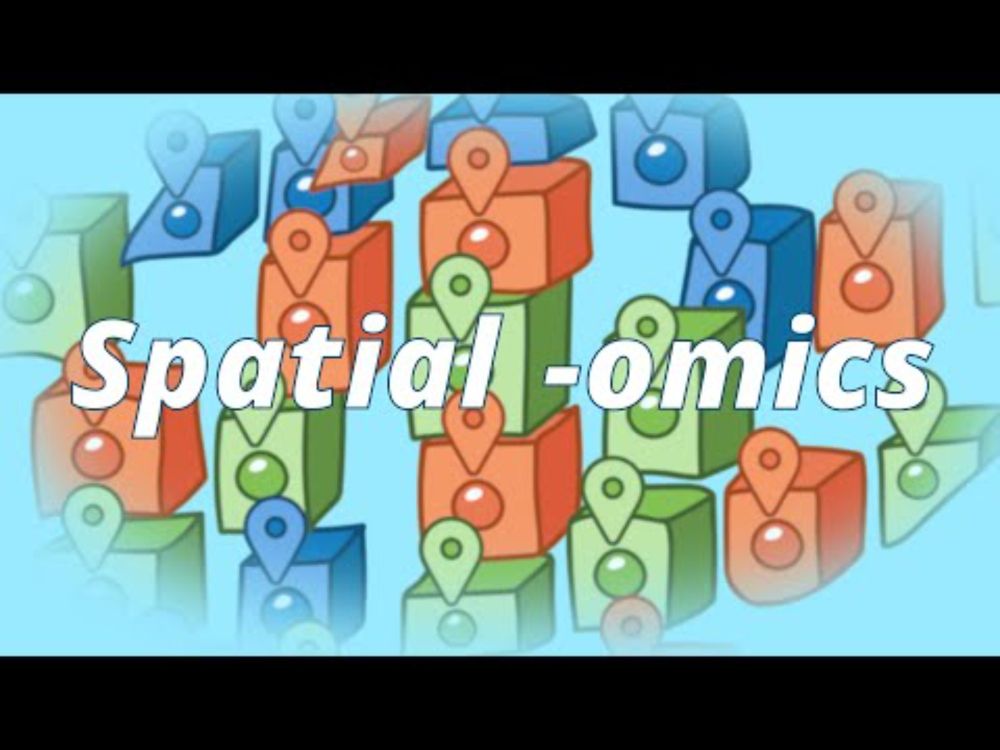
Spatial -omics: "Location, location, location" applies to biology, too
YouTube video by Broad Institute
youtu.be
December 10, 2024 at 5:05 PM
What a cell does depends on its location. Experiments like single cell sequencing strip away signs of where a cell was in its original organ or tissue. New spatial -omics techniques collect in-depth molecular data from cells while retaining that spatial information. Learn more: youtu.be/izhZ9VB1jRM
Reposted by Michal Lipinski, PhD
The Broad’s Spatial Technology Platform supports scientists who want to study cells and tissues with spatial context. In a Q&A, STP director Sami Farhi explains how the team makes spatial tools more accessible and employs them for scientific discovery.
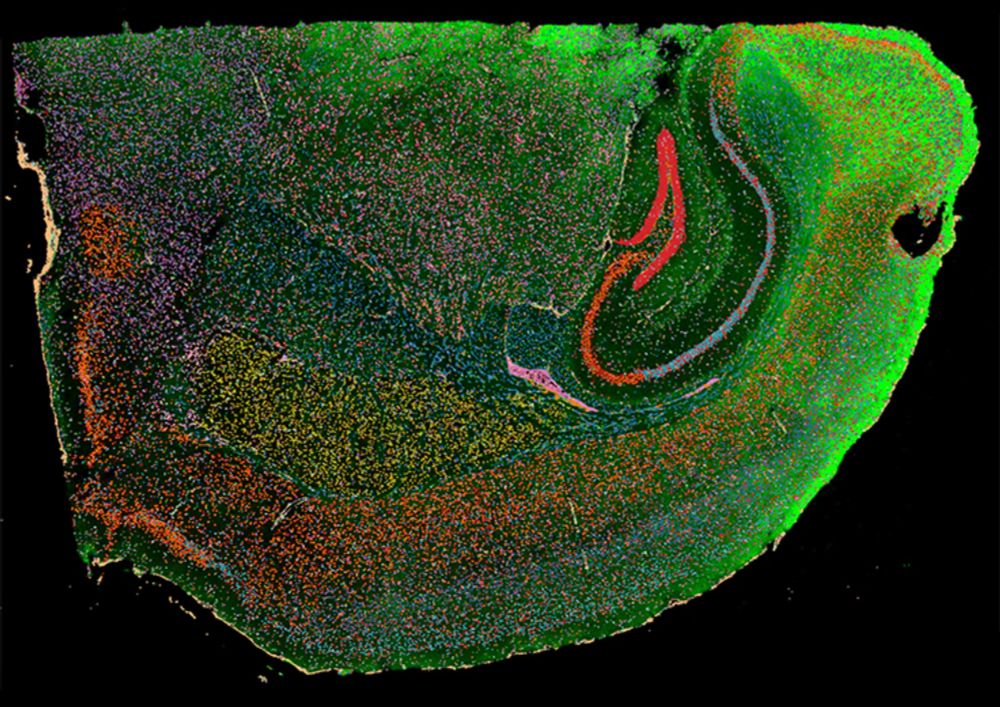
Q&A: How a Broad team uses cutting-edge spatial technologies to enable new science
Sami Farhi, director of Broad’s Spatial Technology Platform, describes how the group, launched in late 2022, supports scientists who want to study cells and tissues with spatial context.
www.broadinstitute.org
December 9, 2024 at 4:31 PM
The Broad’s Spatial Technology Platform supports scientists who want to study cells and tissues with spatial context. In a Q&A, STP director Sami Farhi explains how the team makes spatial tools more accessible and employs them for scientific discovery.
@ioavlachos.bsky.social can I please be added to the Spatial Tissue Profiling starter pack? I work at the Broad Spatial Technology Platform with Sami. Thanks!
November 30, 2024 at 6:21 AM
@ioavlachos.bsky.social can I please be added to the Spatial Tissue Profiling starter pack? I work at the Broad Spatial Technology Platform with Sami. Thanks!
Reposted by Michal Lipinski, PhD
1/ Introducing SCimilarity, a new foundation model to explore single-cell RNA-seq data across tissues and diseases! It learns a common measure of cell similarity by training a deep metric learning model on millions of cells from various human tissues and conditions. www.nature.com/articles/s41...
A cell atlas foundation model for scalable search of similar human cells - Nature
Nature - A cell atlas foundation model for scalable search of similar human cells
www.nature.com
November 22, 2024 at 10:16 PM
1/ Introducing SCimilarity, a new foundation model to explore single-cell RNA-seq data across tissues and diseases! It learns a common measure of cell similarity by training a deep metric learning model on millions of cells from various human tissues and conditions. www.nature.com/articles/s41...