




Kristian Steensen Nielsen
@kristiansn89.bsky.social
Assistant Professor @ Copenhagen Business School
Behavior change | climate change mitigation | environmental psychology | biodiversity conservation
Behavior change | climate change mitigation | environmental psychology | biodiversity conservation
Across a global sample of more than 9,000 scientists, the authors find that those who are more techno-optimistic report lower engagement in both civic climate actions and high-impact lifestyle changes (like reducing flying, car use, or shifting diets).
(2/4)
(2/4)

November 19, 2025 at 4:26 PM
Across a global sample of more than 9,000 scientists, the authors find that those who are more techno-optimistic report lower engagement in both civic climate actions and high-impact lifestyle changes (like reducing flying, car use, or shifting diets).
(2/4)
(2/4)
⚠️ When “technology will save us” becomes a climate risk!
A new paper from great colleagues takes a careful look at techno-optimism — the belief that technology will largely solve climate change — and what it means for real-world climate action.
(1/4)👇
osf.io/preprints/ps...
A new paper from great colleagues takes a careful look at techno-optimism — the belief that technology will largely solve climate change — and what it means for real-world climate action.
(1/4)👇
osf.io/preprints/ps...

November 19, 2025 at 4:26 PM
⚠️ When “technology will save us” becomes a climate risk!
A new paper from great colleagues takes a careful look at techno-optimism — the belief that technology will largely solve climate change — and what it means for real-world climate action.
(1/4)👇
osf.io/preprints/ps...
A new paper from great colleagues takes a careful look at techno-optimism — the belief that technology will largely solve climate change — and what it means for real-world climate action.
(1/4)👇
osf.io/preprints/ps...
👨👨👧👦 Social environments, especially descriptive norms and family goal support, consistently predict both current behaviors and perceived feasibility.
🏙️ Physical environments matter too, but effects are more varied (e.g., transport access influencing driving or public transport use)...
🏙️ Physical environments matter too, but effects are more varied (e.g., transport access influencing driving or public transport use)...


October 24, 2025 at 10:03 AM
👨👨👧👦 Social environments, especially descriptive norms and family goal support, consistently predict both current behaviors and perceived feasibility.
🏙️ Physical environments matter too, but effects are more varied (e.g., transport access influencing driving or public transport use)...
🏙️ Physical environments matter too, but effects are more varied (e.g., transport access influencing driving or public transport use)...
⭐ After quite some time in the making, I’m excited to share our new paper!🌿⭐
We examined people's climate-relevant behaviors (driving, air travel, public transport use, and meat consumption) and their perceptions of how feasible it would be to change them (+ expected wellbeing impacts).
🧵(1/4)
We examined people's climate-relevant behaviors (driving, air travel, public transport use, and meat consumption) and their perceptions of how feasible it would be to change them (+ expected wellbeing impacts).
🧵(1/4)

October 24, 2025 at 10:03 AM
⭐ After quite some time in the making, I’m excited to share our new paper!🌿⭐
We examined people's climate-relevant behaviors (driving, air travel, public transport use, and meat consumption) and their perceptions of how feasible it would be to change them (+ expected wellbeing impacts).
🧵(1/4)
We examined people's climate-relevant behaviors (driving, air travel, public transport use, and meat consumption) and their perceptions of how feasible it would be to change them (+ expected wellbeing impacts).
🧵(1/4)
🔥 The never-ending narrative…
This week, I’ve once again heard prominent climate researchers dismiss individual action as either irrelevant or a distraction instigated by the fossil fuel industry.
Here’s a 🧵 on why this argument frustrates me to no end and why I think it misses the bigger picture.
This week, I’ve once again heard prominent climate researchers dismiss individual action as either irrelevant or a distraction instigated by the fossil fuel industry.
Here’s a 🧵 on why this argument frustrates me to no end and why I think it misses the bigger picture.

October 15, 2025 at 11:50 AM
🔥 The never-ending narrative…
This week, I’ve once again heard prominent climate researchers dismiss individual action as either irrelevant or a distraction instigated by the fossil fuel industry.
Here’s a 🧵 on why this argument frustrates me to no end and why I think it misses the bigger picture.
This week, I’ve once again heard prominent climate researchers dismiss individual action as either irrelevant or a distraction instigated by the fossil fuel industry.
Here’s a 🧵 on why this argument frustrates me to no end and why I think it misses the bigger picture.
We outline:
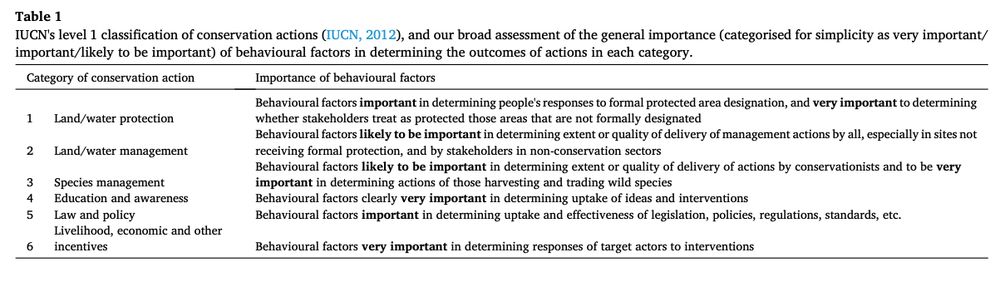
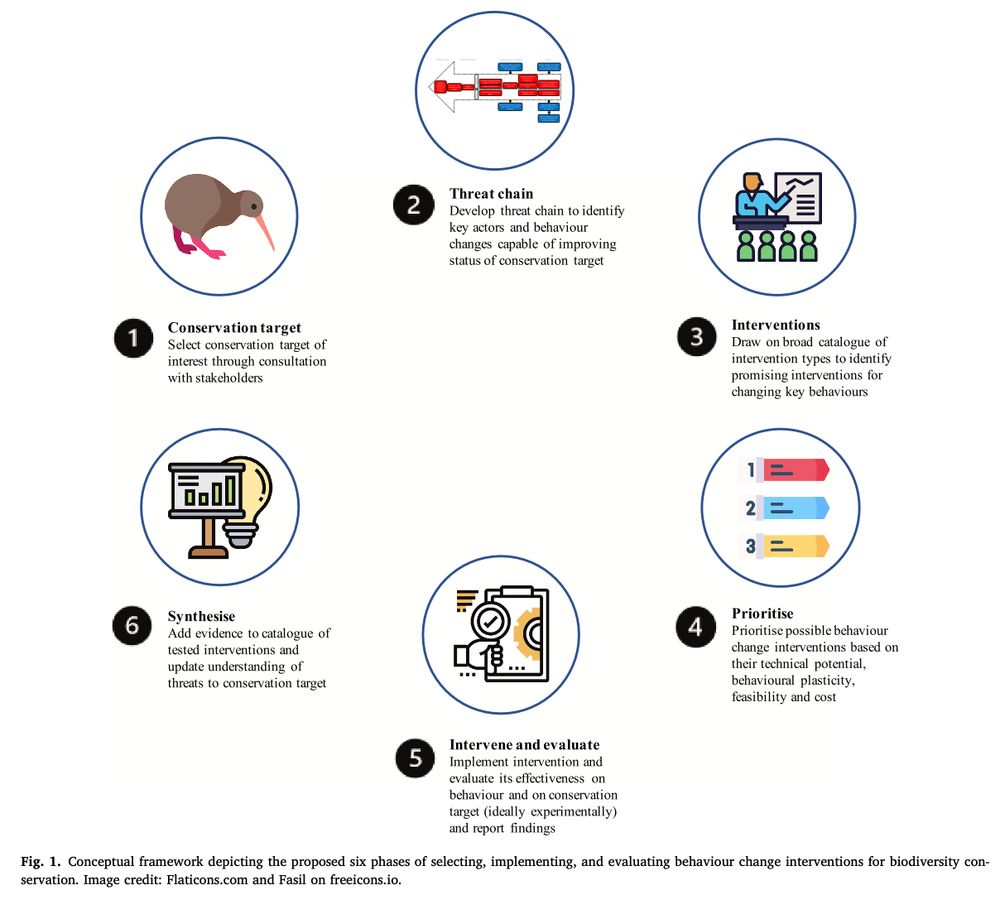
🔑 Why biodiversity challenges are very often also behavioral challenges
📚 A wide range of interventions for changing behavior at both individual and population levels
⚖️ A framework for prioritizing interventions based on their likely impact, feasibility, and cost-effectiveness
(3/5)
🔑 Why biodiversity challenges are very often also behavioral challenges
📚 A wide range of interventions for changing behavior at both individual and population levels
⚖️ A framework for prioritizing interventions based on their likely impact, feasibility, and cost-effectiveness
(3/5)

September 22, 2025 at 12:51 PM
We outline:
🔑 Why biodiversity challenges are very often also behavioral challenges
📚 A wide range of interventions for changing behavior at both individual and population levels
⚖️ A framework for prioritizing interventions based on their likely impact, feasibility, and cost-effectiveness
(3/5)
🔑 Why biodiversity challenges are very often also behavioral challenges
📚 A wide range of interventions for changing behavior at both individual and population levels
⚖️ A framework for prioritizing interventions based on their likely impact, feasibility, and cost-effectiveness
(3/5)
In 2021, we argued that conservation science and practice have only scratched the surface of what behavioral science can contribute.
Too often, interventions rely on education, regulation, or incentives, without applying decades of insights about how to make these approaches more effective. (2/5)
Too often, interventions rely on education, regulation, or incentives, without applying decades of insights about how to make these approaches more effective. (2/5)

September 22, 2025 at 12:51 PM
In 2021, we argued that conservation science and practice have only scratched the surface of what behavioral science can contribute.
Too often, interventions rely on education, regulation, or incentives, without applying decades of insights about how to make these approaches more effective. (2/5)
Too often, interventions rely on education, regulation, or incentives, without applying decades of insights about how to make these approaches more effective. (2/5)
🌍🇩🇰 Nyt indlæg i @altingetdk.bsky.social
Danmark kaldes ofte et grønt foregangsland. Men vores forbrugsbaserede klimaaftryk er ca. 50% højere end de territoriale udledninger.
Hvis vi vil være et ægte grønt foregangsland, kræver det et forbrugsbaseret klimamål og en strategi for adfærdsændringer...
Danmark kaldes ofte et grønt foregangsland. Men vores forbrugsbaserede klimaaftryk er ca. 50% højere end de territoriale udledninger.
Hvis vi vil være et ægte grønt foregangsland, kræver det et forbrugsbaseret klimamål og en strategi for adfærdsændringer...

September 10, 2025 at 10:03 AM
🌍🇩🇰 Nyt indlæg i @altingetdk.bsky.social
Danmark kaldes ofte et grønt foregangsland. Men vores forbrugsbaserede klimaaftryk er ca. 50% højere end de territoriale udledninger.
Hvis vi vil være et ægte grønt foregangsland, kræver det et forbrugsbaseret klimamål og en strategi for adfærdsændringer...
Danmark kaldes ofte et grønt foregangsland. Men vores forbrugsbaserede klimaaftryk er ca. 50% højere end de territoriale udledninger.
Hvis vi vil være et ægte grønt foregangsland, kræver det et forbrugsbaseret klimamål og en strategi for adfærdsændringer...
🦋🌱 Most people care about #biodiversity, yet we often underestimate how concerned others are about its loss. This “pluralistic ignorance” can silence people, weaken action, and make ambitious policies seem less popular.
In a new paper, we outline a research agenda to study and reduce this gap (1/2)
In a new paper, we outline a research agenda to study and reduce this gap (1/2)

September 9, 2025 at 8:03 AM
🦋🌱 Most people care about #biodiversity, yet we often underestimate how concerned others are about its loss. This “pluralistic ignorance” can silence people, weaken action, and make ambitious policies seem less popular.
In a new paper, we outline a research agenda to study and reduce this gap (1/2)
In a new paper, we outline a research agenda to study and reduce this gap (1/2)
IPCC WGIII Chapter 5 remains one of the most comprehensive resources on the social science of climate change mitigation to date. I cannot recommend it enough! (6/6)
Read it here: www.ipcc.ch/report/ar6/w...
@efesce.bsky.social @jksteinberger.bsky.social @elkeweber.bsky.social
Read it here: www.ipcc.ch/report/ar6/w...
@efesce.bsky.social @jksteinberger.bsky.social @elkeweber.bsky.social

September 8, 2025 at 8:22 AM
IPCC WGIII Chapter 5 remains one of the most comprehensive resources on the social science of climate change mitigation to date. I cannot recommend it enough! (6/6)
Read it here: www.ipcc.ch/report/ar6/w...
@efesce.bsky.social @jksteinberger.bsky.social @elkeweber.bsky.social
Read it here: www.ipcc.ch/report/ar6/w...
@efesce.bsky.social @jksteinberger.bsky.social @elkeweber.bsky.social
Here, social science is crucial. Lasting change depends on reshaping the cultural norms, social dynamics, and infrastructures that currently lock people into high-carbon behaviors.
And when done well, these shifts can substantially reduce emissions while enhancing health, wellbeing, and fairness.
And when done well, these shifts can substantially reduce emissions while enhancing health, wellbeing, and fairness.

September 8, 2025 at 8:22 AM
Here, social science is crucial. Lasting change depends on reshaping the cultural norms, social dynamics, and infrastructures that currently lock people into high-carbon behaviors.
And when done well, these shifts can substantially reduce emissions while enhancing health, wellbeing, and fairness.
And when done well, these shifts can substantially reduce emissions while enhancing health, wellbeing, and fairness.
Tackling demand is not only about asking people to consume less. It is about creating the social, political, and institutional conditions that make low-carbon living possible and attractive across the world.
But high-income countries and groups will have to fundamentally shift and reduce demand!
But high-income countries and groups will have to fundamentally shift and reduce demand!

September 8, 2025 at 8:22 AM
Tackling demand is not only about asking people to consume less. It is about creating the social, political, and institutional conditions that make low-carbon living possible and attractive across the world.
But high-income countries and groups will have to fundamentally shift and reduce demand!
But high-income countries and groups will have to fundamentally shift and reduce demand!
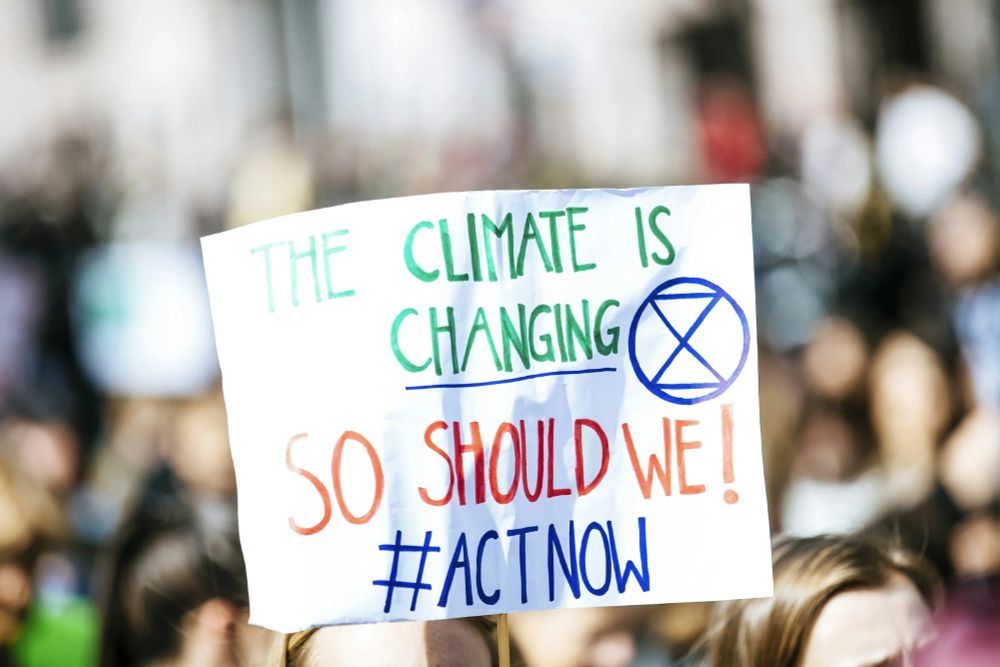
⚖️ Personal action is not a substitute for systemic change. But it can enable it. When we act in the roles available to us, we can shift norms, shape demand, and strengthen political momentum, thereby helping to accelerate ambitious climate action across society.
September 1, 2025 at 7:07 AM
⚖️ Personal action is not a substitute for systemic change. But it can enable it. When we act in the roles available to us, we can shift norms, shape demand, and strengthen political momentum, thereby helping to accelerate ambitious climate action across society.
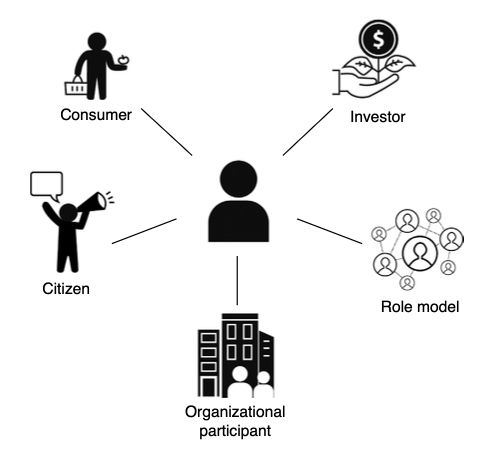
🌍 What can we do as people to tackle climate change?
Too often, the answer is framed narrowly around consumption choices. These choices are crucial for mitigation, but they’re only part of the story.
We influence #climate change in many areas of our lives🧵
Too often, the answer is framed narrowly around consumption choices. These choices are crucial for mitigation, but they’re only part of the story.
We influence #climate change in many areas of our lives🧵
September 1, 2025 at 7:07 AM
🌍 What can we do as people to tackle climate change?
Too often, the answer is framed narrowly around consumption choices. These choices are crucial for mitigation, but they’re only part of the story.
We influence #climate change in many areas of our lives🧵
Too often, the answer is framed narrowly around consumption choices. These choices are crucial for mitigation, but they’re only part of the story.
We influence #climate change in many areas of our lives🧵
🚨BREAKING: Apparently, we've written a paper about how dog ownership causes extreme weather 🐶🌪️ 😂
Or at least that’s what some 'news' headlines are suggesting in the US...
While I appreciate the media's interest in our recent study in PNAS Nexus, in reality, we found something very different...
Or at least that’s what some 'news' headlines are suggesting in the US...
While I appreciate the media's interest in our recent study in PNAS Nexus, in reality, we found something very different...

August 28, 2025 at 12:41 PM
🚨BREAKING: Apparently, we've written a paper about how dog ownership causes extreme weather 🐶🌪️ 😂
Or at least that’s what some 'news' headlines are suggesting in the US...
While I appreciate the media's interest in our recent study in PNAS Nexus, in reality, we found something very different...
Or at least that’s what some 'news' headlines are suggesting in the US...
While I appreciate the media's interest in our recent study in PNAS Nexus, in reality, we found something very different...
- 📊 They also appear to have missed Laura Krumm's excellent meta-analysis from 2024 of 71 studies (N > 390,000), which reports a small but positive overall association between PEB and wellbeing...
iopscience.iop.org/article/10.1...
iopscience.iop.org/article/10.1...

August 7, 2025 at 9:42 AM
- 📊 They also appear to have missed Laura Krumm's excellent meta-analysis from 2024 of 71 studies (N > 390,000), which reports a small but positive overall association between PEB and wellbeing...
iopscience.iop.org/article/10.1...
iopscience.iop.org/article/10.1...
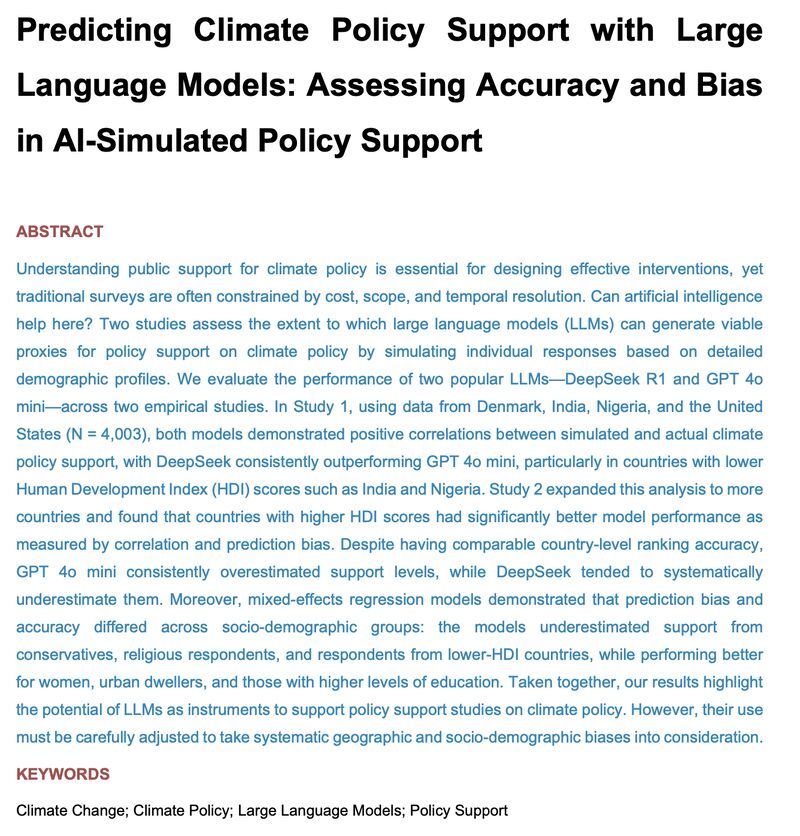
🧠 Can large language models predict public support for climate policies?
In our new paper, we test whether LLMs—such as DeepSeek and GPT-4o mini—can simulate how different people might respond to #climate policy surveys based on their socio-demographic profiles🧵
osf.io/preprints/os...
In our new paper, we test whether LLMs—such as DeepSeek and GPT-4o mini—can simulate how different people might respond to #climate policy surveys based on their socio-demographic profiles🧵
osf.io/preprints/os...
May 20, 2025 at 5:56 PM
🧠 Can large language models predict public support for climate policies?
In our new paper, we test whether LLMs—such as DeepSeek and GPT-4o mini—can simulate how different people might respond to #climate policy surveys based on their socio-demographic profiles🧵
osf.io/preprints/os...
In our new paper, we test whether LLMs—such as DeepSeek and GPT-4o mini—can simulate how different people might respond to #climate policy surveys based on their socio-demographic profiles🧵
osf.io/preprints/os...
🔍 Hvor stor er klimauligheden?
▪️ Der er markant ulighed mellem lande – Danmark ligger betydeligt over verdensgennemsnittet i klimaaftryk.
▪️ Men der er også stor ulighed inden for lande, inklusiv DK
▪️ AEs analyse viser, at de rigeste 10 % i Danmark udleder næsten fire gange så meget som de fattigste
▪️ Der er markant ulighed mellem lande – Danmark ligger betydeligt over verdensgennemsnittet i klimaaftryk.
▪️ Men der er også stor ulighed inden for lande, inklusiv DK
▪️ AEs analyse viser, at de rigeste 10 % i Danmark udleder næsten fire gange så meget som de fattigste

April 16, 2025 at 11:19 AM
🔍 Hvor stor er klimauligheden?
▪️ Der er markant ulighed mellem lande – Danmark ligger betydeligt over verdensgennemsnittet i klimaaftryk.
▪️ Men der er også stor ulighed inden for lande, inklusiv DK
▪️ AEs analyse viser, at de rigeste 10 % i Danmark udleder næsten fire gange så meget som de fattigste
▪️ Der er markant ulighed mellem lande – Danmark ligger betydeligt over verdensgennemsnittet i klimaaftryk.
▪️ Men der er også stor ulighed inden for lande, inklusiv DK
▪️ AEs analyse viser, at de rigeste 10 % i Danmark udleder næsten fire gange så meget som de fattigste
📺 TV-debut om klimaulighed! 🌍
I dag medvirkede jeg i TV Avisen og DR.DK i forbindelse med en ny analyse fra @ae.dk om klimaulighed i Danmark🇩🇰
Analysen viser, at de rigeste 10 % i Danmark udleder næsten 4 gange så meget som de fattigste.
Kort 🧵 om hvorfor dette er vigtigt
www.dr.dk/nyheder/vide...
I dag medvirkede jeg i TV Avisen og DR.DK i forbindelse med en ny analyse fra @ae.dk om klimaulighed i Danmark🇩🇰
Analysen viser, at de rigeste 10 % i Danmark udleder næsten 4 gange så meget som de fattigste.
Kort 🧵 om hvorfor dette er vigtigt
www.dr.dk/nyheder/vide...

April 16, 2025 at 11:19 AM
📺 TV-debut om klimaulighed! 🌍
I dag medvirkede jeg i TV Avisen og DR.DK i forbindelse med en ny analyse fra @ae.dk om klimaulighed i Danmark🇩🇰
Analysen viser, at de rigeste 10 % i Danmark udleder næsten 4 gange så meget som de fattigste.
Kort 🧵 om hvorfor dette er vigtigt
www.dr.dk/nyheder/vide...
I dag medvirkede jeg i TV Avisen og DR.DK i forbindelse med en ny analyse fra @ae.dk om klimaulighed i Danmark🇩🇰
Analysen viser, at de rigeste 10 % i Danmark udleder næsten 4 gange så meget som de fattigste.
Kort 🧵 om hvorfor dette er vigtigt
www.dr.dk/nyheder/vide...
⭐ Key findings ⭐
1️⃣ Participants consistently underestimated the carbon impact of high-impact behaviors (like flying and eating meat) and overestimated the impact of lower-impact behaviors (like recycling). These results are well-aligned with previous research.
1️⃣ Participants consistently underestimated the carbon impact of high-impact behaviors (like flying and eating meat) and overestimated the impact of lower-impact behaviors (like recycling). These results are well-aligned with previous research.

March 7, 2025 at 9:57 AM
⭐ Key findings ⭐
1️⃣ Participants consistently underestimated the carbon impact of high-impact behaviors (like flying and eating meat) and overestimated the impact of lower-impact behaviors (like recycling). These results are well-aligned with previous research.
1️⃣ Participants consistently underestimated the carbon impact of high-impact behaviors (like flying and eating meat) and overestimated the impact of lower-impact behaviors (like recycling). These results are well-aligned with previous research.
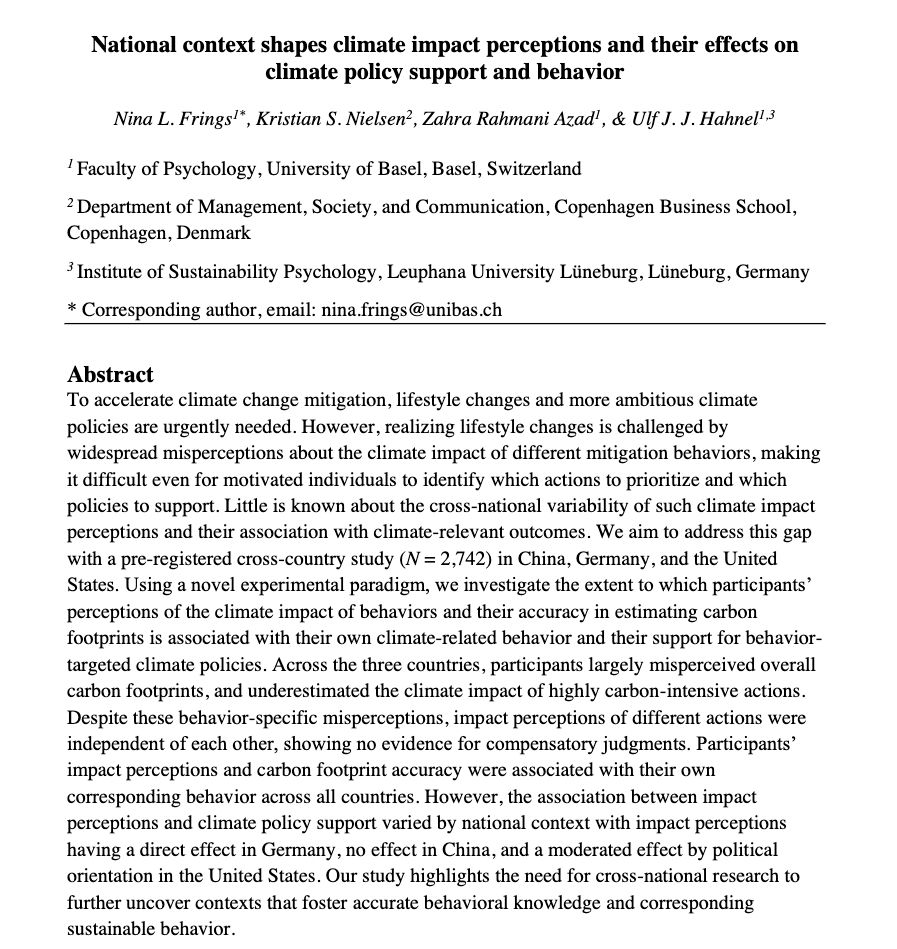
How well do people understand the #climate impact of #behavior?🌱
In a new paper, we examine people’s climate-impact perceptions of different behaviors and lifestyles and whether these are linked to behavior and support for behavior-regulating climate policies 🧵
#GreenSky
osf.io/preprints/ps...
In a new paper, we examine people’s climate-impact perceptions of different behaviors and lifestyles and whether these are linked to behavior and support for behavior-regulating climate policies 🧵
#GreenSky
osf.io/preprints/ps...
March 7, 2025 at 9:57 AM
How well do people understand the #climate impact of #behavior?🌱
In a new paper, we examine people’s climate-impact perceptions of different behaviors and lifestyles and whether these are linked to behavior and support for behavior-regulating climate policies 🧵
#GreenSky
osf.io/preprints/ps...
In a new paper, we examine people’s climate-impact perceptions of different behaviors and lifestyles and whether these are linked to behavior and support for behavior-regulating climate policies 🧵
#GreenSky
osf.io/preprints/ps...
Do psychological variables relate to the number of actions logged? Our survey of AWorld users found that environmentalist identity, perceived effectiveness of individual action, and climate concern in one's inner circle were not associated with the number of actions logged.

January 27, 2025 at 9:07 AM
Do psychological variables relate to the number of actions logged? Our survey of AWorld users found that environmentalist identity, perceived effectiveness of individual action, and climate concern in one's inner circle were not associated with the number of actions logged.
AWorld also estimates users' annual carbon footprint. Higher numbers of domain-specific actions corresponded to a lower carbon footprint only for food. This makes sense: repeated actions significantly influence food emissions, less so in other areas where big one-off decisions matter more. 🍽️🌍

January 27, 2025 at 9:07 AM
AWorld also estimates users' annual carbon footprint. Higher numbers of domain-specific actions corresponded to a lower carbon footprint only for food. This makes sense: repeated actions significantly influence food emissions, less so in other areas where big one-off decisions matter more. 🍽️🌍
We also looked at the most logged actions across four domains. Users mostly report actions that have a low emissions reduction potential and can be repeated daily, such as turning off the lights (except in the food domain, where shifting to plant-rich diets is impactful when done repeatedly).

January 27, 2025 at 9:07 AM
We also looked at the most logged actions across four domains. Users mostly report actions that have a low emissions reduction potential and can be repeated daily, such as turning off the lights (except in the food domain, where shifting to plant-rich diets is impactful when done repeatedly).
Users can select actions from a comprehensive list of 139 actions belonging to domains such as food, waste, energy, and mobility. We found large heterogeneity across users: some log many actions intermittently over a long period of time, others consistently log the same actions for only a few weeks.


January 27, 2025 at 9:07 AM
Users can select actions from a comprehensive list of 139 actions belonging to domains such as food, waste, energy, and mobility. We found large heterogeneity across users: some log many actions intermittently over a long period of time, others consistently log the same actions for only a few weeks.