



Kai Tong
@kaitong25.bsky.social
Postdoc in Mo Khalil's lab at Boston University. Synthetic multicellularity | Understanding and engineering multicellularity via synthetic biology and experimental evolution.
Reposted by Kai Tong
"Technology always becomes obsolete, but a good aesthetic is, by definition, timeless" -Sheehan Quirke
Preview of my flower design toolkit and its visual language.
Preview of my flower design toolkit and its visual language.

November 17, 2025 at 10:09 AM
"Technology always becomes obsolete, but a good aesthetic is, by definition, timeless" -Sheehan Quirke
Preview of my flower design toolkit and its visual language.
Preview of my flower design toolkit and its visual language.
Reposted by Kai Tong

🚨Our collaboration with @centriolelab.bsky.social & @gautamdey.bsky.social is out today in @cp-cell.bsky.social
We show that #Expansion #Microscopy is a broad-spectrum modality for Euks, enabling 3D phenotypic maps rooted to phylogeny.
#ProtistsOnSky #SciComm #SciSky
www.cell.com/cell/fulltex...
We show that #Expansion #Microscopy is a broad-spectrum modality for Euks, enabling 3D phenotypic maps rooted to phylogeny.
#ProtistsOnSky #SciComm #SciSky
www.cell.com/cell/fulltex...
October 31, 2025 at 2:42 PM
🚨Our collaboration with @centriolelab.bsky.social & @gautamdey.bsky.social is out today in @cp-cell.bsky.social
We show that #Expansion #Microscopy is a broad-spectrum modality for Euks, enabling 3D phenotypic maps rooted to phylogeny.
#ProtistsOnSky #SciComm #SciSky
www.cell.com/cell/fulltex...
We show that #Expansion #Microscopy is a broad-spectrum modality for Euks, enabling 3D phenotypic maps rooted to phylogeny.
#ProtistsOnSky #SciComm #SciSky
www.cell.com/cell/fulltex...
Reposted by Kai Tong

A new review paper from our lab courtesy of @jazzsynbio.bsky.social is published in Trends in Biotechnology
In this review, we look at the many opportunities for synthetic biology to be used in the research and applications of Holobionts.
In this review, we look at the many opportunities for synthetic biology to be used in the research and applications of Holobionts.

October 23, 2025 at 10:09 AM
A new review paper from our lab courtesy of @jazzsynbio.bsky.social is published in Trends in Biotechnology
In this review, we look at the many opportunities for synthetic biology to be used in the research and applications of Holobionts.
In this review, we look at the many opportunities for synthetic biology to be used in the research and applications of Holobionts.
Reposted by Kai Tong

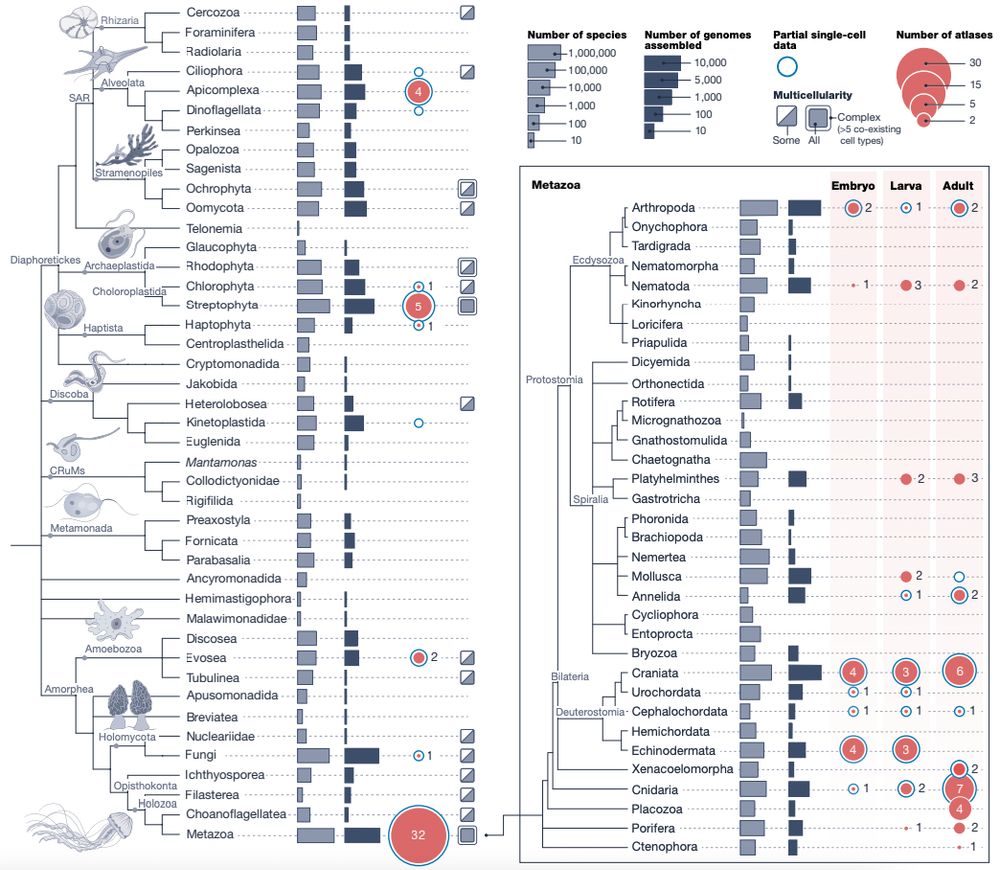
Happy to share the Biodiversity Cell Atlas white paper, out today in @nature.com. We look at the possibilities, challenges, and potential impacts of molecularly mapping cells across the tree of life.
www.nature.com/articles/s41...
www.nature.com/articles/s41...
September 24, 2025 at 3:12 PM
Happy to share the Biodiversity Cell Atlas white paper, out today in @nature.com. We look at the possibilities, challenges, and potential impacts of molecularly mapping cells across the tree of life.
www.nature.com/articles/s41...
www.nature.com/articles/s41...
Reposted by Kai Tong

For some three billion years, unicellular organisms ruled Earth. Then, around one billion years ago, a new chapter of life began
go.nature.com/3JyRV4S
go.nature.com/3JyRV4S

How did life get multicellular? Five simple organisms could have the answer
Single-celled species that often stick together in colonies have researchers rethinking the origin of animals.
go.nature.com
August 27, 2025 at 10:19 AM
For some three billion years, unicellular organisms ruled Earth. Then, around one billion years ago, a new chapter of life began
go.nature.com/3JyRV4S
go.nature.com/3JyRV4S
Reposted by Kai Tong
Adaptive radiation during long-term experimental evolution of the multicellular bacterium #Streptomyces www.biorxiv.org/content/10.1...

Adaptive radiation during long-term experimental evolution of the multicellular bacterium, Streptomyces
The rapid diversification of a single lineage into novel ecological niches underpins evolution of biodiversity, with adaptive radiations being important drivers of ecological diversity across the tree...
www.biorxiv.org
August 25, 2025 at 8:27 PM
Adaptive radiation during long-term experimental evolution of the multicellular bacterium #Streptomyces www.biorxiv.org/content/10.1...
Reposted by Kai Tong
Excited to share new #program, STEPS, which can simulate #dynamics of the E. coli Long-Term Evolution Experiment (#LTEE) or other microbes in serial transfer regime.
telliamedrevisited.wordpress.com/2025/08/12/s...
STEPS developed by @devinmlake.bsky.social, Zachary Matson, Minako Izutsu, and me.
telliamedrevisited.wordpress.com/2025/08/12/s...
STEPS developed by @devinmlake.bsky.social, Zachary Matson, Minako Izutsu, and me.

STEPS To It
Announcing a new program, called STEPS, to simulate the dynamics of evolving microbial populations.
telliamedrevisited.wordpress.com
August 12, 2025 at 3:53 PM
Excited to share new #program, STEPS, which can simulate #dynamics of the E. coli Long-Term Evolution Experiment (#LTEE) or other microbes in serial transfer regime.
telliamedrevisited.wordpress.com/2025/08/12/s...
STEPS developed by @devinmlake.bsky.social, Zachary Matson, Minako Izutsu, and me.
telliamedrevisited.wordpress.com/2025/08/12/s...
STEPS developed by @devinmlake.bsky.social, Zachary Matson, Minako Izutsu, and me.
Reposted by Kai Tong
Introducing the 1,000 Flower Collection 🧬🌹
I’m creating 1,000 genetically designed flowers each crafted with new colors, patterns, and shapes.
Here’s how I’m making it happen… and how you can join me on this journey 🧵(1/7)
I’m creating 1,000 genetically designed flowers each crafted with new colors, patterns, and shapes.
Here’s how I’m making it happen… and how you can join me on this journey 🧵(1/7)

August 11, 2025 at 6:54 PM
Introducing the 1,000 Flower Collection 🧬🌹
I’m creating 1,000 genetically designed flowers each crafted with new colors, patterns, and shapes.
Here’s how I’m making it happen… and how you can join me on this journey 🧵(1/7)
I’m creating 1,000 genetically designed flowers each crafted with new colors, patterns, and shapes.
Here’s how I’m making it happen… and how you can join me on this journey 🧵(1/7)
Reposted by Kai Tong
Online now @ Cell is the yeast multicellular engineering paper from Fankang Meng - the fruits of his productive PhD in our group. He developed modular synthetic biology tools to bring multicellular behaviours to yeast - specific adhesion, juxtacrine signalling and more. www.cell.com/cell/fulltex...
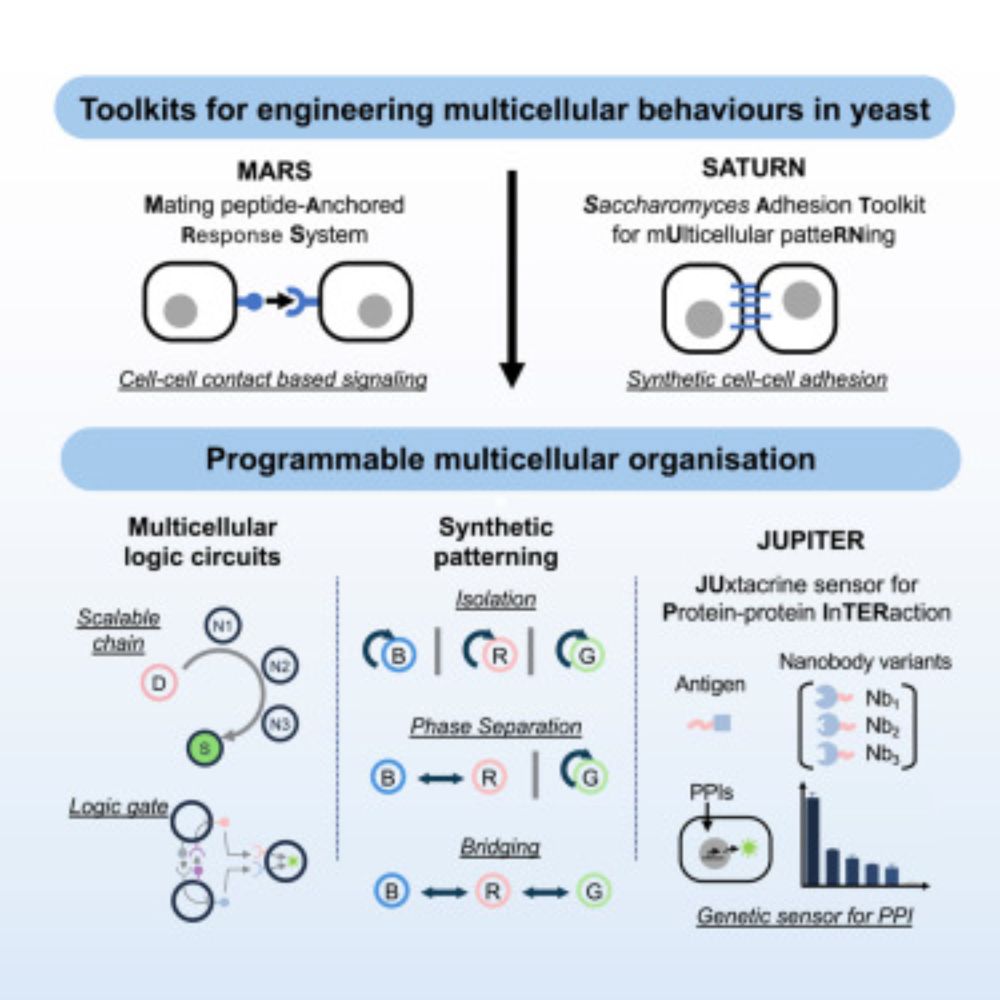
Engineering yeast multicellular behaviors via synthetic adhesion and contact signaling
By designing synthetic toolkits for contact-based signaling (MARS) and cell-cell adhesion
(SATURN), we program yeast to form multicellular structures and perform complex tasks,
like building logic cir...
www.cell.com
July 11, 2025 at 3:01 PM
Online now @ Cell is the yeast multicellular engineering paper from Fankang Meng - the fruits of his productive PhD in our group. He developed modular synthetic biology tools to bring multicellular behaviours to yeast - specific adhesion, juxtacrine signalling and more. www.cell.com/cell/fulltex...
Reposted by Kai Tong
1/27 We have a new paper out! Turns out that snowflake yeast have been hiding a secret from us - they've evolved a (very!) crude circulatory system. Not with blood vessels or a heart, but through spontaneous fluid flows powered by their metabolism. 🧪🔬
www.science.org/doi/full/10....
www.science.org/doi/full/10....
June 24, 2025 at 4:52 PM
1/27 We have a new paper out! Turns out that snowflake yeast have been hiding a secret from us - they've evolved a (very!) crude circulatory system. Not with blood vessels or a heart, but through spontaneous fluid flows powered by their metabolism. 🧪🔬
www.science.org/doi/full/10....
www.science.org/doi/full/10....
Reposted by Kai Tong
I’m very excited to share our work on the early evolution of animal regulatory genome architecture - the main project of my postdoc, carried out across two wonderful and inspirational labs of @arnausebe.bsky.social and @mamartirenom.bsky.social. www.nature.com/articles/s41...
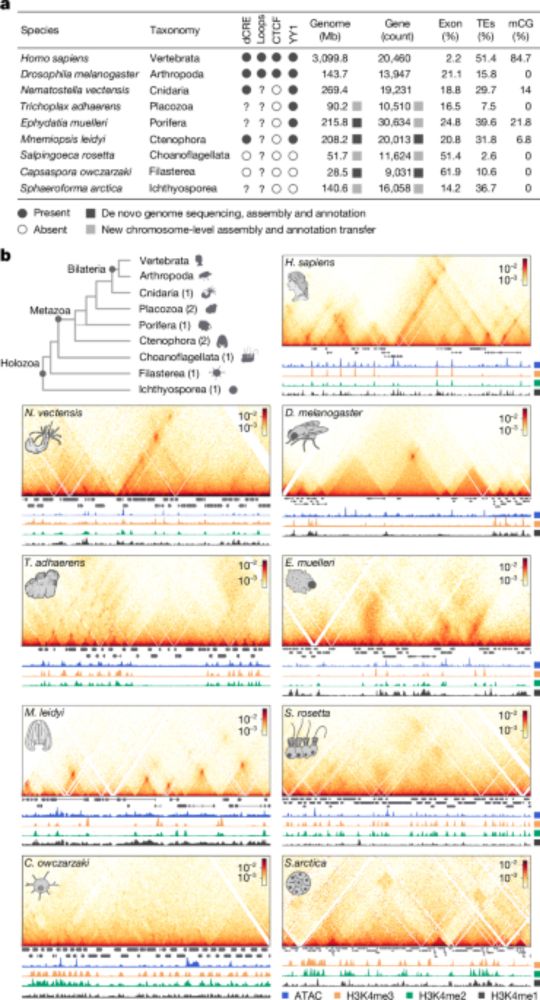
Chromatin loops are an ancestral hallmark of the animal regulatory genome - Nature
The physical organization of the genome in non-bilaterian animals and their closest unicellular relatives is characterized; comparative analysis shows chromatin looping is a conserved feature of ...
www.nature.com
May 7, 2025 at 3:23 PM
I’m very excited to share our work on the early evolution of animal regulatory genome architecture - the main project of my postdoc, carried out across two wonderful and inspirational labs of @arnausebe.bsky.social and @mamartirenom.bsky.social. www.nature.com/articles/s41...
Reposted by Kai Tong
Fun Q&A with Curr Bio in which I discuss mammoths, Don Quijote, and why you should not fall in love with a hypothesis authors.elsevier.com/a/1l2MF3QW8S...
authors.elsevier.com
May 5, 2025 at 3:13 PM
Fun Q&A with Curr Bio in which I discuss mammoths, Don Quijote, and why you should not fall in love with a hypothesis authors.elsevier.com/a/1l2MF3QW8S...
Reposted by Kai Tong
Sign ups for the fall Barcelona multicellularity meeting are now up- come join us!
meetings.embo.org/event/25-mul...
meetings.embo.org/event/25-mul...

Evolution and origins of multicellularity across the tree of life
The study of the origins and evolution of multicellularity in different lineages has recently captured the attention of many research groups and is fueling the generation of numerous innovative resea…
meetings.embo.org
April 18, 2025 at 2:28 PM
Sign ups for the fall Barcelona multicellularity meeting are now up- come join us!
meetings.embo.org/event/25-mul...
meetings.embo.org/event/25-mul...
Reposted by Kai Tong

We published a new xenobot-related paper today:
journals.plos.org/ploscompbiol...
In a nutshell: building xenobots from frog "explants" is good because explants, apparently, come with adaptive potential "built in".
This paper took 6 years and 10 co-authors (see post #2) to reach the light.
journals.plos.org/ploscompbiol...
In a nutshell: building xenobots from frog "explants" is good because explants, apparently, come with adaptive potential "built in".
This paper took 6 years and 10 co-authors (see post #2) to reach the light.
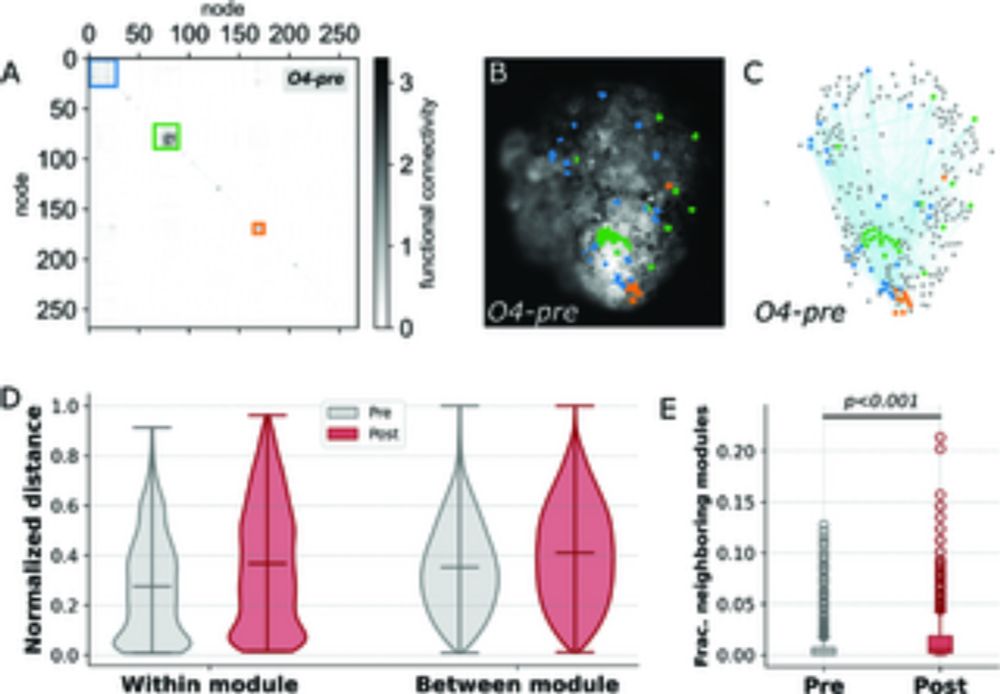
Revealing non-trivial information structures in aneural biological tissues via functional connectivity
Author summary A central challenge in understanding several diverse processes in biology, including morphogenesis, wound healing, and development, is learning from empirical data how information is in...
journals.plos.org
April 15, 2025 at 4:26 PM
We published a new xenobot-related paper today:
journals.plos.org/ploscompbiol...
In a nutshell: building xenobots from frog "explants" is good because explants, apparently, come with adaptive potential "built in".
This paper took 6 years and 10 co-authors (see post #2) to reach the light.
journals.plos.org/ploscompbiol...
In a nutshell: building xenobots from frog "explants" is good because explants, apparently, come with adaptive potential "built in".
This paper took 6 years and 10 co-authors (see post #2) to reach the light.
Reposted by Kai Tong

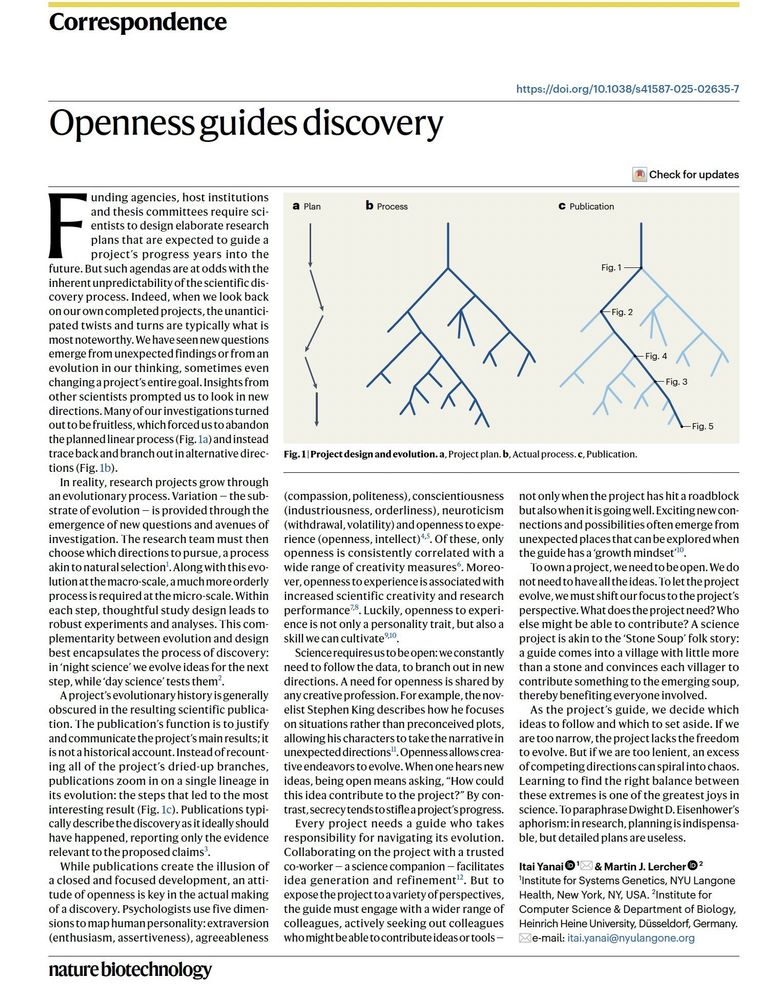
Contrary to popular belief, what is important in science is as much its spirit as its product: it is as much the openmindedness, the primacy of criticism, the submission to the unforeseen, however upsetting, as the result, however new that may be. – Francois Jacob
www.nature.com/articles/s41...
www.nature.com/articles/s41...
April 7, 2025 at 1:07 AM
Contrary to popular belief, what is important in science is as much its spirit as its product: it is as much the openmindedness, the primacy of criticism, the submission to the unforeseen, however upsetting, as the result, however new that may be. – Francois Jacob
www.nature.com/articles/s41...
www.nature.com/articles/s41...
Reposted by Kai Tong
Striking new study from @archaeon-alex.bsky.social's lab just out in @science.org on multicellular development induced by compression in Archaea: www.science.org/doi/10.1126/...
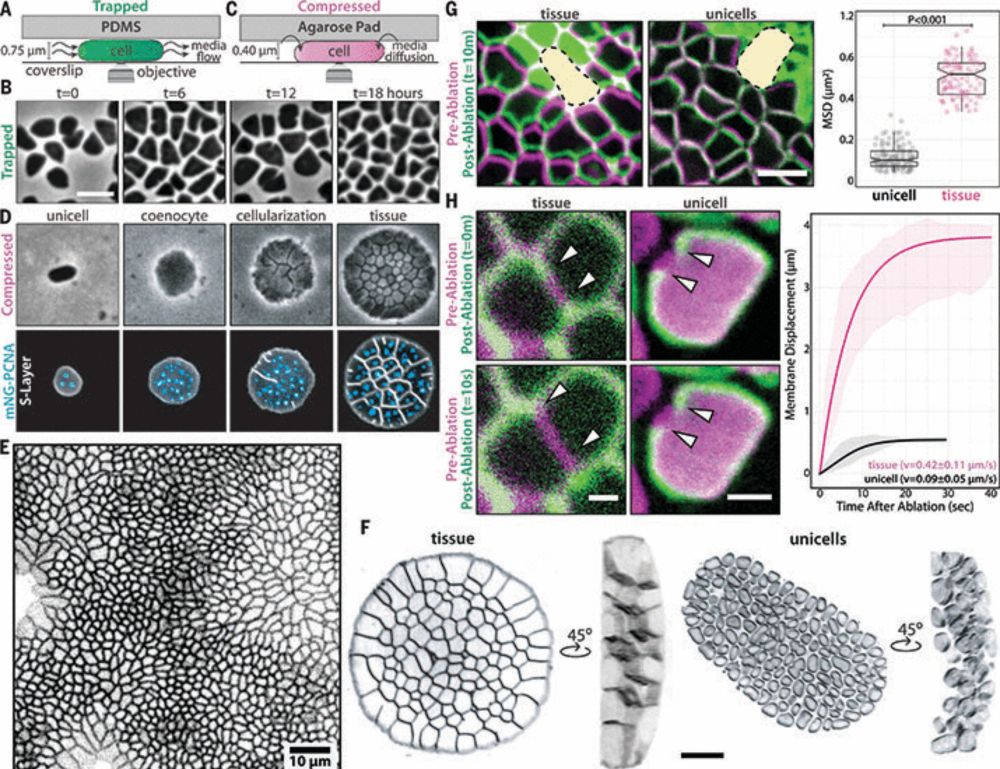
Tissue-like multicellular development triggered by mechanical compression in archaea
The advent of clonal multicellularity is a critical evolutionary milestone, seen often in eukaryotes, rarely in bacteria, and only once in archaea. We show that uniaxial compression induces clonal mul...
www.science.org
April 3, 2025 at 6:24 PM
Striking new study from @archaeon-alex.bsky.social's lab just out in @science.org on multicellular development induced by compression in Archaea: www.science.org/doi/10.1126/...
Reposted by Kai Tong
My new paper examining how plasticity may have shaped the evolution of cellular differentiation is out! We propose that the plastic development of somatic-like cells may have been an intermediate step in the evolution of soma in the volvocine algae. #evosky #mevosky doi.org/10.1098/rspb...
Plasticity and the evolution of group-level regulation of cellular differentiation in the volvocine algae | Proceedings of the Royal Society B: Biological Sciences
During the evolution of multicellularity, the unit of selection transitions from single
cells to integrated multicellular cell groups, necessitating the evolution of group-level
traits such as somatic...
doi.org
March 21, 2025 at 6:53 PM
My new paper examining how plasticity may have shaped the evolution of cellular differentiation is out! We propose that the plastic development of somatic-like cells may have been an intermediate step in the evolution of soma in the volvocine algae. #evosky #mevosky doi.org/10.1098/rspb...
Reposted by Kai Tong
This "behind the paper" is a pretty fun read. Kai includes discord chats and other pieces of day to day science that do a great job of showing how the paper came together.

March 5, 2025 at 11:03 PM
This "behind the paper" is a pretty fun read. Kai includes discord chats and other pieces of day to day science that do a great job of showing how the paper came together.
Reposted by Kai Tong
1/46 Hey folks, we have a new paper out on the MuLTEE. Strap in and I’ll tell you the story of how this “little paper on polyploidy” turned into the most data rich paper our lab has produced, largely thanks to the leadership and work ethic of @kaitong25.bsky.social.
www.nature.com/articles/s41...
www.nature.com/articles/s41...
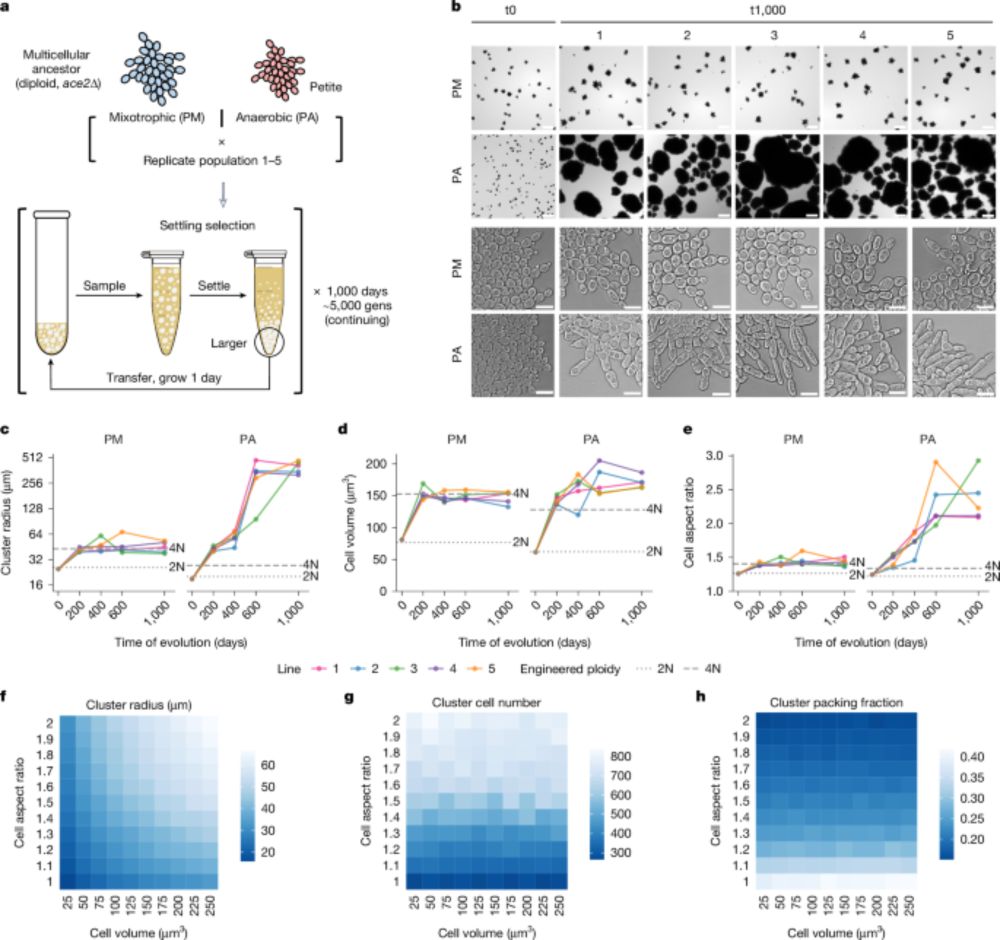
Genome duplication in a long-term multicellularity evolution experiment - Nature
In the Multicellularity Long Term Evolution Experiment, diploid yeast evolve to be tetraploid under selection for larger multicellular size, revealing how whole-genome duplication can arise due to its...
www.nature.com
March 5, 2025 at 11:00 PM
1/46 Hey folks, we have a new paper out on the MuLTEE. Strap in and I’ll tell you the story of how this “little paper on polyploidy” turned into the most data rich paper our lab has produced, largely thanks to the leadership and work ethic of @kaitong25.bsky.social.
www.nature.com/articles/s41...
www.nature.com/articles/s41...