



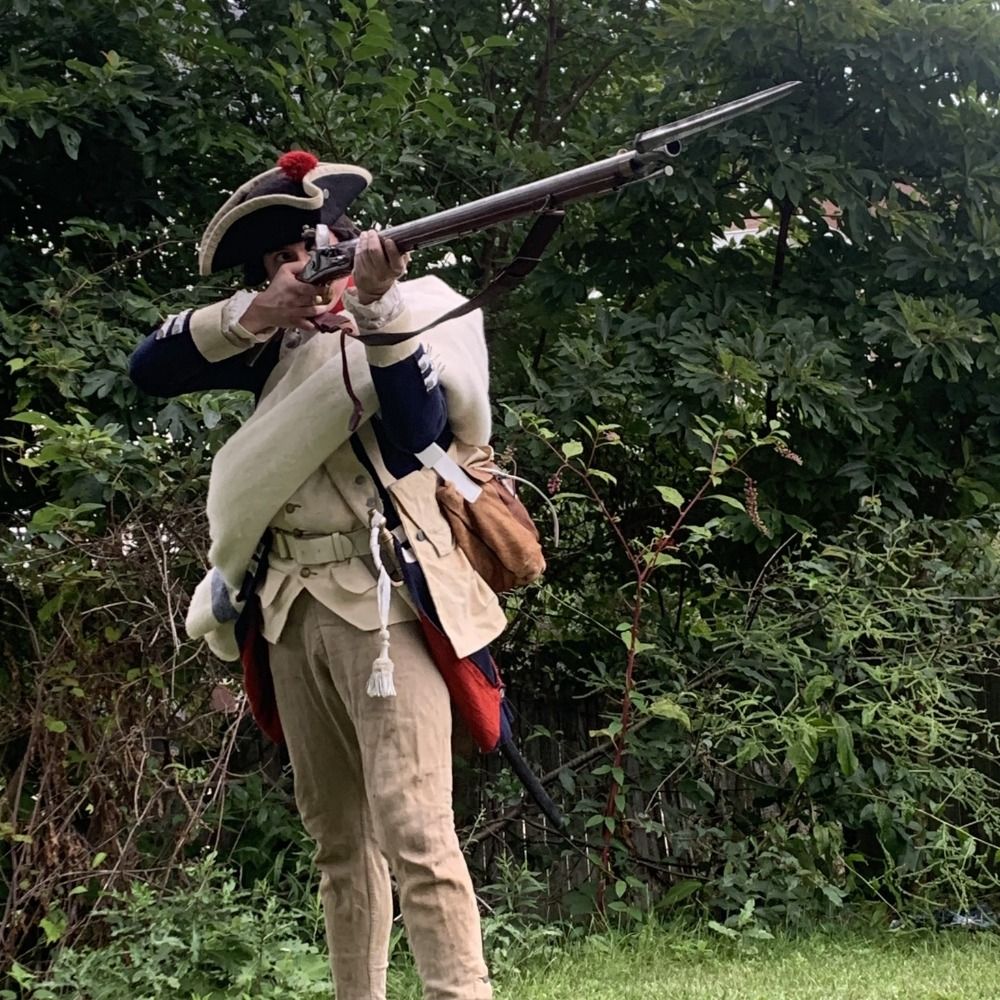
Dr. Alexander S. Burns
@kabinettskriege.bsky.social
Historian of the eighteenth-century Atlantic World, American Continental Army, and Military Europe. PhD WVU.
I'll leave it up to you whether this qualifies as a "a lot of killing" being done with the bayonet, but, we need to be clear, if "a lot" of killing is done with the bayonet, even more is done with firearms. The fighting was not always eyeball to eyeball, nose to nose. 16/16

November 19, 2025 at 12:40 AM
I'll leave it up to you whether this qualifies as a "a lot of killing" being done with the bayonet, but, we need to be clear, if "a lot" of killing is done with the bayonet, even more is done with firearms. The fighting was not always eyeball to eyeball, nose to nose. 16/16
...there are ~85 references to bayonet wounds, and ~425 references to wounds from gunshots. Thus, at least conversationally, this sample size of American veterans (who were often on the receiving end of bayonet charges) were 4 times more likely to be shot than stabbed. 14/16

November 19, 2025 at 12:40 AM
...there are ~85 references to bayonet wounds, and ~425 references to wounds from gunshots. Thus, at least conversationally, this sample size of American veterans (who were often on the receiving end of bayonet charges) were 4 times more likely to be shot than stabbed. 14/16
It is impossible to accurately quantify, in a fully scientific way, the number of gunshot wounds vs the number of bayonet wounds in the Revolutionary War. However, searching the currently transcribed pension applications of revolutionary war veterans... 13/16

November 19, 2025 at 12:40 AM
It is impossible to accurately quantify, in a fully scientific way, the number of gunshot wounds vs the number of bayonet wounds in the Revolutionary War. However, searching the currently transcribed pension applications of revolutionary war veterans... 13/16
12th June 1779
"It is expected that the Troops will advance boldly upon the enemy—and by no means, nor under any pretence whatsoever throw away their ammunition at long shot—A Musquet had better never be discharged than fired in so wasteful, shameful, & cowardly a manner." 10/16
"It is expected that the Troops will advance boldly upon the enemy—and by no means, nor under any pretence whatsoever throw away their ammunition at long shot—A Musquet had better never be discharged than fired in so wasteful, shameful, & cowardly a manner." 10/16

November 19, 2025 at 12:40 AM
12th June 1779
"It is expected that the Troops will advance boldly upon the enemy—and by no means, nor under any pretence whatsoever throw away their ammunition at long shot—A Musquet had better never be discharged than fired in so wasteful, shameful, & cowardly a manner." 10/16
"It is expected that the Troops will advance boldly upon the enemy—and by no means, nor under any pretence whatsoever throw away their ammunition at long shot—A Musquet had better never be discharged than fired in so wasteful, shameful, & cowardly a manner." 10/16
To Gen. Varnum November 11th, 1777:
“It is greatly to be wished that all firing could be prevented, except where there is a real necessity and the distance such as might promise a good effect.” 9/16
“It is greatly to be wished that all firing could be prevented, except where there is a real necessity and the distance such as might promise a good effect.” 9/16

November 19, 2025 at 12:40 AM
To Gen. Varnum November 11th, 1777:
“It is greatly to be wished that all firing could be prevented, except where there is a real necessity and the distance such as might promise a good effect.” 9/16
“It is greatly to be wished that all firing could be prevented, except where there is a real necessity and the distance such as might promise a good effect.” 9/16
The trouble is, we have a huge number of sources from Washington saying the opposite. American soldiers preferred firing at longer ranges: you can see this in Washington's wartime writings: 4/16

November 19, 2025 at 12:40 AM
The trouble is, we have a huge number of sources from Washington saying the opposite. American soldiers preferred firing at longer ranges: you can see this in Washington's wartime writings: 4/16
I want to talk about Atkinson's claim that fighting "a lot of the killing is done with a bayonet" and that the fighting was "eyeball to eyeball...it's very intimate." 3/16

November 19, 2025 at 12:40 AM
I want to talk about Atkinson's claim that fighting "a lot of the killing is done with a bayonet" and that the fighting was "eyeball to eyeball...it's very intimate." 3/16
First of all, I don't really want to talk about accurate musket range.
Firefights actually occurred over 120 yards, but that isn't the point of the thread. You can see a chart below of descriptions of 25 firefight ranges in the Revolutionary War.
Firefights actually occurred over 120 yards, but that isn't the point of the thread. You can see a chart below of descriptions of 25 firefight ranges in the Revolutionary War.

November 19, 2025 at 12:40 AM
First of all, I don't really want to talk about accurate musket range.
Firefights actually occurred over 120 yards, but that isn't the point of the thread. You can see a chart below of descriptions of 25 firefight ranges in the Revolutionary War.
Firefights actually occurred over 120 yards, but that isn't the point of the thread. You can see a chart below of descriptions of 25 firefight ranges in the Revolutionary War.
Tonight on Ken Burns's American Revolution, Rick Atkinson is going is going to tell you:
"Muskets are mostly inaccurate beyond 80 yards...so a lot of the killing is done with the bayonet... this is really eyeball to eyeball."
The trouble is, this just isn't true. 🧵1/16
"Muskets are mostly inaccurate beyond 80 yards...so a lot of the killing is done with the bayonet... this is really eyeball to eyeball."
The trouble is, this just isn't true. 🧵1/16

November 19, 2025 at 12:40 AM
Tonight on Ken Burns's American Revolution, Rick Atkinson is going is going to tell you:
"Muskets are mostly inaccurate beyond 80 yards...so a lot of the killing is done with the bayonet... this is really eyeball to eyeball."
The trouble is, this just isn't true. 🧵1/16
"Muskets are mostly inaccurate beyond 80 yards...so a lot of the killing is done with the bayonet... this is really eyeball to eyeball."
The trouble is, this just isn't true. 🧵1/16
He also continued a relationship with his wife, and collected unpaid debts by threat of force. As a result, his corpse was posthumously beheaded and burned in public.
While not being called a vampire, Kasparek was a man comfortable on both sides of a border. 24/25
While not being called a vampire, Kasparek was a man comfortable on both sides of a border. 24/25

October 30, 2025 at 5:05 PM
He also continued a relationship with his wife, and collected unpaid debts by threat of force. As a result, his corpse was posthumously beheaded and burned in public.
While not being called a vampire, Kasparek was a man comfortable on both sides of a border. 24/25
While not being called a vampire, Kasparek was a man comfortable on both sides of a border. 24/25
For Bohn, the story of Polish/Hungarian horseman, Michał Kasperek (Mihály Kaszperek) is this missing link. In the Polish/Hungarian border region of Spiš, in 1718, a Polish wine merchant died unexpectedly, but returned to life, haunting and biting his servants. 23/25

October 30, 2025 at 5:05 PM
For Bohn, the story of Polish/Hungarian horseman, Michał Kasperek (Mihály Kaszperek) is this missing link. In the Polish/Hungarian border region of Spiš, in 1718, a Polish wine merchant died unexpectedly, but returned to life, haunting and biting his servants. 23/25
Stories of vampires would be harder to crack down on. European rulers struggled with these questions stretching into the 19th century.
Thomas Bohn argued that there is a "missing link" between the medieval and early modern belief in revenants, and the 18th century vampires. 22/25
Thomas Bohn argued that there is a "missing link" between the medieval and early modern belief in revenants, and the 18th century vampires. 22/25

October 30, 2025 at 5:05 PM
Stories of vampires would be harder to crack down on. European rulers struggled with these questions stretching into the 19th century.
Thomas Bohn argued that there is a "missing link" between the medieval and early modern belief in revenants, and the 18th century vampires. 22/25
Thomas Bohn argued that there is a "missing link" between the medieval and early modern belief in revenants, and the 18th century vampires. 22/25
Maria Theresa responded by ordering that exhumations cease, except where ordered by secular, rather than church, authorities. The scourge of vampirism seemed to dissipate as a result.
The vampiric threat haunted the Austrian frontiers, as folktales clashed with the state. 21/25
The vampiric threat haunted the Austrian frontiers, as folktales clashed with the state. 21/25

October 30, 2025 at 5:05 PM
Maria Theresa responded by ordering that exhumations cease, except where ordered by secular, rather than church, authorities. The scourge of vampirism seemed to dissipate as a result.
The vampiric threat haunted the Austrian frontiers, as folktales clashed with the state. 21/25
The vampiric threat haunted the Austrian frontiers, as folktales clashed with the state. 21/25
The local church authorities in Olmütz granted permission for staking. Maria Theresa, scandalized, ordered her personal physician (and medical military reformer) Gerard van Swieten, to investigate the case. 19/25

October 30, 2025 at 5:05 PM
The local church authorities in Olmütz granted permission for staking. Maria Theresa, scandalized, ordered her personal physician (and medical military reformer) Gerard van Swieten, to investigate the case. 19/25
These military men concluded that a number of the villagers who had died were indeed in "vampiric condition," (Vampyrenstand) and ordered that those in such condition were to be executed via stakes, burned, and ashes scattered over water. 16/25

October 30, 2025 at 5:05 PM
These military men concluded that a number of the villagers who had died were indeed in "vampiric condition," (Vampyrenstand) and ordered that those in such condition were to be executed via stakes, burned, and ashes scattered over water. 16/25
Glaser reported these findings to Botta d'Adorno, the vice-commandant in Belgrade, who organized a secondary commission, consisting of five army officers: a Lt. Colonel, Ensign, and three military surgeons. 15/25

October 30, 2025 at 5:05 PM
Glaser reported these findings to Botta d'Adorno, the vice-commandant in Belgrade, who organized a secondary commission, consisting of five army officers: a Lt. Colonel, Ensign, and three military surgeons. 15/25
The matter was considered closed, until around 6 years later, villagers in Medveđa once again began to die under mysterious circumstances. 13 villagers died after brief illnesses, and their deaths were reported to Lt. Colonel Schnezzer, the local Austrian army officer. 11/25

October 30, 2025 at 5:05 PM
The matter was considered closed, until around 6 years later, villagers in Medveđa once again began to die under mysterious circumstances. 13 villagers died after brief illnesses, and their deaths were reported to Lt. Colonel Schnezzer, the local Austrian army officer. 11/25
Also in 1725, about 200 km to the south, a Serbian militiaman or "hajdú" (hajduk) nicknamed "Arnaut Pavle" (Paul the Albanian), fell off of a haycart and broke his neck. For forty days Pavle, who claimed to have been attacked by a vampire, haunted his village, killing 4. 9/25

October 30, 2025 at 5:05 PM
Also in 1725, about 200 km to the south, a Serbian militiaman or "hajdú" (hajduk) nicknamed "Arnaut Pavle" (Paul the Albanian), fell off of a haycart and broke his neck. For forty days Pavle, who claimed to have been attacked by a vampire, haunted his village, killing 4. 9/25
Even Blagojević's widow reported that the dead man had come to her in the night, demanding his shoes. The villagers demanded their new Austrian governmental official: Kameralprovisor Ernst Frombald, along with the local priest, attend Blagojević's exhumation. 6/25

October 30, 2025 at 5:05 PM
Even Blagojević's widow reported that the dead man had come to her in the night, demanding his shoes. The villagers demanded their new Austrian governmental official: Kameralprovisor Ernst Frombald, along with the local priest, attend Blagojević's exhumation. 6/25
Our story begins in the aftermath of Prinz Eugene of Savoy's victory at Belgrade in 1717. After this victory and the resulting Treaty of Passarowitz, the Austrian government now ruled part of Serbia and northern Bosnia: it had to control a porous borderland with refugees. 3/25

October 30, 2025 at 5:05 PM
Our story begins in the aftermath of Prinz Eugene of Savoy's victory at Belgrade in 1717. After this victory and the resulting Treaty of Passarowitz, the Austrian government now ruled part of Serbia and northern Bosnia: it had to control a porous borderland with refugees. 3/25
In the 1720s folktales of supernatural events combined with the tensions of a military borderland to create a new type of spook: The Vampire.
Vampires, and the responses of locals and governments to the threat of their presence, would in the imagination like wildfire.
2/25
Vampires, and the responses of locals and governments to the threat of their presence, would in the imagination like wildfire.
2/25

October 30, 2025 at 5:05 PM
In the 1720s folktales of supernatural events combined with the tensions of a military borderland to create a new type of spook: The Vampire.
Vampires, and the responses of locals and governments to the threat of their presence, would in the imagination like wildfire.
2/25
Vampires, and the responses of locals and governments to the threat of their presence, would in the imagination like wildfire.
2/25
With Halloween upon us, did you know: Vampires turn 300 this year?
This year, 2025, marks the 300th anniversary of vampires haunting public imagination in Europe.
Read on for the origins of Orloc, Dracula, and of course, Nandor.
1/25
This year, 2025, marks the 300th anniversary of vampires haunting public imagination in Europe.
Read on for the origins of Orloc, Dracula, and of course, Nandor.
1/25


October 30, 2025 at 5:05 PM
With Halloween upon us, did you know: Vampires turn 300 this year?
This year, 2025, marks the 300th anniversary of vampires haunting public imagination in Europe.
Read on for the origins of Orloc, Dracula, and of course, Nandor.
1/25
This year, 2025, marks the 300th anniversary of vampires haunting public imagination in Europe.
Read on for the origins of Orloc, Dracula, and of course, Nandor.
1/25
Seeing your scholarship in a peer-reviewed journal:
Broke
Seeing your scholarship on a podcast:
Woke
Seeing your scholarship on a videogame loading screen:
Bespoke
Broke
Seeing your scholarship on a podcast:
Woke
Seeing your scholarship on a videogame loading screen:
Bespoke

October 28, 2025 at 2:26 AM
Seeing your scholarship in a peer-reviewed journal:
Broke
Seeing your scholarship on a podcast:
Woke
Seeing your scholarship on a videogame loading screen:
Bespoke
Broke
Seeing your scholarship on a podcast:
Woke
Seeing your scholarship on a videogame loading screen:
Bespoke
Sir a second Nazi Group chat has hit Politico

October 21, 2025 at 2:40 AM
Sir a second Nazi Group chat has hit Politico
18th century officers when the enlisted men don't march into close range with shouldered muskets and attack with bayonets, but instead:
Fire without orders at long range
Take cover
Run out of the line of fire
Fire without orders at long range
Take cover
Run out of the line of fire

October 17, 2025 at 8:40 PM
18th century officers when the enlisted men don't march into close range with shouldered muskets and attack with bayonets, but instead:
Fire without orders at long range
Take cover
Run out of the line of fire
Fire without orders at long range
Take cover
Run out of the line of fire