




Jamie Heather
@jamieheather.bsky.social
🇬🇧 immunulogist in 🇺🇸 | instructor @ MGH/HMS | TCRs and pMHC
Technically a James | ʤeɪmi hɛðə˞ | he/him
@jamimmunology in the old place
papers, tools, & 3d printed labware here: https://jamieheather.github.io/
Technically a James | ʤeɪmi hɛðə˞ | he/him
@jamimmunology in the old place
papers, tools, & 3d printed labware here: https://jamieheather.github.io/
Just realised I haven't shared some of my favourite recent functional 3d printed labware designs on here. While the PCR tube/strip rack one is undoubtedly the one I use most, I still love the agar plate divider best.
All available @ www.thingiverse.com/jamimmunolog...
#labrats #science #3dprinting
All available @ www.thingiverse.com/jamimmunolog...
#labrats #science #3dprinting


December 1, 2025 at 8:13 PM
Just realised I haven't shared some of my favourite recent functional 3d printed labware designs on here. While the PCR tube/strip rack one is undoubtedly the one I use most, I still love the agar plate divider best.
All available @ www.thingiverse.com/jamimmunolog...
#labrats #science #3dprinting
All available @ www.thingiverse.com/jamimmunolog...
#labrats #science #3dprinting
What fresh captcha hell is this

November 19, 2025 at 1:27 AM
What fresh captcha hell is this
Took my kid to a science festival at the weekend, she was absolutely over the moon to do a ‘real experiment’ extracting DNA (from some blueberries), just like her dad.
She’s going to be absolutely devastated when I sit her down and explain how rubbish her absorbance ratios are.
She’s going to be absolutely devastated when I sit her down and explain how rubbish her absorbance ratios are.

September 23, 2025 at 3:46 PM
Took my kid to a science festival at the weekend, she was absolutely over the moon to do a ‘real experiment’ extracting DNA (from some blueberries), just like her dad.
She’s going to be absolutely devastated when I sit her down and explain how rubbish her absorbance ratios are.
She’s going to be absolutely devastated when I sit her down and explain how rubbish her absorbance ratios are.
Finally, we look at simulated TCRseq read length vs TCR V calling confidence.
As expected, the more you sequence the better you get, and calling 'gene' is easy. What’s maybe less expected is that you can sequence halfway into the V and still only be able to narrow down to a handful of alleles.
As expected, the more you sequence the better you get, and calling 'gene' is easy. What’s maybe less expected is that you can sequence halfway into the V and still only be able to narrow down to a handful of alleles.

September 1, 2025 at 3:18 PM
Finally, we look at simulated TCRseq read length vs TCR V calling confidence.
As expected, the more you sequence the better you get, and calling 'gene' is easy. What’s maybe less expected is that you can sequence halfway into the V and still only be able to narrow down to a handful of alleles.
As expected, the more you sequence the better you get, and calling 'gene' is easy. What’s maybe less expected is that you can sequence halfway into the V and still only be able to narrow down to a handful of alleles.
We also discuss other TCR ref misconceptions that might be leading to other inaccuracies in TCRseq data: like how we shouldn’t omit P/ORF genes from our analyses – or TRDV genes from our alpha chain references – because they do appear in a lot of people!
(They might not work, but they’re there!)
(They might not work, but they’re there!)

September 1, 2025 at 3:18 PM
We also discuss other TCR ref misconceptions that might be leading to other inaccuracies in TCRseq data: like how we shouldn’t omit P/ORF genes from our analyses – or TRDV genes from our alpha chain references – because they do appear in a lot of people!
(They might not work, but they’re there!)
(They might not work, but they’re there!)
Admittedly, a lot of papers said *something*, just not enough – often just ‘IMGT’. Not only does IMGT host multiple resources, the databases change over time: alleles appear, change, and even disappear, so if you’re not saying which version you used, your analysis isn’t reproducible.

September 1, 2025 at 3:18 PM
Admittedly, a lot of papers said *something*, just not enough – often just ‘IMGT’. Not only does IMGT host multiple resources, the databases change over time: alleles appear, change, and even disappear, so if you’re not saying which version you used, your analysis isn’t reproducible.
… because these are often the bedrock of our analyses: the TCRs we sequence (and presumably care about) are annotated by comparing them against the reference.
Despite this, when we checked the last couple of years of TCRseq papers, MOST analyses didn’t properly describe their reference.
Despite this, when we checked the last couple of years of TCRseq papers, MOST analyses didn’t properly describe their reference.

September 1, 2025 at 3:18 PM
… because these are often the bedrock of our analyses: the TCRs we sequence (and presumably care about) are annotated by comparing them against the reference.
Despite this, when we checked the last couple of years of TCRseq papers, MOST analyses didn’t properly describe their reference.
Despite this, when we checked the last couple of years of TCRseq papers, MOST analyses didn’t properly describe their reference.
I've got a PSA to the T cell receptor researchers of #immunosky to let you know about a new paper we've just got out: doi.org/10.1016/j.im...
This covers how our field is handling the sets of germline #TCR genes used in our research. Maybe not the most glamorous topic, but it’s kind of a big deal…
This covers how our field is handling the sets of germline #TCR genes used in our research. Maybe not the most glamorous topic, but it’s kind of a big deal…

September 1, 2025 at 3:18 PM
I've got a PSA to the T cell receptor researchers of #immunosky to let you know about a new paper we've just got out: doi.org/10.1016/j.im...
This covers how our field is handling the sets of germline #TCR genes used in our research. Maybe not the most glamorous topic, but it’s kind of a big deal…
This covers how our field is handling the sets of germline #TCR genes used in our research. Maybe not the most glamorous topic, but it’s kind of a big deal…
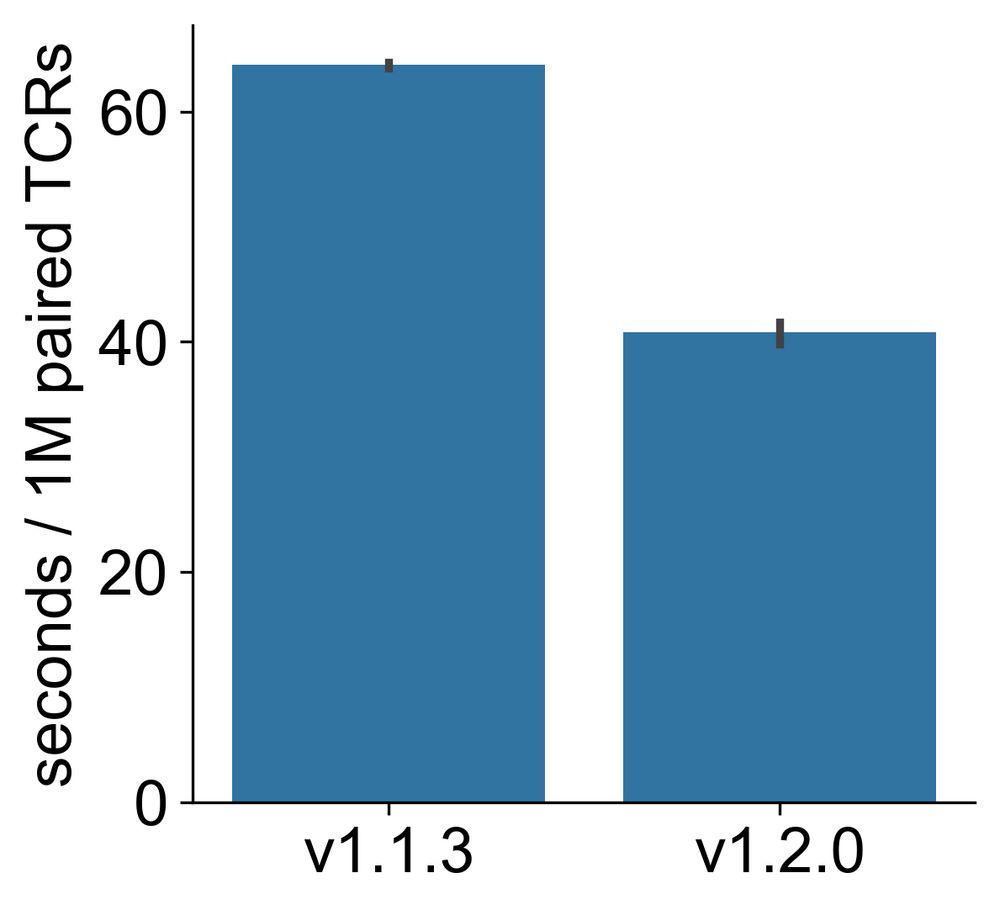
While adding in these QoL tweaks, I also did a bit of spring cleaning and sped the code up by about a third. Should be handy for making full length sequences for those larger datasets!
February 25, 2025 at 4:24 AM
While adding in these QoL tweaks, I also did a bit of spring cleaning and sped the code up by about a third. Should be handy for making full length sequences for those larger datasets!
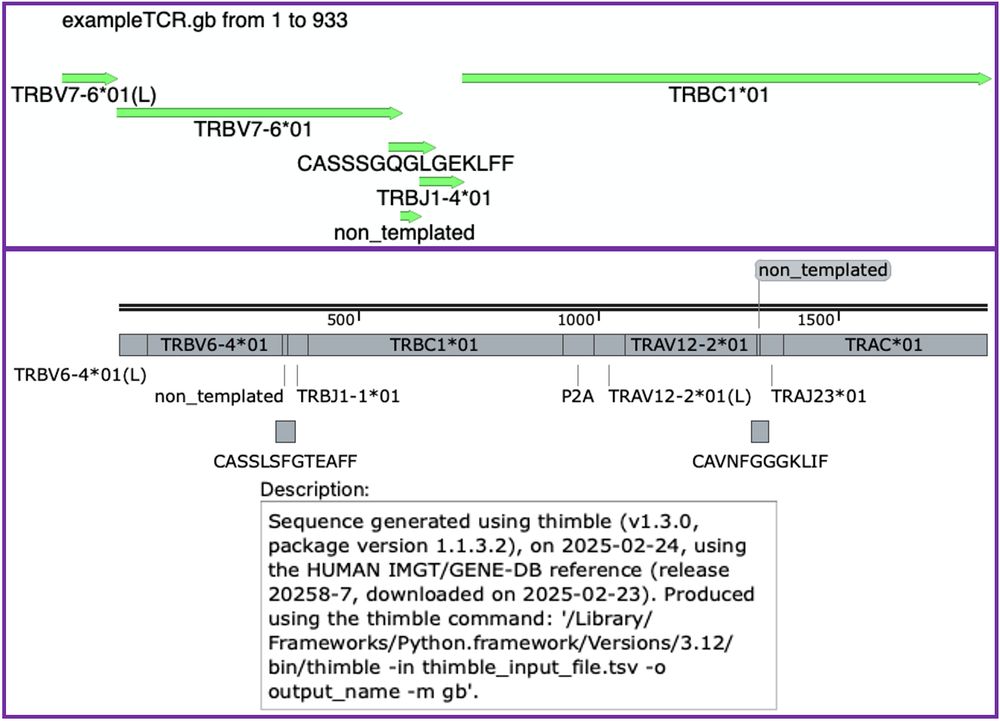
This version has a bunch of wee improvements, mostly allowing metadata about the reference and run to be included with stitched sequences.
This includes new output options to produce either a JSON or (my favourite) GenBank file, which you can then open/edit with a tool like ApE or Snapgene Viewer.
This includes new output options to produce either a JSON or (my favourite) GenBank file, which you can then open/edit with a tool like ApE or Snapgene Viewer.
February 25, 2025 at 4:24 AM
This version has a bunch of wee improvements, mostly allowing metadata about the reference and run to be included with stitched sequences.
This includes new output options to produce either a JSON or (my favourite) GenBank file, which you can then open/edit with a tool like ApE or Snapgene Viewer.
This includes new output options to produce either a JSON or (my favourite) GenBank file, which you can then open/edit with a tool like ApE or Snapgene Viewer.
As the inmates run the asylum into the ground and the fate of the American experiment hangs in the balance, can we all take a moment to reflect on the real problems facing us today.
Specifically, Biolegend changing the colour of their tube lids. What the hell BL, my antibody box looks awful now.
Specifically, Biolegend changing the colour of their tube lids. What the hell BL, my antibody box looks awful now.

February 14, 2025 at 8:21 PM
As the inmates run the asylum into the ground and the fate of the American experiment hangs in the balance, can we all take a moment to reflect on the real problems facing us today.
Specifically, Biolegend changing the colour of their tube lids. What the hell BL, my antibody box looks awful now.
Specifically, Biolegend changing the colour of their tube lids. What the hell BL, my antibody box looks awful now.
I would say more than just the students should read this, it's full of gems!
Like this absolute banger, which is maybe even more relevant today than it was at the time.
Like this absolute banger, which is maybe even more relevant today than it was at the time.

November 18, 2024 at 5:43 PM
I would say more than just the students should read this, it's full of gems!
Like this absolute banger, which is maybe even more relevant today than it was at the time.
Like this absolute banger, which is maybe even more relevant today than it was at the time.
Every time I take a photo of a petri dish my phone thinks it's food, which raises a lot of questions about their training data to me

November 15, 2024 at 3:21 PM
Every time I take a photo of a petri dish my phone thinks it's food, which raises a lot of questions about their training data to me
I keep coming back to this figure from the ludicrous AI generated Frontiers paper. There's something about it that really tickles me.
Can someone please start discovering new members of the pathway and calling them stuff like 'Dimimeriom eme' to make this more true
Can someone please start discovering new members of the pathway and calling them stuff like 'Dimimeriom eme' to make this more true

February 15, 2024 at 6:30 PM
I keep coming back to this figure from the ludicrous AI generated Frontiers paper. There's something about it that really tickles me.
Can someone please start discovering new members of the pathway and calling them stuff like 'Dimimeriom eme' to make this more true
Can someone please start discovering new members of the pathway and calling them stuff like 'Dimimeriom eme' to make this more true