


Olga Novikova
@inteins.bsky.social
Microbiologist & Evolutionary Biologist; self-taught Bioinformatician; Assistant Professor at SUNY Buffalo State Univeristy, Buffalo, NY
Reposted by Olga Novikova

Our new paper on the rapid evolution of centromeres in Drosophila is out! 🚀 Discover how transposable elements and satellite DNAs shape centromere dynamics and drive karyotype evolution over short timescales. @amlarracuente.bsky.social 🌟 Check it out here: journals.plos.org/plosbiology/...

Turnover of retroelements and satellite DNA drives centromere reorganization over short evolutionary timescales in Drosophila
Centromeres reside in rapidly evolving, repeat-rich genomic regions, despite their essential function in chromosome segregation. This study of centromere evolution over short evolutionary timescales i...
journals.plos.org
November 21, 2024 at 10:02 PM
Our new paper on the rapid evolution of centromeres in Drosophila is out! 🚀 Discover how transposable elements and satellite DNAs shape centromere dynamics and drive karyotype evolution over short timescales. @amlarracuente.bsky.social 🌟 Check it out here: journals.plos.org/plosbiology/...
Reposted by Olga Novikova

What I am pretty sure is Porpidia crustulata, although it seems Porpidia is a difficult genus. All I can say is that I can find no reason for it not to be crustulata. Potential second county record. #lichensGB


April 6, 2025 at 6:52 PM
What I am pretty sure is Porpidia crustulata, although it seems Porpidia is a difficult genus. All I can say is that I can find no reason for it not to be crustulata. Potential second county record. #lichensGB
Reposted by Olga Novikova

#Viewpoint: Flexible or fortified? How #lichens balance defence strategies across climatic harshness gradients
Inger K. de Jonge, et al. 👇
📖 nph.onlinelibrary.wiley.com/doi/10.1111/...
#LatestIssue
Inger K. de Jonge, et al. 👇
📖 nph.onlinelibrary.wiley.com/doi/10.1111/...
#LatestIssue

March 28, 2025 at 4:30 PM
#Viewpoint: Flexible or fortified? How #lichens balance defence strategies across climatic harshness gradients
Inger K. de Jonge, et al. 👇
📖 nph.onlinelibrary.wiley.com/doi/10.1111/...
#LatestIssue
Inger K. de Jonge, et al. 👇
📖 nph.onlinelibrary.wiley.com/doi/10.1111/...
#LatestIssue
Reposted by Olga Novikova

Reposted by Olga Novikova

Lichen on a Maple! So much to see... #lichen #NaturePhotography @licheomancy.bsky.social #nature themeaningofwater.com/2025/02/02/l...

Living Bark of a Maple—A Lichen Study
Various lichen crowd over the gnarly bark of a red maple tree on a wet winter day, ON (photo by Nina Munteanu) . After my fence post lichen study, I felt compelled to look for lichen everywhere els…
themeaningofwater.com
March 26, 2025 at 4:49 PM
Lichen on a Maple! So much to see... #lichen #NaturePhotography @licheomancy.bsky.social #nature themeaningofwater.com/2025/02/02/l...
Reposted by Olga Novikova
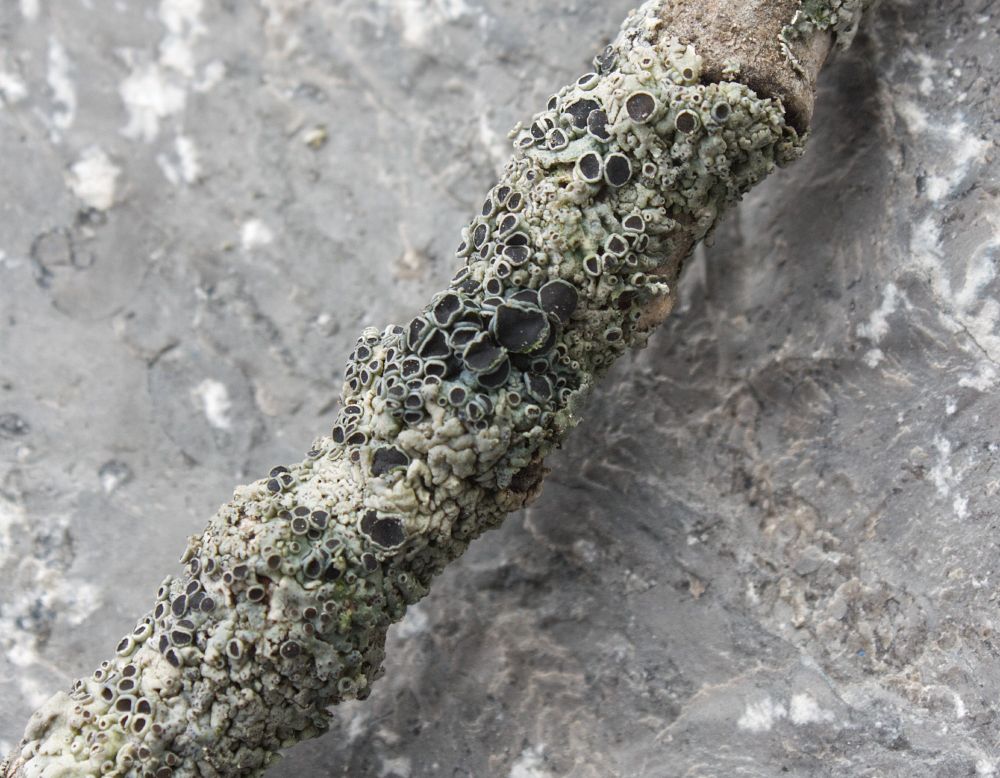
Lichen on a Twig... On my walk today, I picked up some twigs blown on the ground by the wind and found them covered by Star Rosette Lichen (Physcia stellaris) with abundant apothecia and picnidia! What a beautiful thing on the ground! #Lichen #beauty #NaturePhotography


March 28, 2025 at 8:18 PM
Lichen on a Twig... On my walk today, I picked up some twigs blown on the ground by the wind and found them covered by Star Rosette Lichen (Physcia stellaris) with abundant apothecia and picnidia! What a beautiful thing on the ground! #Lichen #beauty #NaturePhotography
Reposted by Olga Novikova

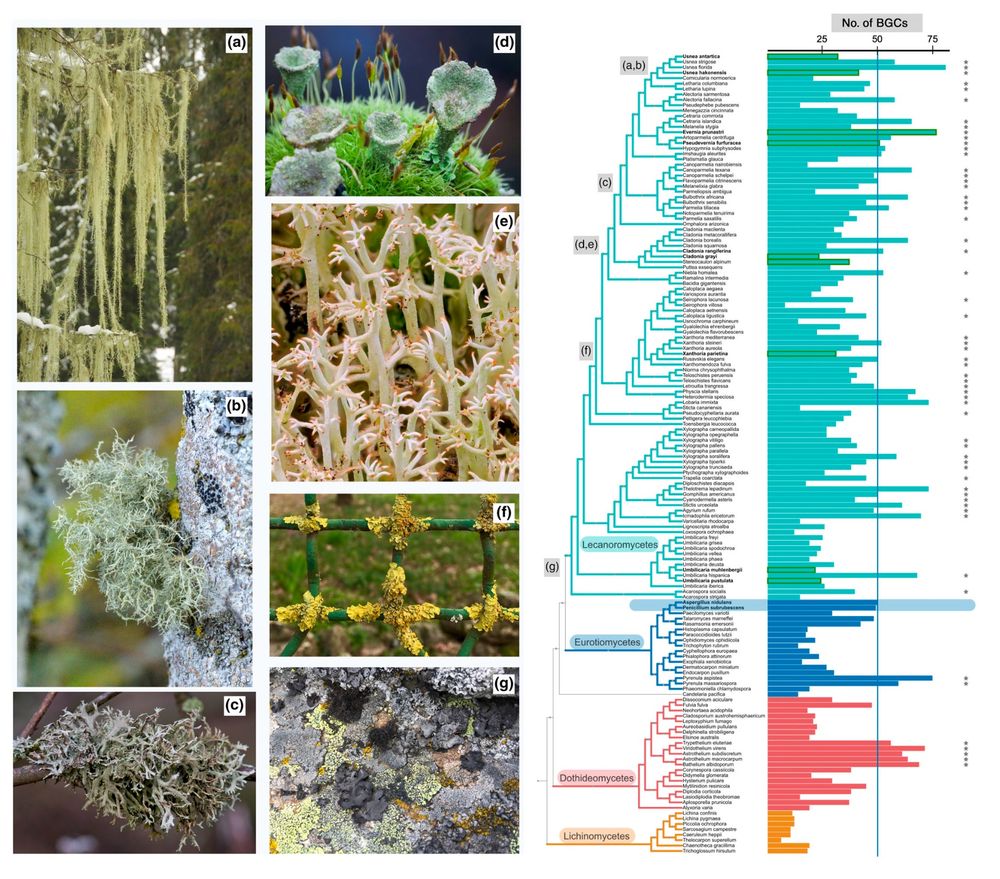
I enjoyed teaming with Garima, Francesco and Marnix to write this piece for @newphyt.bsky.social ...
Breaking into nature's secret medicine cabinet: lichens – a biochemical goldmine ready for discovery
nph.onlinelibrary.wiley.com/doi/abs/10.1...
Breaking into nature's secret medicine cabinet: lichens – a biochemical goldmine ready for discovery
nph.onlinelibrary.wiley.com/doi/abs/10.1...
February 27, 2025 at 8:59 AM
I enjoyed teaming with Garima, Francesco and Marnix to write this piece for @newphyt.bsky.social ...
Breaking into nature's secret medicine cabinet: lichens – a biochemical goldmine ready for discovery
nph.onlinelibrary.wiley.com/doi/abs/10.1...
Breaking into nature's secret medicine cabinet: lichens – a biochemical goldmine ready for discovery
nph.onlinelibrary.wiley.com/doi/abs/10.1...
Reposted by Olga Novikova

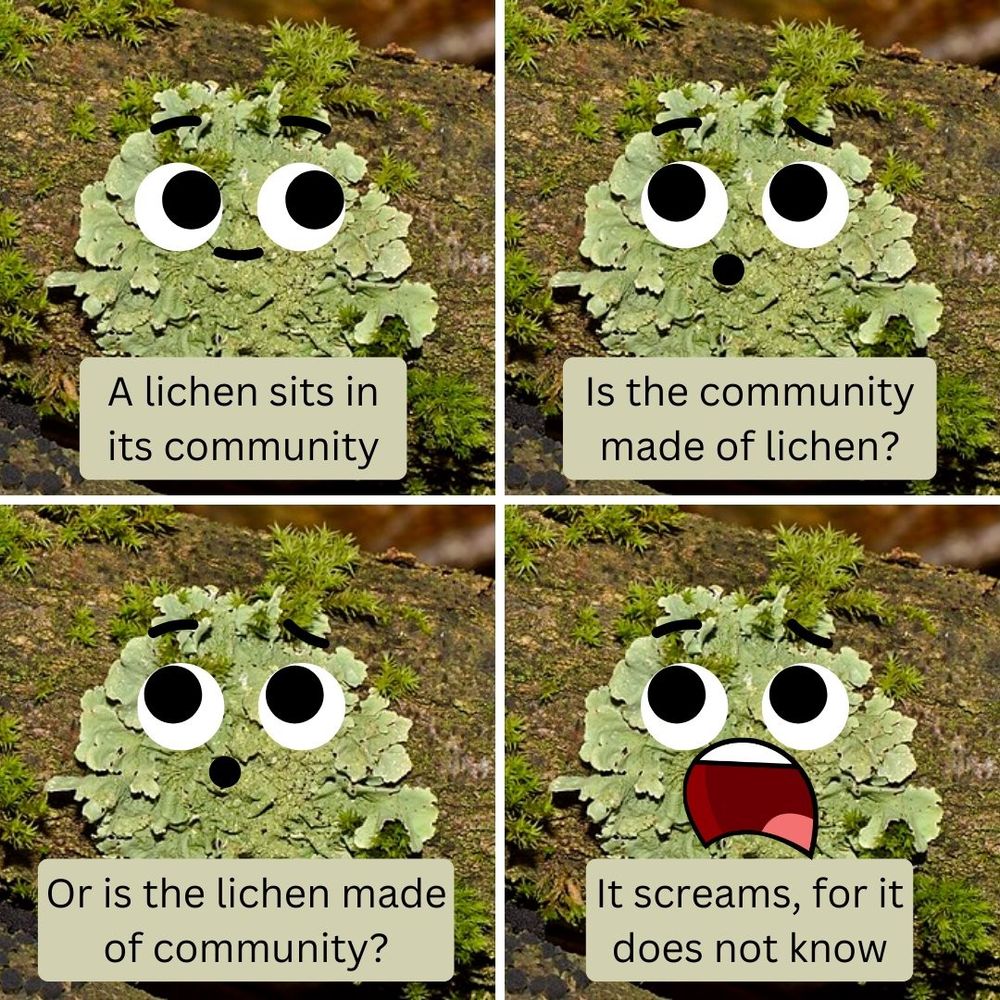
Our study on #lichen #symbiosis is out in @currentbiology.bsky.social! How can multiple microbes create a large, 3D, and structurally complex organism? To answer this question, we used #metagenomics, #metatranscriptomics, and a bit of protein structure modeling 🧵1/7
🧬 🖥️ 🧪 🦠 🧫 #SymbioSky
🧬 🖥️ 🧪 🦠 🧫 #SymbioSky
January 31, 2025 at 4:35 PM
Our study on #lichen #symbiosis is out in @currentbiology.bsky.social! How can multiple microbes create a large, 3D, and structurally complex organism? To answer this question, we used #metagenomics, #metatranscriptomics, and a bit of protein structure modeling 🧵1/7
🧬 🖥️ 🧪 🦠 🧫 #SymbioSky
🧬 🖥️ 🧪 🦠 🧫 #SymbioSky
Reposted by Olga Novikova

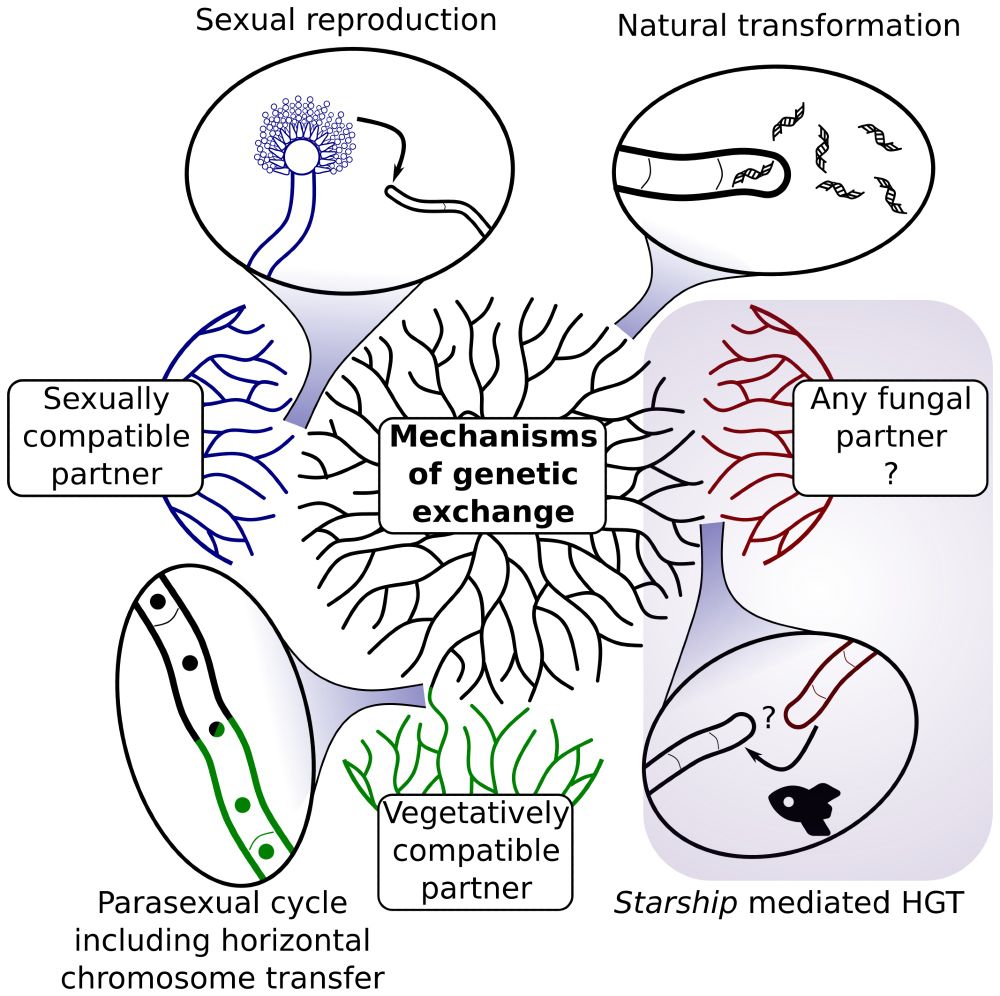
We did it! We caught Starship #transposons moving between #fungal species in the lab, including between species separated by ~100my. We think Starships are a mediator of HGT in fungi, akin to conjugative elements in bacteria. Check out the preprint. www.biorxiv.org/content/10.1...
March 7, 2025 at 7:18 AM
We did it! We caught Starship #transposons moving between #fungal species in the lab, including between species separated by ~100my. We think Starships are a mediator of HGT in fungi, akin to conjugative elements in bacteria. Check out the preprint. www.biorxiv.org/content/10.1...
Reposted by Olga Novikova
New Bergman Lab paper now online at GBE: "Horizontal transfer and recombination fuel Ty4 retrotransposon evolution in Saccharomyces"

Horizontal transfer and recombination fuel Ty4 retrotransposon evolution in Saccharomyces
Abstract. Horizontal transposon transfer (HTT) plays an important role in the evolution of eukaryotic genomes, however the detailed evolutionary history an
academic.oup.com
January 10, 2025 at 2:33 PM
New Bergman Lab paper now online at GBE: "Horizontal transfer and recombination fuel Ty4 retrotransposon evolution in Saccharomyces"
Reposted by Olga Novikova
An inversion polymorphism under balancing selection, involving giant mobile elements, in the invasive fungal pathogen responsable for the chesnut blight disease!
doi.org/10.1093/molb...
doi.org/10.1093/molb...
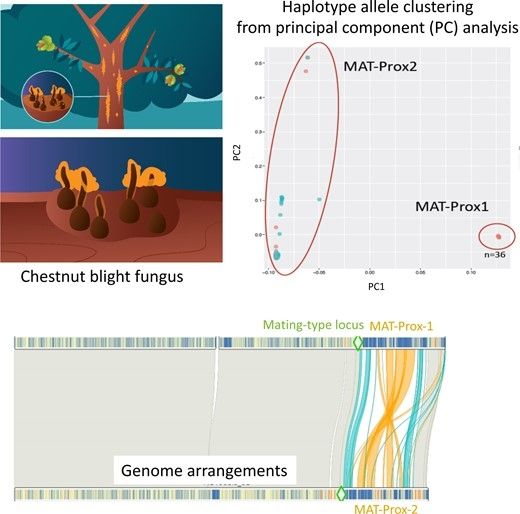
An inversion polymorphism under balancing selection, involving giant mobile elements, in an invasive fungal pathogen
Abstract. Recombination suppression can evolve in sex or mating-type chromosomes, or in autosomal supergenes, with different haplotypes being maintained by
doi.org
February 11, 2025 at 9:24 AM
An inversion polymorphism under balancing selection, involving giant mobile elements, in the invasive fungal pathogen responsable for the chesnut blight disease!
doi.org/10.1093/molb...
doi.org/10.1093/molb...
Reposted by Olga Novikova

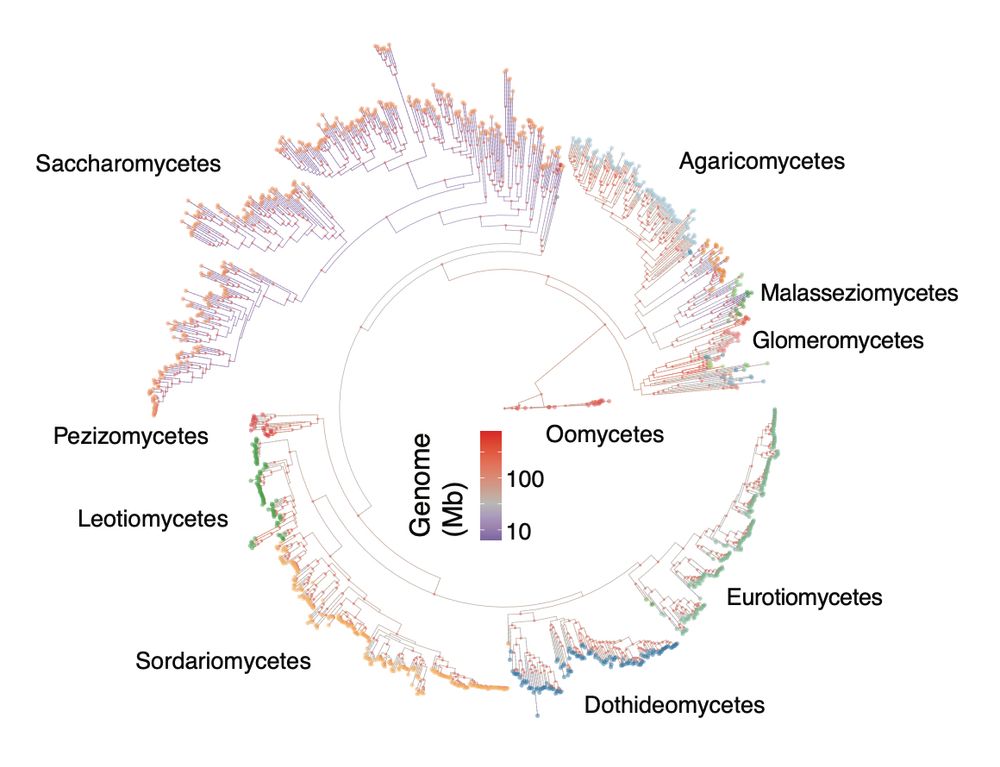
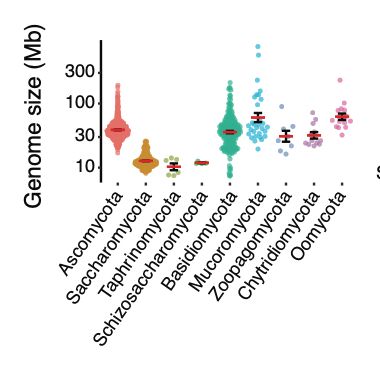
@tbadet.bsky.social and I have a preprint out on transposon silencing in fungi!
Genome size evolution is fascinating and showcases the dynamic nature of transposon activation.
What we understand less are the dynamics of transposon defense systems encoded by the genomes.
doi.org/10.1101/2025...
Genome size evolution is fascinating and showcases the dynamic nature of transposon activation.
What we understand less are the dynamics of transposon defense systems encoded by the genomes.
doi.org/10.1101/2025...
January 16, 2025 at 9:09 PM
@tbadet.bsky.social and I have a preprint out on transposon silencing in fungi!
Genome size evolution is fascinating and showcases the dynamic nature of transposon activation.
What we understand less are the dynamics of transposon defense systems encoded by the genomes.
doi.org/10.1101/2025...
Genome size evolution is fascinating and showcases the dynamic nature of transposon activation.
What we understand less are the dynamics of transposon defense systems encoded by the genomes.
doi.org/10.1101/2025...
Reposted by Olga Novikova

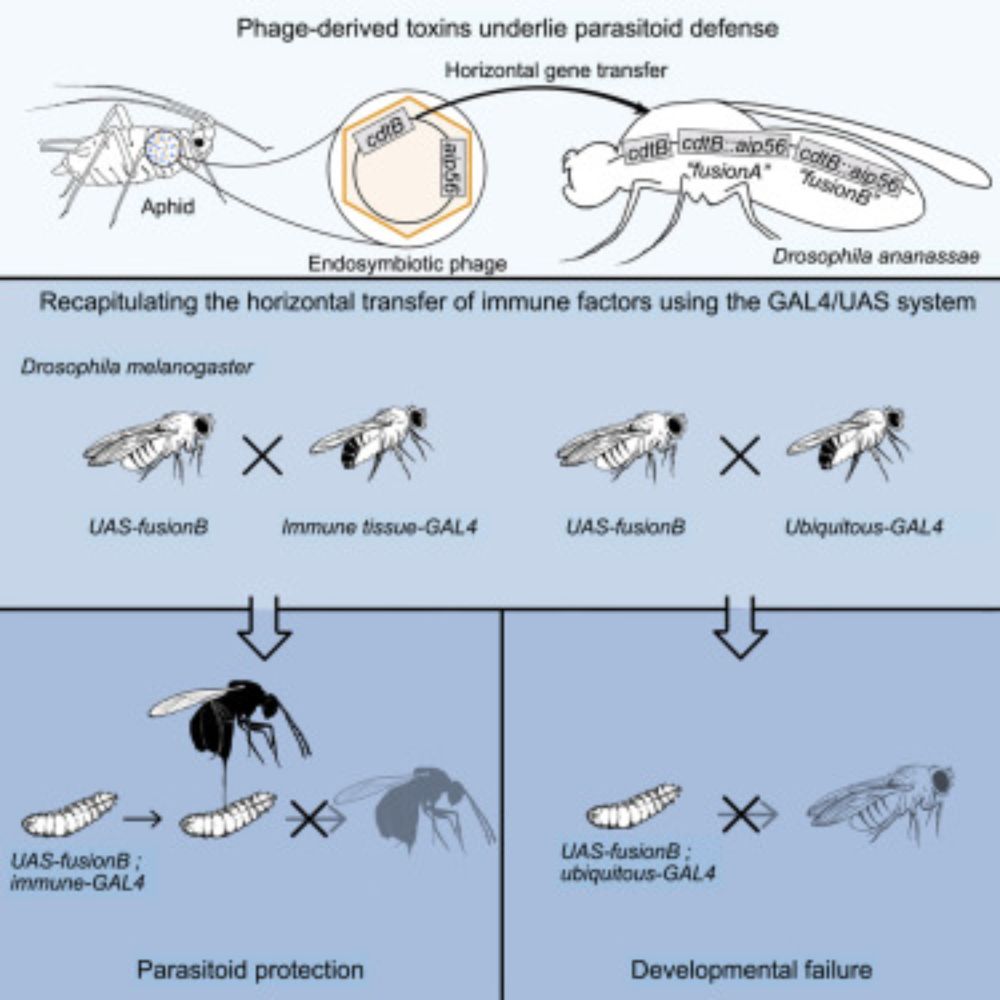
The two toxins—cytolethal distending toxin B (cdtB) and apoptosis inducing protein of 56kDa (aip56)—are implicated in a defensive endosymbiosis in aphids. Our lab found HGT of these genes to insects in multiple orders, where they function in anti-parasitoid defense (2/n): tinyurl.com/m9mufn9a

Evolution of insect innate immunity through domestication of bacterial toxins | PNAS
Toxin cargo genes are often horizontally transferred by phages between bacterial species
and are known to play an important role in the evolution o...
www.pnas.org
December 20, 2024 at 5:58 PM
The two toxins—cytolethal distending toxin B (cdtB) and apoptosis inducing protein of 56kDa (aip56)—are implicated in a defensive endosymbiosis in aphids. Our lab found HGT of these genes to insects in multiple orders, where they function in anti-parasitoid defense (2/n): tinyurl.com/m9mufn9a
Reposted by Olga Novikova
Excited to share the major work of my dissertation, out now in @currentbiology.bsky.social! We use Drosophila genetics to dissect the evolution of phage-derived toxins that were horizontally transferred to insects and now function as potent anti-parasitoid defenses (1/n): tinyurl.com/2k9ypyxr
Experimental horizontal transfer of phage-derived genes to Drosophila confers innate immunity to parasitoids
Metazoan parasites have played a major role in shaping innate immunity in animals. Insect hosts and parasitoid wasps are excellent models for illumina…
www.sciencedirect.com
December 20, 2024 at 5:58 PM
Excited to share the major work of my dissertation, out now in @currentbiology.bsky.social! We use Drosophila genetics to dissect the evolution of phage-derived toxins that were horizontally transferred to insects and now function as potent anti-parasitoid defenses (1/n): tinyurl.com/2k9ypyxr
Reposted by Olga Novikova
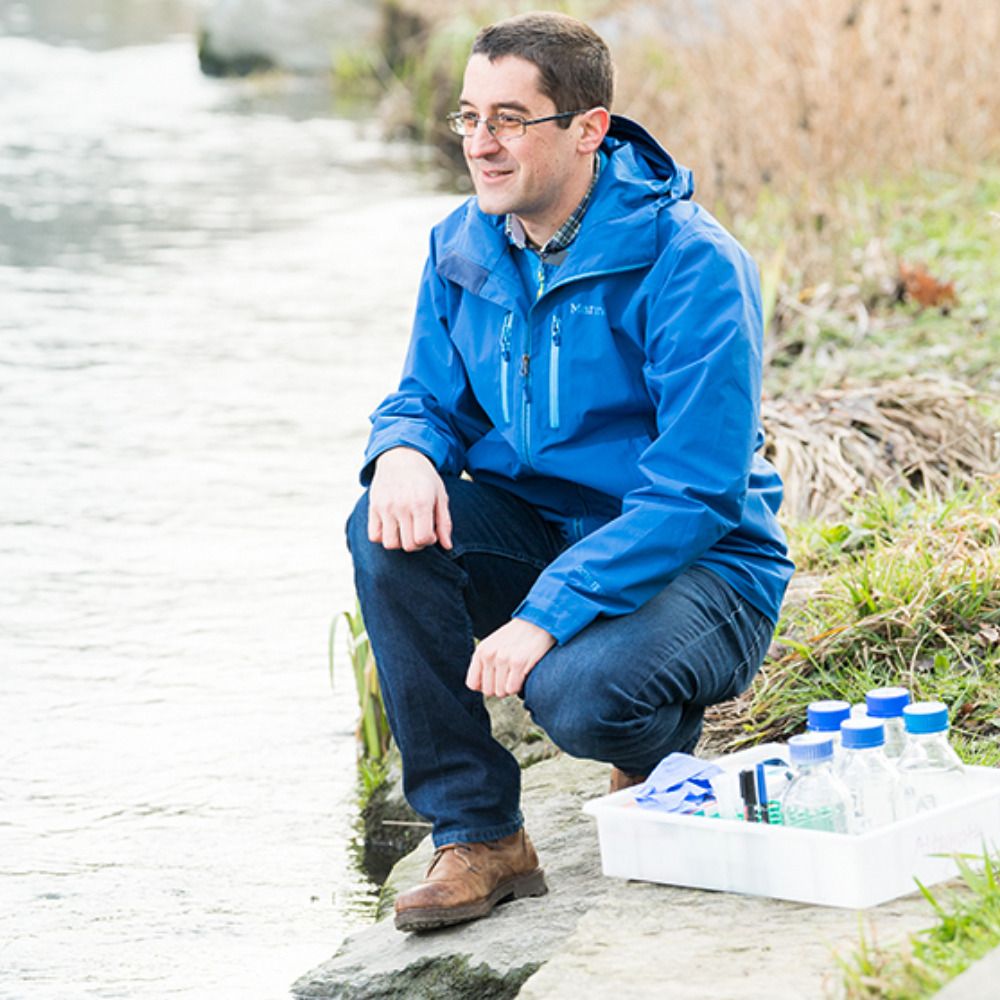
Environmental DNA: The next chapter
🧬🔬🐟🧬🦠🧬🦋🧬
Molecular tools, incl. #eDNA, have become an indispensable part of #ecology & #biodiversity sciences.
What is needed to concretely move the field forward?
Retrospect & outlook out now @molecology
doi.org/10.1111/mec....
a🧵
🧬🔬🐟🧬🦠🧬🦋🧬
Molecular tools, incl. #eDNA, have become an indispensable part of #ecology & #biodiversity sciences.
What is needed to concretely move the field forward?
Retrospect & outlook out now @molecology
doi.org/10.1111/mec....
a🧵

April 17, 2024 at 2:53 PM
Environmental DNA: The next chapter
🧬🔬🐟🧬🦠🧬🦋🧬
Molecular tools, incl. #eDNA, have become an indispensable part of #ecology & #biodiversity sciences.
What is needed to concretely move the field forward?
Retrospect & outlook out now @molecology
doi.org/10.1111/mec....
a🧵
🧬🔬🐟🧬🦠🧬🦋🧬
Molecular tools, incl. #eDNA, have become an indispensable part of #ecology & #biodiversity sciences.
What is needed to concretely move the field forward?
Retrospect & outlook out now @molecology
doi.org/10.1111/mec....
a🧵