



@georgeelliot19.bsky.social
I also hate how Bill Gates totally twists the work of Vaclav Smil in service of climate delay. Smil consistently advocates for both accelerated deployment of low carbon energy technologies and deep reductions in energy demand in rich countries.


November 17, 2025 at 5:58 AM
I also hate how Bill Gates totally twists the work of Vaclav Smil in service of climate delay. Smil consistently advocates for both accelerated deployment of low carbon energy technologies and deep reductions in energy demand in rich countries.
And important to note this study does not consider scope 3 emissions. Thats very important for two reasons. First with current high growth rates of datacenters and high turnover rate of equipment a huge share of annual resource use associated with AI datacenter buildout is upfront and "upstream".

November 14, 2025 at 5:42 AM
And important to note this study does not consider scope 3 emissions. Thats very important for two reasons. First with current high growth rates of datacenters and high turnover rate of equipment a huge share of annual resource use associated with AI datacenter buildout is upfront and "upstream".
See these charts. Red is global trend. Black lines are top 30 solar producing countries. X-axis is solar share of electricity. Absolute growth rate first increases then levels off or declines with increasing share. Relative growth rate declines with increasing share. Last two are log scale.


November 13, 2025 at 3:12 PM
See these charts. Red is global trend. Black lines are top 30 solar producing countries. X-axis is solar share of electricity. Absolute growth rate first increases then levels off or declines with increasing share. Relative growth rate declines with increasing share. Last two are log scale.
See these charts. Red is global trend. Black lines are top 30 solar producing countries. X-axis is solar share of electricity. Absolute growth rate first increases then levels off or declines with increasing share. Relative growth rate declines with increasing share.
November 13, 2025 at 3:10 PM
See these charts. Red is global trend. Black lines are top 30 solar producing countries. X-axis is solar share of electricity. Absolute growth rate first increases then levels off or declines with increasing share. Relative growth rate declines with increasing share.
Here’s another graph I’m working on. Shows current growth of low carbon energies compared to historic growth of energy system. Will add historic growth of fossil fuels to the graph but it’s basically the same as total energy. I will also add some future net zero scenario.

November 12, 2025 at 9:29 PM
Here’s another graph I’m working on. Shows current growth of low carbon energies compared to historic growth of energy system. Will add historic growth of fossil fuels to the graph but it’s basically the same as total energy. I will also add some future net zero scenario.
in their absolute growth rate (ie annual additions). That would mean annual additions equivalent to ~5-10% of total electricity use and ~2-4% of total energy use. That’s a very fast pace of technology deployment actually, just not exponential.
November 12, 2025 at 9:15 PM
in their absolute growth rate (ie annual additions). That would mean annual additions equivalent to ~5-10% of total electricity use and ~2-4% of total energy use. That’s a very fast pace of technology deployment actually, just not exponential.
… who is widely misread. Smil does *not* claim that a rapid phaseout of fossil fuels is impossible, only that it requires some combo of unprecedented deployment of low carbon technologies and/or reduction in total energy use, especially in high income countries. Here’s his most recent assessment:


November 12, 2025 at 5:37 PM
… who is widely misread. Smil does *not* claim that a rapid phaseout of fossil fuels is impossible, only that it requires some combo of unprecedented deployment of low carbon technologies and/or reduction in total energy use, especially in high income countries. Here’s his most recent assessment:
before eventually declining. The IEA is basically right that solar additions will flatten out many of their scenarios are just premature in this. These graphs show relative growth and absolute growth. Red line is global trend and black lines are top 30 solar producers.
November 12, 2025 at 3:28 PM
before eventually declining. The IEA is basically right that solar additions will flatten out many of their scenarios are just premature in this. These graphs show relative growth and absolute growth. Red line is global trend and black lines are top 30 solar producers.
Also see comparison between actual solar growth and exponential scenarios. Solar has underperformed compared to exponential growth.


November 12, 2025 at 3:21 PM
Also see comparison between actual solar growth and exponential scenarios. Solar has underperformed compared to exponential growth.
Here's another chart showing growth of all fossil fuels (coal, oil, gas) versus growth of all modern low carbon energy sources (solar, wind, water, nuclear). Dotted green line shows growth of low carbon energy needed for 100% low carbon energy 2050

November 10, 2025 at 6:06 PM
Here's another chart showing growth of all fossil fuels (coal, oil, gas) versus growth of all modern low carbon energy sources (solar, wind, water, nuclear). Dotted green line shows growth of low carbon energy needed for 100% low carbon energy 2050
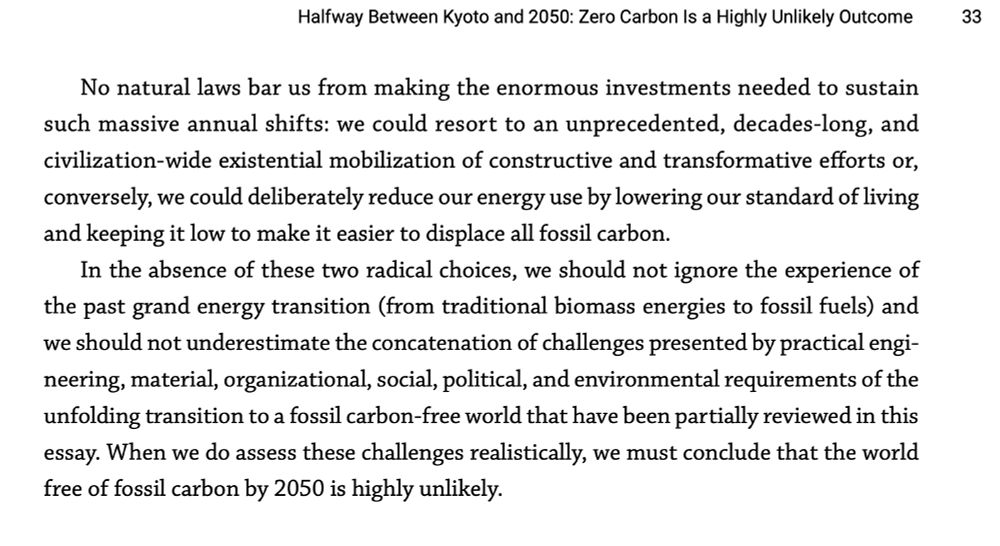
And here's Smil's most recent conclusion on the prospects for an energy transition. He does not say that rapid decarbonization is impossible but rather says that both rapid and cheap decarbonization is impossible due to upfront costs of transition.
Link: www.fraserinstitute.org/sites/defaul...
Link: www.fraserinstitute.org/sites/defaul...

November 10, 2025 at 6:06 PM
And here's Smil's most recent conclusion on the prospects for an energy transition. He does not say that rapid decarbonization is impossible but rather says that both rapid and cheap decarbonization is impossible due to upfront costs of transition.
Link: www.fraserinstitute.org/sites/defaul...
Link: www.fraserinstitute.org/sites/defaul...
Is current exponential initial takeoff of solar/wind faster than previous energy transitions? Yes and no. It's ~2-3x faster than previous growth of coal/oil/gas but when normalized to total energy its almost identical to the initial takeoff of nuclear energy.


November 10, 2025 at 4:24 PM
Is current exponential initial takeoff of solar/wind faster than previous energy transitions? Yes and no. It's ~2-3x faster than previous growth of coal/oil/gas but when normalized to total energy its almost identical to the initial takeoff of nuclear energy.
But this ignores the hugely different impacts of extracting different resources. See this chart showing global mining land use by commodity. Ex: gold and coal mining use same land globally despite producing 2 million times more coal than gold.

October 28, 2025 at 2:09 PM
But this ignores the hugely different impacts of extracting different resources. See this chart showing global mining land use by commodity. Ex: gold and coal mining use same land globally despite producing 2 million times more coal than gold.
YES there are inherent gains in throughput efficiency associated with decarbonization and electrification. But there are also some ways that throughput efficiency is reduced (curtailment, storage, transmission, P2X). And upfront costs of energy transition require increased share of final energy.


October 27, 2025 at 8:22 PM
YES there are inherent gains in throughput efficiency associated with decarbonization and electrification. But there are also some ways that throughput efficiency is reduced (curtailment, storage, transmission, P2X). And upfront costs of energy transition require increased share of final energy.
See this paper looking at land use for mining by commodity: papers.ssrn.com/sol3/papers....
Mining metals (predictably) requires much more land per tonne than mining coal or producing fossil fuels.
Mining metals (predictably) requires much more land per tonne than mining coal or producing fossil fuels.

October 26, 2025 at 10:43 PM
See this paper looking at land use for mining by commodity: papers.ssrn.com/sol3/papers....
Mining metals (predictably) requires much more land per tonne than mining coal or producing fossil fuels.
Mining metals (predictably) requires much more land per tonne than mining coal or producing fossil fuels.
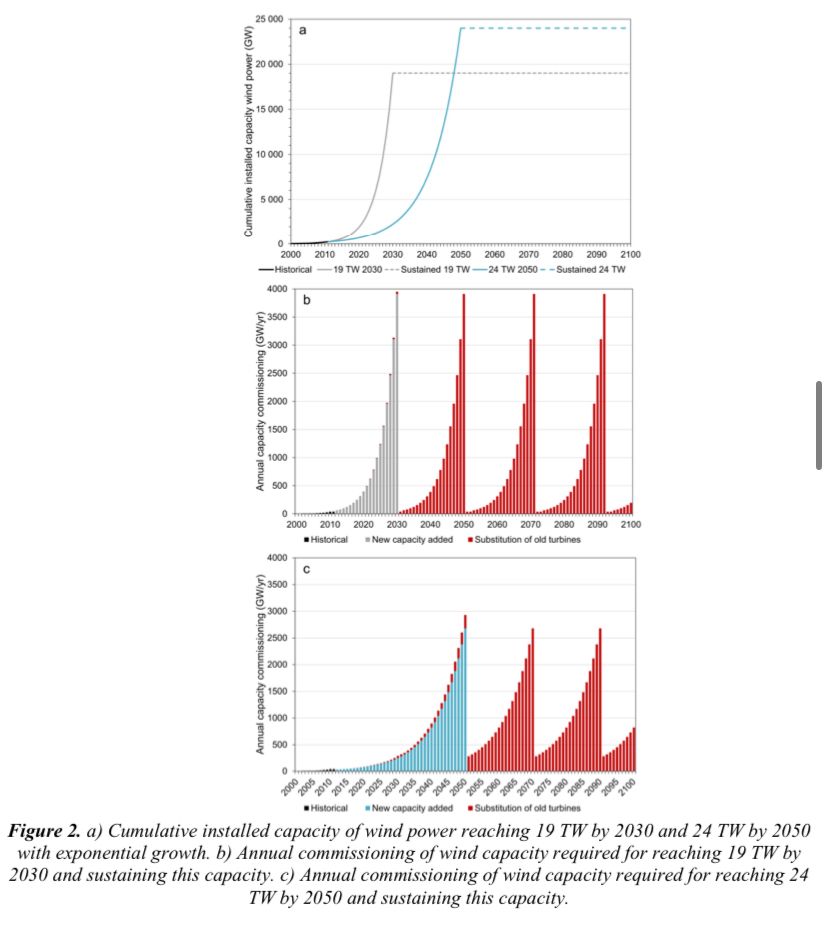
But the current growth dynamics make these waste flows hard to manage. Linear growth of renewables means constant materials flows. Logistic growth means recurring waves. Exponential growth means recurring pulses.


October 1, 2025 at 2:30 AM
But the current growth dynamics make these waste flows hard to manage. Linear growth of renewables means constant materials flows. Logistic growth means recurring waves. Exponential growth means recurring pulses.
Compare this to electricity. Low carbon electricity sources contribute almost half of Pakistans electricity generation. And solar is growing rapidly making up 10% in 2024 and 25% in the *first months* of 2025.


September 30, 2025 at 4:15 PM
Compare this to electricity. Low carbon electricity sources contribute almost half of Pakistans electricity generation. And solar is growing rapidly making up 10% in 2024 and 25% in the *first months* of 2025.
What a rapid transformation where solar and wind each account for ~1% of total energy use in Pakistan. Note the substitution method used here accounts for efficiency improvements associated with decarbonization and electrification.


September 30, 2025 at 1:50 PM
What a rapid transformation where solar and wind each account for ~1% of total energy use in Pakistan. Note the substitution method used here accounts for efficiency improvements associated with decarbonization and electrification.
Most people saying Smil has been proven wrong are often misquoting him. This is his most recent conclusion on energy transition.

September 29, 2025 at 10:40 PM
Most people saying Smil has been proven wrong are often misquoting him. This is his most recent conclusion on energy transition.
And this is the actual timeline of previous energy transitions that the compares rise of renewables to. Decades not centuries as many people falsely quote.

September 29, 2025 at 10:14 PM
And this is the actual timeline of previous energy transitions that the compares rise of renewables to. Decades not centuries as many people falsely quote.
Smil is so often misquoted. This is his most recent conclusion on energy transition. Not as pessimistic as people think.
September 29, 2025 at 10:12 PM
Smil is so often misquoted. This is his most recent conclusion on energy transition. Not as pessimistic as people think.
Is AI like a deep sea oil rig? Allows us to exploit the “hard to find” ideas at high resource costs because we depleted the “easy to find” ideas a century ago.


September 24, 2025 at 8:56 PM
Is AI like a deep sea oil rig? Allows us to exploit the “hard to find” ideas at high resource costs because we depleted the “easy to find” ideas a century ago.
Global material/energy use ~8X and energy use has increased ~13X since 1900. How much has the resource footprint of scientific research increased in this period? 100X? 1000X? 10000X?


September 24, 2025 at 4:06 PM
Global material/energy use ~8X and energy use has increased ~13X since 1900. How much has the resource footprint of scientific research increased in this period? 100X? 1000X? 10000X?
What if AI is like a deep sea oil rig? After depleting the easiest to access oil resources we now need much more advanced technologies and many times higher resource expenditures to exploit increasingly marginal resources. Despite increased tech capabilities resource productivity has declined.
September 24, 2025 at 3:19 PM
What if AI is like a deep sea oil rig? After depleting the easiest to access oil resources we now need much more advanced technologies and many times higher resource expenditures to exploit increasingly marginal resources. Despite increased tech capabilities resource productivity has declined.